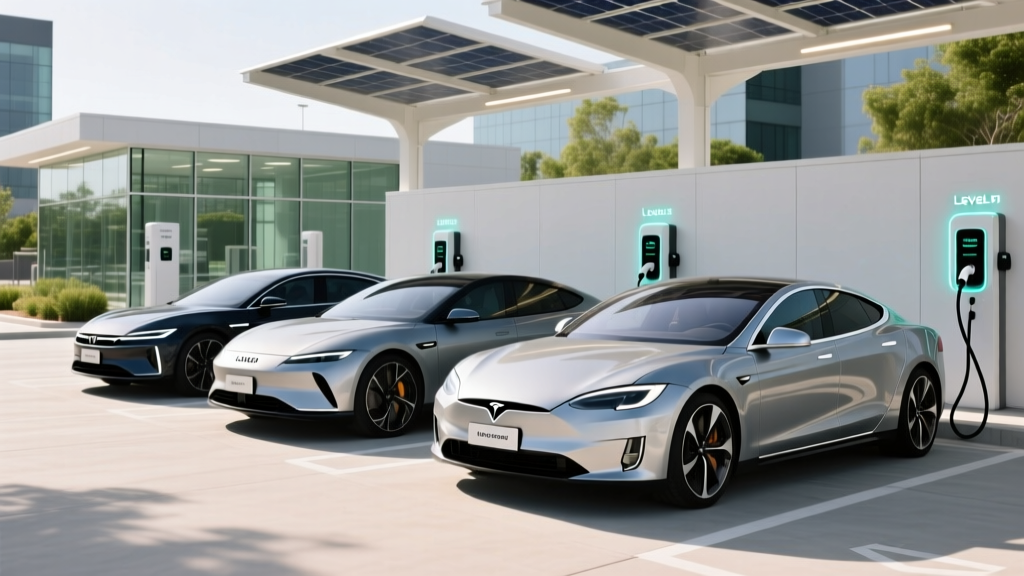
If you own or are shopping for a Volkswagen ID.4, you already know its EPA-estimated range sits at 291 miles for the Pro S (RWD) with the 82 kWh usable battery (91 kWh gross). But real-world range — especially in cold weather or at sustained highway speeds — typically lands between 230 and 260 miles. The single biggest factor in whether you actually enjoy that range daily isn't the battery itself; it's your charging setup. A well-configured home charger eliminates range anxiety entirely, while reliance on inconsistent public infrastructure can turn a 291-mile EV into a 200-mile liability on road trips.
This guide breaks down exactly how to charge a VW ID.4 at every level, what home installation actually costs in 2026, which connectors you need as Volkswagen transitions to NACS, and how charging costs compare to gasoline — with real numbers, not marketing estimates.
Understanding kW vs kWh: The Foundation of EV Charging
Before evaluating chargers, you must distinguish between two units that are frequently confused:
- kW (kilowatts) = the rate of power delivery. Think of it as the width of a pipe — higher kW means electricity flows faster into your battery.
- kWh (kilowatt-hours) = the total amount of energy stored or delivered. Think of it as gallons in a tank. The VW ID.4 Pro S has 82 kWh of usable battery capacity.
A 19.2 kW Level 2 charger delivers energy at a rate of 19.2 kilowatts. To fill 82 kWh from empty, it would take roughly 82 ÷ 19.2 ≈ 4.3 hours — though you'll rarely charge from 0%, and charging slows above 80% state of charge (SoC) to protect battery health.
Charging Levels Explained: Speeds, Times, and VW ID.4 Range Recovery
Every VW ID.4 owner will interact with three charging tiers. Here's what each delivers in practice, using the 82 kWh (usable) Pro S battery as our baseline.
| Level | Voltage | Max Power (kW) | Miles of Range Added per Hour | Typical Use Case |
|---|---|---|---|---|
| Level 1 (120V) | 120V AC | 1.0–1.4 kW | 3–5 miles/hr | Emergency/overnight trickle |
| Level 2 (240V) | 240V AC | 7.2–11.5 kW (ID.4 onboard limit) | 25–40 miles/hr | Home daily charging |
| DC Fast Charging | 400V+ DC | 170 kW peak (CCS); up to ~175 kW (NACS w/ adapter on newer models) | ~170 miles in 10 min (peak curve) | Road trips, rapid top-ups |
DC Fast Charging Curve Reality
Volkswagen advertises 10–80% DC fast charging in approximately 28–30 minutes at a 170 kW-capable station. That figure is achievable — but only under ideal conditions. The ID.4's charge curve peaks near 170 kW between roughly 10–30% SoC, then tapers progressively. From 60–80%, you'll see speeds drop to 60–80 kW. Above 80%, charging slows dramatically to protect the NMC battery chemistry. On a road trip, plan to charge from 10–80% and skip the slow final 20% unless you need the full battery for your next leg.
Home Charger Installation: Electrical Requirements and True Costs
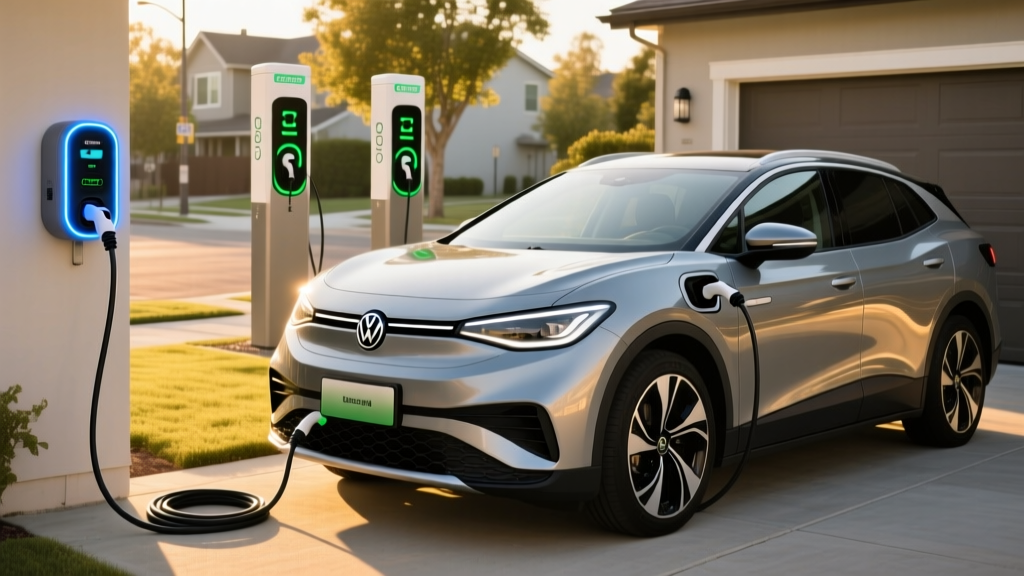
Installing a Level 2 home charger is the single highest-impact upgrade an ID.4 owner can make. Here's what's involved electrically and financially.
Electrical Requirements
The VW ID.4's onboard charger accepts up to 11.5 kW on Level 2 (48 amps). To deliver that, you need a 240V circuit rated for at least 60 amps (EVSE must be derated to 80% of circuit capacity per NEC code, so a 48A charger requires a 60A breaker). Most homes install a 40A or 48A charger on a 50A or 60A dedicated circuit.
Key electrical specifications:
- Voltage: 240V (split-phase, standard US residential)
- Amperage: 40A circuit (for 32A charger) or 60A circuit (for 48A charger)
- Wiring: 6 AWG copper (50A circuit) or 4 AWG copper (60A circuit) — run in conduit where exposed
- Dedicated circuit: Required — no sharing with other appliances
- GFCI protection: NEC 2020+ requires GFCI for EV outlets; hardwired EVSE units have built-in ground fault protection
- Outdoor rating: NEMA 4 or NEMA 4X rated enclosure if installed outdoors
Panel Upgrade Considerations
Many homes built before 2000 have 100A or 150A main electrical panels. Adding a 60A EV circuit to an already-loaded 100A panel may exceed safe capacity. A licensed electrician will perform a load calculation (per NEC Article 220) to determine if your panel can handle the additional draw. If not, a panel upgrade to 200A typically costs $1,500–$3,000 before the EV circuit is even installed. Homes with 200A panels rarely need an upgrade for a single EV charger.
Installation Cost Breakdown
| Component | Low Estimate | High Estimate | Notes |
|---|---|---|---|
| Level 2 EVSE (charger hardware) | $350 | $700 | 32A–48A smart chargers |
| Electrician labor (2–6 hrs) | $400 | $1,500 | Varies by run length, wall type |
| Electrical materials (wire, conduit, breaker) | $150 | $500 | Longer runs = higher cost |
| Permit and inspection | $50 | $300 | Required in most jurisdictions |
| Panel upgrade (if needed) | $1,500 | $3,000 | Only if load calc fails |
| Total (no panel upgrade) | $950 | $3,000 | Most typical installs |
| Total (with panel upgrade) | $2,450 | $6,000 | Older homes |
Always hire a licensed electrician familiar with NEC Article 625 (EV charging equipment). Some utilities offer rebates of $250–$1,000 for home charger installation — check with your local provider before starting work.
Connector Compatibility: CCS1, NACS, and the VW Transition
The connector landscape shifted dramatically in 2024–2025. Here's where Volkswagen stands in 2026:
| Connector | Type | VW ID.4 (2021–2024) | VW ID.4 (2025–2026) | Adapter Needed? |
|---|---|---|---|---|
| CCS1 (Combined Charging System) | DC Fast + AC Level 2 | Native port | Native port (transitioning) | No |
| NACS (North American Charging Standard / Tesla) | DC Fast + AC Level 2 | Adapter required | Native port on newest builds; adapter for earlier 2025 MY | Yes (CCS-to-NACS) for older models |
| J1772 | AC Level 1/2 only | Native (upper portion of CCS port) | Native or NACS (model dependent) | No for J1772 stations |
| CHAdeMO | DC Fast (legacy) | Not compatible | Not compatible | N/A — essentially discontinued |
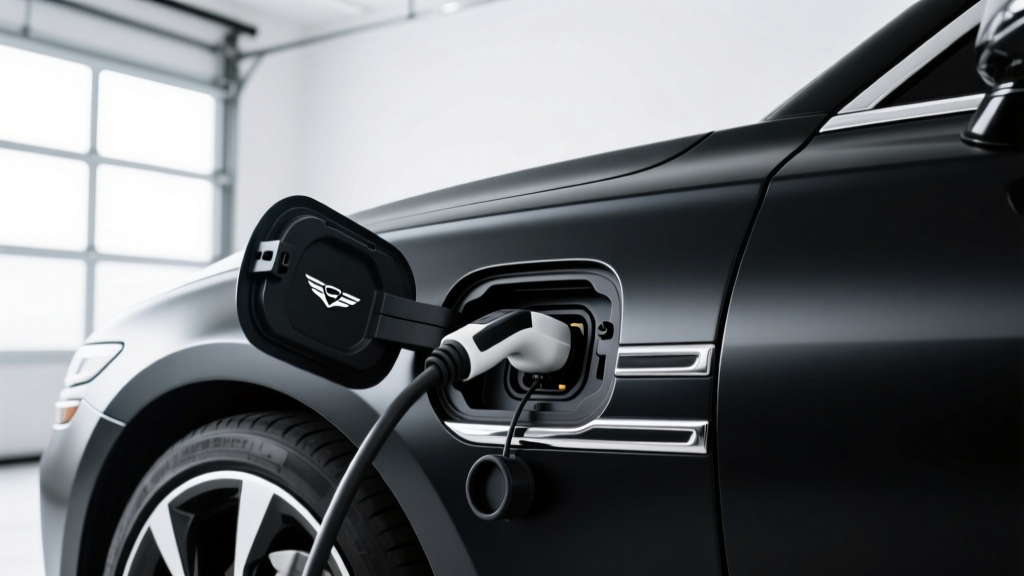
What this means for ID.4 owners: If you have a 2021–2024 ID.4, your native DC fast charging connector is CCS1. Volkswagen has begun equipping 2025+ ID.4 models with NACS ports, granting direct access to Tesla Supercharger stations (now opened to non-Tesla EVs). VW offers or supports CCS-to-NACS adapters for earlier models — typically $150–$250. Before purchasing an adapter, verify it supports DC fast charging (not just AC Level 2), as some cheaper adapters are AC-only.
For home Level 2 charging, most residential EVSE units ship with a J1772 connector (universal for AC charging on CCS-equipped vehicles) or NACS. If your home charger has a J1772 plug and your 2025+ ID.4 has a NACS port, you'll need a J1772-to-NACS adapter for home use — or simply purchase a NACS-terminated home charger.
Charging Cost Per Mile: EV vs Gasoline
The economic case for the ID.4 depends heavily on where and when you charge. Here are realistic 2026 scenarios using national averages.
| Charging/Fueling Scenario | Cost per kWh or Gallon | ID.4 Cost/Mile | Gas SUV Cost/Mile | Annual Savings (12,000 mi) |
|---|---|---|---|---|
| Home (off-peak utility rate) | $0.12/kWh | $0.034 | $0.136 ($3.40/gal) | $1,224 |
| Home (avg US residential) | $0.17/kWh | $0.048 | $0.136 | $1,056 |
| Public Level 2 (network pricing) | $0.28/kWh | $0.079 | $0.136 | $684 |
| DC Fast Charging (public) | $0.43/kWh | $0.121 | $0.136 | $180 |
| DC Fast (peak pricing, EA/EVgo) | $0.58/kWh | $0.164 | $0.136 | −$336 (EV costs more) |
The ID.4 AWD Pro S consumes approximately 2.8–3.0 kWh per mile in mixed driving (roughly 104 MPGe combined per EPA data). At home off-peak rates, charging is roughly 75% cheaper per mile than gasoline. But at peak DC fast charging rates, the ID.4 can actually cost more per mile than a fuel-efficient gas SUV. The economics overwhelmingly favor home charging.
Recommended Level 2 Home Chargers for the VW ID.4
Based on compatibility, reliability, and value, these are our top picks for ID.4 home charging in 2026.
ChargePoint Home Flex
- Power: Up to 12 kW (50A circuit, adjustable down to 16A–50A)
- Connector: J1772 (NACS version available)
- Cable length: 23 feet
- Smart features: Wi-Fi, app scheduling, Alexa integration, energy tracking
- Price: ~$549 (J1772) / ~$599 (NACS)
- Best for: Flexible amperage adjustment for older panels
Tesla Wall Connector (Universal)
- Power: Up to 11.5 kW (48A on 60A circuit)
- Connector: NACS with integrated J1772 adapter (Magic Dock)
- Cable length: 24 feet
- Smart features: Wi-Fi, OTA updates, load sharing with multiple units
- Price: ~$599
- Best for: NACS-equipped 2025+ ID.4 owners; future-proofing
Emporia Level 2 EV Charger
- Power: Up to 11.5 kW (48A)
- Connector: J1772
- Cable length: 24 feet
- Smart features: Wi-Fi, energy monitoring, solar integration, app control
- Price: ~$399
- Best for: Budget-conscious buyers with solar panels
Grizzl-E Smart
- Power: Up to 10 kW (40A)
- Connector: J1772
- Cable length: 24 feet
- Smart features: OCPP-compatible, adjustable amperage, rugged outdoor build
- Price: ~$449
- Best for: Outdoor installs in harsh climates (NEMA 4 rated)
For the ID.4's 11.5 kW onboard charger limit, any 48A (11.5 kW) charger will maximize charging speed. A 40A (9.6 kW) unit adds roughly 32 miles of range per hour versus 40 miles/hr at 48A — a difference of about 45 minutes for a full charge that most owners won't notice overnight.
Safety, Code, and Permit Considerations
EV charger installation is regulated under NEC Article 625 and local building codes. Key requirements:
- Dedicated circuit: Your EV charger must have its own breaker — no shared circuits with dryers, ovens, or HVAC.
- Permit required: Most municipalities require an electrical permit ($50–$300) and a post-installation inspection. Unpermitted work can void home insurance claims and complicate future home sales.
- GFCI protection: If using a NEMA 14-50 receptacle (rather than hardwired), NEC 2020+ requires a GFCI breaker. Hardwired EVSE units incorporate ground-fault protection internally.
- Outdoor installations: Must use NEMA 4-rated (weatherproof) enclosures and outdoor-rated cable or conduit. The charger unit itself should carry an outdoor rating.
- Cable management: NEC requires the charging cable not to cross walkways where it creates a trip hazard. Wall-mounted cord reels or cable organizers keep installations code-compliant and tidy.
Always verify your electrician pulls a permit. The inspection protects you — it confirms wire gauge, breaker sizing, and grounding meet code. A $150 inspection is cheap insurance against a $50,000 electrical fire.
Frequently Asked Questions
How much does it cost to install a home EV charger for a VW ID.4?
A typical Level 2 home charger installation costs $950–$3,000 including equipment, electrician labor, materials, and permits — assuming your electrical panel has sufficient capacity. If a panel upgrade from 100A to 200A is needed, add $1,500–$3,000, bringing the total to $2,450–$6,000. Most modern homes with 200A panels fall in the lower range.
How fast will each charging level add range to my ID.4?
Level 1 (120V) adds 3–5 miles per hour — adequate only for PHEVs or very low daily mileage. Level 2 (240V at 48A) adds approximately 35–40 miles per hour, fully recharging an 82 kWh ID.4 battery overnight in roughly 8–9 hours. DC fast charging at 170 kW can add up to 70 miles in 10 minutes at peak rate, with a 10–80% charge taking approximately 28–30 minutes under optimal conditions.
Which connector and charger is compatible with my VW ID.4?
Model years 2021–2024 use CCS1 for DC fast charging and J1772 for AC Level 2. Model year 2025+ vehicles are transitioning to NACS. For home Level 2 charging, a J1772-connector charger works with all CCS-equipped ID.4 models. If you have a NACS-equipped 2025+ ID.4, choose a NACS home charger or use a J1772-to-NACS adapter. For Tesla Supercharger access with a CCS-equipped ID.4, you'll need a CCS-to-NACS DC adapter.
How much does charging an ID.4 cost per mile compared to gas?
At the US average residential electricity rate of ~$0.17/kWh, the ID.4 AWD costs approximately $0.048 per mile to charge at home — about 65% less than a comparable 25 MPG gas SUV at $3.40/gallon ($0.136/mile). However, public DC fast charging at $0.43–$0.58/kWh narrows or eliminates that advantage, costing $0.12–$0.16 per mile. Home charging is where EV economics shine.
What electrical upgrades might I need for a home charger?
The most common upgrade is a panel capacity increase. If your home has a 100A main panel and existing loads (HVAC, electric range, dryer) already consume significant capacity, adding a 60A EV circuit may exceed safe limits. A licensed electrician performs an NEC Article 220 load calculation to determine this. Other potential upgrades include running new conduit from the panel to the garage (if the panel is far from the parking spot), upgrading from aluminum to copper wiring in older homes, or adding a sub-panel if the main panel has no available breaker slots.
Does the VW ID.4 battery warranty cover degradation?
Volkswagen provides an 8-year/100,000-mile high-voltage battery warranty for the ID.4, guaranteeing the battery will retain at least 70% of its original usable capacity. The NMC chemistry in the ID.4 typically shows 3–5% degradation in the first year, then stabilizes to roughly 1–2% annual loss with normal use. Real-world data from early 2021 models suggests approximately 90–94% state of health (SoH) at 60,000 miles with regular Level 2 home charging. Avoiding frequent DC fast charging and keeping daily SoC between 20–80% further preserves longevity.