Understanding the VW ID.4 Range and Battery Fundamentals
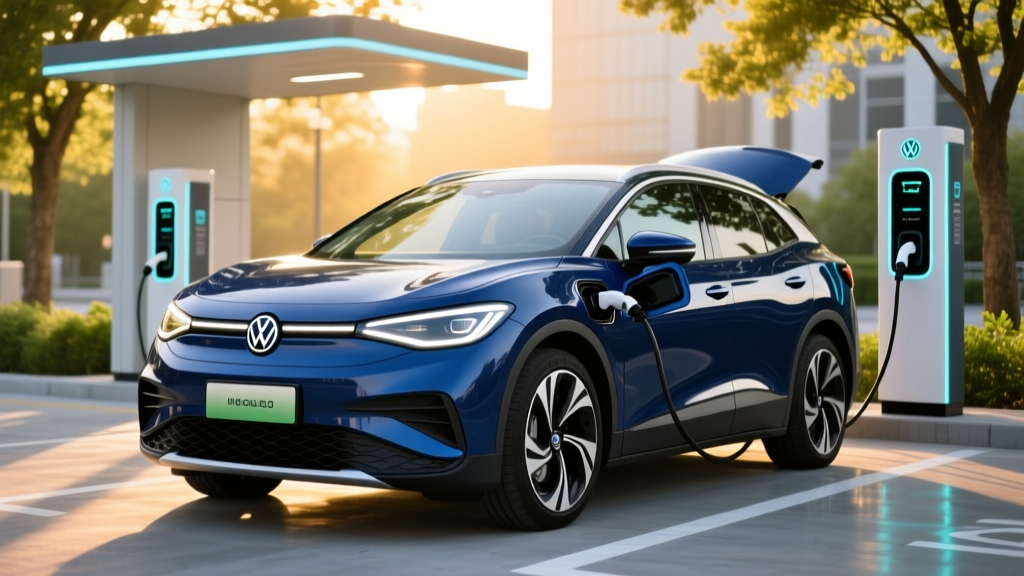
The 2026 Volkswagen ID.4 ships with an 82 kWh usable lithium-ion NMC battery pack (77 kWh net in earlier model years, updated for 2025+). The EPA rates the rear-wheel-drive ID.4 Pro at 291 miles of range, while the AWD Pro S variant lands at approximately 263 miles. But EPA stickers are a starting point, not a guarantee — especially for a crossover in this weight class.
• EPA sticker: 291 mi (RWD Pro) / 263 mi (AWD Pro S)
• Highway (70-75 mph, moderate climate): ~240-260 mi
• Cold weather (below 32°F, highway): ~190-220 mi (30-35% reduction typical for NMC packs without aggressive preconditioning)
• City/mixed driving with regen: ~270-290 mi
Source: fueleconomy.gov
The ID.4's efficiency sits around 104 MPGe combined (roughly 3.0-3.3 kWh/mile depending on trim and conditions). That efficiency figure is the bridge between your battery capacity and the charging infrastructure we'll cover next. Understanding how many kWh you need to replenish — and how fast different chargers can deliver them — is the key to stress-free ownership.
Charging Levels Explained: kW, Speed, and What They Mean for the ID.4
Before we break down each level, a critical distinction: kW (kilowatts) measures power — how fast energy flows into the battery. kWh (kilowatt-hours) measures energy — the total capacity stored. Think of kW as the width of a hose and kWh as the size of the bucket. The VW ID.4's bucket holds 82 kWh usable; the hose width depends on your charger.
| Level | Voltage / Amps | Power (kW) | Miles of Range Added per Hour | 10-80% Time (ID.4 82 kWh) |
|---|---|---|---|---|
| Level 1 (120V outlet) | 120V / 12A | ~1.4 kW | ~3-4 mi/hr | ~40+ hours (impractical for full charge) |
| Level 2 (240V home/public) | 240V / 32-48A | 7.7 - 11.5 kW | ~22-34 mi/hr | ~5-7.5 hours |
| DC Fast Charging | 400V architecture | Up to 170 kW peak | ~200+ mi in 30 min | ~28-30 min (170 kW station) |
The ID.4's onboard charger maxes out at 11.5 kW on Level 2 (AC), meaning even if you plug into a 19.2 kW charger, the car will only accept 11.5 kW. On DC fast charging, the 2025-2026 ID.4 peaks at approximately 170 kW on a capable CCS1 station. However, like all EVs, it doesn't sustain peak power — the charge curve tapers significantly above 80% state of charge (SoC) to protect battery health. Expect roughly 170 kW from 10-30%, dropping to ~100 kW by 50%, and ~50 kW by 80%.
Home Charger Installation: Electrical Requirements and Costs
Charging at home is where most ID.4 owners will replenish 90%+ of their battery. A properly installed Level 2 charger on a 240V circuit transforms daily ownership — wake up to a full battery every morning. But installation costs vary enormously based on your home's electrical panel, wiring distance, and local permit requirements.
Electrical Requirements for the VW ID.4
To hit the ID.4's maximum 11.5 kW AC charge rate, you need a 240V / 48-amp dedicated circuit with a 60-amp breaker (the National Electrical Code requires the breaker to be rated at 125% of continuous load, so 48A × 1.25 = 60A). If your panel can't support a 60A breaker, a 40A breaker with a 32A charger still delivers 7.7 kW — adequate for overnight replenishment of ~180 miles.
Panel upgrade reality: Many older homes (pre-2000) have 100A or 125A main service panels. Adding a 60A EV circuit to an already-loaded panel may require upgrading to a 200A service — a significant cost. Always have a licensed electrician perform a load calculation before committing to a charger amperage.
| Component | Simple Install (panel nearby) | Complex Install (long run, subpanel) | Panel Upgrade Required |
|---|---|---|---|
| Level 2 Charger (hardware) | $350 - $700 | $350 - $700 | $350 - $700 |
| Electrician labor (2-6 hrs) | $300 - $600 | $800 - $2,000 | $800 - $1,500 |
| Materials (conduit, wire, breaker) | $50 - $150 | $200 - $600 | $200 - $500 |
| Permit & inspection | $50 - $200 | $100 - $300 | $150 - $400 |
| Panel upgrade (if needed) | N/A | N/A | $1,500 - $3,500 |
| Total Estimated Cost | $750 - $1,650 | $1,450 - $3,600 | $3,000 - $6,600 |
Federal incentive note: The Alternative Fuel Vehicle Refueling Property Credit (§30C) can cover up to 30% of home charger equipment and installation costs (max $1,000), but eligibility depends on your census tract meeting specific low-income or rural criteria. Check IRS guidelines before assuming eligibility.
Connector Compatibility: NACS, CCS1, and the ID.4
The 2026 VW ID.4 sold in North America uses the CCS1 (Combined Charging System) connector for both Level 2 AC and DC fast charging. However, the EV charging landscape is shifting rapidly toward the NACS (North American Charging Standard) — Tesla's connector, now adopted by most major automakers.
| Connector Type | Native on ID.4? | Adapter Needed? | Notes |
|---|---|---|---|
| CCS1 (J1772 + DC pins) | Yes — native | No | Works at Electrify America, EVgo, ChargePoint DC stations |
| NACS (Tesla standard) | No | Yes — CCS-to-NACS adapter (~$200-$300) | Required for Tesla Supercharger access; VW has confirmed future trims may ship with NACS natively |
| J1772 (AC only) | Yes (upper portion of CCS1) | No | Level 2 public AC charging compatible without adapter |
| CHAdeMO | No | Not available (legacy standard) | Largely discontinued in the US; irrelevant for ID.4 owners |
Practical recommendation: If you plan to road-trip frequently, invest in a CCS-to-NACS adapter (such as the Lectron or A2Z adapter rated for DC fast charging). Tesla's Supercharger network remains the most reliable DC fast-charging infrastructure in the US, and VW's Electrify America free-charging period for new ID.4 buyers eventually expires. Having both connector options eliminates range anxiety on longer routes.
Charging Cost Per Mile: ID.4 vs. Gasoline Crossover
The financial case for the ID.4 hinges on fuel cost savings — but those savings depend entirely on where and when you charge. Electricity rates vary from under $0.08/kWh in some utility districts to over $0.35/kWh on unregulated public DC fast chargers.
| Charging/Fuel Scenario | Rate / Price | ID.4 Cost per Mile | Gas Crossover Cost per Mile |
|---|---|---|---|
| Home (off-peak utility rate) | $0.12/kWh | $0.038 | $0.131 (at $3.40/gal) |
| Home (average US rate) | $0.17/kWh | $0.054 | $0.131 |
| Public Level 2 (network pricing) | $0.25/kWh | $0.079 | $0.131 |
| DC Fast Charging (Electrify America, EVgo) | $0.40/kWh | $0.126 | $0.131 |
| DC Fast Charging (premium pricing) | $0.55/kWh | $0.174 | $0.131 |
Key takeaway: At home off-peak rates, the ID.4 costs roughly 3.8 cents per mile — about 70% less than a gas crossover. But if you rely exclusively on premium-priced DC fast chargers, you can actually exceed the per-mile cost of gasoline. Home charging access is the single biggest economic variable in EV ownership. The ID.4's ~3.15 kWh/mile real-world consumption (based on EPA data) is used in these calculations.
Recommended Home Chargers for the VW ID.4
Since the ID.4 caps AC charging at 11.5 kW, you'll want a Level 2 charger that delivers at least 48 amps to maximize that capability. Here are three proven options across different budgets and feature sets:
Emporia Vue Level 2 Charger
Power: 48A / 11.5 kW (240V)
Connector: J1772 (CCS1 compatible)
Cable length: 24 ft
Smart features: Wi-Fi, app scheduling, energy monitoring, solar integration
Price: ~$399
Best for: Budget-conscious owners who want smart scheduling and energy tracking. Hardwired installation required for full 48A.
ChargePoint Home Flex
Power: Up to 50A / 12 kW (configurable down to 16A)
Connector: J1772 (CCS1 compatible)
Cable length: 23 ft
Smart features: Wi-Fi, Alexa integration, app scheduling, amperage adjustment to match panel capacity
Price: ~$599-$699
Best for: Flexibility. If your panel can't support 60A, you can dial this charger down to 40A or 32A without buying different hardware. NEMA 14-50 plug or hardwired.
Tesla Universal Wall Connector
Power: 48A / 11.5 kW (240V)
Connector: Built-in NACS + J1772 adapter included (Magic Dock style)
Cable length: 24 ft
Smart features: Wi-Fi, over-the-air updates, power sharing between two units, load management
Price: ~$599
Best for: ID.4 owners who also have (or plan to get) a NACS-equipped vehicle. Charges the ID.4 natively via the included J1772 adapter without a separate dongle.
Important installation note: If you opt for a NEMA 14-50 receptacle (plug-in installation), your electrician must install a GFCI breaker to meet NEC 2020+ code for EV charging. Some chargers have built-in GFCI protection, which can cause nuisance tripping with a GFCI breaker — consult your electrician on whether hardwired installation (which doesn't require a GFCI breaker at the panel) is preferable in your jurisdiction.
Safety, Electrical Code, and the Panel Upgrade Question
EV charging is a continuous, high-draw electrical load — your charger will run at full amperage for hours at a time. This demands attention to code and safety that goes beyond a typical home wiring project:
- Dedicated circuit: Your Level 2 charger must be on its own dedicated breaker — no sharing with other outlets or appliances.
- Wire gauge: A 60A circuit requires 6 AWG copper wire (or 4 AWG aluminum). Longer runs may need thicker wire to prevent voltage drop.
- Outdoor rating: If your charger is installed outside (garage-less homes), ensure both the charger enclosure and the receptacle/connector are rated for outdoor use (NEMA 3R or 4 rating).
- Load calculation: Per NEC Article 220, your electrician must calculate your home's total existing load before adding a 40-60A EV circuit. If your panel is near capacity, you may need a panel upgrade or a smart load-management device (such as the Emporia Smart Load Center) that throttles charger amperage when other major loads are active.
- Permit and inspection: Most jurisdictions require an electrical permit for EV charger installation. Skipping the permit can void homeowner's insurance coverage for electrical fires and may cause issues at home sale.
For the VW ID.4's battery longevity, Volkswagen recommends keeping daily charge limits at 80% SoC for NMC chemistry, only charging to 100% when you need the full range for a trip. Most Level 2 chargers and the ID.4's onboard software allow you to set a charge limit — use it. The ID.4's battery warranty covers 8 years / 100,000 miles with a minimum 70% capacity retention threshold.
Frequently Asked Questions
How much does it cost to install a home EV charger for the VW ID.4?
A straightforward installation (electrical panel near the garage, 240V/48A circuit) typically costs $750-$1,650 including the charger, electrician labor, materials, and permit. If your panel requires an upgrade to 200A service, total costs can reach $3,000-$6,600. Always get at least two quotes from licensed electricians who have specific EV charger installation experience.
How fast will each charging level add range to my ID.4?
Level 1 (120V standard outlet) adds roughly 3-4 miles per hour — enough only for emergency trickle charging. Level 2 (240V, 48A) adds approximately 30-34 miles per hour, fully replenishing the 82 kWh battery in about 7.5 hours. DC fast charging at a 170 kW CCS1 station can add roughly 70% charge (10-80%) in about 28-30 minutes, translating to approximately 180-200 miles of range restored.
Which connector and charger is compatible with my VW ID.4?
The 2026 ID.4 uses a CCS1 connector natively. For Level 2 home and public AC charging, any J1772 or CCS1 plug works without an adapter. For DC fast charging at CCS1 stations (Electrify America, EVgo, most ChargePoint), no adapter is needed. To access Tesla Superchargers, you'll need a CCS-to-NACS adapter (approximately $200-$300). CHAdeMO is not compatible and is largely obsolete in North America.
How much does charging the ID.4 cost per mile compared to gas?
At home off-peak rates (~$0.12/kWh), the ID.4 costs about $0.038 per mile — roughly 70% cheaper than a 26 MPG gas crossover at $3.40/gallon ($0.131/mi). At average home rates ($0.17/kWh), expect about $0.054/mile. However, exclusive reliance on premium DC fast chargers ($0.40-$0.55/kWh) can push costs to $0.13-$0.17/mile, matching or exceeding gasoline. The economics strongly favor home charging.
What electrical upgrades might my home need for an EV charger?
The most common upgrade is a panel upgrade from 100A or 125A to 200A service ($1,500-$3,500), required when your existing panel lacks capacity for a 40-60A dedicated EV circuit. Other potential upgrades include: replacing a Federal Pacific or Zinsco panel (known fire hazards, often flagged by insurers), running new conduit for long wire runs from the panel to the garage, or installing a smart load-management system if you want to avoid a panel upgrade by dynamically sharing amperage between the charger and other large loads (HVAC, electric oven).
Does the VW ID.4 support vehicle-to-home (V2H) or bidirectional charging?
As of the 2026 model year, the ID.4 does not support V2H or V2L (vehicle-to-load) in the North American market. Volkswagen has indicated bidirectional capability is technically possible on the MEB platform, but it has not been enabled via software or hardware for US-spec vehicles. If bidirectional power is a priority, the Ford F-150 Lightning and Hyundai Ioniq 5 currently offer this feature.