The Volkswagen ID.4 Pro remains one of the most practical electric SUVs for American buyers who need real utility without luxury-badge pricing. With an EPA-estimated 275 miles of range (RWD, 82 kWh usable battery), it covers most daily commutes and weekend road trips without drama — provided your charging setup is dialed in. Whether you're plugging into a standard 120V outlet overnight, installing a 48-amp Level 2 wallbox, or pulling into a 170 kW DC fast charger, understanding the exact speeds, costs, and electrical requirements makes the difference between effortless EV ownership and frustrating compromises.
This guide walks through every charging scenario for the 2025–2026 VW ID.4 Pro, including real-world range expectations, home installation costs, connector compatibility, and the specific Level 2 chargers that pair best with its onboard charging hardware.
VW ID.4 Pro Range: EPA vs. Real-World Expectations
Real-World Highway (70 mph, 75°F): ~235–250 miles
Cold Weather (30°F, mixed driving): ~190–220 miles
Efficiency: 104 MPGe combined / 32 kWh per 100 miles
The ID.4 Pro's 82 kWh usable battery pack (NMC chemistry, 91 kWh gross) delivers its best efficiency in city and suburban driving where regenerative braking recaptures energy. At sustained highway speeds above 70 mph, expect the range to drop 10–15% below the EPA sticker. In freezing temperatures, battery chemistry limitations and cabin heating demand can reduce range by 20–30%, a pattern consistent across most NMC-based EVs. The ID.4 Pro does not include a standard heat pump in all trims — verify your specific model year, as VW has shifted heat pump availability between the Pro, Pro S, and AWD variants.
For daily driving, most ID.4 Pro owners report charging from 80% down to 20% and back up, yielding a practical usable range of roughly 165 miles in the worst conditions and 220 miles in moderate weather. That's enough for round-trip commutes up to 80 miles with margin, assuming nightly Level 2 charging at home.
Charging Levels Explained: How Fast Each Adds Range
EV charging speed is measured in kilowatts (kW), which represents power — the rate at which energy flows. Your battery stores energy in kilowatt-hours (kWh). Think of kW as the width of the pipe and kWh as the size of the tank. Higher kW means a faster fill.
| Level | Voltage | Max Power (kW) | Miles of Range Added per Hour | Typical Use Case |
|---|---|---|---|---|
| Level 1 | 120V AC | 1.0–1.4 kW | 3–5 mi/hr | Emergency / trickle charging from standard outlet |
| Level 2 | 240V AC | 7.2–11.5 kW | 22–40 mi/hr | Home wallbox, workplace, public AC stations |
| DC Fast | 400V+ DC | Up to 170 kW (ID.4 Pro) | ~200+ mi in 30 min (10–80%) | Road trips, highway corridors |
The ID.4 Pro's onboard charger accepts up to 11 kW on Level 2 AC (single-phase, 48 amps). This means a full 0–100% charge at home takes roughly 8 hours — perfectly suited to overnight charging on a 240V/48A circuit. On DC fast charging, the ID.4 Pro peaks at 170 kW, but like all EVs, it does not sustain that peak rate. The charging curve tapers significantly above 80% state of charge to protect battery longevity.
Charging Time Examples for the ID.4 Pro (82 kWh Battery)
- Level 1 (120V, 1.2 kW): ~68 hours from 0–100% — impractical for daily use, adds ~40 miles overnight
- Level 2 (240V, 48A, 11.5 kW): ~7.5 hours from 0–100%; ~6 hours from 10–90%
- Level 2 (240V, 32A, 7.7 kW): ~11 hours from 0–100%; adequate for overnight top-ups from 20–80%
- DC Fast (170 kW peak): 10–80% in approximately 28–30 minutes at a compatible CCS station; 10–80% at a 50 kW charger takes ~65 minutes
Home Charger Installation: Electrical Requirements and Costs
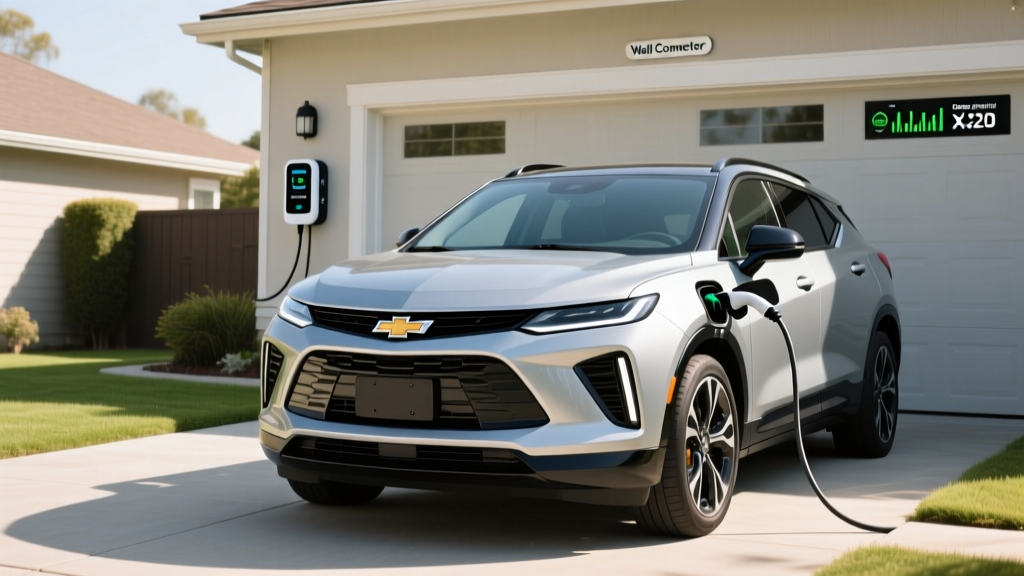
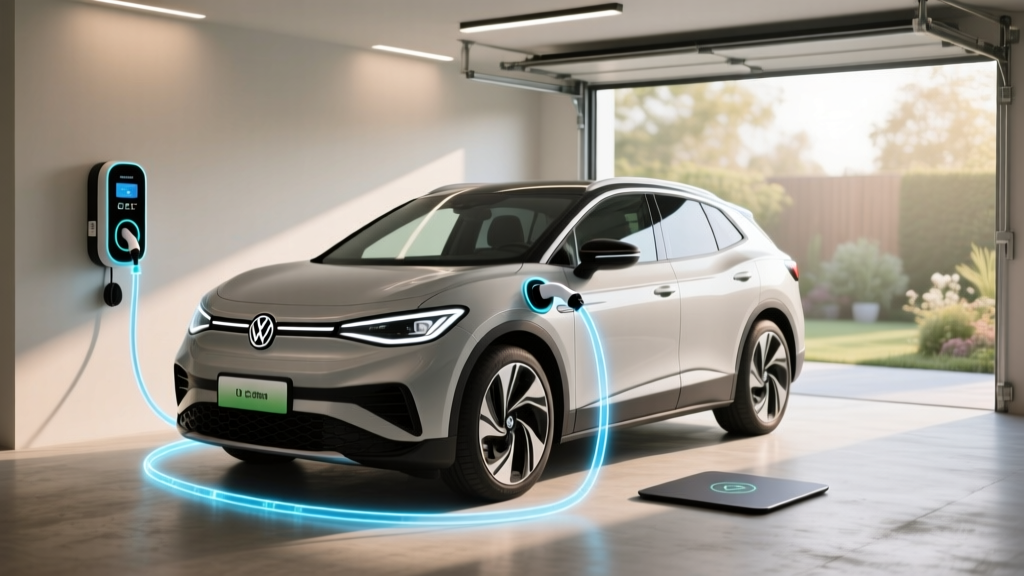
Installing a Level 2 home charger is the single highest-impact upgrade for EV ownership. For the ID.4 Pro, a 48-amp charger on a dedicated 60-amp circuit unlocks the full 11 kW onboard charging rate, replenishing roughly 35–40 miles of range per hour plugged in.
Electrical Requirements for the ID.4 Pro
- Circuit: Dedicated 60-amp, 240V breaker (for a 48A continuous-load charger; NEC requires 125% overhead)
- Wire gauge: 6 AWG copper (THHN in conduit) or 4 AWG aluminum, depending on run length
- Panel capacity: Your main panel must have sufficient spare amperage. A 200-amp panel is typically adequate; older 100-amp panels may require an upgrade
- Permit: Most jurisdictions require an electrical permit and inspection for new 240V circuits
- GFCI protection: 2023 NEC (and most 2026 local adoptions) requires GFCI protection for EV charging outlets; hardwired chargers often have GFCI built in
Panel Upgrade: The Hidden Cost
If your home has a 100-amp main panel or your panel is already near capacity (common in homes with electric dryers, ranges, and HVAC), you may need a panel upgrade to 200 amps or a secondary subpanel. This is the single largest variable in installation cost. A panel upgrade can add $1,500–$4,000+ to the project, depending on utility connection requirements and local code. Have a licensed electrician perform a load calculation before committing to equipment.
| Component | Low Estimate | High Estimate | Notes |
|---|---|---|---|
| Level 2 Charger (40–48A) | $350 | $700 | Varies by brand, smart features, cable length |
| Electrician Labor (new 60A circuit) | $500 | $1,500 | Depends on panel proximity, wall material, conduit run |
| Materials (wire, conduit, breaker) | $150 | $400 | Longer runs and larger gauge increase cost |
| Electrical Permit & Inspection | $50 | $200 | Varies by municipality |
| Panel Upgrade (if needed) | $1,500 | $4,000+ | Only if existing panel lacks capacity |
| Total (no panel upgrade) | $1,050 | $2,800 | Most homes with 200A panels fall in this range |
| Total (with panel upgrade) | $2,550 | $6,800+ | Older homes, high-load panels |
The federal government does not currently offer a direct tax credit for home charger installation under §30D (that credit applies to vehicle purchases). However, some states and utilities offer rebates for Level 2 equipment or installation — check with your local utility and AFDC's state incentive database for current programs.
Connector Compatibility: NACS, CCS1, and the ID.4
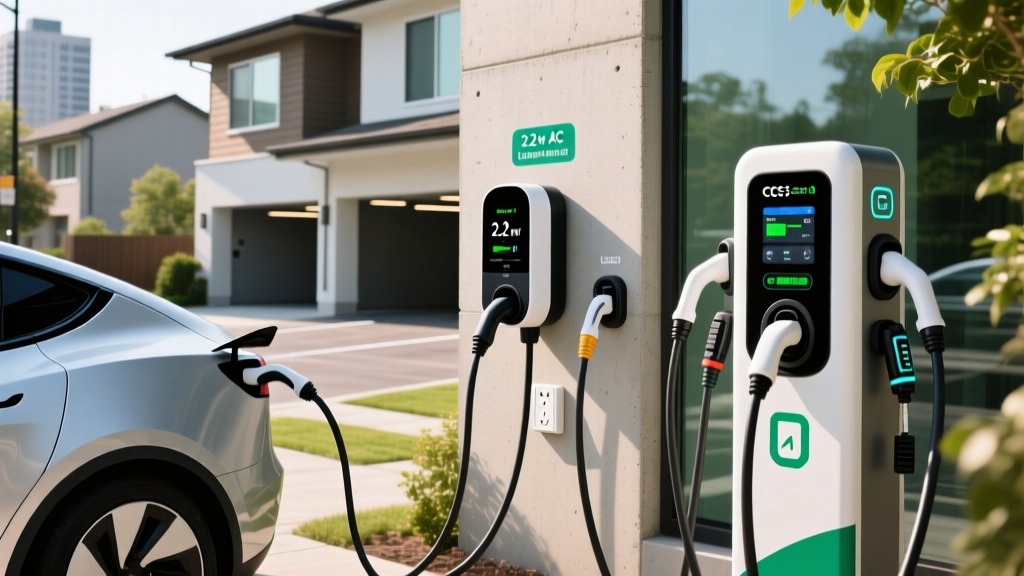
The 2025–2026 VW ID.4 Pro sold in North America comes equipped with a CCS1 (Combo) charge port. This is the standard connector used by Electrify America, EVgo, and most non-Tesla DC fast-charging networks. However, the North American charging landscape is rapidly shifting toward NACS (the Tesla connector), and VW has committed to adopting NACS on future models.
| Connector | Type | ID.4 Pro Compatible? | Network / Notes |
|---|---|---|---|
| CCS1 (Combo) | DC Fast + AC Level 2 | Yes — native port | Electrify America, EVgo, ChargePoint, most public DC stations |
| NACS (Tesla) | DC Fast + AC Level 2 | With adapter (CCS-to-NACS) | Tesla Supercharger network (15,000+ stalls); VW-approved adapters available |
| J1772 | AC Level 1/2 only | Yes — native for AC | Public Level 2 stations, workplace chargers, home chargers |
| CHAdeMO | DC Fast | No | Largely discontinued in North America; Nissan Leaf legacy |
For ID.4 Pro owners, the biggest practical development is Tesla Supercharger access via a CCS-to-NACS adapter. As of 2026, several manufacturers offer VW-compatible adapters (priced $150–$250) that allow CCS1-equipped EVs to use Tesla's extensive Supercharger network. This dramatically expands road-trip charging options, particularly in rural corridors where Electrify America coverage is sparse. Verify that any adapter you purchase is rated for at least 170 kW DC to avoid bottlenecking the ID.4's peak charge rate.
Cost to Charge: ID.4 Pro vs. Gasoline SUV
One of the most compelling arguments for the ID.4 Pro is the per-mile energy cost. At 32 kWh per 100 miles (per fueleconomy.gov), the math is straightforward once you know your electricity rate.
| Scenario | Rate ($/kWh) | Cost per 100 Miles | Cost per Mile | Annual (12,000 mi) |
|---|---|---|---|---|
| Home, off-peak utility rate | $0.09 | $2.88 | $0.029 | $346 |
| Home, average US residential | $0.16 | $5.12 | $0.051 | $614 |
| Public Level 2 (ChargePoint, etc.) | $0.25 | $8.00 | $0.080 | $960 |
| DC Fast Charging (Electrify America) | $0.43 | $13.76 | $0.138 | $1,651 |
| Comparable gas SUV (25 MPG, $3.40/gal) | — | $13.60 | $0.136 | $1,632 |
The takeaway is clear: if you charge primarily at home on an off-peak or average residential rate, the ID.4 Pro costs roughly $0.03–$0.05 per mile to fuel — a fraction of a comparable gasoline compact SUV. Even at DC fast-charging rates, the ID.4 is roughly cost-parity with gasoline. The savings compound if you have access to workplace Level 2 charging or solar panels at home.
To minimize DC fast-charging costs on road trips, use network apps (PlugShare, ChargePoint, Electrify America) to filter for stations offering off-peak pricing or membership rates. Some utilities offer EV-specific time-of-use plans that drop rates to $0.06–$0.08/kWh overnight.
Best Level 2 Chargers for the VW ID.4 Pro
The ID.4 Pro's 11 kW onboard charger means you want a Level 2 wallbox capable of at least 48 amps to unlock its full charging speed. Here are three proven options across different budgets and feature sets:
Emporia Vue Level 2 EV Charger
- Power Output: 48A / 11.5 kW (240V)
- Connector: J1772 (NACS version available)
- Cable Length: 24 ft
- Smart Features: Wi-Fi, app scheduling, solar integration, energy monitoring
- Price: ~$399
- Best For: Budget-conscious buyers who want smart scheduling and energy tracking
ChargePoint Home Flex
- Power Output: Up to 50A / 12 kW (240V, adjustable)
- Connector: J1772 (NACS adapter available)
- Cable Length: 23 ft
- Smart Features: Wi-Fi, Alexa, app scheduling, flexible amperage setting
- Price: ~$549
- Best For: Flexibility — set amperage from 16A to 50A to match your circuit
Grizzl-E Smart
- Power Output: 40A / 9.6 kW (240V)
- Connector: J1772
- Cable Length: 24 ft
- Smart Features: Wi-Fi, OCPP-compatible, extreme cold rated (-40°F)
- Price: ~$449
- Best For: Cold-climate durability; Canadian-built, rugged enclosure
All three chargers are hardwirable or available with a NEMA 14-50 plug. If you opt for a plug-in installation (NEMA 14-50 outlet), your electrician must install a GFCI breaker per current NEC code, which adds $50–$120 to the breaker cost. Hardwired installations often avoid this requirement because the charger's internal GFCI protection satisfies code.
Safety, Code, and Installation Best Practices
A properly installed home charger should be a set-and-forget appliance. Here are the critical safety and code considerations specific to ID.4 Pro charging:
- Dedicated circuit: Your Level 2 charger must be on its own dedicated breaker — never share a circuit with a dryer, range, or HVAC system. Shared circuits risk tripping breakers and creating fire hazards under sustained EV loads.
- Continuous load derating: The NEC treats EV charging as a continuous load (3+ hours). A 48A charger requires a breaker rated at 60A (48 × 1.25 = 60). Do not install a 48A charger on a 50A breaker.
- Outdoor rating: If your charger is mounted in a garage that is not climate-controlled or on an exterior wall, ensure the unit carries a NEMA 4 (or IP65+) weather rating. All three chargers recommended above meet this standard.
- Cable management: The ID.4's charge port is located on the passenger-side rear quarter panel. Plan your charger placement and cable length so the cable reaches without stretching across a driveway or creating a trip hazard. A 24-foot cable is generally sufficient for most garage configurations.
- Load management: If your panel is near capacity but a full upgrade isn't feasible, consider a smart panel-level load management system (such as the Emporia VUE with smart breaker panel) that dynamically throttles charger amperage when other high-draw appliances activate.
Always hire a licensed electrician for 240V EV circuit installation. DIY electrical work on high-amperage circuits carries serious shock and fire risk, and unpermitted work may void homeowner's insurance coverage in the event of an incident.
DC Fast Charging on the Road: Networks and Real-World Speeds
The ID.4 Pro's 170 kW peak DC fast-charging rate is competitive for its class, but real-world charging sessions depend heavily on station output, battery temperature, and state of charge. VW includes three years of complimentary DC fast charging at Electrify America stations (limited kWh or session count depending on model year), which significantly reduces road-trip fuel costs for the first few years of ownership.
At a 150–170 kW Electrify America station with a preconditioned battery (use the ID.4's navigation-based preconditioning feature by setting a DC charger as your destination), expect the following:
- 10–80%: ~28–30 minutes
- 10–50%: ~14–16 minutes (peak charge rate is sustained in this window)
- 80–100%: ~25+ additional minutes (sharp taper to protect cells)
The charge curve is the reason experienced EV drivers rarely charge past 80% on road trips — the time penalty is severe. Plan your stops around 10–80% sessions, which add roughly 190 miles of range in half an hour.
For NACS Supercharger access, Tesla's V3 Superchargers (250 kW peak) will charge the ID.4 Pro at its 170 kW ceiling when using a compatible adapter. V4 Supercharger stalls with CCS-native cables are also appearing at newer Tesla locations, eliminating the adapter requirement entirely.
Frequently Asked Questions
How much does it cost to install a home EV charger for the ID.4 Pro?
For most homes with a 200-amp electrical panel and a nearby garage wall, expect $1,050–$2,800 total (charger + electrician + permit + materials). If your panel needs an upgrade to handle the additional 60A circuit, the total can reach $2,500–$6,800+. Always get a load calculation from a licensed electrician before purchasing equipment.
How fast will each charging level add range to the ID.4 Pro?
Level 1 (120V) adds 3–5 miles per hour — only useful for overnight trickle charging. Level 2 at 48 amps (240V) adds roughly 35–40 miles per hour, fully replenishing the battery overnight. DC fast charging at 170 kW adds approximately 190 miles in a 30-minute session (10–80%).
Which connector and charger is compatible with my VW ID.4 Pro?
The ID.4 Pro uses a CCS1 (Combo) connector for DC fast charging and a J1772 connector for AC Level 1/2 charging. Any J1772 Level 2 wallbox will work. For Tesla Supercharger access, you'll need a CCS-to-NACS adapter rated for 170+ kW. CHAdeMO stations are not compatible.
How much does charging the ID.4 Pro cost per mile compared to gas?
At the US average residential electricity rate of $0.16/kWh, the ID.4 Pro costs approximately $0.051 per mile to charge at home. A comparable gasoline SUV at 25 MPG and $3.40/gallon costs $0.136 per mile. Home charging saves roughly 60–65% on fuel costs. Even public DC fast charging at $0.43/kWh is approximately cost-neutral with gasoline.
What electrical upgrades might I need for a Level 2 charger?
You need a dedicated 60-amp, 240V circuit with 6 AWG copper wire. If your main electrical panel is 100 amps or is already near capacity, you may need a panel upgrade to 200 amps ($1,500–$4,000+). Your electrician will perform a load calculation to determine if your existing panel can handle the additional draw. Older homes (pre-1990) are more likely to need upgrades.
Does the ID.4 Pro come with free charging?
Volkswagen has historically included a complimentary DC fast-charging plan with Electrify America for new ID.4 purchases (typically 3 years or a set kWh allowance). Confirm the current offer with your dealer, as promotional terms change by model year. This benefit can save $500–$1,000+ in road-trip charging costs during the ownership period.
Should I charge to 100% every night?
For daily driving, VW recommends setting the charge limit to 80% to maximize long-term battery health (NMC chemistry degrades faster at sustained high states of charge). Charge to 100% only when you need the full 275-mile range for a road trip. The ID.4's infotainment system allows you to set a custom charge limit and scheduled charging window to take advantage of off-peak electricity rates.