The VW ID. Buzz Electric Bus: Range, Charging & Home Setup Reality Check
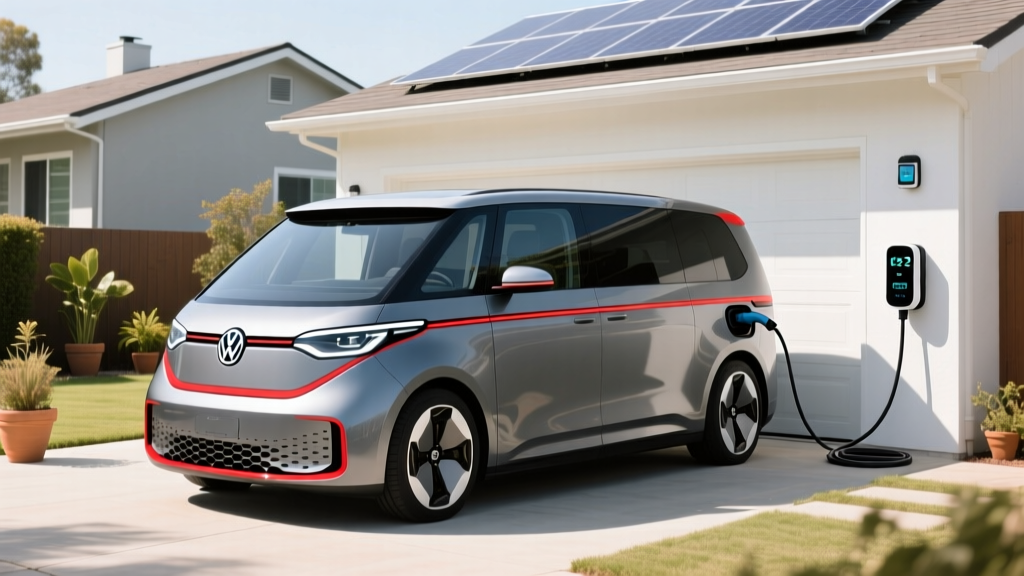
If you've been searching for VW electric bus range and charging specifics, the 2025–2026 Volkswagen ID. Buzz is the vehicle in question — a retro-styled three-row EV built on VW's MEB platform. But owning this electric microbus means understanding how to keep its large battery charged efficiently, especially at home. This guide covers the ID. Buzz's real-world range expectations, every charging level's speed, home Level 2 installation costs, connector compatibility, and what you'll actually pay per mile compared to gas.
VW ID. Buzz: Range & Battery Specs at a Glance
| Specification | 2025 ID. Buzz (RWD) | 2025 ID. Buzz (AWD) |
|---|---|---|
| Usable Battery Capacity | 91 kWh (NMC chemistry) | 91 kWh (NMC chemistry) |
| EPA Estimated Range | 234 miles | 217 miles |
| Real-World Highway Expectation | ~195–210 miles | ~180–195 miles |
| Cold Weather (below 32°F) Range | ~165–185 miles | ~155–175 miles |
| Peak DC Fast Charge Rate | 200 kW | 200 kW |
| 10–80% DC Fast Charge Time | ~26 minutes | ~26 minutes |
| Level 2 (AC) Max Acceptance | 11 kW | 11 kW |
| Efficiency | 2.1–2.3 kWh/mile | 2.3–2.5 kWh/mile |
| Base MSRP | $59,995 | $63,495 |
Charging Levels Explained: Speeds for the ID. Buzz
The ID. Buzz's 91 kWh battery is large — among the biggest in any consumer EV. That makes understanding charging speeds critical, because filling it from empty at low power takes serious time.
| Charging Level | Voltage / Power | Miles Added Per Hour | 10–80% Time (91 kWh Battery) | Best Use Case |
|---|---|---|---|---|
| Level 1 (120V outlet) | 120V / 1.4–1.9 kW | ~2–3 miles/hr | ~40–55 hours | Emergency / trickle top-off only |
| Level 2 (240V home/public) | 240V / 7.2–11.5 kW | ~15–23 miles/hr | ~8–10 hours (full 0–100%) | Daily home charging — overnight |
| DC Fast Charging | 400V+ / 50–200 kW | ~150–300 miles/hr (peak) | ~26 minutes (10–80%) | Road trips, quick top-ups |
Why 10–80% matters: DC fast charging follows a curve — the ID. Buzz peaks at 200 kW around 20–40% State of Charge (SoC), then tapers significantly above 80%. Charging from 80–100% on DC fast can take as long as 10–80%. For battery longevity and time efficiency, plan road-trip stops around the 10–80% window.
Preconditioning tip: The ID. Buzz will precondition its battery when you set a DC fast charger as your navigation destination. This warms the battery to optimal temperature, ensuring you hit peak charge rates upon arrival — critical in cold weather where an un-preconditioned battery might peak at only 80–100 kW instead of 200 kW.
Home Level 2 Charger Installation: Costs & Electrical Requirements
For daily ownership, a Level 2 home charger is essential. With the ID. Buzz's 91 kWh battery, Level 1 charging (standard 120V outlet) would require over 40 hours for a full charge — completely impractical. A properly installed Level 2 station replenishes the battery overnight in 8–10 hours.
Electrical Requirements for the ID. Buzz
- Circuit: Dedicated 240V circuit, minimum 40-amp (for a 32A continuous charger) or 60-amp (for a 48A continuous charger that maxes out the ID. Buzz's 11 kW onboard charger)
- Outlet vs. hardwired: NEMA 14-50 outlet (50A circuit) is the most common and offers portability; hardwired allows up to 60A circuits and avoids GFCI nuisance tripping
- Wire gauge: 6 AWG copper for 50A circuits; 4 AWG for 60A circuits
- Panel capacity: Your main electrical panel must have sufficient spare amperage — most homes need at least 150–200A total service
Installation Cost Breakdown
| Cost Component | Simple Install (panel nearby) | Complex Install (panel upgrade / long run) |
|---|---|---|
| Level 2 Charger (Equipment) | $400–$700 | $400–$700 |
| Electrician Labor | $500–$1,200 | $1,500–$4,000 |
| Electrical Permit | $50–$200 | $50–$200 |
| Panel Upgrade (if needed) | N/A | $2,000–$5,000 |
| Conduit, Wiring, Misc. Materials | $100–$300 | $300–$1,000 |
| Total Estimated Cost | $1,050–$2,400 | $4,250–$10,900 |
According to the U.S. Department of Energy, most straightforward home Level 2 installations fall between $1,000 and $2,500 when the electrical panel has sufficient capacity. The IRS §30C tax credit may cover up to 30% of home charging equipment and installation costs (capped at $1,000), though eligibility depends on whether your census tract qualifies — consult a tax professional.
Connector Compatibility: NACS, CCS1 & Adapter Needs for the ID. Buzz
The 2025–2026 VW ID. Buzz sold in North America comes equipped with a CCS1 (Combined Charging System) port. However, the charging landscape has shifted heavily toward the North American Charging Standard (NACS), pioneered by Tesla and now adopted by most automakers for upcoming models.
| Connector Type | Used By | ID. Buzz Compatibility | Adapter Needed? |
|---|---|---|---|
| CCS1 | VW, BMW, GM (legacy), Electrify America, most non-Tesla DC networks | Native — built-in port | No |
| NACS (Tesla) | Tesla Superchargers; Ford, Rivian, GM, Volvo (2025+ models) | Yes, with adapter | Yes — CCS1-to-NACS adapter (~$200–$300) |
| CHAdeMO | Nissan Leaf (legacy); largely discontinued | Not compatible | N/A — avoid these stations |
| J1772 (Level 2 AC) | All public Level 2 stations | Native — CCS port accepts J1772 for AC | No (J1772 is the top portion of CCS1) |
Practical advice: VW has confirmed that future model-year ID. vehicles will transition to NACS, but current ID. Buzz owners will rely on CCS1 natively. To access Tesla Superchargers (the largest and most reliable DC fast-charging network in the U.S.), purchase a CCS1-to-NACS adapter. VW may offer an official adapter; third-party options from Lectron or A2Z are also available. Always verify that any adapter is rated for the full 200 kW DC fast charge rate before purchasing.
Cost to Charge the ID. Buzz: Per-Mile Economics vs. Gas Minivans
The ID. Buzz competes with gas-powered minivans like the Toyota Sienna (36 MPG combined) and Chrysler Pacifica (22 MPG combined). Here's what charging actually costs across different scenarios.
| Charging Scenario | Cost per kWh | Cost to Add 200 Miles | Cost Per Mile |
|---|---|---|---|
| Home Level 2 (national avg. residential) | $0.16/kWh | $7.04 | $0.035/mile |
| Home Level 2 (off-peak utility rate) | $0.09/kWh | $3.96 | $0.020/mile |
| Public Level 2 (ChargePoint, etc.) | $0.25–$0.39/kWh | $11.00–$17.16 | $0.055–$0.086/mile |
| DC Fast Charging (Electrify America) | $0.36–$0.56/kWh | $15.84–$24.64 | $0.079–$0.123/mile |
| Tesla Supercharger (with adapter) | $0.28–$0.40/kWh | $12.32–$17.60 | $0.062–$0.088/mile |
Gas comparison: A Toyota Sienna at 36 MPG combined and $3.50/gallon gasoline costs $0.097/mile. A Chrysler Pacifica at 22 MPG costs $0.159/mile. Even at public DC fast-charging rates, the ID. Buzz undercuts most gas minivans on per-mile fuel cost — and home charging on off-peak rates delivers savings of 70–80%.
Based on fueleconomy.gov data, the ID. Buzz consumes approximately 44–48 kWh per 100 miles (roughly 2.1–2.3 kWh/mile for RWD). This is higher than most sedans and crossovers due to its van proportions and weight, but still dramatically cheaper than gasoline per mile.
Recommended Home Chargers for the ID. Buzz
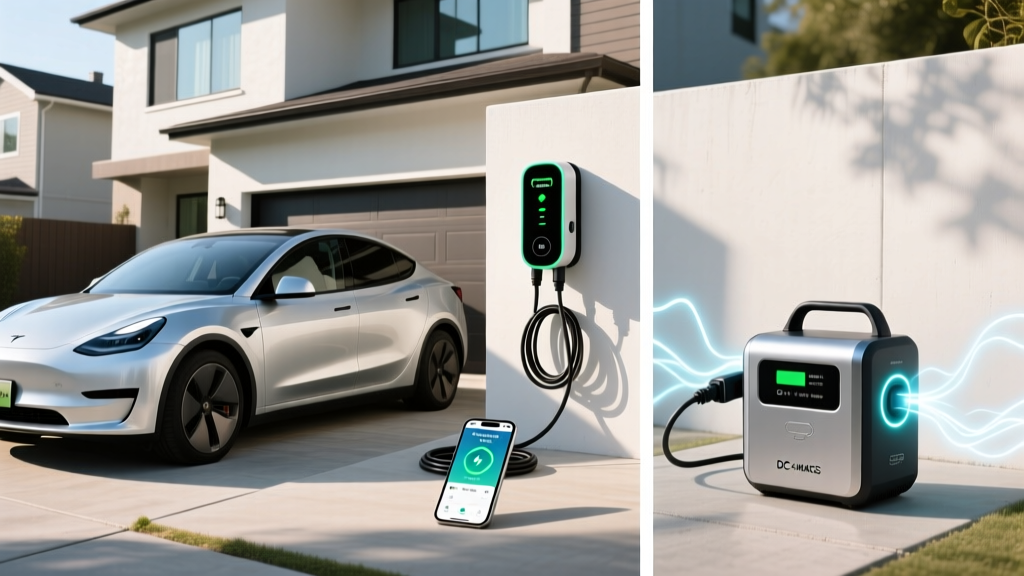
The ID. Buzz's onboard charger accepts up to 11 kW (48 amps at 240V on a single phase). To maximize charging speed, pair it with a 48-amp capable charger on a 60-amp circuit. A 40-amp charger (32A continuous) on a 50-amp circuit also works well, adding ~17 miles per hour — sufficient for overnight replenishment.
Emporia Level 2 Smart Charger
- Power Output: 48A (11.5 kW)
- Connector: J1772 (NACS version available)
- Cable Length: 24 ft
- Smart Features: Wi-Fi, energy monitoring, solar integration, scheduling via app
- Price: ~$400
- Best For: Budget-conscious buyers who want full smart features and 48A output
ChargePoint Home Flex
- Power Output: Up to 50A (12 kW) — adjustable via DIP switch
- Connector: J1772 (NACS adapter available)
- Cable Length: 23 ft
- Smart Features: Wi-Fi, Alexa integration, detailed app scheduling, utility demand-response programs
- Price: ~$550–$650
- Best For: Brand reliability, utility rebate eligibility, robust app ecosystem
Tesla Wall Connector
- Power Output: 48A (11.5 kW)
- Connector: NACS (native) or J1772 with adapter
- Cable Length: 24 ft
- Smart Features: Wi-Fi, OTA updates, power sharing (multiple units on one circuit), load management
- Price: ~$450 (J1772 version) / ~$425 (NACS)
- Best For: Multi-EV households with both Tesla and non-Tesla vehicles
For the ID. Buzz specifically, the Emporia Level 2 offers the best value — 48A output matches the van's 11 kW acceptance rate, and the energy monitoring feature helps track exactly how much your charging costs. If your utility offers demand-response rebates, the ChargePoint Home Flex frequently qualifies.
Safety, Code & Installation Considerations
- Dedicated circuit: NEC Article 625 requires EV charging equipment to be on a dedicated branch circuit — no sharing with other appliances or outlets.
- GFCI protection: The 2020 NEC and later require GFCI protection for receptacles used for EV charging. Hardwired installations are exempt and avoid the nuisance tripping that GFCI breakers can cause with some chargers.
- Outdoor rating: If your charger is installed outdoors (garage not available), ensure it carries a NEMA 4 or IP65 rating for weather resistance. All three chargers recommended above meet this standard.
- Permit required: Virtually all jurisdictions require an electrical permit for new 240V circuits. Your electrician should pull this permit — unpermitted work can void home insurance coverage and complicate future home sales.
- Cable management: With the ID. Buzz's charge port on the rear quarter panel, consider charger placement to ensure the cable reaches without stretching across a driveway. A 24-foot cable is typically sufficient for a single-car garage or driveway mount.
Frequently Asked Questions
How much does it cost to install a home EV charger for the VW ID. Buzz?
A straightforward Level 2 installation with adequate panel capacity typically costs $1,050–$2,400 (equipment + electrician + permit). If your home needs a 200A panel upgrade, total costs can reach $4,250–$10,900. The IRS §30C credit may reimburse up to $1,000 of these costs if your census tract qualifies.
How fast will each charging level add range to the ID. Buzz?
Level 1 (120V): approximately 2–3 miles per hour — impractical for daily use. Level 2 (240V, 48A): approximately 20–23 miles per hour, fully replenishing the battery overnight in 8–10 hours. DC Fast Charging (200 kW peak): approximately 150–300 miles per hour at peak, adding 10–80% in about 26 minutes.
Which connector does the VW ID. Buzz use, and do I need an adapter?
The North American ID. Buzz uses a CCS1 connector natively, compatible with Electrify America, EVgo, and most non-Tesla public chargers. To access Tesla Superchargers, you'll need a CCS1-to-NACS adapter ($200–$300). For home Level 2 charging, the J1772 portion of the CCS1 port is used — no adapter needed for standard home chargers.
How much does charging the ID. Buzz cost per mile vs. a gas minivan?
At home on average residential electricity ($0.16/kWh), the ID. Buzz costs about $0.035/mile — roughly 64% cheaper than a Toyota Sienna hybrid at $0.097/mile ($3.50/gal, 36 MPG). On off-peak utility rates ($0.09/kWh), the cost drops to $0.020/mile. Even at public DC fast-charging rates ($0.40/kWh), the ID. Buzz at ~$0.088/mile still undercuts most gasoline minivans.
What electrical upgrades might I need for a home charger?
The most common upgrade is ensuring your electrical panel has sufficient spare capacity. Homes with 200A service typically handle a 40–60A EV circuit without issue. Homes with 100A service often need a panel upgrade ($2,000–$5,000). Your electrician will perform a NEC Article 220 load calculation. Other potential needs: upgrading from aluminum to copper wiring, adding a sub-panel if the main panel is full, or relocating the panel to reduce wire run length to the garage.
Can the ID. Buzz charge at Tesla Superchargers?
Yes, but only with a CCS1-to-NACS adapter. VW has indicated future models will adopt NACS natively, but current ID. Buzz vehicles retain CCS1. Once you have a compatible adapter rated for 200 kW, you can access the full Tesla Supercharger network — which, according to NHTSA and independent reliability surveys, consistently offers the highest uptime rates among DC fast-charging networks.