2025 Volvo EX30 Range and Charging Specs at a Glance
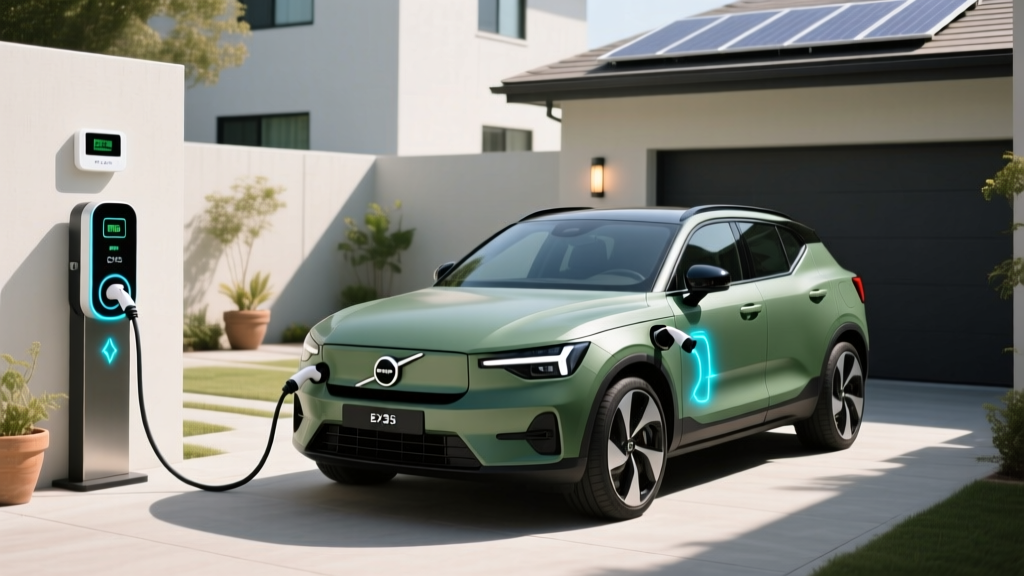
The 2025 Volvo EX30 is a compact luxury crossover built on Volvo's SEA platform, sharing underpinnings with the Smart #1 and Zeekr X. For US buyers, it arrives with a single 69 kWh usable lithium-iron-phosphate (LFP) battery pack, rear-wheel drive, and a 268-hp permanent-magnet motor. Below is the core spec sheet you need before planning your charging setup.
| Spec | Value |
|---|---|
| EPA Range (est.) | ~265 miles (real-world highway: ~220–240 mi) |
| Battery (usable) | 69 kWh, LFP chemistry |
| Max DC Fast Charge | 153 kW peak (CCS1 port on US models) |
| 10–80% DC Fast Charge | ~26 minutes (optimal battery temp) |
| Level 2 AC Onboard Charger | 11 kW (three-phase capable; ~9.6 kW on US split-phase 240V/40A) |
| Level 2 Full Charge (0–100%) | ~7–8 hours at 9.6 kW |
| 0–60 mph | 5.1 seconds (Single Motor Extended Range) |
| Horsepower / Torque | 268 hp / 253 lb-ft |
| Base MSRP (Core trim) | $36,145 (before destination, incentives) |
| Battery/Powertrain Warranty | 8 years / 100,000 miles |
| Connector (US) | CCS1 (J1772 AC + DC combo) |
How Fast Will Each Charging Level Add Range to the EX30?
Understanding the difference between kW (kilowatts — the rate of power delivery) and kWh (kilowatt-hours — the total energy stored in the battery) is the single most important concept in EV ownership. Think of kW as the width of the hose and kWh as the size of the bucket. The EX30's bucket holds 69 kWh; the hose width depends on your charger.
| Charging Level | Power (kW) | Miles Added/Hour | Typical Use Case |
|---|---|---|---|
| Level 1 (120V, 12A) | ~1.4 kW | ~3–4 mi/hr | Emergency/trickle; overnight top-up only |
| Level 2 (240V, 32A) | ~7.7 kW | ~22–25 mi/hr | Standard home install; full charge overnight |
| Level 2 (240V, 40A) | ~9.6 kW | ~28–32 mi/hr | Recommended home setup; matches EX30 AC limit |
| Level 2 (240V, 48A) | ~11.5 kW | ~33–36 mi/hr | Future-proofing; EX30 caps at ~9.6 kW on US split-phase |
| DC Fast (50 kW) | 50 kW | ~150 mi/hr | Older public stations; moderate road-trip speed |
| DC Fast (150+ kW) | Up to 153 kW peak | ~430+ mi/hr (peak) | Electrify America, EVgo, Tesla Supercharger (with adapter) |
Charging curve reality: The EX30's 153 kW peak only holds roughly between 10–40% state of charge. Above 60%, the rate tapers to ~80 kW, and above 80% it drops further to ~35–45 kW. This is why manufacturers quote 10–80% times rather than 0–100%: the last 20% can add 20+ minutes. On a road trip, charge to 80% and move on — it's faster overall.
Home Charger Installation: Requirements, Costs, and Panel Upgrades
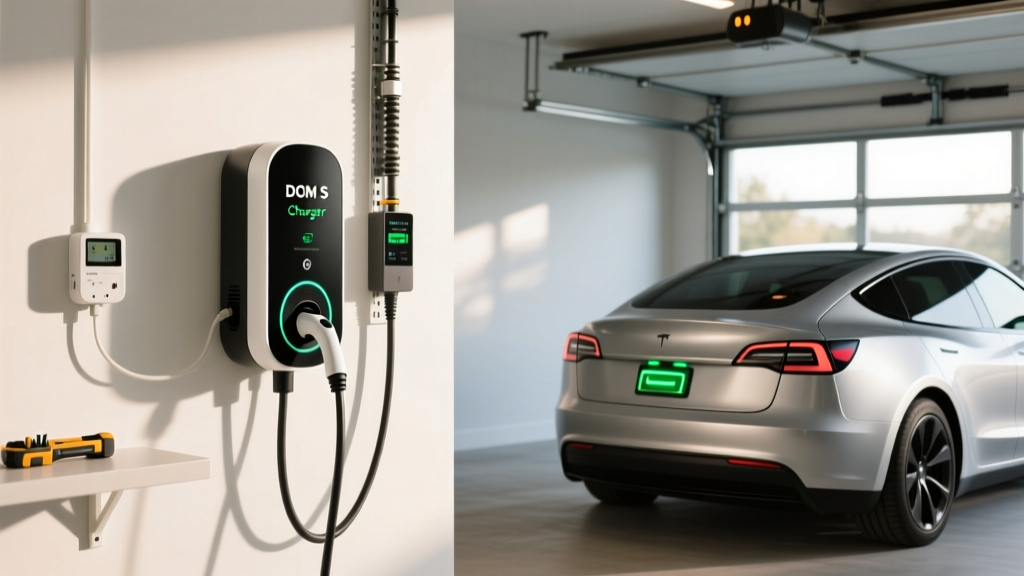
For daily ownership, a Level 2 home charger is non-negotiable. The EX30's 11 kW onboard charger means you'll get the most from a 40A/240V dedicated circuit, delivering ~9.6 kW to the car. Here's what the installation actually involves and what it costs.
Electrical Requirements for the EX30
- Circuit: Dedicated 50A breaker (NEC requires 125% headroom for continuous loads, so a 40A charger needs a 50A breaker)
- Voltage: 240V split-phase (standard US residential)
- Wire gauge: 6 AWG copper (THHN in conduit or NMB/Romex depending on local code)
- Outlet vs. hardwired: NEMA 14-50 outlet offers portability; hardwired units avoid GFCI nuisance trips and are preferred by many electricians
- Panel capacity: Your main panel must have 2 open slots and sufficient amperage headroom (typically 200A service for modern homes)
Do You Need a Panel Upgrade?
Homes with 100A service, older fuse boxes, or panels already near capacity (common with electric ranges, dryers, and HVAC) may need a service upgrade to 200A, which is the single largest variable in installation cost. A licensed electrician will perform a load calculation per NEC Article 220 to determine if your panel can handle the additional 40A continuous draw. If your home was built after 2000 with 200A service, you're likely fine.
| Component | Low Estimate | High Estimate | Notes |
|---|---|---|---|
| Level 2 Charger (Equipment) | $400 | $750 | 40A–48A smart chargers; see recommendations below |
| Electrician Labor (standard install) | $500 | $1,500 | Panel to garage, <30 ft run, no drywall repair |
| Electrical Permit | $50 | $250 | Varies by municipality; required for code compliance |
| Panel Upgrade (if needed) | $1,500 | $4,000 | 100A → 200A service upgrade; not always required |
| Conduit/Wire/Misc Materials | $100 | $400 | Longer runs, outdoor conduit, junction boxes |
| Total (no panel upgrade) | $1,050 | $2,900 | Most common scenario for modern homes |
| Total (with panel upgrade) | $2,550 | $6,900 | Older homes or maxed-out panels |
Connector Compatibility: CCS1, NACS, and the Adapter Question
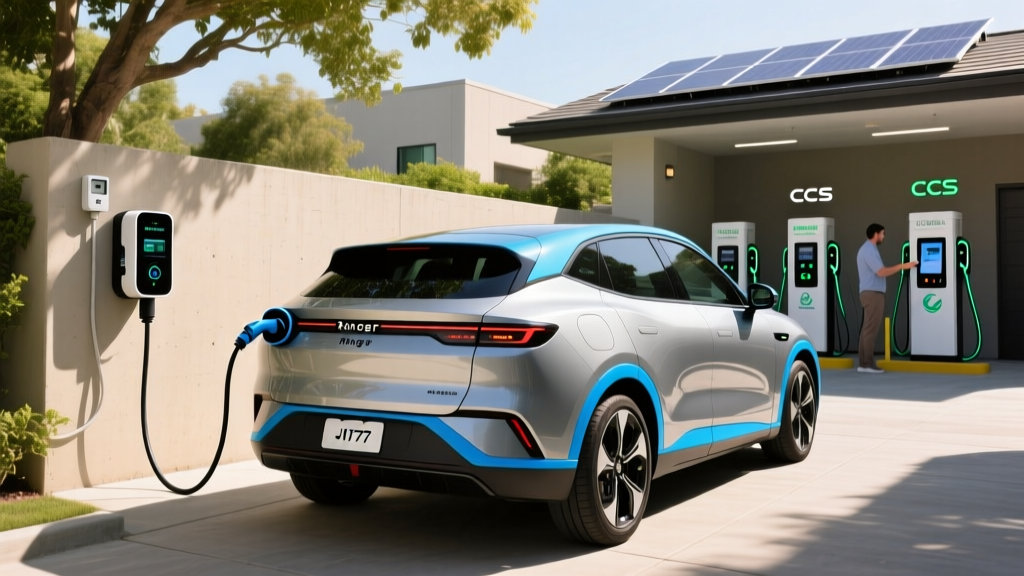
The 2025 Volvo EX30 sold in the United States comes equipped with a CCS1 (Combined Charging System) port. This is the legacy standard used by Electrify America, EVgo, and most non-Tesla networks. However, Volvo has committed to transitioning to the NACS (North American Charging Standard / Tesla) connector for future model years, and EX30 owners will have access to Tesla Superchargers via adapter.
| Network/Connector | Native Support? | Adapter Needed? | Notes |
|---|---|---|---|
| CCS1 (Electrify America, EVgo) | Yes — native | No | Direct plug-in; widest public DC network for EX30 |
| NACS / Tesla Supercharger | No (2025 model year) | Yes — CCS-to-NACS adapter | Tesla Universal Wall Connector supports J1772 AC natively; DC requires adapter (~$200–$250) |
| CHAdeMO | No | Not practical | Network is sunsetting in the US; skip it |
| J1772 (Level 2 public AC) | Yes — native | No | Standard for all AC Level 2 public charging |
| Tesla Wall Connector (home) | AC only (J1772 version) | No for AC home charging | Tesla Universal Wall Connector has integrated J1772 plug |
Adapter reality: If you plan to use Tesla Superchargers on road trips, budget ~$200–$250 for a reputable CCS-to-NACS adapter (such as the Lectron or Tesla-authorized adapter). Verify the adapter's DC rating matches the EX30's 153 kW peak. For home charging, the Tesla Universal Wall Connector's built-in J1772 plug works natively with the EX30 — no adapter needed for Level 2.
Recommended Level 2 Chargers for the EX30
Since the EX30's onboard charger caps at ~9.6 kW on US split-phase 240V, a 40A charger is the sweet spot. A 48A unit provides future-proofing for your next EV. Below are three chargers that match the EX30 well, with exact specs and pricing.
ChargePoint Home Flex
- Power: Up to 12 kW (50A) — adjustable via DIP switches
- Connector: J1772 (native for EX30)
- Cable length: 23 ft
- Smart features: Wi-Fi, app scheduling, Alexa, energy tracking
- Price: ~$549
- Best for: Flexible amperage; works on 20A–50A circuits
Tesla Universal Wall Connector
- Power: Up to 11.5 kW (48A)
- Connector: Integrated J1772 + NACS (Magic Dock style)
- Cable length: 24 ft
- Smart features: Wi-Fi, OTA updates, Tesla app integration, Power Sharing for multi-charger setups
- Price: ~$599
- Best for: Households with both Tesla and non-Tesla EVs
Emporia Vue Level 2 Charger
- Power: Up to 11.5 kW (48A)
- Connector: J1772
- Cable length: 24 ft
- Smart features: Wi-Fi, app, solar integration, load management with Emporia energy monitor
- Price: ~$399
- Best for: Budget-conscious buyers; solar-home integration
Cost Per Mile: EX30 Charging vs. Gas Equivalent
The EX30's efficiency is rated at approximately 115 MPGe combined (source: fueleconomy.gov), which translates to roughly 29 kWh per 100 miles. That efficiency figure lets us calculate real charging costs across different scenarios.
| Scenario | Rate ($/kWh) | Cost per 100 mi | Cost per Mile |
|---|---|---|---|
| Home (off-peak utility rate) | $0.12 | $3.48 | $0.035 |
| Home (average US residential) | $0.17 | $4.93 | $0.049 |
| Public Level 2 (ChargePoint, etc.) | $0.30 | $8.70 | $0.087 |
| DC Fast Charging (Electrify America) | $0.48 | $13.92 | $0.139 |
| Gas equivalent (30 MPG, $3.50/gal) | — | $11.67 | $0.117 |
| Gas equivalent (25 MPG, $3.50/gal) | — | $14.00 | $0.140 |
The takeaway: Home charging the EX30 costs roughly 3.5–5 cents per mile — about one-third the cost of a comparable gas vehicle. Even public DC fast charging at premium rates is competitive with gas on a per-mile basis. Over 12,000 miles/year, home charging saves approximately $1,000–$1,300 annually versus a 25 MPG gas car at $3.50/gallon.
Safety, Code, and Installation Best Practices
EV charging is a continuous high-amperage load — your installation must meet National Electrical Code (NEC) requirements to pass inspection and avoid fire risk.
- Dedicated circuit: The charger must be on its own breaker — never share with other appliances.
- GFCI protection: NEC 2020+ requires GFCI for outdoor receptacles. Hardwired installations avoid the nuisance tripping common with 240V GFCI breakers on EV circuits. Many jurisdictions now exempt hardwired EVSE from GFCI requirements.
- Outdoor rating: If your charger is mounted outside or in an open carport, ensure the unit carries a NEMA 4 (weatherproof) rating. All three chargers recommended above are outdoor-rated.
- Permit and inspection: Always pull an electrical permit. Unpermitted work can void homeowner's insurance claims and create issues at resale. Your electrician should handle this.
- Cable management: Use a holster or cable reel to keep the cord off the ground — prevents trip hazards and connector contamination.
- Utility programs: Many utilities offer time-of-use (TOU) rates or EV-specific tariffs that drop off-peak electricity to $0.06–$0.10/kWh. Enrolling can cut your charging cost in half. Check with your local utility before installation — some require a dedicated meter or smart charger for EV rate plans.
EX30 Charging FAQ
How much does it cost to install a home EV charger for the Volvo EX30?
Expect $1,050–$2,900 for a standard installation (equipment + electrician + permit) if your panel has capacity. Homes needing a 200A service upgrade should budget $2,550–$6,900. The federal §30C credit may cover 30% up to $1,000 depending on your census tract.
How long does it take to charge the EX30 from 10% to 80%?
At a 150+ kW DC fast charger with a preconditioned battery: approximately 26 minutes. On a 9.6 kW Level 2 home charger, 10–80% takes roughly 5.5 hours. Level 1 (120V) would take over 40 hours — it's only suitable for emergency trickle charging.
Can I use Tesla Superchargers with the 2025 EX30?
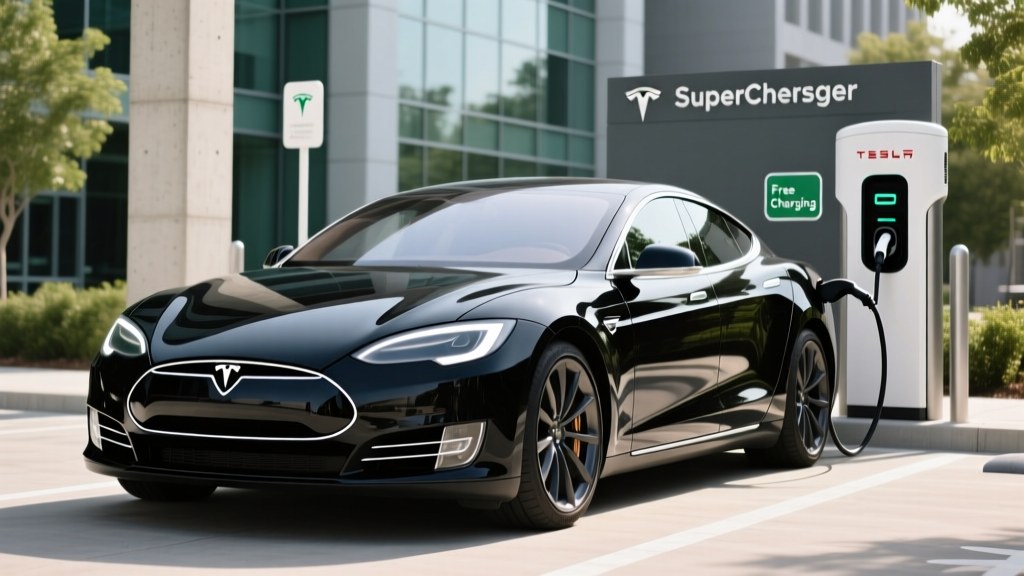
Not natively. The 2025 EX30 has a CCS1 port. You'll need a CCS-to-NACS adapter (~$200–$250) to access Tesla Superchargers. Volvo has indicated future model years will adopt NACS natively, but for 2025, the adapter is your bridge.
Does the EX30's LFP battery change how I should charge?
Yes — LFP chemistry tolerates (and benefits from) regular charging to 100%, unlike NMC batteries which prefer an 80% daily limit. Volvo recommends periodic full charges to allow the BMS to recalibrate cell balancing. For daily driving, charge to 100% without the range-degradation concern you'd have with NMC packs.
What electrical upgrades might I need for a Level 2 charger?
If your home has 200A service with open breaker slots, likely none — just a dedicated 50A circuit. Homes with 100A service, full panels, or outdated wiring (aluminum, knob-and-tube) may need a panel upgrade ($1,500–$4,000), new service drop, or sub-panel installation. A licensed electrician's load calculation will determine this before any work begins.
Is the EX30 eligible for the $7,500 federal EV tax credit?
The EX30's eligibility under IRS §30D depends on battery component and critical-mineral sourcing requirements that change annually. Volvo manufactures the EX30 in China (Luqiao plant), which may affect eligibility under current sourcing rules. Check the latest IRS clean vehicle credit page and consult a tax professional. The credit can be transferred to the dealer at point of sale if eligible, reducing your purchase price directly.