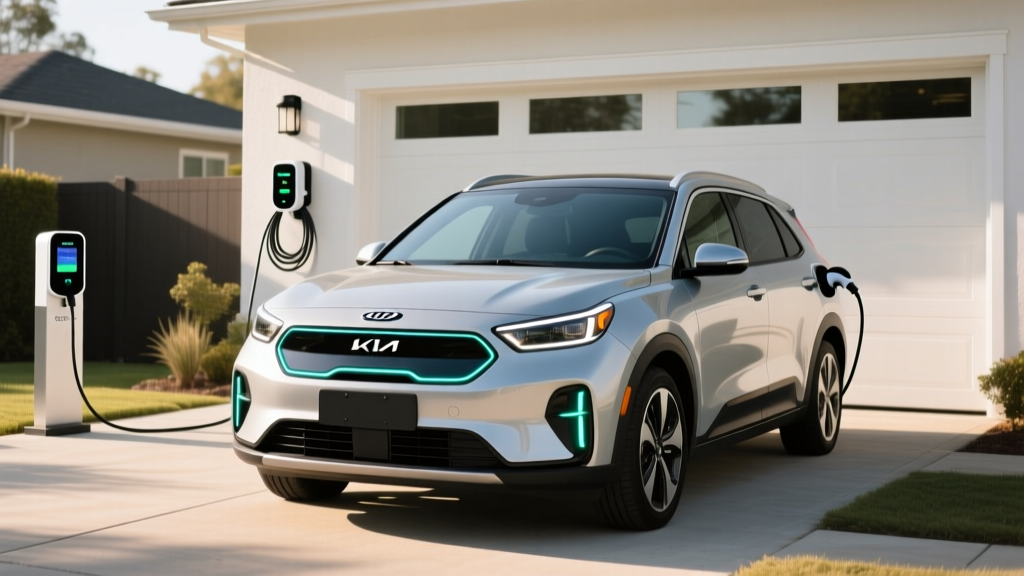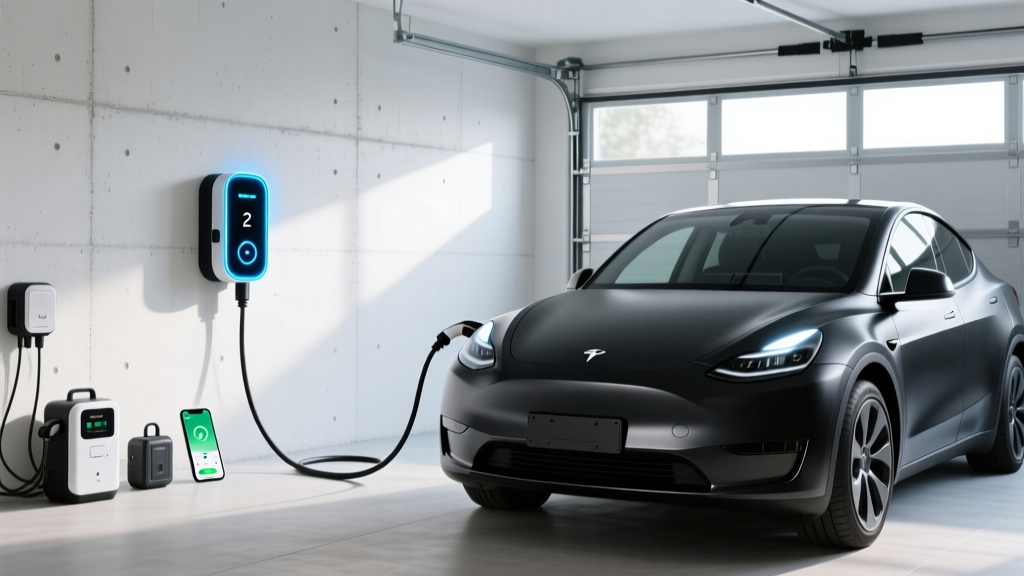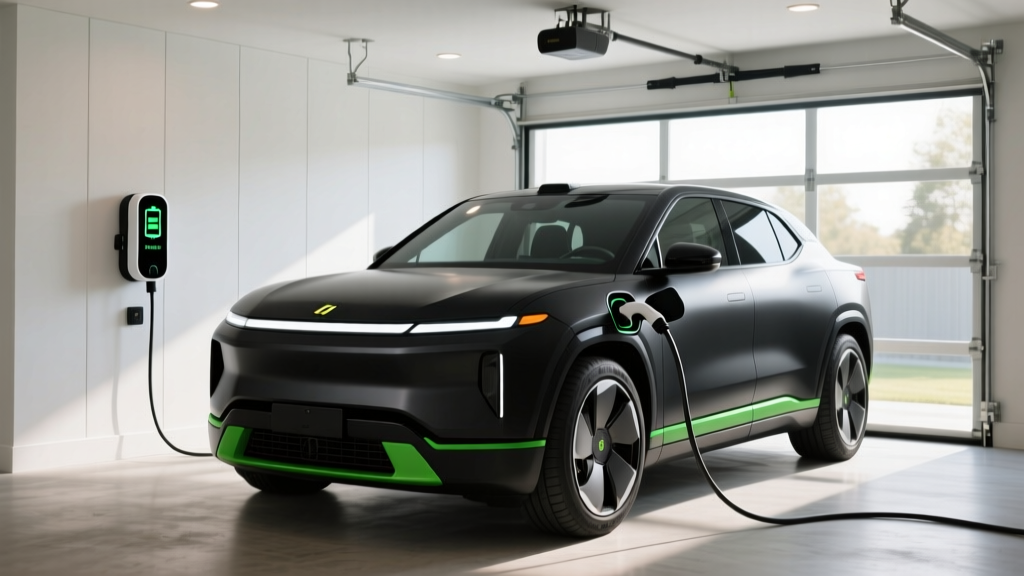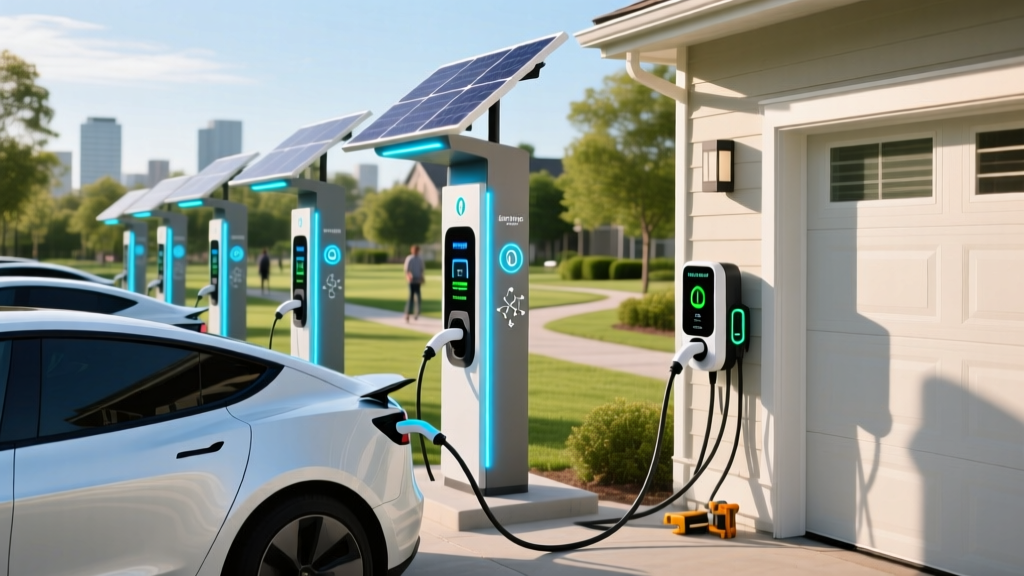
If you've pulled into a shopping center and spotted those tall, screen-wrapped charging pedestals, you've likely encountered Volta EV charging stations. Once famous for offering completely free Level 2 charging funded by advertising, the Volta network has undergone significant changes since Shell acquired the company in early 2023. By 2026, the Volta footprint operates under Shell Recharge Solutions, blending legacy free stations with newer paid fast-charging locations. This guide covers what the Volta network looks like today, how fast these stations actually charge, and what you need to set up reliable Level 2 charging at home.
What Is Volta EV Charging and How Has It Changed?
Volta Charging built its brand on a simple premise: free EV charging subsidized by large-format digital advertising displays on each pedestal. The company installed stations at high-traffic retail locations — grocery stores, shopping malls, and big-box retailers — where drivers could plug in for 30–60 minutes while running errands.
Shell's acquisition of Volta in March 2023 for approximately $169 million folded the network into Shell Recharge Solutions. By 2026, the transition means:
- Legacy Volta stations (ad-supported Level 2): Many still offer free Level 2 charging, but Shell has been gradually converting select locations to paid stations or adding DC fast chargers alongside the original pedestals.
- Shell Recharge stations at former Volta sites: Newer installations often feature 50–150 kW DC fast chargers with standard pricing (typically $0.35–$0.55/kWh depending on the market).
- Network access: Volta's standalone app has been sunset. Drivers now use the Shell Recharge app or PlugShare to locate and activate sessions at these stations.
The practical takeaway: you can still find free Level 2 charging at some legacy Volta locations, but availability is shrinking. Always check PlugShare or the Shell Recharge app before relying on a free session.
Understanding Charging Levels: Speed, Power, and Range Added
Before evaluating any public station or home charger, you need a clear picture of the three charging levels. The distinction between kW (kilowatts — the rate of power delivery, like water pressure in a hose) and kWh (kilowatt-hours — the total energy stored in your battery, like gallons in a tank) is critical. A charger's kW rating tells you how fast it can fill your battery's kWh capacity.
| Level | Voltage | Power (kW) | Miles of Range Added per Hour | Typical Use Case |
|---|---|---|---|---|
| Level 1 (120V) | 120V AC | 1.0–1.9 kW | 3–5 miles | Overnight trickle charge; emergency top-up |
| Level 2 (240V) | 240V AC | 3.3–19.2 kW | 12–75 miles | Home daily charging; destination/Volta stations |
| DC Fast Charging | 200–800V DC | 50–350 kW | 150–1,000+ miles (equivalent rate) | Road trips; rapid top-ups in 15–40 minutes |
Real-world context for Volta stations: Legacy Volta Level 2 pedestals typically deliver 30 amps at 208/240V, yielding roughly 6.6–7.2 kW. For a vehicle like the Hyundai Ioniq 5 (efficiency around 3.2 miles/kWh), that translates to approximately 21–23 miles of range per hour of charging. Plan for a 45-minute shopping trip to recover roughly 15–20 miles — useful for topping off, not for a full charge on a depleted battery.
Charging Time Examples: 10–80% by Battery Size
Most EV owners charge between 10% and 80% State of Charge (SoC) for daily use, since charging above 80% slows dramatically to protect battery health. Here's what that looks like across common battery sizes at different charging speeds:
| Battery Size (kWh usable) | Example Vehicle | Level 2 at 7.2 kW (Legacy Volta) | Level 2 at 11.5 kW (Home 48A) | DC Fast at Peak Rate |
|---|---|---|---|---|
| 58 kWh | VW ID.4 | ~5 hrs 38 min | ~3 hrs 31 min | ~28 min (135 kW peak) |
| 77 kWh | Ford Mustang Mach-E ER | ~7 hrs 28 min | ~4 hrs 41 min | ~35 min (150 kW peak) |
| 84 kWh | Hyundai Ioniq 5 (Long Range) | ~8 hrs 10 min | ~5 hrs 7 min | ~18 min (240 kW peak, 800V) |
| 100 kWh | GMC Hummer EV / Lucid Air | ~9 hrs 43 min | ~6 hrs 5 min | ~35–45 min (varies) |
Important charge-curve caveat: DC fast charging speeds are peak rates, not sustained. A station advertising 150 kW might deliver that rate only between 10–40% SoC, then taper to 75 kW by 60%, and drop below 40 kW past 80%. Always budget more time than the peak-rate math suggests. According to fueleconomy.gov, real-world efficiency also drops 15–30% in cold weather (below 40°F), which extends charging times and reduces recovered range per kWh.
Connector Compatibility: Will Your EV Plug In?
The North American charging connector landscape shifted dramatically when Tesla opened its Supercharger network and the industry adopted the North American Charging Standard (NACS). As of 2026, here's what you need to know:
| Connector | Brands Using It (Factory) | Adapter Needed? |
|---|---|---|
| NACS (J3400) | Tesla (all), Ford, GM, Rivian, Volvo, Polestar, Mercedes-Benz (2025+), Honda (2026+) | CCS-to-NACS adapter for non-Tesla CCS vehicles at some stations |
| CCS1 (Combo) | Hyundai, Kia, BMW, VW, Audi, Porsche, most pre-2025 models | NACS-to-CCS adapter if vehicle has NACS port and station has CCS cable |
| CHAdeMO | Nissan Leaf (legacy only — discontinued for 2026) | Not adapter-compatible to NACS/CCS for DC fast charging |
At Volta/Shell Recharge stations: Legacy Volta Level 2 pedestals use J1772 connectors, which work with every EV on the road (NACS vehicles use the included J1772-to-NACS adapter that ships with the car). Newer Shell Recharge DC fast chargers at converted sites typically offer both CCS1 and NACS cables. Check the station listing on PlugShare before visiting to confirm connector availability.
Home EV Charger Installation: Requirements, Costs, and Panel Upgrades
Relying on public charging — Volta or otherwise — is a supplement, not a strategy. The U.S. Department of Energy estimates that over 80% of EV charging happens at home. Installing a dedicated Level 2 home charger is the single highest-impact upgrade you can make for EV ownership.
Electrical Requirements
A Level 2 home charger requires a 240-volt circuit, identical in concept to what powers an electric dryer or oven. Key specifications:
- Circuit amperage: Most home chargers draw 32A or 48A. National Electrical Code (NEC) requires the circuit breaker to be rated at 125% of the continuous load, so a 48A charger needs a 60A breaker.
- Wire gauge: 6 AWG copper for 48A/60A circuits; 8 AWG for 32A/40A circuits (varies by run length and local code).
- Dedicated circuit: The charger must have its own dedicated circuit — not shared with other appliances.
- GFCI protection: NEC 2020 and later require GFCI (Ground Fault Circuit Interrupter) protection for EV charging outlets, though many hardwired chargers have internal GFCI protection built in.
Will You Need a Panel Upgrade?
This is the variable that can double or triple your installation cost. Most homes built after 1990 have a 200-amp main electrical panel, which typically has enough spare capacity for a 60A EV circuit. However:
- Homes with 100A service (common in pre-1970 construction) almost always need a panel upgrade to 200A before adding a 48A charger. Cost: $1,500–$3,500.
- Homes with existing heavy loads (electric heat, tankless water heater, hot tub, double oven) may be near capacity even on a 200A panel. An electrician will perform a load calculation to determine available headroom.
- Workaround: If your panel is near capacity but you want to avoid an upgrade, you can install a lower-amperage charger (e.g., 24A or 32A) that draws less from the panel. A 32A charger on a 40A circuit still delivers ~7.7 kW — enough for most daily driving needs overnight.
Installation Cost Breakdown
| Component | Basic Install (32A, short run) | Standard Install (48A, moderate run) | Complex Install (panel upgrade + long run) |
|---|---|---|---|
| Charger equipment | $350–$550 | $500–$750 | $500–$750 |
| Electrician labor (2–6 hrs) | $400–$800 | $800–$1,500 | $1,500–$2,500 |
| Permit and inspection | $50–$150 | $100–$250 | $150–$350 |
| Panel upgrade (if needed) | $0 | $0 | $1,500–$3,500 |
| Total estimated cost | $800–$1,500 | $1,400–$2,500 | $3,650–$7,100 |
According to the IRS §30D guidelines, there is no federal tax credit specifically for home charger equipment as of 2026 — the Alternative Fuel Vehicle Refueling Property Credit (§30C) expired for most residential installations after 2023, though it was extended for eligible census tracts. Check with a tax professional and your local utility, as many utilities offer $250–$500 rebates for Level 2 charger installation.
Cost to Charge: Home vs. Public vs. Gas
One of the strongest arguments for EV ownership is fuel cost savings — but the math depends heavily on where and when you charge.
| Scenario | Rate ($/kWh) | Cost per Mile (at 3.0 mi/kWh) | Monthly Cost (1,000 mi) |
|---|---|---|---|
| Home (off-peak utility rate) | $0.10–$0.15 | $0.033–$0.050 | $33–$50 |
| Home (standard utility rate) | $0.15–$0.22 | $0.050–$0.073 | $50–$73 |
| Public Level 2 (paid station) | $0.25–$0.40 | $0.083–$0.133 | $83–$133 |
| DC Fast Charging (public) | $0.35–$0.55 | $0.117–$0.183 | $117–$183 |
| Free Volta Level 2 (legacy stations) | $0.00 | $0.00 | $0 |
| Gasoline (28 MPG combined, $3.40/gal) | — | $0.121 | $121 |
The bottom line: Charging at home on off-peak rates saves roughly 60–75% compared to gasoline per mile. Public DC fast charging approaches or exceeds gas costs in some markets. Legacy Volta free stations are a genuine $0 option when available, but their shrinking footprint means you cannot build a charging strategy around them.
Recommended Home Level 2 Chargers (2026)
If you're ready to install a home charger, here are four proven options across price and feature tiers. All are UL-listed, compatible with every EV via J1772 (or NACS with included adapter), and suitable for indoor or outdoor installation.
Emporia Vue Smart Charger
- Power output: 48A (11.5 kW on 240V/60A circuit)
- Connector: J1772 (NACS adapter included)
- Cable length: 24 ft
- Smart features: Wi-Fi, scheduling, solar integration, energy monitoring via Emporia app
- Price: ~$399
- Best for: Budget-conscious buyers wanting full smart features and 48A output
ChargePoint Home Flex
- Power output: Configurable 16A–50A (up to 12 kW)
- Connector: J1772 (25-ft cable)
- Smart features: Wi-Fi, Alexa integration, flexible amperage dial to match your circuit
- Price: ~$599–$699
- Best for: Homes with limited panel capacity (can dial down to 16A/24A)
Tesla Wall Connector
- Power output: 48A (11.5 kW on 60A circuit)
- Connector: NACS native (J1772 adapter available separately for ~$150)
- Cable length: 24 ft
- Smart features: Wi-Fi updates, power sharing between two units, load management
- Price: ~$475
- Best for: Tesla owners or NACS-equipped vehicles; cleanest cable management
Enel X JuiceBox 48
- Power output: 48A (11.5 kW)
- Connector: J1772 (25-ft cable)
- Smart features: Wi-Fi, app-based scheduling, energy usage reports
- Price: ~$549
- Best for: Reliable mid-range option with proven track record
Safety, Code, and Installation Best Practices
EV chargers draw sustained high current for hours — this is not a DIY electrical project. Here's what proper installation requires:
- Licensed electrician: Always use a licensed electrician familiar with NEC Article 625 (Electric Vehicle Charging System Equipment). Many municipalities require the installer to pull the permit.
- Dedicated circuit: The charger must be on its own circuit. Sharing with an outlet or appliance creates a fire hazard.
- Hardwired vs. plug-in: Hardwired installations (no plug) are preferred for 48A chargers — they eliminate the NEMA 14-50 outlet as a potential failure point and often don't require GFCI breakers (which can nuisance-trip and cost $100–$150). Plug-in installations offer portability but require a quality industrial-grade receptacle.
- Outdoor rating: If installing outside, ensure the charger carries a NEMA 4 or NEMA 4X rating for weather resistance. All four chargers recommended above meet this standard.
- Permit and inspection: Most jurisdictions require an electrical permit and post-installation inspection. Skipping this can void your homeowner's insurance coverage for electrical fires. According to NHTSA safety guidance, proper installation is the first line of defense against EV charging-related incidents.
- Cable management: Use a wall-mounted holster or cable organizer to prevent tripping hazards and cable damage. Never run a charging cable across a driveway or sidewalk.
Frequently Asked Questions
Is Volta charging still free in 2026?
Some legacy Volta Level 2 stations remain free, funded by advertising. However, Shell Recharge Solutions has been converting many locations to paid stations or adding paid DC fast chargers alongside the original free pedestals. Check PlugShare or the Shell Recharge app for real-time pricing at each location before assuming it's free.
How much does it cost to install a home EV charger?
A straightforward installation with adequate panel capacity costs $800–$2,500 (equipment + electrician + permit). If your home needs a panel upgrade from 100A to 200A service, expect $3,650–$7,100 total. Get three quotes from licensed electricians — prices vary significantly by market.
How fast will a Volta Level 2 station charge my EV?
Legacy Volta stations typically deliver 6.6–7.2 kW (30A at 208/240V). That adds roughly 20–23 miles of range per hour for an efficient EV like the Ioniq 5, or about 15–18 miles per hour for a larger vehicle like the Ford F-150 Lightning. Plan for a 45–90 minute session to recover meaningful range.
Which connector do I need for my EV?
If your EV was built in 2025 or later by Tesla, Ford, GM, Rivian, Volvo, or Polestar, it has a NACS port. Most pre-2025 non-Tesla EVs use CCS1. All Level 2 public stations (including Volta) use J1772, which adapts to both NACS and CCS1 via the adapter that ships with your vehicle. CHAdeMO (Nissan Leaf) is being phased out with no new vehicles using it.
How much does EV charging cost per mile vs. gas?
Home charging at $0.13/kWh averages about $0.043 per mile — roughly 65% cheaper than gasoline at $3.40/gallon in a 28 MPG vehicle ($0.121/mile). Public DC fast charging at $0.45/kWh costs about $0.15/mile, which can exceed gas costs. The savings case for EVs depends heavily on home charging access.
What electrical upgrades might I need for a home charger?
The most common upgrade is a panel capacity increase from 100A to 200A ($1,500–$3,500). If your panel already has 200A service with spare capacity, you likely only need a new 60A breaker and a wire run to the charger location. An electrician's load calculation — which typically costs $100–$200 as part of the quote — will determine your exact needs.