If you've scrolled through PlugShare or ChargePoint while planning a road trip, you've likely spotted the distinctive, ad-wrapped pedestals of Volta Charging. Now owned by Shell and integrated into the Shell Recharge network, Volta remains one of the few ways to add free miles to your EV battery — but the network's mix of Level 2 and DC fast charging, urban placement strategy, and variable reliability demand a clear-eyed look before you plan your routine around it.
This guide breaks down exactly what Volta Charging offers in 2026, how its speeds compare to home and paid public charging, what connectors you'll encounter, and whether relying on free public charging makes financial sense versus installing a Level 2 charger at home.
What Is Volta Charging and How Does It Work?
Volta Charging built its network on a simple premise: offer free EV charging funded by advertising revenue. The large, screen-topped pedestals display video ads while your car charges. Shell acquired Volta in 2023, and by 2026 the stations have been folded into the Shell Recharge ecosystem, though many locations still offer complimentary sessions — typically time-limited to 30 or 60 minutes to maximize turnover.
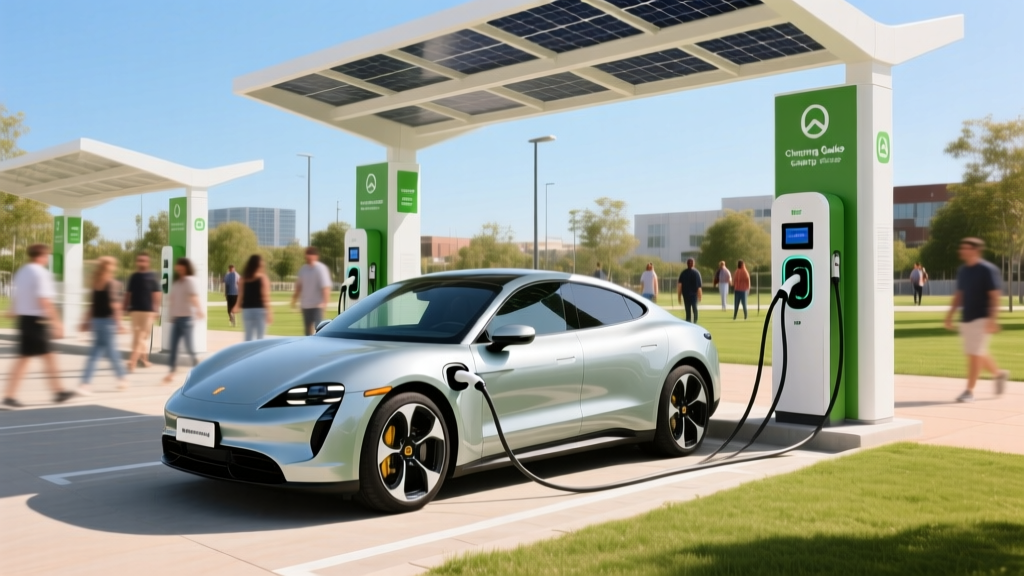
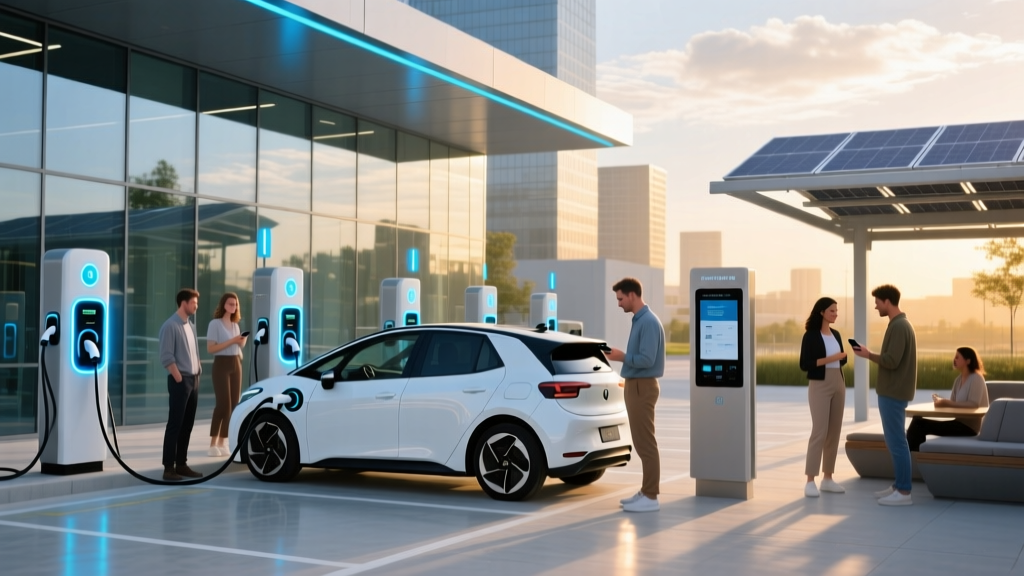
Volta stations are concentrated in high-foot-traffic retail locations: grocery store parking lots (Kroger, Whole Foods), shopping centers, and urban garages. The strategy is destination charging — you park, shop, and add 15–40 miles of range while you browse.
Not every Volta location is free in 2026. Shell has converted some high-demand urban stations to paid sessions, typically at $0.35–$0.49/kWh, while suburban retail partners often maintain the ad-supported free model. Always check the Shell Recharge or PlugShare app before driving to a station to confirm pricing and availability.
Charging Levels Explained: Speeds You'll Actually See
Understanding the difference between kW (kilowatts — the rate of power delivery) and kWh (kilowatt-hours — the energy stored in your battery) is the single most important piece of EV literacy. Think of kW as how fast water flows from a hose, and kWh as the size of the bucket you're filling. A 77 kWh battery charged at 11 kW takes about 7 hours; at 150 kW, roughly 30 minutes to 80%.
Volta stations primarily offer Level 2 AC charging (typically 16–19.2 kW) and, at select locations, DC fast charging up to 100–150 kW. Here's how all three charging levels stack up:
| Level | Power (kW) | Voltage / Amperage | Miles of Range per Hour | Typical Use Case |
|---|---|---|---|---|
| Level 1 (120V household) | 1.0–1.4 kW | 120V / 12A | 3–5 mi/hr | Overnight trickle, PHEVs, low-mileage commuters |
| Level 2 (240V home/public) | 7.2–19.2 kW | 240V / 30–80A | 22–60 mi/hr | Home charging, workplace, Volta L2 stations |
| DC Fast Charging | 50–350 kW | 400–800V DC | 150–1,000+ mi/hr (peak) | Road trips, quick top-ups, Volta DC locations |
- Tesla Model Y (75 kWh battery, NACS): ~6.5 hrs at 11 kW L2 | ~22 min at 250 kW DCFC (peak)
- Hyundai Ioniq 5 (77.4 kWh, 800V architecture, CCS/NACS adapter): ~7 hrs at 11 kW L2 | ~18 min at 350 kW DCFC
- Ford F-150 Lightning Extended Range (131 kWh, NACS): ~11 hrs at 11 kW L2 | ~41 min at 150 kW DCFC
- Chevrolet Equinox EV (85 kWh, NACS): ~7.5 hrs at 11 kW L2 | ~25 min at 175 kW DCFC
Note: DC fast charging speeds taper significantly above 80% SoC to protect battery health. A "10–80%" time is the useful metric — charging from 80–100% can take as long as 10–80%.
How Much Does Charging Cost Per Mile vs. Gas?
The economics of EV charging depend heavily on where you charge. Here's a realistic cost breakdown comparing a typical mid-size EV (efficiency: 3.5 miles/kWh, or roughly 120 MPGe combined) against a comparable gas vehicle averaging 28 MPG combined at $3.40/gallon:
| Charging Scenario | Cost per kWh | Cost per Mile | Annual Cost (12,000 mi) |
|---|---|---|---|
| Home Level 2 (off-peak utility rate) | $0.10–$0.14 | $0.03–$0.04 | $360–$480 |
| Home Level 2 (standard residential rate) | $0.16–$0.22 | $0.05–$0.06 | $600–$720 |
| Volta Charging (free locations) | $0.00 | $0.00 | $0 |
| Volta/Shell Recharge (paid locations) | $0.35–$0.49 | $0.10–$0.14 | $1,200–$1,680 |
| Electrify America / EVgo (DCFC) | $0.43–$0.56 | $0.12–$0.16 | $1,440–$1,920 |
| Tesla Supercharger (average 2026) | $0.30–$0.40 | $0.09–$0.11 | $1,080–$1,320 |
| Gas vehicle (28 MPG, $3.40/gal) | — | $0.12 | $1,440 |
The takeaway: home charging at off-peak rates delivers the lowest cost per mile by a wide margin. Volta's free stations are unbeatable when available, but time limits (often 30–60 minutes) and urban placement mean you can't rely on them as your sole charging strategy. Paid DC fast charging on road trips often exceeds the per-mile cost of gasoline — the savings come from the 80%+ of charging done at home.
Connector Compatibility: Will Volta Work With Your EV?
The connector landscape has shifted dramatically since 2024, when Ford, GM, Rivian, and most major automakers adopted the NACS (North American Charging Standard, originally Tesla's connector). By 2026, nearly all new EVs sold in the US ship with a NACS charge port. Volta/Shell Recharge stations have been updating their hardware to match, but legacy CCS1 connectors still appear at many locations.
| Connector | Vehicles Using It (2026) | Volta/Shell Availability | Adapter Needed? |
|---|---|---|---|
| NACS (Tesla standard) | Tesla (all), Ford, GM, Rivian, Hyundai/Kia (2025+), Volvo, Polestar, most 2025+ models | Increasingly common; newer Shell Recharge installs | No (native on most 2025+ EVs) |
| CCS1 (Combo) | Pre-2025 Hyundai/Kia, VW ID.4 (pre-2025), BMW iX/i4, older non-Tesla EVs | Legacy Volta stations, many Shell Recharge locations | NACS-to-CCS adapter for newer vehicles with NACS port |
| CHAdeMO | Nissan Leaf (legacy only — discontinued for 2026 model year) | Rare; being phased out | No direct adapter; CHAdeMO vehicles cannot use NACS/CCS DCFC |
Home Level 2 Charger Installation: Costs and Requirements
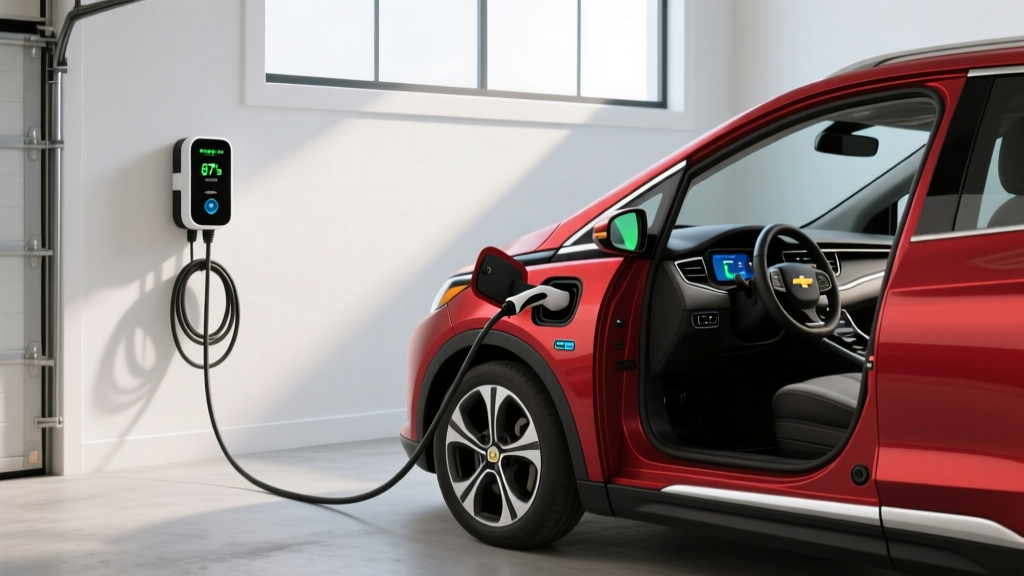
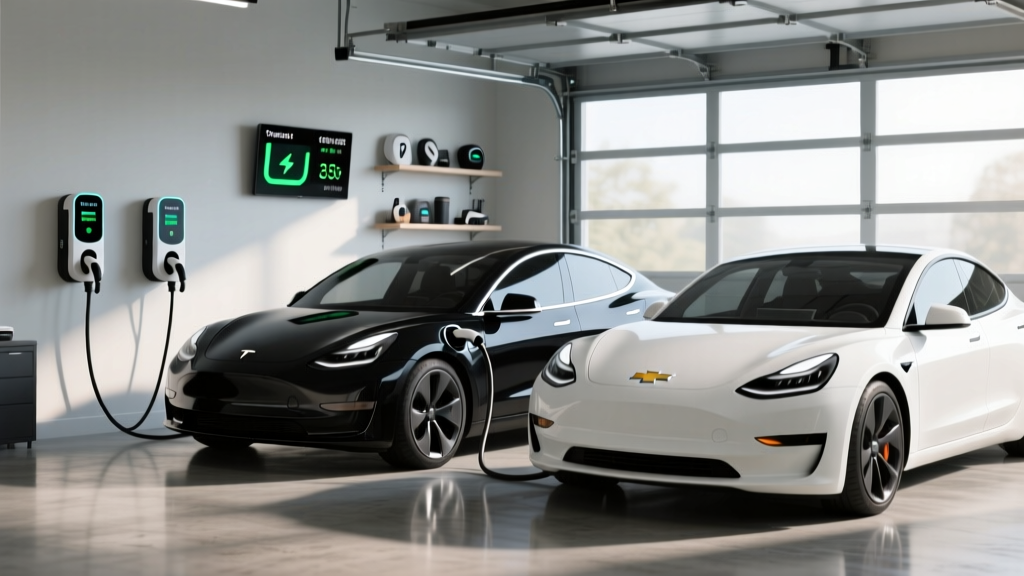
Volta's free charging is convenient, but the backbone of EV ownership is home Level 2 charging. Most EV owners do 80–90% of their charging at home, waking up to a full battery every morning. Here's what a proper home installation actually requires and costs.
Electrical Requirements
A Level 2 home charger requires a dedicated 240-volt circuit, similar to what powers an electric dryer or oven. The most common configurations:
- 40-amp circuit / 32-amp continuous (NEMA 14-50 outlet or hardwired): Delivers up to 7.7 kW. Suitable for most EVs and the most cost-effective installation.
- 50-amp circuit / 40-amp continuous (NEMA 14-50 or hardwired): Delivers up to 9.6 kW. Good for larger batteries like the F-150 Lightning.
- 60-amp circuit / 48-amp continuous (hardwired only): Delivers up to 11.5 kW. Requires a charger rated for 48A+ and sufficient panel capacity.
The National Electrical Code (NEC) requires that continuous loads (anything running 3+ hours, which includes EV charging) not exceed 80% of the circuit breaker rating. A 40A breaker supports 32A continuous charging. Never undersize the breaker.
Panel Upgrade: The Hidden Cost
Homes built before 2000 often have 100-amp electrical panels. Adding a 40–60A EV circuit may push total load beyond the panel's capacity, requiring a panel upgrade to 200 amps. This is the single biggest variable in installation cost and one that online calculators routinely underestimate.
A licensed electrician will perform a load calculation considering your existing appliances (HVAC, electric range, dryer, water heater) before approving a new circuit. If you're already running electric heat, an electric oven, and an electric dryer on a 100A panel, an upgrade is likely mandatory.
Installation Cost Breakdown
| Component | Low Estimate | High Estimate | Notes |
|---|---|---|---|
| Level 2 charger hardware (32–48A) | $350 | $700 | ChargePoint Home Flex, Emporia Vue, Wallbox Pulsar Plus |
| Electrician labor (run 240V circuit, mount charger) | $400 | $1,500 | Depends on distance from panel, wall material, conduit runs |
| Electrical permit | $50 | $200 | Varies by municipality; required by code in most jurisdictions |
| Panel upgrade (if needed) | $1,500 | $3,500 | 100A → 200A upgrade; not always required |
| Total (no panel upgrade) | $800 | $2,400 | Typical scenario for newer homes with 200A panels |
| Total (with panel upgrade) | $2,300 | $5,900 | Older homes with 100A panels |
Some utilities offer rebates of $250–$500 for home charger installation, and the federal Residential Clean Energy Credit (as of 2026, extended through 2034) covers 30% of charger hardware and installation costs up to $1,000 — check IRS.gov for current eligibility details and Form 8911.
Recommended Home Level 2 Chargers for 2026
If you're using Volta for supplemental public charging, a reliable home charger is still essential. Here are three proven options:
ChargePoint Home Flex
- Power: Up to 11.5 kW (48A) on a 60A circuit; configurable down to 16A
- Connector: NACS (2025+ models); J1772 with adapter for older
- Cable: 23 ft
- Smart features: Wi-Fi, scheduling, Alexa, energy dashboard
- Price: ~$599 (NACS version)
Best for: Most EV owners. Flexible amperage lets you match your circuit without overspending.
Emporia Level 2 EV Charger
- Power: Up to 11.5 kW (48A)
- Connector: NACS or J1772
- Cable: 24 ft
- Smart features: Wi-Fi, solar integration, real-time energy monitoring via Emporia app
- Price: ~$399
Best for: Budget-conscious buyers and solar-panel owners who want to charge on excess solar production.
Tesla Wall Connector
- Power: Up to 11.5 kW (48A)
- Connector: NACS (native Tesla); works with all NACS-equipped EVs
- Cable: 24 ft
- Smart features: Wi-Fi updates, power sharing (link multiple units), Tesla app integration
- Price: ~$475
Best for: Tesla owners and households with multiple NACS vehicles. Power-sharing feature lets two chargers split one circuit.
Safety and Code Considerations
EV charging draws sustained high current for hours — this is fundamentally different from plugging in a dryer for 45 minutes. Safety shortcuts are not acceptable.
- Dedicated circuit: Your Level 2 charger must have its own dedicated breaker. Sharing a circuit with other appliances risks tripping the breaker mid-charge or, worse, overheating the wiring.
- GFCI protection: The 2020 NEC requires GFCI (Ground Fault Circuit Interrupter) protection for outdoor receptacles. Hardwired chargers typically have built-in ground-fault protection, eliminating the need for a GFCI breaker (which can cause nuisance trips with some EVs).
- Outdoor rating: If your charger is installed outside, it must carry a NEMA 4 (weatherproof) rating. All chargers listed above meet this standard.
- Wire gauge: A 60A circuit requires 6 AWG copper wire (THHN in conduit) or 4 AWG for NM-B (Romex). Your electrician will size this correctly — do not attempt DIY electrical work on 240V circuits.
- Permit and inspection: Most municipalities require a permit for new 240V circuits. The inspection ensures the work meets NEC standards and protects your homeowner's insurance coverage. Skipping the permit can void claims if an electrical fire occurs.
Is Volta Charging Enough, or Do You Need Home Charging?
Volta's free charging is a genuine perk — but treating it as your primary strategy has real limitations:
- Time limits: Most free Volta stations cap sessions at 30–60 minutes. At Level 2 speeds (16–19.2 kW), that's roughly 10–20 miles of range — useful for topping off, not for a full charge.
- Availability: Popular urban Volta stations are frequently occupied or ICE'd (blocked by gas vehicles). The Shell Recharge app shows real-time status, but you can't reserve a spot.
- Location: Volta's footprint skews heavily toward coastal metros and Sun Belt cities. Rural EV owners will find few, if any, Volta stations nearby.
- Reliability: As with any public network, individual station uptime varies. Shell Recharge has improved maintenance since the acquisition, but downtime reports still appear on PlugShare.
For most EV owners, the optimal strategy is: home Level 2 for daily charging + Volta/paid DCFC for road trips and occasional top-ups. If you live in an apartment without home charging access, Volta's free sessions combined with a paid DC fast-charging membership (Electrify America's $4/month Pass+ plan, for example) can work — but expect higher monthly costs and more planning effort.
Frequently Asked Questions
How much does it cost to install a home EV charger?
A typical Level 2 home installation costs $800–$2,400 if your electrical panel has sufficient capacity. Homes needing a 100A-to-200A panel upgrade should budget $2,300–$5,900 total. The federal Residential Clean Energy Credit covers 30% of hardware and installation up to $1,000, and many utilities offer additional rebates.
How fast will each charging level add range?
Level 1 (120V) adds 3–5 miles per hour. Level 2 (240V) adds 22–60 miles per hour depending on amperage and your vehicle's onboard charger capacity. DC fast charging adds 150–1,000+ miles per hour at peak power, though speeds taper significantly above 80% state of charge.
Which connector is compatible with my EV?
If your EV is a 2025 or newer model from Ford, GM, Rivian, Hyundai, Kia, or Tesla, it likely has a NACS port. Older non-Tesla EVs typically use CCS1. CHAdeMO is limited to the now-discontinued Nissan Leaf. Check your owner's manual or the charge port itself — and carry a CCS1-to-NACS adapter if your vehicle has a NACS port and you plan to use older public stations.
How much does charging cost per mile compared to gas?
Home charging at off-peak rates costs roughly $0.03–$0.04 per mile — about one-third the cost of gasoline at $3.40/gallon and 28 MPG. Free Volta sessions cost nothing. However, paid DC fast charging on road trips ($0.43–$0.56/kWh) can cost $0.12–$0.16 per mile, which equals or exceeds the cost of gas. The savings come from doing the vast majority of charging at home.
What electrical upgrades might I need for a home charger?
A Level 2 charger requires a dedicated 240V circuit (40–60 amps). If your home has a 200-amp electrical panel with available capacity, no upgrade is needed. Homes with 100-amp panels — common in houses built before 2000 — may require a panel upgrade to 200 amps, adding $1,500–$3,500 to the installation cost. A licensed electrician will perform a load calculation to determine this before any work begins.