What Are Volta Chargers and How Do They Work?
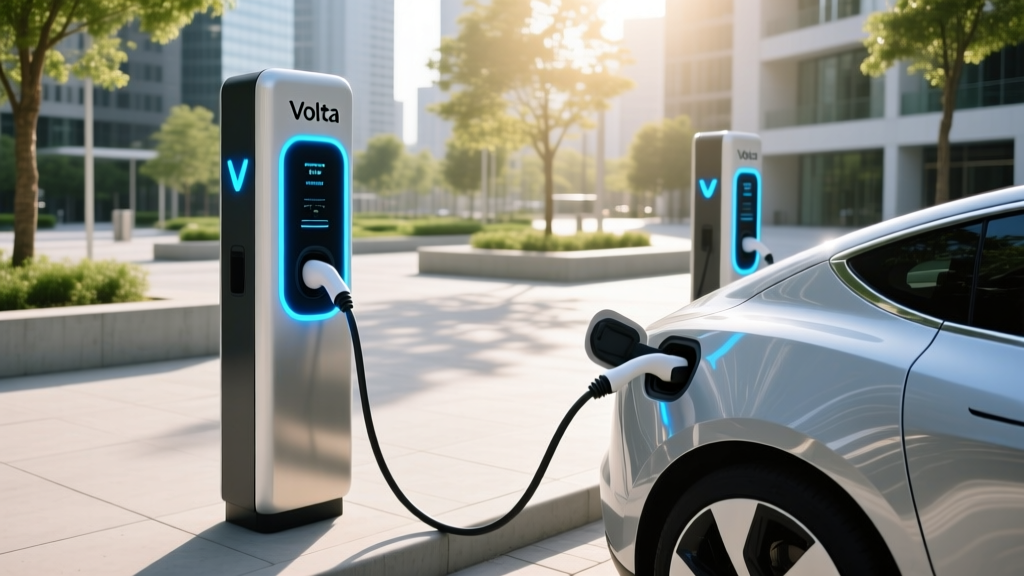
Volta Chargers (now part of the Shell Recharge network following Shell's 2023 acquisition) occupy a unique niche in the U.S. public charging landscape: advertising-subsidized stations that offer free or heavily discounted charging to EV drivers. You'll find them at grocery stores, shopping centers, and retail parking lots — typically mounted on distinctive green pedestals wrapped in digital ad displays.
As of 2026, Volta's network spans roughly 3,000+ charging points across the United States, concentrated in metro areas like California, Texas, Florida, and the Northeast corridor. The business model is straightforward: brands pay for premium ad placement on the charger's large-format screens, and that revenue offsets the electricity cost passed to drivers. In practice, this means you can often top off your battery at zero direct cost while you shop.
But "free" comes with caveats. Power output is moderate, availability varies by location, and the network's long-term pricing strategy under Shell ownership continues to evolve. Here's a data-driven breakdown of what Volta actually delivers — and how to build a complete charging strategy around it.
Charging Levels Explained: Speeds, Power, and Range Added
Before evaluating any public network, you need to understand the three charging tiers and how they translate into real miles. The critical distinction: kW (kilowatts) measures power — the rate at which energy flows into your battery. kWh (kilowatt-hours) measures energy — the total capacity of your battery, like gallons in a fuel tank. Never confuse the two.
| Level | Voltage | Power (kW) | Miles of Range Added Per Hour | Typical Use Case |
|---|---|---|---|---|
| Level 1 | 120V AC | 1.2–1.9 kW | 3–5 miles | Overnight trickle; emergency backup |
| Level 2 | 240V AC | 3.3–19.2 kW | 12–75 miles | Home daily charging; destination/Volta stations |
| DC Fast Charging | 400–800V DC | 50–350 kW | 150–1,200+ miles (equivalent rate) | Road trips; rapid top-ups |
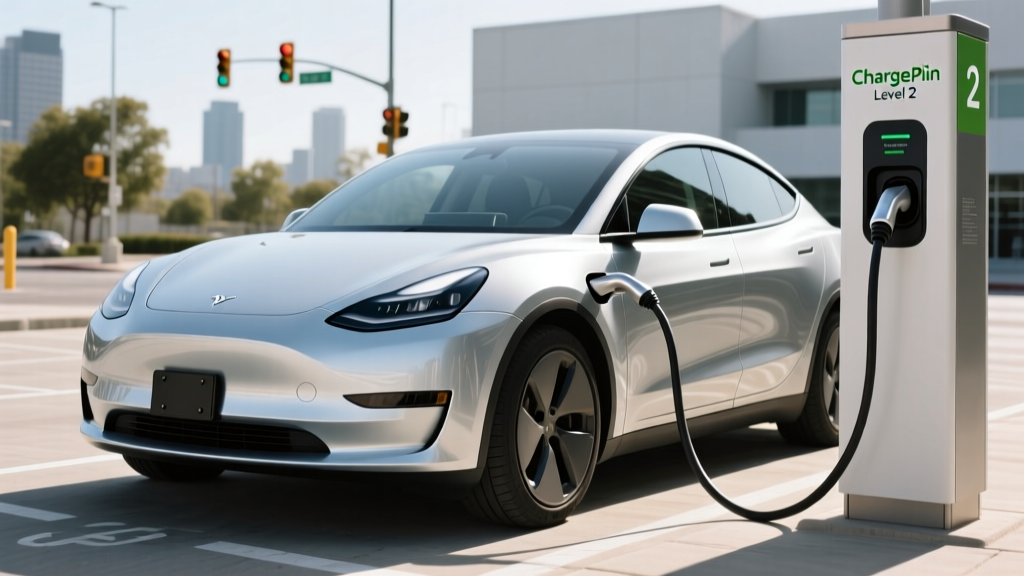
What Volta offers: Most Volta locations provide Level 2 charging at 5.5–7.2 kW (J1772 connector), adding roughly 20–28 miles of range per hour for a typical mid-size EV. Select high-traffic locations also feature DC fast chargers at 50–100 kW, which can push a 75 kWh battery from 10–80% in approximately 35–55 minutes depending on the vehicle's charge-curve acceptance rate.
Real-world context: A 7.2 kW Volta Level 2 session during a 90-minute grocery run adds roughly 30–40 miles — enough to cover most daily commutes but not a substitute for DC fast charging on road trips.
Volta Charger Locations: Where to Find Them and What to Expect
Volta stations are strategically placed at high-dwell-time retail locations. Common hosts include:
- Grocery chains: Kroger, Whole Foods, Safeway, and regional supermarkets
- Shopping centers: Simon Property Group malls, outdoor lifestyle centers
- Big-box retailers: Select Target, Walmart, and Home Depot locations
- Pharmacies: Some CVS and Walgreens parking lots
To locate stations, use the Shell Recharge app or third-party aggregators like PlugShare and A Better Routeplanner (ABRP). Filter for "Volta" or "Shell Recharge" to see real-time availability, power output, and connector type.
Honest limitation: Volta's free-tier availability is not guaranteed at every location. Some stations have transitioned to paid pricing under Shell's management, particularly at newer DC fast-charging installations. Always check the app before driving to a station — pricing status is listed per charger.
Connector Compatibility: Will a Volta Charger Fit Your EV?
Connector standards have consolidated significantly since 2024, when Ford, GM, Rivian, and most major automakers adopted the North American Charging Standard (NACS). Here's what you'll encounter at Volta stations and across the broader network:
| Connector | Brands Using It (2026 Models) | Volta Availability | Adapter Needed? |
|---|---|---|---|
| NACS (Tesla-style) | Tesla, Ford, GM, Rivian, Hyundai/Kia (2025+), BMW, Mercedes | Select DC fast locations | CCS-to-NACS adapter for older CCS vehicles at NACS stations |
| CCS1 (Combined Charging System) | Legacy VW/Audi, older Hyundai/Kia (pre-2025), Honda Prologue | Most Volta DC fast chargers | NACS-to-CCS adapter for newer NACS vehicles at CCS stations |
| J1772 (Level 2) | All non-Tesla EVs (universal for AC Level 2) | All Volta Level 2 stations | Tesla Mobile Connector adapter for Tesla vehicles |
| CHAdeMO | Nissan Leaf (legacy); discontinued on new models | Rare; some legacy Volta locations | Not available — CHAdeMO is being phased out |
Practical tip: If you drive a 2025+ NACS-equipped vehicle, carry a CCS1-to-NACS adapter (roughly $100–$180) to access older Volta DC fast chargers that still have CCS cables. For Level 2, the J1772 connector is universal — Tesla drivers just need the J1772 adapter that ships with every Tesla.
Cost to Charge: Home vs. Volta vs. Gas — The Real Math
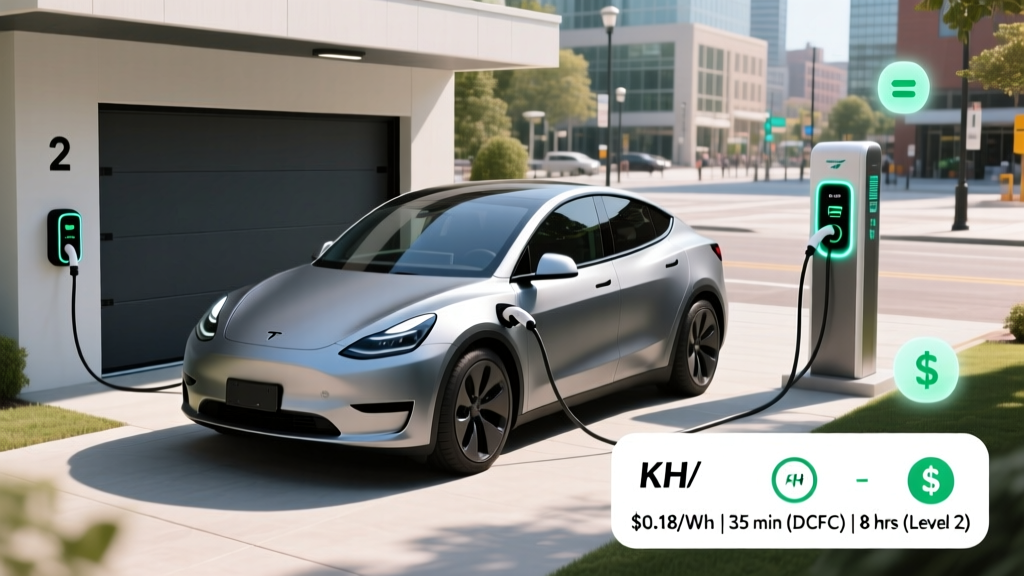
The economics of EV charging depend heavily on where you plug in. Let's compare four scenarios using a representative mid-size EV with a 75 kWh usable battery and 3.5 miles per kWh efficiency (roughly 263 miles of range):
| Scenario | Rate | Cost for Full Charge (0–100%) | Cost Per Mile |
|---|---|---|---|
| Home Level 2 (off-peak utility rate) | $0.08–$0.12/kWh | $6.00–$9.00 | $0.02–$0.03 |
| Home Level 2 (standard rate) | $0.14–$0.18/kWh | $10.50–$13.50 | $0.03–$0.04 |
| Volta Level 2 (free tier) | $0.00/kWh | $0.00 | $0.00 |
| Public DC fast (Electrify America, EVgo) | $0.35–$0.55/kWh | $26.25–$41.25 | $0.08–$0.12 |
| Gasoline equivalent (28 MPG, $3.40/gal) | — | $32.17 | $0.12 |
Volta's free charging is genuinely zero-cost when available — no membership fee, no per-session charge. However, relying exclusively on public free charging is impractical for most owners due to limited station density, dwell-time requirements, and inconsistent availability. The optimal strategy: install a Level 2 home charger for daily use, and use Volta as a supplementary top-up during routine errands.
For the full cost-per-mile picture, factor in that the average American drives ~37 miles per day (FHWA data). A home-charged EV at $0.12/kWh costs roughly $1.00–$1.30 per day in electricity — about 1/3 the fuel cost of a 28 MPG gas car.
Home Charger Installation: Electrical Requirements and Real Costs
If you're supplementing Volta with a home Level 2 charger — and most EV owners should — here's what the installation actually involves.
Electrical Requirements
A typical home Level 2 charger requires a 240V dedicated circuit, similar to what powers an electric dryer or oven. The most common configurations:
- 40-amp circuit / 32-amp continuous draw: Delivers 7.7 kW — sufficient for most EVs overnight
- 50-amp circuit / 40-amp continuous draw: Delivers 9.6 kW — faster charging for larger batteries (100+ kWh trucks/SUVs)
- 60-amp circuit / 48-amp continuous draw: Delivers 11.5 kW — maximum for vehicles that can accept it (e.g., Tesla Model 3/Y at 11.5 kW onboard charger limit)
Panel upgrade reality: Most modern homes with 200-amp electrical service can accommodate a 40–60A EV circuit without a panel upgrade. However, older homes with 100-amp service, or homes already running multiple high-draw appliances (electric range, heat pump, dryer), may need a service upgrade to 200A. This is the single largest cost variable in home charger installation.
Installation Cost Breakdown
| Component | Cost Range | Notes |
|---|---|---|
| Level 2 charger unit (hardwired or plug-in) | $300–$700 | Smart Wi-Fi chargers cost more; basic units start ~$300 |
| Electrician labor (standard install, panel to garage) | $400–$1,200 | Depends on conduit run length, wall type, and local rates |
| Electrical permit | $50–$200 | Required in most jurisdictions; varies by city/county |
| Panel upgrade (if needed — 100A → 200A) | $1,500–$3,500 | Major cost driver; not needed for most modern homes |
| Total (no panel upgrade) | $750–$2,100 | Most common scenario for homes built after 2000 |
| Total (with panel upgrade) | $2,250–$5,600 | Older homes or those near panel capacity |
Always hire a licensed electrician and pull the required permit. Unpermitted EV charger installations can void homeowner's insurance claims and create fire-safety liabilities. The National Electrical Code (NEC) requires GFCI protection for outdoor receptacles and specific wire-gauge sizing based on circuit amperage.
Federal Tax Credit for Home Charging Equipment
The IRS Residential Clean Energy Credit covers 30% of home EV charger equipment and installation costs, up to $1,000. This is separate from the §30D vehicle purchase credit. Eligibility requires installation at your primary residence; consult a tax professional for your specific situation, as income limits and census-tract requirements may apply.
Recommended Home Chargers: Equipment Picks for 2026
If Volta handles your errand-time top-ups, a reliable home Level 2 charger handles everything else. Here are three proven options across different budgets:
Emporia Vue Level 2 Smart Charger
- Power output: 48A / 11.5 kW (on 60A circuit)
- Connector: J1772 (NACS adapter included)
- Cable length: 24 feet
- Smart features: Wi-Fi, energy monitoring, solar integration, scheduled charging, load management
- Price: ~$399
- Best for: Budget-conscious buyers who want full smart features and energy tracking
ChargePoint Home Flex
- Power output: Configurable 16A–50A / up to 12 kW (on 60A circuit)
- Connector: J1772 (NACS version available)
- Cable length: 23 feet
- Smart features: Wi-Fi, ChargePoint app, Alexa integration, flexible amperage settings
- Price: ~$549–$649
- Best for: Homes with variable circuit capacity; the adjustable amperage avoids costly panel upgrades
Tesla Wall Connector (Gen 4)
- Power output: 48A / 11.5 kW (on 60A circuit)
- Connector: NACS native; J1772 adapter available for non-Tesla EVs
- Cable length: 24 feet
- Smart features: Wi-Fi, over-the-air updates, Tesla app integration, power sharing (link multiple units on one circuit)
- Price: ~$475
- Best for: Tesla owners or households with NACS-equipped vehicles; power-sharing feature is unique for multi-EV garages
Charging time examples (10–80% SoC):
- 60 kWh battery (e.g., Chevrolet Equinox EV) at 7.7 kW: ~5.5 hours
- 75 kWh battery (e.g., Hyundai Ioniq 5) at 9.6 kW: ~5.5 hours
- 100 kWh battery (e.g., Ford F-150 Lightning Extended Range) at 11.5 kW: ~6.5 hours
All of these complete comfortably overnight, which is the whole point of home Level 2 charging. You wake up to a full battery every morning — something no gas car owner experiences.
Safety, Electrical Code, and Installation Best Practices
EV chargers draw sustained high current for hours — this is fundamentally different from intermittent loads like a microwave. Proper installation isn't optional.
- Dedicated circuit: Your EV charger must have its own breaker — never share a circuit with other appliances. A 40A charger needs a 50A breaker (NEC requires 125% overhead for continuous loads).
- GFCI protection: Required for all outdoor installations and recommended indoors. Modern Level 2 chargers include built-in ground-fault detection, but the circuit breaker should also be GFCI-rated for outdoor receptacles.
- Wire gauge: 6 AWG copper for 50A circuits; 4 AWG for 60A circuits. Your electrician will size this correctly — don't attempt DIY wiring for EV circuits.
- Outdoor rating: If your charger is mounted outside, verify NEMA 4 or IP65 weather resistance. All three chargers recommended above carry outdoor ratings.
- Hardwired vs. plug-in: Hardwired installations (no plug) eliminate the failure point of a 240V receptacle and are preferred for new construction. Plug-in (NEMA 14-50) offers portability if you move.
Building Your Complete Charging Strategy Around Volta
Volta chargers work best as a supplement, not a primary charging solution. Here's a practical decision framework:
Choose home Level 2 as your primary if: You have garage or driveway access, drive more than 20 miles daily, and want guaranteed availability every morning. Install a 40–50A circuit with a smart charger.
Use Volta for supplementary top-ups if: You regularly visit shopping centers or grocery stores with Volta stations, your daily mileage is moderate, and you want to reduce home electricity costs.
Rely on DC fast charging (paid networks) if: You're on a road trip, your home charger is unavailable, or you need 150+ miles added in under 30 minutes.
The economics are compelling: if you can capture even two free Volta sessions per week (adding ~60–80 miles total), you offset roughly $3–$5 in home charging costs. Over a year, that's $150–$260 in savings — not transformative, but a genuine perk of strategic route planning.
Frequently Asked Questions About Volta Chargers and EV Charging
How much does it cost to install a home EV charger?
Between $750 and $2,100 for most homes built after 2000 that don't need a panel upgrade. This includes the charger unit ($300–$700), electrician labor ($400–$1,200), and permit ($50–$200). Older homes with 100-amp service may need a panel upgrade adding $1,500–$3,500.
How fast will each charging level add range?
Level 1 (120V) adds 3–5 miles per hour. Level 2 (240V) adds 12–75 miles per hour depending on amperage. DC fast charging can add 150–1,200+ miles per hour at peak rates, though charging curves taper significantly above 80% State of Charge.
Which connector is compatible with my EV?
All 2025+ models from Tesla, Ford, GM, Rivian, Hyundai, Kia, and BMW use NACS. Older non-Tesla EVs typically use CCS1. For Level 2 AC charging, all non-Tesla EVs use J1772 (Tesla includes an adapter). CHAdeMO is effectively discontinued on new vehicles.
How much does charging cost per mile vs. gas?
Home charging at $0.12/kWh costs roughly $0.03–$0.04 per mile for a typical EV. Gasoline at $3.40/gallon in a 28 MPG vehicle costs $0.12 per mile. Volta's free tier brings the per-mile cost to $0.00 when available.
What electrical upgrades might I need?
If your home has 200-amp service and available breaker slots, you likely need no upgrades. Homes with 100-amp service or panels near capacity may require a service upgrade to 200A ($1,500–$3,500). A licensed electrician can assess your panel's headroom during a site visit.
Are Volta chargers really free in 2026?
Many Volta Level 2 stations remain free, but Shell has introduced paid pricing at select DC fast-charging locations. Always check the Shell Recharge app for real-time pricing before visiting a station.