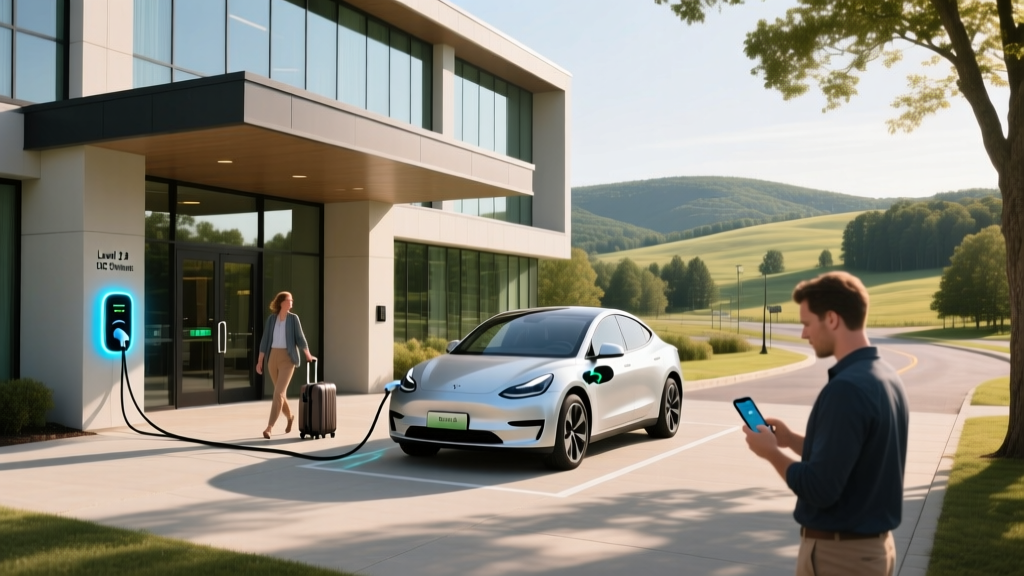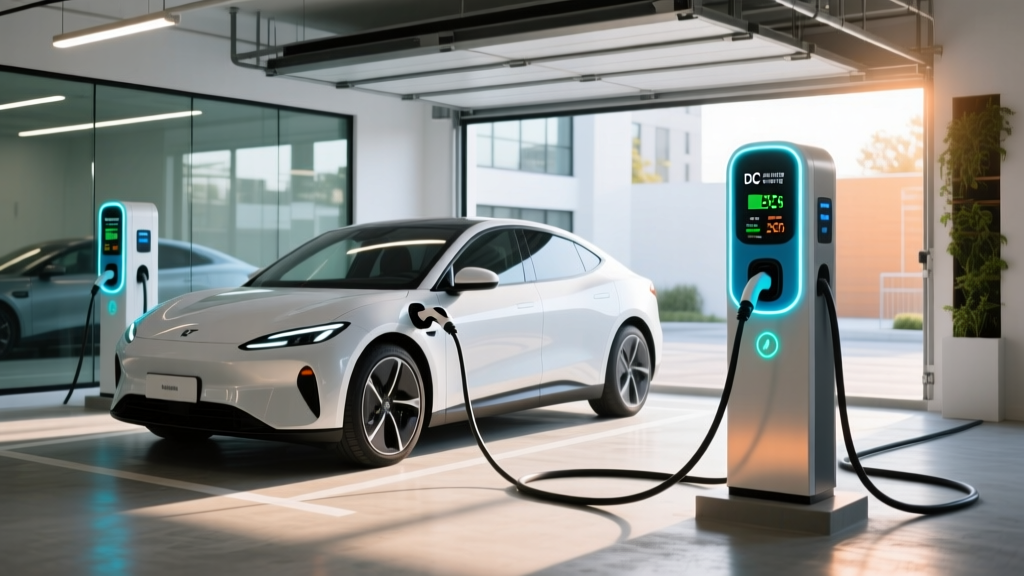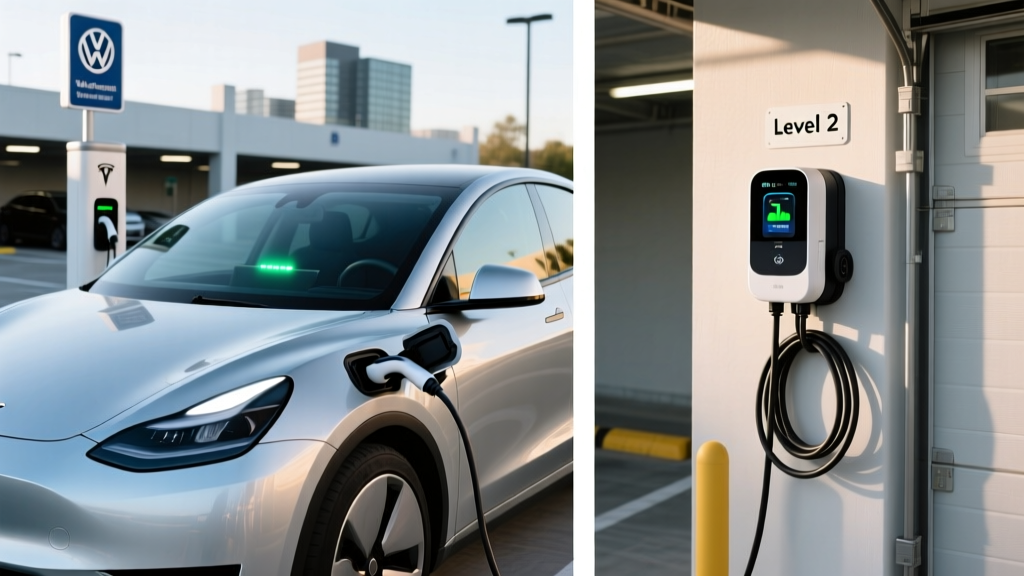
If you own a Volkswagen ID.4 or are considering an ID.7, you've likely seen the headlines about non-Tesla EVs gaining access to the Tesla Supercharger network. Volkswagen Tesla Supercharger access became a reality starting in 2025, when VW joined the wave of automakers adopting the North American Charging Standard (NACS). But what does that actually mean for your daily charging routine, your road-trip options, and your home setup? This guide breaks down exactly how to access Tesla Superchargers in a Volkswagen EV, what adapters you need, how fast you'll charge, and what it costs to build a proper home charging station.
Volkswagen's NACS Transition and Supercharger Access
Volkswagen began equipping its North American EVs with native NACS charge ports starting with the 2026 model year. The refreshed ID.4 and the ID.7 sedan are the first to ship with the Tesla-compatible connector directly from the factory. For owners of 2021–2025 model-year ID.4 vehicles (which use the CCS1 connector), Volkswagen has approved the use of NACS-to-CCS1 adapters, enabling access to the Tesla Supercharger network — over 30,000 stalls across North America as of early 2026.
Here's what you need to know before plugging in:
- 2026+ VW EVs (native NACS): Plug directly into any V3/V4 Supercharger. No adapter required.
- 2021–2025 ID.4 (CCS1 port): Requires a NACS-to-CCS1 adapter. Volkswagen has partnered with Tesla to provide an approved adapter; third-party adapters from Lectron and A2Z are also available, priced between $180 and $250.
- Activation: Access is initiated through the Tesla app or the in-car navigation system on 2026+ models. For CCS1-equipped VWs, you must create a Tesla account and add your vehicle before your first session.
| Model Year | Native Port | Supercharger Access | Adapter Needed? |
|---|---|---|---|
| 2026+ ID.4 / ID.7 | NACS | Direct plug-in | No |
| 2021–2025 ID.4 | CCS1 | Via adapter | NACS-to-CCS1 adapter ($180–$250) |
| 2020 e-Golf (discontinued) | CCS1 | Limited — verify stall type | NACS-to-CCS1 adapter |
For detailed Supercharger locations and real-time stall availability, the Tesla Find Us map remains the most reliable tool. The EPA's fueleconomy.gov site also provides charging-access data by vehicle model.
Charging Levels Explained: kW, Miles Per Hour, and Charge Times
Understanding charging speeds requires one critical distinction: kW (kilowatts) measures power — the rate at which energy flows into your battery. kWh (kilowatt-hours) measures energy — the total capacity stored in your battery. Think of kW as the width of the hose and kWh as the size of the tank.
| Level | Voltage / Amperage | Max Power (kW) | Miles of Range Added Per Hour | Typical Use Case |
|---|---|---|---|---|
| Level 1 | 120V / 12A | 1.4 kW | 3–5 miles | Overnight trickle, emergencies |
| Level 2 | 240V / 32–48A | 7.7–11.5 kW | 22–44 miles | Home daily charging, workplace |
| DC Fast Charging | 400–800V DC | 50–350 kW | 150–1,200 miles (theoretical) | Road trips, rapid top-ups |
Real-World Charge Times for the Volkswagen ID.4
The 2026 Volkswagen ID.4 carries an 82 kWh usable battery (NMC chemistry). Here's what charge times look like across levels, based on EPA and manufacturer data:
- Level 1 (120V, 1.4 kW): 0–100% in approximately 58 hours. Impractical for daily use; useful only for maintaining charge.
- Level 2 (240V, 48A / 11.5 kW): 0–100% in roughly 7.5 hours. 10–80% in about 5 hours. Ideal overnight solution.
- DC Fast Charge — Tesla V3 Supercharger (250 kW peak): 10–80% in approximately 28 minutes. Note: the ID.4's charge curve tapers significantly above 80% SoC, and sustained rates average around 120–140 kW across the 10–80% window.
- DC Fast Charge — Tesla V4 Supercharger (350 kW capable): The ID.4's onboard architecture caps at approximately 175 kW DC, so V4 stalls won't deliver their full potential to this vehicle.
Real-world caveat: In cold weather (below 32°F / 0°C), expect DC fast-charge times to increase by 15–30% unless you precondition the battery. The ID.4's thermal management system will automatically precondition when a Supercharger is set as your navigation destination — always navigate to the charger for optimal speeds.
Home Charger Installation: Electrical Requirements and Costs
Installing a Level 2 home charger is the single highest-impact upgrade for EV ownership. Here's what's involved electrically:
Electrical Requirements
- Circuit: A dedicated 240V circuit, typically 40A to 60A, depending on the charger's amperage.
- Breaker: Must be rated at 125% of the charger's continuous draw. A 48A charger requires a 60A breaker.
- Wire gauge: 6 AWG copper for 48A circuits; 4 AWG for 60A circuits (varies by run length and local code).
- Panel capacity: Your electrical panel must have sufficient spare amperage. A 200A panel is generally adequate; a 100A panel may require an upgrade.
- GFCI protection: NEC 2020 and later require GFCI protection for EV charging outlets in garages. Hardwired installations bypass this requirement.
- Outdoor rating: If mounting outside, ensure the charger carries a NEMA 4 or IP65 weatherproof rating.
| Component | Cost Range | Notes |
|---|---|---|
| Level 2 Charger Equipment | $350–$750 | Varies by brand, power, smart features |
| Electrician Labor (standard install) | $500–$1,500 | 240V outlet or hardwire, 1–4 hour job |
| Electrical Permit | $50–$200 | Required in most jurisdictions |
| Panel Upgrade (if needed) | $1,500–$4,000 | 100A → 200A service upgrade |
| Total — Simple Install (no panel upgrade) | $900–$2,450 | Most homes with 200A panels |
| Total — With Panel Upgrade | $2,400–$6,450 | Older homes with 100A service |
Always hire a licensed electrician familiar with NEC Article 625 (EV charging). Ask for a load calculation before work begins. Some utilities offer rebates of $250–$500 for Level 2 installations — check with your local provider. The Alternative Fuels Data Center maintains a state-by-state incentive database.
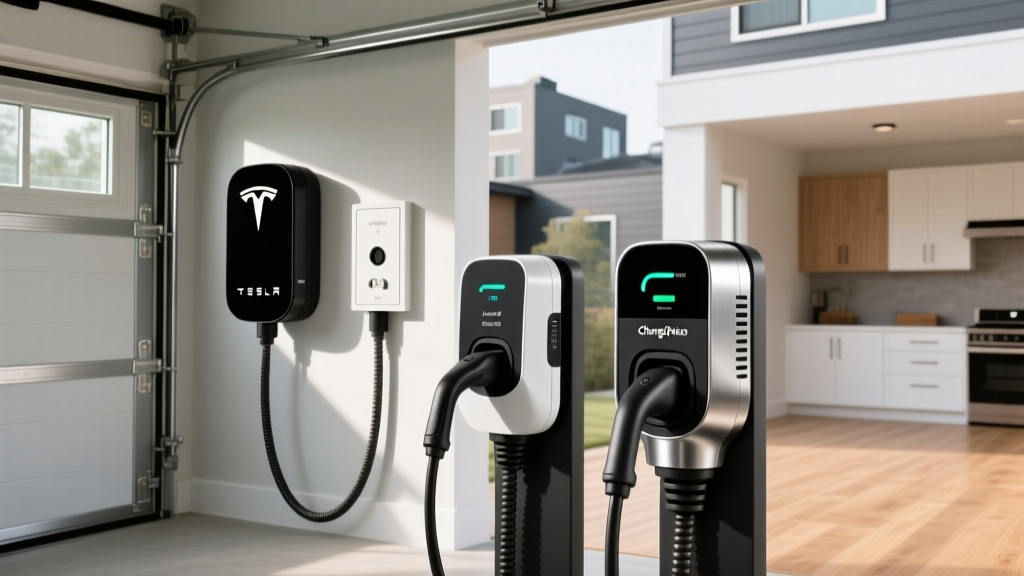
Recommended Level 2 Home Chargers for Volkswagen EVs
Whether you drive a native-NACS 2026 ID.4 or a CCS1-equipped 2021–2025 model, these chargers deliver reliable, code-compliant home charging:
Emporia Vue Level 2 Charger
- Power Output: 11.5 kW (48A)
- Connector: NACS native (CCS1 adapter included)
- Cable Length: 24 feet
- Smart Features: Wi-Fi scheduling, energy monitoring via Emporia app, solar integration
- Price: ~$399
- Best For: Budget-conscious buyers who want smart scheduling and solar pairing
ChargePoint Home Flex
- Power Output: Up to 12 kW (50A adjustable)
- Connector: NACS (2026 model); CCS1 available on older stock
- Cable Length: 23 feet
- Smart Features: Alexa integration, ChargePoint app scheduling, utility demand-response compatible
- Price: ~$599
- Best For: Owners who want a well-established ecosystem and Alexa voice control
Wallbox Pulsar Plus
- Power Output: 11.5 kW (48A)
- Connector: NACS or CCS1 (choose at purchase)
- Cable Length: 20 feet
- Smart Features: Wi-Fi + Bluetooth, myWallbox app, Eco-Smart solar mode, load balancing
- Price: ~$549
- Best For: Compact form factor and load-balancing for homes with limited panel capacity
All three chargers are UL-listed and support hardwired or NEMA 14-50 outlet installation. Hardwiring eliminates the GFCI breaker requirement and reduces long-term connection wear.
Cost to Charge: Home vs. Public vs. Gas
One of the strongest arguments for EV ownership is fuel-cost savings — but the math depends heavily on where and when you charge. Here's a realistic breakdown for a Volkswagen ID.4 (EPA efficiency: approximately 2.8 kWh/mile, or 107 MPGe combined for the 2026 Pro S AWD):
| Charging Scenario | Cost per kWh | Cost Per Mile | Annual Cost (12,000 mi) |
|---|---|---|---|
| Home Level 2 — Off-Peak (utility rate) | $0.09–$0.14 | $0.025–$0.039 | $300–$470 |
| Home Level 2 — Standard Rate | $0.15–$0.20 | $0.042–$0.056 | $500–$670 |
| Tesla Supercharger (V3, average) | $0.28–$0.36 | $0.078–$0.101 | $940–$1,210 |
| Electrify America / Public DCFC | $0.35–$0.48 | $0.098–$0.134 | $1,180–$1,610 |
| Gasoline Equivalent (25 MPG, $3.40/gal) | — | $0.136 | $1,632 |
Home off-peak charging delivers the deepest savings — often 70–80% less per mile than gasoline. Even exclusive Supercharger use undercuts gas costs, though the gap narrows. For maximum savings, ask your utility about time-of-use (TOU) plans that offer rates as low as $0.05–$0.08/kWh between midnight and 6 AM.
Safety, Electrical Code, and Smart Charging Practices
EV charging draws sustained high current for hours — more like a large appliance than a phone charger. Follow these code and safety essentials:
- Dedicated circuit: Your Level 2 charger must have its own dedicated breaker — never share a circuit with other loads.
- Continuous-load derating: NEC requires circuits to be rated at 125% of the charger's maximum draw. A 48A charger needs a 60A breaker and appropriately sized wire.
- GFCI: Required for receptacle-based (NEMA 14-50) installations in garages per NEC 2020+. Hardwired units are exempt.
- Outdoor installations: Use a charger rated NEMA 4 (splash-proof) minimum. Ensure the connector holster keeps the plug off the ground.
- Cable management: Avoid running cables across walkways. Use a wall-mounted retractable reel or hook system.
- Preconditioning: Always set your Supercharger as a navigation destination in the ID.4 to activate battery preconditioning. This warms the battery to optimal charging temperature, shaving 5–10 minutes off your 10–80% time in cold weather.
- Charge-curve awareness: On DC fast chargers, the ID.4 peaks near 175 kW at low SoC but tapers to under 50 kW above 85%. Plan road-trip stops to charge from 10–80% rather than topping off to 100% — the last 20% takes nearly as long as the first 70%.
Frequently Asked Questions
How much does it cost to install a home EV charger?
A standard Level 2 home charger installation (equipment + electrician + permit) typically costs $900–$2,450 if your panel has adequate capacity. If a panel upgrade from 100A to 200A is needed, total costs can reach $2,400–$6,450. Always get a load calculation from a licensed electrician first.
How fast will each charging level add range to my ID.4?
Level 1 (120V) adds 3–5 miles per hour. Level 2 (240V, 48A) adds approximately 30–38 miles per hour. DC fast charging at a Tesla V3 Supercharger can add up to 200+ miles in a 28-minute session (10–80%), though sustained rates average lower due to the ID.4's charge curve taper.
Which connector is compatible with my Volkswagen EV?
2026+ Volkswagen EVs ship with a native NACS port and plug directly into Tesla Superchargers. 2021–2025 ID.4 models use CCS1 and require a NACS-to-CCS1 adapter ($180–$250) for Supercharger access. For home charging, all Level 2 chargers sold in 2026 are available in either NACS or CCS1 configurations.
How much does charging cost per mile compared to gas?
Home off-peak charging costs $0.025–$0.039 per mile in the ID.4 — roughly 75% less than gasoline at $3.40/gallon in a 25 MPG vehicle ($0.136/mile). Even exclusive Supercharger use ($0.078–$0.101/mile) saves 25–40% versus gas.
What electrical upgrades might I need for a home charger?
The most common upgrade is a 240V dedicated circuit with a 60A breaker. Older homes with 100A electrical service may need a full panel upgrade to 200A ($1,500–$4,000). Homes with modern 200A panels typically need only the new circuit and breaker. A licensed electrician can perform a load calculation to determine your needs.
Do I need a Tesla account to charge at Superchargers in my VW?
Yes. For CCS1-equipped VWs using an adapter, you'll need a Tesla account with your vehicle added for billing. Native NACS 2026+ VWs can initiate sessions via the in-car system or the Tesla app. Payment is processed through the account on file.
Will Supercharger access void my Volkswagen warranty?
No. Using an OEM-approved or Tesla-approved NACS adapter does not void your VW battery or powertrain warranty (8 years / 100,000 miles). However, damage caused by a non-certified third-party adapter may not be covered. Stick with adapters approved by Volkswagen or Tesla.