Volkswagen and the Tesla Supercharger Network: What Changed
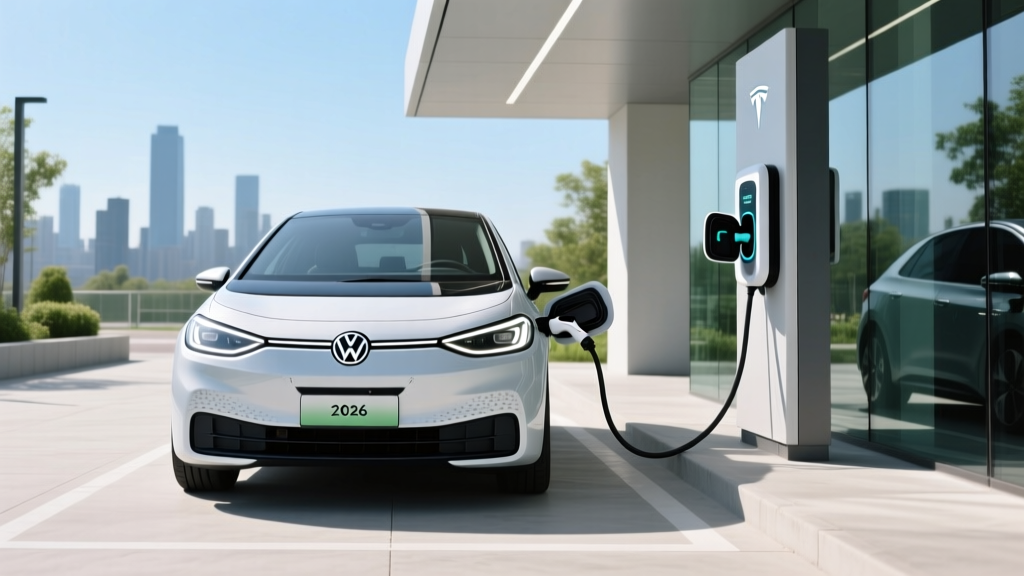
For years, Volkswagen EV owners relied exclusively on CCS1-compatible networks like Electrify America — the infrastructure VW helped fund as part of its Dieselgate settlement. That landscape shifted dramatically starting in 2025, when Volkswagen began equipping new models with the North American Charging Standard (NACS) port, opening the door to Tesla's Supercharger network. By the 2026 model year, the Volkswagen ID.4, ID.7, and the refreshed ID.Buzz all ship with native NACS ports, meaning Volkswagen Supercharger access is no longer an adapter-dependent workaround — it's a native capability.
This guide breaks down exactly what that means for your daily charging routine, your road-trip planning, and your home electrical setup. We'll cover the three charging levels with real numbers, installation costs that include the panel-upgrade scenarios most guides ignore, and a cost-per-mile comparison against the gas vehicles VW's EVs are replacing.
Understanding Charging Levels: Speeds in kW and Miles per Hour
The single most important distinction in EV charging is between kW (kilowatts — the rate of power delivery, like water pressure) and kWh (kilowatt-hours — the total energy delivered, like gallons in a tank). Your battery capacity is measured in kWh; your charger's speed is measured in kW. Confusing these two is the most common EV literacy gap, and it leads to wildly wrong expectations about charging time.
| Level | Voltage | Power (kW) | Miles of Range Added per Hour | Typical Use Case |
|---|---|---|---|---|
| Level 1 | 120V AC | 1.0–1.4 kW | 3–5 mi/hr | Emergency/top-up, PHEV overnight |
| Level 2 | 240V AC | 7.2–11.5 kW | 25–45 mi/hr | Daily home and workplace charging |
| DC Fast Charge | 400–800V DC | 50–350 kW | 150–800+ mi/hr (peak) | Road trips, rapid top-ups |
For a 2026 Volkswagen ID.4 with its 82 kWh usable battery (approximately 275 miles EPA range), Level 1 charging adds roughly 4 miles of range per hour — enough only for plug-in hybrid daily needs or emergency trickle charging. Level 2 at 11.5 kW (the ID.4's onboard charger maximum) will replenish the full battery in roughly 7.5 hours, ideal for overnight charging. DC fast charging at the ID.4's peak rate of 175 kW delivers a 10–80% charge in approximately 28 minutes under ideal conditions, though real-world charge-curve taper above 80% SoC means you'll rarely sustain that peak rate for the full session.
Volkswagen Connector Compatibility: NACS, CCS1, and Adapters
The connector situation for VW owners in 2026 depends entirely on your model year.
| Vehicle | Model Years | Native Port | Supercharger Access | Adapter Needed? |
|---|---|---|---|---|
| ID.4 | 2021–2024 | CCS1 | Via adapter | Yes — CCS1-to-NACS adapter (~$200–$300) |
| ID.4 | 2025–2026 | NACS | Native | No — plug directly into Superchargers |
| ID.7 | 2025–2026 | NACS | Native | No |
| ID.Buzz | 2025–2026 | NACS | Native | No |
If you own a 2021–2024 ID.4 with a CCS1 port, Volkswagen has approved specific CCS1-to-NACS adapters for Supercharger use. The critical detail: not all Supercharger stalls support non-Tesla vehicles. Tesla has designated specific stalls with magic dock connectors or marked stalls in the Tesla app for non-Tesla access. Always verify stall compatibility in the Tesla app before routing to a Supercharger with an older CCS1-equipped VW.
For Electrify America and other CCS1-native networks, 2025+ NACS-equipped VWs will need a NACS-to-CCS1 adapter. Volkswagen includes this adapter with new vehicle purchases for the 2025–2026 transition period, but replacement or additional adapters run approximately $150–$250.
Home Level 2 Charger Installation: Costs, Electrical Requirements, and Gotchas
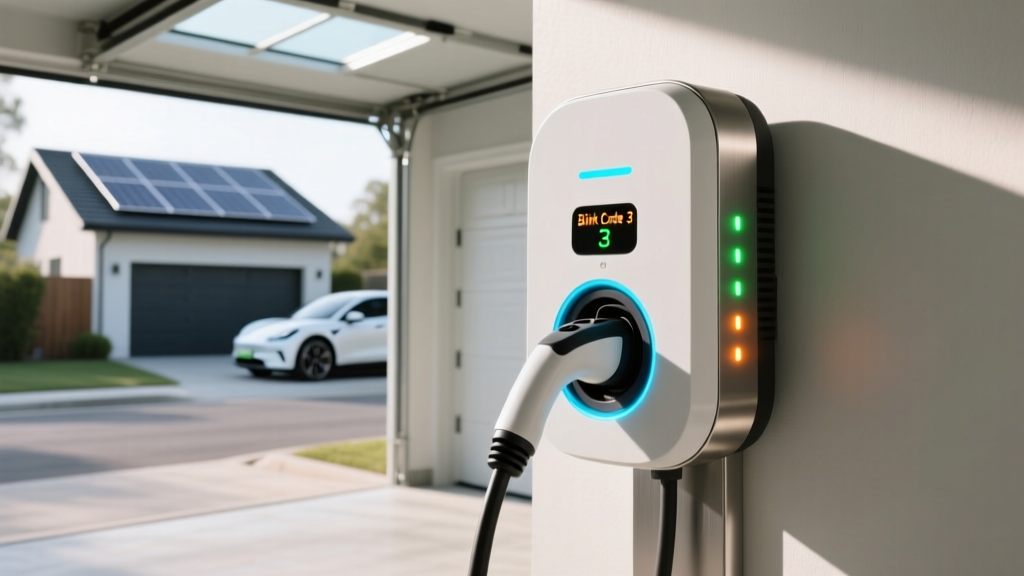
Home Level 2 charging is where 80–90% of VW EV charging happens for owners with garage or driveway access. But the installation cost varies enormously based on your home's electrical panel capacity and the distance from panel to charger location.
Electrical Requirements
A full-power Level 2 charger delivering 11.5 kW (matching the ID.4's onboard charger limit) requires a 240V / 60A dedicated circuit with a NEMA 14-60 outlet or hardwired connection. Many homeowners opt for a 40A circuit (9.6 kW delivery), which still provides 35+ miles of range per hour and may avoid a panel upgrade.
Panel Upgrade Reality
Homes built before 2000 often have 100A or 150A main service panels. Adding a 60A EV circuit to an already-loaded 100A panel may require upgrading to 200A service — a significant expense. Even some 200A panels lack physical breaker slots for a new double-pole breaker. Your electrician will perform a load calculation (per NEC Article 220) to determine if your panel can handle the additional draw.
| Component | Simple Install (panel adjacent) | Moderate Install (50–80 ft run) | Complex Install (panel upgrade needed) |
|---|---|---|---|
| Level 2 Charger Equipment | $400–$700 | $400–$700 | $400–$700 |
| Electrician Labor | $300–$600 | $600–$1,500 | $800–$2,000 |
| Permit & Inspection | $50–$200 | $50–$200 | $50–$200 |
| Panel Upgrade (if needed) | $0 | $0 | $1,500–$4,000 |
| Conduit/Wiring Materials | $50–$150 | $150–$400 | $200–$500 |
| Total Range | $800–$1,650 | $1,200–$2,800 | $2,950–$7,400 |
Always get at least two quotes from licensed electricians who specifically list EV charger installation experience. The National Electrical Contractors Association maintains a directory of certified professionals. Also check whether your utility offers rebates for Level 2 equipment or panel upgrades — many utilities in 2026 offer $250–$1,000 toward EV-ready installations.
Safety and Code Requirements
- Dedicated circuit: EV chargers require their own breaker — no sharing with other appliances.
- GFCI protection: NEC 2023 (and 2026 updates) requires GFCI protection for all outdoor receptacles and many indoor EV installations. Hardwired units often have integrated ground-fault protection.
- Outdoor rating: If your charger is mounted outside, it must carry a NEMA 4 (weatherproof) rating. All major chargers listed below meet this standard.
- Cable management: NEC requires that charging cables not create a trip hazard across walkways or driveways. Plan your mount location accordingly.
Recommended Level 2 Chargers for Volkswagen EVs
These chargers all feature native NACS connectors (with CCS1 adapters available) and are compatible with the ID.4, ID.7, and ID.Buzz.
Tesla Wall Connector (Gen 4)
Power: Up to 11.5 kW (48A on 60A circuit)
Connector: NACS native
Cable: 24 ft
Smart Features: Wi-Fi, OTA updates, power sharing between two units, Tesla app scheduling
Price: ~$450
Best For: VW owners who primarily use Superchargers and want a single ecosystem
ChargePoint Home Flex
Power: Up to 12 kW (50A, configurable)
Connector: NACS (2025+ models) or J1772 with adapter
Cable: 23 ft
Smart Features: Wi-Fi, ChargePoint app, Alexa integration, utility demand-response programs
Price: ~$600
Best For: Owners who want network-agnostic public charging access via the ChargePoint app
Emporia Vue Level 2 Charger
Power: Up to 11.5 kW (48A)
Connector: NACS or J1772 options
Cable: 24 ft
Smart Features: Wi-Fi, energy monitoring, solar integration, scheduling, load management
Price: ~$400
Best For: Budget-conscious installers who want energy monitoring and solar pairing
For 2026 VW models with native NACS, the Tesla Wall Connector is a compelling choice — it's the least expensive quality option and integrates seamlessly with Supercharger routing in the Tesla app. However, if you also charge at Electrify America stations or want utility demand-response participation (which can lower your electricity rate), the ChargePoint Home Flex offers broader ecosystem support.
Charging Cost per Mile: Home vs. Public vs. Gas
The economic case for EV charging depends heavily on where you charge. Here's how the numbers break down for a 2026 Volkswagen ID.4 (approximately 3.0 miles per kWh efficiency, or 105 MPGe combined per fueleconomy.gov).
| Scenario | Rate | Cost per kWh | Cost per Mile |
|---|---|---|---|
| Home — off-peak utility rate | $0.12/kWh | $0.12 | $0.040 |
| Home — standard residential rate | $0.18/kWh | $0.18 | $0.060 |
| Public Level 2 (ChargePoint, etc.) | $0.30/kWh avg | $0.30 | $0.100 |
| Tesla Supercharger (NACS) | $0.32/kWh avg | $0.32 | $0.107 |
| Electrify America DC Fast | $0.43/kWh avg | $0.43 | $0.143 |
| Gas equivalent (28 MPG, $3.40/gal) | — | — | $0.121 |
The takeaway: home charging at off-peak rates is roughly one-third the cost per mile of gasoline. Even Supercharger pricing undercuts gas on a per-mile basis. The only scenario where EV charging costs more than gas is frequent reliance on premium-priced DC fast networks like Electrify America's peak-rate stations — which is why home Level 2 installation pays for itself quickly.
DC Fast Charging Times: What to Expect at Superchargers and Beyond
The 2026 Volkswagen ID.4 supports DC fast charging at up to 175 kW on a NACS Supercharger or CCS1 station. The ID.7, with its slightly larger battery and improved thermal management, peaks at approximately 200 kW. Here's what those numbers mean in practice:
| Vehicle | Battery (usable kWh) | Peak DC Rate (kW) | 10–80% Time (ideal) | Real-World 10–80% Estimate |
|---|---|---|---|---|
| VW ID.4 (2026) | 82 kWh | 175 kW | ~28 min | 32–38 min |
| VW ID.7 (2026) | 86 kWh | 200 kW | ~25 min | 28–34 min |
| VW ID.Buzz (2026) | 86 kWh | 175 kW | ~30 min | 34–40 min |
The gap between "ideal" and "real-world" times comes from the charge curve. Your VW will accept peak kW rates only between roughly 10–40% SoC. Above 50%, the rate tapers significantly to protect battery health. Above 80%, charging slows to Level 2 speeds or slower — which is why road-trip strategy emphasizes charging to 80% and moving on rather than waiting for a full charge. Cold battery temperatures (below 50°F) further reduce peak charge rates by 20–40% unless you precondition the battery via the vehicle's navigation-routed charging system.
Tax Credits and Incentives for Home Charging Equipment
The federal Alternative Fuel Vehicle Refueling Property Credit (§30C) covers 30% of home EV charger equipment and installation costs, up to $1,000. This credit is available for chargers installed in census tracts that are classified as non-urban or meet specific low-income criteria — a requirement that excludes many suburban homeowners. Check the IRS §30C guidelines for your specific census tract eligibility. Many states and utilities stack additional rebates on top of federal credits; consult your local utility's EV program page for current offers.
Frequently Asked Questions
How much does it cost to install a home EV charger for my Volkswagen?
A straightforward installation with adequate panel capacity and a short wiring run costs $800–$1,650 total (equipment, labor, and permit). If your wiring run exceeds 50 feet, expect $1,200–$2,800. If your electrical panel needs an upgrade from 100A to 200A service, total costs can reach $3,000–$7,400. Always get a load calculation from a licensed electrician before committing.
How fast will each charging level add range to my VW ID.4?
Level 1 (120V): approximately 3–5 miles per hour. Level 2 (240V at 11.5 kW): approximately 38–42 miles per hour. DC fast charging (at peak 175 kW): up to 190+ miles in 10 minutes during the peak charge-curve window (roughly 10–40% SoC). These figures assume ~3.0 mi/kWh efficiency.
Which connector does my Volkswagen EV use, and can I charge at Tesla Superchargers?
2025–2026 model-year Volkswagen EVs (ID.4, ID.7, ID.Buzz) use the NACS connector natively and can charge at Tesla Superchargers without an adapter. 2021–2024 ID.4 models use CCS1 and require a VW-approved CCS1-to-NACS adapter for Supercharger access. For Electrify America and other CCS1 networks, 2025+ NACS-equipped VWs need a NACS-to-CCS1 adapter (included with new vehicle purchase).
How much does charging cost per mile compared to gas?
Home off-peak charging costs approximately $0.04 per mile for a VW ID.4 — about one-third the cost of gasoline at $3.40/gallon and 28 MPG. Even Supercharger pricing (~$0.11/mile) undercuts gasoline. Only frequent use of premium-priced DC fast chargers ($0.14+/mile) approaches gas-equivalent costs.
What electrical upgrades might I need for a Level 2 charger?
The most common upgrade is a panel capacity increase from 100A to 200A service ($1,500–$4,000), required when your existing panel lacks headroom for a 60A dedicated EV circuit. You may also need a new double-pole breaker slot, conduit routing through walls or underground, or a sub-panel installation if your garage is far from the main service panel. A licensed electrician's load calculation will determine exactly what's needed.