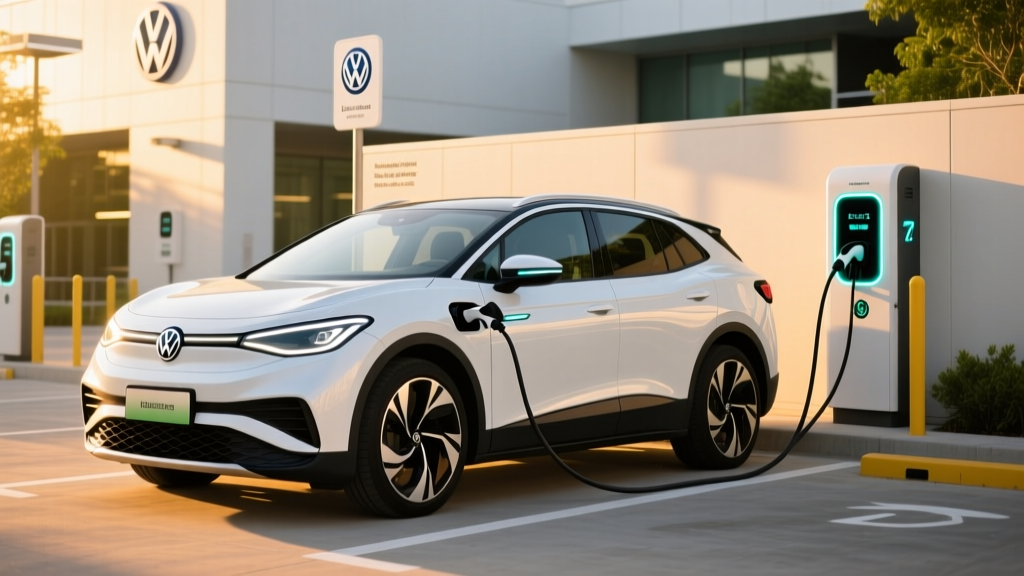
If you own or are shopping for a Volkswagen ID.4, understanding how charging infrastructure affects your daily driving is just as important as the EPA sticker on the window. The 2025–2026 ID.4 lineup offers between 206 and 291 miles of EPA-estimated range depending on trim, drivetrain (RWD vs AWD), and battery pack. But extracting the most usable miles from that pack — and keeping charging costs low — requires matching the right home equipment to the ID.4's specific charging architecture.
This guide walks through exactly how fast each charging level replenishes the ID.4's battery, what a Level 2 home installation actually costs, which connectors you need, and how per-mile charging costs compare to gasoline. We'll also recommend specific chargers that pair well with the ID.4's onboard charger and DC fast-charge capability.
- Standard Range (62 kWh usable, RWD): EPA 206 mi — expect ~170–185 mi highway, ~145–160 mi in sub-30°F cold
- Pro/Pro S (82 kWh usable, RWD): EPA 291 mi — expect ~245–265 mi highway, ~200–225 mi in sub-30°F cold
- Pro/Pro S (82 kWh usable, AWD): EPA 263 mi — expect ~220–240 mi highway, ~180–200 mi in sub-30°F cold
Source: fueleconomy.gov. Real-world range varies with speed, elevation, HVAC use, and tire condition. Cold-weather estimates based on aggregated owner data and independent testing.
Charging Levels Explained: How Fast Each Adds Range to the ID.4
Before selecting equipment, let's clarify the distinction that trips up many new EV owners: kW (kilowatts) measures power — how fast energy flows into the battery. kWh (kilowatt-hours) measures energy capacity — how much the battery holds. Think of kW as the width of a hose and kWh as the size of the bucket. The ID.4's Pro and Pro S trims carry an 82 kWh usable battery; the Standard Range carries 62 kWh usable.
| Charging Level | Voltage | Power (kW) | Miles of Range Added per Hour | ID.4 Use Case |
|---|---|---|---|---|
| Level 1 (standard outlet) | 120V | 1.0–1.4 kW | 3–5 mi/hr | Overnight trickle for short commutes (<30 mi/day) |
| Level 2 (home/public AC) | 240V | 7.2–11.5 kW | 22–38 mi/hr | Daily home charging — the practical standard |
| DC Fast Charging | 400V DC | 50–175 kW (peak) | ~170–220 mi in 10 min (peak rate) | Road trips; 10–80% in ~28–30 min (82 kWh pack) |
ID.4 onboard charger specifics: The 2025–2026 ID.4 comes with an 11.5 kW onboard AC charger (single-phase). This means even if you install a 48-amp Level 2 circuit capable of delivering 11.5 kW, the car will accept the full rate. Earlier 2021–2022 models had a 10.8 kW onboard charger. On DC fast charging, the 82 kWh pack peaks at up to 175 kW on a compatible CCS1 station, though sustained rates taper significantly above 60% state of charge (SoC) — a reality of lithium-ion charge curves, not a defect.
For the 82 kWh pack, a 10–80% DC fast charge takes approximately 28–30 minutes at a 175 kW-capable station under ideal battery temperatures. Expect this to stretch to 35–40 minutes in cold weather unless you've preconditioned the battery via the car's navigation-routed charging feature.
Home Level 2 Installation: Electrical Requirements and Real Costs
A Level 2 home charger is where most ID.4 owners will do 85–95% of their charging. Here's what an installation actually involves and what you'll pay.
Electrical Requirements for the ID.4
To unlock the ID.4's full 11.5 kW AC charging capability, you need a 240V, 60-amp dedicated circuit feeding a hardwired wall connector rated for 48 amps continuous (the National Electrical Code requires circuits be rated at 125% of continuous load). If you opt for a 40-amp circuit (common in older installations), you'll get up to 9.6 kW — still adequate for overnight replenishment of even the 82 kWh pack, adding roughly 250 miles in a 10-hour session.
Panel capacity matters. Most modern homes with a 200-amp main panel can accommodate a 60-amp EV circuit without issue. Homes with 100-amp service or panels already near capacity (common with electric ranges, dryers, and HVAC) may require a panel upgrade to 200 amps — adding $1,500–$3,500 to the project. A licensed electrician will perform a load calculation during the estimate visit.
| Component | Typical Cost Range | Notes |
|---|---|---|
| Level 2 charger (hardware) | $350–$750 | Smart Wi-Fi models at the higher end |
| Electrician labor (standard install) | $600–$1,800 | Depends on panel-to-garage distance, conduit run, drywall work |
| Electrical permit | $50–$250 | Varies by municipality; required in most jurisdictions |
| Panel upgrade (if needed) | $1,500–$3,500 | 100A → 200A service upgrade; not needed in most modern homes |
| Utility make-ready program (if available) | -$200 to -$1,500 | Some utilities cover conduit/wiring to the panel — check locally |
| Total (typical, no panel upgrade) | $1,000–$2,800 | Before any federal/state/utility rebates |
The federal Residential Clean Energy Credit (26 USC §25D) does not cover EV chargers for most taxpayers after 2022. However, the Alternative Fuel Vehicle Refueling Property Credit (§30C) may cover up to 30% of charger hardware and installation costs (max $1,000) if you live in an eligible census tract — consult a tax professional and IRS guidance for current eligibility.
Connector Compatibility: What Plugs Into the ID.4
The Volkswagen ID.4 sold in North America uses the CCS1 (Combined Charging System) connector for both Level 2 AC charging (the upper J1772 portion) and DC fast charging (the combined CCS1 plug with two additional DC pins below).
| Connector Type | Used By | ID.4 Compatible? | Adapter Needed? |
|---|---|---|---|
| J1772 (Level 1/2 AC) | All non-Tesla North American EVs | Yes — native | No |
| CCS1 (DC fast) | VW, Ford, GM, Hyundai, BMW, others | Yes — native | No |
| NACS (Tesla / North American Charging Standard) | Tesla (native); Ford, GM, Rivian, others (2025+) | Via adapter | Yes — CCS1-to-NACS adapter (~$200–$250) for Tesla Supercharger access |
| CHAdeMO (DC fast) | Nissan Leaf (legacy) | No | N/A — CHAdeMO stations are increasingly rare |
Tesla Supercharger access for the ID.4: As of 2025–2026, Volkswagen has not natively adopted NACS on the ID.4. However, you can access the Tesla Supercharger network using a CCS1-to-NACS adapter from approved manufacturers (such as the Tesla CCS adapter or third-party options like Lectron or A2Z). Confirm adapter compatibility with your specific model year before purchasing, as firmware updates can affect handshake protocols.
Charging Cost Per Mile: ID.4 vs. a Gasoline SUV
The ID.4 Pro (RWD, 82 kWh) achieves an EPA-rated 104 MPGe combined, translating to roughly 32 kWh per 100 miles driven (source: fueleconomy.gov). Let's use that efficiency figure to calculate real costs.
| Charging Scenario | $/kWh | Cost per 100 Miles | Cost per Mile |
|---|---|---|---|
| Home Level 2 (off-peak utility rate) | $0.12–$0.16 | $3.84–$5.12 | $0.038–$0.051 |
| Home Level 2 (standard utility rate) | $0.16–$0.22 | $5.12–$7.04 | $0.051–$0.070 |
| Public Level 2 (ChargePoint, EVgo, etc.) | $0.25–$0.49 | $8.00–$15.68 | $0.080–$0.157 |
| DC Fast Charging (Electrify America, EA Pass) | $0.35–$0.55 | $11.20–$17.60 | $0.112–$0.176 |
| Gasoline SUV (25 MPG combined, $3.40/gal) | — | $13.60 | $0.136 |
The takeaway: Home charging at off-peak rates delivers per-mile costs roughly 60–70% lower than a comparable gasoline compact SUV (think Tiguan or Honda CR-V at 25–28 MPG). Even public DC fast charging is cost-competitive with gasoline on a per-mile basis, though relying exclusively on DCFC is both more expensive and accelerates battery degradation over time. VW's partnership with Electrify America includes a complimentary charging period for new ID.4 buyers — check current terms at purchase.
Recommended Level 2 Chargers for the Volkswagen ID.4
The chargers below are selected for compatibility with the ID.4's 11.5 kW onboard charger, build quality, smart features, and value. All use the J1772 connector native to the ID.4.
ChargePoint Home Flex
- Power output: Up to 12 kW (50A) — adjustable down to 16A for lower-capacity circuits
- Connector: J1772 (NACS adapter available separately)
- Cable length: 23 ft
- Smart features: Wi-Fi, app scheduling, Alexa integration, energy reports, utility demand-response compatible
- Price: ~$549–$649
- Why for the ID.4: Amperage adjustability means you can install on a 40A or 60A circuit and dial the charger to match. Excellent app for tracking charge sessions and costs.
Emporia Level 2 EV Charger
- Power output: Up to 11.5 kW (48A)
- Connector: J1772
- Cable length: 24 ft
- Smart features: Wi-Fi, real-time energy monitoring, solar integration (pairs with Emporia Vue energy monitor), TOU scheduling
- Price: ~$399–$449
- Why for the ID.4: Best value for a full-featured 48A charger. If you have home solar, the Emporia ecosystem lets you charge exclusively on excess solar production.
Grizzl-E Smart
- Power output: Up to 10 kW (40A)
- Connector: J1772
- Cable length: 24 ft
- Smart features: Wi-Fi, OCPP protocol, adjustable amperage (16A–40A), outdoor-rated enclosure
- Price: ~$449–$549
- Why for the ID.4: Built for extreme cold (rated to -40°F), which matters if you're charging an unheated garage in northern climates where the ID.4's range already drops 20–30%. Slightly lower max amperage (40A/9.6 kW) still replenishes the 82 kWh pack overnight.
Safety, Code, and Installation Best Practices
A Level 2 EV charger draws sustained high current for hours — similar to an electric dryer but running longer. Proper installation protects your home and your vehicle.
- Dedicated circuit required: The EV charger must have its own breaker — never share a circuit with other appliances. For 48A continuous charging, the NEC requires a 60A breaker.
- GFCI protection: The 2020 NEC (and most adopted local codes) requires GFCI protection for outdoor receptacles. Hardwired chargers sidestep the nuisance-tripping issues some owners experience with GFCI-protected 240V outlets (NEMA 14-50). Hardwired is generally the more reliable path.
- Outdoor rating: If your charger mounts outside or in an unenclosed carport, confirm the unit carries a NEMA 4 or NEMA 4X rating for weather resistance. All three chargers recommended above meet this standard.
- Permit and inspection: Most jurisdictions require an electrical permit for a new 240V circuit. The inspection verifies wire gauge, breaker sizing, grounding, and conduit are up to code. Skipping the permit risks insurance coverage denial in the event of an electrical fire.
- Wire gauge: A 60A circuit typically requires 6 AWG copper (THHN in conduit) or 4 AWG aluminum. Your electrician will specify based on run length and local amendments to the NEC.
Charging Time Examples: 10–80% Across Common Scenarios
Most EV owners charge between 10% and 80% state of charge for daily use — the 80% ceiling preserves battery longevity by avoiding sustained high-SoC storage. Here's what that looks like for the ID.4's two battery sizes:
| Scenario | ID.4 Standard (62 kWh) | ID.4 Pro (82 kWh) |
|---|---|---|
| Level 1 (120V, 1.4 kW) | ~36 hours | ~48 hours |
| Level 2 (240V, 9.6 kW / 40A) | ~5.5 hours | ~7.5 hours |
| Level 2 (240V, 11.5 kW / 48A) | ~4.5 hours | ~6 hours |
| DC Fast (175 kW station, ideal temp) | ~24 minutes | ~28 minutes |
| DC Fast (50 kW station) | ~55 minutes | ~70 minutes |
Charge curve reality: The ID.4's peak 175 kW DC rate is sustained only between roughly 5–35% SoC under ideal thermal conditions. From 35–60%, the rate drops to approximately 100–130 kW. Above 80%, it tapers sharply to under 50 kW — this is why 10–80% times are the meaningful metric, not 0–100%. Always precondition the battery (via the ID.4's navigation system routing to a charger) to minimize cold-weather taper.
Frequently Asked Questions
How much does it cost to install a home EV charger for the Volkswagen ID.4?
A typical Level 2 installation — including a quality smart charger ($400–$650), electrician labor ($600–$1,800), and permit ($50–$250) — runs $1,050–$2,700 if your electrical panel has sufficient capacity. Homes needing a panel upgrade from 100A to 200A should budget an additional $1,500–$3,500. Utility make-ready programs and the federal §30C credit can offset some costs.
How fast will each charging level add range to my ID.4?
Level 1 (120V) adds 3–5 miles per hour — sufficient only for very short commutes. Level 2 (240V, 48A) adds approximately 33–38 miles per hour, fully replenishing the 82 kWh pack overnight. DC fast charging at a 175 kW station adds roughly 70% of the battery (10–80%) in about 28–30 minutes under ideal conditions.
Which connector is compatible with the Volkswagen ID.4?
The ID.4 uses CCS1 natively — J1772 for AC charging and CCS1 for DC fast charging. To access Tesla Superchargers, you'll need a CCS1-to-NACS adapter (~$200–$250). CHAdeMO is not compatible and is increasingly irrelevant as stations retire.
How much does charging the ID.4 cost per mile compared to gasoline?
At home on off-peak rates ($0.13/kWh), the ID.4 Pro costs roughly $0.04–$0.05 per mile — about 65% less than a 25 MPG gasoline SUV at $3.40/gallon ($0.14/mile). Public DC fast charging ($0.40–$0.55/kWh) costs $0.13–$0.18 per mile, roughly comparable to gasoline. Home charging is where the economics clearly favor the ID.4.
What electrical upgrades might I need for a Level 2 charger?
Homes with a 200-amp main panel and moderate existing loads typically need only a new 60-amp double-pole breaker and a conduit run to the garage. Homes with 100-amp service, older panels (e.g., Federal Pacific or Zinsco — known safety concerns), or panels already near capacity will need an upgrade to 200A service. Your electrician's load calculation determines this before work begins.
Does the Volkswagen ID.4 come with any free charging?
Volkswagen has historically included a period of complimentary Electrify America charging (typically 2–3 years or a kWh cap) with new ID.4 purchases. Specific terms vary by model year — confirm current offers with your dealer at purchase.