What Vehicle to Home Charging Actually Means
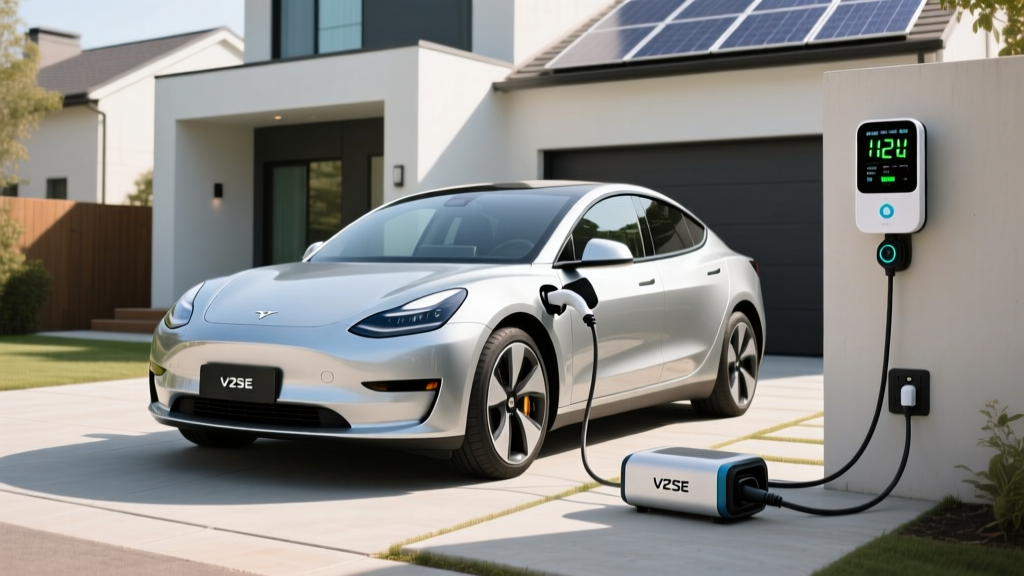
Vehicle to home charging — often abbreviated V2H — is the capability of an electric vehicle to discharge its battery back into your home's electrical system, effectively turning your EV into a mobile backup generator. It sits under the broader umbrella of bi-directional charging, which also includes V2L (vehicle to load, powering individual appliances via an outlet) and V2G (vehicle to grid, selling power back to the utility).
As of 2026, true V2H remains limited to a handful of vehicles and requires specific hardware on both the car side and the home side. But the technology is expanding rapidly, driven by increasing grid instability, extreme weather events, and homeowner demand for resilient backup power. If you're researching vehicle to home charging, you need clarity on three things: what your EV can actually do, what electrical work your home requires, and what the total installed cost looks like.
V2H vs V2L vs V2G: Which Bi-Directional Mode Do You Need?
Not every EV with "bi-directional" capability can power your home. The three modes serve different use cases and require different equipment:
| Mode | What It Does | Typical Power | Equipment Needed | 2026 Vehicle Availability |
|---|---|---|---|---|
| V2L (Vehicle to Load) | Powers individual devices via 120V outlet on the car | 1.9–3.6 kW | Built-in outlet or adapter dongle | Hyundai Ioniq 5/6, Kia EV6/EV9, Ford F-150 Lightning, Rivian R1T/R1S |
| V2H (Vehicle to Home) | Feeds your home's electrical panel during outages | 9.6–19.2 kW | Bi-directional wallbox + transfer switch/energy management system | Ford F-150 Lightning, GM Silverado EV, Hyundai Ioniq 5 (with HomePlug) |
| V2G (Vehicle to Grid) | Sells energy back to the utility for grid services | 10–20 kW | Bi-directional charger + utility interconnection agreement | Pilot programs only (Sunrun, Fermata Energy partnerships) |
The practical upshot: If you want to run a refrigerator and some lights during a blackout, V2L with a heavy-duty extension cord may suffice. If you want whole-home backup that seamlessly takes over when the grid drops, you need V2H with a permanently installed bi-directional charger and transfer switch.
Charging Levels Explained: Speeds, Power, and Range Added
Before sizing a V2H system, understand the charging levels that replenish your EV. Every EV owner interacts with these daily, and the distinction between Level 1, Level 2, and DC fast charging determines both your daily routine and your electrical infrastructure needs.
| Level | Voltage / Amperage | Power (kW) | Miles of Range Added per Hour | Typical Use Case |
|---|---|---|---|---|
| Level 1 | 120V / 12A | 1.4 kW | 3–5 mi/hr | Overnight trickle charge, PHEV top-ups, emergency |
| Level 2 | 240V / 32A–48A | 7.7–11.5 kW | 25–44 mi/hr | Home daily charging, workplace, public destination |
| DC Fast (Level 3) | 400V–800V DC | 50–350 kW | 180–1,200+ mi/hr (peak) | Road trips, highway corridors, fleet depots |
Real-world charging time examples (10–80% SoC):
- 77 kWh battery (Ford Mustang Mach-E Extended Range): ~7.5 hours on Level 2 (48A/11.5 kW); ~22 minutes on a 150 kW DC fast charger (with curve taper above 80%)
- 131 kWh battery (Ford F-150 Lightning Extended Range): ~12 hours on Level 2 (48A); ~41 minutes on a 150 kW DC charger
- 58 kWh battery (Hyundai Ioniq 5 Standard Range): ~5.5 hours on Level 2; ~18 minutes on a 250 kW DC charger (Ioniq 5's 800V architecture enables peak ~240 kW)
DC fast charging speeds are peak rates, not sustained averages. Charge curves taper significantly above 80% SoC to protect battery health — a 150 kW peak might average 90–110 kW across the full 10–80% session.
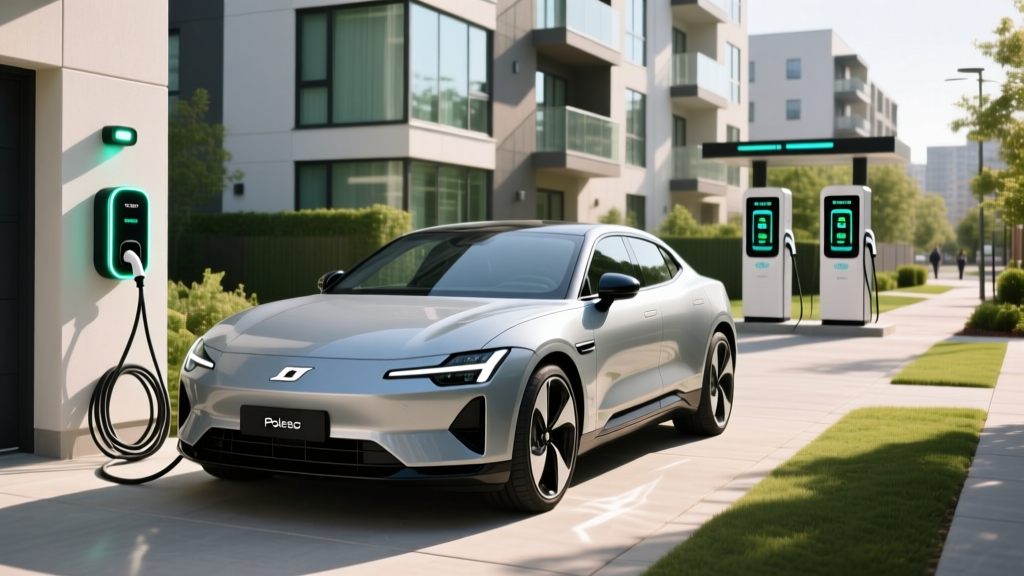
Home EV Charger Installation: Electrical Requirements and Costs
Whether you're installing a standard Level 2 charger for daily use or a bi-directional V2H unit for backup power, the electrical work is the largest variable in your total cost. Here's what the installation actually involves.
Core Electrical Requirements
- Standard Level 2 (charging only): Requires a dedicated 240V circuit, typically 40A–60A breaker (delivering 32A–48A continuous to the vehicle). Uses 6 AWG or 4 AWG copper wire depending on circuit size and run length.
- Bi-directional V2H system: Requires a dedicated 240V/60A circuit minimum, plus a transfer switch or energy management system (like the Span smart panel or Ford Home Integration System) that isolates your home from the grid during outages to prevent back-feeding utility workers.
- GFCI protection: NEC 2023 (and adopted into most 2026 local codes) requires GFCI protection on all EV charging circuits — built into most UL-listed chargers, but your electrician must verify compliance.
- Outdoor rating: If your charger mounts outside, it must carry a NEMA 4 or NEMA 4X enclosure rating for weather resistance.
Panel Upgrade: The Hidden Cost
Most homes built before 2000 have 100A or 150A main electrical panels. Adding a 60A EV circuit — especially alongside existing loads like electric dryers, ranges, and HVAC — may exceed your panel's capacity. A licensed electrician will perform a load calculation per NEC Article 220.
If you need a panel upgrade to 200A (the modern standard), expect to add $1,500–$3,500 to your project. In rare cases — older homes with 60A service or homes adding V2H plus solar plus a heat pump — you may need a 400A service upgrade or a secondary sub-panel, pushing costs higher.
Installation Cost Breakdown
| Component | Standard Level 2 Install | Bi-Directional V2H Install |
|---|---|---|
| Charger/Equipment | $300–$750 | $1,800–$4,500 |
| Electrician labor (licensed) | $400–$1,200 | $1,500–$3,500 |
| Permit & inspection | $50–$200 | $150–$400 |
| Panel upgrade (if needed) | $0–$3,500 | $0–$3,500 |
| Transfer switch / EMS | N/A | $500–$1,500 |
| Total typical range | $750–$2,150 | $3,950–$13,400 |
Federal incentive note: The IRS §30C credit covers 30% of home EV charging equipment and installation costs, up to $1,000, for equipment placed in service. This applies to both standard Level 2 chargers and bi-directional V2H hardware. Eligibility requires installation in a qualified census tract — check your address against the DOE's mapping tool before assuming qualification.
Connector Compatibility: NACS, CCS1, CHAdeMO, and V2H Adapters
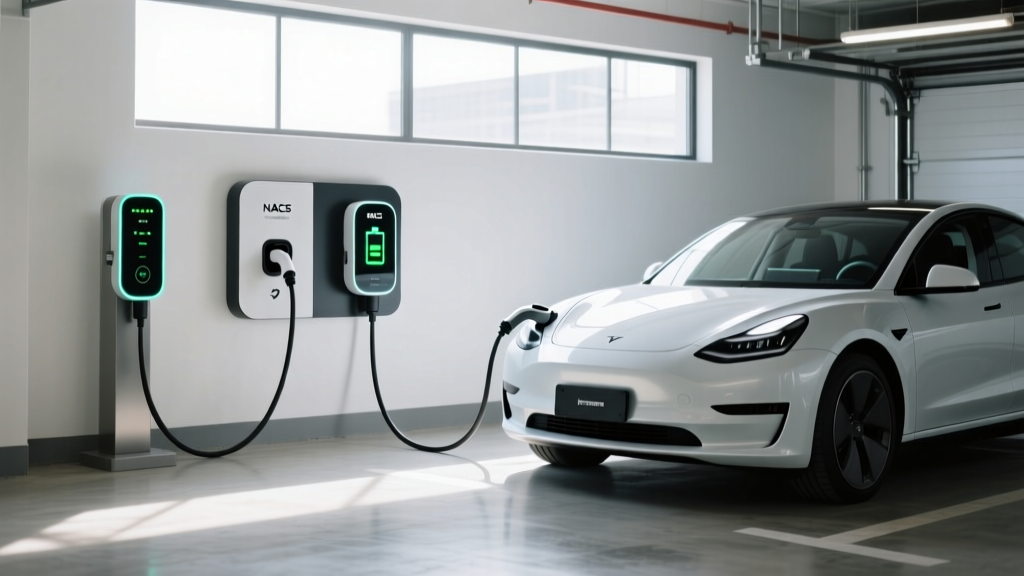
The connector on your EV determines which chargers you can use — and crucially, which bi-directional systems are compatible. The North American market has largely converged on NACS (the Tesla-standard connector now adopted by Ford, GM, Hyundai, Rivian, and others), but CCS1 vehicles remain on the road in large numbers, and V2H has its own connector requirements.
| Connector | Brands Using It (2026) | Level 2 Charging | DC Fast Charging | V2H Bi-Directional |
|---|---|---|---|---|
| NACS (J3400) | Tesla, Ford, GM, Rivian, Hyundai/Kia (2025+), Volvo, Polestar, BMW, Mercedes | Yes (native) | Yes (native at Superchargers; CCS stations via adapter) | Ford Charge Station Pro (NACS); Tesla Powerwall integration announced |
| CCS1 | VW ID.4 (pre-2026), older Hyundai/Kia, BMW i4/iX (pre-2025), legacy models | Yes (native) | Yes (native at Electrify America, EVgo) | Limited — Fermata Energy V2G uses CCS; some home V2H adapters available |
| CHAdeMO | Nissan Leaf (legacy), Mitsubishi Outlander PHEV (older) | Yes (with J1772 adapter) | Yes (declining station availability) | Nissan Leaf V2H (Japan-specific hardware; limited US availability) |
Adapter reality for 2026: If you own a CCS1 vehicle, Tesla provides a NACS-to-CCS adapter (~$250) that grants access to Superchargers. For V2H specifically, Ford's Charge Station Pro uses the NACS connector and pairs with the F-150 Lightning and GM Silverado EV. Hyundai's HomePlug system (available for the Ioniq 5) uses a dedicated V2H wallbox with NACS. If your vehicle supports V2L only (not V2H), you can power appliances through the car's built-in 120V/240V outlet without any home electrical modification — but you cannot back-feed your home's panel.
Compatible EVs for Vehicle to Home Charging in 2026
True V2H capability is still a short list. Here are the vehicles and systems confirmed for US residential V2H as of 2026:
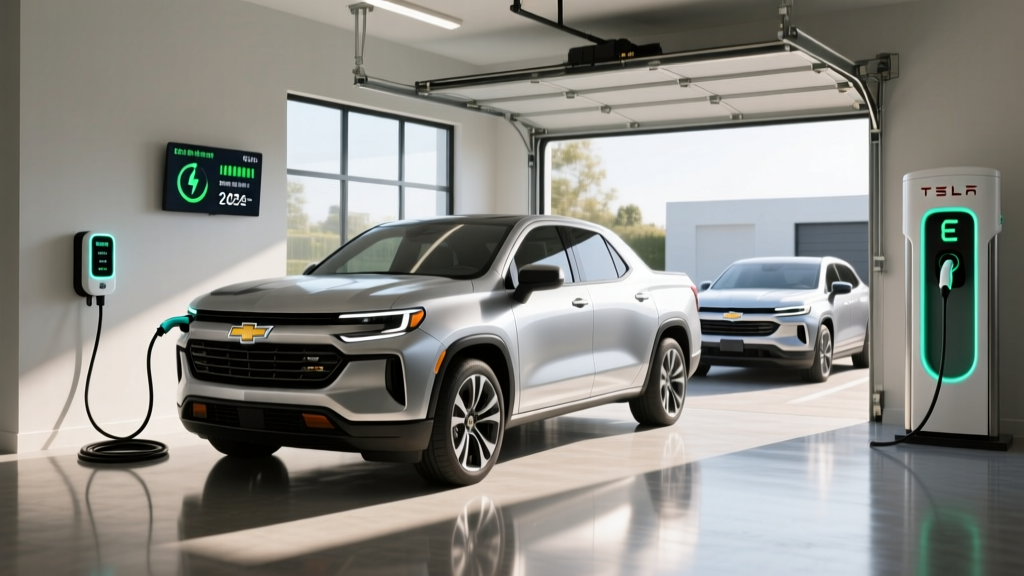
- Ford F-150 Lightning (all trims with extended-range battery): 9.6 kW continuous discharge via Ford Charge Station Pro + Home Integration System. Can power an average home for approximately 3 days on a full 131 kWh battery. MSRP starts at $55,995 (2026 base Pro trim).
- GM Chevrolet Silverado EV (Work Truck and RST trims): Up to 19.2 kW discharge via GM Energy V2H Enablement Kit. Pairs with the Ultium Home energy management system. 200+ kWh battery on RST trim provides extensive backup duration. MSRP from $57,900.
- Hyundai Ioniq 5 (2025+ with V2H option): 3.6 kW V2H via the Hyundai HomePlug system (available in select markets). 77.4 kWh battery provides ~1 day of essential-loads backup. Requires the dedicated Hyundai HomePlug wallbox.
- Kia EV9 (2025+, V2L standard, V2H pending): Currently offers 3.6 kW V2L via interior and exterior outlets. Full V2H with a Kia-branded bi-directional charger expected late 2026.
Most other EVs — including Tesla models, Rivian R1T/R1S, and VW ID.4 — offer V2L (powering devices directly from the vehicle) but not V2H (back-feeding your home's panel). This distinction matters enormously for purchase decisions if whole-home backup is your goal.
Charging Cost Per Mile: Home vs Public vs Gas
One of the strongest economic arguments for EV ownership is the per-mile energy cost, but only if you're charging at home on off-peak rates. Public DC fast charging has narrowed the gap with gasoline in some regions.
| Scenario | Rate | Cost for 77 kWh Fill | Cost Per Mile (3.5 mi/kWh avg) |
|---|---|---|---|
| Home off-peak (utility time-of-use) | $0.08–$0.12/kWh | $6.16–$9.24 | $0.023–$0.035 |
| Home standard rate (no TOU) | $0.14–$0.18/kWh | $10.78–$13.86 | $0.041–$0.053 |
| Public Level 2 (ChargePoint, EVgo) | $0.25–$0.49/kWh | $19.25–$37.73 | $0.073–$0.14 |
| DC Fast Charging (Electrify America, Tesla Supercharger) | $0.32–$0.55/kWh | $24.64–$42.35 | $0.094–$0.16 |
| Gasoline equivalent (28 MPG combined, $3.40/gal) | $3.40/gallon | $9.35 (equiv.) | $0.12 |
The takeaway: Home off-peak charging delivers fuel costs roughly 70–80% below gasoline. But exclusive reliance on DC fast charging can match or exceed gas costs depending on your local network pricing. This is why a home Level 2 installation isn't just a convenience — it's the economic foundation of EV ownership.
For V2H specifically, the value calculation shifts. If a V2H system prevents a single spoiled-freezer event or keeps your heat running during a 12-hour winter outage, the system's payback extends beyond per-mile driving economics into insurance and resilience value.
Recommended Equipment: Bi-Directional Chargers and Standard Level 2 Units
Equipment selection depends on whether you need V2H capability or standard charging. Here are vetted picks for 2026:
Bi-Directional V2H Chargers
Ford Charge Station Pro
- Power: 9.6 kW charge / 9.6 kW discharge
- Connector: NACS (J3400)
- Cable length: 25 ft
- Smart features: FordPass app integration, scheduled charging, V2H automatic switchover
- Price: ~$2,200 (equipment only)
- Compatible vehicles: F-150 Lightning, compatible future Ford EVs
GM Energy V2H Enablement Kit
- Power: Up to 19.2 kW discharge
- Connector: NACS (J3400)
- Cable length: 25 ft
- Smart features: myChevrolet app, grid-island mode, solar integration
- Price: ~$3,500–$4,500 (includes energy management module)
- Compatible vehicles: Silverado EV, future Ultium-platform GM EVs
Standard Level 2 Chargers (Non-Bi-Directional)
Emporia Vue Level 2 EV Charger
- Power: 11.5 kW (48A)
- Connector: NACS (J3400), CCS adapter included
- Cable length: 24 ft
- Smart features: Energy monitoring, solar-aware scheduling, load management
- Price: ~$350
ChargePoint Home Flex
- Power: Up to 12 kW (50A configurable)
- Connector: NACS or CCS1 (configurable at purchase)
- Cable length: 23 ft
- Smart features: Alexa integration, scheduling, charging history, flexible amperage
- Price: ~$550
Safety, Code, and Installation Best Practices
EV charging circuits carry significant continuous current — more than most household appliances. Cutting corners here creates fire risk and insurance liability. Every installation should meet these standards:
- Dedicated circuit: Your EV charger must have its own dedicated breaker — never shared with other outlets or appliances. A 48A charger requires a 60A breaker (NEC requires 125% overhead for continuous loads).
- Hardwired vs plug: Hardwired installations (no plug) are preferred for 48A+ chargers, eliminating the NEMA 14-50 receptacle as a failure point. If using a 14-50 outlet, ensure it's a high-quality industrial-grade receptacle (Hubbell, Bryant) — cheap residential-grade outlets have caused documented fires under continuous EV loads.
- GFCI protection: Required by NEC 625. Most modern chargers include internal GFCI; your electrician should verify and avoid double-GFCI configurations that cause nuisance tripping.
- Permit and inspection: Required in virtually all US jurisdictions. The inspection verifies wire gauge, breaker sizing, grounding, and GFCI compliance. Skipping the permit risks insurance denial in the event of an electrical fire.
- V2H-specific — anti-islanding: Your bi-directional system must include grid-isolation hardware (transfer switch or smart panel) that prevents energy from back-feeding utility lines during an outage. This protects line workers and is non-negotiable per NEC Article 702 and utility interconnection requirements.
For authoritative installation standards, refer to the National Electrical Code (NFPA 70), Article 625 — Electric Vehicle Charging System Equipment. Your local AHJ (Authority Having Jurisdiction) may have additional amendments.
Frequently Asked Questions
How much does it cost to install a home EV charger?
A standard Level 2 home charger installation typically costs $750–$2,150 total, including equipment ($300–$750), licensed electrician labor ($400–$1,200), and permits ($50–$200). If your home needs a panel upgrade to 200A service, add $1,500–$3,500. A bi-directional V2H system is significantly more expensive: $3,950–$13,400 including the bi-directional wallbox, energy management hardware, transfer switch, and labor.
How fast will each charging level add range?
Level 1 (120V) adds roughly 3–5 miles per hour — adequate for plug-in hybrids with small batteries but impractical for full-size EVs. Level 2 (240V, 32–48A) adds 25–44 miles per hour, fully replenishing most EVs overnight. DC fast charging adds 180–1,200+ miles per hour at peak, but charge curves taper above 80% SoC, so real-world sessions average slower than peak rates suggest.
Which connector or charger is compatible with my EV?
Check your vehicle's charge port. As of 2026, most new EVs sold in the US use the NACS (J3400) connector, including all Tesla vehicles, Ford, GM, Hyundai/Kia (2025+), Rivian, Volvo, and BMW. Older or pre-2025 models from VW, Hyundai, and Kia may use CCS1. The Nissan Leaf uses CHAdeMO. For V2H specifically, you need a vehicle with confirmed bi-directional capability (F-150 Lightning, Silverado EV, Ioniq 5 with HomePlug) paired with the manufacturer-specified bi-directional wallbox.
How much does charging cost per mile compared to gas?
Home charging on off-peak utility rates costs approximately $0.02–$0.04 per mile — roughly 70–80% less than gasoline at $3.40/gallon and 28 MPG combined. Home charging on standard rates runs $0.04–$0.05 per mile. Public DC fast charging at $0.32–$0.55/kWh costs $0.09–$0.16 per mile, which can approach or exceed gasoline costs depending on your local fuel prices.
What electrical upgrades might I need?
The most common upgrade is a panel replacement from 100A or 150A to 200A service ($1,500–$3,500). Older homes with 60A service may need a full service upgrade or a secondary sub-panel. You'll also need a dedicated 240V circuit with appropriately sized wire (6 AWG for 40A circuits, 4 AWG for 60A). For V2H installations, a transfer switch or smart energy management panel (like the Span panel) is required to safely isolate your home from the grid during backup operation.
Can any EV power my home during an outage?
No. Only vehicles with confirmed V2H capability and the matching bi-directional wallbox can back-feed your home's electrical panel. As of 2026, this includes the Ford F-150 Lightning (9.6 kW), GM Silverado EV (up to 19.2 kW), and Hyundai Ioniq 5 with HomePlug (3.6 kW). Many other EVs offer V2L, which can power individual appliances through a 120V outlet on the vehicle, but V2L cannot energize your home's breaker panel.
Does bi-directional V2H degrade my EV battery faster?
Every charge-discharge cycle contributes to battery degradation, but V2H usage during occasional outages (a few times per year) adds minimal wear relative to normal driving cycles. Ford and GM warranty their EV batteries for 8 years/100,000 miles with a minimum 70% capacity retention threshold. If you plan to use V2H daily for time-of-use arbitrage (discharging every evening), expect accelerated degradation — consult your manufacturer's warranty terms for cycle-life exclusions.
Sources: fueleconomy.gov (EPA range and efficiency data), IRS §30C credit guidelines, NFPA National Electrical Code Article 625. Vehicle specifications and pricing reflect 2026 model-year data from manufacturer press resources. Tax credit and incentive rules are subject to change — consult a tax professional for eligibility determination.