What Is V2X Charging and Why Does It Matter?
V2X charging — short for "vehicle-to-everything" — is an umbrella term for technology that lets your electric vehicle's battery send energy out, not just take it in. Instead of your EV sitting idle in the garage for 20 hours a day, V2X turns that large battery (typically 60–100 kWh of usable capacity) into a mobile power station that can run your home during an outage, offset peak electricity rates, or even earn you money by selling power back to the grid.
The V2X umbrella covers three main capabilities:
- V2H (Vehicle-to-Home): Your EV powers your house during an outage or during expensive peak-rate hours.
- V2G (Vehicle-to-Grid): Your EV sends electricity back to the utility grid, participating in demand-response programs and potentially earning credits.
- V2L (Vehicle-to-Load): Your EV powers individual devices or appliances through standard AC outlets — no special home equipment needed.
As of early 2026, V2X is transitioning from concept to real-world deployment. A growing number of vehicles support V2L natively, several support V2H with the right bidirectional charger, and V2G pilot programs are expanding across utilities in California, Texas, and the Northeast. But making V2X work at your home requires specific vehicles, specific chargers, and specific electrical work — and that's where most buyers get confused.
This guide covers the full V2X landscape: what's available now, what equipment you need, what it costs, and how bidirectional charging fits into the broader EV charging ecosystem.
V2H, V2G, and V2L: Understanding the Differences
Before diving into equipment and costs, it's critical to understand what each V2X mode actually does — and what it requires.
V2L (Vehicle-to-Load) is the simplest form. Your EV has one or more standard 120V AC outlets built in (or available via an adapter), typically rated at 1.5 to 3.6 kW. You can plug in a laptop, a camp stove, a TV, or even a small window AC unit directly from the car. No home electrical modifications needed. Vehicles like the Hyundai Ioniq 5, Kia EV6, Ford F-150 Lightning, and Rivian R1S/R1T offer V2L either standard or with an adapter. It's essentially a very large, very capable portable power station.
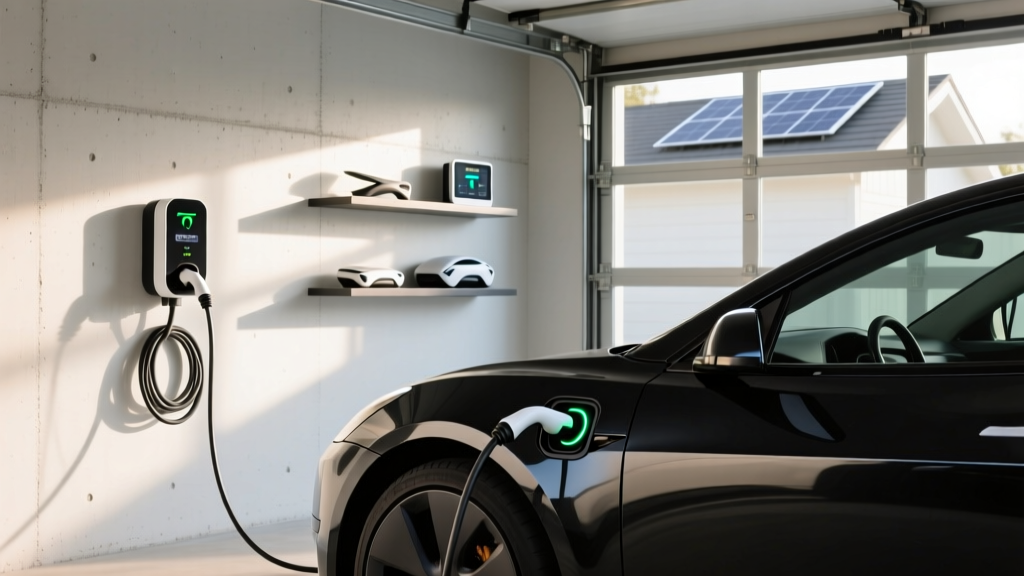
V2H (Vehicle-to-Home) requires a bidirectional home charger — a wall-mounted unit that can both charge your EV and accept power flowing back from it. During a grid outage, a V2H-capable system with a transfer switch can power your entire home (or critical circuits) using your EV's battery. A typical EV with 75–80 kWh of usable battery can run an average U.S. home (roughly 30 kWh/day) for two to three days. The Ford F-150 Lightning with Ford's Charge Station Pro and Home Integration System was the first widely available V2H setup, and the GM Ultium-based Silverado EV and Sierra EV joined with V2H capability for the 2025–2026 model years.
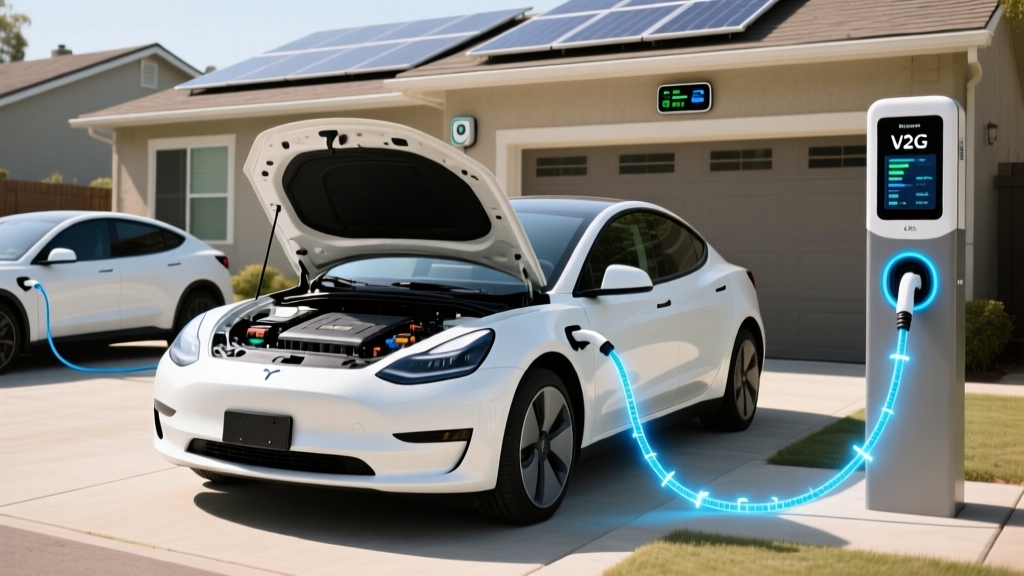
V2G (Vehicle-to-Grid) is the most complex. It requires not only a bidirectional charger and a compatible vehicle but also utility participation and a grid interconnection agreement. With V2G, your EV can sell electricity back to the grid during peak demand hours and recharge during off-peak hours when electricity is cheap — a practice sometimes called "energy arbitrage." As of 2026, V2G is primarily available through utility pilot programs. The U.S. Department of Energy has funded multiple V2G demonstration projects, and utilities like PG&E, Con Edison, and Austin Energy have active or announced programs.
How V2X Fits Into the Broader Charging Landscape
V2X doesn't replace conventional charging — it builds on top of it. You still need to understand standard charging levels to plan your setup. Here's how the three charging levels work for everyday EV charging, with speeds expressed in kW (power, the rate of energy flow) and approximate miles of range added per hour:
| Level | Voltage / Amperage | Power (kW) | Miles of Range per Hour | Typical Use Case |
|---|---|---|---|---|
| Level 1 | 120V / 12A | ~1.4 kW | 3–5 mi/hr | Overnight trickle charge from a standard outlet |
| Level 2 | 240V / 32–48A | 7.7–11.5 kW | 25–44 mi/hr | Home wall charger, workplace, public Level 2 |
| DC Fast Charge | 400–800V DC | 50–350 kW | 180–1,300+ mi/hr (peak) | Highway travel, rapid top-ups |
A bidirectional V2H charger operates as a Level 2 charger when filling your car (typically at 7.7–11.5 kW) and as a Level 2-scale discharger when sending power back to your home (typically 7.2–11.5 kW output). The key distinction: standard Level 2 chargers are unidirectional — power only flows from the grid to the car. V2H chargers are bidirectional — power flows both ways.
For context on charging times with common battery sizes using a standard Level 2 charger at 11.5 kW:
- 60 kWh battery (e.g., base Tesla Model 3): 10–80% in approximately 3.5–4 hours
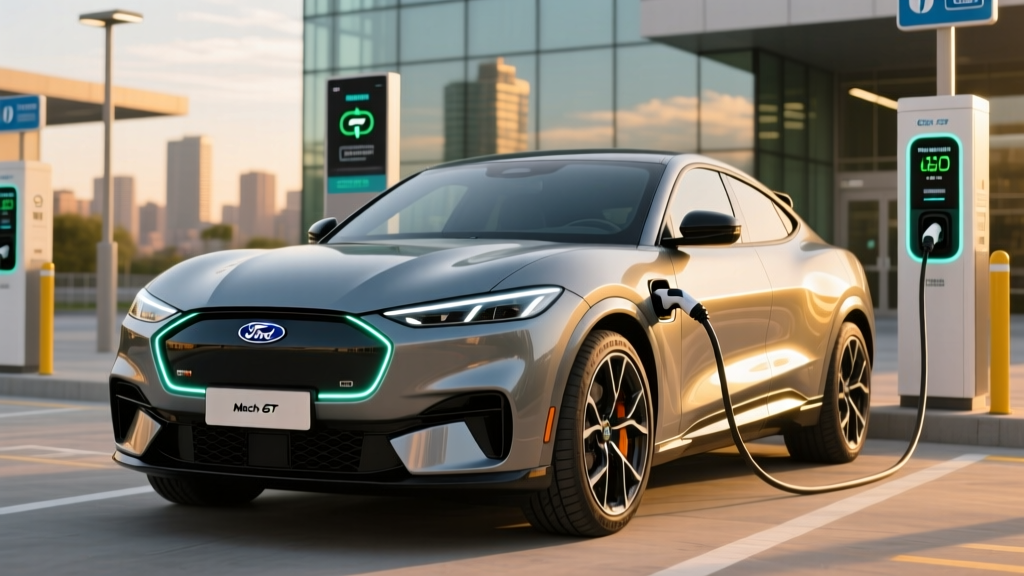
- 77 kWh battery (e.g., Ford Mustang Mach-E Extended Range): 10–80% in approximately 4.5–5 hours
- 131 kWh battery (e.g., Ford F-150 Lightning Extended Range): 10–80% in approximately 8–9 hours
Which EVs Support V2X in 2026?
Not every EV can send power back. V2X requires specific onboard hardware and software. Here's the landscape as of the 2026 model year:
| Vehicle | V2L | V2H | V2G | Notes |
|---|---|---|---|---|
| Ford F-150 Lightning | Yes (9.6 kW via Pro Power Onboard) | Yes (with Charge Station Pro + Home Integration System) | Pilot programs | First mass-market V2H-capable EV; up to 9.6 kW home backup |
| GM Silverado EV / Sierra EV | Yes (up to 10.2 kW via PowerBase) | Yes (with GM Energy V2H Enablement Kit) | Announced pilots | Available on 2025+ models with Ultium platform |
| Hyundai Ioniq 5 | Yes (3.6 kW via interior outlet or V2L adapter) | No (2026 MY) | No | V2L standard; V2H expected on future Ioniq models |
| Kia EV6 / EV9 | Yes (3.6 kW via V2L adapter) | No (2026 MY) | No | V2L via rear outlet or external adapter |
| Rivian R1T / R1S (Gen 2) | Yes (up to 7.2 kW camp kitchen/outlets) | No (2026 MY) | No | Robust V2L; V2H on roadmap but not yet available |
| VW ID.4 (2025+) | Limited (via adapter in some markets) | No (U.S.) | No | Bidirectional hardware present in some markets; U.S. V2H not yet enabled |
The critical takeaway: V2L is increasingly common, but V2H remains limited to a small number of vehicles — primarily trucks and large SUVs with big batteries where the home-backup use case is most compelling. If V2H is a priority for your purchase, the F-150 Lightning and GM's full-size EV trucks are currently your primary options.
Equipment and Installation: What You Need for V2H
Setting up V2H at home is more complex than installing a standard Level 2 charger. You need three things: a bidirectional charger, a transfer switch or energy management system, and sufficient electrical panel capacity. Here's the equipment landscape:
Bidirectional Chargers Available in 2026
| Charger | Charge Power (kW) | Discharge Power (kW) | Connector | Smart Features | Approx. Price |
|---|---|---|---|---|---|
| Ford Charge Station Pro | 11.5 kW (charging) | 9.6 kW (discharging) | NACS (Tesla-style, Ford switching 2025+) | Wi-Fi, FordPass integration, automatic backup switching | ~$1,300 (unit only) |
| GM Energy PowerShift Charger | 11.5 kW (charging) | Up to 10.2 kW (discharging) | NACS (2025+ GM EVs) | GM Energy app, utility integration, backup mode | ~$1,400 (unit only) |
| Wallbox Quasar 2 | 11.5 kW (charging) | 11.5 kW (discharging) | NACS | myWallbox app, solar integration, V2G-ready, load balancing | ~$2,500 (unit only) |
| Emporia V2X (announced) | 11.5 kW (charging) | 11.5 kW (discharging) | NACS / CCS1 (adapter) | Emporia app, whole-home energy monitoring, solar pairing | ~$1,800 (estimated, unit only) |
The Wallbox Quasar 2 stands out for its full bidirectional power and solar-integration capability, but it commands a premium. The Ford Charge Station Pro is the most proven option, but it only works with Ford vehicles for V2H. The Emporia V2X is notable for its whole-home energy monitoring ecosystem, though availability has been limited.
Additional Equipment: Transfer Switches and Energy Management
A bidirectional charger alone doesn't complete a V2H system. You also need:
- Transfer switch or automatic backup controller: This device safely disconnects your home from the grid during an outage and routes power from your EV to your home's electrical panel. Ford's Home Integration System (~$800) and GM's V2H Enablement Kit (~$700) include this component. Without it, your V2H system cannot legally or safely power your home during a blackout — back-feeding an energized grid is extremely dangerous for utility workers.
- Energy management system (optional but recommended): Devices like the Emporia Vue or Span smart panel give you circuit-level control over which loads your EV powers, helping you stretch battery capacity during extended outages.
Installation Costs: The Full Picture
V2H installation costs more than a standard Level 2 charger install because of the additional transfer switch, potential panel upgrade, and more complex wiring. Here's a realistic breakdown based on 2026 national averages:
| Component | Typical Cost Range | Notes |
|---|---|---|
| Bidirectional charger unit | $1,300–$2,500 | Varies by brand; Ford/GM units at lower end, Wallbox at higher |
| Transfer switch / backup controller | $600–$1,200 | Often bundled with OEM kits (Ford Home Integration System, GM V2H kit) |
| Electrician labor (installation) | $1,500–$3,500 | Higher than standard L2 install due to transfer switch wiring and commissioning |
| Electrical permit | $100–$400 | Varies by jurisdiction; some areas require separate permit for backup system |
| Panel upgrade (if needed) | $1,500–$4,000 | Required if your panel is 100A or less, or lacks space for new breakers |
| Total (no panel upgrade) | $3,500–$7,600 | Most homes with 200A service fall in this range |
| Total (with panel upgrade) | $5,000–$11,600 | Older homes with 100A service or full panels |
The panel upgrade is the biggest variable. A V2H system draws up to 48A continuously during charging and pushes significant current back during discharge. Homes with older 100-amp panels almost always need an upgrade to 200A service — a $1,500–$4,000 job on its own. Even some 200A panels may need a sub-panel or load-management device if they're near capacity with existing circuits (electric range, dryer, HVAC).
Pro tip: Before committing to V2H, have a licensed electrician perform a load calculation on your panel. This $100–$200 service call will tell you immediately whether a panel upgrade is required, saving you from surprise costs mid-project.
Federal Tax Credit for Home Charging Equipment
The IRS §30C Alternative Fuel Vehicle Refueling Property Credit covers 30% of the cost of qualified home EV charging equipment, including bidirectional chargers, up to a maximum credit of $1,000. This applies to both the charger hardware and installation costs. Key caveats for 2026:
- The property must be located in an eligible census tract (generally low-income or non-urban areas — check the IRS locator tool)
- The credit covers equipment and installation, but not panel upgrades alone
- Income limits and sourcing requirements differ from the §30D vehicle credit
- Always consult a tax professional to confirm eligibility for your specific situation
Connector Compatibility: What Plugs Into What
The North American charging connector landscape has consolidated significantly since 2024, but V2X introduces additional complexity because not all connectors support bidirectional power flow.
| Connector | Charging Support | V2H/V2G Bidirectional | Common Vehicles (2026) |
|---|---|---|---|
| NACS (J3400) | Level 1, Level 2, DC Fast | Yes (with compatible charger) | Tesla (all), Ford F-150 Lightning (2025+), GM EVs (2025+), Rivian (2025+), most new EVs |
| CCS1 | Level 2, DC Fast | Limited (some pilots) | Hyundai Ioniq 5 (pre-2025), Kia EV6, VW ID.4 (pre-2025), BMW iX |
| CHAdeMO | DC Fast only | No (U.S.) | Nissan Leaf (legacy); being phased out |
| J1772 | Level 1, Level 2 only | No | All EVs (via adapter if NACS-equipped) |
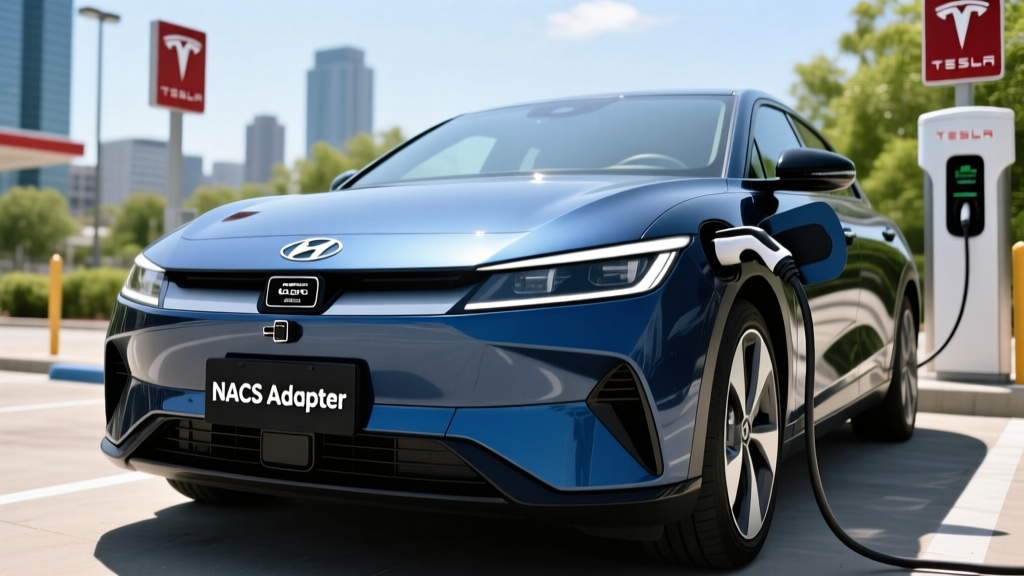
The NACS connector (now formally SAE J3400) has become the dominant standard, and it supports bidirectional power flow by design. Most new bidirectional chargers ship with NACS. If you drive a CCS1-equipped vehicle, your V2X options are currently limited — you may need a CCS-to-NACS adapter, and not all bidirectional chargers support this configuration.
For V2L, connectors are less relevant since V2L uses standard 120V AC outlets built into the vehicle or accessed via a proprietary adapter that plugs into the vehicle's charging port. Hyundai and Kia use a V2L adapter that plugs into their CCS1 port; Ford integrates V2L outlets directly into the F-150 Lightning's bed and cabin.
The Economics: Charging Costs, V2X Savings, and Cost Per Mile
Understanding what you'll spend — and potentially save — with V2X requires looking at both charging costs and the value of the energy services your EV can provide.
| Scenario | Rate ($/kWh) | Cost for 60 kWh Fill | Cost per Mile (4 mi/kWh EV) |
|---|---|---|---|
| Home off-peak (time-of-use) | $0.08–$0.14 | $4.80–$8.40 | $0.02–$0.035 |
| Home standard rate | $0.14–$0.20 | $8.40–$12.00 | $0.035–$0.05 |
| Public Level 2 (ChargePoint, etc.) | $0.25–$0.49 | $15.00–$29.40 | $0.06–$0.12 |
| DC Fast Charge (Electrify America, EVgo) | $0.35–$0.65 | $21.00–$39.00 | $0.09–$0.16 |
| Gasoline equivalent (25 MPG, $3.30/gal) | — | $19.80 (for ~300 mi) | $0.13 |
Home charging remains dramatically cheaper than gasoline — typically 3 to 6 cents per mile versus 13 cents for a 25 MPG gas vehicle. Public DC fast charging narrows the gap but still tends to be cheaper per mile than gas, especially for efficient EVs.
Where V2X Adds Financial Value
The economic case for V2X goes beyond simple charging costs:
- Backup power value: A portable home generator costs $1,000–$5,000, requires fuel storage, and produces noise and emissions. Your EV's V2H capability provides 2–3 days of whole-home backup with zero additional fuel cost. For homeowners in areas with frequent outages (Texas, California, the Gulf Coast), this alone can justify the bidirectional charger investment.
- Time-of-use arbitrage: If your utility charges $0.35/kWh during peak hours (4–9 PM) and $0.08/kWh overnight, V2H lets you charge at $0.08 and power your home during peak hours at an effective savings of $0.27/kWh. For a home using 15 kWh during peak hours daily, that's roughly $4/day or $120/month in savings.
- V2G demand response payments: Utilities running V2G programs typically pay $5–$20 per event (a few hours of discharge during grid stress), with some programs offering $50–$100/month in credits for participation. These programs are still limited but growing.
Safety, Electrical Code, and Installation Requirements
Bidirectional charging introduces safety considerations beyond standard EV charging because power flows back into your home's electrical panel and potentially the grid. Here's what you need to know:
Electrical Requirements for V2H
- Circuit: A dedicated 60A breaker (for 48A continuous charging/discharging) on a 200A or larger panel is standard. Some systems can operate on a 50A breaker at reduced power.
- Wire gauge: Typically 6 AWG copper for 48A continuous, or 4 AWG for longer runs to minimize voltage drop.
- Transfer switch: Required by the National Electrical Code (NEC) for any system that can back-feed a home panel. This prevents your EV from energizing grid lines during an outage — a critical safety measure for utility line workers.
- GFCI protection: NEC 2023 and later require GFCI protection for EV charging circuits, including bidirectional installations. Your electrician will ensure compliance.
- Outdoor rating: If the bidirectional charger is mounted outdoors, it must carry a NEMA 4 or NEMA 4X rating for weather resistance. The Wallbox Quasar 2 and Ford Charge Station Pro are rated for outdoor installation.
- Permitting and inspection: Most jurisdictions require a permit for bidirectional charger installation, and some require a separate permit for the backup power system. Expect an inspection after installation to verify code compliance.
Always hire a licensed electrician experienced with EV charger and backup power installations. The combination of high-current EV charging and grid-tied backup power is not a DIY project — incorrect wiring can create fire hazards or endanger utility workers.
Frequently Asked Questions
How much does it cost to install a home V2X charger?
A complete V2H installation typically costs $3,500–$7,600 if your home has a 200A panel with available capacity, or $5,000–$11,600 if you need a panel upgrade. This includes the bidirectional charger unit ($1,300–$2,500), transfer switch or backup controller ($600–$1,200), electrician labor ($1,500–$3,500), and permitting ($100–$400). The IRS §30C credit can offset up to $1,000 of equipment and installation costs if you're in an eligible census tract.
How fast will each charging level add range?
Level 1 (120V) adds roughly 3–5 miles per hour. Level 2 (240V) adds 25–44 miles per hour depending on amperage (32A–48A). DC fast charging adds 180–1,300+ miles per hour at peak rates, though charging curves taper significantly above 80% state of charge — expect a 10–80% session to take 18–40 minutes depending on the vehicle and charger power. V2H discharge rates of 7.2–11.5 kW can power an average home's full load continuously.
Which connector is compatible with my EV for V2X?
For V2H, the NACS (J3400) connector is the current standard. Ford, GM, Rivian, and Tesla vehicles use NACS natively. CCS1-equipped vehicles have limited V2H options and may require an adapter. For V2L, connector type is less relevant — V2L uses standard 120V outlets built into the vehicle or accessed via a port-specific adapter. Check your vehicle's specifications and consult the bidirectional charger manufacturer's compatibility list before purchasing.
How much does EV charging cost per mile compared to gas?
Home charging at off-peak rates typically costs $0.02–$0.035 per mile — roughly one-quarter the cost of gasoline at $0.13 per mile (assuming 25 MPG and $3.30/gallon). Even public DC fast charging at $0.35–$0.65/kWh usually costs less per mile than gasoline for efficient EVs. V2H and time-of-use optimization can push effective home charging costs even lower.
What electrical upgrades might I need for V2X?
The most common upgrade is a panel replacement from 100A to 200A service ($1,500–$4,000), required for older homes that lack the capacity for a 48A bidirectional charger circuit. Even homes with 200A panels may need a sub-panel, load-management device, or circuit rearrangement if the panel is near capacity. A licensed electrician can perform a load calculation to determine your specific needs. The transfer switch required for V2H adds wiring complexity that goes beyond a standard Level 2 charger install.
Will V2X degrade my EV battery faster?
Bidirectional cycling does add charge-discharge cycles to your battery, but the impact is modest for V2H use. A V2H session that uses 15–20 kWh is roughly equivalent to driving 60–80 miles. Modern EV batteries are warrantied for 8 years/100,000 miles and designed for 1,500–3,000 full cycles before reaching 70–80% capacity. Occasional V2H use (a few times per week during peak hours, or during outages) adds minimal degradation. Most OEMs that support V2H explicitly state that bidirectional use does not void the battery warranty — but confirm this in writing for your specific vehicle.
Can I use solar panels with a V2X system?
Yes — and this is one of the most compelling V2X combinations. Solar panels charge your EV during the day (effectively free energy), and V2H can power your home with that stored solar energy at night or during outages. The Wallbox Quasar 2 and Emporia ecosystem are specifically designed for solar integration. Pairing solar + V2H can dramatically reduce your grid electricity consumption and provide resilient backup power without a separate home battery system like the Tesla Powerwall.