What Is a V2H Bidirectional Charger and Why It Matters Now
A V2H (vehicle-to-home) bidirectional charger does something no standard EV charger can: it sends power back from your EV's battery into your home's electrical panel. During a grid outage, your electric vehicle becomes a rolling backup generator. With most EV batteries ranging from 60 to 100+ kWh of usable capacity, a fully charged EV can power an average U.S. home (roughly 30 kWh/day) for two to three days — far longer than a typical home standby battery like the Tesla Powerwall (13.5 kWh).
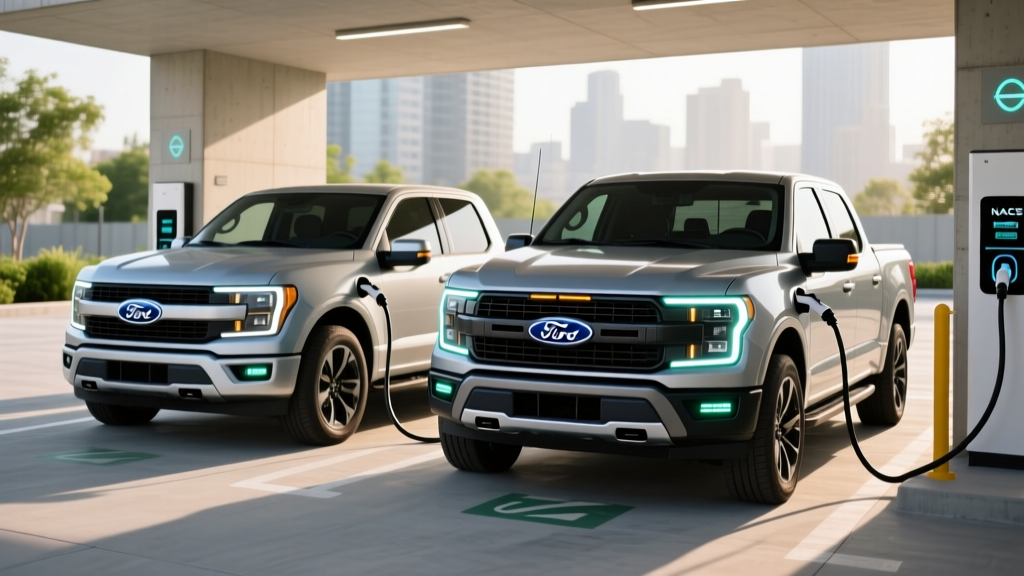
As of early 2026, V2H adoption is accelerating but still limited by hardware availability, EV compatibility, and installer familiarity. The Ford F-150 Lightning pioneered consumer V2H with its Pro Power Onboard and the Charge Station Pro. The Hyundai Ioniq 5 and Kia EV9 now support V2H/V2L capabilities. General Motors has committed to V2H support across its Ultium-based lineup. But the ecosystem of certified bidirectional chargers, compatible electrical panels, and qualified installers remains narrow — and the costs are significantly higher than a standard Level 2 home charger installation.
This guide breaks down exactly what V2H requires, what it costs, which EVs support it, and how bidirectional charging fits into the broader home charging landscape.
Charging Levels Explained: Level 1, Level 2, DC Fast, and Bidirectional
Before evaluating V2H specifically, it helps to understand the full charging landscape. Every EV owner needs to understand the difference between kW (kilowatts — the rate of power flow) and kWh (kilowatt-hours — the total energy stored or delivered). Think of kW as the speed of water flowing through a hose, and kWh as the total volume of water in the bucket.
| Level | Voltage | Power (kW) | Miles of Range Added per Hour | Typical Use Case |
|---|---|---|---|---|
| Level 1 | 120V AC | 1.0–1.4 kW | 3–5 mi/hr | Overnight trickle charge; emergency top-up |
| Level 2 | 240V AC | 3.3–19.2 kW | 12–75 mi/hr | Daily home charging; workplace charging |
| DC Fast Charging | 400–800V DC | 50–350 kW | 150–1,000+ mi/hr (at peak) | Road trips; highway corridor stops |
| Bidirectional (V2H) | 240V AC (to home panel) | 3.3–19.2 kW (discharge to home) | N/A — powers home loads, not vehicle | Backup power during outages; peak shaving |
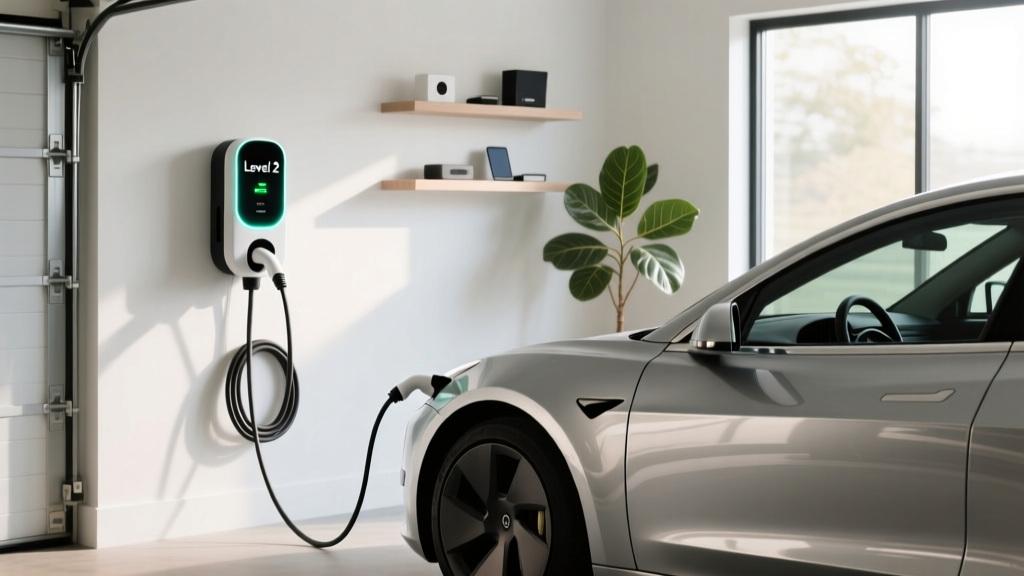
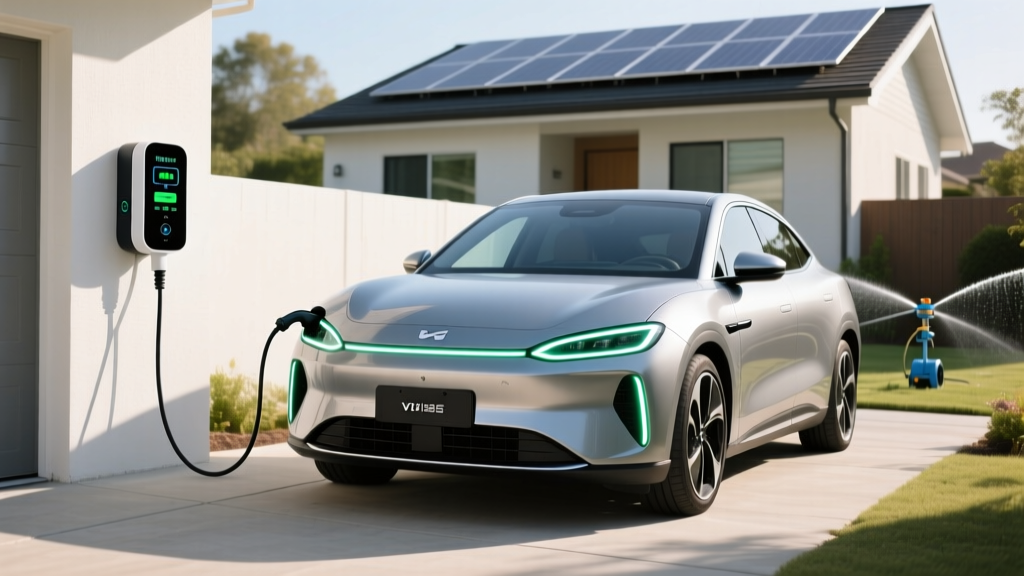
Level 2 charging is the backbone of daily EV ownership. A 48-amp (11.5 kW) Level 2 charger adds roughly 40–44 miles of range per hour in a vehicle like the Tesla Model Y. DC fast charging is for road trips, delivering a 10–80% charge in as little as 18 minutes on vehicles with 250+ kW peak charge rates. V2H operates at Level 2 power levels but in reverse — pulling energy from the vehicle and feeding it into your home's 240V electrical system.
How V2H Bidirectional Charging Works: The Technical Setup
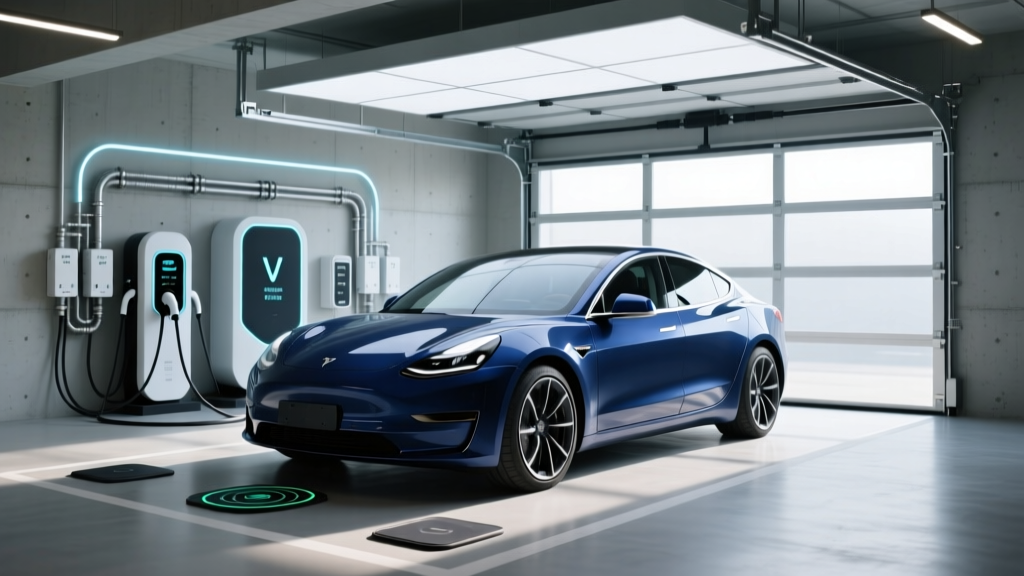
A standard Level 2 charger converts AC power from your home's electrical panel into a form the EV's onboard charger can use to fill the battery. A V2H bidirectional charger adds the reverse path: it converts DC power from the EV's battery back into 240V AC power synchronized with your home's electrical panel.
This requires several components working together:
- Bidirectional EVSE (Electric Vehicle Supply Equipment): The charger unit itself, which must be certified to UL 9741 (the safety standard for bidirectional EVSE). As of 2026, certified units include the Ford Charge Station Pro (19.2 kW bidirectional), the Wallbox Quasar 2 (up to 11.5 kW, CCS/NACS), and the Fermata Energy FE-15 (commercial-grade, 15 kW).
- Compatible EV: The vehicle must support bidirectional power flow through its charge port. Currently, the Ford F-150 Lightning, Hyundai Ioniq 5 (V2L via adapter or V2H via compatible EVSE), Kia EV9, and select GM Ultium-platform vehicles support this. Tesla vehicles do not natively support V2H as of 2026, though the Cybertruck's Powershare feature provides limited V2L capability.
- Transfer switch or energy management system: Your home needs a way to safely isolate from the grid during an outage (to avoid backfeeding power to utility lines, which is dangerous and illegal). This typically requires an automatic transfer switch (ATS) or a smart panel like the Span drive panel or a FranklinWH whole-home management system.
- Electrical panel capacity: Bidirectional chargers often require a 200-amp or larger main service panel. Older homes with 100-amp panels will almost certainly need an upgrade.
Home Installation Requirements and Costs
Installing a V2H bidirectional charger is substantially more complex — and expensive — than a standard Level 2 charger. Here's why, and what it costs.
Electrical Requirements
A V2H charger typically requires a dedicated 240V circuit rated for 60 to 100 amps, depending on the unit's power output. The Ford Charge Station Pro, for example, requires a 100-amp dedicated circuit to deliver its full 19.2 kW bidirectional capability. The Wallbox Quasar 2 operates on a 60-amp circuit for 11.5 kW output.
Your home's main electrical panel must have sufficient spare capacity. A 200-amp panel is generally the minimum. If your home has a 100-amp or 150-amp panel — common in homes built before the 1990s — you will need a panel upgrade, which is a significant additional cost.
Installation Cost Breakdown
| Component | Low End | High End | Notes |
|---|---|---|---|
| Bidirectional EVSE unit | $3,500 | $7,500 | Ford Charge Station Pro ~$4,500; Wallbox Quasar 2 ~$5,000+ |
| Transfer switch / energy management system | $1,500 | $4,000 | Span panel: ~$3,500+; conventional ATS: ~$1,500–$2,500 |
| Electrical labor (licensed electrician) | $2,000 | $5,000 | Varies by region, run length, and complexity |
| Panel upgrade (if needed) | $2,000 | $5,000 | Upgrading from 100A to 200A service |
| Permits and inspection | $200 | $800 | Varies by municipality; some require utility interconnection agreement |
| Total (no panel upgrade) | $7,200 | $17,300 | |
| Total (with panel upgrade) | $9,200 | $22,300 |
For comparison, a standard Level 2 home charger installation (like a ChargePoint Home Flex or Tesla Wall Connector) typically runs $800–$2,500 total when no panel upgrade is needed. The V2H premium is significant, but the value proposition is different: you're buying a whole-home backup power system, not just a car charger.
Compatible EVs and Connector Standards for V2H
Not every EV can send power back to your home. Bidirectional capability requires both hardware support in the vehicle and software protocols that coordinate with the EVSE. Here's where the landscape stands in 2026:
| Vehicle | Bidirectional Type | Max Discharge Power | Connector | Battery (usable kWh) |
|---|---|---|---|---|
| Ford F-150 Lightning | V2H (Pro Power Onboard) | 9.6 kW (standard) / 19.2 kW (extended) | CCS1 (NACS adapter available) | 98 kWh (std) / 131 kWh (ext) |
| Hyundai Ioniq 5 | V2L (interior/exterior adapter) | 3.6 kW | CCS1 / NACS (2025+) | 77.4 kWh |
| Kia EV9 | V2L + V2H (with compatible EVSE) | 3.6 kW (V2L) / up to 11.5 kW (V2H) | CCS1 / NACS (2025+) | 76.1 / 100.0 kWh |
| GM Silverado EV / Blazer EV | V2H (Ultium platform, rolling out) | Up to 19.2 kW (with Energy Transfer Pro) | CCS1 / NACS (2025+) | 85–200+ kWh (varies by trim) |
| Tesla Cybertruck | V2L (Powershare) | 11.5 kW (bed outlets) | NACS | ~123 kWh |
Cost to Charge: Home vs. Public vs. Gas per Mile
Understanding your per-mile energy cost is essential for evaluating EV ownership economics. Here's how common scenarios compare using 2026 national averages:
| Scenario | Rate | Vehicle Efficiency | Cost per Mile |
|---|---|---|---|
| Home Level 2 (off-peak utility rate) | $0.09/kWh | 3.5 mi/kWh (286 Wh/mi) | $0.026 |
| Home Level 2 (national avg. residential) | $0.17/kWh | 3.5 mi/kWh | $0.049 |
| Public Level 2 (network pricing) | $0.25–$0.49/kWh | 3.5 mi/kWh | $0.071–$0.14 |
| DC Fast Charging (Electrify America, EVgo) | $0.35–$0.55/kWh | 3.5 mi/kWh | $0.10–$0.16 |
| Gasoline vehicle (28 MPG combined) | $3.30/gal (national avg.) | 28 mi/gal | $0.118 |
| Gasoline vehicle (truck, 19 MPG) | $3.30/gal | 19 mi/gal | $0.174 |
Home charging on an off-peak rate delivers a dramatic cost advantage — roughly 4–5 cents per mile versus 12–17 cents for gasoline. Even DC fast charging at premium rates is competitive with or cheaper than gasoline per mile. The U.S. Department of Energy's fueleconomy.gov provides vehicle-specific MPGe and kWh/100mi data for precise comparisons.
For V2H specifically, the economics work differently. You're not paying to charge for driving — you're paying for the backup power capability. If you pair V2H with time-of-use (TOU) utility rates, you can charge overnight at off-peak rates and discharge during peak hours, potentially offsetting some electricity cost. This "peak shaving" strategy is still emerging and depends heavily on your utility's rate structure.
Equipment Recommendations: Bidirectional and Standard Level 2 Chargers
Whether you need full V2H capability or a reliable standard Level 2 charger, here are specific units worth evaluating in 2026:
Bidirectional (V2H) Chargers
Ford Charge Station Pro
- Power: 19.2 kW bidirectional (charge and discharge)
- Connector: CCS1 (NACS adapter included with 2025+ vehicles)
- Circuit required: 100A dedicated, 240V
- Cable length: 25 ft
- Smart features: FordPass app integration, scheduled charging, energy monitoring
- Price: ~$4,500 (unit only)
- Best for: F-150 Lightning owners wanting maximum backup power
Wallbox Quasar 2
- Power: 11.5 kW bidirectional
- Connector: CCS1 or NACS
- Circuit required: 60A dedicated, 240V
- Cable length: 23 ft
- Smart features: myWallbox app, solar integration, TOU optimization
- Price: ~$5,000–$5,500 (unit only)
- Best for: Non-Ford EVs with CCS/NACS bidirectional support
Standard Level 2 Chargers (Non-Bidirectional)
Tesla Wall Connector (Gen 4)
- Power: Up to 11.5 kW (48A)
- Connector: NACS (J1772 adapter included)
- Circuit required: 60A dedicated, 240V
- Cable length: 24 ft
- Smart features: Wi-Fi updates, power sharing across multiple units, Tesla app
- Price: ~$475
ChargePoint Home Flex
- Power: Up to 12 kW (50A, configurable down to 16A)
- Connector: J1772 (NACS adapter available separately)
- Circuit required: 40–60A dedicated, 240V
- Cable length: 23 ft
- Smart features: ChargePoint app, Alexa integration, scheduling, energy reports
- Price: ~$550–$650
Emporia Level 2 Smart Charger
- Power: Up to 11.5 kW (48A)
- Connector: J1772 or NACS
- Circuit required: 60A dedicated, 240V
- Cable length: 24 ft
- Smart features: Emporia app, real-time energy monitoring, solar-aware charging
- Price: ~$350–$400
Safety, Electrical Code, and Permit Considerations
EV charger installation — bidirectional or standard — must comply with the National Electrical Code (NEC), specifically Article 625, which governs EV charging systems. Key requirements:
- Dedicated circuit: Your EV charger must be on its own dedicated breaker — not shared with other household loads. For a 48A charger, NEC requires the breaker to be rated at 125% of continuous load, meaning a 60A breaker minimum.
- GFCI protection: NEC 2020 and later require ground-fault circuit interrupter (GFCI) protection for all EVSE installations, including hardwired units. Many modern EVSEs have built-in GFCI protection; your electrician will verify compliance.
- Outdoor rating: If your charger is installed outdoors (garage exterior, carport, driveway), it must carry a NEMA 4 or NEMA 4X weather-resistance rating. All recommended units above meet this standard.
- Utility interconnection: For V2H systems, your utility may require an interconnection agreement even though the system is designed to island during outages. Some utilities are still developing policies for bidirectional EVSE; expect to provide equipment specifications and a single-line electrical diagram.
- Inspection: Most jurisdictions require a post-installation electrical inspection. Your electrician will pull the permit; the inspector verifies code compliance before you energize the system.
According to NHTSA and the National Fire Protection Association, properly installed EV chargers carry extremely low fire risk. The primary safety concern is improper installation by unlicensed individuals — always use a licensed electrician familiar with NEC Article 625.
Charging Time Examples: 10–80% for Common Battery Sizes
The 10–80% state of charge (SoC) window is the practical charging range for daily use and road trips. Charging above 80% slows dramatically due to the charge curve taper — the battery management system reduces current to protect cell health. Here's how common EVs perform at different charging levels:
| Vehicle | Battery (usable) | Level 2 at 11.5 kW | Level 2 at 19.2 kW | DC Fast (peak rate) |
|---|---|---|---|---|
| Tesla Model Y Long Range | 75 kWh | ~4 hr 30 min | N/A (max 11.5 kW onboard) | ~25 min (250 kW peak, V3 Supercharger) |
| Hyundai Ioniq 5 | 77.4 kWh | ~4 hr 40 min | N/A (max 10.9 kW onboard) | ~18 min (240 kW peak, 800V architecture) |
| Ford F-150 Lightning (ext.) | 131 kWh | ~8 hr | ~5 hr | ~41 min (155 kW peak) |
| Kia EV9 (long range) | 100 kWh | ~6 hr | N/A (max 10.9 kW onboard) | ~24 min (210 kW peak, 800V) |
| Chevrolet Equinox EV | 85 kWh | ~5 hr 10 min | N/A (max 11.5 kW onboard) | ~30 min (150 kW peak) |
Real-world charging times vary based on battery temperature (cold batteries charge slower — preconditioning helps), the specific DC fast charger's power output, and the vehicle's charge curve. Peak kW ratings are rarely sustained for the full session; expect average rates 20–40% below peak during a 10–80% session.
Is a V2H Bidirectional Charger Right for You?
Choose V2H bidirectional charging if:
- You live in an area with frequent or prolonged power outages (storm-prone coasts, wildfire-related PSPS zones, aging grid infrastructure)
- You own or plan to buy a V2H-compatible EV like the F-150 Lightning or Kia EV9
- You want whole-home backup without purchasing a separate stationary battery system
- You have (or are willing to upgrade to) a 200A+ electrical panel
- You can budget $10,000–$20,000+ for the complete installed system
Stick with a standard Level 2 charger if:
- Your grid is reliable and outages are rare or brief
- Your EV doesn't support bidirectional power flow
- Your budget is under $3,000 for charging equipment and installation
- You rent your home or plan to move within a few years
- You already have a dedicated home backup solution (generator, Powerwall)
Frequently Asked Questions
How much does it cost to install a home EV charger?
A standard Level 2 charger installation costs between $800 and $2,500 total (equipment + electrician + permit) when no panel upgrade is needed. A V2H bidirectional charger installation runs $7,200–$22,300 depending on whether you need a panel upgrade, the specific EVSE unit, and the complexity of the transfer switch setup. Always get at least three quotes from licensed electricians.
How fast will each charging level add range?
Level 1 (120V) adds 3–5 miles per hour. Level 2 (240V) adds 12–75 miles per hour depending on the charger's kW output and the vehicle's onboard charger capacity. DC fast charging can add 150–1,000+ miles per hour at peak power, though real-world sessions average 20–40% below peak due to charge curve taper above 80% SoC.
Which connector/charger is compatible with my EV?
For 2025+ model-year EVs, NACS (the Tesla connector) is becoming the standard. Pre-2025 non-Tesla EVs mostly use CCS1. The Nissan Leaf uses CHAdeMO. For home Level 2 charging, J1772 is the legacy standard, but NACS-equipped chargers are now widely available. For V2H specifically, confirm your vehicle's bidirectional capability and required EVSE before purchasing — compatibility is currently limited to specific models.
How much does charging cost per mile vs. gas?
Home charging at the national average residential rate ($0.17/kWh) costs roughly 5 cents per mile in a typical EV. Off-peak rates can drop this to under 3 cents. Gasoline at $3.30/gallon in a 28 MPG vehicle costs about 12 cents per mile. EVs deliver a 2–4x per-mile cost advantage when charging at home. According to the U.S. Department of Energy, EV owners save an average of $700–$1,200 annually on fuel compared to gasoline vehicles.
What electrical upgrades might I need?
If your home has a 100-amp or 150-amp main service panel, you will likely need an upgrade to 200 amps to support a V2H charger — especially the 19.2 kW units that draw 80–100 amps continuously. Even for standard Level 2 chargers, homes with older panels may lack sufficient spare breaker slots. Budget $2,000–$5,000 for a panel upgrade. Your electrician will perform a load calculation per NEC Article 220 to determine if your existing panel can support the additional circuit.
Does the federal tax credit cover V2H charger installation?
The IRS §30D clean vehicle credit applies to the EV purchase, not the charger. However, the separate §30C alternative fuel vehicle refueling property credit covers up to 30% of home charger equipment and installation costs, capped at $1,000. This credit has income limits and is subject to eligibility requirements — consult the IRS §30C page or a tax professional to confirm your eligibility. Some states and utilities offer additional rebates for EVSE installation; check your local programs.