If you've been browsing used EV listings, you've likely seen the phrase "used Tesla with free Supercharging" and wondered: is this real, is it transferable, and how much will I actually spend charging day-to-day? The short answer is that free unlimited Supercharging on used Teslas is largely a relic of Tesla's pre-2017 and occasional 2019 promotional periods, and most of those credits are tied to the original owner, not the car. But whether you land one of the rare transferable cases or not, understanding your full charging picture — home Level 2, public DC fast charging, connectors, and real cost-per-mile — is what separates a confident used-Tesla buyer from a regretful one.
This guide breaks down exactly what "free Supercharging" means on a used Tesla in 2026, then walks through the home and public charging setup every Tesla owner needs to budget for.
The Truth About "Free Supercharging" on a Used Tesla
Tesla has run several Supercharging promotions over the years, and the transfer rules differ sharply depending on the era:
- Pre-2017 Model S and Model X: Many of these vehicles came with Free Unlimited Supercharging tied to the car itself. These credits generally survive a private-party sale and transfer to the new owner. This is the "holy grail" listing you're looking for — but verify the VIN with Tesla support before purchase.
- 2017–2019 Model S/X: Tesla shifted to Free Unlimited Supercharging tied to the original owner. These credits do not transfer on resale. The listing may say "free Supercharging included," but it expires the moment the title changes hands.
- 2019 promotional periods: Tesla briefly offered transferable Free Unlimited Supercharging on new Model S/X orders as a sales incentive. A small number of these vehicles carry credits that transfer once to a second owner. After that second transfer, they're gone.
- Model 3 and Model Y: These have never been offered with Free Unlimited Supercharging as a standard perk. Any listing claiming otherwise is misleading or referring to a limited-time referral credit with an expiration date.
Even if you secure a used Tesla with legitimately transferable free Supercharging, you'll still need a home charging setup for daily driving. Superchargers are designed for road trips, not daily top-ups — frequent DC fast charging accelerates battery degradation and is inconvenient as a routine. Here's what you need to know about the full charging ecosystem.
Charging Levels Explained: How Fast Will Each Level Add Range?
EV charging comes in three levels. The critical distinction every new EV owner must internalize: kW (kilowatts) measures power — how fast energy flows into the car. kWh (kilowatt-hours) measures energy — how much the battery holds. Think of kW as the width of a hose and kWh as the size of the bucket. A wider hose fills the bucket faster.
| Level | Voltage | Power (kW) | Miles of Range per Hour | Best Use Case |
|---|---|---|---|---|
| Level 1 (Standard Outlet) | 120V AC | 1.0–1.4 kW | 3–5 mi/hr | Emergency / overnight trickle |
| Level 2 (Home / Workplace) | 240V AC | 7.2–19.2 kW | 25–70 mi/hr | Daily charging, overnight |
| DC Fast Charging (Supercharger / CCS) | 400–800V DC | 50–350 kW | 150–1,000+ mi/hr (peak) | Road trips, rapid top-ups |
For a used Tesla Model 3 Long Range (75 kWh usable battery, EPA 358 miles), here's what charging times look like in practice:
- Level 1 (1.4 kW): 0–100% in roughly 54 hours. Impractical for daily use.
- Level 2, 48A / 11.5 kW (Tesla Wall Connector): 10–80% in approximately 5.5 hours; full charge overnight in ~7 hours.
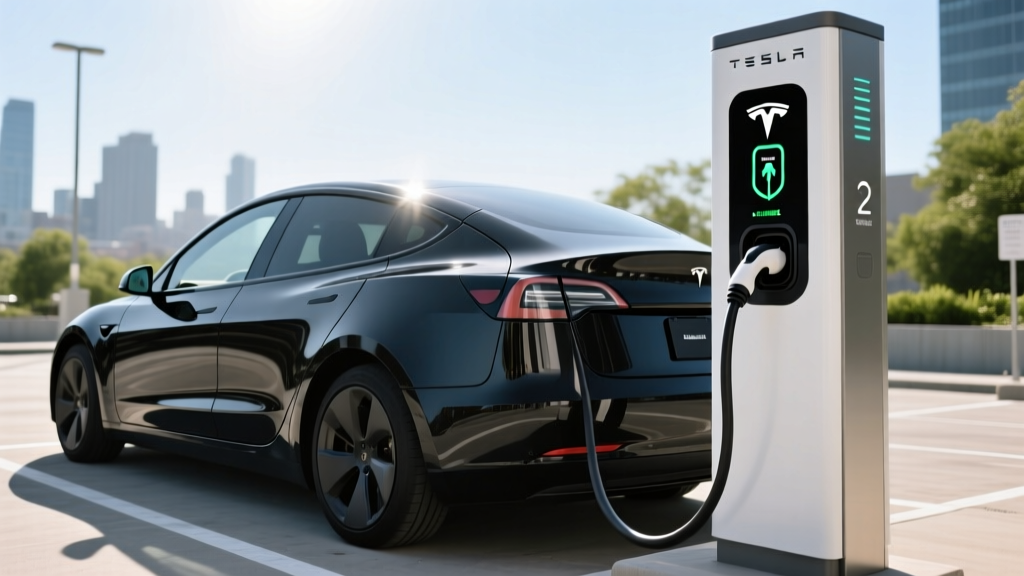
- DC Fast Charge, V3 Supercharger (peak 250 kW): 10–80% in approximately 25–30 minutes. Note that charge speed tapers significantly above 80% — the last 20% can take as long as the first 80%.
Home Charger Installation: Electrical Requirements and Real Costs
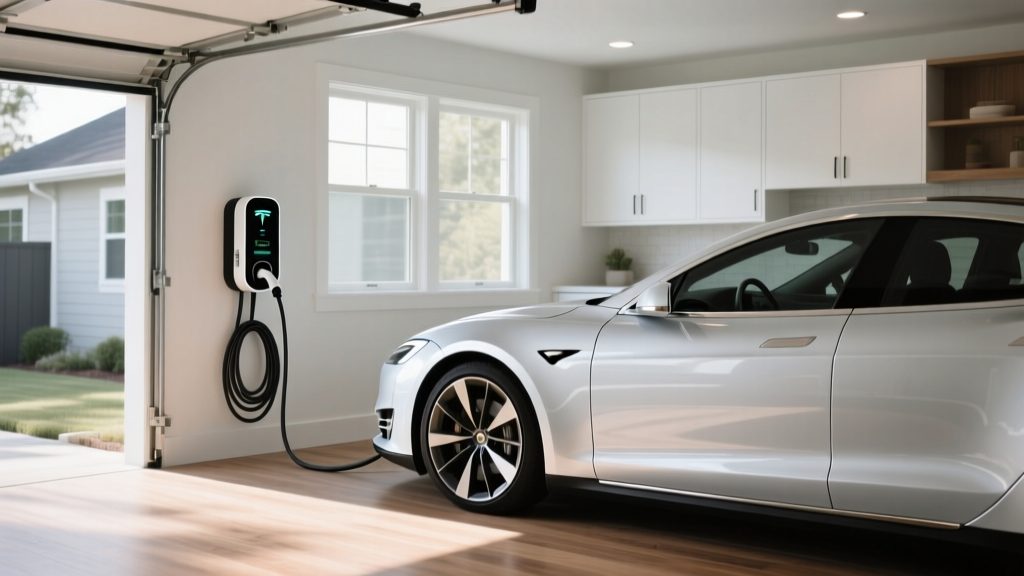
Installing a Level 2 home charger is the single most impactful upgrade for daily EV ownership. For Tesla owners, the Tesla Wall Connector (Gen 3) is the default choice, but third-party J1772 chargers work with a simple adapter. Here's what the installation involves.
Electrical Requirements
A Level 2 charger requires a 240V dedicated circuit — the same voltage as your electric dryer or oven. The circuit amperage determines your charge speed:
- 40A circuit / 32A continuous: Delivers ~7.7 kW — adequate for most daily needs, adding ~30 miles of range per hour.
- 50A circuit / 40A continuous: Delivers ~9.6 kW — a solid middle ground, adding ~38 miles per hour.
- 60A circuit / 48A continuous: Delivers ~11.5 kW — the Tesla Wall Connector's maximum, adding ~44 miles per hour.
The National Electrical Code (NEC) requires that continuous loads (like EV charging) use no more than 80% of a circuit's rated capacity. So a 60A breaker supports 48A continuous charging. A licensed electrician will size the breaker, wire gauge, and conduit accordingly.
Panel Upgrade: The Hidden Cost in Older Homes
If your home has a 100A electrical panel (common in homes built before the 1990s), adding a 50–60A EV circuit may exceed your panel's capacity. Your electrician will perform a load calculation to determine if an upgrade to a 200A panel is necessary. Panel upgrades are the single biggest variable in home charging cost.
| Component | Simple Install (Panel Has Capacity) | Complex Install (Panel Upgrade Needed) |
|---|---|---|
| EVSE Equipment (charger) | $400–$650 | $400–$650 |
| Electrical Permit | $50–$200 | $100–$300 |
| Electrician Labor (2–4 hrs simple; 6–12 hrs complex) | $300–$800 | $1,200–$3,000 |
| Panel Upgrade (if needed) | $0 | $1,500–$4,000 |
| Wire / Conduit / Misc Materials | $100–$400 | $200–$600 |
| Total Estimated Cost | $850–$2,050 | $3,400–$8,550 |
According to the U.S. Department of Energy, most straightforward Level 2 installations fall in the $1,000–$2,500 range when no panel upgrade is needed. Always get at least three quotes from licensed electricians and confirm they hold appropriate state licensing and insurance.
Connector Compatibility: NACS, CCS, and What Your Used Tesla Needs
One advantage of buying a used Tesla is that the Tesla connector — now formally adopted as the North American Charging Standard (NACS) — has become the dominant charging connector in North America. As of 2025–2026, nearly every major automaker (Ford, GM, Rivian, Volvo, BMW, and others) has adopted NACS for their new vehicles, and public charging networks are rapidly adding NACS cables.
| Connector | Used By | DC Fast Charging? | Adapter Needed for Tesla? |
|---|---|---|---|
| NACS (Tesla) | Tesla (all years), Ford, GM, Rivian, Volvo, BMW, others (2025+) | Yes — native at Superchargers | None — native connector |
| CCS1 (Combined Charging System) | Most non-Tesla EVs pre-2025 (Hyundai, Kia, VW, etc.) | Yes | Tesla CCS Adapter (~$175–$250) |
| CHAdeMO | Nissan Leaf, Mitsubishi Outlander PHEV (legacy) | Yes | Third-party adapter (~$300–$400), increasingly rare |
| J1772 (Level 2 AC) | All non-Tesla EVs for Level 2 | No — AC only | Tesla J1772 Adapter (included with Tesla) |
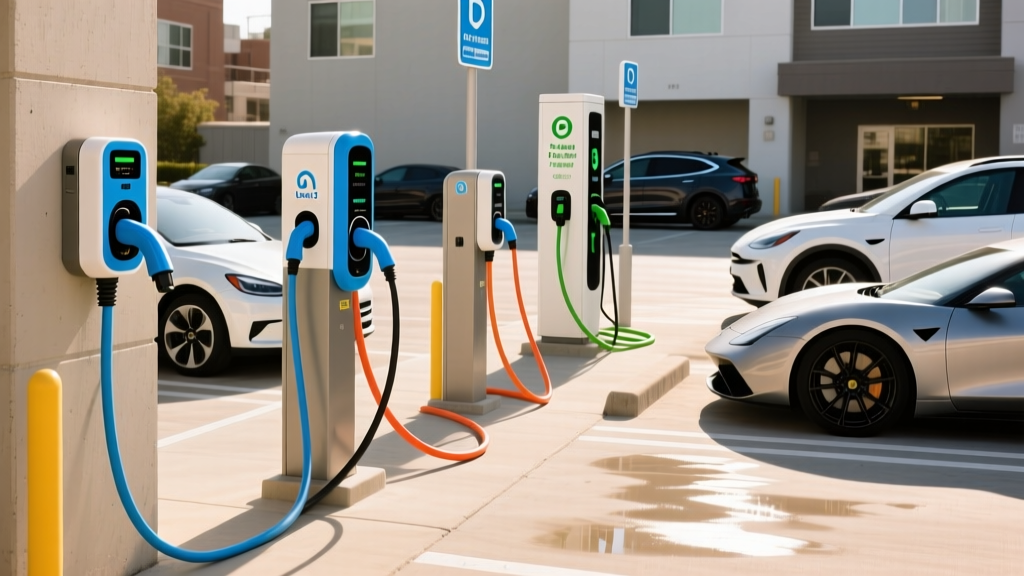
If your used Tesla is a 2018 or earlier Model S/X, it may have a legacy Tesla connector that physically differs from the current NACS port but is electrically compatible. Tesla provides adapter solutions, and Supercharger stalls remain backward-compatible. The Tesla CCS Adapter is essential if you want to access non-Tesla DC fast-charging networks like Electrify America or EVgo, which still predominantly feature CCS1 cables at many stations.
Charging Cost Per Mile: Home vs. Public vs. Gas
The economics of EV charging depend heavily on where you charge. Home charging on a Level 2 setup is dramatically cheaper than public DC fast charging, and both are typically cheaper than gasoline on a per-mile basis.
| Charging Scenario | Avg Cost per kWh | Cost to Charge 75 kWh (Tesla Model 3 LR) | Cost per Mile (at 4 mi/kWh efficiency) |
|---|---|---|---|
| Home — Off-Peak Utility Rate | $0.08–$0.14 | $6.00–$10.50 | $0.02–$0.035 |
| Home — Standard Residential Rate | $0.14–$0.20 | $10.50–$15.00 | $0.035–$0.05 |
| Public Level 2 (Workplace / Shopping) | $0.20–$0.35 | $15.00–$26.25 | $0.05–$0.09 |
| Tesla Supercharger (pay-per-use) | $0.28–$0.42 | $21.00–$31.50 | $0.07–$0.105 |
| Non-Tesla DC Fast (EA, EVgo) | $0.35–$0.55 | $26.25–$41.25 | $0.09–$0.14 |
| Gasoline Baseline (30 MPG, $3.40/gal) | — | — | $0.113 |
At national average electricity and gas prices, home charging delivers fuel costs at roughly one-quarter to one-third the per-mile cost of gasoline. Even Tesla Supercharger pay-per-use rates typically undercut gasoline on a cost-per-mile basis. The savings compound: a driver covering 12,000 miles per year with home charging at $0.15/kWh spends approximately $450 annually on fuel versus $1,360 for a 30 MPG gas car — a savings of over $900 per year.
If your used Tesla has legitimately transferable free Supercharging, your road-trip fuel cost drops to $0. But daily home charging still carries an electricity cost, so budget for that regardless.
Equipment Recommendations: Best Home Chargers for Your Tesla
Here are three proven Level 2 chargers well-suited for Tesla owners, covering different budgets and feature sets:
Tesla Wall Connector (Gen 3)
- Power Output: Up to 11.5 kW (48A on 60A circuit)
- Connector: Native NACS — no adapter needed
- Cable Length: 24 ft
- Smart Features: Wi-Fi, OTA firmware updates, load sharing between two units, Power Sharing
- Price: ~$475
- Best For: Tesla-only households wanting maximum simplicity
ChargePoint Home Flex
- Power Output: Up to 12 kW (50A on 60A circuit) — configurable from 16A to 50A
- Connector: J1772 (use included Tesla adapter) or NACS version (2025+)
- Cable Length: 23 ft
- Smart Features: Wi-Fi, Alexa integration, scheduling, detailed energy tracking via app
- Price: ~$550–$650
- Best For: Multi-EV households (Tesla + non-Tesla) wanting app-based controls
Emporia Level 2 EV Charger
- Power Output: Up to 11.5 kW (48A on 60A circuit)
- Connector: J1772 (Tesla adapter needed) or NACS version
- Cable Length: 24 ft
- Smart Features: Wi-Fi, solar integration with Emporia Vue energy monitor, scheduling, load management
- Price: ~$350–$400
- Best For: Budget-conscious buyers or homes with solar panels
Safety and Electrical Code Considerations
EV charging draws significant current for extended periods — often 6–10 hours continuously. This is fundamentally different from short-burst appliances like a microwave. Proper installation isn't optional; it's a safety requirement.
- Dedicated Circuit: Your Level 2 charger must be on its own dedicated circuit, not shared with other appliances. This prevents overloading and tripped breakers.
- GFCI Protection: The 2020 NEC (and subsequent 2023/2026 updates) requires GFCI (Ground Fault Circuit Interrupter) protection for EV charging outlets in garages and all outdoor locations. Hardwired installations may have different GFCI requirements depending on local code — your electrician will advise.
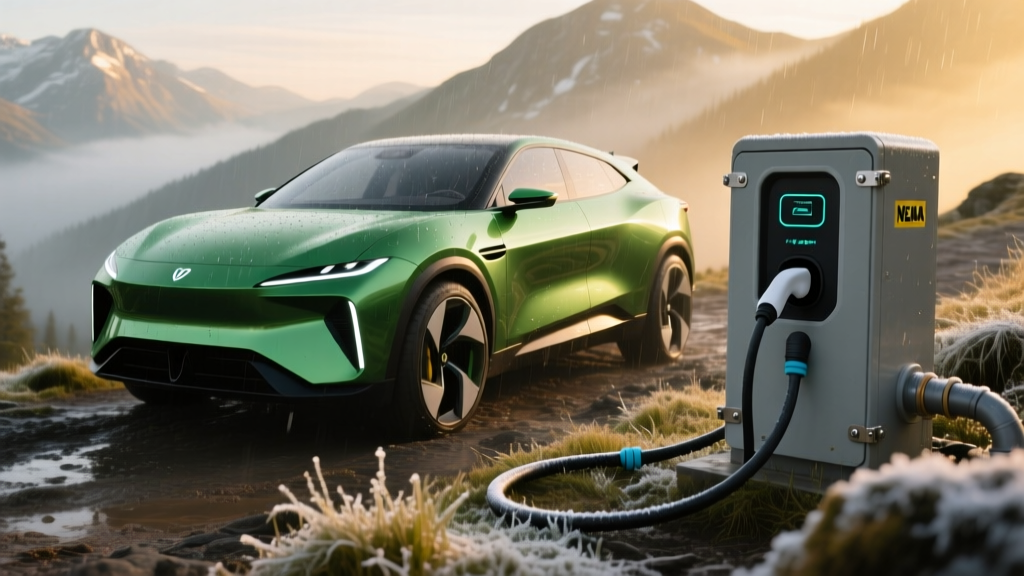
- Outdoor Rating: If your charger is installed outdoors, both the EVSE unit and the receptacle (if plug-in) must carry a NEMA 3R or NEMA 4 weatherproof rating. The Tesla Wall Connector is rated for indoor and outdoor use.
- Wire Gauge: A 60A circuit typically requires 6 AWG copper wire (or 4 AWG aluminum) in conduit. Undersized wire creates a fire hazard. Never let an unlicensed person cut corners here.
- Permit and Inspection: Most jurisdictions require an electrical permit and post-installation inspection for EV charger installations. This protects you legally and ensures code compliance. Unpermitted work can void homeowner's insurance claims.
Frequently Asked Questions
How much does it cost to install a home EV charger?
A straightforward Level 2 installation on an existing 200A panel typically costs $850–$2,050 including equipment, permit, and electrician labor. If your home needs a panel upgrade from 100A to 200A, total costs can reach $3,400–$8,550. Always get multiple quotes from licensed electricians.
How fast will each charging level add range?
Level 1 (120V) adds 3–5 miles per hour. Level 2 (240V) adds 25–70 miles per hour depending on amperage. DC fast charging adds 150–1,000+ miles per hour at peak rates, though sustained rates are lower due to charge-curve tapering. For daily driving, Level 2 overnight charging is the standard.
Which connector/charger is compatible with my EV?
All Teslas use the NACS (Tesla) connector natively for both Level 2 and DC fast charging. To use non-Tesla public chargers with CCS1 cables, you'll need a Tesla CCS Adapter. For Level 2 J1772 stations, Tesla includes a J1772 adapter with every vehicle. Non-Tesla EVs built from 2025 onward are increasingly adopting NACS as well.
How much does charging cost per mile vs. gas?
Home charging at average U.S. electricity rates costs approximately $0.03–$0.05 per mile. Tesla Supercharger pay-per-use runs $0.07–$0.10 per mile. A comparable 30 MPG gasoline car at $3.40/gallon costs about $0.11 per mile. Home charging is roughly one-quarter the cost of gasoline per mile.
What electrical upgrades might I need?
If your home has a 100A electrical panel, you'll likely need a panel upgrade to 200A ($1,500–$4,000) to safely support a 50–60A EV charging circuit. Homes with 200A panels usually have sufficient capacity, but a licensed electrician must perform a load calculation to confirm. Older wiring, aluminum service conductors, or insufficient grounding may also require remediation.
Can I just use a regular 120V outlet for my Tesla?
Yes, but it's only practical as a supplement. A standard 120V outlet (Level 1) delivers roughly 1.0–1.4 kW, adding 3–5 miles of range per hour. If your daily commute is under 30 miles and the car is parked for 12+ hours, Level 1 can work. For anything beyond minimal daily driving, Level 2 is strongly recommended.
Does frequent Supercharging damage my Tesla's battery?
DC fast charging generates more heat than Level 2 AC charging, and sustained high temperatures accelerate lithium-ion battery degradation. Tesla's battery management system actively manages thermal loads, but exclusive reliance on DC fast charging will result in measurably faster capacity loss over 5–10 years compared to predominantly Level 2 home charging. For optimal battery longevity, use Level 2 for daily charging and reserve Superchargers for road trips. Refer to Tesla's battery care guidance for manufacturer recommendations.
Whether you score a rare used Tesla with genuinely transferable free Supercharging or not, your charging strategy should center on a properly installed home Level 2 setup. It's cheaper, gentler on the battery, and ensures you wake up to a full charge every morning. The Supercharger network — free or paid — is your road-trip tool, not your daily driver.