The Free Supercharging Question: What You're Actually Getting
Search listings long enough and you'll spot it: a 2017 Model S or 2018 Model X advertised as a "used Tesla with free Supercharging for sale." The promise is seductive — unlimited long-distance travel without paying a cent at the plug. But before you wire the deposit, you need to understand exactly what transfers, what doesn't, and what your total charging picture looks once you bring that car home.
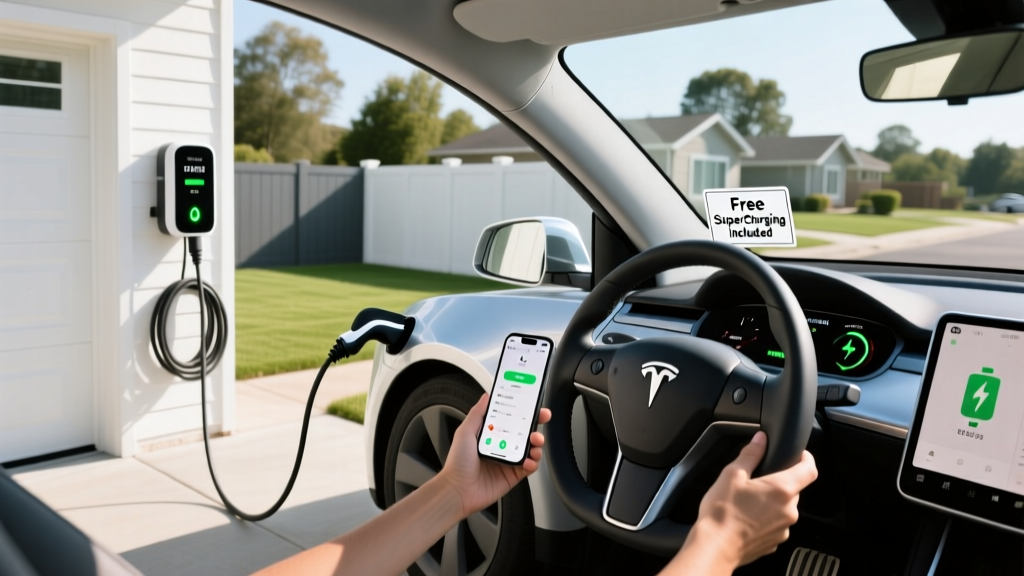
Free Supercharging on older Teslas generally falls into two buckets. The first is free unlimited Supercharging tied to the car, which Tesla offered on vehicles ordered before January 15, 2017. This perk can transfer to subsequent owners, though Tesla has periodically changed transfer policies — always verify the car's Supercharging status in the Tesla app or by calling Tesla support with the VIN before purchase. The second is free Supercharging tied to the original owner, which does not transfer on vehicles ordered between January 15, 2017, and approximately mid-2019; those credits expire on resale.
Even if you secure a car with transferable free Supercharging, you'll still need a home charging solution for daily driving. Roughly 80-90% of EV charging happens at home, and relying solely on Superchargers means extra trips, idle time, and battery degradation from repeated DC fast charging. Let's build out what a complete charging setup looks like.
Charging Levels Explained: Speeds, Power, and Real-World Range Gains
The single most important distinction in EV charging is between kW (kilowatts), which measures power — the rate of energy delivery — and kWh (kilowatt-hours), which measures energy — the total amount stored in your battery. A 75 kWh battery charged at 11.5 kW takes roughly 6.5 hours from empty. Think of kW as the width of the pipe and kWh as the size of the tank.
| Level | Voltage | Power (kW) | Miles of Range Per Hour | Typical Use |
|---|---|---|---|---|
| Level 1 | 120V AC | 1.0–1.4 kW | 3–5 mi/hr | Overnight top-up, PHEVs, low-mileage drivers |
| Level 2 | 240V AC | 3.3–19.2 kW | 12–75 mi/hr | Daily home and workplace charging |
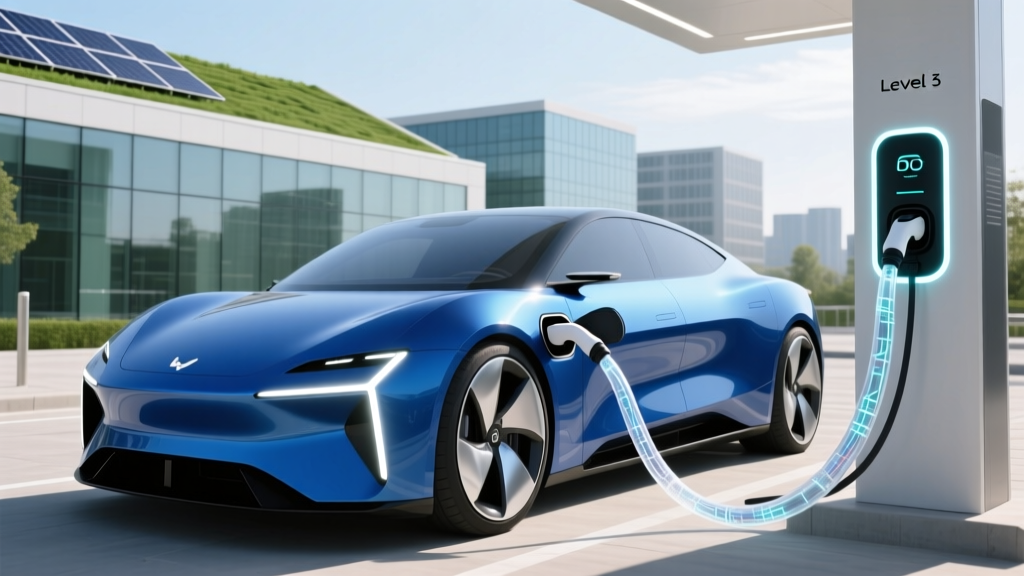
| DC Fast Charging | 400–800V DC | 50–350 kW | 150–1,000+ mi/hr (peak) | Road trips, rapid top-ups |
For a used Tesla Model S 75D (75 kWh usable battery, EPA 259 miles), Level 2 charging at 11.5 kW (48A) adds roughly 37 miles of range per hour — enough to fully replenish overnight. At a V3 Supercharger (peak 250 kW), that same car charges from 10-80% in approximately 30-35 minutes, though older Model S vehicles built before 2019 are often limited to ~120-150 kW peak depending on the battery pack revision.
Home Charger Installation: Electrical Requirements, Costs, and Panel Upgrades
Installing a Level 2 home charger is the single biggest infrastructure decision you'll make as an EV owner. The cost varies enormously depending on your home's electrical panel, the distance from panel to charger location, and local permitting requirements.
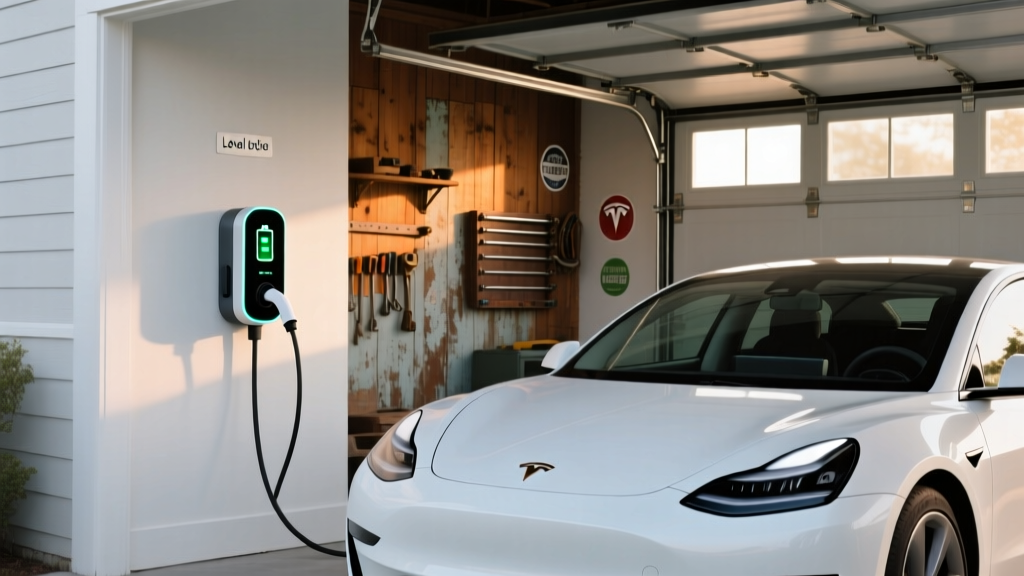
For a Tesla, you'll want a 240V circuit. The Tesla Wall Connector supports up to 48A continuous draw, which requires a 60A breaker (electrical code requires breakers rated at 125% of continuous load). If your home has a 200A service panel with available capacity, installation is relatively straightforward. If you have a 100A panel — common in homes built before the 1990s — you may need a panel upgrade or a load-management device.
| Component | Cost Range | Notes |
|---|---|---|
| Level 2 Charger (Equipment) | $350–$700 | Tesla Wall Connector ~$475; ChargePoint Home Flex ~$550–$700 |
| Electrician Labor | $500–$2,500 | Depends on run length, conduit, wall type; 10-30 ft typical |
| Electrical Permit | $50–$250 | Required in most jurisdictions; varies by city/county |
| Panel Upgrade (if needed) | $1,500–$4,000 | 100A to 200A service upgrade; not always required |
| Load Management Device | $200–$500 | Alternative to panel upgrade; e.g., Emporia Smart Load Center |
| Total (standard install) | $900–$3,450 | Without panel upgrade |
| Total (with panel upgrade) | $2,400–$7,450 | Older homes with 100A service |
Get at least two quotes from licensed electricians who have EV charger experience. Ask specifically about available amperage on your panel, whether the run requires conduit, and whether a permit is included in the estimate. The IRS Residential Clean Energy Credit covers 30% of home charging equipment and installation costs (up to $1,000 annually through 2032) — this can offset several hundred dollars of your install.
Safety and Code Considerations
Your installation must comply with NEC Article 625 (Electric Vehicle Charging System Equipment). Key requirements include:
- Dedicated circuit: The charger must be on its own breaker — no shared circuits with other appliances.
- GFCI protection: Required for outdoor installations and in garages per the 2020 NEC and later. Many modern chargers have built-in GFCI, but your electrician will verify code compliance.
- Outdoor rating: If mounting outside, the charger and receptacle must carry a NEMA 4 or NEMA 4X rating for weather resistance. The Tesla Wall Connector is rated for indoor and outdoor use.
- Wire gauge: A 60A breaker requires 6 AWG copper wire (THHN in conduit) or 4 AWG aluminum. Your electrician will size appropriately.
Connector Compatibility: NACS, CCS, and the Adapter Landscape
Every Tesla sold in North America uses the North American Charging Standard (NACS) connector — Tesla's proprietary plug, which has now been adopted industry-wide. If you're buying a used Tesla, connector compatibility is straightforward for home charging but worth understanding for public networks.
| Connector | Vehicles | Public Networks | Adapter Needed for Tesla? |
|---|---|---|---|
| NACS (Tesla) | All Tesla models; 2025+ Ford, GM, Rivian, Volvo, others | Tesla Supercharger, some Electrify America & EVgo stations | No — native connector |
| CCS1 | Most non-Tesla EVs (2014-2024 models) | Electrify America, EVgo, ChargePoint, Ionity | CCS adapter (~$175–$250 from Tesla or third-party) |
| CHAdeMO | Nissan Leaf, Mitsubishi Outlander PHEV (legacy) | Declining availability; some EVgo stations | Not available for Tesla; avoid for new purchases |
For a used Tesla, you charge natively at any Supercharger or Tesla Destination Charger. If you want access to Electrify America or other CCS-only networks (useful on road trips through areas with sparse Supercharger coverage), Tesla sells a CCS adapter for approximately $175–$250. Note that free Supercharging credits apply only to the Supercharger network — public CCS stations will always charge you per kWh.
Charging Cost Per Mile: Home vs. Public vs. Gas
The economics of EV charging depend heavily on where and when you plug in. Here's how the numbers break down across scenarios, using a Tesla Model S consuming approximately 30 kWh per 100 miles (3.33 mi/kWh) as our baseline.
| Scenario | Rate | Cost Per 100 Miles | Cost Per Mile |
|---|---|---|---|
| Home (off-peak utility rate) | $0.10/kWh | $3.00 | $0.030 |
| Home (national avg. residential) | $0.17/kWh | $5.10 | $0.051 |
| Home (high-cost state, e.g., CA) | $0.30/kWh | $9.00 | $0.090 |
| Public Level 2 (ChargePoint, etc.) | $0.25–$0.49/kWh | $7.50–$14.70 | $0.075–$0.147 |
| DC Fast Charging (non-Tesla) | $0.35–$0.55/kWh | $10.50–$16.50 | $0.105–$0.165 |
| Tesla Supercharger (paid, 2026 avg.) | $0.28–$0.40/kWh | $8.40–$12.00 | $0.084–$0.120 |
| Free Supercharging (transferable) | $0.00/kWh | $0.00 | $0.000 |
| Gasoline (25 MPG, $3.40/gal) | — | $13.60 | $0.136 |
The takeaway is clear: home charging at off-peak rates delivers the lowest cost per mile — typically 3-5 cents, or roughly one-quarter to one-third the cost of gasoline. Even at California's higher residential rates, home charging undercuts gas. Public DC fast charging, however, can approach or exceed gasoline costs per mile, which is why home charging infrastructure matters so much.
If you score a used Tesla with genuinely transferable free Supercharging, your road-trip fuel cost drops to zero. But your daily commuting cost still depends on your home electricity rate. Factor in both when calculating total savings.
Equipment Recommendations: Home Chargers for Your Used Tesla
Tesla Wall Connector (Best Overall)
- Power Output: Up to 11.5 kW (48A) on a 60A circuit
- Connector: NACS (native Tesla)
- Cable Length: 24 ft
- Smart Features: Wi-Fi for OTA updates, power sharing between two units, access control
- Price: ~$475
- Why: Purpose-built for Tesla, fastest Level 2 charging available, clean integration with the Tesla app
ChargePoint Home Flex (Best Universal)
- Power Output: Up to 12 kW (50A) on a 60A circuit; configurable down to 16A
- Connector: NACS or CCS1 (choose at purchase)
- Cable Length: 23 ft
- Smart Features: App scheduling, energy tracking, Alexa integration, flexible amperage
- Price: ~$550–$700
- Why: Adjustable amperage lets you match your panel capacity; great if you also own a non-Tesla EV
Emporia Level 2 Charger (Best Budget)
- Power Output: Up to 11.5 kW (48A)
- Connector: NACS (J1772 with Tesla adapter also available)
- Cable Length: 24 ft
- Smart Features: Detailed energy monitoring, solar integration, load management with Emporia Vue panel monitor
- Price: ~$350–$400
- Why: Lowest cost for full-power 48A charging; ideal if you want load management without a panel upgrade
Grizzl-E Smart (Best Rugged/Outdoor)
- Power Output: Up to 10 kW (40A) on a 50A circuit
- Connector: NACS or J1772
- Cable Length: 24 ft
- Smart Features: OCPP compatible, app scheduling, extreme-weather rated (-40°F)
- Price: ~$450–$550
- Why: Built in Canada for harsh winters; IP67-rated for outdoor mounting; solid choice for unheated garages
For a used Tesla with free Supercharging, the Tesla Wall Connector is the obvious default — it maximizes your Level 2 speed and keeps everything in the Tesla ecosystem. If your panel can't support a 60A circuit, the ChargePoint Home Flex lets you dial down to 32A or 40A without replacing hardware.
Charging Time Examples: What to Expect With Common Tesla Batteries
Charging time depends on battery size, charger power, and the charge curve. EVs charge fastest between roughly 10-50% State of Charge, then taper significantly above 80% to protect the battery. Here are realistic 10-80% times for batteries found in commonly available used Teslas:
| Battery (Usable kWh) | Model Example | Level 2 @ 11.5 kW (10-80%) | DC Fast @ 150 kW (10-80%) | V3 Supercharger @ 250 kW (10-80%) |
|---|---|---|---|---|
| 60 kWh | 2016-2017 Model S 60 | ~3.6 hours | ~28 min | ~28 min (pack-limited) |
| 75 kWh | 2017-2018 Model S/3 75D | ~4.5 hours | ~33 min | ~33 min (pack-limited) |
| 90 kWh | 2016-2018 Model S 90D | ~5.4 hours | ~38 min | ~35 min (tapers early) |
| 100 kWh | 2017-2020 Model S/X 100D | ~6.1 hours | ~42 min | ~38 min |
| 82 kWh | 2021+ Model 3 Long Range | ~5.0 hours | ~28 min | ~22 min |
Older Model S and X packs (90D and early 100D) have more conservative charge curves and may not sustain peak DC fast-charging rates for long. Expect real-world Supercharger sessions on a used 2017 Model S 100D to average closer to 38-45 minutes for 10-80%, not the 20-minute figure you might see on newer vehicles.
Battery Health, Degradation, and What to Check Before You Buy
Any used Tesla is a used battery. Lithium-ion packs degrade with time, charge cycles, and exposure to high temperatures or sustained high State of Charge. For a 2017-2018 Model S, expect approximately 8-15% capacity loss after 7-8 years, depending on charging habits and climate.
Tesla's battery warranty on these models covers 8 years or 150,000 miles (whichever comes first) with a minimum 70% capacity retention threshold. If the car you're evaluating is within that window and shows less than 70% capacity, Tesla may replace or refurbish the pack under warranty. Beyond the warranty period, a replacement battery for a Model S can cost $12,000-$20,000+ depending on the pack — a significant factor in total ownership cost.
Before purchasing, check the following:
- Rated range at 100%: Compare the car's displayed range at full charge to its original EPA rating. A 2017 Model S 100D that shows 285 miles at 100% (vs. 335 EPA) has roughly 15% degradation.
- Supercharging history: Cars charged primarily on DC fast chargers degrade faster than those charged on Level 2. Ask for charging history or check via TeslaFi if the owner used it.
- Free Supercharging verification: Call Tesla with the VIN or check the Tesla app to confirm the free Supercharging entitlement is active and transferable before you take title.
Free Supercharging: Is It Worth Paying a Premium?
A used Tesla with free Supercharging often commands a $2,000-$5,000 premium over an otherwise identical car without it. Whether that premium pays off depends on your driving pattern.
If you drive 15,000 miles per year and take four 500-mile road trips annually (2,000 Supercharger miles), at an average paid Supercharger rate of $0.35/kWh and 3 mi/kWh efficiency, you'd spend roughly $233/year on Supercharging. Over five years, that's about $1,167 in savings — not enough to justify a large premium.
However, if you drive 30,000+ miles per year with frequent long trips (say, 8,000 Supercharger miles annually), your annual savings jump to roughly $933, or $4,667 over five years. For high-mileage road warriors, the premium makes financial sense. For most buyers, the real value of free Supercharging is psychological: the freedom to road-trip without calculating fuel costs.
Regardless, budget for a home Level 2 charger installation. Even with free Supercharging, home charging is more convenient for daily use and gentler on your battery long-term.
Frequently Asked Questions
How much does it cost to install a home EV charger?
A standard Level 2 home charger installation runs $900-$3,450 when your electrical panel has sufficient capacity. This includes the charger ($350-$700), electrician labor ($500-$2,500), and permit ($50-$250). If your home needs a panel upgrade from 100A to 200A service, add $1,500-$4,000, bringing the total to $2,400-$7,450. The IRS Residential Clean Energy Credit covers 30% of equipment and installation up to $1,000 annually.
How fast will each charging level add range?
Level 1 (120V) adds 3-5 miles per hour — adequate only for PHEVs or very low daily mileage. Level 2 (240V at 48A/11.5 kW) adds roughly 37 miles per hour for a Model S, fully replenishing overnight. DC fast charging at 150 kW adds 150-200+ miles in 15-20 minutes at peak rate, though the charge curve tapers significantly above 80% SoC.
Which connector and charger is compatible with my used Tesla?
All Teslas use the NACS connector natively. For home charging, the Tesla Wall Connector is the optimal choice. For public non-Tesla DC fast chargers (CCS1 stations), you'll need a CCS adapter ($175-$250). CHAdeMO is not compatible with Tesla vehicles.
How much does charging cost per mile vs. gas?
Home charging at the national average residential rate ($0.17/kWh) costs roughly $0.05/mile for a Model S — about one-third the cost of gasoline at $3.40/gal in a 25 MPG car ($0.14/mile). Public DC fast charging at $0.40-$0.55/kWh costs $0.12-$0.18/mile, which can match or exceed gasoline. Free Supercharging drops road-trip cost to $0.00/mile.
What electrical upgrades might I need?
If your home has a 200A panel with at least two open breaker slots and sufficient calculated load capacity, you likely need no upgrade. Homes with 100A service — common in pre-1990 construction — may require a panel upgrade ($1,500-$4,000) or a load-management device ($200-$500) that throttles the charger when other high-draw appliances are running. Your electrician will perform a load calculation per NEC Article 220 to determine what's required.
Does free Supercharging actually transfer when I buy a used Tesla?
It depends on the vehicle's order date and transfer history. Teslas ordered before January 15, 2017, with free unlimited Supercharging typically retain the benefit through ownership transfers. Vehicles ordered after that date with promotional free Supercharging credits usually lose them upon resale. Always verify by providing the VIN to Tesla support or checking the Tesla app before completing the purchase — do not rely solely on the seller's claim or the listing description.