How Many Charging Stations Are There in the US Right Now?
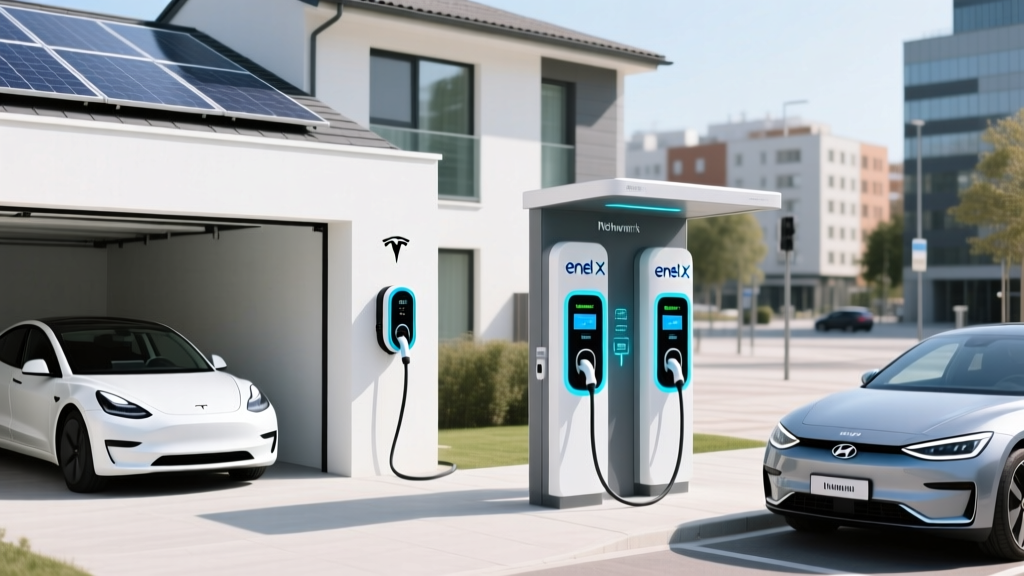
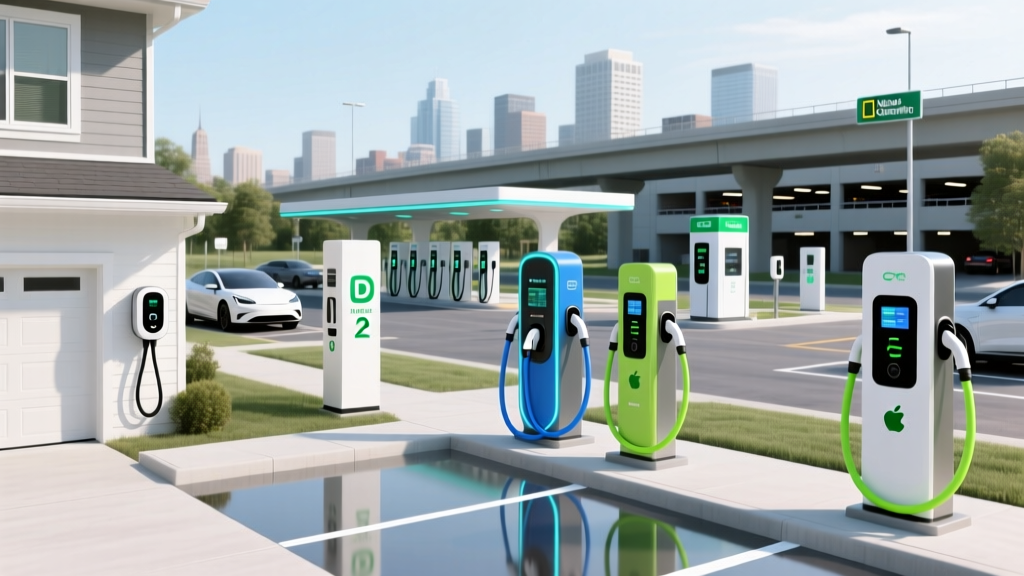
As of early 2026, the United States has approximately 72,000 public EV charging stations housing roughly 195,000 individual charging ports, according to the Alternative Fuels Data Center (AFDC). That number has grown steadily from about 54,000 stations and 148,000 ports at the start of 2024, driven by NEVI (National Electric Vehicle Infrastructure) funding, Tesla Supercharger network expansion, and private investment from Electrify America, EVgo, and ChargePoint.
But here's the breakdown that actually matters for EV buyers and owners:
- Level 2 public ports (240V AC): ~138,000 (about 71% of all ports) — typically 6.6–19.2 kW, adding 20–70 miles of range per hour
- DC Fast Charging ports: ~57,000 (about 29%) — ranging from 50 kW legacy units to 350–500 kW ultra-fast chargers
- Tesla Supercharger ports (now open to NACS-equipped non-Tesla EVs): ~32,000 across ~3,800 stations
For context, there are roughly 145,000 gas stations in the US. The public charging network hasn't reached parity in station count, but the average EV owner does 80% or more of their charging at home — which is why understanding home charging infrastructure matters far more than public station density for most buyers.
kW (kilowatt) = power, the rate at which electricity flows. Think of it as the size of the hose.
kWh (kilowatt-hour) = energy, the total amount stored or delivered. Think of it as the size of the bucket.
A 150 kW charger can theoretically deliver 150 kWh in one hour — but your battery size (say, 75 kWh) and charge curve determine how much you actually absorb and how fast.
Charging Levels Explained: Speeds, Power, and Real-World Range Added
Every EV owner needs to understand the three charging levels. The speed differences are dramatic — and they directly shape whether an EV fits your lifestyle.
| Level | Voltage | Power (kW) | Miles of Range Added Per Hour | Typical Use Case | 10–80% Time (75 kWh Battery) |
|---|---|---|---|---|---|
| Level 1 | 120V AC | 1.0–1.4 kW | 3–5 mi/hr | Overnight trickle; PHEV top-ups | ~40+ hours (impractical) |
| Level 2 | 240V AC | 3.3–19.2 kW | 12–70 mi/hr | Home daily charging; workplace; public destinations | ~4.5 hrs (7.2 kW) / ~3 hrs (11.5 kW) |
| DC Fast Charge | 400–900V DC | 50–500 kW | 150–1,200+ mi/hr (peak) | Road trips; highway corridors; quick top-ups | 15–40 min (varies by vehicle + charger) |
Real-world charging time examples for common 2025/2026 EV batteries:
- Tesla Model Y (75 kWh usable, NMC): 10–80% in ~20 minutes at a 250 kW V3 Supercharger; ~8.5 hours on a 7.2 kW home Level 2
- Hyundai Ioniq 5 (77.4 kWh usable, NMC, 800V architecture): 10–80% in ~18 minutes at a 350 kW Electrify America station; ~7 hours on an 11.5 kW home Level 2
- Ford F-150 Lightning Extended Range (131 kWh usable, NMC): 15–80% in ~41 minutes at a 150 kW DCFC; ~13 hours on an 11.5 kW Level 2
- Chevrolet Equinox EV (85 kWh usable, NMC): 10–80% in ~30 minutes at a 150 kW DCFC; ~9 hours on a 9.6 kW Level 2
Home EV Charger Installation: Electrical Requirements and Costs
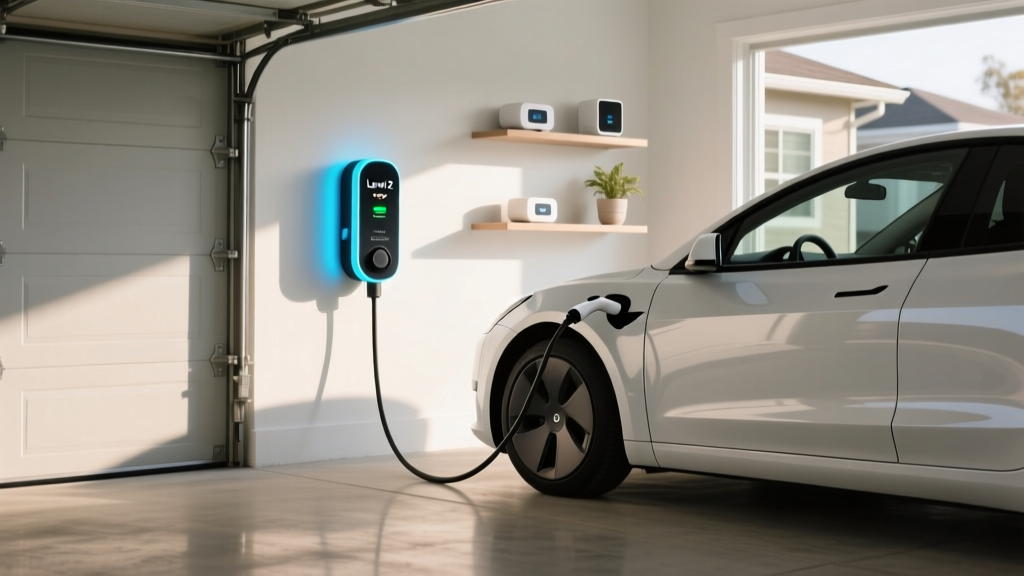
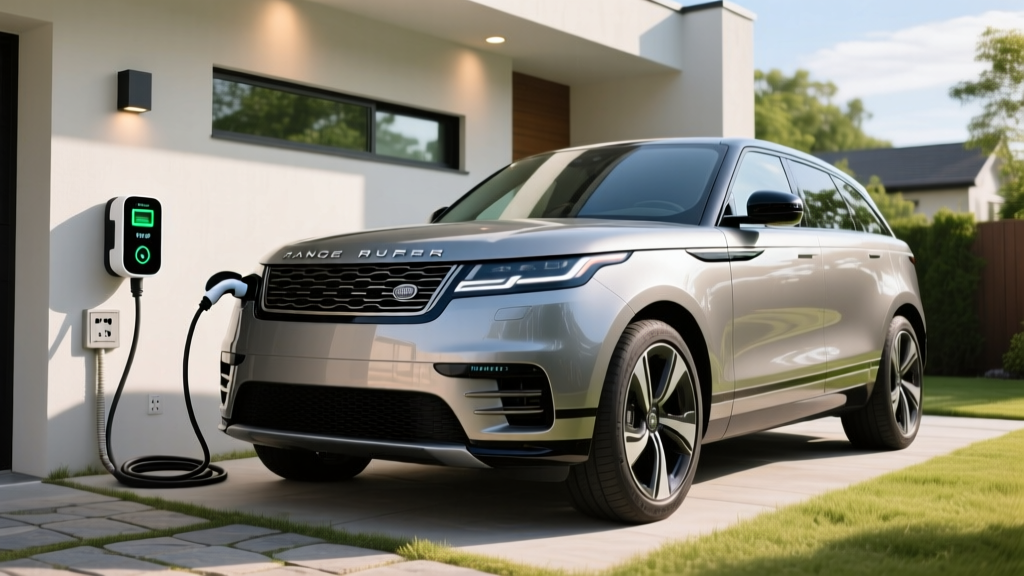
Home Level 2 charging is where the EV ownership experience is won or lost. Most EV owners install a 240V Level 2 charger in their garage or driveway, enabling a full overnight charge for daily driving. But the installation cost varies enormously depending on your home's electrical panel, wiring distance, and local code.
Electrical Requirements for a Typical Home Level 2 Charger
- Voltage: 240V (same as a dryer or oven outlet — NEMA 14-50 or hardwired)
- Amperage: 40A circuit for a 32A continuous charger (NEC requires circuits rated 125% above continuous load); 60A circuit for a 48A charger
- Dedicated circuit: Required — you cannot share the circuit with other appliances
- GFCI protection: Required by NEC 2020 and later for EV receptacles (some hardwired chargers have built-in GFCI)
- Outdoor rating: If mounted outside, both the charger and the receptacle must be rated for wet locations (NEMA 4 or IP65+)
Panel Upgrade: The Hidden Cost That Catches Homeowners Off Guard
Most homes built before 2000 have 100A or 150A electrical panels. Adding a 40–60A dedicated EV circuit may push total load beyond the panel's capacity, especially if you also run central AC, an electric dryer, and an electric oven. A licensed electrician will perform a load calculation to determine whether your panel can handle the new circuit.
If you need a panel upgrade from 100A to 200A, expect to pay $1,500–$3,500 on top of the charger installation. This is the single biggest variable in home charging cost — and it's the reason some homeowners see quotes of $4,000+ while neighbors with newer 200A panels pay under $1,000.
| Component | Simple Install (Panel Has Capacity, Short Run) | Complex Install (Panel Upgrade Needed, Long Run) |
|---|---|---|
| Level 2 Charger Equipment | $350–$700 | $350–$700 |
| Electrician Labor (wiring, circuit, outlet/hardwire) | $400–$800 | $800–$2,000 |
| Electrical Permit | $50–$200 | $50–$200 |
| Panel Upgrade (if needed) | $0 | $1,500–$3,500 |
| Conduit, Wiring Materials | $50–$150 | $200–$500 |
| Total Estimated Cost | $850–$1,850 | $2,900–$6,900 |
Federal incentive: The IRS Residential Clean Energy Credit (formerly §30C Alternative Fuel Vehicle Refueling Property Credit) offers up to $1,000 (30% of equipment + installation costs, capped at $1,000) for home EV charger installation, subject to income and census-tract eligibility. Check irs.gov for current-year rules and consult a tax professional for your specific situation.
Connector Compatibility: NACS, CCS1, CHAdeMO, and Adapters
The connector landscape in 2026 has largely consolidated around NACS (North American Charging Standard, originally Tesla's proprietary connector), but legacy CCS1 and CHAdeMO vehicles and chargers remain widespread. Here's what you need to know based on your vehicle.
| Connector | Native Vehicle Brands | DC Fast Charge Networks | Adapter Needed? |
|---|---|---|---|
| NACS (Tesla) | Tesla (all); Ford, GM, Rivian, Volvo, Polestar, Mercedes, Fisker (2025+ models ship with NACS) | Tesla Supercharger; growing EA/EVgo/ChargePoint NACS stalls | CCS1→NACS adapter for legacy CCS vehicles ($150–$250) |
| CCS1 (Combo) | Hyundai, Kia, BMW, VW, Porsche (pre-2025 models); Stellantis | Electrify America, EVgo, ChargePoint (majority of existing DCFC) | NACS→CCS1 adapter for access to Superchargers (Tesla, Lectron, A2Z ~$150–$250) |
| CHAdeMO | Nissan Leaf (legacy); Mitsubishi Outlander PHEV | Declining network; some EA and independent stations | No adapter available for DCFC; CHAdeMO is a legacy standard |
Key 2026 trend: Most automakers have transitioned to NACS for new models, and Tesla Superchargers now welcome non-Tesla EVs equipped with NACS ports or using approved adapters. If you're buying a new EV in 2026, NACS is the safest long-term bet for maximum network access. If you own a CCS1 vehicle, a quality NACS-to-CCS1 adapter (such as the Lectron Vortex or Tesla's official CCS adapter for older Model 3/Y) unlocks the Supercharger network.
How Much Does EV Charging Cost Per Mile vs. Gas?
The economics of EV charging depend heavily on where you charge. Home charging is dramatically cheaper than public DC fast charging — and both are typically cheaper than gasoline per mile.
| Scenario | Rate ($/kWh) | Vehicle Efficiency (kWh/100mi) | Cost Per Mile | Annual Fuel Cost (12,000 mi) |
|---|---|---|---|---|
| Home, off-peak utility rate | $0.08–$0.14 | 28–32 kWh | $0.025–$0.045 | $300–$540 |
| Home, standard residential rate | $0.14–$0.20 | 28–32 kWh | $0.04–$0.064 | $480–$770 |
| Public Level 2 (ChargePoint, EVgo) | $0.20–$0.35 | 28–32 kWh | $0.06–$0.11 | $720–$1,320 |
| DC Fast Charging (EA, EVgo, Tesla) | $0.32–$0.58 | 28–35 kWh (highway driving is less efficient) | $0.09–$0.20 | $1,080–$2,400 |
| Gasoline vehicle (27 MPG combined, $3.40/gal) | — | — | $0.126 | $1,510 |
The takeaway: If you charge primarily at home on off-peak rates, your annual "fuel" cost can be $300–$540 — roughly 65–80% less than a comparable gas vehicle. Even if you rely on public DC fast charging for road trips part of the time, blending home and public charging typically saves $500–$1,000 per year.
However, if you cannot charge at home and rely exclusively on public DC fast charging at $0.40–$0.58/kWh, your per-mile cost can approach or exceed gasoline. Home charging access is the single biggest economic factor in EV ownership.
Recommended Home Level 2 Chargers (2026 Picks)
Not all Level 2 chargers are equal. Here are top-performing units we've tested or tracked across reliability, smart features, and value:
ChargePoint Home Flex
- Power Output: Up to 12 kW (50A circuit) / 9.6 kW (40A circuit) — adjustable
- Connector: NACS or J1772 (configurable)
- Cable Length: 23 ft
- Smart Features: Wi-Fi, app scheduling, Alexa integration, energy tracking
- Price: ~$550–$650
- Best For: Most homes; adjustable amperage fits various panel capacities
Tesla Wall Connector
- Power Output: Up to 11.5 kW (48A / 60A circuit)
- Connector: NACS native; J1772 adapter included
- Cable Length: 24 ft
- Smart Features: Wi-Fi, OTA updates, power sharing (multiple units on one circuit), Tesla app integration
- Price: ~$475
- Best For: Tesla owners and NACS-equipped EVs; excellent value for power output
Emporia Vue EV Charger
- Power Output: Up to 11.5 kW (48A / 60A circuit)
- Connector: J1772 (NACS adapter available)
- Cable Length: 24 ft
- Smart Features: Wi-Fi, solar integration with Emporia Vue energy monitor, scheduling, load management
- Price: ~$400–$450
- Best For: Budget-conscious buyers; homes with solar panels
Safety note: Always have your charger installed (or inspected, if hardwiring yourself) by a licensed electrician. The NEC requires a dedicated circuit, proper wire gauge (6 AWG copper for 50A circuits, 4 AWG for 60A), and GFCI protection for receptacle-based installations. Never use an extension cord with an EV charger, and never plug into a circuit shared with other high-draw appliances.
Public Charging Networks: Reliability and Coverage Reality
While the US has nearly 72,000 public charging stations, the experience varies enormously by network, location, and charger type. Here's the honest state of public charging in 2026:
- Tesla Supercharger: Still the gold standard for reliability — 97%+ uptime, consistent speeds, integrated navigation preconditioning. Now open to NACS-equipped non-Tesla EVs at most locations.
- Electrify America: Largest non-Tesla DCFC network (~4,500+ chargers). Reliability has improved significantly since 2024 hardware refreshes, but expect occasional offline stalls at older locations. Peak speeds up to 350 kW.
- EVgo: ~3,500+ DC fast chargers, often in urban and suburban retail locations. Pricing varies; some stalls still 50 kW legacy units. Growing 350 kW deployment.
- ChargePoint: Dominant in Level 2 destination charging (workplaces, shopping centers). DCFC footprint is smaller. App shows real-time availability.
- Charging deserts: Rural areas in the Mountain West, Great Plains, and parts of the South still have sparse DCFC coverage. If you frequently drive these corridors, plan carefully using PlugShare or A Better Routeplanner.
For road trips, the key strategy is preconditioning — warming or cooling your battery to optimal temperature before arriving at a DC fast charger. Tesla does this automatically when you navigate to a Supercharger. Hyundai/Kia's E-GMP vehicles, Ford, and GM now offer manual or nav-triggered preconditioning. Without it, cold batteries can cut peak charge rates by 30–50%, especially in winter.
Frequently Asked Questions
How much does it cost to install a home EV charger?
A straightforward Level 2 home installation (200A panel with spare capacity, short wire run, NEMA 14-50 outlet) typically costs $850–$1,850 including equipment, electrician labor, and permit. If your home needs a panel upgrade from 100A to 200A, total costs can reach $2,900–$6,900. Always get a load calculation from a licensed electrician before committing.
How fast will each charging level add range?
Level 1 (120V) adds roughly 3–5 miles per hour. Level 2 (240V) adds 12–70 miles per hour depending on amperage and vehicle acceptance rate. DC fast charging can add 150–1,200+ miles per hour at peak rates, but sustained speeds taper significantly above 50% SoC. For a typical 75 kWh battery, a 10–80% DC fast charge takes 15–40 minutes depending on the vehicle's charge architecture and the station's output.
Which connector/charger is compatible with my EV?
Check your vehicle's charge port: 2025–2026 Tesla, Ford, GM, Rivian, Volvo, and Polestar models use NACS. Most pre-2025 Hyundai, Kia, BMW, VW, and Stellantis models use CCS1. The Nissan Leaf uses CHAdeMO. If your vehicle has CCS1 and you want Supercharger access, you'll need a NACS-to-CCS1 adapter (~$150–$250). For home Level 2, all vehicles charge via J1772 or NACS — adapters are widely available.
How much does charging cost per mile vs gas?
Home charging at off-peak rates ($0.08–$0.14/kWh) costs roughly $0.025–$0.045 per mile for a typical EV. Gasoline at $3.40/gal in a 27 MPG vehicle costs about $0.126 per mile. Home-charged EVs save 65–80% on fuel costs. Public DC fast charging ($0.32–$0.58/kWh) costs $0.09–$0.20 per mile — still often cheaper than gas, but the savings narrow considerably.
What electrical upgrades might I need?
If your home has a 100A panel, is older than 25 years, or already runs multiple high-draw appliances (electric range, dryer, central AC, hot tub), you may need a panel upgrade to 200A ($1,500–$3,500). Some utilities offer load-management devices that let you add an EV circuit without upgrading the panel by automatically reducing charger power when other appliances cycle on. Ask your electrician about a load calculation before assuming you need a full upgrade.