For early Tesla adopters, "free unlimited Supercharging" was the ultimate perk — a transferable golden ticket that made road trips essentially cost-free. By 2026, Tesla's charging landscape has shifted dramatically. The company now offers paid unlimited Supercharging subscriptions on select models and trims, while simultaneously opening the Supercharger network to non-Tesla EVs via the NACS standard. For buyers and current owners, the math has changed: is a monthly unlimited Supercharging plan actually cheaper than installing a home Level 2 charger? And how do the real-world costs compare per mile against gasoline?
This guide breaks down every charging tier — Level 1, Level 2, and DC fast charging — with exact speeds, installation costs, connector compatibility, and a head-to-head cost analysis of Tesla's unlimited Supercharging versus home charging. Whether you drive a Model Y, a new Rivian R2 with a NACS port, or a Hyundai Ioniq 5 using a Supercharger adapter, the numbers below will tell you exactly what to expect.
Charging Levels Explained: Speeds, kW, and Miles Per Hour
The single most important distinction in EV charging is between kW (kilowatts), which measures power — how fast energy flows into your car — and kWh (kilowatt-hours), which measures energy capacity — how much your battery holds. Think of kW as the width of a hose and kWh as the size of the bucket. A wider hose (higher kW) fills the bucket faster, but the bucket size stays the same.
Every EV charges at three possible tiers, each with dramatically different speeds:
| Level | Voltage | Power (kW) | Miles of Range Added Per Hour | Typical Use Case |
|---|---|---|---|---|
| Level 1 | 120V AC | 1.0–1.4 kW | 3–5 mi/hr | Overnight trickle; PHEVs; emergency top-ups |
| Level 2 | 240V AC | 7.2–19.2 kW | 20–60 mi/hr | Daily home/workplace charging |
| DC Fast Charging | 400–800V DC | 50–350 kW | 150–1,000+ mi/hr (peak) | Road trips; rapid top-ups |
A few real-world nuances matter here. Level 2 charging at 11.5 kW (a common 48-amp home charger on a 60-amp circuit) will add roughly 35–40 miles of range per hour to a Tesla Model Y. That means a 10–80% charge on the Model Y Long Range's ~75 kWh usable battery takes roughly 5–6 hours at home — perfect for overnight charging. DC fast charging, meanwhile, follows a charge curve: a Tesla V4 Supercharger may peak at 250 kW on a Model 3/Y, but that peak only sustains from roughly 10–40% State of Charge (SoC). Above 60%, the rate tapers significantly, and above 80% it slows to a trickle to protect battery health. A 10–80% DC fast charge on a Model Y typically takes 25–30 minutes at a V3/V4 Supercharger.
Tesla Unlimited Supercharging in 2026: What It Costs and Who Qualifies
Tesla has periodically offered unlimited Supercharging as a promotional incentive — typically on new vehicle purchases during end-of-quarter sales pushes, or as a subscription add-on. In 2026, the structure generally works as follows:
- Legacy free unlimited Supercharging: Tied to older Model S/X vehicles (pre-2017 or specific promotional periods). This benefit is usually non-transferable to new owners on vehicles sold after a certain date. If you're buying a used Model S/X, verify the Supercharging status in the Tesla app before purchase.
- Promotional unlimited Supercharging: Tesla periodically offers 1 year, 3 years, or lifetime unlimited Supercharging on new vehicle deliveries, particularly on Model 3 and Model Y during demand-stimulation periods. These are time-limited and region-specific.
- Paid Supercharging rates: Without a free/unlimited plan, Tesla Supercharger pricing in 2026 averages $0.30–$0.50 per kWh depending on location and time of day, with some urban Superchargers reaching $0.55/kWh during peak hours.
For context, a full 10–80% charge on a Model Y Long Range (~52 kWh added) at $0.40/kWh costs roughly $20.80 and yields about 200 miles of real-world highway range. If you drive 1,000 miles per month exclusively on paid Supercharging, expect to spend approximately $100–$130/month. An unlimited Supercharging plan makes financial sense primarily for high-mileage drivers who lack home charging access — apartment dwellers, frequent road-trippers, or rideshare drivers covering 2,000+ miles monthly.
Home Level 2 Charger Installation: Costs, Electrical Requirements, and Gotchas
Installing a Level 2 home charger is the single highest-impact upgrade an EV owner can make. It transforms your daily routine: plug in at night, wake up to a full battery, and rarely visit a public charger except on road trips. But the installation cost varies enormously based on your home's electrical infrastructure.
Electrical Requirements
A typical Level 2 home charger requires a 240-volt dedicated circuit, similar to what powers an electric dryer or oven. The most common configurations:
- 40-amp circuit / 32-amp continuous (7.7 kW): The minimum practical setup for most EVs. Adds ~25 mi/hr.
- 60-amp circuit / 48-amp continuous (11.5 kW): The sweet spot for most homes. Adds ~35–40 mi/hr. This is what Tesla's Wall Connector and most premium chargers support.
- 80-amp circuit / 64-amp continuous (15.4 kW): Maximum for vehicles with larger onboard chargers (e.g., Ford F-150 Lightning extended range). Adds ~50+ mi/hr. Requires substantial panel capacity.
Panel Upgrade: The Hidden Cost
Most homes built before 2000 have 100-amp or 150-amp electrical panels. Adding a 60-amp EV circuit to a 100-amp panel that's already near capacity (central AC, electric range, dryer) may require a panel upgrade to 200 amps, which costs $1,500–$3,500 on top of the charger installation. Newer homes with 200-amp panels and available breaker slots usually avoid this expense. Always have a licensed electrician perform a load calculation before committing to a charger amperage.
| Component | Low-End | Typical | High-End |
|---|---|---|---|
| Level 2 Charger Equipment | $200 | $450 | $700 |
| Electrician Labor (240V circuit run) | $400 | $800 | $1,800 |
| Permit & Inspection | $50 | $150 | $350 |
| Panel Upgrade (if needed) | $0 | $0 | $3,500 |
| Conduit/Materials | $50 | $150 | $400 |
| Total (no panel upgrade) | $700 | $1,550 | $3,250 |
| Total (with panel upgrade) | $2,200 | $3,550 | $6,750 |
According to data from the U.S. Department of Energy, the national average for a Level 2 home installation (without panel upgrade) falls between $1,000 and $2,500. The IRS §30C Alternative Fuel Vehicle Refueling Property Credit can cover up to 30% of home charger equipment and installation costs (capped at $1,000), subject to income and census-tract eligibility. Always consult a tax professional for your specific situation.
Connector Compatibility: NACS, CCS, and CHAdeMO in 2026
The connector landscape has consolidated significantly since 2023, when Ford and GM announced adoption of Tesla's North American Charging Standard (NACS). By 2026, NACS is the dominant connector for new EVs sold in North America, though CCS1 vehicles remain on the road in large numbers and require adapters for Supercharger access.
| Connector | Brands Using Natively | Supercharger Access | Adapter Needed? |
|---|---|---|---|
| NACS (Tesla) | Tesla, Ford, GM, Rivian, Volvo, Polestar, Hyundai/Kia (2025+), Fisker | Direct | No |
| CCS1 | Legacy VW ID.4, BMW i4/iX (pre-2025), Mercedes EQS/EQE, Stellantis | Via adapter at select Superchargers | Yes — CCS-to-NACS adapter ($150–$250) |
| CHAdeMO | Nissan Leaf (legacy only; discontinued in US) | No Supercharger access | N/A — use Electrify America, EVgo CHAdeMO stations |
For home Level 2 charging, all EVs use a J1772 connector (non-Tesla) or a Tesla proprietary connector. Tesla includes a J1772 adapter with every vehicle, and third-party chargers with J1772 connectors work with Teslas via that adapter. If you own multiple EVs of different brands, a J1772 home charger is the most universal choice.
Cost Per Mile: Home Charging vs. Supercharging vs. Gasoline
This is where the economics crystallize. The cost gap between home charging and public DC fast charging is substantial — often 3x to 5x — and both dramatically undercut gasoline on a per-mile basis.
| Scenario | Rate | Cost to Add 200 Miles* | Cost Per Mile |
|---|---|---|---|
| Home Level 2 (off-peak utility rate) | $0.10/kWh | $6.00 | $0.030 |
| Home Level 2 (national avg. residential) | $0.17/kWh | $10.20 | $0.051 |
| Tesla Supercharger (avg. paid rate) | $0.40/kWh | $24.00 | $0.120 |
| Electrify America / EVgo (avg.) | $0.48/kWh | $28.80 | $0.144 |
| Gasoline vehicle (28 MPG combined, $3.40/gal) | $3.40/gal | $24.29 | $0.121 |
*Based on an EV efficiency of 3.0 miles per kWh (typical for a Model Y or Ioniq 5 class vehicle). Actual efficiency varies with temperature, speed, and terrain.
The takeaway: home charging at off-peak rates delivers fuel costs roughly 75–80% lower than gasoline on a per-mile basis. Even paid Supercharging is roughly cost-parity with gasoline per mile — the advantage of Supercharging is speed and convenience on road trips, not cost savings. If you have access to unlimited Supercharging through a promotional plan, your road-trip fuel cost drops to $0, but your daily home-charging cost still applies unless you rely exclusively on Superchargers (which adds time and wear from frequent DC fast charging).
Recommended Home Level 2 Chargers for 2026
The home charger market has matured significantly. Here are the top-performing units we recommend based on reliability, power output, smart features, and value:
Tesla Wall Connector (Gen 4)
- Power: Up to 11.5 kW (48A) on a 60A circuit
- Connector: NACS native; J1772 adapter included
- Cable Length: 24 ft
- Smart Features: Wi-Fi, OTA updates, Power Share (load balancing between two units), Tesla app integration
- Price: ~$475
- Best For: Tesla owners; households with two Teslas (Power Share eliminates need for panel upgrade)
ChargePoint Home Flex (2nd Gen)
- Power: Up to 12 kW (50A) on a 60A circuit; adjustable down to 16A
- Connector: J1772 (works with all EVs; Tesla via adapter)
- Cable Length: 23 ft
- Smart Features: Wi-Fi, Alexa, scheduling, utility demand-response programs, detailed energy tracking
- Price: ~$550
- Best For: Multi-EV households (Tesla + non-Tesla); utility rate optimization
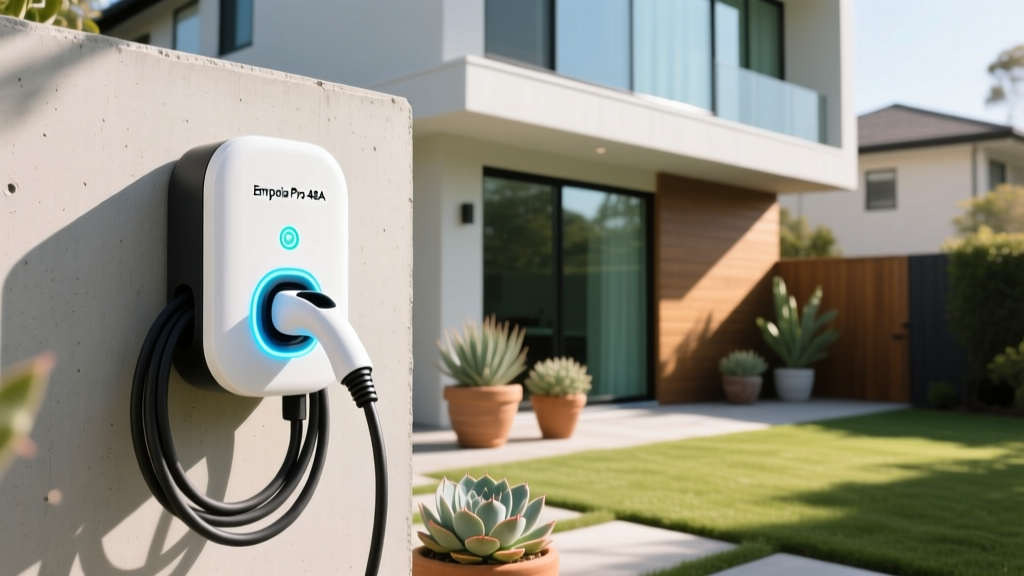
Emporia Level 2 EV Charger
- Power: Up to 11.5 kW (48A) on a 60A circuit
- Connector: J1772
- Cable Length: 24 ft
- Smart Features: Wi-Fi, Emporia energy ecosystem integration, solar-aware charging, scheduling
- Price: ~$350
- Best For: Budget-conscious buyers; homes with Emporia Vue energy monitors
Grizzl-E Smart (United Chargers)
- Power: Up to 10 kW (40A) on a 50A circuit
- Connector: J1772
- Cable Length: 24 ft
- Smart Features: Wi-Fi, OCPP compatibility, adjustable amperage, extreme cold rating (-40°F)
- Price: ~$450
- Best For: Cold-climate installations; outdoor mounting; commercial/fleet use
Safety, Electrical Code, and Installation Best Practices
EV charging draws sustained high current for hours — far longer than most household appliances. This makes proper installation non-negotiable for safety and code compliance:
- Dedicated circuit: Your Level 2 charger must be on its own dedicated breaker — never shared with other appliances. The National Electrical Code (NEC) requires EV circuits to be rated at 125% of the charger's continuous draw (e.g., a 48-amp charger requires a 60-amp breaker).
- GFCI protection: The 2020 NEC (and most 2023/2026 adoptions) requires GFCI protection for all EV charging outlets. Hardwired chargers (no plug) often have built-in GFCI and may satisfy this requirement without a separate GFCI breaker, which can cost $80–$150 extra.
- Hardwired vs. plug-in (NEMA 14-50): Hardwired installations allow higher amperage (up to 48A/11.5 kW) and avoid the GFCI breaker requirement in some jurisdictions. NEMA 14-50 outlets (50A) limit you to 40A continuous (9.6 kW) but offer portability — you can take the charger when you move.
- Outdoor rating: If your charger mounts outdoors, verify an NEMA 4 or NEMA 4X rating (weatherproof). All chargers listed above meet this standard.
- Permit and inspection: Virtually all jurisdictions require an electrical permit for a new 240V circuit. Inspections verify wire gauge, breaker sizing, grounding, and GFCI compliance. Skipping the permit risks insurance claim denial in the event of an electrical fire.
Unlimited Supercharging vs. Home Charging: The Decision Framework
Choose Unlimited Supercharging If:
- You live in an apartment or condo without charging access
- You drive 2,000+ miles per month and road-trip frequently
- Your commute includes a Supercharger station with no wait times
- The promotional plan is included at no extra cost with your vehicle purchase
- You plan to own the vehicle 3 years or less (minimizing long-term DC fast-charging degradation concerns)
Choose Home Level 2 Charging If:
- You own or rent a home with garage or driveway parking
- You want the lowest possible cost per mile ($0.03–$0.05 vs. $0.12+ at Superchargers)
- You plan long-term ownership (5+ years) and want to maximize battery health
- Your daily driving is under 200 miles (most drivers — home charging fully replenishes overnight)
- You want to leverage off-peak utility rates or solar panels for near-zero fuel cost
The Hybrid Approach (Recommended for Most Owners):
- Install a home Level 2 charger for 90%+ of daily charging
- Use Superchargers only for road trips and occasional long-distance driving
- This maximizes battery longevity, minimizes cost, and preserves Supercharger convenience when you actually need it
Frequently Asked Questions
How much does it cost to install a home EV charger?
A typical Level 2 home charger installation costs between $1,200 and $2,500 when no panel upgrade is needed, covering the charger unit ($200–$700), electrician labor ($400–$1,800), permit ($50–$350), and materials. If your home requires a 200-amp panel upgrade, add $1,500–$3,500. The IRS §30C credit may offset up to $1,000 (30% of costs) for eligible taxpayers. Get at least three quotes from licensed electricians — pricing varies significantly by region.
How fast will each charging level add range?
Level 1 (120V) adds 3–5 miles per hour — adequate only for PHEVs with small batteries or overnight trickle charging. Level 2 (240V, 48A) adds 35–40 miles per hour to most EVs, fully replenishing a typical 75 kWh battery overnight in 6–8 hours. DC fast charging (Supercharger/CCS) adds 150–300 miles in 20–30 minutes but tapers significantly above 80% SoC.
Which connector/charger is compatible with my EV?
If you drive a 2025+ Tesla, Ford, GM, Rivian, Volvo, Hyundai, or Kia EV, your vehicle has a native NACS port and plugs directly into Tesla Superchargers and NACS home chargers. Older CCS1 vehicles (pre-2025 VW, BMW, Mercedes) require a CCS-to-NACS adapter ($150–$250) for Supercharger access. For home charging, any J1772 Level 2 charger works with all EVs — Tesla includes a J1772 adapter in the glovebox.
How much does charging cost per mile vs. gas?
Home charging at the national average residential rate ($0.17/kWh) costs approximately $0.05 per mile in a typical EV. Paid Supercharging at $0.40/kWh costs roughly $0.12 per mile. A comparable gasoline vehicle at 28 MPG and $3.40/gallon costs $0.12 per mile. Home charging delivers 60–75% fuel cost savings versus gasoline; paid Supercharging is roughly cost-neutral with gas.
What electrical upgrades might I need?
The most common upgrade is a panel capacity increase from 100A or 150A to 200A, required when your existing panel lacks capacity for a new 60A EV circuit alongside existing loads. Other potential upgrades include: running new conduit from the panel to the garage ($5–$15 per linear foot), upgrading the meter base (rare, usually utility-driven), or adding a sub-panel if the main panel is in a different part of the house. A licensed electrician's load calculation (often free with a quote) determines exactly what's needed.
Does unlimited Supercharging transfer when I sell my Tesla?
Generally, no — for most vehicles produced after January 2018, free unlimited Supercharging is tied to the original owner and does not transfer on resale. Some promotional periods in 2019 and 2023 offered transferable plans, but these are exceptions. Always verify Supercharging status through Tesla's website using the VIN before purchasing a used Tesla. Promotional unlimited plans tied to new vehicle purchases in 2025–2026 are typically non-transferable and expire after the stated term (1–3 years).
Is frequent Supercharging bad for my Tesla's battery?
Exclusive reliance on DC fast charging accelerates battery degradation by approximately 3–5 percentage points over 150,000 miles compared to primarily Level 2 home charging, based on Tesla's published battery longevity data. Modern Tesla battery management systems (BMS) and thermal preconditioning mitigate much of the damage, but the physics of high-current charging still generate more heat and stress on cells. Tesla recommends daily home charging with Supercharging reserved for travel. Set your daily charge limit to 80% for NMC batteries (Model 3/Y Long Range) or 100% for LFP batteries (Model 3/Y RWD) to maximize longevity.