The Ultium Home Charger at a Glance: 19.2 kW of Level 2 Power
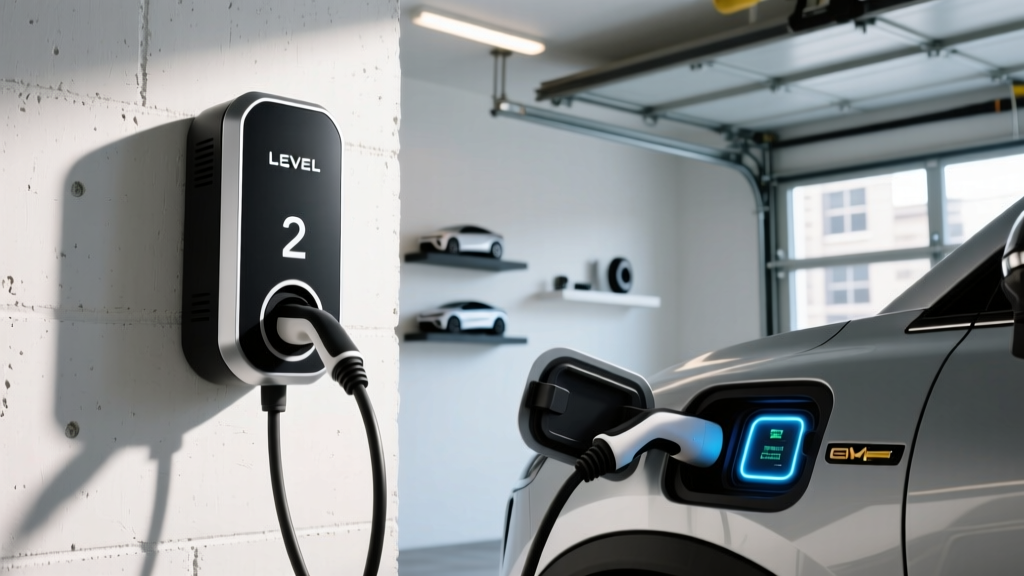
General Motors designed the Ultium Home Charger to extract maximum Level 2 speed from a residential electrical panel. Rated at 19.2 kW (240V / 80A continuous on a 100A breaker), it is one of the most powerful home wallboxes available to consumers in 2026 — and it ships with a native NACS (North American Charging Standard) connector, making it a first-party fit for the Chevrolet Silverado EV, Blazer EV, Equinox EV, Cadillac Lyriq, and Optiq, as well as Tesla vehicles and any EV using a CCS1-to-NACS adapter.
But raw power means nothing if your home's electrical service can't support it. An 80A continuous draw requires either a 200A service panel with ample spare capacity or a dedicated sub-panel — and that reality shapes the entire ownership equation. Below, we break down the hardware, the electrical math, the installation costs, and how the Ultium Home Charger compares to 48A and 32A alternatives for real-world EV charging.
| Specification | Value |
|---|---|
| Max Power Output | 19.2 kW (240V / 80A continuous) |
| Required Circuit Breaker | 100A double-pole (NEC 80% rule) |
| Connector | NACS (Tesla-style, SAE J3400) |
| Cable Length | 24 feet (7.3 m) |
| Wi-Fi / Smart Features | Yes — myChevrolet / myCadillac app scheduling, energy monitoring |
| Indoor / Outdoor Rating | NEMA 4 (indoor and outdoor rated) |
| Energy Star Certified | Yes |
| Warranty | 3 years |
| MSRP (Equipment Only) | ~$600–$700 |
Charging Levels Explained: kW, Miles Per Hour, and What They Mean
Before evaluating any charger, the distinction between kW (kilowatts, a measure of power — the rate of energy flow) and kWh (kilowatt-hours, a measure of energy — the total capacity of your battery) is essential. Think of kW as how wide the hose is, and kWh as the size of the tank you're filling.
| Level | Voltage | Power (kW) | Miles of Range Added Per Hour | Typical Use |
|---|---|---|---|---|
| Level 1 | 120V AC | 1.0–1.4 kW | 3–5 mi/hr | Overnight top-up; PHEVs; low-mileage commuters |
| Level 2 | 240V AC | 3.3–19.2 kW | 12–75 mi/hr | Primary home and workplace charging |
| DC Fast Charge | 400–800V DC | 50–350 kW | 150–1,000+ mi/hr (equivalent) | Road trips; 10–80% in 18–45 min |
At 19.2 kW, the Ultium Home Charger adds roughly 52–75 miles of range per hour depending on vehicle efficiency. For a Chevrolet Equinox EV (which averages about 3.0 mi/kWh), that's approximately 57 miles per hour. For a heavier Silverado EV RST (about 2.1 mi/kWh), expect roughly 40 miles per hour. These are real-world figures — EPA sticker MPGe values may differ.
Electrical Requirements: Does Your Panel Support 80 Amps Continuous?
The National Electrical Code (NEC) requires that continuous loads (defined as running for 3 hours or more — which EV charging almost always does) be limited to 80% of a circuit breaker's rating. An 80A continuous charger therefore needs a 100A breaker on a dedicated circuit.
Here's where many homeowners hit a wall:
- 100A main service panels (common in homes built before 1990) simply cannot support a 100A EV circuit. A panel upgrade to 200A or 400A service is mandatory.
- 200A panels can support a 100A breaker only if the remaining loads (HVAC, electric range, dryer, water heater) don't push the total calculated load past the panel's rating. A licensed electrician must perform a NEC Article 220 load calculation.
- 400A panels (or dual 200A panels) handle 80A chargers easily, and are increasingly common in new construction and renovated homes.
Alternatives If Your Panel Can't Handle 100A
If a load calculation shows insufficient capacity, you have options:
- Downsize to a 48A charger (requires a 60A breaker) — still delivers 11.5 kW, adding roughly 30–40 miles per hour.
- Install an Energy Management System (EMS) like the Emporia VUE or Span smart panel, which dynamically throttles charger amperage when other loads spike, avoiding a panel upgrade.
- Upgrade to 200A or 400A service — the permanent fix, but also the most expensive ($2,500–$6,000+ depending on utility trenching and local code).
Ultium Home Charger Installation Cost Breakdown
Installation costs vary enormously based on your panel, wire run distance, and local permit fees. Below is a realistic range for a professional installation in 2026, based on national averages and NREL residential charging studies:
| Cost Component | Simple Install (panel nearby, no upgrade) | Complex Install (long wire run, sub-panel) | Full Service Upgrade (200A→400A) |
|---|---|---|---|
| Charger Unit | $600–$700 | $600–$700 | $600–$700 |
| 100A Breaker + Wiring (#2 AWG copper or #1/0 aluminum) | $300–$600 | $800–$1,500 | $800–$1,200 |
| Electrician Labor (licensed, 2–8 hours) | $500–$1,200 | $1,500–$3,000 | $2,000–$4,000 |
| Permit & Inspection | $100–$300 | $150–$400 | $200–$500 |
| Panel Upgrade (if needed) | — | $500–$1,500 (sub-panel) | $2,500–$6,000 |
| Total Estimated Range | $1,500–$2,800 | $3,550–$7,100 | $6,100–$12,400 |
The IRS Residential Clean Energy Credit (§25D) does not cover EV chargers as of 2026 — that credit applies to solar, battery storage, and geothermal. However, some utilities and states offer rebates specifically for Level 2 charger installation (check AFDC's incentive search tool for your ZIP code).
Connector Compatibility: NACS, CCS1, and Adapter Realities
As of the 2025–2026 model year, virtually every major automaker has adopted or committed to the NACS connector. The Ultium Home Charger ships with a native NACS plug, making it directly compatible with:
| Vehicle Brand / Connector | Direct Plug? | Adapter Needed? | Notes |
|---|---|---|---|
| GM (Chevy, Cadillac, GMC) — NACS | Yes | No | Native fit for 2025+ Ultium-platform EVs |
| Tesla (all models) — NACS | Yes | No | Full compatibility |
| Ford (Mustang Mach-E, F-150 Lightning) — NACS | Yes | No | 2025+ models ship NACS; 2021–2024 CCS1 models need Ford adapter |
| Hyundai / Kia (Ioniq 5, EV6) — CCS1 | No | Yes — CCS1-to-NACS adapter (~$200–$300) | 2026+ models transitioning to NACS |
| Nissan (Leaf) — CHAdeMO | No | Yes — CHAdeMO-to-NACS (limited availability, ~$400+) | Leaf remains CHAdeMO; adapters are rare and expensive |
| Rivian (R1T, R1S) — NACS | Yes | No | 2025+ models ship NACS |
If you currently drive a CCS1 vehicle and plan to keep it for several more years, a quality CCS1-to-NACS adapter (such as the Lectron or A2Z adapter rated for 48A–80A) will let you use the Ultium charger. However, confirm the adapter's amperage rating — some are capped at 48A, meaning you won't access the full 19.2 kW even though the charger can deliver it.
Charging Time Examples: 10–80% for Common GM Battery Sizes
Level 2 charging follows a relatively linear curve (unlike DC fast charging, which tapers sharply above 80%). At a sustained 19.2 kW, here's how long a 10–80% session takes for several popular Ultium-platform batteries. Note: actual on-board charger acceptance matters — if a vehicle's internal charger is rated for only 11.5 kW, that becomes the bottleneck regardless of wallbox output.
| Vehicle | Usable Battery (kWh) | On-Board Charger Limit | 10–80% Time at 19.2 kW | 10–80% Time at 11.5 kW |
|---|---|---|---|---|
| Chevrolet Equinox EV (2026) | ~85 kWh | 11.5 kW | N/A (capped at 11.5 kW) | ~5.2 hours |
| Chevrolet Blazer EV SS (2026) | ~102 kWh | 19.2 kW | ~3.7 hours | ~6.2 hours |
| Cadillac Lyriq (2026) | ~102 kWh | 19.2 kW | ~3.7 hours | ~6.2 hours |
| Chevrolet Silverado EV RST (2026) | ~200 kWh | 19.2 kW | ~7.3 hours | ~12.2 hours |
| GMC Sierra EV Denali (2026) | ~200 kWh | 19.2 kW | ~7.3 hours | ~12.2 hours |
Key insight: the Equinox EV's 11.5 kW on-board charger means a 19.2 kW wallbox provides no speed advantage over a cheaper 48A unit for that specific vehicle. If your household runs two EVs and one accepts 19.2 kW (like the Blazer EV or Lyriq), the Ultium charger still justifies its install cost. But for Equinox-only households, a $400 48A charger on a 60A circuit saves significant installation money.
Cost to Charge: Home Electricity vs. Public DC Fast vs. Gas
Charging at home on Level 2 is almost always the cheapest way to fuel an EV. Here's a realistic cost comparison using 2026 national averages:
| Scenario | Rate | Cost per kWh | Cost per Mile (3.0 mi/kWh EV) | Cost per Mile (2.1 mi/kWh Truck EV) |
|---|---|---|---|---|
| Home Level 2 — Off-Peak TOU Rate | $0.08–$0.12/kWh | $0.10 avg | $0.033 | $0.048 |
| Home Level 2 — Standard Residential Rate | $0.14–$0.20/kWh | $0.17 avg | $0.057 | $0.081 |
| Public Level 2 (ChargePoint, etc.) | $0.25–$0.49/kWh | $0.35 avg | $0.117 | $0.167 |
| DC Fast Charge (Electrify America, EVgo) | $0.35–$0.55/kWh | $0.45 avg | $0.150 | $0.214 |
| Gasoline — 25 MPG Combined (ICE baseline) | $3.30/gal | — | $0.132 | — |
| Gasoline — 18 MPG Combined (Truck baseline) | $3.30/gal | — | — | $0.183 |
The takeaway: home off-peak charging at $0.10/kWh costs roughly one-quarter to one-third what gasoline costs per mile. Even public DC fast charging is competitive with gasoline on a per-mile basis for efficient EVs, though it becomes more expensive for heavy trucks. Time-of-use (TOU) utility plans are the single most impactful way to reduce your home charging cost — most utilities offer them, and scheduling charges between 11 PM and 6 AM via the Ultium charger's smart features is straightforward.
Equipment Comparison: Ultium Home Charger vs. Alternatives
If 80A is overkill for your vehicle or your panel, here's how the Ultium charger stacks up against popular 48A and smart alternatives:
| Charger | Power | Circuit Needed | Connector | Cable | Smart Features | Price |
|---|---|---|---|---|---|---|
| GM Ultium Home Charger | 19.2 kW (80A) | 100A breaker | NACS | 24 ft | Wi-Fi, app scheduling, energy monitoring | $600–$700 |
| Tesla Wall Connector | 11.5 kW (48A) | 60A breaker | NACS | 24 ft | Wi-Fi, OTA updates, load sharing (pair 2 units) | $425–$475 |
| ChargePoint Home Flex | Up to 12 kW (50A) | 65A breaker (configurable down to 16A) | NACS or J1772 | 23 ft | Wi-Fi, app, Alexa, flexible amperage | $550–$650 |
| Emporia Vue Level 2 | 11.5 kW (48A) | 60A breaker | NACS or J1772 | 24 ft | Wi-Fi, whole-home energy monitoring, solar integration | $400–$500 |
| Grizzl-E Smart | 10 kW (40A) | 50A breaker | J1772 (NACS adapter avail.) | 24 ft | Wi-Fi, OCPP, extreme cold rated (-40°F) | $400–$500 |
The Ultium charger's 19.2 kW output is genuinely differentiated — no other mainstream consumer wallbox matches it. But that advantage only materializes if (a) your vehicle's on-board charger accepts 19.2 kW, and (b) your electrical panel can support a 100A breaker. For Equinox EV owners or homes with 100A main panels, the Tesla Wall Connector or ChargePoint Home Flex at 48A delivers excellent overnight charging at a fraction of the installation cost.
Safety, Code, and Installation Best Practices
Regardless of which charger you select, these code and safety considerations are non-negotiable:
- Dedicated circuit: Level 2 chargers must be on a circuit serving no other loads. Sharing a circuit with an outlet or appliance is a code violation.
- GFCI protection: The 2023 NEC (and most jurisdictions enforcing 2026 codes) requires GFCI protection for outdoor receptacles. Hardwired chargers (no plug) typically avoid this requirement and are preferred for reliability — GFCI breakers can nuisance-trip with EV chargers.
- NEMA 4 rating: The Ultium charger's NEMA 4 rating means it's sealed against rain, dust, and hose-directed water — suitable for outdoor mounting in any US climate.
- Wire gauge: An 80A continuous / 100A breaker circuit requires #2 AWG copper or #1/0 AWG aluminum conductors in most jurisdictions. Long runs (over 50 feet) may require upsizing to compensate for voltage drop.
- Permit and inspection: Virtually all jurisdictions require an electrical permit for a new 240V circuit. The inspection ensures the breaker, wire, and grounding meet code. Skipping the permit risks insurance claim denial if an electrical fire occurs.
- Utility notification: Some utilities require advance notice for loads over 40A. Check with your provider — they may also offer a dedicated EV meter or TOU rate that saves money.
Frequently Asked Questions
How much does it cost to install a home EV charger?
For the Ultium Home Charger (19.2 kW / 80A), total installed cost ranges from roughly $1,500–$2,800 if your panel has spare capacity and the charger mounts close to the panel, to $6,000–$12,000+ if a full service upgrade (200A to 400A) is needed. The charger unit itself is $600–$700; the rest is electrical work, wire, breaker, and permit.
How fast will each charging level add range?
Level 1 (120V) adds 3–5 miles per hour. Level 2 at 48A (11.5 kW) adds roughly 30–40 miles per hour. The Ultium Home Charger at 80A (19.2 kW) adds roughly 40–75 miles per hour depending on vehicle efficiency. DC fast charging at 150–350 kW can add 150–1,000+ equivalent miles per hour, though sessions typically last 18–45 minutes for a 10–80% fill.
Which connector and charger is compatible with my EV?
The Ultium Home Charger uses a NACS connector. It plugs directly into all 2025+ GM EVs, all Teslas, and 2025+ Ford, Rivian, and other NACS-equipped vehicles. Older CCS1 vehicles (2021–2024 Hyundai, Kia, VW, Ford) require a CCS1-to-NACS adapter. CHAdeMO vehicles (Nissan Leaf) have very limited adapter options.
How much does charging cost per mile vs. gas?
At a typical home off-peak rate of $0.10/kWh, an efficient EV (3.0 mi/kWh) costs about $0.033/mile — roughly one-quarter the cost of gasoline at $3.30/gal in a 25 MPG vehicle ($0.132/mile). Even at standard residential rates of $0.17/kWh, home charging costs roughly $0.057/mile, less than half the gas equivalent.
What electrical upgrades might I need?
The most common upgrade is a panel capacity increase. Homes with 100A main service almost always need a 200A or 400A upgrade ($2,500–$6,000). Even some 200A panels need a load calculation to confirm a 100A breaker is safe. Alternatives include downsizing to a 48A charger (60A breaker), installing a sub-panel, or using an energy management system to dynamically limit charger draw.
Is hardwired or plug-in installation better?
Hardwired is preferred for the Ultium charger's 80A draw. A plug-in (NEMA 14-100 receptacle) installation is technically possible but adds cost, requires a GFCI breaker in many jurisdictions (which can nuisance-trip), and introduces a connection point that can overheat under sustained high-amperage use. Most licensed electricians recommend hardwiring for circuits above 50A.