Why Uber and Lyft EV Drivers Face Unique Charging Pressures
For rideshare drivers, an electric vehicle isn't an environmental statement—it's a profit-center decision. Every minute spent waiting at a charger is a minute not earning, and every dollar spent on public DC fast charging eats directly into margins. The uber ev drivers charging concerns that dominate driver forums aren't theoretical: they're about whether a 2026 Tesla Model 3 or Chevrolet Bolt EUV can realistically handle 200+ miles of daily driving, how to minimize downtime, and whether home charging infrastructure is worth the upfront investment.
This guide breaks down the exact numbers—charging speeds in kW, installation costs by component, electricity pricing by scenario, and equipment picks—so full-time and part-time rideshare drivers can build a charging strategy that protects their hourly earnings.
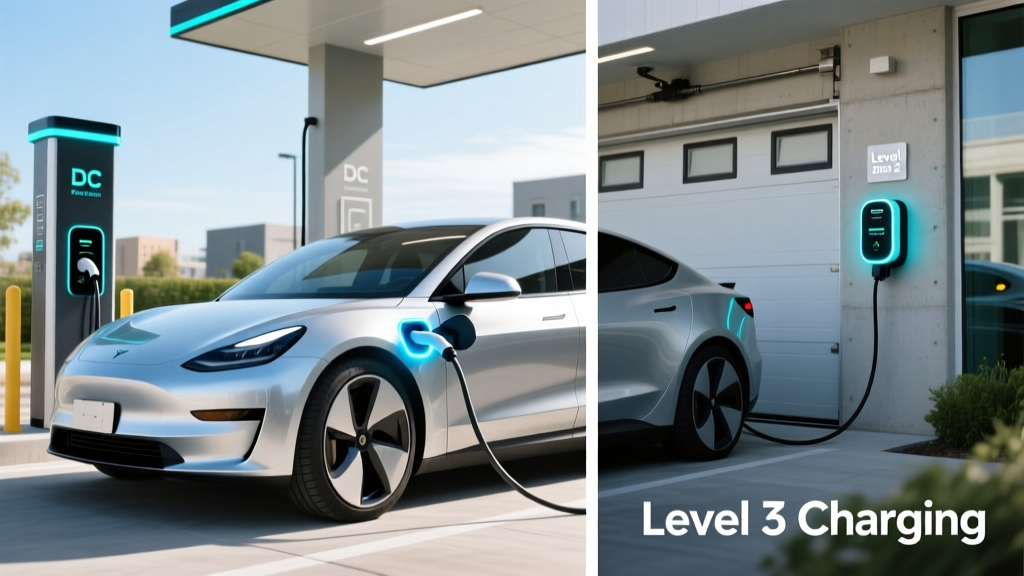
Charging Levels Explained: Speeds, Downtime, and Real-World Impact
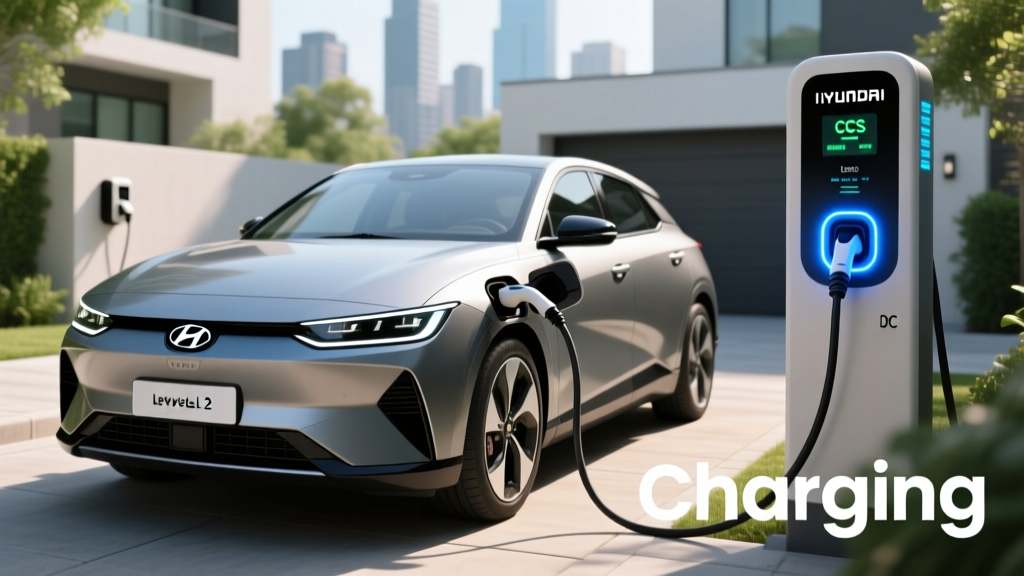
Understanding charging speed requires distinguishing kW (kilowatts), the rate of power delivery, from kWh (kilowatt-hours), the total energy stored in your battery. A 75 kWh battery charged at 7.2 kW (Level 2) takes roughly 10 hours from empty; that same battery at 150 kW (DC fast) reaches 80% in about 25 minutes. For rideshare drivers, the goal is minimizing the latter and maximizing overnight top-ups on the former.
| Level | Voltage / Power | Typical kW | Miles of Range Added per Hour | 10–80% Time (75 kWh Battery) | Rideshare Use Case |
|---|---|---|---|---|---|
| Level 1 (120V) | 120V / 12A | ~1.4 kW | 3–5 mi/hr | ~52 hours | Emergency only; unusable for daily rideshare |
| Level 2 (240V) | 240V / 32–48A | 7.2–11.5 kW | 20–44 mi/hr | ~7–10 hours | Overnight home charging; primary strategy |
| DC Fast Charging | 400–800V DC | 50–350 kW | 150–1,200 mi/hr (peak) | 18–45 minutes | Mid-shift top-ups; plan around charge-curve taper |
Home Level 2 Installation: Costs, Electrical Requirements, and Panel Upgrades
For full-time Uber or Lyft drivers covering 150–250 miles daily, a home Level 2 charger is non-negotiable. It's the difference between starting every shift with a full battery and burning 45 minutes at a public charger before your first ride.
Electrical Requirements
A standard Level 2 home charger requires a 240V dedicated circuit, typically rated at 40A or 50A. A 40A circuit delivers up to 9.6 kW (though most chargers cap at 32A continuous draw for 7.7 kW, per the National Electrical Code's 80% continuous-load rule). A 48A charger requires a 60A circuit. Your electrical panel must have sufficient spare capacity—typically 200A total service for modern homes, though older homes may have 100A or 150A panels that cannot accommodate a new high-draw circuit without an upgrade.
Installation Cost Breakdown
| Component | Low Estimate | High Estimate | Notes |
|---|---|---|---|
| Level 2 Charger Equipment | $300 | $750 | 32A–48A smart charger; hardwired or NEMA 14-50 plug |
| Electrician Labor (standard install) | $400 | $1,200 | Running conduit, wiring, breaker; varies by panel-to-garage distance |
| Permit & Inspection | $50 | $250 | Required by most municipalities; varies by jurisdiction |
| Panel Upgrade (if needed) | $1,500 | $3,500 | 100A→200A upgrade; common in pre-1990 homes |
| Total (no panel upgrade) | $750 | $2,200 | Typical scenario for modern homes |
| Total (with panel upgrade) | $2,250 | $5,700 | Older homes; get 2–3 quotes |
Key cost driver: The distance from your electrical panel to the charger location. A panel in the garage next to the parking spot may cost $400–$600 in labor. A panel in the basement requiring 60+ feet of conduit run to an exterior wall can push labor past $1,000. Always get a licensed electrician to assess your specific setup—do not rely on online estimates alone.
Federal Tax Credit for Home Charging Equipment
The IRS §30D-adjacent Alternative Fuel Vehicle Refueling Property Credit (Form 8911) covers 30% of home charger equipment and installation costs, up to $1,000. Eligibility depends on your census tract meeting certain low-income or non-urban criteria. Check the IRS Form 8911 instructions for current eligibility maps and rules, as these are subject to change.
Connector Compatibility: NACS, CCS1, CHAdeMO, and Adapter Realities
As of 2026, the North American Charging Standard (NACS), developed by Tesla, has become the dominant connector for new EVs. Most legacy CCS1 vehicles can access Tesla Superchargers via adapter, and the CHAdeMO standard is effectively discontinued for new models. For rideshare drivers, connector compatibility determines which public networks are accessible during a shift.
| Connector | Vehicle Brands Using It | Public Network Access | Adapter Needed? |
|---|---|---|---|
| NACS (Tesla) | Tesla (all), Ford (2025+), GM (2025+), Rivian, Volvo, Polestar, Hyundai/Kia (2026+) | Tesla Supercharger (20,000+ stalls), Electrify America, EVgo | None for native NACS vehicles |
| CCS1 | Hyundai/Kia (pre-2026), VW ID.4 (pre-2026), BMW iX, older Ford/GM EVs | Electrify America, EVgo, ChargePoint, Ionity (EU) | CCS-to-NACS adapter (~$200–$300) for Supercharger access |
| CHAdeMO | Nissan Leaf (legacy), Mitsubishi Outlander PHEV (legacy) | Limited; many stations decommissioned | No viable adapter to NACS; declining infrastructure |
Rideshare recommendation: If you're purchasing a new EV specifically for Uber/Lyft in 2026, choose a NACS-native vehicle. Supercharger network reliability consistently outperforms third-party DC fast networks in uptime and ease of use, which directly impacts your earning time. If you already own a CCS1 vehicle, invest in the manufacturer-approved NACS adapter and verify Supercharger compatibility on Tesla's website for your specific model.
Charging Cost Per Mile vs. Gasoline: The Rideshare Margin Calculator
The economic case for EVs in rideshare hinges on fuel cost per mile. Here's how charging costs break down across realistic scenarios for a driver putting in 200 miles per day, five days per week.
| Scenario | Rate ($/kWh) | Vehicle Efficiency | Cost Per Mile | Weekly Cost (1,000 mi) |
|---|---|---|---|---|
| Home Level 2, off-peak utility rate | $0.09–$0.14 | 3.5 mi/kWh (e.g., Tesla Model 3) | $0.026–$0.040 | $26–$40 |
| Home Level 2, standard utility rate | $0.14–$0.20 | 3.5 mi/kWh | $0.040–$0.057 | $40–$57 |
| Public Level 2 (ChargePoint, etc.) | $0.20–$0.35 | 3.5 mi/kWh | $0.057–$0.100 | $57–$100 |
| DC Fast Charging (Electrify America, EVgo) | $0.35–$0.55 | 3.5 mi/kWh | $0.100–$0.157 | $100–$157 |
| Tesla Supercharger (member pricing) | $0.25–$0.40 | 3.5 mi/kWh | $0.071–$0.114 | $71–$114 |
| Gasoline (30 MPG combined, $3.50/gal) | $3.50/gallon | 30 MPG | $0.117 | $117 |
| Gasoline (25 MPG city, $3.50/gal) | $3.50/gallon | 25 MPG | $0.140 | $140 |
Equipment Picks: Best Home Chargers for High-Mileage Drivers
Rideshare drivers need reliability, adequate cable length (24–25 feet to reach various parking positions), and smart scheduling to exploit off-peak utility rates. Here are three proven options as of 2026:
Top Pick: ChargePoint Home Flex (NACS or J1772)
- Power Output: Up to 11.5 kW (48A) on a 60A circuit; configurable down to 16A for lower-capacity panels
- Connector: Available in NACS (native Tesla/Ford/GM) or J1772 (universal with adapter)
- Cable Length: 23 feet
- Smart Features: Wi-Fi, app-based scheduling, Alexa integration, energy reporting, automatic off-peak charging
- Price: ~$550–$650 (equipment only)
- Why for rideshare: Adjustable amperage means it works even if your panel can't support a full 60A circuit. Scheduling feature automates off-peak charging.
Best Value: Emporia Level 2 EV Charger
- Power Output: Up to 11.5 kW (48A) on a 60A circuit
- Connector: J1772 (use NACS adapter for Tesla-connector vehicles)
- Cable Length: 24 feet
- Smart Features: Wi-Fi, app scheduling, real-time energy monitoring, integrates with Emporia home energy management
- Price: ~$350–$400 (equipment only)
- Why for rideshare: Lowest-cost 48A smart charger on the market. Solid build quality and reliable app. Best for budget-conscious drivers.
Premium Pick: Tesla Wall Connector (NACS)
- Power Output: Up to 11.5 kW (48A) on a 60A circuit
- Connector: NACS native; includes J1772 adapter in box (2025+ versions)
- Cable Length: 24 feet
- Smart Features: Wi-Fi, OTA updates, power-sharing between multiple units, integrated with Tesla app
- Price: ~$475–$550 (equipment only)
- Why for rideshare: If you drive a Tesla, the native integration is unmatched. Power-sharing lets you install two units on one 60A circuit if you have two EVs.
Safety, Electrical Code, and Inspection Requirements
Home EV charging involves sustained high-current draw for 8–10 hours nightly. This is not the same as plugging in a dryer—it demands proper installation to avoid fire risk and ensure insurance coverage.
- Dedicated circuit: Your Level 2 charger must be on its own dedicated breaker—never shared with other appliances. A 48A charger requires a 60A breaker; a 32A charger requires a 40A breaker.
- GFCI protection: The 2023 NEC (adopted by most jurisdictions by 2026) requires GFCI protection for outdoor receptacles. Hardwired chargers (no plug) are generally exempt from this requirement and are preferred by many electricians for reliability—GFCI breakers can nuisance-trip on EV chargers.
- Outdoor rating: If your charger is installed outdoors or in an unenclosed carport, it must carry a NEMA 4 (weatherproof) rating. All three chargers recommended above meet this standard.
- Permit and inspection: Nearly all jurisdictions require an electrical permit for a new 240V circuit. The inspection verifies wire gauge, breaker sizing, grounding, and conduit fill. Skipping the permit risks insurance denial in the event of an electrical fire and may violate local code.
- Wire gauge: A 60A circuit requires 6 AWG copper wire (or 4 AWG aluminum). A 40A circuit requires 8 AWG copper. Your electrician will size this correctly—do not attempt DIY wiring for a high-current circuit.
Public Charging Strategy for Mid-Shift Top-Ups
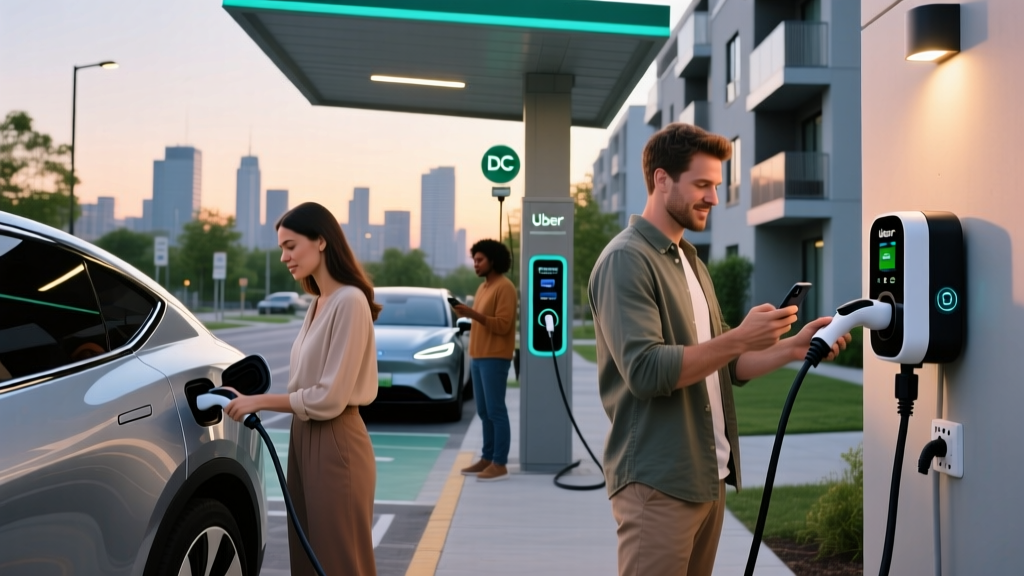
Even with home charging, most full-time rideshare drivers covering 200+ miles need one mid-shift DC fast charge. Here's how to minimize downtime:
- Target 20–80% SoC: The charging curve means 20–80% is the fastest window. Arriving at 10% is marginally faster at the start, but the stress of near-empty driving isn't worth the 2 minutes saved.
- Precondition the battery: Navigate to the charger using your vehicle's built-in navigation (Tesla, Ford, GM, Hyundai all support this). The car will warm or cool the battery to optimal charging temperature, adding 10–30% to your peak charge rate. In cold weather, preconditioning can be the difference between a 90 kW and a 175 kW peak.
- Avoid charging above 80% on-shift: The taper above 80% means the last 20% can take as long as the first 60%. Charge to 80%, get back on the road, and finish charging at home overnight.
- Use network apps to check stall availability: Apps like PlugShare, Tesla, Electrify America, and EVgo show real-time stall availability. Driving to a station with zero available stalls is 15–20 minutes of lost earnings.
- Choose charging locations near demand: A DC fast charger near an airport queue, shopping district, or hospital lets you position for your next ride request while charging. A charger in an empty industrial park does not.
Frequently Asked Questions
How much does it cost to install a home EV charger?
A typical home Level 2 installation (40A–60A circuit, no panel upgrade) costs $750–$2,200 total, including the charger ($300–$750), electrician labor ($400–$1,200), and permit ($50–$250). If your home needs a panel upgrade from 100A to 200A service, add $1,500–$3,500. Always get 2–3 quotes from licensed electricians.
How fast will each charging level add range?
Level 1 (120V) adds 3–5 miles per hour—effectively useless for rideshare. Level 2 (240V, 48A) adds 30–44 miles per hour, fully replenishing a 75 kWh battery overnight. DC fast charging at 150+ kW can add 150–250 miles in 20–30 minutes, but only within the 10–80% SoC window before the charge curve tapers significantly.
Which connector/charger is compatible with my EV?
Check your vehicle's charge port. 2025–2026 Tesla, Ford, GM, Rivian, Volvo, and newer Hyundai/Kia models use NACS. Pre-2025 Hyundai/Kia, VW, and BMW use CCS1. Nissan Leaf uses CHAdeMO (legacy). CCS1 vehicles can access Tesla Superchargers with a manufacturer-approved adapter ($200–$300). For home charging, match your charger's connector to your vehicle or use the appropriate adapter.
How much does charging cost per mile vs gas?
Home charging at off-peak rates ($0.10/kWh) costs approximately $0.029/mile in a 3.5 mi/kWh EV—roughly 75% less than a 25 MPG gas car at $3.50/gallon ($0.14/mile). However, DC fast charging at $0.48/kWh costs $0.137/mile, nearly matching gasoline. Profitability for rideshare EV drivers depends on maximizing home charging and minimizing public DC fast sessions.
What electrical upgrades might I need?
The most common upgrade is a panel capacity increase from 100A or 150A to 200A service ($1,500–$3,500). Homes built after 2000 typically have 200A panels with sufficient spare capacity. Your electrician will perform a load calculation per NEC Article 220 to determine if your panel can handle an additional 40A–60A continuous load. Some utilities offer "make-ready" programs that cover panel upgrade costs—check with your local provider.
Can I use a NEMA 14-50 outlet instead of hardwiring?
Yes, but with caveats. A NEMA 14-50 outlet (50A, 240V) supports up to 40A continuous draw (9.6 kW). However, the 2023 NEC requires GFCI protection for new 14-50 installations in garages in many jurisdictions, and GFCI breakers are known to nuisance-trip with EV chargers. Hardwired installations avoid this issue and are generally preferred by electricians for reliability. A hardwired install also eliminates the $80–$150 cost of an industrial-grade 14-50 receptacle.
Does frequent DC fast charging degrade my battery faster?
Yes, but the effect is moderate with modern thermal management. Data from fueleconomy.gov and long-term fleet studies show that exclusive DC fast charging accelerates degradation by roughly 1–2% additional capacity loss over 100,000 miles compared to Level 2-only charging. Most 2026 EVs carry battery warranties of 8 years/100,000 miles with a 70% capacity retention guarantee. For rideshare drivers hitting 50,000+ miles/year, plan for 8–12% total degradation over 5 years with a mixed home/DC fast charging strategy.