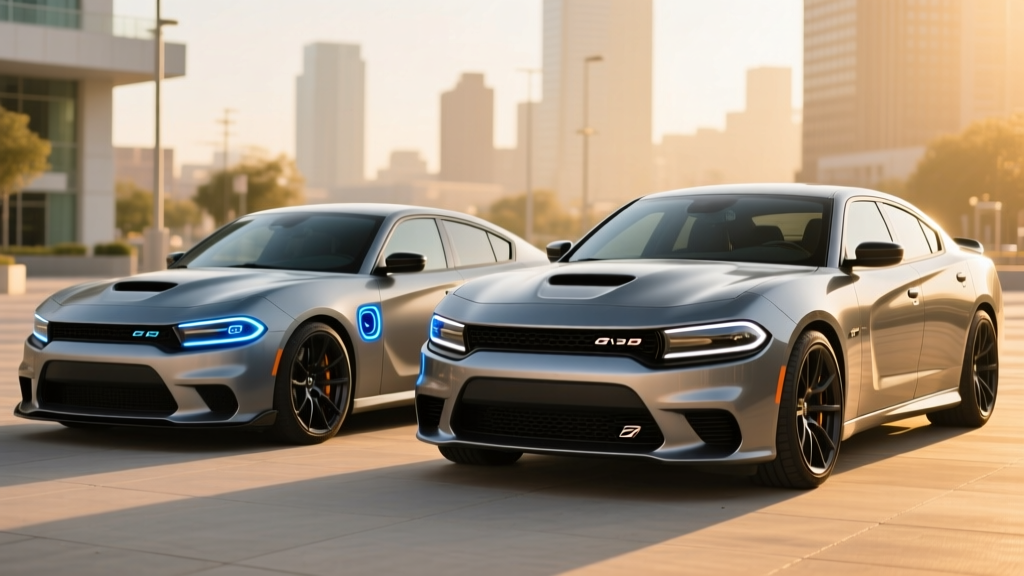
The Dodge Charger lineup has undergone a historic transformation. For decades, the Charger was defined by its HEMI V8 rumble and rear-wheel-drive muscle. Today, the 'types of Dodge Chargers' available to buyers span two distinct worlds: the all-electric Dodge Charger Daytona and the traditional gas-powered models that continue to carry the internal combustion torch. Whether you are researching the 2026 EV lineup or looking at the final iterations of the V8 era, understanding the differences in powertrain, efficiency, and charging infrastructure is critical for making the right purchase.
The Electric Era: Dodge Charger Daytona (2024–2026)
The Dodge Charger Daytona represents Stellantis's pivot to electrified muscle. Built on the STLA Large platform, the Daytona is available in two primary configurations for the 2024–2026 model years: the R/T and the Scat Pack. Both utilize an 800-volt architecture, which allows for significantly faster DC fast charging compared to older 400V systems.
Dodge Charger Daytona R/T
The R/T is the entry point into the electric muscle car segment. It features a dual-motor all-wheel-drive (AWD) system producing 496 horsepower (with the Direct Connection Stage 1 upgrade). It offers a balance of performance and range that appeals to daily drivers who still want that signature Dodge push.
- Battery: ~100.5 kWh (usable) Lithium-Ion (NMC chemistry)
- Range: EPA-estimated 317 miles (274 miles with the optional 20-inch wheels and performance tires)
- 0-60 mph: 4.7 seconds
- Charging Speed: Peak 175 kW on DC Fast Charging
Dodge Charger Daytona Scat Pack
For those who prioritize track performance over maximum range, the Scat Pack is the high-output variant. With the Direct Connection Stage 2 upgrade, it produces a massive 670 horsepower, rivaling the old Hellcat models in acceleration while offering instant electric torque.
- Battery: ~100.5 kWh (usable) Lithium-Ion (NMC chemistry)
- Range: EPA-estimated 260 miles (due to higher output and wider tires)
- 0-60 mph: 3.3 seconds
- Charging Speed: Peak 175 kW on DC Fast Charging
The Gas Legacy: V8 HEMI and Six-Cylinder Models
While the Daytona is the future, the internal combustion (ICE) Charger remains a staple of the used and new-old-stock market. The 2023 model year was the final year for the legendary HEMI V8s in their original form, though some 2024–2025 models may still be found in dealer inventories or as certified pre-owned.
Dodge Charger SXT and GT (V6)
The SXT and GT trims are powered by the 3.6L Pentastar V6. These are the most common 'types of Dodge Chargers' found on the road and offer a balance of affordability and style.
- Engine: 3.6L V6 (292–300 hp)
- Fuel Economy: ~19 MPG city / 30 MPG highway
- 0-60 mph: ~6.2 seconds
Dodge Charger R/T, Scat Pack, and Hellcat (V8)
The high-performance V8 models are the ones that built the brand's reputation. From the 5.7L HEMI in the R/T to the supercharged 6.2L in the Hellcat and Jailbreak editions, these vehicles are defined by their sound and raw power.
- R/T (5.7L V8): 370 hp, ~16 MPG city / 25 MPG highway
- Scat Pack (6.4L V8): 485 hp, ~15 MPG city / 24 MPG highway
- Hellcat (6.2L Supercharged V8): 717+ hp, ~12 MPG city / 21 MPG highway
Charging the Daytona: Levels and Speeds
For buyers considering the electric Daytona, understanding the three levels of charging is essential. The 800V system is designed to maximize the efficiency of DC fast charging, but you will still need a plan for Level 2 charging at home.
| Charging Level | Voltage/Amperage | Power Output (kW) | Range Added per Hour | 10%–80% Charge Time |
|---|---|---|---|---|
| Level 1 (Standard Outlet) | 120V / 12A | ~1.4 kW | ~4–5 miles | ~50+ hours |
| Level 2 (Home/Public AC) | 240V / 48A | ~11.5 kW | ~35–40 miles | ~8.5 hours |
| DC Fast Charging | 800V Architecture | Up to 175 kW | ~500+ miles/hr | ~27 minutes |
Note: The 10–80% time for DCFC is based on a 175 kW peak. Real-world speeds depend on battery temperature and the charger's maximum output. The 800V system allows the Daytona to maintain higher charging speeds for longer portions of the session.
Home Charging Installation and Costs
To get the most out of the Charger Daytona, you will need a Level 2 home charger. This requires a 240V outlet (NEMA 14-50) or a hardwired wallbox. For a 48A charger, you need a dedicated 60A circuit. If your home's electrical panel is older (100A service), you may need a panel upgrade to handle the additional load safely.
| Item | Estimated Cost (USD) | Notes |
|---|---|---|
| Level 2 Charger (Equipment) | $400 – $700 | Smart Wi-Fi enabled chargers cost more |
| Electrician Labor | $600 – $1,500 | Varies by distance from panel |
| Permits and Materials | $150 – $400 | Required for code compliance |
| Panel Upgrade (if needed) | $1,500 – $3,000+ | Only for homes with insufficient capacity |
| Total Estimated Install | $1,150 – $2,600 | Excluding panel upgrades |
Connector Compatibility and Adapters
The automotive industry is currently shifting from the CCS1 standard to the North American Charging Standard (NACS). Dodge has confirmed that the Charger Daytona will utilize the CCS1 connector for its initial launch years, though Stellantis is moving toward NACS for future models. If you use the Tesla Supercharger network, you will likely need a CCS-to-NACS adapter, which Dodge may provide or sell as an accessory.
| Connector Type | Compatibility | Network Availability |
|---|---|---|
| CCS1 (Combo) | Native to 2024–2026 Daytona | Electrify America, EVgo, ChargePoint |
| NACS (Tesla) | Requires Adapter (Future Native) | Tesla Superchargers (via adapter) |
| CHAdeMO | Not Compatible | Legacy network; not supported |
Ownership Economics: Charging vs. Gas
Comparing a Charger Daytona Scat Pack to a gas-powered Scat Pack reveals a massive difference in 'fuel' costs. While the gas Scat Pack requires premium fuel and gets ~17 MPG combined, the Daytona can be charged at home for a fraction of the cost.
- Gas Cost (Scat Pack): ~$0.22 per mile (based on $3.80/gal and 17 MPG)
- Home Charging (Daytona): ~$0.05 per mile (based on $0.16/kWh and 2.5 mi/kWh)
- Public DCFC (Daytona): ~$0.14 per mile (based on $0.45/kWh average)
Over 15,000 miles of annual driving, the electric Daytona can save a buyer between $1,200 and $2,500 in fuel costs, depending on their home electricity rates and public charging frequency.
Frequently Asked Questions
Will Dodge bring back the HEMI V8 Charger?
Dodge has introduced the 'Six-Pack' (a twin-turbo inline-six) as the successor to the V8 in other models like the Hornet and future ICE muscle cars. While the classic HEMI is retired, high-output gas engines will likely remain part of the Charger lineup alongside the EV.
Does the Charger Daytona have a 'Fratzonic' exhaust?
Yes. To address the lack of engine noise, Dodge developed the Fratzonic Chambered Exhaust system, which uses amplifiers and chambers to produce a sound profile that mimics the volume and intensity of a Hellcat V8.
Are there tax credits for the electric Charger?
Eligibility for the §30D Federal Tax Credit (up to $7,500) depends on battery sourcing requirements and the buyer's income. Because the Daytona is built in Canada and uses global battery supply chains, buyers should check the latest IRS guidance or consult a tax professional before purchasing.
What is the real-world range of the Daytona R/T?
While the EPA estimate is 317 miles, real-world highway driving at 75 mph or in cold weather (below 40°F) can reduce range by 15–25%. Expect approximately 240–270 miles in mixed high-speed or winter conditions.