If you've searched for the difference between turbo and supercharger, you've probably landed in one of two worlds: the internal-combustion universe of forced-induction engines, or the EV universe where Tesla calls its DC fast-charging network "Supercharger." The terms share a name but describe entirely different technologies. This guide clears up the confusion, then gives you everything you need to know about EV charging speeds, home installation costs, connectors, and per-mile costs in 2026.
What "Turbo" and "Supercharger" Actually Mean
In automotive engineering, a turbocharger (turbo) and a supercharger are both forced-induction devices that compress air into an engine's cylinders to produce more power. The key difference is how they're driven:
- Turbocharger: Powered by exhaust gases spinning a turbine. It recovers otherwise-wasted energy but can suffer from "turbo lag" before the turbine spools up.
- Supercharger: Mechanically driven by the engine's crankshaft via a belt or gear. It delivers instant boost but parasitically consumes engine power to operate.
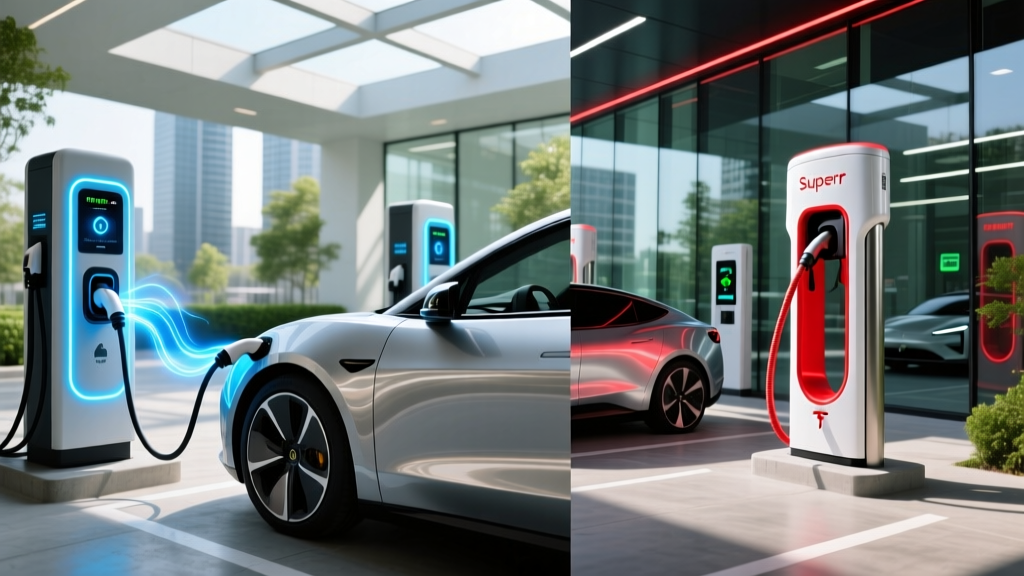
Neither of these components exists in a battery-electric vehicle. EVs have no combustion engine, no exhaust, and no intake manifold. Instead, the word "Supercharger" entered the EV lexicon because Tesla branded its DC fast-charging network the Tesla Supercharger network. So when EV owners talk about a "supercharger," they mean a high-power DC fast-charging station — not a belt-driven air compressor.
Bottom line: Turbos and superchargers are gas-engine hardware. Tesla Superchargers are DC fast chargers. The only thing they share is a name borrowed for marketing punch.
EV Charging Levels Explained: kW and Miles Per Hour
Before we discuss specific equipment, let's define the unit that matters most: kW (kilowatts) measures charging power — how fast energy flows into your battery. kWh (kilowatt-hours) measures battery capacity — how much energy the battery stores. Never confuse the two: kW is the speed of the hose, kWh is the size of the tank.
| Level | Voltage | Power (kW) | Miles of Range Added Per Hour | Typical Use |
|---|---|---|---|---|
| Level 1 | 120V AC | 1.2–1.9 kW | 3–5 mi/hr | Emergency / overnight trickle (PHEVs, low-mileage commutes) |
| Level 2 | 240V AC | 3.3–19.2 kW | 12–75 mi/hr | Home daily charging, workplace, shopping centers |
| DC Fast Charge (incl. Tesla Supercharger V4) | 400–800V DC | 50–350 kW | 150–1,200+ mi/hr (peak) | Road trips, highway corridors, 10–80% top-ups |
A typical 2026 EV with an 80 kWh battery and 3.5 mi/kWh efficiency will gain roughly 3.5 miles of range per kWh added. So a 11.5 kW Level 2 charger adds about 40 miles of range per hour — enough to fully replenish a daily commute overnight.
How Much Does It Cost to Install a Home EV Charger?
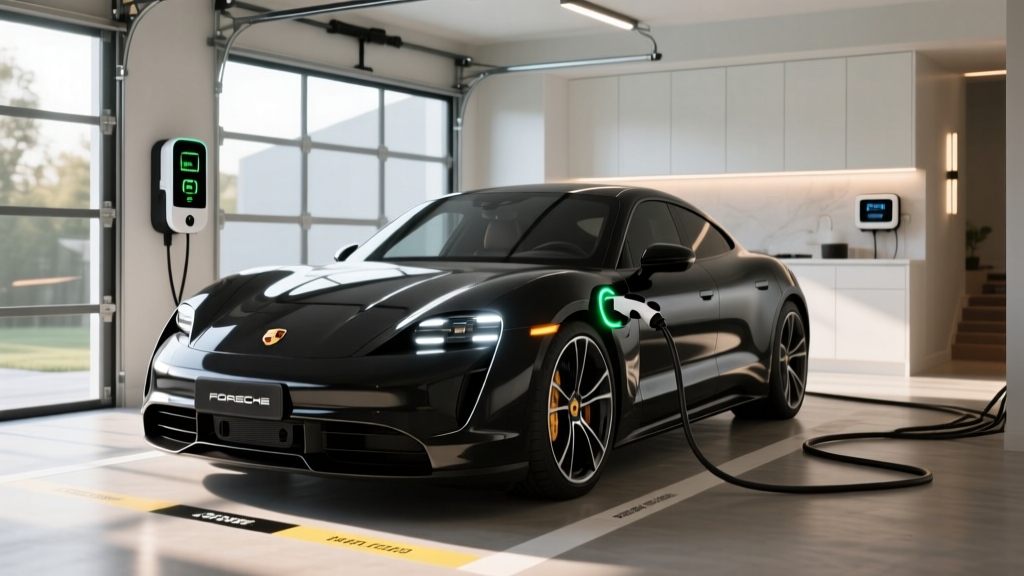
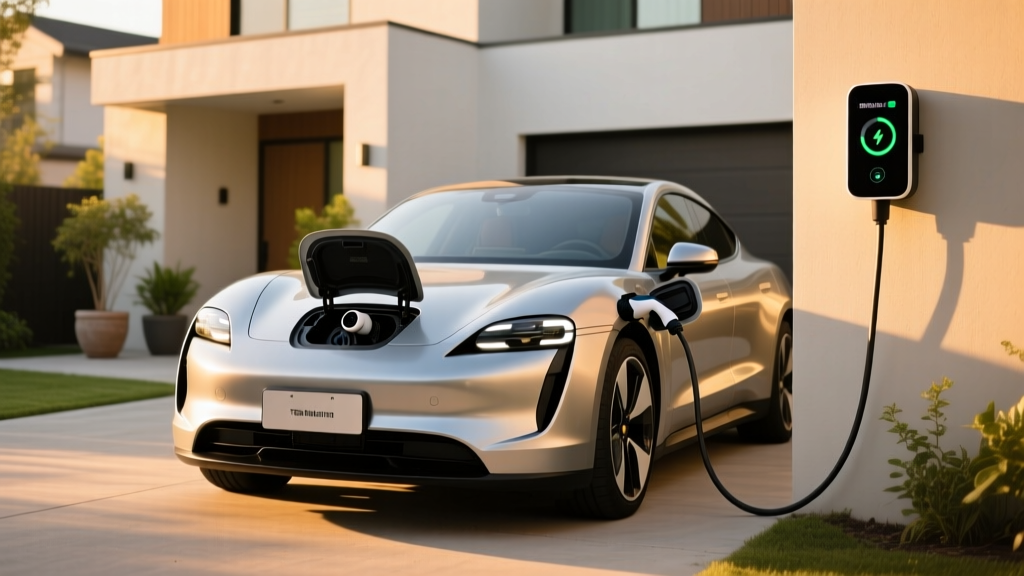
Home Level 2 charging is where 80%+ of EV charging happens. But installation costs vary enormously depending on your home's electrical panel, the distance from the panel to the charging location, and local permit fees.
| Cost Component | Low Estimate | High Estimate | Notes |
|---|---|---|---|
| Level 2 EVSE Equipment (charger unit) | $350 | $750 | Smart Wi-Fi-enabled units with 25-ft cable |
| Electrician Labor (240V/40–60A circuit) | $500 | $1,500 | Depends on run length and wall type |
| Electrical Permit | $50 | $250 | Varies by municipality |
| Panel Upgrade (if needed: 100A → 200A) | $1,500 | $4,000 | Older homes with 100A service may require this |
| Total (no panel upgrade) | $900 | $2,500 | Most homes with 200A service fall here |
| Total (with panel upgrade) | $2,400 | $6,500 | Common in pre-1990 homes |
What electrical upgrades might I need? A Level 2 charger drawing 40 amps requires a dedicated 50-amp breaker (NEC code requires circuits rated at 125% of continuous load). If your panel lacks two adjacent open slots or is already near capacity — common in homes with electric ranges, dryers, and HVAC — you may need a panel upgrade. A licensed electrician will perform a load calculation per NEC Article 220 before recommending this. Some utilities offer rebates of $200–$500 for panel upgrades tied to EV adoption; check with your local provider.
⚠️ Panel-Upgrade Gotcha: Don't assume your 200-amp panel has spare capacity. A 200A panel rating describes the main breaker limit, not available headroom. If your home already runs electric heat, a dryer, an oven, and a water heater on 200A service, adding a 40A EV circuit may push you over. Always get a professional load calculation before purchasing equipment.
Which Connector Is Compatible With My EV?
The connector landscape shifted dramatically between 2023 and 2026. Tesla's North American Charging Standard (NACS) has been adopted by nearly every major automaker, and as of 2025–2026, most new EVs ship with a native NACS port. Older CCS1-equipped EVs can use adapters.
| Connector | Brands Using It (2026 Models) | Adapter Needed? |
|---|---|---|
| NACS (Tesla / J3400) | Tesla, Ford, GM, Rivian, Volvo, Polestar, Mercedes, Nissan, Honda, Fisker, BMW, Hyundai (select 2026+) | No — native on these vehicles |
| CCS1 (Combo) | Hyundai/Kia (pre-2026 models), VW ID.4 (pre-2026), older BMW i4/iX, older Ford/GM | CCS1-to-NACS adapter ($150–$250) for Tesla Supercharger access |
| CHAdeMO | Nissan Leaf (legacy only; 2026 Leaf uses NACS) | CHAdeMO-to-NACS adapters are rare; network is declining |
If you own a CCS1-equipped EV from the 2022–2024 era, a Tesla CCS adapter (approximately $170–$230 from Tesla or third-party suppliers) unlocks access to Tesla Supercharger stations — the most reliable DC fast-charging network in North America, with over 30,000 stalls as of early 2026 (Tesla Supercharger).
DC Fast Charging: Real-World Times for Common Battery Sizes
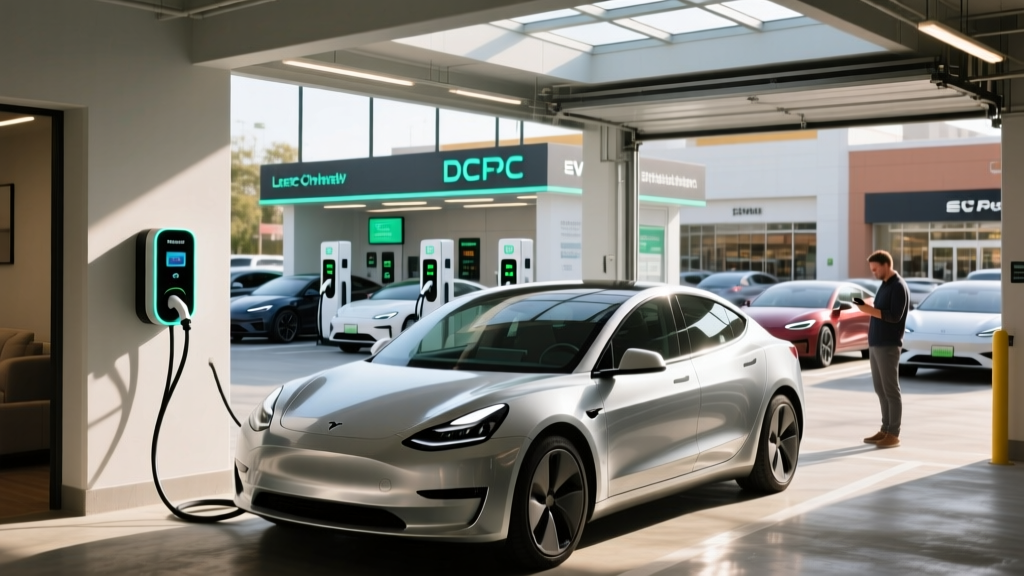
DC fast-charging speeds are rated at peak kW, but batteries don't charge at peak the entire session. The charge curve tapers significantly above 80% state of charge to protect battery longevity. Here's what real 10–80% sessions look like:
- Tesla Model Y Long Range (75 kWh usable, NMC): Peaks at ~250 kW on V3 Superchargers; 10–80% in approximately 25–27 minutes. Sustained average is closer to 130–150 kW due to taper.
- Hyundai Ioniq 5 (77.4 kWh usable, NMC, 800V architecture): Peaks at ~240 kW on 350 kW chargers; 10–80% in approximately 18–20 minutes. The 800V system sustains higher power longer than 400V platforms.
- Ford F-150 Lightning Extended Range (131 kWh usable, NMC): Peaks at ~150 kW; 10–80% in approximately 40–45 minutes. Larger batteries take longer even at moderate charge rates.
- Chevrolet Equinox EV (85 kWh usable, NMC): Peaks at ~150 kW; 10–80% in approximately 30–33 minutes.
For context, a 400V vehicle charging at 150 kW will see the rate taper to ~50 kW by the time it hits 80% SoC. An 800V vehicle (Ioniq 5, Ioniq 6, Kia EV6, Porsche Taycan) can sustain higher rates longer because the higher voltage allows lower current for the same power, reducing heat.
Cost to Charge: Per-Mile Comparison vs. Gas
Charging costs depend on where and when you plug in. Here's a realistic breakdown for 2026:
| Charging Scenario | Cost per kWh | Cost per Mile (at 3.5 mi/kWh) | Annual Cost (12,000 mi) |
|---|---|---|---|
| Home, off-peak (utility time-of-use rate) | $0.08–$0.14 | $0.02–$0.04 | $275–$480 |
| Home, standard residential rate | $0.13–$0.20 | $0.04–$0.06 | $445–$685 |
| Public Level 2 (ChargePoint, EVgo L2) | $0.20–$0.35 | $0.06–$0.10 | $685–$1,200 |
| DC Fast Charging (Electrify America, EVgo, Tesla) | $0.30–$0.55 | $0.09–$0.16 | $1,030–$1,885 |
| Gasoline vehicle (28 MPG combined, $3.40/gal) | — | $0.12 | $1,455 |
The numbers are clear: home charging is the cheapest way to fuel any vehicle on the road, typically 60–75% cheaper per mile than gasoline. Even exclusive DC fast charging is often comparable to or slightly cheaper than gas, depending on your vehicle's efficiency. The gap narrows if you rely entirely on expensive public chargers, which is why home Level 2 installation is the single best investment an EV owner can make.
For current federal incentive details on EV purchases and home charging equipment, refer to the IRS §30D Clean Vehicle Credit page and the §30C Alternative Fuel Vehicle Refueling Property Credit for charger installation (up to $1,000 credit, subject to income and location requirements).
Recommended Home Level 2 Chargers (2026)
ChargePoint Home Flex (NACS or J1772)
- Power Output: Up to 12 kW (50A circuit) or 9.6 kW (40A circuit) at 240V
- Connector: Available in NACS or J1772 (CCS1) configurations
- Cable Length: 23 feet
- Smart Features: Wi-Fi, Alexa integration, scheduled charging, energy tracking via ChargePoint app
- Price: ~$550–$650
- Best For: Most homeowners; flexible amperage lets you match your circuit capacity
Tesla Wall Connector (NACS)
- Power Output: Up to 11.5 kW (48A / 60A breaker) at 240V
- Connector: NACS native; also includes J1772 adapter in box
- Cable Length: 24 feet
- Smart Features: Wi-Fi, over-the-air updates, Tesla app integration, power-sharing between two units on one circuit
- Price: ~$475
- Best For: Tesla owners or multi-EV households wanting power-sharing
Emporia Vue Level 2 EV Charger
- Power Output: Up to 11.5 kW (48A) at 240V
- Connector: J1772 (CCS1); NACS version available
- Cable Length: 24 feet
- Smart Features: Wi-Fi, solar integration with Emporia Vue energy monitor, time-of-use scheduling, load management
- Price: ~$400–$500
- Best For: Solar-equipped homes; budget-conscious buyers wanting smart features
Grizzl-E Smart (NACS or J1772)
- Power Output: Up to 9.6 kW (40A) at 240V
- Connector: NACS or J1772 options
- Cable Length: 24 feet
- Smart Features: Wi-Fi, OCPP compatibility, adjustable amperage (16A–40A)
- Price: ~$450–$550
- Best For: Cold-climate durability (rated to -40°F); Canadian-built
Every charger listed above is UL-listed or ETL-listed — a critical safety certification. Avoid unbranded chargers from online marketplaces that lack independent safety testing. For outdoor installations, ensure the unit carries a NEMA 4 rating (weatherproof enclosure).
Safety and Electrical Code Requirements
The National Electrical Code (NEC) and local building codes govern EV charger installations. Key requirements your electrician will follow:
- Dedicated circuit: Your Level 2 charger must be on its own dedicated double-pole breaker — it cannot share a circuit with other appliances.
- 125% rule: Because EV charging is classified as a "continuous load" (3+ hours), the circuit must be rated at 125% of the charger's maximum draw. A 40A charger requires a 50A breaker; a 48A charger requires a 60A breaker.
- GFCI protection: NEC 2020 and later require GFCI (Ground Fault Circuit Interrupter) protection for all EV receptacles. Hardwired chargers (no plug) are often exempt from this requirement and are generally preferred because they eliminate the failure-prone GFCI breaker nuisance trips that plague receptacle-based installations.
- Wire gauge: A 50A circuit requires 6 AWG copper wire; a 60A circuit requires 4 AWG. Longer runs may need larger wire to prevent voltage drop.
- Outdoor rating: Outdoor installations require NEMA 4-rated enclosures and outdoor-rated conduit and fittings.
- Permit and inspection: Nearly all jurisdictions require a permit and a post-installation inspection. Skipping this can void your homeowner's insurance coverage for electrical fires.
Hardwiring your charger (rather than using a NEMA 14-50 receptacle) is the approach most EV-experienced electricians recommend. It eliminates the GFCI nuisance-trip issue, removes a potential failure point, and is often required by local code amendments. If you do use a receptacle, invest in a high-quality industrial-grade outlet (Hubbell or Bryant brand, ~$80–$120) — cheap residential-grade 14-50 receptacles have been linked to overheating and melting under sustained EV charging loads.
Frequently Asked Questions
How fast will each charging level add range?
Level 1 (120V) adds roughly 3–5 miles per hour — suitable only for PHEVs or very low-mileage drivers. Level 2 (240V, 40A) adds approximately 30–40 miles per hour for most EVs, fully replenishing a daily commute overnight. DC fast charging at 150+ kW adds 150–400+ miles per hour at peak, enabling 10–80% sessions in 18–40 minutes depending on battery size and architecture.
How much does it cost to install a home EV charger?
Expect $900–$2,500 for a standard installation on an existing 200A panel with a nearby charger location. If your home needs a panel upgrade from 100A to 200A, total costs can reach $2,400–$6,500. The charger unit itself costs $350–$750; the remainder is electrician labor, wire, conduit, and permit fees.
Which connector/charger is compatible with my EV?
If you bought a new EV in 2025–2026 from Tesla, Ford, GM, Rivian, Volvo, or most other brands, your vehicle has a NACS port. If you own a 2022–2024 Hyundai, Kia, or VW, you likely have CCS1 and will need an adapter (~$170–$230) for Tesla Supercharger access. CHAdeMO is legacy-only (pre-2025 Nissan Leaf) and the network is shrinking. When in doubt, check your vehicle's charge port or consult fueleconomy.gov for your specific model's connector type.
How much does charging cost per mile vs gas?
Home charging at typical residential rates ($0.13–$0.20/kWh) costs $0.04–$0.06 per mile — roughly 50–65% less than a 28 MPG gas car at $3.40/gallon ($0.12/mile). Off-peak utility rates can push EV fuel costs below $0.03 per mile. Even exclusive DC fast charging ($0.30–$0.55/kWh) often matches or undercuts gasoline on a per-mile basis.
What electrical upgrades might I need?
The most common upgrade is a panel replacement from 100A to 200A service ($1,500–$4,000), required in older homes with insufficient spare capacity. You may also need a panel upgrade if your existing panel lacks two adjacent breaker slots. Homes with 200A service and gas appliances (range, dryer, furnace) almost always have enough headroom for a 40–48A EV circuit without any panel work. A licensed electrician's load calculation (per NEC Article 220) is the definitive answer.
Can I use a regular household outlet to charge my EV?
Yes — that's Level 1 charging on a standard 120V/15A outlet, delivering about 1.2–1.4 kW and adding 3–5 miles of range per hour. It's adequate for PHEVs with small batteries (10–20 kWh) and for BEV owners who drive under 30 miles per day and can charge for 10–12 hours overnight. For most BEV owners, though, Level 1 is too slow for practical daily use, which is why Level 2 installation is strongly recommended.
Whether you're coming from a turbocharged gas car or a supercharged one, the transition to an EV means trading boost pressure for battery capacity and fuel injectors for charge controllers. The good news: with a properly installed Level 2 home charger, you'll start every morning with a full "tank" at a fraction of the per-mile cost. The infrastructure math is straightforward — invest $1,000–$2,500 upfront in a quality home installation, and the per-mile savings pay for it within the first year or two of ownership.