The Forced Induction Question in an Electric World
If you've shopped for a performance car in the last decade, you've wrestled with the difference between turbo and supercharged powertrains. Turbos harness exhaust gases to spool a compressor, delivering big top-end power but with a perceptible lag before boost arrives. Superchargers bolt directly to the crankshaft via a belt, providing instant, linear boost at the cost of parasitic engine load and lower peak efficiency.
Both approaches force more air into the combustion chamber to extract more power from a given displacement. But in 2026, the conversation has shifted. Battery-electric vehicles deliver maximum torque from 0 RPM — no spool time, no belt drive, no compromise. The real question for performance-minded buyers isn't turbo versus supercharger anymore. It's whether any internal combustion engine can match the immediacy, efficiency, and home-refueling convenience of an EV.
This guide breaks down the engineering differences between turbocharging and supercharging, then maps how EV powertrains and modern home charging infrastructure resolve the trade-offs that forced-induction engineers spent decades trying to solve.
Turbo vs Supercharged: How They Actually Work
A turbocharger uses a turbine placed in the exhaust stream. Hot exhaust gases spin the turbine, which drives a compressor wheel on a shared shaft. The compressor pressurizes intake air, allowing more fuel to burn per cycle. Modern twin-scroll and variable-geometry turbos have reduced lag substantially, but the fundamental physics remain: the turbine must reach tens of thousands of RPM before meaningful boost builds. That takes time — typically 0.5 to 1.5 seconds from throttle tip-in to full boost on a well-tuned setup.
A supercharger is mechanically driven, usually by a serpentine belt connected to the crankshaft. Roots-type, twin-screw, and centrifugal superchargers all share one trait: boost is proportional to engine RPM from the instant you touch the throttle. There's zero lag. The trade-off is parasitic loss — a supercharger can consume 50–100 horsepower just to drive itself at high boost, reducing net output and fuel economy.
Key Engineering Differences
| Characteristic | Turbocharger | Supercharger |
|---|---|---|
| Power source | Exhaust gas energy (waste recovery) | Crankshaft via belt (parasitic) |
| Boost response | 0.5–1.5 sec lag (modern: ~0.3 sec) | Instant, linear with RPM |
| Peak efficiency | Higher (recovers waste energy) | Lower (consumes crankshaft power) |
| Complexity | Higher (oil lines, intercooler, wastegate) | Moderate (belt, pulley, bypass valve) |
| Heat generation | Very high (exhaust-side temps) | Moderate |
| Typical application | Downsized efficiency engines, diesel, performance | Large-displacement V8s, drag racing, muscle cars |
Why EV Motors Make the Debate Moot
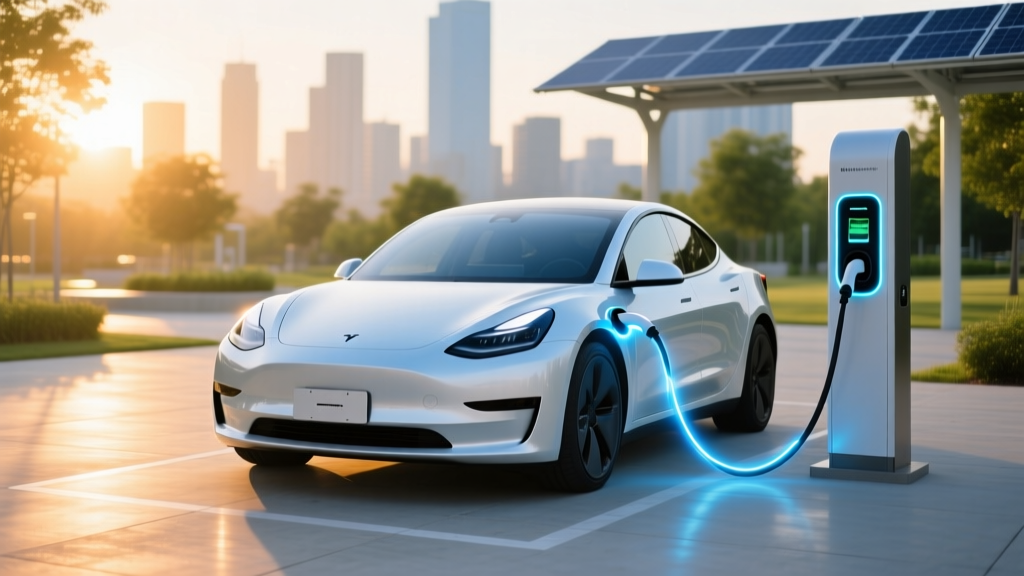
An electric motor delivers peak torque from zero RPM. There is no spool time, no belt to slip, no exhaust gas to wait for. A 2026 Tesla Model Y Performance hits 0–60 mph in 3.5 seconds with dual motors producing a combined 510 hp and instantaneous torque delivery that no turbo-four or supercharged V8 can replicate off the line.
The physics advantage is stark. A turbocharged 2.0L four-cylinder in a sport sedan might produce 300 hp and 300 lb-ft of torque, but that torque arrives in a band between roughly 1,800 and 5,000 RPM. Below 1,800 RPM, you're waiting for boost. An EV motor produces its full torque rating at 1 RPM and sustains it through the low-to-mid speed range, then transitions to power-limited operation at higher speeds.
This is why EVs dominate 0–60 times relative to their power output. The EPA's fuel economy site lists MPGe ratings that translate to energy efficiency far beyond what any forced-induction engine achieves — a Model 3 Long Range achieves 132 MPGe combined, equivalent to roughly 4 miles per kWh, while a 300-hp turbo sedan averages 25–28 MPG combined.
Charging an EV at Home: Levels, Speeds, and Real-World Times
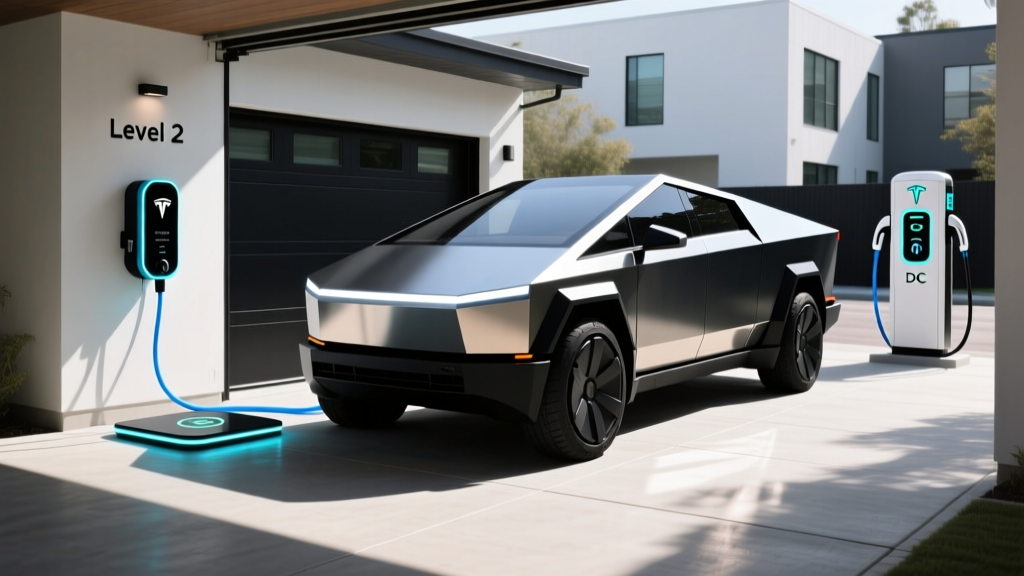
The closest analog to the turbo-vs-supercharger trade-off in the EV world is the choice between charging levels. Level 1 is slow but universally available (like a naturally aspirated engine — reliable, no complexity). Level 2 is the daily sweet spot. DC fast charging delivers rapid energy when you need it, with a taper curve that mirrors how a turbo builds boost progressively.
| Level | Voltage | Max Power (kW) | Miles of Range per Hour | Best For |
|---|---|---|---|---|
| Level 1 | 120V AC | 1.4–1.9 kW | 3–5 mi/hr | Overnight top-off, PHEVs, low-mileage drivers |
| Level 2 | 240V AC | 7.2–19.2 kW | 25–60 mi/hr | Daily home charging, most EV owners |
| DC Fast Charge | 400–800V DC | 50–350 kW | 150–800+ mi/hr (peak) | Road trips, rapid top-ups |
kW vs. kWh — the critical distinction: kW (kilowatts) measures power — the rate at which energy flows into your battery, like horsepower at the wheels. kWh (kilowatt-hours) measures energy — the total capacity stored in your battery, like gallons in a fuel tank. A 75 kWh battery charged at 11.5 kW (Level 2) takes roughly 6.5 hours from empty to full. That same battery at a 150 kW DC fast charger can go from 10% to 80% in approximately 25–30 minutes, though the charge curve tapers significantly above 80% to protect cell longevity.
Charging Time Examples for Common Battery Sizes
| Battery Size | Level 2 (11.5 kW / 48A) | DC Fast 10–80% (150 kW peak) | DC Fast 10–80% (250 kW peak) |
|---|---|---|---|
| 60 kWh (e.g., base Model 3) | ~5.2 hours | ~22 minutes | ~18 minutes |
| 75 kWh (e.g., Model Y LR) | ~6.5 hours | ~28 minutes | ~22 minutes |
| 84 kWh (e.g., Hyundai Ioniq 5) | ~7.3 hours | ~18 minutes (800V) | ~18 minutes (800V) |
| 100 kWh (e.g., F-150 Lightning Ext.) | ~8.7 hours | ~41 minutes | ~32 minutes |
Real-world DC fast charging rarely sustains peak rates. A vehicle rated for 250 kW peak may only hold that rate between 10–30% state of charge, then step down to 150 kW, then 100 kW, then 50 kW as the battery fills. This charge-curve taper is the EV equivalent of turbo lag — a physical limitation managed by thermal and chemical constraints. Battery preconditioning (heating the pack before arrival at a charger via navigation routing) significantly improves sustained charge rates in cold weather.
Home Charger Installation: Costs, Electrical Requirements, and Gotchas
Installing a Level 2 home charger is the single highest-impact upgrade an EV owner can make. It's the equivalent of having a fuel pump in your garage — except it costs $0.04–$0.15 per mile depending on your electricity rate, versus $0.12–$0.18 per mile for a 25 MPG gas car at $3.50/gallon.
Electrical Requirements
A standard Level 2 home charger requires a dedicated 240V circuit, typically rated for 40A to 60A. Most popular home chargers draw 32A to 48A continuously. The National Electrical Code requires that continuous loads (anything running 3+ hours) use only 80% of a circuit's rated capacity. So a 48A charger requires a 60A breaker and appropriately sized wire (6 AWG copper in most installations).
Your home's electrical panel must have sufficient spare capacity. A typical 200A residential panel can usually accommodate a 60A EV circuit if it isn't already heavily loaded. Older homes with 100A service almost always need a panel upgrade — a significant cost that catches many buyers off guard.
Home Charger Installation Cost Breakdown (2026)
| Component | Low Estimate | High Estimate | Notes |
|---|---|---|---|
| Level 2 charger (hardware) | $350 | $750 | 32A–48A smart chargers; Wi-Fi enabled |
| Electrician labor | $500 | $1,500 | Depends on run length, conduit, wall type |
| Electrical permit | $50 | $250 | Varies by municipality |
| Panel upgrade (if needed) | $1,500 | $3,500 | 100A → 200A service upgrade |
| Total (no panel upgrade) | $900 | $2,500 | Most common scenario |
| Total (with panel upgrade) | $2,400 | $6,000 | Older homes, 100A service |
The IRS §30D tax credit does not currently cover home charging equipment directly (the former Alternative Fuel Infrastructure Tax Credit, §30C, expired for most residential installations and has limited applicability). However, many utility companies offer rebates of $250–$500 for Level 2 charger installation — check with your local provider. Some states also offer separate incentives.
Which Connector and Charger Is Compatible with My EV?
The connector landscape in 2026 has consolidated significantly. The North American Charging Standard (NACS), developed by Tesla and adopted by Ford, GM, Hyundai, Kia, Rivian, and most major automakers starting in 2025, is now the dominant connector for new vehicles. CCS1 (Combined Charging System) remains on vehicles produced through 2024–2025 and is still supported at most public DC fast stations. CHAdeMO is effectively legacy, found only on older Nissan Leafs and Mitsubishi Outlander PHEVs.
| Connector | Brands (2026 models) | AC Level 2 | DC Fast | Adapter Availability |
|---|---|---|---|---|
| NACS (Tesla) | Tesla, Ford, GM, Hyundai, Kia, Rivian, Volvo, Polestar, BMW, Mercedes | Yes | Yes (Supercharger + open networks) | CCS→NACS adapters widely available (~$150–$250) |
| CCS1 | Legacy: 2020–2024 VW, BMW, Mercedes, Stellantis models | Yes | Yes (Electrify America, EVgo, ChargePoint) | NACS→CCS adapters available (~$175) |
| CHAdeMO | Nissan Leaf (discontinued), Mitsubishi Outlander PHEV | Yes (J1772) | Limited and declining | Adapters rare; plan for CCS/NACS transition |
For home Level 2 charging, all EVs (regardless of DC fast connector) accept J1772 or NACS for AC charging. Most home chargers now ship with NACS connectors, and a J1772 adapter is included or available for older EVs. When buying a home charger, match the connector to your vehicle's AC inlet — or buy a charger with a swappable connector cable.
Recommended Home Chargers: Power, Features, and Pricing
Not all Level 2 chargers are equal. Key differentiators include amperage (which determines charge speed), cable length (25 ft is standard; 18 ft may not reach), smart features (scheduling, energy tracking, utility demand-response), and build quality for outdoor installations.
Top Home Charger Picks for 2026
ChargePoint Home Flex (NACS)
- Power: Up to 12 kW (50A adjustable down to 16A)
- Connector: NACS (J1772 adapter included)
- Cable: 23 ft
- Smart features: Wi-Fi, app scheduling, Alexa integration, utility demand-response
- Price: ~$599
- Best for: NACS-equipped EVs, flexible amperage for older panels
Tesla Wall Connector
- Power: Up to 11.5 kW (48A)
- Connector: NACS native
- Cable: 24 ft
- Smart features: Wi-Fi, OTA updates, power sharing (multiple units on one circuit), Tesla app integration
- Price: ~$420
- Best for: Tesla owners; best value in NACS chargers
Emporia Level 2 Smart Charger
- Power: Up to 11.5 kW (48A)
- Connector: J1772 (NACS adapter available)
- Cable: 24 ft
- Smart features: Wi-Fi, energy monitoring, solar integration, load management
- Price: ~$399
- Best for: Budget-conscious buyers, solar-panel homes, J1772 vehicles
Grizzl-E Smart (United Chargers)
- Power: Up to 10 kW (40A)
- Connector: J1772 or NACS (select at purchase)
- Cable: 24 ft
- Smart features: OCPP compatible, adjustable amperage, extreme cold rated (-40°C)
- Price: ~$499
- Best for: Cold-climate installations, outdoor mounting, commercial-grade durability
Cost to Charge per Mile: EV vs Gas, the Real Numbers
The economic case for home EV charging is compelling — and it's where the turbo/supercharger efficiency debate becomes irrelevant. A turbocharged engine recovers waste exhaust energy to improve efficiency over a naturally aspirated equivalent, typically gaining 20–30% fuel economy. But even a highly optimized turbo-four at 30 MPG combined can't approach the per-mile energy cost of an EV charged at residential electricity rates.
| Scenario | Rate | Cost per Mile (EV at 3.5 mi/kWh) | Cost per Mile (Gas at 28 MPG) |
|---|---|---|---|
| Home off-peak (utility time-of-use) | $0.09/kWh | $0.026 | $0.125 (at $3.50/gal) |
| Home standard rate | $0.15/kWh | $0.043 | $0.125 |
| Public Level 2 (ChargePoint, etc.) | $0.30/kWh | $0.086 | $0.125 |
| DC fast charging (Electrify America) | $0.48/kWh | $0.137 | $0.125 |
| DC fast charging (Tesla Supercharger) | $0.32/kWh | $0.091 | $0.125 |
At home on off-peak rates, an EV costs roughly 80% less per mile than a 28 MPG gas car. Even at public DC fast charging rates, most EVs match or beat gasoline on cost per mile. The break-even point where DC fast charging exceeds gas cost is around $0.44/kWh for a vehicle achieving 3.5 mi/kWh — a rate exceeded only at the most expensive urban charging stations.
Safety, Code, and Installation Best Practices
EV charging equipment must meet the same electrical safety standards as any high-amperage home appliance. Key requirements under the 2023 NEC (National Electrical Code), adopted in most jurisdictions by 2026:
- Dedicated circuit: Your Level 2 charger must be on its own dedicated breaker — no shared circuits with other appliances.
- GFCI protection: NEC 2023 requires ground-fault circuit interrupter protection for all EV receptacles. Hardwired chargers with built-in GFCI meet this requirement. If using a NEMA 14-50 receptacle, your breaker must be GFCI-rated (adds ~$50–$80 to the breaker cost).
- Outdoor rating: If mounted outside, the charger must carry a NEMA 4 or NEMA 4X rating for weather resistance. All major chargers listed above meet this standard.
- Cable management: Loose cables create trip hazards and code violations. Most installations include a cable holster or retractable reel.
- Load management: If your panel is near capacity, smart load-management systems (like the Emporia VUE or Tesla Powerwall integration) can dynamically reduce charger amperage when other loads spike, avoiding the need for a panel upgrade.
Always hire a licensed electrician and pull a permit. Unpermitted EV charger installations can void homeowner's insurance claims, fail home inspections during sale, and create fire risk. The permit fee ($50–$250) is trivial insurance against these outcomes.
Frequently Asked Questions
How much does it cost to install a home EV charger?
Most installations run $900–$2,500 total, including the charger ($350–$750), electrician labor ($500–$1,500), and permit ($50–$250). If your home has a 100A electrical panel and needs an upgrade to 200A, add $1,500–$3,500. Homes with a 200A panel and a short wire run from the panel to the garage typically land at the lower end of the range.
How fast will each charging level add range?
Level 1 (120V) adds 3–5 miles of range per hour — adequate for PHEVs with small batteries or EVs driven under 30 miles daily. Level 2 (240V, 48A) adds 30–45 miles per hour, fully recharging most EVs overnight in 6–8 hours. DC fast charging adds 150–800+ miles per hour at peak rates, but taper means a typical 10–80% session takes 18–40 minutes depending on battery size, charger power, and pack temperature.
Which connector/charger is compatible with my EV?
If your EV is a 2025+ model from Tesla, Ford, GM, Hyundai, Kia, or Rivian, it uses NACS for both AC and DC charging. Most 2020–2024 EVs from VW, BMW, and others use CCS1. Older Nissan Leafs use CHAdeMO. For home Level 2 charging, buy a charger with the connector that matches your car's AC inlet — NACS for new vehicles, J1772 for pre-2025 non-Tesla models. Adapters are available for cross-compatibility.
How much does charging cost per mile vs gas?
At home on standard residential rates ($0.12–$0.15/kWh), an EV costs $0.03–$0.05 per mile — roughly 60–75% cheaper than a 28 MPG gas car at $3.50/gallon ($0.125/mile). Off-peak utility rates can push EV cost below $0.03/mile. Public DC fast charging at $0.32–$0.48/kWh ranges from $0.09–$0.14/mile, comparable to or slightly above gasoline depending on the station.
What electrical upgrades might I need?
The most common upgrade is a 100A-to-200A panel replacement in older homes ($1,500–$3,500). You may also need: a new 240V circuit with 6 AWG wire and a 60A breaker ($300–$800 in labor and materials), a GFCI breaker if using a receptacle rather than hardwired installation (+$50–$80), or a smart load-management system if your panel is near capacity but you want to avoid a full upgrade ($200–$500 for hardware). A licensed electrician can assess your panel's spare capacity during a site visit, typically included in the installation quote.
Is a turbo or supercharger still worth it in 2026?
For enthusiasts who prioritize exhaust note, lightweight handling dynamics, and the mechanical engagement of a manual transmission, forced-induction engines still have appeal. But for the performance metrics that matter in daily driving — off-the-line acceleration, passing power, and energy efficiency — electric motors outperform both turbo and supercharged setups. The real-world advantage of an EV isn't just peak power; it's the combination of instant torque, regenerative braking, and $0.03/mile home charging that no internal combustion configuration can match.