Charging Speeds Decoded: From Trickle to Turbo
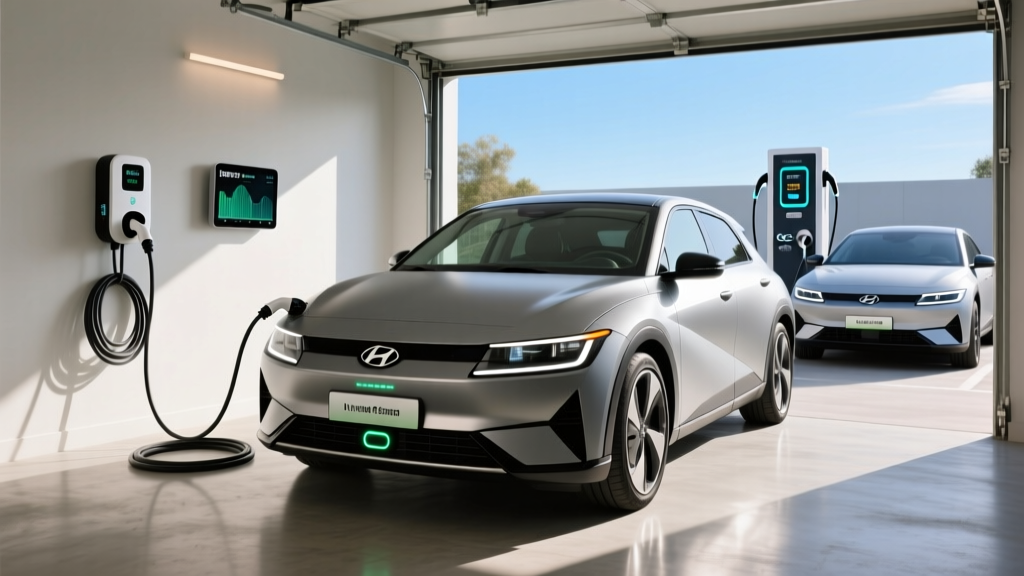
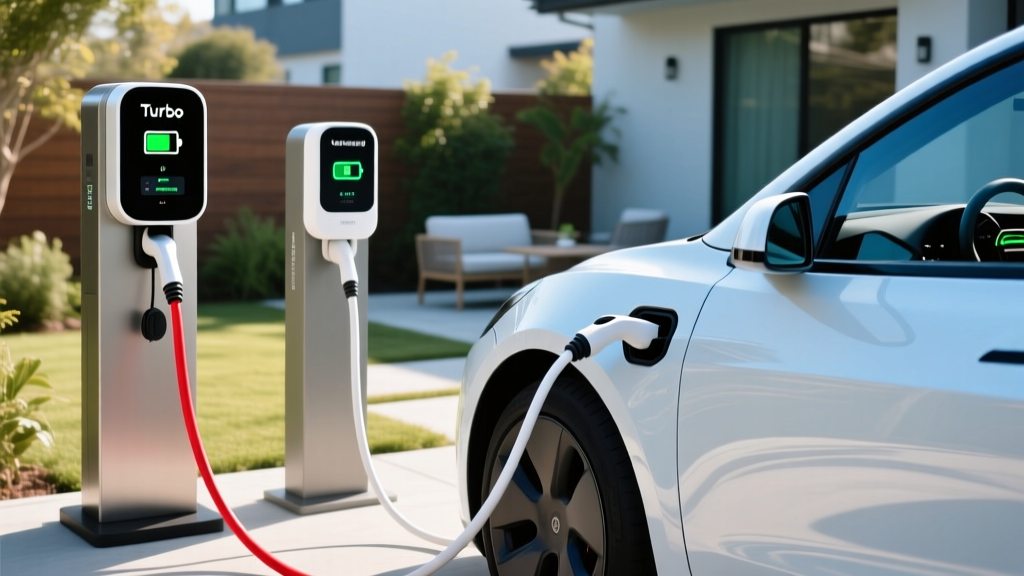
When EV owners ask whether their setup is "turbo or supercharged," they're really asking about power delivery — measured in kilowatts (kW). Unlike a gas car's turbocharger, EV charging speed depends on the weakest link in the chain: the car's onboard charger, the station's output, and your home's electrical panel. Understanding the three charging levels is the first step to optimizing your daily routine and road-trip strategy.
| Level | Voltage | Max Power (kW) | Miles of Range Added Per Hour | Best For |
|---|---|---|---|---|
| Level 1 | 120V AC | 1.2–1.9 kW | 3–5 mi/hr | Overnight top-ups, PHEVs, emergencies |
| Level 2 | 240V AC | 3.3–19.2 kW | 12–75 mi/hr | Daily home charging, workplace, destinations |
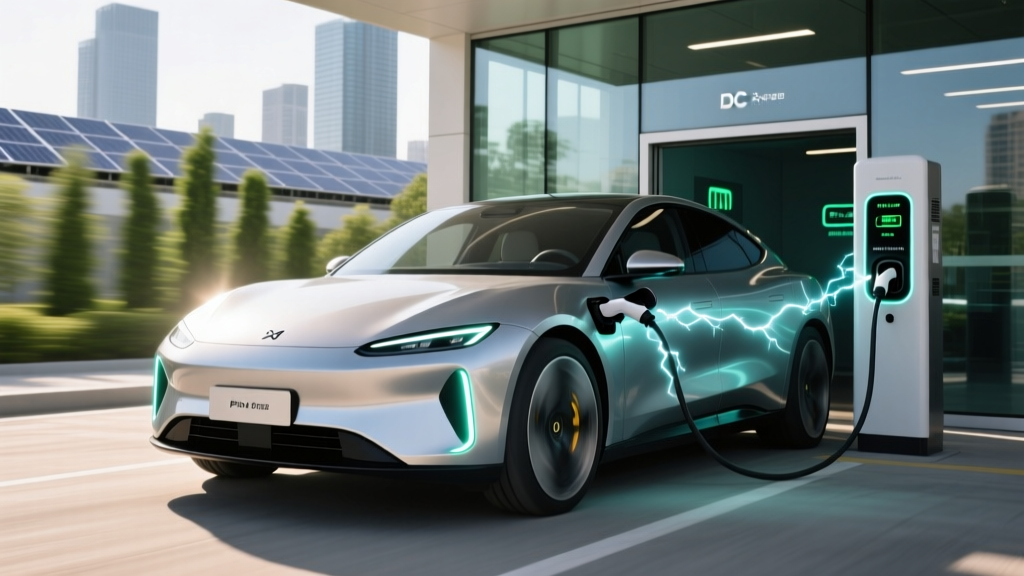
| DC Fast (Level 3) | 200–500V DC | 50–350+ kW | 150–1,000+ mi/hr (peak) | Road trips, highway corridors, quick top-ups |
A critical distinction: kW (kilowatts) measures power — how fast energy flows into your battery. kWh (kilowatt-hours) measures energy — the total capacity stored in your battery. Think of kW as the width of the hose and kWh as the size of the tank. A 350 kW DC fast charger can theoretically fill a 75 kWh battery in roughly 13 minutes, but real-world charge curves, battery temperature, and state of charge (SoC) make the actual 10–80% session closer to 18–25 minutes on modern EVs.
How Fast Will Each Charging Level Add Range?
Let's ground this in real vehicles. A 2026 Tesla Model Y Long Range (75 kWh usable battery, ~320 mi EPA range) charging at different levels illustrates the practical differences:
- Level 1 (1.4 kW / 120V): Adds ~4 miles per hour. A full 10–80% charge (52.5 kWh) takes approximately 37 hours — essentially useless for daily driving but fine for a PHEV with a 30-mile electric range.
- Level 2 (11.5 kW / 240V / 48A): Adds ~32 miles per hour. That same 10–80% session takes about 4.5 hours — perfect for overnight charging.
- DC Fast (250 kW peak, Tesla Supercharger V4): Adds up to ~200 miles in 15 minutes. Expect a 10–80% charge in roughly 18–22 minutes, though the charge curve tapers significantly above 60% SoC.
Real-World Charging Reality: Peak kW ratings are not sustained. A vehicle advertising "250 kW peak" may only hold that rate between 10–30% SoC before tapering to 150 kW, then 90 kW, then 40 kW above 80%. Always look at 10–80% times, not peak numbers, to judge true charging speed. Cold batteries (below 50°F / 10°C) can reduce DC fast charging speeds by 30–50% unless the vehicle has preconditioning — a thermal management feature that warms the pack en route to a charger.
Home Charger Installation: Electrical Requirements and Costs
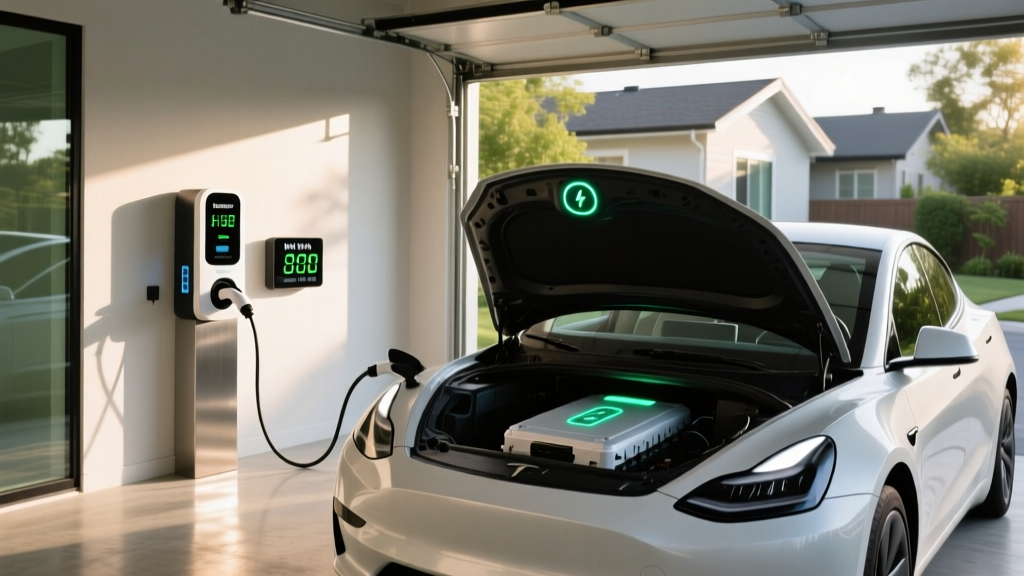
Installing a Level 2 home charger is the single most impactful upgrade an EV owner can make. Here's what the electrical side demands:
Core Electrical Specifications
- Voltage: 240V (same as a dryer or oven outlet)
- Amperage: Most home chargers draw 32A, 40A, or 48A. The National Electrical Code (NEC) requires the circuit breaker to be rated at 125% of the continuous load, so a 40A charger needs a 50A breaker, and a 48A charger needs a 60A breaker.
- Wire gauge: Typically 6 AWG copper for 50A circuits, 4 AWG for 60A circuits (varies by run length and local code)
- Dedicated circuit: Your EV charger must have its own dedicated breaker — no sharing with other appliances
Panel Upgrade: The Hidden Cost
Many homes built before 2000 have 100A or 150A main electrical panels. Adding a 50–60A EV circuit may exceed available capacity, especially if you already run electric heat, a dryer, and an oven. A licensed electrician will perform a load calculation (NEC Article 220) to determine whether your panel can handle the additional draw. If not, a panel upgrade to 200A typically costs $1,500–$3,000 before the charger circuit is even installed. Some homeowners opt for a smart load-management device (e.g., Emporia VUE with automatic load shedding) to avoid a full panel upgrade — these devices throttle the charger when other appliances are running.
| Component | Low End | High End | Notes |
|---|---|---|---|
| Level 2 EVSE Equipment (hardwired or plug-in) | $350 | $750 | 40–48A smart chargers; premium models with load management cost more |
| Electrician Labor (2–6 hours) | $400 | $1,500 | Depends on panel-to-garage distance, wall/ceiling routing, conduit needs |
| Electrical Materials (wire, conduit, breaker) | $100 | $400 | Long wire runs (>50 ft) significantly increase copper cost |
| Permit and Inspection | $50 | $250 | Required by most jurisdictions; ensures code compliance |
| Panel Upgrade (if needed) | $1,500 | $3,000 | 100A → 200A service upgrade; not always required |
| Total (no panel upgrade) | $900 | $2,900 | Most homeowners spend $1,200–$2,000 |
| Total (with panel upgrade) | $2,400 | $5,900 | Older homes with 100A service |
The federal Residential Clean Energy Credit does not cover EV charger equipment in 2026 (the Alternative Fuel Vehicle Refueling Property Credit expired for most residential installations after 2023, though some census-tract-based commercial credits remain). Check your state and utility incentives — many offer $250–$1,000 rebates for Level 2 equipment or installation, and some utilities provide discounted time-of-use (TOU) rates that dramatically lower overnight charging costs.
Connector Compatibility: NACS, CCS, and CHAdeMO
The North American charging connector landscape has consolidated significantly since 2023, when Ford, GM, Rivian, and most major automakers committed to adopting the North American Charging Standard (NACS) — Tesla's proprietary connector, now standardized under SAE J3400. Here's where things stand for 2026 model-year vehicles:
| Connector | Brands Using It (Native) | Adapter Needed For |
|---|---|---|
| NACS (J3400) | Tesla (all models), Ford (2025+), GM (2025+), Rivian (2025+), Hyundai/Kia (2026+), Volvo/Polestar, Fisker, Mercedes (2026+) | CCS stations (NACS-to-CCS adapter ~$200) |
| CCS1 | Volkswagen, BMW, Audi, some remaining Stellantis models, legacy 2023–2024 Ford/GM EVs | Tesla Superchargers (CCS-to-NACS adapter; some provided by automaker) |
| CHAdeMO | Nissan Leaf (legacy — discontinued after 2025 model year), Mitsubishi Outlander PHEV | Essentially a dead standard; limited new station deployment |
For home Level 2 charging, all vehicles (including Teslas) use the J1772 connector or a NACS connector that is backward-compatible with J1772 via the adapter included with every Tesla. If you own a non-Tesla with a J1772 inlet, any J1772 home charger will work. If you own a 2025+ Ford or GM EV with a native NACS port, you'll need a NACS home charger (e.g., the Tesla Wall Connector, which also supports J1772 vehicles via an included adapter) or a J1772 charger with a J1772-to-NACS adapter.
Cost to Charge: Home vs. Public vs. DC Fast
Electricity pricing varies enormously by region, time of day, and provider. Here are representative 2026 scenarios based on national averages and major utility rate structures:
| Scenario | Price per kWh | Cost to Add 200 Miles (75 kWh Battery, ~3.5 mi/kWh) | Cost Per Mile |
|---|---|---|---|
| Home — Off-Peak TOU Rate (overnight) | $0.08–$0.14 | $4.30–$7.50 | $0.02–$0.04 |
| Home — Standard Residential Rate | $0.14–$0.22 | $7.50–$11.80 | $0.04–$0.06 |
| Public Level 2 (ChargePoint, workplace, mall) | $0.25–$0.49 | $13.40–$26.20 | $0.07–$0.13 |
| DC Fast Charging (Electrify America, EVgo, Tesla Supercharger) | $0.35–$0.65 | $18.80–$34.90 | $0.09–$0.17 |
| Gasoline Vehicle (25 MPG combined, $3.50/gal) | — | $28.00 | $0.14 |
Home off-peak charging remains the cheapest way to "fuel" any vehicle on the road — roughly one-quarter to one-third the per-mile cost of gasoline. However, exclusive reliance on DC fast charging erases most of that savings advantage. This is why home Level 2 installation pays for itself within 12–24 months for most drivers covering 10,000+ miles annually.
Equipment Recommendations: Top Level 2 Home Chargers
Not all Level 2 chargers are created equal. Below are proven 2026 picks spanning budget, performance, and smart features. All support J1772 or NACS connectors (or both via adapters) and are UL-listed for safety.
Emporia Vue Level 2 Charger
- Power Output: 48A / 11.5 kW (240V)
- Connector: J1772 (NACS adapter available)
- Cable Length: 24 ft
- Smart Features: Wi-Fi, app scheduling, energy monitoring, solar integration, automatic load management (pairs with Emporia VUE panel monitor to avoid panel upgrades)
- Price: ~$400
- Best For: Homes with limited panel capacity; solar-panel owners who want to charge only from excess generation
Tesla Wall Connector (Gen 4)
- Power Output: 48A / 11.5 kW (240V)
- Connector: NACS native; includes J1772 adapter in box
- Cable Length: 24 ft
- Smart Features: Wi-Fi, Tesla app integration, over-the-air updates, power sharing (link two units on one 60A circuit), load management
- Price: ~$475
- Best For: Tesla owners and mixed-fleet households (Tesla + non-Tesla EV)
ChargePoint Home Flex (2nd Gen)
- Power Output: Up to 50A / 12 kW (240V); configurable via dip switches for 16A–50A
- Connector: J1772 (NACS version available)
- Cable Length: 23 ft
- Smart Features: Wi-Fi, ChargePoint app, Alexa integration, flexible amperage adjustment (ideal for older panels where you want to set a lower draw)
- Price: ~$550
- Best For: Homes needing adjustable amperage without an electrician re-visit; robust app ecosystem
Grizzl-E Smart (United Chargers)
- Power Output: 40A / 9.6 kW (240V)
- Connector: J1772 or NACS (select at purchase)
- Cable Length: 24 ft
- Smart Features: OCPP-compatible (works with utility demand-response programs), rugged aluminum enclosure, -40°F rated for extreme cold, no Wi-Fi dependency (works offline)
- Price: ~$450
- Best For: Cold-climate outdoor installations; garages without Wi-Fi coverage; buyers who prioritize build durability over app features
Safety, Code, and Permit Considerations
EV chargers are high-draw, continuous-load appliances — they run at full power for hours. This demands rigorous safety compliance:
- Dedicated circuit: NEC 625.40 requires a dedicated branch circuit for EVSE. No shared outlets.
- GFCI protection: NEC 2023 and later require Ground Fault Circuit Interrupter protection for all 120V and 240V EV charging outlets. Hardwired installations may have different requirements — your electrician will determine compliance.
- Outdoor rating: If your charger is mounted outside (driveway, carport), it must carry a NEMA 4 or IP65 weather-resistance rating. All chargers recommended above meet this standard.
- Permit and inspection: Most municipalities require an electrical permit for a new 240V circuit. The inspection verifies proper wire gauge, breaker sizing, grounding, and GFCI compliance. Skipping the permit risks insurance denial in the event of an electrical fire.
- Hardwired vs. plug-in: Hardwired chargers (direct wire connection, no plug) eliminate the NEMA 14-50 receptacle as a failure point and are preferred for 48A+ installations. Plug-in units using a NEMA 14-50 outlet offer portability but are limited to 40A (NEC 80% continuous-load rule on a 50A breaker).
Charging Time Examples: 10–80% by Battery Size
Here's how long a 10–80% session takes for common EV battery sizes across different charging methods. These times assume optimal battery temperature (preconditioned) and a sustained charge curve representative of 2026-era vehicles:
| Battery Size (kWh Usable) | Example Vehicle | Level 2 @ 11.5 kW | DC Fast @ 150 kW (Peak) | DC Fast @ 250+ kW (Peak) |
|---|---|---|---|---|
| 40 kWh | Base Nissan Ariya / smaller BEVs | ~2.5 hrs | ~22 min | ~18 min |
| 65 kWh | Hyundai Ioniq 5 Standard Range | ~4 hrs | ~28 min | ~18 min |
| 77 kWh | Ford Mustang Mach-E Extended Range | ~4.7 hrs | ~32 min | ~20 min |
| 85 kWh | Rivian R1T (Dual-Motor Max) | ~5.2 hrs | ~35 min | ~22 min |
| 100 kWh | Tesla Model S / GMC Sierra EV | ~6.1 hrs | ~40 min | ~25 min |
| 123 kWh | GMC Hummer EV | ~7.5 hrs | ~48 min | ~32 min |
Charge Curve Taper: The times above reflect 10–80% SoC only. Charging from 80–100% can take as long as the 10–80% session due to the battery management system (BMS) throttling current to protect cell health. On road trips, charge to 80% and move on — it's faster to stop twice for 20 minutes each than once for 45 minutes.
Frequently Asked Questions
How much does it cost to install a home EV charger?
Most homeowners spend between $1,200 and $2,000 for a complete Level 2 installation (equipment, electrician labor, materials, and permit) when no panel upgrade is needed. If your home has an older 100A electrical panel that requires upgrading to 200A, total costs can range from $2,400 to $5,900. Get three quotes from licensed electricians and confirm they perform a NEC Article 220 load calculation before recommending a panel upgrade — some homes can accommodate a 40A charger on existing 150A service without modification.
How fast will each charging level add range?
Level 1 (120V) adds 3–5 miles per hour — suitable only for PHEVs or emergency top-ups. Level 2 (240V, 40–48A) adds 25–40 miles per hour, fully replenishing most EV batteries overnight in 6–10 hours. DC fast charging (50–350 kW) adds 150–1,000+ miles per hour at peak, enabling 10–80% charges in 18–40 minutes depending on battery size and peak charge rate. Real-world sustained speeds are always lower than peak ratings due to charge-curve taper.
Which connector/charger is compatible with my EV?
For 2026 models: Tesla, Ford, GM, Rivian, Hyundai/Kia, Volvo/Polestar, and Mercedes use the NACS connector. Volkswagen, BMW, and Audi still use CCS1. The Nissan Leaf used CHAdeMO but was discontinued after 2025. For home Level 2 charging, the Tesla Wall Connector supports both NACS and J1772 (with included adapter), making it the most versatile single-unit option. If you own a CCS1 vehicle, any J1772 charger works natively, and CCS-to-NACS adapters are available for Supercharger access.
How much does charging cost per mile vs gas?
Home off-peak charging costs $0.02–$0.04 per mile — roughly 70–80% cheaper than gasoline at $3.50/gallon and 25 MPG ($0.14/mile). Standard home rates ($0.14–$0.22/kWh) bring the cost to $0.04–$0.06/mile, still a 55–70% savings. Public DC fast charging at $0.35–$0.65/kWh costs $0.09–$0.17/mile, which can approach or exceed gasoline costs. The economic case for EVs is strongest when you charge at home; road-trip DC fast charging is a convenience premium, not a savings strategy.
What electrical upgrades might I need?
The most common upgrade is a panel capacity increase from 100A or 150A to 200A, required when your existing panel lacks headroom for a 50–60A dedicated EV circuit. Alternatives include installing a lower-amperage charger (32A / 7.7 kW, which only needs a 40A breaker) or using a smart load-management system that dynamically reduces charger draw when other appliances activate. Your electrician should provide a written load calculation before recommending a panel upgrade — some homes with gas appliances (rather than electric heat/cooking) have ample capacity even on 150A service.