Understanding Turbo Supercharged Charging Speeds
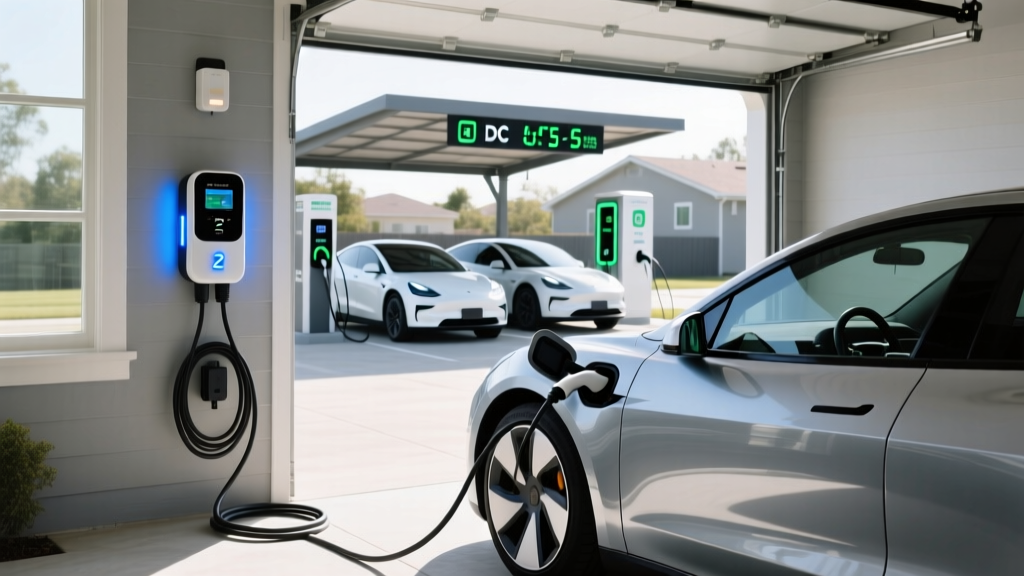
Modern EVs can accept charging power at rates that would have seemed impossible five years ago. When we talk about "turbo supercharged" charging in 2026, we're referring to DC fast charging capabilities that peak at 250-350 kW, adding 200+ miles of range in 15-20 minutes. But understanding the full charging ecosystem requires breaking down three distinct levels.
| Level | Voltage/Amps | Power (kW) | Miles Added/Hour | 10-80% Time (80 kWh battery) | Best For |
|---|---|---|---|---|---|
| Level 1 | 120V / 12A | 1.4 kW | 3-5 miles | 40-48 hours | Overnight top-ups, PHEVs, emergencies |
| Level 2 | 240V / 32-48A | 7.7-11.5 kW | 25-45 miles | 6-10 hours | Daily home charging, workplace |
| DC Fast | 400-800V DC | 50-350 kW | 180-1,200 miles | 15-45 minutes | Road trips, rapid top-ups |
Critical distinction: kW (kilowatts) measures power—the rate of energy delivery. kWh (kilowatt-hours) measures energy capacity—your battery size. A 350 kW charger can theoretically deliver 350 kWh in one hour, but your EV's battery management system limits actual intake based on state of charge, temperature, and chemistry.
Home Charging Installation: Electrical Requirements and Costs
Installing a Level 2 home charger delivers the best balance of convenience and cost for most EV owners. But the installation complexity varies dramatically based on your home's electrical infrastructure.
Electrical Specifications
Most Level 2 chargers require a dedicated 240V circuit with 40-60 amp capacity. The actual amperage depends on your charger's power rating:
- 32A circuit (7.7 kW): Requires 40A breaker (125% safety margin)
- 40A circuit (9.6 kW): Requires 50A breaker
- 48A circuit (11.5 kW): Requires 60A breaker
Your electrical panel must have sufficient spare capacity. A typical 200A residential panel can usually accommodate a 40-60A EV circuit, but older 100A panels or homes with electric heating, dryers, and ranges may require a panel upgrade.
| Component | Basic Install (32A) | Standard Install (48A) | Complex Install (Panel Upgrade) |
|---|---|---|---|
| EVSE Equipment (Level 2 charger) | $350-$500 | $500-$700 | $500-$700 |
| Electrician labor (2-8 hours) | $300-$600 | $400-$900 | $800-$1,500 |
| Materials (conduit, wire, breaker) | $100-$250 | $150-$400 | $300-$600 |
| Permit and inspection | $50-$150 | $75-$200 | $150-$300 |
| Panel upgrade (if needed) | — | — | $1,500-$3,500 |
| Total | $800-$1,500 | $1,125-$2,200 | $3,250-$6,600 |
Panel upgrade reality check: If your home was built before 1980 or has a 100A service, budget for a panel upgrade. This adds $1,500-$3,500 and requires utility coordination, but it's non-negotiable for safety and code compliance. A licensed electrician can assess your panel capacity during a site visit (typically $100-$200 consultation fee, often credited toward installation).
Safety and Code Requirements
The National Electrical Code (NEC) mandates specific protections for EV charging circuits:
- Dedicated circuit: Your EVSE cannot share a circuit with other appliances
- GFCI protection: Required for outdoor installations and some jurisdictions for indoor (2026 NEC Article 625)
- Outdoor rating: NEMA 4 enclosure if mounted outside; indoor units need only NEMA 1
- Disconnect switch: Required within sight of hardwired units over 60A
Connector Compatibility: NACS, CCS1, and CHAdeMO
The connector landscape has consolidated significantly since Tesla opened its Supercharger network and the North American Charging Standard (NACS) emerged as the dominant format. Here's what you need to know for 2026:
| Connector | Vehicle Brands (2026) | Network Access | Adapter Required? |
|---|---|---|---|
| NACS (Tesla) | Tesla, Ford, GM, Rivian, Volvo, Polestar, Mercedes, BMW, Hyundai, Kia (new models) | Tesla Supercharger, Electrify America, EVgo, ChargePoint (new stations) | CCS1 vehicles need NACS adapter ($150-$250) |
| CCS1 | VW, Audi, older Ford/GM/Hyundai/Kia models | Electrify America, EVgo, ChargePoint, non-Tesla networks | Tesla Supercharger access via CCS adapter (if enabled) |
| CHAdeMO | Nissan Leaf (legacy), Mitsubishi Outlander PHEV | Limited network support (declining) | No adapter; avoid for new purchases |
2026 reality: If you're buying a new EV, prioritize NACS-equipped vehicles for maximum charging flexibility. CCS1 vehicles can access most networks but face limitations at Tesla Superchargers unless the manufacturer has enabled adapter support. CHAdeMO is effectively obsolete—avoid new purchases unless you have specific use cases and verified local charging access.
Charging Cost Analysis: Home vs Public vs Gas
One of the strongest EV ownership arguments is lower fueling costs, but the savings depend heavily on where and when you charge.
| Scenario | Rate | Cost per kWh | Cost per Mile (3.5 mi/kWh efficiency) | Annual Cost (12,000 miles) |
|---|---|---|---|---|
| Home off-peak | Time-of-use rate | $0.08-$0.12 | $0.023-$0.034 | $276-$408 |
| Home standard | Average residential | $0.14-$0.18 | $0.040-$0.051 | $480-$612 |
| Public Level 2 | ChargePoint, workplace | $0.20-$0.35 | $0.057-$0.100 | $684-$1,200 |
| DC Fast Charging | Electrify America, EVgo | $0.35-$0.55 | $0.100-$0.157 | $1,200-$1,884 |
| Gasoline (25 MPG combined) | $3.50/gallon | — | $0.140 | $1,680 |
Bottom line: Home charging delivers 70-85% fuel cost savings versus gas. Heavy DC fast charging users break even or pay slightly more than gas. For maximum savings, install a home Level 2 charger and enroll in your utility's EV time-of-use rate plan.
Equipment Recommendations: Best Level 2 Chargers for 2026
Not all Level 2 chargers are created equal. Here are three proven options across different budgets and feature sets:
Budget Pick: Emporia Vue Level 2 EVSE
- Power: 48A (11.5 kW) max, adjustable down to 16A
- Connector: NACS or CCS1 (specify at purchase)
- Cable length: 24 feet
- Smart features: Wi-Fi, energy monitoring, scheduling via app
- Price: $399
- Best for: Cost-conscious buyers who want smart features without subscription fees
Mid-Range: ChargePoint Home Flex
- Power: 50A (12 kW) max, adjustable 16-50A
- Connector: NACS or CCS1 (interchangeable cable)
- Cable length: 23 feet
- Smart features: Wi-Fi, Alexa integration, load balancing, detailed app
- Price: $649
- Best for: Users wanting proven reliability and ecosystem integration
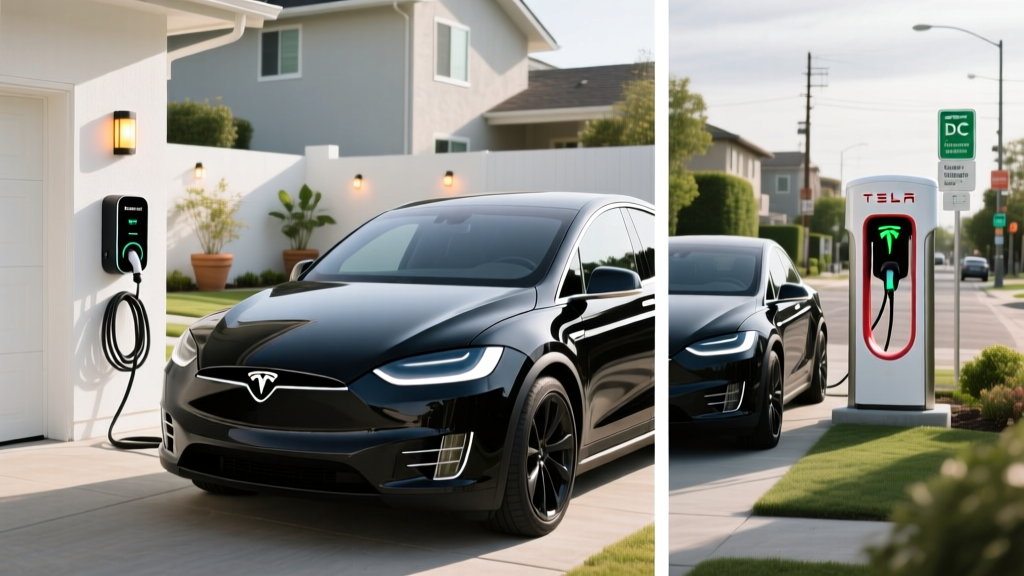
Premium: Tesla Wall Connector
- Power: 48A (11.5 kW)
- Connector: NACS native; CCS1 adapter available ($150)
- Cable length: 24 feet
- Smart features: Wi-Fi, power sharing (up to 6 units on one circuit), OTA updates
- Price: $475 (NACS) / $625 (with CCS adapter)
- Best for: Tesla owners and households with multiple EVs
Charging Time Examples: 10-80% for Common Battery Sizes
Charging speed isn't linear—EVs charge fastest between 10-80% state of charge, then taper significantly to protect battery health. Here are real-world 10-80% times for common scenarios:
| Battery Size | Example Vehicles | Level 2 (11.5 kW) | DC Fast (150 kW peak) | DC Fast (250 kW peak) |
|---|---|---|---|---|
| 60 kWh | Chevy Bolt, Nissan Leaf Plus | 3.5 hours | 28 minutes | N/A (vehicle limited to 55 kW) |
| 75 kWh | Tesla Model 3 RWD, Hyundai Ioniq 6 | 4.5 hours | 32 minutes | 22 minutes |
| 85 kWh | Ford Mustang Mach-E, VW ID.4 | 5 hours | 35 minutes | 24 minutes |
| 100 kWh | Tesla Model S, Rivian R1T | 6 hours | 42 minutes | 28 minutes |
Real-world caveat: These times assume optimal battery temperature (70-80°F) and preconditioning. Cold weather (below 40°F) can increase charging times by 30-50% unless your EV has active battery thermal management and you precondition before charging.
Frequently Asked Questions
How much does it cost to install a home EV charger?
A basic 32A Level 2 installation costs $800-$1,500 including equipment, electrician labor, materials, and permits. A standard 48A installation runs $1,125-$2,200. If your home needs an electrical panel upgrade (common in pre-1980 homes or those with 100A service), total costs range from $3,250-$6,600. Get 2-3 quotes from licensed electricians and verify they have EVSE installation experience.
How fast will each charging level add range?
Level 1 (120V) adds 3-5 miles per hour—suitable for PHEVs or overnight top-ups. Level 2 (240V) adds 25-45 miles per hour, fully recharging most EVs overnight. DC fast charging adds 180-1,200 miles per hour at peak power, but actual session times are 15-45 minutes for 10-80% due to charging curve taper above 80% state of charge.
Which connector/charger is compatible with my EV?
Check your vehicle's charge port: NACS (Tesla-style) is now standard on Ford, GM, Rivian, Volvo, and new Hyundai/Kia models. CCS1 is used on VW, Audi, and older Ford/GM vehicles. CHAdeMO is legacy-only (Nissan Leaf, Mitsubishi). For maximum 2026 network access, prioritize NACS-equipped vehicles or budget $150-$250 for a CCS-to-NACS adapter if your vehicle supports it.
How much does charging cost per mile vs gas?
Home off-peak charging costs $0.023-$0.034 per mile (70-85% savings vs gas at $3.50/gallon and 25 MPG). Home standard rates cost $0.040-$0.051 per mile (65-75% savings). Public DC fast charging costs $0.10-$0.16 per mile—comparable to or slightly more than gas. For maximum savings, install a home Level 2 charger and use time-of-use utility rates.
What electrical upgrades might I need?
Homes built after 1990 with 200A service typically have sufficient panel capacity for a 40-60A EV circuit. Older homes, 100A service, or homes with electric heating/dryers/ranges may need a panel upgrade ($1,500-$3,500). A licensed electrician can assess your panel's spare capacity during a site visit. Don't skip this step—overloading your panel creates fire risk and code violations.
For authoritative guidance on EV charging standards, consult the U.S. Department of Energy's Alternative Fuels Data Center and your local utility's EV program resources. For electrical code questions, reference the National Electrical Code (NEC) Article 625 or consult a licensed electrician familiar with EVSE installations.