What Does "Turbo" or "Supercharger" Actually Mean for EV Charging?
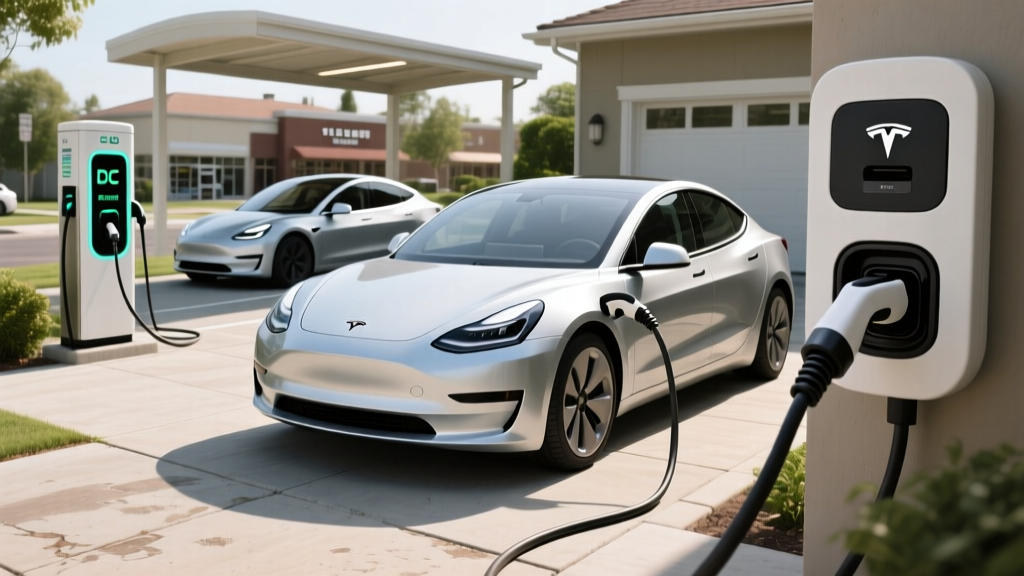
If you've shopped for an electric vehicle or browsed charging networks, you've likely encountered marketing terms like Turbo Charging (used by brands like Hyundai, Kia, and Volkswagen) and Supercharger (Tesla's proprietary DC fast-charging network). Neither term refers to a fundamentally different technology — both describe DC fast charging (DCFC), which bypasses the vehicle's onboard charger to deliver high-voltage direct current straight to the battery pack.
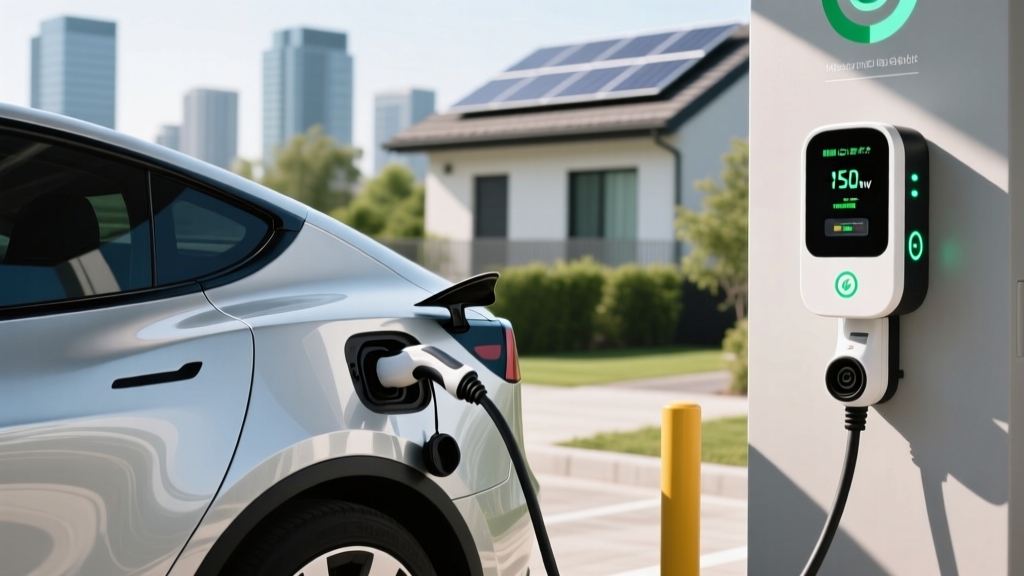
The real question isn't the branding. It's understanding the three charging levels available to you, how many kW (kilowatts — a measure of power, or charging speed) each delivers, and how that translates to miles of range added per hour. Confusing kW with kWh (kilowatt-hours — a measure of energy capacity, like gallons in a tank) is the single most common mistake new EV owners make. A 150 kW charger doesn't deliver 150 kWh; it delivers energy at a rate of 150 kW, meaning a 75 kWh battery could theoretically go from empty to full in 30 minutes at peak rate (real-world charging curves make it longer — more on that below).
| Level | Voltage | Power (kW) | Miles of Range / Hour | Best For |
|---|---|---|---|---|
| Level 1 (120V) | 120V AC | 1.0–1.9 kW | 3–5 mi/hr | Overnight trickle, PHEVs, emergencies |
| Level 2 (240V) | 240V AC | 3.3–19.2 kW | 12–75 mi/hr | Daily home/work charging |
| DC Fast (Turbo/Supercharger) | 400–900V DC | 50–350 kW | 150–1,000+ mi/hr (at peak) | Road trips, rapid top-ups |
For context, a 2026 Hyundai Ioniq 5 with its 84 kWh battery and 800V architecture can accept up to 240 kW at a DC fast charger, adding roughly 200 miles of range in 18 minutes (10–80% SoC). A Tesla Model Y on a V4 Supercharger (250 kW peak) achieves a similar 10–80% charge in about 20 minutes. But these peak rates are sustained only briefly — charging curves taper significantly above 80% to protect battery health.
How Much Does It Cost to Install a Home EV Charger?
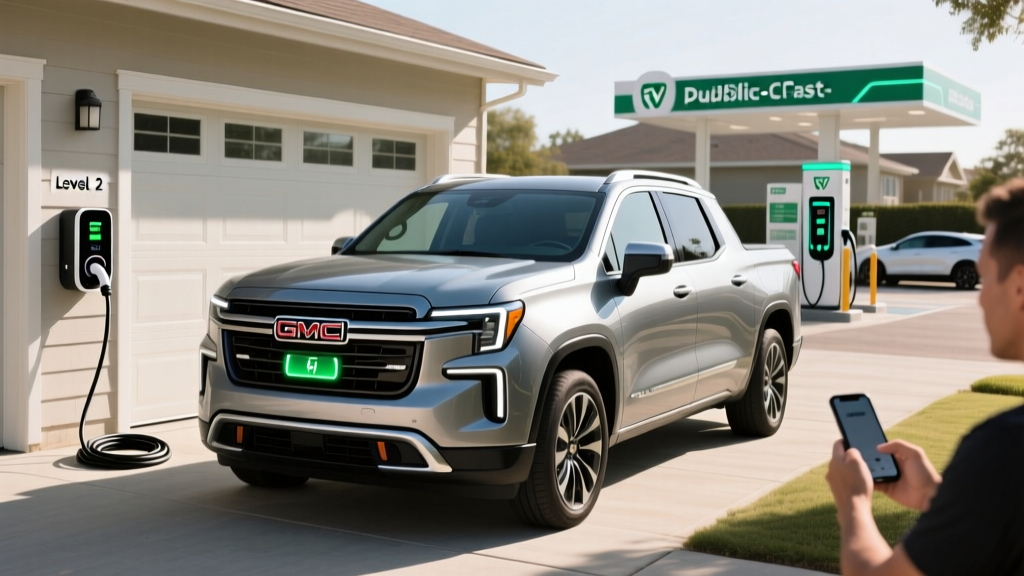
Home Level 2 charging is where 80%+ of all EV charging happens, and it's the single biggest quality-of-life upgrade an EV owner can make. But installation costs vary wildly depending on your home's electrical panel, the distance from panel to charger location, and local permit requirements.
A Level 2 home charger requires a 240V circuit (the same voltage as your electric dryer or oven) rated for 40–60 amps, depending on the charger. Most popular home chargers draw 32A or 48A, requiring a 40A or 60A dedicated breaker, respectively. The National Electrical Code (NEC) requires that continuous loads (like EV charging) use only 80% of a circuit's rated capacity — so a 48A charger needs a 60A breaker.
| Component | Simple Install (Near Panel) | Complex Install (Far Run / Upgrade) |
|---|---|---|
| Level 2 Charger (Equipment) | $350–$700 | $500–$750 |
| Electrician Labor (2–4 hrs simple / 6–12 hrs complex) | $300–$800 | $900–$2,500 |
| Electrical Permit | $50–$200 | $50–$200 |
| Panel Upgrade (100A → 200A, if needed) | N/A | $1,500–$3,500 |
| Conduit, Wiring, Misc. Materials | $50–$200 | $200–$800 |
| Total Estimated Cost | $750–$1,900 | $3,150–$7,750 |
Panel upgrade reality check: Homes built before 1990 often have 100-amp electrical panels. Adding a 60A EV circuit to an already-loaded 100A panel may require upgrading to 200A service — a $1,500–$3,500 job that involves the utility company replacing the service drop. Always have a licensed electrician perform a load calculation before committing to a charger. Some utilities offer rebates of $250–$1,000 for panel upgrades tied to EV adoption.
The IRS §30D tax credit does not cover home charging equipment directly (that was the §30C alternative fuel infrastructure credit, which has separate eligibility rules and caps). Check with a tax professional about current-year availability.
Charging Speeds by the Numbers: 10–80% Times for Common EVs
Peak kW ratings are marketing headlines. What matters for road-trip planning is the 10–80% charging time — the usable fast-charging window, since charging above 80% slows dramatically to protect the battery (the charge curve taper). Here's what real-world DC fast charging looks like for popular 2026 EVs:
| Vehicle | Battery (kWh) | Architecture | Peak DC Rate (kW) | 10–80% Time |
|---|---|---|---|---|
| Hyundai Ioniq 5 (Long Range) | 84 kWh (NMC) | 800V | 240 kW | ~18 min |
| Kia EV6 (Long Range) | 84 kWh (NMC) | 800V | 240 kW | ~18 min |
| Tesla Model Y (Long Range) | 75 kWh (NMC/LFP) | 400V | 250 kW | ~22 min |
| Ford F-150 Lightning (Extended) | 131 kWh (NMC) | 400V | 150 kW | ~41 min |
| Chevrolet Equinox EV (RS) | 85 kWh (NMC) | 400V | 150 kW | ~30 min |
| Nissan Leaf (SV Plus) | 60 kWh (NMC) | 400V | 100 kW (CHAdeMO) | ~40 min |
Charge curve reality: A Hyundai Ioniq 5 hitting 240 kW at 10% SoC will taper to roughly 150 kW by 50%, and drop below 50 kW past 80%. That's why you'll rarely see anyone DC-fast-charge above 80% on a road trip — the time-per-mile becomes worse than just driving to the next stop.
For Level 2 home charging, a 48A / 11.5 kW charger will fully recharge a 75 kWh Tesla Model Y battery in about 7 hours — perfect for overnight. A 32A / 7.7 kW charger extends that to roughly 10 hours, still adequate for most commuters who plug in at 9 PM and leave at 7 AM.
Which Connector and Charger Is Compatible with My EV?
The connector landscape in North America has consolidated dramatically since 2023, when Ford, GM, Rivian, and most major automakers committed to adopting the North American Charging Standard (NACS) — Tesla's connector design — starting with 2025 model-year vehicles. By 2026, NACS is the dominant standard for new EVs, though CCS1 and CHAdeMO vehicles remain on the road.
| Connector | Brands Using It (2026 Models) | DC Fast Network Access | Adapter Needed? |
|---|---|---|---|
| NACS (Tesla) | Tesla, Ford, GM, Rivian, Volvo, Polestar, Mercedes, Nissan (new), Fisker, Hyundai/Kia (select) | Tesla Supercharger + growing NACS networks (Electrify America, EVgo adding NACS) | CCS→NACS adapter for legacy CCS vehicles at Superchargers |
| CCS1 | VW, BMW, Hyundai/Kia (pre-2025 models), Stellantis, Honda, Subaru, Lucid | Electrify America, EVgo, ChargePoint, Ionity (EU) | NACS→CCS adapter for Tesla Supercharger access (limited) |
| CHAdeMO | Nissan Leaf (legacy), Mitsubishi Outlander PHEV | Declining network support | No widely available adapter; CHAdeMO stations being phased out |
Adapter note: Tesla sells a CCS-to-NACS adapter (~$250) that allows non-Tesla CCS vehicles to use Superchargers, and Ford/GM provide adapters to their buyers. If you own a CCS-equipped vehicle from 2022–2024, confirm adapter availability and Supercharger compatibility via Tesla's app before relying on it for road trips. Per NHTSA guidance, always use manufacturer-approved adapters to avoid connector damage or safety hazards.
How Much Does Charging Cost Per Mile vs. Gas?
The economics of EV charging depend heavily on where and when you charge. Home charging on an off-peak utility rate is dramatically cheaper than DC fast charging on a road trip — and both are usually cheaper than gasoline on a per-mile basis.
| Scenario | Rate ($/kWh) | Efficiency (kWh/mi) | Cost Per Mile | Gas Equivalent (25 MPG @ $3.50/gal) |
|---|---|---|---|---|
| Home Level 2 — Off-Peak Utility Rate | $0.08–$0.14 | 0.28 (e.g., Model Y) | $0.022–$0.039 | $0.14/mi |
| Home Level 2 — Standard Rate | $0.13–$0.20 | 0.28 | $0.036–$0.056 | $0.14/mi |
| Public Level 2 (ChargePoint, etc.) | $0.20–$0.35 | 0.28 | $0.056–$0.098 | $0.14/mi |
| DC Fast (Supercharger/Electrify America) | $0.30–$0.55 | 0.28 | $0.084–$0.154 | $0.14/mi |
Key takeaway: A Tesla Model Y charged at home on a $0.12/kWh off-peak rate costs roughly $0.034 per mile — about 75% cheaper than a 25 MPG gas car at $3.50/gallon. Even at the most expensive DC fast-charging rates ($0.55/kWh), the EV costs $0.154/mile, still comparable to gas. Over 15,000 miles/year, home-charging savings can reach $1,200–$1,600 annually.
According to fueleconomy.gov, a 2026 Tesla Model Y Long Range achieves 122 MPGe combined (28 kWh/100 mi), while a Hyundai Ioniq 5 achieves 114 MPGe combined (30 kWh/100 mi). Use these efficiency figures — not peak range — to calculate your actual charging costs.
Home Charger Equipment Picks: What to Buy in 2026
Not all Level 2 chargers are equal. The critical specs are power output (kW), amperage, connector type, cable length, and smart features (Wi-Fi scheduling, utility demand-response integration, load balancing). Here are top picks for 2026:
ChargePoint Home Flex (NACS or CCS)
- Power Output: Up to 12 kW (50A) on a 60A circuit, adjustable down to 16A
- Connector: Available in NACS or CCS1
- Cable Length: 23 feet
- Smart Features: Wi-Fi, Alexa integration, scheduled charging, utility demand-response, Energy Star certified
- Price: ~$550–$650
- Best For: Flexible amperage for older panels; excellent app
Tesla Wall Connector (NACS)
- Power Output: Up to 11.5 kW (48A) on a 60A circuit
- Connector: NACS (native Tesla)
- Cable Length: 24 feet
- Smart Features: Wi-Fi, OTA updates, power sharing (link two units on one circuit), load management
- Price: ~$475
- Best For: Tesla owners; cleanest integration, power-sharing for 2-EV garages
Emporia Vue Smart EV Charger
- Power Output: Up to 11.5 kW (48A)
- Connector: CCS1 (NACS version available)
- Cable Length: 24 feet
- Smart Features: Real-time energy monitoring, solar integration, load balancing with Emporia panel monitor, scheduled charging
- Price: ~$400–$500
- Best For: Solar homeowners; budget-conscious buyers wanting full energy visibility
Grizzl-E Smart (NACS or CCS)
- Power Output: Up to 10 kW (40A) on a 50A circuit
- Connector: NACS or CCS1
- Cable Length: 24 feet
- Smart Features: Wi-Fi, OCPP-compatible (works with utility programs), IP67 outdoor rated, built in Canada for extreme cold
- Price: ~$500–$600
- Best For: Outdoor installations in cold climates; rugged build
Hardwired vs. plug-in: Chargers rated above 40A typically require hardwiring (no plug), which means a dedicated junction box and no easy removal. A 48A hardwired charger on a 60A circuit delivers the fastest practical home charging. Plug-in models (NEMA 14-50 outlet) max at 40A (32A continuous) for most consumer units but offer portability if you move homes.
Safety, Electrical Code, and Installation Essentials
EV charging draws sustained high current for hours — making proper installation non-negotiable. Key requirements per the National Electrical Code (NEC Article 625) and best practices:
- Dedicated circuit: Your EV charger must be on its own dedicated breaker — never shared with other appliances.
- GFCI protection: NEC 2020+ requires GFCI (Ground Fault Circuit Interrupter) protection for all EV charging outlets. Hardwired chargers often have built-in GFCI. Outdoor receptacles must be GFCI-protected regardless.
- Outdoor rating: If installing outside, the charger must carry at least an IP54 rating (splash-resistant). Look for IP65 or IP67 for full weather exposure. NEMA 4X enclosures protect against hose-directed water and ice.
- Wire gauge: A 60A circuit requires 6 AWG copper wire (or 4 AWG aluminum). Your electrician will size this based on run length and local code. Longer runs may require upsizing to prevent voltage drop.
- Permit and inspection: Virtually all jurisdictions require an electrical permit for a new 240V circuit. The inspection ensures code compliance and protects your homeowner's insurance coverage. Unpermitted work can void claims in the event of an electrical fire.
- Load calculation: Before installation, your electrician must perform a NEC Article 220 load calculation to verify your panel can handle the added EV load alongside existing circuits (HVAC, dryer, range, etc.). If the calculation shows insufficient headroom, a panel upgrade is mandatory — not optional.
⚠️ Safety Warning: Never use extension cords, adapter plugs (e.g., dryer-to-EV adapters), or undersized wiring for EV charging. Sustained high-current draw on inadequate wiring causes overheating, melted connectors, and fire risk. Always hire a licensed electrician and pull a permit. The National Fire Protection Association (NFPA) publishes the NEC standards governing EV supply equipment.
What Electrical Upgrades Might I Need?
Not every home is EV-ready out of the box. Here's a diagnostic framework:
| Your Home Situation | Likely Upgrade Needed | Estimated Cost |
|---|---|---|
| 200A panel, spare breaker slots, garage near panel | None — just install the circuit and charger | $750–$1,500 |
| 200A panel, but no spare slots | Add a subpanel or tandem breakers | $300–$800 |
| 100A panel, moderate existing loads | Panel upgrade to 200A | $1,500–$3,500 |
| 100A panel, heavy loads (electric heat, hot tub, workshop) | Panel upgrade to 200A or 320A + possible utility transformer upgrade | $2,500–$6,000+ |
| Charger location far from panel (100+ ft) | Larger wire gauge, possible conduit run, higher labor | +$500–$1,500 over base install |
Pro tip: If you're upgrading your panel anyway, install a 60A circuit and conduit for a second EV charger at the same time — the marginal cost is low ($200–$400 in wire and conduit), and it future-proofs your garage for a second EV.
Frequently Asked Questions
Is a Tesla Supercharger the same as a Turbo Charger?
Functionally, yes. Both are DC fast chargers delivering 50–350 kW. "Supercharger" is Tesla's brand name for their network. "Turbo Charging" is a marketing term used by Hyundai, Kia, VW, and others for their vehicles' DC fast-charging capability. The underlying technology — direct-current delivery at high voltage to bypass the onboard charger — is identical. The difference lies in the connector (NACS vs. CCS1) and network access.
How fast will Level 1 charging add range?
Level 1 (120V) charging adds roughly 3–5 miles of range per hour, depending on the vehicle's efficiency. A full charge from empty for a 300-mile EV would take 60–100 hours — impractical for BEVs but sufficient for PHEVs with 30–50 miles of electric range. Most PHEV owners charge exclusively on Level 1 overnight.
Can I install a home charger myself?
Technically, some jurisdictions allow homeowners to perform their own electrical work with a permit. Practically, a 240V/48A circuit carries lethal current and sustained high-load fire risk if improperly installed. A licensed electrician ensures proper wire sizing, breaker rating, torque specs, GFCI compliance, and load calculation — and their work is covered by inspection and insurance. The $300–$800 in labor is not worth risking.
Does DC fast charging degrade my battery?
Exclusively DC fast charging causes marginally more degradation than Level 2 charging — roughly 1–3% additional capacity loss over 100,000 miles, based on data from Recurrent Auto and IIHS-referenced battery studies. Modern thermal management systems (liquid cooling, preconditioning) mitigate this significantly. For daily driving, charge at home on Level 2 and reserve DCFC for road trips. Most manufacturers warranty batteries at 70% capacity retention for 8 years/100,000 miles.
What if my utility offers time-of-use (TOU) rates?
TOU rates can cut your charging cost in half. Off-peak rates (typically 10 PM – 6 AM) often run $0.06–$0.10/kWh vs. peak rates of $0.25–$0.45/kWh. Every smart charger listed above supports scheduled charging — set it to begin at 10 PM and plug in when you get home. Some utilities (PG&E, SCE, ConEd) offer EV-specific TOU plans with super off-peak rates as low as $0.05/kWh.