What 'Turbo Charging' Actually Means for EV Owners
When enthusiasts and manufacturers talk about turbo charging an electric vehicle, they're referring to maximizing the rate at which energy flows into the battery pack — whether that means squeezing every kilowatt out of a home Level 2 wall connector, preconditioning for a 250 kW DC fast-charge session, or simply choosing the right equipment to cut your charging time in half. Unlike a turbocharger on an internal-combustion engine (which forces more air into the cylinders), EV turbo charging is all about electrical power delivery: higher kW (kilowatts, the rate of energy flow) into a battery measured in kWh (kilowatt-hours, the total energy stored).
Getting this distinction right is non-negotiable. A 48-amp Level 2 charger delivering 11.5 kW adds energy roughly 5× faster than a 120V Level 1 cord at 1.4 kW. And a 350 kW DC fast charger can, under ideal conditions, push electrons into a compatible pack at 250× the Level 1 rate — though real-world charge curves taper significantly above 80% state of charge (SoC). This guide breaks down every layer of turbo charging, from the electrons leaving your panel to the miles added to your dashboard.
The Three Charging Levels: Speed, Power, and Real-World Range Added
Every EV sold in the United States charges at one of three defined levels. The table below shows typical power outputs, connector types, and — most importantly for daily planning — how many miles of EPA-rated range each level adds per hour of charging. Note that actual miles-per-hour varies by vehicle efficiency; we use a 3.0 mi/kWh average (representative of a midsize crossover like the Tesla Model Y or Hyundai Ioniq 5) for these estimates.
| Level | Voltage / Phase | Typical kW Output | Miles of Range Added per Hour* | 10–80% Time (75 kWh Battery) | Best Use Case |
|---|---|---|---|---|---|
| Level 1 | 120V AC / 1-phase | 1.2–1.9 kW | 3–5 mi/hr | ~31 hours | Overnight top-up, PHEVs, low-mileage drivers |
| Level 2 | 240V AC / 1-phase | 3.3–19.2 kW | 12–58 mi/hr | 3.5–15 hours | Daily home charging, workplace, destinations |
| DC Fast Charge | 200–900V DC | 50–350 kW | 150–1,000+ mi/hr (peak) | 18–45 minutes | Road trips, fleet turnaround, charging deserts |
*Based on 3.0 mi/kWh vehicle efficiency. Cold weather, high speeds, and battery preconditioning state all affect real-world results.
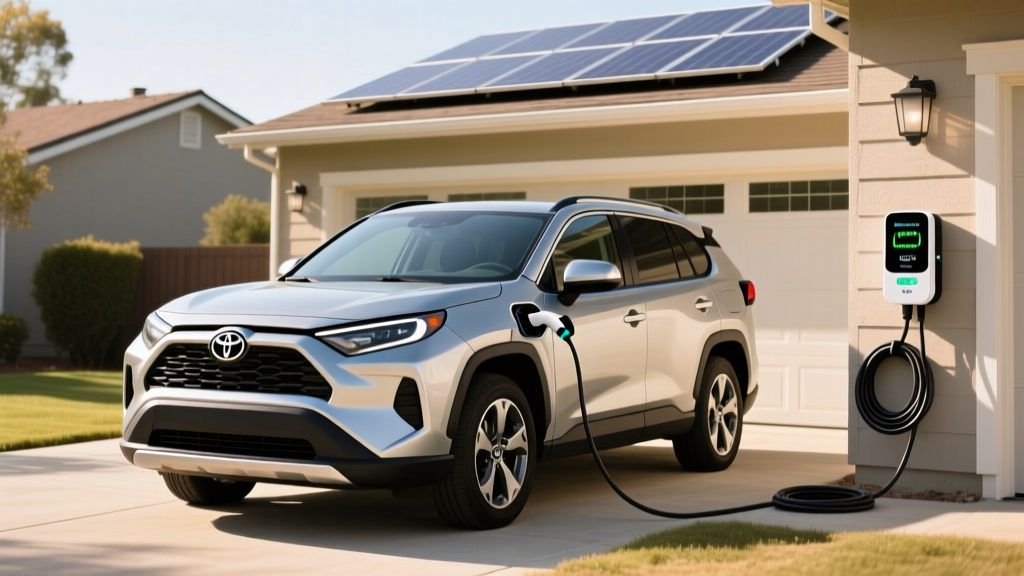
For most EV owners pursuing turbo charging at home, Level 2 is the sweet spot. A 48-amp, 11.5 kW wall connector on a 60-amp dedicated circuit will fully replenish a 75 kWh battery overnight — and add roughly 34 miles of range per hour. That's the practical ceiling for residential single-phase 240V service without a panel upgrade.
Home Charger Installation: Electrical Requirements, Panel Upgrades, and Real Costs
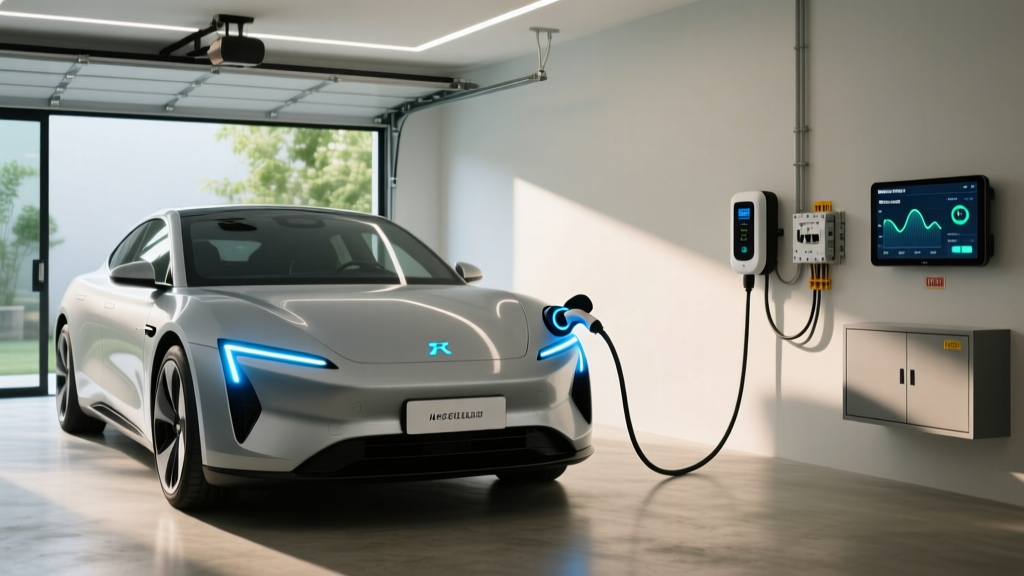
A turbo-charging home setup starts at the electrical panel. Most Level 2 chargers rated at 40–48 amps require a dedicated 50–60 amp, 240-volt circuit using 6 AWG copper wire (or 4 AWG aluminum). The National Electrical Code (NEC) requires that continuous loads — and EV charging qualifies — not exceed 80% of a circuit's rated capacity, which is why a 48-amp charger needs a 60-amp breaker.
When Your Panel Can't Keep Up
Homes built before 2000 often have 100-amp main service panels with limited spare breaker slots. Adding a 60-amp EV circuit to an already-loaded panel can push you past safe capacity — particularly if you also run electric heat, an electric dryer, and an electric range. In these cases, a panel upgrade to 200 amps (or a smart load-management device like the Emporia Smart SPAN panel or a Tesla Gateway with Powerwall) becomes necessary. According to NFPA's NEC guidelines, a licensed electrician must perform a load calculation before signing off on the new circuit.
Installation Cost Breakdown
Here's what homeowners typically spend to install a Level 2 turbo-charging setup in 2026, based on national averages and electrician surveys:
| Cost Component | Low End | Typical | High End | Notes |
|---|---|---|---|---|
| Level 2 Charger (hardware) | $350 | $550 | $750 | 40–48A smart Wi-Fi models |
| Electrician labor (circuit + wiring) | $400 | $900 | $2,200 | Varies with panel distance, wall material |
| Electrical permit | $50 | $150 | $400 | Municipality-dependent |
| Panel upgrade (if needed) | $1,500 | $2,500 | $4,500 | 100A → 200A service upgrade |
| Conduit, wire, breaker | $100 | $250 | $600 | Longer runs = more copper |
| Total (no panel upgrade) | $900 | $1,850 | $3,950 | Most homes with 200A panels |
| Total (with panel upgrade) | $2,400 | $4,350 | $8,450 | Older homes, 100A service |
The federal §30C Alternative Fuel Vehicle Refueling Property Credit can offset up to 30% of hardware and installation costs (capped at $1,000) for home charging equipment, subject to census-tract eligibility. Check irs.gov or consult a tax professional for your specific situation.
Connector Compatibility: NACS, CCS1, CHAdeMO, and Adapter Realities
The North American charging-connector landscape has consolidated dramatically since 2024. The Tesla-designed North American Charging Standard (NACS) is now the dominant connector for new EVs, with Ford, GM, Rivian, Volvo, Polestar, Hyundai/Kia, BMW, and others adopting it on 2025–2026 model-year vehicles. The older CCS1 (Combined Charging System) connector remains on many 2020–2024 models, while CHAdeMO is effectively legacy (Nissan Leaf being the primary holdout, itself discontinued after the 2025 model year).
| Connector | AC Level 2 | DC Fast Charge | 2026 Brands Using It | Adapter Needed? |
|---|---|---|---|---|
| NACS (J3400) | Yes | Yes | Tesla, Ford, GM, Rivian, Hyundai/Kia (2025+), Volvo, Polestar, BMW, Mercedes | CCS→NACS adapters available (~$200–$300) for older CCS vehicles |
| CCS1 | Yes (J1772 + DC pins) | Yes | VW ID.4 (pre-2025), some older BMW/Hyundai/Kia models | NACS→CCS adapters for Tesla Superchargers (~$200) |
| CHAdeMO | No (uses J1772 for AC) | Yes | Nissan Leaf (discontinued 2025), Mitsubishi Outlander PHEV (older) | No widely available adapter; network access shrinking |
| J1772 | Yes (AC only) | No | All non-Tesla EVs for AC Level 1/2 (pre-NACS transition) | J1772→NACS adapter included with most new NACS vehicles |
Practical advice for home charger buyers: If your current EV uses CCS1 and your next one will likely be NACS, consider a charger with a swappable connector or buy a J1772-output charger with a J1772-to-NACS adapter (most new NACS vehicles ship with one). Hardwired NACS wall connectors from Tesla, Emporia, and Autel are now widely available and future-proof for the majority of new EVs.
Top Home Chargers for Turbo Charging: Equipment Picks for 2026
Below are three Level 2 chargers that consistently deliver reliable turbo-charging performance at home, based on sustained power output, build quality, smart features, and connector flexibility.
Tesla Wall Connector (Gen 4, NACS)
- Power output: Up to 11.5 kW (48A) on a 60A circuit
- Connector: NACS native; J1772 adapter included in box
- Cable length: 24 feet
- Smart features: Wi-Fi, OTA firmware updates, Tesla app scheduling, load sharing (pair up to 6 units on one circuit), Powerwall integration
- Price: ~$475
- Best for: Tesla owners and NACS-adopting households wanting the cleanest integration
Emporia Vue Level 2 Smart Charger
- Power output: Up to 11.5 kW (48A), configurable down to 16A for lower-capacity circuits
- Connector: J1772 (NACS adapter available separately)
- Cable length: 24 feet
- Smart features: Wi-Fi, energy monitoring via Emporia Vue panel integration, solar-aware charging, utility TOU scheduling, load management
- Price: ~$399
- Best for: Solar-equipped homes and budget-conscious buyers wanting granular energy data
Autel MaxiCharger Home (NACS)
- Power output: Up to 19.2 kW (80A) on a 100A circuit — the fastest residential single-phase charger available
- Connector: NACS native
- Cable length: 25 feet
- Smart features: Wi-Fi + Ethernet, RFID access control, Autel Cloud app, commercial-grade build, adjustable amperage
- Price: ~$699
- Best for: Large-battery EVs (F-150 Lightning, Hummer EV, Rivian R1T) where 11.5 kW isn't fast enough overnight
For most homes, the 48A / 11.5 kW tier is the practical maximum without a panel upgrade. The 80A Autel requires a dedicated 100-amp circuit and 2 AWG copper wire — feasible on 200A panels with spare capacity, but a significant install investment.
Charging Cost Per Mile: Home vs. Public vs. Gasoline
The economics of turbo charging depend heavily on where you plug in. Here's a real-world cost comparison using a midsize EV averaging 3.0 mi/kWh (equivalent to roughly 110 MPGe) and a comparable gasoline crossover at 28 MPG combined.
| Scenario | Price per kWh (or Gallon) | Cost per Mile | Annual Cost (12,000 mi) |
|---|---|---|---|
| Home Level 2 (national avg. electricity, 2026) | $0.16/kWh | $0.053 | $640 |
| Home Level 2 (off-peak TOU rate) | $0.09/kWh | $0.030 | $360 |
| Home Level 2 (peak TOU rate, summer) | $0.32/kWh | $0.107 | $1,280 |
| Public Level 2 (network avg.) | $0.28/kWh | $0.093 | $1,120 |
| DC Fast Charge (Electrify America, Tesla Supercharger avg.) | $0.38/kWh | $0.127 | $1,520 |
| Gasoline vehicle (28 MPG, $3.40/gal national avg.) | $3.40/gallon | $0.121 | $1,457 |
Key takeaway: home off-peak charging is the cheapest way to fuel any vehicle on the road, at roughly 3 cents per mile. Even DC fast charging, the most expensive EV scenario, is competitive with gasoline on a per-mile basis — though relying solely on public DC fast charging erodes the EV cost advantage. For data on current electricity rates by state, the U.S. Energy Information Administration (EIA) maintains up-to-date averages.
Real-World Charging Times: What Turbo Charging Actually Delivers
Manufacturer claims of "10–80% in 18 minutes" are based on ideal conditions: a preconditioned battery at optimal temperature (roughly 75–95°F), a charger capable of sustaining the vehicle's peak charge rate, and a state of charge starting exactly at 10%. Here's what you'll actually experience with common 2026 battery sizes:
| Battery Size | Example Vehicles | Peak DC Charge Rate | Ideal 10–80% Time | Real-World 10–80% (Cold/Hwy) |
|---|---|---|---|---|
| 58 kWh (LFP) | Tesla Model 3 RWD | 170 kW | ~25 min | ~32–38 min |
| 77 kWh (NMC) | Hyundai Ioniq 5, Kia EV6 | 240 kW (800V) | ~18 min | ~22–28 min |
| 82 kWh (NMC) | Tesla Model Y Long Range | 250 kW | ~22 min | ~27–34 min |
| 100 kWh (NMC) | BMW iX xDrive50 | 200 kW | ~31 min | ~38–45 min |
| 131 kWh (NMC) | Ford F-150 Lightning Ext. Range | 150 kW | ~45 min | ~55–65 min |
The charge curve taper is the reason real-world times exceed marketing claims. Most EVs pull their peak kW only between roughly 10–30% SoC, then progressively step down: a vehicle rated for 250 kW peak may sustain only 120 kW from 50–70%, and drop to 40 kW above 80%. This is why highway road-trip strategy favors multiple short stops (10–60% each) over one long session to 90%.
Safety, Code, and Installation Best Practices
Turbo charging pushes significant current through your home's wiring for hours at a time. Safety isn't optional — it's code-mandated:
- Dedicated circuit: Your Level 2 charger must have its own breaker — never share a circuit with an appliance. Continuous loads generate heat that shared circuits aren't rated for.
- GFCI protection: NEC 2023 and later require Ground Fault Circuit Interrupter protection for all EV charging outlets. Hardwired installations may use a GFCI breaker at the panel; plug-in units (NEMA 14-50 receptacles) need a GFCI breaker or a GFCI-protected receptacle.
- Outdoor rating: If your charger is mounted outside, it must carry at minimum a NEMA 4 (weatherproof) rating. All chargers listed above meet this standard.
- NEMA 14-50 vs. hardwired: A 14-50 outlet offers portability but is limited to 40A continuous (50A breaker). Hardwiring allows up to 48A (60A breaker) or even 80A (100A breaker), eliminates one failure point (the receptacle), and avoids the NEC GFCI-receptacle requirement.
- Permit and inspection: Nearly all jurisdictions require an electrical permit for a new 240V circuit. Skipping this risks insurance claim denial if a fire originates from unpermitted work. Budget $50–$400 and 1–3 weeks for inspection.
Frequently Asked Questions
How much does it cost to install a home EV charger?
Expect $900–$3,950 for a standard Level 2 installation on an existing 200-amp panel, including the charger ($350–$750), electrician labor ($400–$2,200), permit ($50–$400), and materials. If your home has a 100-amp panel that needs upgrading to 200 amps, add $1,500–$4,500 to the total, bringing the all-in range to roughly $2,400–$8,450.
How fast will each charging level add range?
Level 1 (120V) adds 3–5 miles of range per hour. Level 2 (240V, 48A) adds roughly 34 miles per hour. DC fast charging adds 150–1,000+ miles per hour at peak rates, but sessions typically last 18–45 minutes due to charge-curve taper above 80% SoC.
Which connector and charger is compatible with my EV?
If you drive a 2025+ model-year EV from Tesla, Ford, GM, Rivian, Hyundai, Kia, Volvo, or BMW, your vehicle uses the NACS connector. Older (2020–2024) non-Tesla EVs typically use CCS1. For home charging, a NACS wall connector covers new vehicles directly, while a J1772-output charger works with older EVs and most new NACS vehicles via an included adapter.
How much does EV charging cost per mile compared to gasoline?
Home charging at the national average electricity rate ($0.16/kWh) costs about $0.053 per mile — less than half the $0.121 per mile of a 28 MPG gasoline vehicle at $3.40/gallon. Off-peak time-of-use rates can drop EV fueling to $0.030/mile. Public DC fast charging at $0.38/kWh is roughly cost-competitive with gas at $0.127/mile.
What electrical upgrades might I need before installing a charger?
The most common upgrade is a 100-amp to 200-amp main panel replacement ($1,500–$4,500) if your existing panel lacks capacity for a new 60-amp dedicated circuit. Alternatives include smart load-management panels (like SPAN) that dynamically share capacity, or reducing charger amperage to 32A (requiring only a 40A breaker) to avoid the upgrade entirely.
Can I turbo charge with solar panels?
Yes. Chargers like the Emporia Vue and Wallbox Pulsar Plus offer solar-aware modes that direct excess solar production to your EV rather than exporting it to the grid at low utility buyback rates. A typical 8 kW residential solar array produces roughly 30–35 kWh on a clear summer day — enough to fully recharge a 75 kWh battery over two days of peak production.