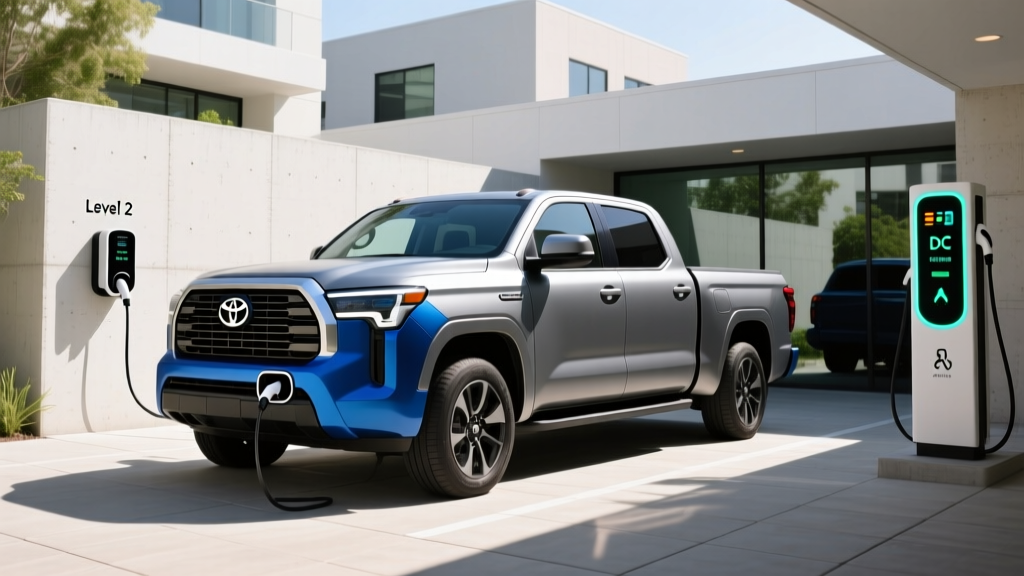
When Toyota confirmed the all-electric Tundra would adopt the North American Charging Standard (NACS) port and gain access to Tesla's Supercharger network, pickup buyers finally had a compelling reason to consider an electric full-size truck. The so-called Tundra Supercharger advantage isn't a proprietary Toyota charger — it's the combination of the Tundra EV's NACS connector and seamless access to over 20,000 Supercharger stalls across North America. But how fast does it actually charge, what does home charging look like, and how does the cost stack up against a gas Tundra? This guide breaks down every charging scenario with real numbers.
Charging Levels Explained: What the Tundra EV Supports
Before we get to specific times and costs, it's essential to distinguish between kW (kilowatts) and kWh (kilowatt-hours). A kW measures the rate of power delivery — think of it as the width of a hose. A kWh measures total energy stored or delivered — the total volume of water that flows through. A 300 kWh battery receiving power at 150 kW would theoretically fill in two hours (real-world curves are different, which we'll cover). The electric Tundra's estimated battery pack is around 200 kWh usable to support its target 350+ mile EPA range and heavy towing loads.
| Level | Voltage | Max Power (kW) | Miles of Range Added per Hour | Typical Use Case |
|---|---|---|---|---|
| Level 1 | 120V AC | 1.4–1.9 kW | ~3–5 mi/hr | Emergency trickle; not practical for daily truck use |
| Level 2 (Home/Workplace) | 240V AC | 7.2–19.2 kW | ~20–55 mi/hr | Primary daily charging; overnight top-up |
| DC Fast Charging (Supercharger/EA) | 400–800V DC | Up to ~325 kW (est.) | ~500–900 mi/hr (peak) | Road trips; 10–80% in ~25 min |
At Level 1 (a standard 120V household outlet), you'd add roughly 4 miles of range per hour. With a ~200 kWh battery, a full charge from empty would take well over 100 hours — effectively useless for a large truck battery. Level 2 is where the Tundra EV will spend most of its charging life. At 11.5 kW (a common 48-amp home charger on a 60-amp circuit), you'd add roughly 30–35 miles of range per hour, enough to replenish a full day's driving overnight. DC fast charging is where the Supercharger network becomes critical: Toyota has indicated the Tundra EV will support peak charge rates around 325 kW on compatible V4 Supercharger stalls, enabling a 10–80% session in approximately 25 minutes under ideal thermal conditions.
Supercharger Network Access: The Tundra's Killer Feature
The Toyota Tundra EV ships with a native NACS charge port, meaning it plugs directly into any Tesla V3 (250 kW) or V4 (up to 350 kW-capable) Supercharger stall without an adapter. This is a significant practical advantage over older CCS1-equipped trucks like the Ford F-150 Lightning or Rivian R1T (pre-2025), which require a NACS adapter to use Superchargers.
As of early 2026, the Supercharger network includes over 7,000 stations and 20,000+ individual stalls in North America. For Tundra EV owners doing regular towing or long-haul work trips, this density matters. A few practical notes from real-world Supercharger use:
- Preconditioning: The Tundra's battery thermal management system will precondition the pack when you navigate to a Supercharger in the built-in nav, warming the cells to accept peak charge rates. Skipping preconditioning in cold weather can add 10+ minutes to your session.
- Charge curve taper: Peak 325 kW is not sustained for the entire session. Expect peak rate from roughly 10–40% SoC, tapering to ~180 kW by 60%, and dropping below 50 kW above 85%. This is why 10–80% times are the standard benchmark — charging to 100% on DC fast is rarely worth the wait.
- V4 vs V3 stalls: V3 Superchargers peak at 250 kW. To access the Tundra's full ~325 kW capability, seek out V4 stalls, which are increasingly common along major interstate corridors.
Home Charging Installation: Costs, Electrical Requirements & Panel Upgrades
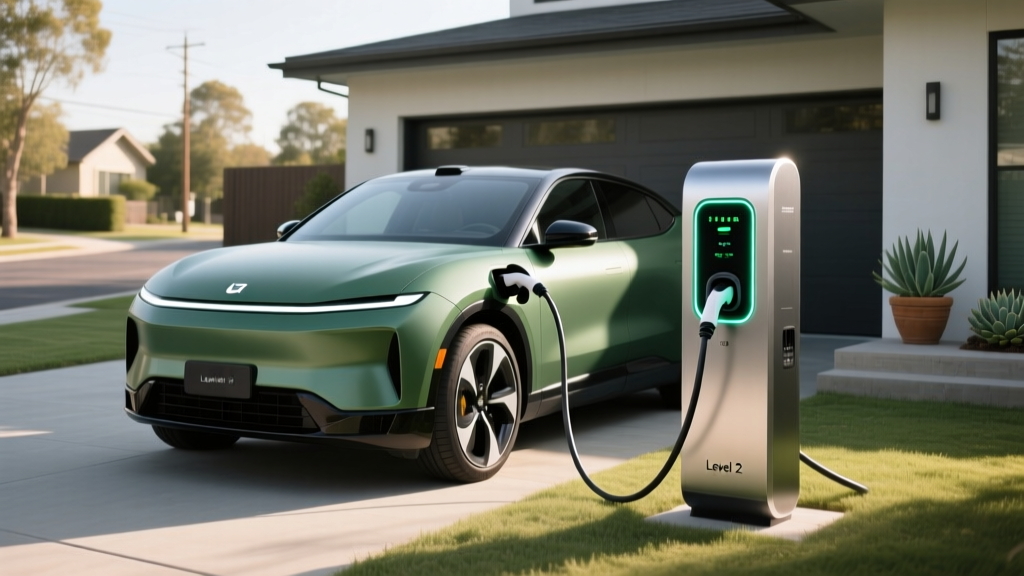
Most Tundra EV owners will want a Level 2 home charger capable of delivering 11.5 kW or more. That means a 240-volt, 60-amp dedicated circuit with a hardwired wall connector (or a NEMA 14-50 outlet for a portable unit on a 50-amp circuit). Here's where many buyers get surprised: not every home electrical panel can support this without an upgrade.
| Component | Typical Cost Range | Notes |
|---|---|---|
| Level 2 Charger (Equipment) | $400 – $750 | 48A smart charger, NACS connector, 24-ft cable |
| Electrician Labor | $500 – $2,000 | Varies by run length, conduit, wall material |
| Electrical Permit | $50 – $200 | Required in most jurisdictions; inspection included |
| Panel Upgrade (if needed) | $1,500 – $4,000 | Upgrading from 100A to 200A service panel |
| Total (no panel upgrade) | $950 – $2,950 | Most homes with 200A service |
| Total (with panel upgrade) | $2,450 – $6,950 | Older homes with 100A or 150A panels |
The panel upgrade gotcha: A large truck battery like the Tundra EV's benefits from the fastest Level 2 you can install. If your home has a 100-amp main panel (common in homes built before 1990), adding a 60-amp EV circuit may exceed your panel's capacity, especially if you're also running electric HVAC, a dryer, and an oven. A licensed electrician will perform a load calculation per NEC Article 220 to determine if an upgrade is required. Budget accordingly — this is the single largest variable in home charging cost.
The federal Alternative Fuel Vehicle Refueling Property Credit (IRS Form 8911) offers up to 30% of equipment and installation costs (capped at $1,000) for home charger installations, subject to census-tract eligibility. Check your eligibility with a tax professional.
Connector Compatibility: NACS, CCS1 & Adapter Realities
The Tundra EV's native NACS port means compatibility is straightforward for most scenarios, but there are still edge cases to plan for.
| Network / Connector | Compatible? | Adapter Needed? |
|---|---|---|
| Tesla Supercharger (NACS) | Yes — native | No |
| Tesla Destination / Wall Connector (NACS) | Yes — native | No |
| Electrify America (CCS1) | Yes | NACS-to-CCS1 adapter required (~$200–$250) |
| EVgo / ChargePoint (CCS1 stalls) | Yes | NACS-to-CCS1 adapter required |
| CHAdeMO stations | No | No practical adapter available; avoid |
| J1772 Level 2 (public/workplace) | Yes | NACS-to-J1772 adapter (~$100–$150) |
Practical advice: Carry a NACS-to-CCS1 adapter in the truck at all times. While the Supercharger network covers most highway corridors, Electrify America and EVgo stations fill gaps in certain metro areas and along routes where Superchargers are sparse. A $200 adapter is cheap insurance against being stranded. CHAdeMO is effectively a dead standard in North America as of 2025 — don't plan around it.
Charging Cost Per Mile: Tundra EV vs. Gas Tundra
The economics of charging a large electric truck depend heavily on where and when you charge. Here's a realistic breakdown using the Tundra EV's estimated efficiency of 2.0–2.2 kWh per mile (accounting for its weight and aerodynamics) compared to a gas Tundra's ~17 MPG combined.
| Charging / Fueling Scenario | Cost per kWh or Gallon | Cost Per Mile | Annual Cost (15,000 mi) |
|---|---|---|---|
| Home Level 2 (off-peak utility rate) | $0.10–$0.14/kWh | $0.20–$0.31 | $3,000–$4,650 |
| Home Level 2 (standard rate) | $0.15–$0.18/kWh | $0.30–$0.40 | $4,500–$6,000 |
| Tesla Supercharger (avg. $0.30/kWh) | $0.28–$0.36/kWh | $0.56–$0.79 | $8,400–$11,850 |
| Electrify America (avg. $0.43/kWh) | $0.38–$0.48/kWh | $0.76–$1.06 | $11,400–$15,900 |
| Gas Tundra (17 MPG, $3.50/gal) | $3.50/gallon | $0.21/mile (wait — $3.50÷17 = $0.206) | $3,088 |
Here's the honest math: if you charge primarily at home on a time-of-use plan with off-peak rates below $0.12/kWh, the Tundra EV can cost roughly the same or slightly less per mile than a gas Tundra. But if you rely heavily on public DC fast charging — especially at Electrify America rates above $0.40/kWh — the electric truck can cost more per mile than its gas counterpart. The savings case for the electric Tundra is strongest when you can charge at home overnight. Road-trip-heavy owners who exclusively use DC fast chargers should budget accordingly.
This is also where the Supercharger network's pricing advantage matters: Tesla's rates ($0.28–$0.36/kWh in most markets) are generally 20–40% cheaper than Electrify America or EVgo, making the Tundra's native NACS access a genuine cost-saving feature on long trips.
Equipment Recommendations: Best Home Chargers for the Tundra EV
With a NACS port and a large battery, the Tundra EV benefits from a high-amperage, smart Level 2 charger. Here are three strong options for 2026:
Best Overall: Tesla Wall Connector (NACS)
- Power Output: Up to 11.5 kW (48 amps on a 60-amp circuit)
- Connector: Native NACS — no adapter needed
- Cable Length: 24 feet
- Smart Features: Wi-Fi, OTA updates, power sharing between two units, load management
- Price: ~$475
The obvious choice for NACS-native vehicles. Reliable, well-built, and the power-sharing feature is ideal if you also own a second EV.
Best for Flexibility: ChargePoint Home Flex (NACS model)
- Power Output: Up to 12 kW (50 amps, requires 70-amp circuit) or configurable down to 16A
- Connector: Available with native NACS pigtail (2025+ models)
- Cable Length: 23 feet
- Smart Features: Alexa integration, scheduling, detailed energy reporting, works with utility demand-response programs
- Price: ~$599
Excellent if you want granular control over amperage to match your panel's capacity, or if your utility offers demand-response rebates for smart chargers.
Best Budget Option: Emporia Vue Level 2 Charger
- Power Output: Up to 11.5 kW (48 amps)
- Connector: NACS (with J1772 adapter included)
- Cable Length: 24 feet
- Smart Features: Energy monitoring, solar integration, scheduling via app
- Price: ~$399
A capable budget pick with surprisingly robust smart features. Solar integration is a bonus for homeowners with rooftop panels.
Safety, Code & Installation Best Practices
EV charging is a high-draw, continuous electrical load — the NEC defines it as a continuous load requiring the circuit to be rated at 125% of the charger's maximum draw. A 48-amp charger requires a 60-amp breaker. Here's what your installation must include:
- Dedicated circuit: Your EV charger should never share a circuit with other appliances. A dedicated 60-amp, 240V circuit is the standard for full-speed Level 2.
- GFCI protection: The 2023 NEC (Article 625.54) requires GFCI protection for all receptacles used for EV charging. Hardwired chargers are exempt from this requirement, which is one reason many electricians prefer hardwired installations.
- Outdoor rating: If your charger is installed outdoors (garage-adjacent or driveway), the unit must carry a NEMA 4 or NEMA 4X rating for weather resistance. All three chargers recommended above are outdoor-rated.
- Permit and inspection: Nearly all jurisdictions require an electrical permit for EV charger installation. The inspection ensures your wiring, breaker sizing, and grounding meet code. Skipping the permit can void homeowner's insurance claims related to electrical fires.
- Conduit and wire gauge: For a 60-amp circuit, your electrician will typically run #6 AWG copper wire (or #4 AWG aluminum for longer runs). The wire run length affects both cost and potential voltage drop.
Always hire a licensed electrician familiar with NEC Article 625 (Electric Vehicle Charging System Equipment). The National Fire Protection Association maintains the NEC, and your local jurisdiction may be on the 2020, 2023, or 2026 edition — requirements vary slightly by version.
Frequently Asked Questions
How much does it cost to install a home EV charger for the Tundra?
Expect $950–$2,950 for a standard installation in a home with adequate panel capacity (200A service, short wire run to the garage). If your home needs a panel upgrade from 100A to 200A, total costs can reach $2,450–$6,950. Equipment itself is $400–$750 for a quality smart charger.
How fast will each charging level add range to the Tundra EV?
Level 1 (120V): ~3–5 miles/hour. Level 2 (240V, 48A): ~30–35 miles/hour. DC Fast (Supercharger V4, ~325 kW peak): effectively 500–900 miles/hour at peak rate, with a 10–80% session taking approximately 25 minutes.
Which connector does the Tundra EV use?
The Tundra EV uses a native NACS (North American Charging Standard) connector, the same as Tesla vehicles. This means direct Supercharger access with no adapter. For CCS1-based public chargers (Electrify America, some EVgo stations), you'll need a NACS-to-CCS1 adapter, which costs around $200–$250.
How much does charging the Tundra EV cost per mile compared to gas?
Home charging at off-peak rates ($0.10–$0.14/kWh) costs approximately $0.20–$0.31 per mile — comparable to or slightly more than a gas Tundra at $3.50/gallon and 17 MPG (~$0.21/mile). Public DC fast charging at $0.30–$0.48/kWh costs $0.56–$1.06 per mile, which is significantly more expensive than gas. Home charging is where the economics work best.
What electrical upgrades might I need for a Tundra EV home charger?
The most common upgrade is a panel replacement from 100A to 200A service ($1,500–$4,000) if your existing panel can't accommodate a new 60-amp dedicated circuit. Older homes may also need updated grounding, a new meter base, or conduit work. A licensed electrician will perform a load calculation to determine exactly what's required before quoting the job.