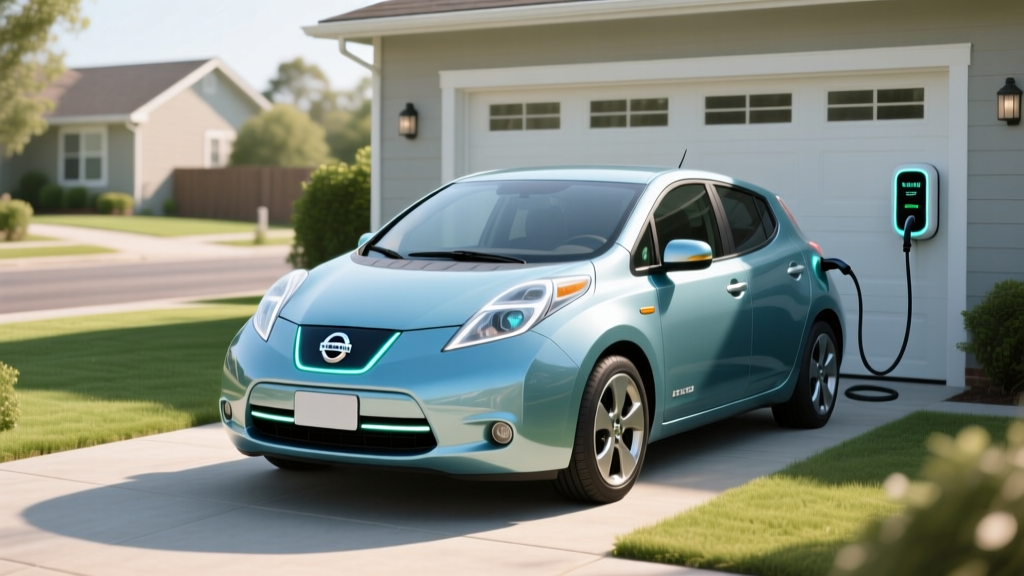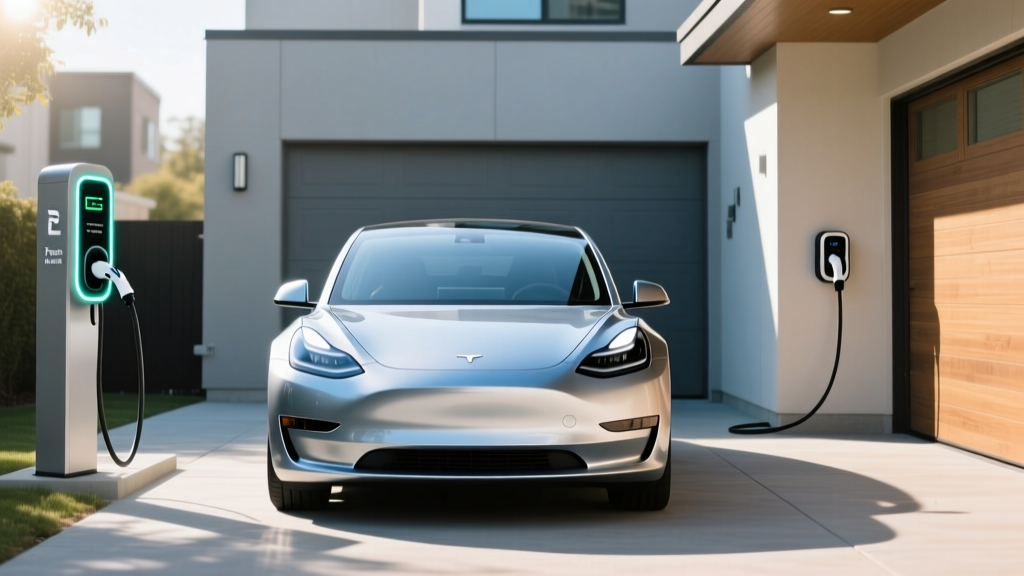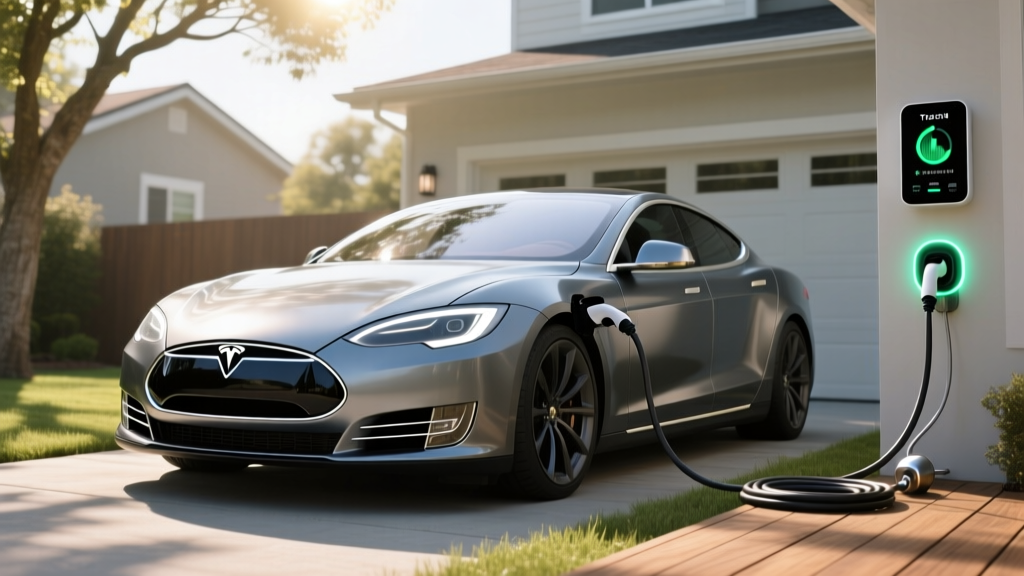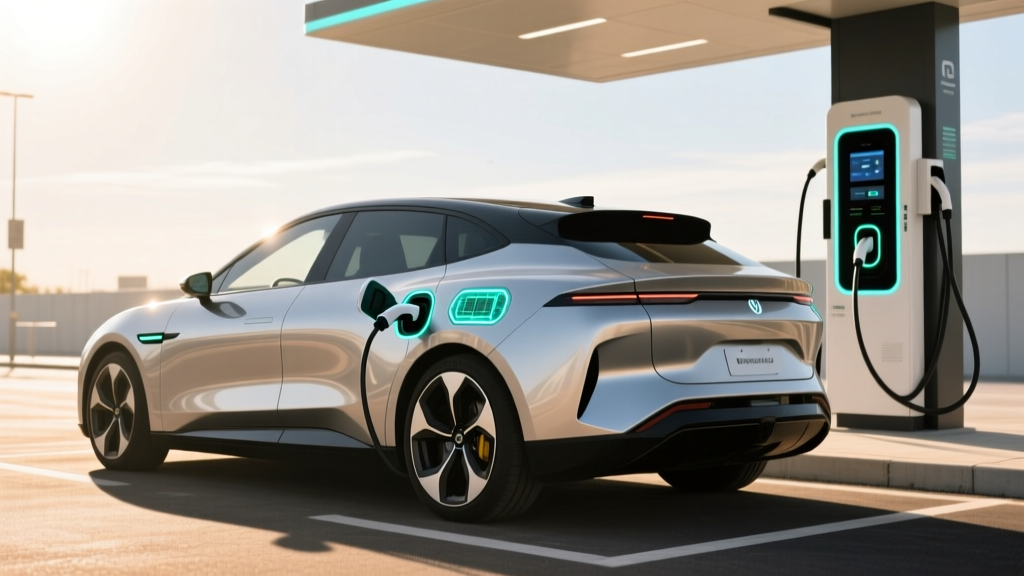
If you've landed here searching for Toyota MR2 Supercharged charging information, let's clear up a fundamental misconception right away: the 1988–1989 Toyota MR2 Supercharged (AW11 chassis, 4A-GZE engine) is a pure internal combustion vehicle. It has no traction battery, no charge port, and no capability to accept electrons from any EV charger — Level 1, Level 2, or DC fast. It runs on gasoline, and its only "refueling" happens at a gas pump.
But your search may reflect a deeper question: how does EV charging actually work, and could I ever convert a classic like the MR2 to electric? This guide answers both — starting with why the MR2 Supercharged remains a beloved analog sports car, then pivoting into a comprehensive breakdown of modern EV charging for anyone considering an electrified vehicle alongside their weekend classic.
The Toyota MR2 Supercharged: A Gasoline Legend, Not an EV
The second-gen 4A-GZE supercharged 1.6L inline-four produced 145 horsepower and 140 lb-ft of torque, pushing the mid-engine AW11 to 60 mph in roughly 6.5 seconds — remarkable for a 2,500-lb car in the late 1980s. It sips fuel through a 5-speed manual, achieving an estimated 22 city / 28 highway mpg per fueleconomy.gov archives. There is no hybrid variant, no plug-in model, and no factory or aftermarket EV conversion kit that preserves its supercharged character.
EV conversions of classic MR2s do exist in the DIY community, typically using salvaged Tesla or Nissan Leaf drivetrains paired with custom battery enclosures in the frunk and engine bay. These are one-off projects costing $15,000–$40,000+ and are not production vehicles. If you own a stock MR2 Supercharged, your refueling infrastructure is a gas station, not a charge point.
EV Charging Levels Explained: kW Power vs. kWh Energy
Before evaluating any charger, you must understand the single most important distinction in EV literacy:
- kW (kilowatts) = power, the rate at which electricity flows into the battery — like water pressure from a hose.
- kWh (kilowatt-hours) = energy, the total amount stored in the battery — like gallons in a tank.
A 72 kWh battery charged at 11.5 kW (Level 2) takes roughly 6–7 hours from empty. That same battery at 150 kW (DC fast) can go from 10–80% in about 25 minutes. The math: energy ÷ power = time, adjusted for charge-curve taper above 80% state of charge (SoC).
| Level | Voltage | Max Power (kW) | Miles of Range per Hour | Typical Use Case |
|---|---|---|---|---|
| Level 1 | 120V AC | 1.2–1.9 kW | 3–5 mi/hr | Overnight trickle, PHEVs, emergencies |
| Level 2 | 240V AC | 3.3–19.2 kW | 12–75 mi/hr | Home daily charging, workplace, public AC |
| DC Fast (Level 3) | 400–900V DC | 50–350 kW | 150–1,000+ mi/hr (peak) | Road trips, highway corridors, 10–80% top-ups |
Real-world charging rarely sustains peak kW. Most EVs hit their maximum charge rate between 10–40% SoC, then taper significantly. A vehicle advertising "250 kW peak" may average 150–180 kW across a 10–80% session. This is why manufacturers quote 10–80% times rather than 0–100%.
How Much Does It Cost to Install a Home EV Charger?
Home Level 2 installation is the single biggest variable in EV ownership setup. Costs depend on your electrical panel capacity, the distance from panel to charger location, and local permit fees. Here's a realistic 2026 breakdown:
| Component | Low End | High End | Notes |
|---|---|---|---|
| Level 2 EVSE equipment | $350 | $750 | Smart Wi-Fi chargers, 32A–48A, 25ft cable |
| Electrician labor | $500 | $2,000 | Depends on run length, conduit, drywall work |
| Permit & inspection | $50 | $300 | Varies by municipality; some waive for EVSE |
| Panel upgrade (if needed) | $1,500 | $4,000 | 100A→200A service upgrade for older homes |
| Total (no panel upgrade) | $900 | $3,050 | Most homes with 200A service fall here |
| Total (with panel upgrade) | $2,400 | $7,050 | Common in pre-1990 homes with 100A panels |
The dedicated circuit requirement is non-negotiable: a 40A charger needs a 50A breaker (NEC continuous-load rule requires 125% headroom). A 48A charger needs a 60A breaker. Your electrician will verify available panel capacity before pulling a permit.
What Electrical Upgrades Might I Need?
Homes built before 1990 often have 100-amp service panels with limited breaker slots. Adding a 50A or 60A dedicated circuit for EV charging may max out available capacity, triggering a panel upgrade to 200A. Some utilities offer rebates of $200–$500 for panel upgrades tied to EV adoption. Smart panels with load-management software (like Span or Lumin) can sometimes avoid a full upgrade by dynamically shedding non-essential loads when the EV charges.
Connector Compatibility: NACS, CCS1, and CHAdeMO in 2026
The connector landscape has consolidated significantly since 2023. Here's where things stand for 2026 model-year vehicles:
| Connector | Brands Using It | Adapter Needed? |
|---|---|---|
| NACS (Tesla/SAE J3400) | Tesla, Ford, GM, Rivian, Volvo, Polestar, Mercedes, BMW, Hyundai/Kia (new models), Toyota (bZ series) | None for Tesla Superchargers; CCS→NACS adapters for non-Tesla DC networks |
| CCS1 (Combined Charging System) | Legacy VW ID.4, older Hyundai/Kia models, Stellantis, some Honda | NACS→CCS adapter (~$200) needed for Tesla Supercharger access |
| CHAdeMO | Nissan Leaf (discontinued), Mitsubishi Outlander PHEV (older) | Effectively orphaned; limited DC network support |
If you're buying a 2026 EV, NACS is the dominant standard. Every new Tesla, Ford, GM, and most Hyundai/Kia/Toyota EVs ship with a native NACS port. CCS1 vehicles can access Tesla Superchargers via a manufacturer-approved adapter, but verify your specific model's compatibility — not all CCS vehicles support the adapter handshake protocol reliably.
Cost to Charge: Home vs. Public vs. Gas per Mile
Electricity pricing varies dramatically by location, time of day, and charger type. Here's a realistic cost-per-mile comparison using a midsize EV averaging 3.0 miles per kWh (roughly 115 MPGe combined):
| Scenario | $/kWh | Cost per Mile | Equivalent Gas Price (at 28 MPG) |
|---|---|---|---|
| Home off-peak (utility TOU rate) | $0.08–$0.12 | $0.03–$0.04 | $0.84–$1.12/gal |
| Home standard rate | $0.14–$0.18 | $0.05–$0.06 | $1.40–$1.68/gal |
| Public Level 2 (ChargePoint, etc.) | $0.25–$0.40 | $0.08–$0.13 | $2.24–$3.64/gal |
| DC Fast (Electrify America, Tesla) | $0.35–$0.55 | $0.12–$0.18 | $3.36–$5.04/gal |
| Gasoline (US average, 2026) | — | $0.12–$0.15 | $3.30–$4.20/gal |
Home charging on an off-peak time-of-use (TOU) plan is the economic sweet spot — roughly one-quarter the cost per mile of gasoline. Public DC fast charging, while convenient for road trips, often costs more per mile than gas. This is why 80%+ of EV charging happens at home or work, per DOE data.
Charging Time Examples: What 10–80% Actually Takes
Charge times depend on battery size (kWh), peak charge rate (kW), and the vehicle's charge curve. Here are representative 2026 examples:
- Hyundai Ioniq 5 (84 kWh, NMC, 350 kW peak): 10–80% in ~18 minutes at a 350 kW charger; ~25 min at 150 kW.
- Tesla Model Y Long Range (75 kWh, NMC, 250 kW peak): 10–80% in ~22 minutes at a V3 Supercharger.
- Ford F-150 Lightning Extended Range (131 kWh, NMC, 150 kW peak): 10–80% in ~41 minutes at 150 kW.
- Chevrolet Equinox EV (85 kWh, NMC, 150 kW peak): 10–80% in ~30 minutes at 150 kW.
- Toyota bZ4X (72.8 kWh, NMC, 150 kW peak): 10–80% in ~30 minutes at 150 kW.
These times assume battery preconditioning is active (the car warms the battery to optimal temperature before arriving at the charger). Without preconditioning — especially below 40°F — expect 30–50% longer charge times due to reduced charge acceptance.
Equipment Recommendations: Top Level 2 Home Chargers for 2026
ChargePoint Home Flex (2nd Gen)
- Power: Up to 12 kW (50A circuit)
- Connector: NACS or J1772 (configurable)
- Cable: 23 ft
- Smart features: Wi-Fi, app scheduling, TOU optimization, Alexa
- Price: ~$599
Tesla Wall Connector
- Power: Up to 11.5 kW (48A / 60A breaker)
- Connector: NACS native
- Cable: 24 ft
- Smart features: Wi-Fi, OTA updates, power sharing (multiple units on one circuit)
- Price: ~$475
Emporia Vue Level 2
- Power: Up to 11.5 kW (48A)
- Connector: J1772 (NACS adapter available)
- Cable: 24 ft
- Smart features: Integrated energy monitoring, solar-aware charging, app control
- Price: ~$399
For NACS-native vehicles (most 2026 models), the Tesla Wall Connector offers the best value. For J1772-equipped older EVs or flexibility, the ChargePoint Home Flex remains the gold standard with its configurable amperage and robust app.
Safety, Code, and the MR2 Supercharged Owner's EV Future
Every home EV charger installation must comply with NEC Article 625 and local building codes. Key requirements:
- Dedicated circuit: The EVSE must have its own breaker — no shared circuits with dryers, ovens, or HVAC.
- GFCI protection: Required for outdoor installations and garages per NEC 2023+ updates.
- Outdoor rating: If mounted outside, the EVSE must be NEMA 4 rated (rain/sleet resistant).
- Permit & inspection: Required in virtually all jurisdictions; unpermitted work may void home insurance claims.
If you're an MR2 Supercharged owner exploring a second vehicle for daily commuting, a modern EV charged at home on off-peak rates can cost under $500/year in electricity for 12,000 miles of driving — while your MR2 at 24 MPG combined and $3.75/gal would cost roughly $1,875 in fuel for the same distance. The math often justifies an EV as a practical daily companion to a cherished gasoline sports car.
For federal EV purchase incentives, the IRS §30D Clean Vehicle Credit offers up to $7,500 for qualifying new EVs (subject to MSRP caps of $55,000 for cars / $80,000 for SUVs and trucks, buyer income limits of $150K single / $300K joint, and battery critical-mineral sourcing requirements). Always verify current-year eligibility on irs.gov before purchasing.
Frequently Asked Questions
Can I charge a Toyota MR2 Supercharged at an EV charging station?
No. The Toyota MR2 Supercharged (1988–1989) is a gasoline-only vehicle with a 1.6L supercharged inline-four engine. It has no battery-electric drivetrain, no charge port, and no compatibility with any EV charging equipment. It must be refueled with gasoline.
How much does it cost to install a home EV charger?
Expect $900–$3,050 for a standard Level 2 installation in a home with adequate 200A panel capacity. If your home has an older 100A panel requiring a service upgrade, total costs can reach $2,400–$7,050. Equipment alone runs $350–$750 for quality smart chargers.
How fast will each charging level add range?
Level 1 (120V) adds 3–5 miles of range per hour. Level 2 (240V) adds 12–75 miles per hour depending on amperage. DC fast charging adds 150–1,000+ miles per hour at peak power, though sessions are typically measured in 10–80% time (18–45 minutes for most 2026 EVs).
Which connector is compatible with my EV?
For 2026 model-year vehicles, NACS (SAE J3400) is the dominant standard across Tesla, Ford, GM, Hyundai, Kia, Toyota, and most others. Older CCS1-equipped vehicles need a NACS-to-CCS adapter for Tesla Supercharger access. CHAdeMO is effectively discontinued for new vehicles.
How much does charging cost per mile compared to gas?
Home charging on off-peak rates costs $0.03–$0.04 per mile — roughly one-quarter the cost of gasoline at $3.50/gal and 28 MPG. Public DC fast charging at $0.35–$0.55/kWh costs $0.12–$0.18 per mile, which can equal or exceed gasoline costs.
What electrical upgrades might I need for a home charger?
Homes with 100A electrical service (common in pre-1990 construction) typically need a panel upgrade to 200A, costing $1,500–$4,000. Homes with 200A service usually have sufficient capacity for a dedicated 50A or 60A circuit without upgrades. A licensed electrician will perform a load calculation to determine your specific needs.