Toyota bZ 2026 Range: What the EPA Sticker Actually Means in the Real World
The 2026 Toyota bZ lineup — anchored by the refreshed bZ4X crossover and the newly introduced bZ SUV variant — targets buyers who want Toyota reliability wrapped around a modern battery-electric platform. But before you plug in, you need to know exactly what range you're getting, how fast you can recharge, and what your home electrical panel can handle.
EPA Estimated Range: 252 miles (FWD, 71.4 kWh usable battery)
Real-World Highway (70 mph, mild weather): ~220–235 miles
Cold Weather (below 30°F, highway): ~175–195 miles
AWD Trim (67.5 kWh usable): EPA 228 miles; expect ~195–210 real-world highway
The bZ4X FWD uses a 71.4 kWh lithium-ion battery pack (NMC chemistry) paired with a 201-hp front motor. The AWD variant adds a rear motor for 214 hp combined but sacrifices some range due to the slightly smaller pack and added weight. For 2026, Toyota has improved thermal management, which helps sustain DC fast-charging speeds and reduces cold-weather range loss compared to the 2023–2024 models that drew early criticism.
| Spec | bZ4X FWD 2026 | bZ4X AWD 2026 |
|---|---|---|
| EPA Range | 252 mi | 228 mi |
| Battery (usable) | 71.4 kWh, NMC | 67.5 kWh, NMC |
| Horsepower | 201 hp | 214 hp |
| 0-60 mph | 7.1 sec | 6.5 sec |
| Max DC Fast Charge | 150 kW | 150 kW |
| 10-80% DC Time | ~32 min | ~30 min |
| Level 2 Rate | 7.2 kW (onboard) | 7.2 kW (onboard) |
| MPGe (combined) | 114 MPGe | 102 MPGe |
| Base MSRP | $38,465 | $41,020 |
| Battery Warranty | 8 yr / 100,000 mi | 8 yr / 100,000 mi |
Source: fueleconomy.gov and Toyota's official 2026 bZ4X specifications.
Charging Levels Explained: kW Speeds and Miles Added Per Hour
Understanding charging requires one critical distinction: kW (kilowatts) measures power — how fast energy flows into your battery. kWh (kilowatt-hours) measures energy — the total capacity of your battery, like gallons in a fuel tank. You'll never confuse these again once you think of kW as "flow rate" and kWh as "tank size."
| Level | Voltage / Amperage | Power (kW) | Miles of Range Per Hour | Best For |
|---|---|---|---|---|
| Level 1 | 120V / 12A | ~1.4 kW | 3–5 mi/hr | Overnight top-offs, emergencies |
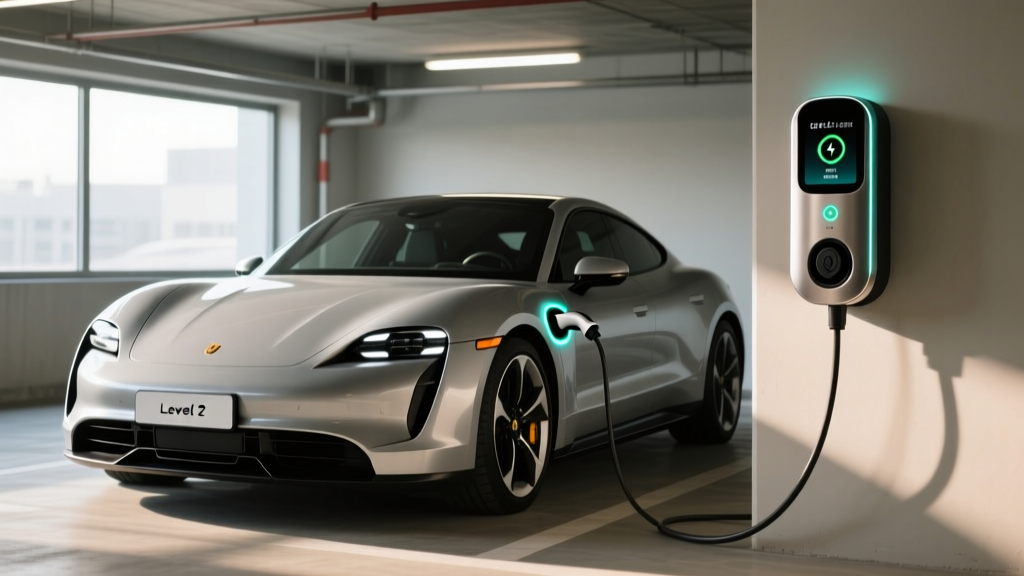
| Level 2 (Home) | 240V / 32A | ~7.7 kW | 22–28 mi/hr | Daily home charging |
| Level 2 (Home max) | 240V / 48A | ~11.5 kW | 33–42 mi/hr | Larger batteries; bZ4X capped at 7.2 kW onboard |
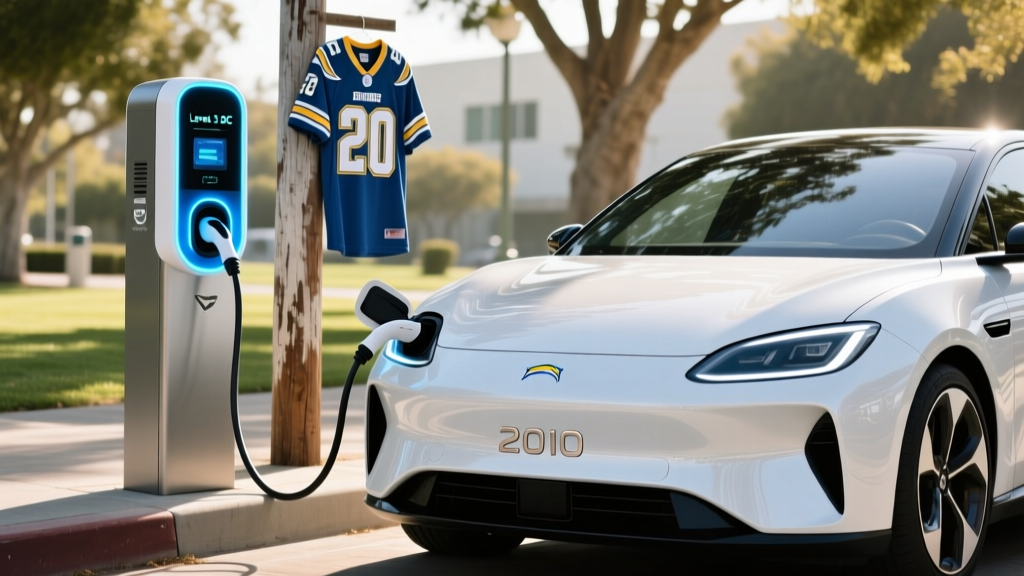
| DC Fast Charge | 400V+ / variable | 50–350 kW | 150–900+ mi/hr (peak) | Road trips, quick top-ups |
Key bZ4X constraint: The onboard charger limits Level 2 AC charging to 7.2 kW. Even if you install a 48A (11.5 kW) home charger, the bZ4X will only pull 7.2 kW. That means a full charge from 10% to 100% on Level 2 takes roughly 9–10 hours for the FWD model — fine for overnight charging, but it won't benefit from higher-amperage home chargers the way a Tesla Model Y or Hyundai Ioniq 5 would.
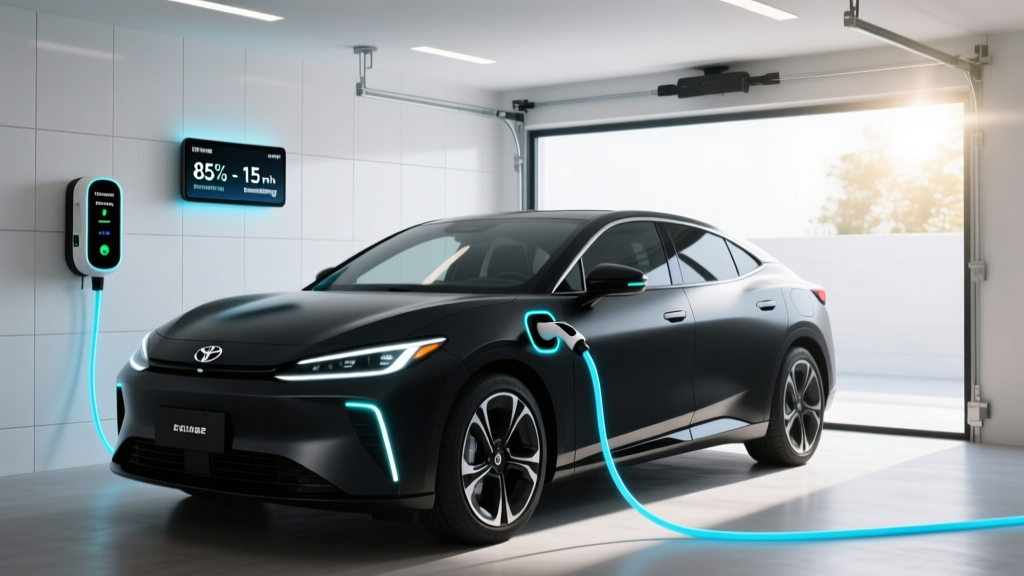
On DC fast charging, the bZ4X peaks at 150 kW, but like all EVs, it doesn't sustain that rate. The charge curve tapers significantly above 55–60% state of charge (SoC). Expect roughly 150 kW from 10–40%, dropping to ~80–100 kW through 60%, and falling below 40 kW past 80%. This is why manufacturers quote 10–80% times rather than 0–100%: the last 20% can take as long as the first 70%.
Home Charger Installation: Electrical Requirements and Costs
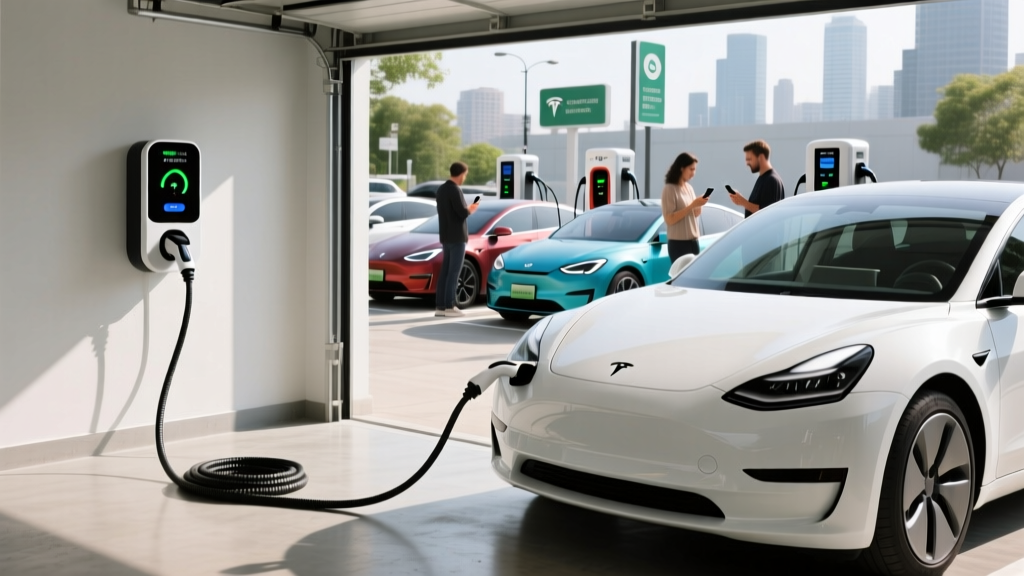
Installing a Level 2 home charger for your Toyota bZ4X requires a dedicated 240V circuit, typically 40A (which supports up to 32A continuous charging, per the 80% NEC rule for continuous loads). Here's what's involved and what you'll actually pay.
Electrical Requirements
- Circuit: Dedicated 240V / 40A breaker (minimum for a 32A charger)
- Wire: 6 AWG copper (or 8 AWG for shorter runs, per electrician assessment)
- Panel capacity: Your main panel must have at least 40A of spare capacity. Most modern 200A panels handle this easily; older 100A panels may not.
- Permit: Required in most US jurisdictions — typically $50–$200
- Outlet vs. hardwired: A NEMA 14-50 outlet gives you portability (take the charger when you move); hardwired is slightly cheaper and avoids GFCI breaker nuisance trips that some jurisdictions now require on outlets.
Panel Upgrade Reality
If your home has a 100A panel or your panel is near capacity (common in homes with electric ranges, dryers, and HVAC), you may need a panel upgrade to 200A. This is the single biggest variable in home charger installation cost — a panel upgrade runs $1,500–$3,500 on top of the charger circuit work. Some homeowners opt for a smart load-management device (like the Emporia VUE with smart breaker) that dynamically shares capacity between the EV charger and other loads, avoiding the need for a full panel upgrade.
| Component | Cost Range | Notes |
|---|---|---|
| Level 2 Charger (equipment) | $300–$700 | 32A–40A; smart vs. dumb; cord length |
| Electrician labor (circuit + install) | $500–$1,500 | Varies by run length, wall type, conduit |
| Electrical permit | $50–$200 | Required in most municipalities |
| Panel upgrade (if needed) | $1,500–$3,500 | Only if panel lacks capacity; 100A → 200A |
| Total (no panel upgrade) | $850–$2,400 | Most homes with 200A panels fall here |
| Total (with panel upgrade) | $2,350–$5,900 | Older homes or maxed-out panels |
Federal incentive: The Residential Clean Energy Credit (IRS §25D) was modified under recent legislation. Check current-year eligibility on irs.gov, as the alternative fuel vehicle refueling property credit (§30C) may cover up to $1,000 for home charging equipment in eligible census tracts. Eligibility depends on your address and current-year IRS guidance — consult a tax professional.
Connector Compatibility: What Plug Does the 2026 Toyota bZ Use?
For the 2026 model year, Toyota has transitioned the bZ4X to the NACS (North American Charging Standard) connector, aligning with the industry-wide shift led by Tesla. This is a significant change from the CCS1 connector used on 2023–2024 bZ4X models.
| Connector | Used By | AC Level 2 | DC Fast Charge | bZ4X 2026 Compatible? |
|---|---|---|---|---|
| NACS (J3400) | Tesla, Toyota (2026+), Ford, GM, Rivian, Hyundai (2025+) | Yes | Yes | Yes — native |
| CCS1 | VW, BMW, older Toyota bZ, most 2020–2024 EVs | Yes | Yes | With adapter (if available) |
| CHAdeMO | Nissan Leaf (legacy) | No | Yes | No |
| J1772 | All EVs (AC Level 1 & 2 only) | Yes | No | Yes (NACS includes J1772 adapter for public L2) |
What this means practically: The 2026 bZ4X with NACS gains access to Tesla Supercharger stations natively — no adapter required. This dramatically expands your DC fast-charging network for road trips. For older CCS1 public chargers (Electrify America, EVgo stations not yet converted), you may need a CCS-to-NACS adapter, though most major networks are converting stalls to NACS through 2026.
For home Level 2 charging, NACS handles AC charging directly. If you have an existing J1772 home charger from a previous EV, a simple J1772-to-NACS adapter (~$100–$150) will work, though at the bZ4X's 7.2 kW onboard limit.
Cost to Charge: Per-Mile Economics vs. Gasoline
The financial case for an EV rests heavily on where and when you charge. Here's how the Toyota bZ4X 2026 stacks up against a comparable gas-powered Toyota RAV4 (28 MPG combined) across common charging scenarios.
| Scenario | Rate ($/kWh) | Cost for 250 mi | Cost Per Mile | vs. RAV4 (28 MPG @ $3.40/gal) |
|---|---|---|---|---|
| Home off-peak (utility time-of-use) | $0.08–$0.12 | $6.40–$9.60 | $0.026–$0.038 | Save 69–85% |
| Home standard rate | $0.14–$0.18 | $11.20–$14.40 | $0.045–$0.058 | Save 53–63% |
| Public Level 2 (workplace, shopping) | $0.20–$0.35 | $16.00–$28.00 | $0.064–$0.112 | Save 7–48% |
| DC Fast Charge (Electrify America, Tesla) | $0.35–$0.55 | $28.00–$44.00 | $0.112–$0.176 | Costs 0–43% more |
| Gas RAV4 baseline | $3.40/gal | $30.36 | $0.121 | — |
The math assumes: bZ4X FWD efficiency of ~3.2 mi/kWh (derived from 114 MPGe). The bZ4X consumes roughly 31 kWh per 100 miles in mixed driving.
The takeaway: Home charging is where EV economics win decisively. If you charge primarily at home on off-peak rates, your annual "fuel" cost for 12,000 miles is roughly $310–$460, compared to $1,457 for the gas RAV4. That's over $1,000/year in savings. But if you rely exclusively on DC fast charging, the bZ4X can actually cost more per mile than gasoline — a reality many new EV owners discover the hard way.
Best Home Chargers for the Toyota bZ4X 2026
Since the bZ4X caps AC charging at 7.2 kW, you don't need a 48A charger. A quality 32A (7.7 kW) unit is the sweet spot — it maxes out the onboard charger without wasting money on capacity the car can't use. Here are three proven picks:
Power: 40A max (32A continuous) / 9.6 kW max
Connector: NACS (J3400) native — 2026 model
Cable length: 24 ft
Smart features: Wi-Fi, app scheduling, energy monitoring, load management
Price: ~$399
Why it fits the bZ4X: Affordable, NACS-native, and the energy monitoring helps you track charging costs precisely. Load-management feature can avoid panel upgrades.
Power: Up to 50A (configurable to 32A) / up to 12 kW
Connector: NACS native
Cable length: 23 ft
Smart features: Wi-Fi, Alexa/Google Home, app scheduling, utility integration
Price: ~$599
Why it fits the bZ4X: Amperage is adjustable — set it to 32A for the bZ4X today, reconfigure to 48A if you upgrade to a vehicle with a larger onboard charger later. Future-proof.
Power: 40A / 9.6 kW
Connector: NACS native
Cable length: 25 ft
Smart features: Wi-Fi + Bluetooth, Power Sharing (two chargers on one circuit), app control
Price: ~$549
Why it fits the bZ4X: Compact wall footprint, longest cable in this group, and Power Sharing is ideal for two-EV households sharing a single 40A circuit.
Pro tip: Choose a charger with a 25-foot cable if your parking spot isn't directly adjacent to the wall mount. The bZ4X's charge port is on the driver-side front fender, so plan your mount location accordingly — measure from the proposed mount point to the port with some slack for the cable to drape safely.
Safety, Code, and Installation Best Practices
A Level 2 charger is a continuous high-power load — essentially a large appliance running for 6–10 hours at a time. Proper installation isn't optional; it's a fire-safety requirement.
Non-Negotiable Code Requirements
- Dedicated circuit: Your charger must have its own breaker — never shared with other appliances or outlets.
- 80% rule (NEC 210.20): A 40A breaker supports only 32A of continuous load. A 50A breaker supports 40A continuous. Your charger's max draw must not exceed 80% of the breaker rating.
- GFCI protection: NEC 2023 and later requires GFCI protection for EV charging outlets (NEMA 14-50) in garages. Hardwired installations are generally exempt from this requirement, which is why many electricians now recommend hardwiring to avoid nuisance GFCI trips.
- Outdoor rating: If mounting outside, the charger must carry a NEMA 4 or IP65 rating. All three chargers above are outdoor-rated.
- Permit and inspection: Required in nearly all jurisdictions. An unpermitted installation can void your homeowner's insurance in the event of an electrical fire.
Common Installation Mistakes to Avoid
Don't use an extension cord with a portable Level 2 charger — the sustained high current can overheat undersized cords. Don't install a 14-50 outlet on a 50A breaker without verifying the receptacle is rated for the load (some cheap receptacles overheat; your electrician should use a Hubbell or Bryant industrial-grade 14-50R). And never skip the permit — the $100 fee and 20-minute inspection protect your home and your insurance coverage.
Frequently Asked Questions
How much does it cost to install a home EV charger for the Toyota bZ4X?
For most homes with a modern 200A electrical panel, expect $850–$2,400 total (charger + electrician + permit). If your home needs a panel upgrade from 100A to 200A, add $1,500–$3,500. Get at least two quotes from licensed electricians — prices vary significantly by region and job complexity.
How fast will each charging level add range to the bZ4X?
Level 1 (120V standard outlet): about 3–5 miles per hour. Level 2 (240V home charger at 32A): about 22–25 miles per hour — a full overnight charge adds ~200 miles in 8–9 hours. DC Fast Charging at 150 kW peak: 10–80% in roughly 30–32 minutes, adding about 180 miles of range.
Which connector and charger is compatible with the 2026 Toyota bZ?
The 2026 bZ4X uses the NACS (J3400) connector natively for both Level 2 AC and DC fast charging. This means direct access to Tesla Superchargers and any NACS-equipped public station. For older CCS1 stations, check with Toyota regarding adapter availability. For home charging, any NACS-equipped Level 2 charger at 32A will fully utilize the bZ4X's 7.2 kW onboard charger.
How much does charging the bZ4X cost per mile vs. gas?
At home on off-peak electricity ($0.10/kWh), the bZ4X costs about $0.032/mile — roughly 73% less than a 28 MPG RAV4 on $3.40/gal gas ($0.121/mile). On standard residential rates ($0.16/kWh), it's about $0.051/mile — still 58% cheaper. However, DC fast charging at $0.45/kWh pushes the cost to $0.144/mile, which is actually more expensive than gas. The economics strongly favor home charging.
What electrical upgrades might I need for a Level 2 charger?
If your panel is 200A with spare capacity, you likely only need a new 40A breaker and a wire run to your garage or parking spot. If your panel is 100A, near capacity, or uses outdated fuse boxes, you'll need a panel upgrade ($1,500–$3,500). Homes with solar or battery storage may also need coordination with the inverter system. A licensed electrician can assess your panel in a 15-minute visit, often for free as part of a quote.
Does the Toyota bZ4X 2026 qualify for the federal EV tax credit?
The §30D new clean vehicle credit has strict requirements: MSRP must be under $55,000 for SUVs (the bZ4X qualifies at ~$38,465–$44,000 depending on trim), buyer AGI must be under $150,000 (single) or $300,000 (joint), and the battery must meet critical-mineral and battery-component sourcing thresholds that tighten annually. For 2026, the sourcing requirements are more restrictive than prior years. The credit can be transferred to the dealer as a point-of-sale discount. Verify current eligibility on irs.gov or with your tax advisor before relying on the credit in your purchase decision.