If you are shopping for an electric vehicle or already own one, the single biggest variable in your daily ownership experience is not range — it is your total charging setup. Where you charge, how fast you charge, and what you pay per kilowatt-hour determine whether EV ownership feels effortless or frustrating. This guide breaks down every charging tier, the real costs to install and operate them, connector compatibility across brands, and specific hardware recommendations for 2026.
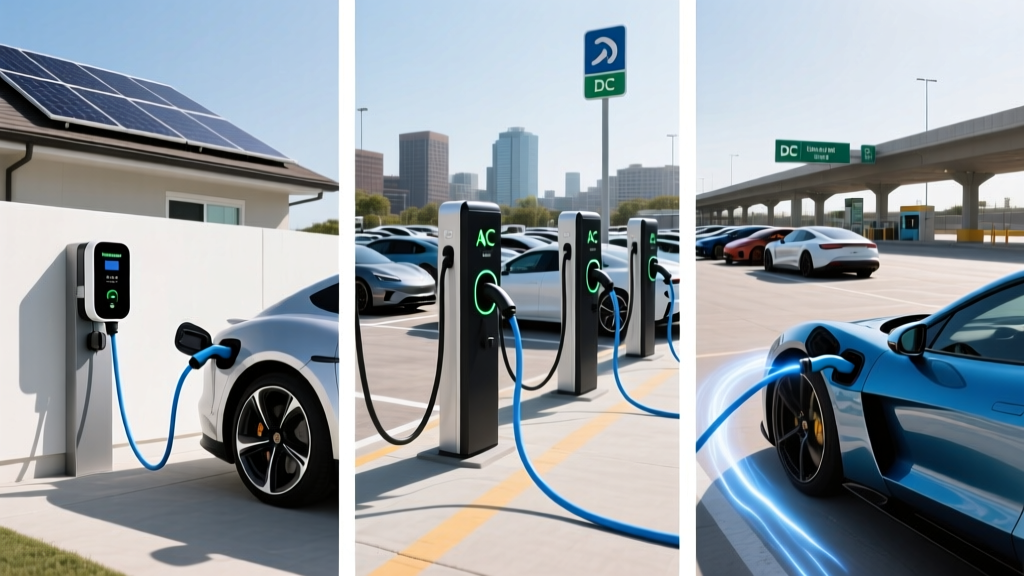
Charging Levels Explained: Speeds, Power, and Range Added Per Hour
EV charging is organized into three tiers. The critical distinction to understand first: kW (kilowatts) measures power — how fast energy flows into your battery. kWh (kilowatt-hours) measures energy — the total capacity stored in your battery. Think of kW as the width of a hose and kWh as the size of the bucket. A wider hose (more kW) fills the bucket faster, but the bucket size (kWh) determines how much total energy your EV can hold.
| Level | Voltage | Max Power (kW) | Miles of Range Added Per Hour | Typical Use Case |
|---|---|---|---|---|
| Level 1 | 120V AC | 1.4–1.9 kW | 3–5 miles | Overnight top-off, PHEVs, low-mileage drivers |
| Level 2 | 240V AC | 3.3–19.2 kW | 12–75 miles | Home daily charging, workplace, destinations |
| DC Fast | 400–800V DC | 50–350+ kW | 150–1,200+ miles (peak rate) | Road trips, highway corridors, quick stops |
Level 1 plugs into a standard household outlet and is included with most EVs. It is painfully slow for battery-electric vehicles (BEVs) with 75+ kWh batteries — a full charge can take 50+ hours — but it is adequate for plug-in hybrids with 10–18 kWh batteries or BEV owners who drive under 30 miles daily.
Level 2 is the workhorse of EV ownership. A 48-amp (11.5 kW) home charger adds roughly 35–45 miles of range per hour for most EVs, easily replenishing a day's driving overnight. This is what the vast majority of EV owners install at home.
DC fast charging bypasses the vehicle's onboard AC-to-DC converter and feeds direct current straight to the battery. Speeds vary enormously based on the vehicle's acceptance rate, battery state of charge, and ambient temperature. A peak rate of 250 kW does not mean sustained 250 kW — every EV tapers charging speed as the battery fills past roughly 80% state of charge (SoC) to protect cell health.
How Fast Will Each Charging Level Add Range?
Real-world charging speed depends on your vehicle's onboard charger capacity (for Level 1 and 2) and its DC fast-charge acceptance curve. Here are representative 10–80% charging times for common battery sizes at each level:
| Battery Size | Level 1 (1.4 kW) | Level 2 (11.5 kW / 48A) | Level 2 (7.7 kW / 32A) | DC Fast (peak rate) |
|---|---|---|---|---|
| 15 kWh (PHEV) | ~7.5 hours | ~1 hour | ~1.5 hours | N/A (most PHEVs lack DCFC) |
| 60 kWh (compact BEV) | ~35 hours | ~4.5 hours | ~6.5 hours | ~25–35 min at 150 kW peak |
| 82 kWh (midsize BEV) | ~48 hours | ~6 hours | ~9 hours | ~18–28 min at 250 kW peak |
| 100 kWh (large SUV/truck) | ~58 hours | ~7.5 hours | ~11 hours | ~22–40 min at 250–350 kW peak |
Home EV Charger Installation: Electrical Requirements, Costs, and Panel Upgrades
A Level 2 home charger is the single most impactful upgrade for EV ownership. Here is what the installation actually requires and costs in 2026.
Electrical Requirements
A standard Level 2 home charger runs on a 240-volt circuit — the same voltage as your electric dryer or oven. Most popular home chargers draw 32 amps or 48 amps, requiring a dedicated 40-amp or 60-amp circuit respectively (the National Electrical Code requires circuits rated at 125% of the continuous load, so a 48A charger needs a 60A breaker).
Key specifications your electrician will assess:
- Circuit amperage: 40A (for 32A chargers) or 60A (for 48A chargers)
- Wire gauge: Typically 6 AWG copper for 60A circuits; 8 AWG for 40A
- Outlet type: NEMA 14-50 (most common) or hardwired connection (required for 60A+ circuits and often preferred for reliability)
- Distance from panel: Longer wire runs increase material cost and may require thicker gauge wire
Do You Need a Panel Upgrade?
This is the make-or-break cost question. Most modern homes have a 200-amp main electrical panel, which can typically support a 60A EV charger circuit alongside existing loads. However, older homes with 100-amp service, homes with heavy existing loads (electric heating, hot tubs, multiple large appliances), or homes where the panel is at capacity will need a service upgrade.
A panel upgrade from 100A to 200A typically costs $1,500–$3,500 depending on your utility and local code requirements. In some cases, utilities require a new transformer or service drop, pushing costs higher. A licensed electrician will perform a load calculation to determine if your existing panel has sufficient headroom.
An increasingly popular alternative: load-management smart chargers that dynamically adjust charging amperage based on real-time household electricity use, avoiding the need for a panel upgrade in borderline cases.
| Cost Component | Simple Install (panel nearby, no upgrade) | Moderate Install (longer wire run, outlet) | Complex Install (panel upgrade required) |
|---|---|---|---|
| Charger equipment | $400–$700 | $400–$700 | $400–$700 |
| Electrician labor | $300–$600 | $600–$1,200 | $600–$1,200 |
| Electrical materials (wire, conduit, breaker) | $100–$250 | $250–$600 | $250–$600 |
| Permit and inspection | $50–$200 | $50–$200 | $50–$200 |
| Panel upgrade (if needed) | $0 | $0 | $1,500–$3,500 |
| Total estimated cost | $850–$1,750 | $1,300–$2,700 | $2,800–$6,200 |
The federal Alternative Fuel Vehicle Refueling Property Credit (IRS Form 8911) covers 30% of home charger equipment and installation costs, up to $1,000, for installations in qualifying census tracts. Check IRS guidelines for eligibility, as the census-tract requirement significantly limits who qualifies.
Which Connector Is Compatible With My EV?
The North American charging connector landscape has consolidated significantly since 2023, when Ford and GM began adopting Tesla's North American Charging Standard (NACS). As of 2026, NACS is the dominant light-vehicle connector, but CCS1 and CHAdeMO vehicles remain on the road and at many public stations.
| Connector | Brands Using It (2026) | Notes |
|---|---|---|
| NACS (Tesla) | Tesla, Ford, GM, Rivian, Volvo, Polestar, Mercedes-Benz, Hyundai/Kia, BMW, Toyota, Subaru, Lucid, Fisker | Native NACS on new models from most brands; some 2024–2025 models use CCS with included NACS adapter |
| CCS1 | Remaining Stellantis models, some VW/ID.4 (transitioning), legacy 2018–2024 EVs | Adapters available for NACS stations; Electrify America retains CCS cables |
| CHAdeMO | Nissan Leaf (legacy only — Nissan moving to NACS for future models) | Declining infrastructure; new CHAdeMO stations are rare |
Total Charging Cost: Per-Mile Breakdown vs. Gasoline
The economic case for EV charging hinges on where and when you charge. Home charging on off-peak electricity rates delivers the lowest cost per mile; DC fast charging on road trips narrows the gap with gasoline but rarely exceeds it.
| Scenario | Avg $/kWh | Cost per Mile (at 3.0 mi/kWh) | Cost to Add 200 Miles |
|---|---|---|---|
| Home, off-peak utility rate | $0.08–$0.14 | $0.027–$0.047 | $5.30–$9.40 |
| Home, standard residential rate | $0.14–$0.20 | $0.047–$0.067 | $9.40–$13.40 |
| Home with solar (marginal cost) | $0.00–$0.05 | $0.000–$0.017 | $0.00–$3.40 |
| Public Level 2 (workplace, destination) | $0.20–$0.40 | $0.067–$0.133 | $13.40–$26.60 |
| DC fast charging (Electrify America, EVgo, Tesla) | $0.30–$0.55 | $0.100–$0.183 | $20.00–$36.60 |
| Gasoline comparison (28 MPG, $3.40/gal) | — | $0.121 | $24.28 |
At 3.0 miles per kWh (a realistic average for midsize BEVs like the Tesla Model Y, Hyundai IONIQ 5, or Ford Mustang Mach-E), home charging at $0.14/kWh costs roughly $0.047 per mile — about 60% cheaper than gasoline at $3.40/gallon in a 28 MPG vehicle. Over 12,000 annual miles, that translates to roughly $560 per year for home-charged electricity versus $1,457 for gasoline.
However, if you rely exclusively on DC fast charging at $0.45/kWh, your per-mile cost rises to $0.15 — more expensive than the gas car. This is why home charging access is the single most important economic factor in EV ownership.
For the most current efficiency ratings across all EV models, fueleconomy.gov provides official EPA MPGe and kWh/100-mile figures you can use to calculate your personal cost per mile.
Equipment Recommendations: 2026 Home Charger Picks
The home charger market in 2026 is mature, with reliable options spanning $350–$700. Here are four widely recommended units with specific capabilities:
Tesla Wall Connector (Gen 4)
Power: Up to 48A (11.5 kW on 240V)
Connector: NACS native
Cable length: 24 feet
Smart features: Wi-Fi, OTA updates, load sharing with multiple units, access control
Price: ~$475
Best for: NACS-equipped vehicles, Tesla owners, multi-EV households using load sharing
ChargePoint Home Flex (2nd Gen)
Power: Configurable 16A–50A (up to 12 kW)
Connector: NACS (CCS adapter available)
Cable length: 23 feet
Smart features: Wi-Fi, app scheduling, Alexa integration, detailed energy reporting
Price: ~$550–$650
Best for: Adjustable amperage to match available circuit capacity, robust app
Emporia Vue Level 2 Charger
Power: Up to 48A (11.5 kW)
Connector: NACS
Cable length: 24 feet
Smart features: Solar integration, load management, energy monitoring via Emporia Vue panel
Price: ~$400–$500
Best for: Homes with solar panels, budget-conscious buyers wanting smart features
Grizzl-E Smart (United Chargers)
Power: Up to 40A (9.6 kW)
Connector: NACS (CCS adapter available)
Cable length: 24 feet
Smart features: OCPP-compatible, adjustable amperage, extreme cold rating (-40°F)
Price: ~$450–$550
Best for: Cold-climate durability, outdoor installations, Canadian/Northern US owners
When selecting a charger, match the amperage to your available circuit. A 48A charger requires a 60A breaker and 6 AWG wire. If your panel only supports a 40A circuit, choose a 32A charger. Hardwired installations eliminate the NEMA 14-50 receptacle as a potential failure point and are required by code for circuits above 50A.
Safety, Code Compliance, and Installation Best Practices
EV charging is a continuous high-amperage load — your charger will draw maximum current for hours at a stretch, which is more demanding than intermittent loads like a dryer. This makes proper installation non-negotiable.
Key safety and code considerations:
- Dedicated circuit: Your EV charger must be on its own dedicated breaker — never shared with other appliances.
- GFCI protection: The 2023 NEC update requires GFCI protection for EV charging outlets (not hardwired units). Some chargers have built-in GFCI; confirm with your electrician.
- Outdoor rating: If installing outdoors or in an unenclosed carport, choose a charger rated NEMA 4 (weatherproof). All four picks above carry outdoor ratings.
- Permit and inspection: Most jurisdictions require an electrical permit for new 240V circuits. Your electrician typically handles this. The inspection ensures wire gauge, breaker size, and grounding meet code.
- NEMA 14-50 quality: If using a receptacle rather than hardwiring, specify a commercial-grade (industrial) NEMA 14-50 outlet. Residential-grade receptacles have been linked to overheating under continuous EV charging loads. Brands like Hubbell and Bryant make heavy-duty versions.
Frequently Asked Questions
How much does it cost to install a home EV charger?
A straightforward Level 2 installation with an adequate existing panel runs $850–$1,750 including equipment, labor, materials, and permit. If your electrical panel needs a service upgrade from 100A to 200A, total costs range from $2,800–$6,200. The federal refueling property credit (30% up to $1,000, subject to census-tract eligibility) can offset a portion of this cost.
Which connector/charger is compatible with my EV?
For 2026 model-year vehicles, NACS is the dominant standard — Tesla, Ford, GM, Hyundai, Kia, Rivian, BMW, and most other brands now use it natively. If you own a 2022–2025 model with a CCS1 port, a CCS-to-NACS adapter ($150–$250) enables Supercharger access. CHAdeMO is limited to the legacy Nissan Leaf. Check your owner's manual or the charge port badge to confirm your vehicle's native connector.
How much does charging cost per mile vs gas?
Home charging at average residential rates ($0.14/kWh) costs roughly $0.047 per mile in a midsize BEV — about 60% less than gasoline at $3.40/gallon in a 28 MPG vehicle ($0.121/mile). DC fast charging at $0.45/kWh costs $0.15/mile, which can exceed gasoline. Your total charging cost advantage depends heavily on home charging access and local electricity rates.
What electrical upgrades might I need?
The most common upgrade is a panel service increase from 100A to 200A, needed in older homes or those with heavy existing loads. Your electrician will perform a NEC Article 220 load calculation. Alternatives include installing a lower-amperage charger (32A instead of 48A) to fit existing capacity, or using a smart load-management system that dynamically reduces charging current when other household loads spike.
Can I use a regular 120V outlet for daily charging?
Yes, but with limitations. Level 1 at 120V adds only 3–5 miles of range per hour. For a BEV with an 82 kWh battery, a full charge takes roughly 48 hours. Level 1 works for PHEVs with small batteries or BEV owners who drive under 30 miles per day and can charge overnight (12 hours × 4 miles = ~48 miles recovered). For anything beyond that, Level 2 is strongly recommended.