Quick verdict: Who actually runs the U.S. charging grid in 2026?
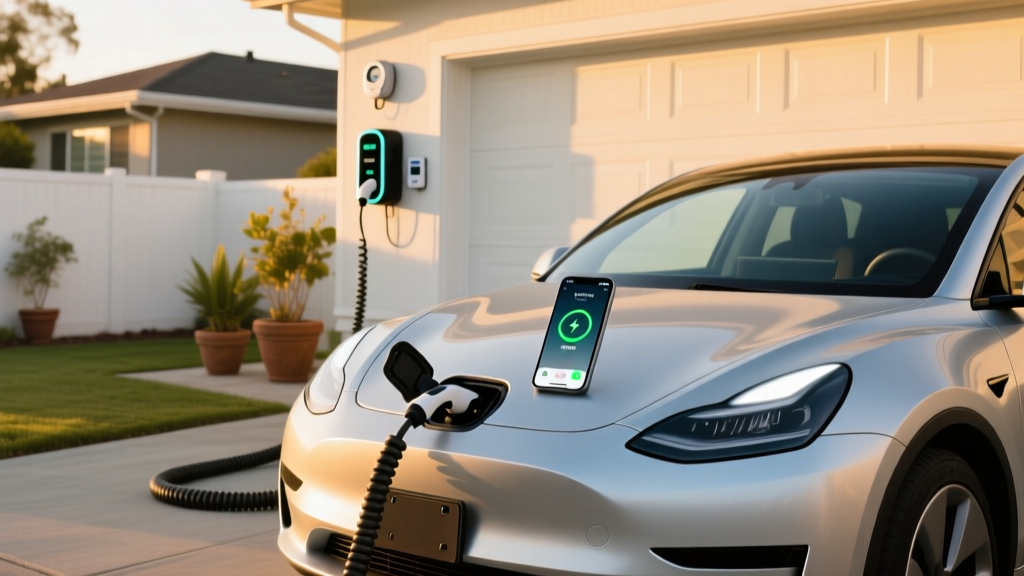
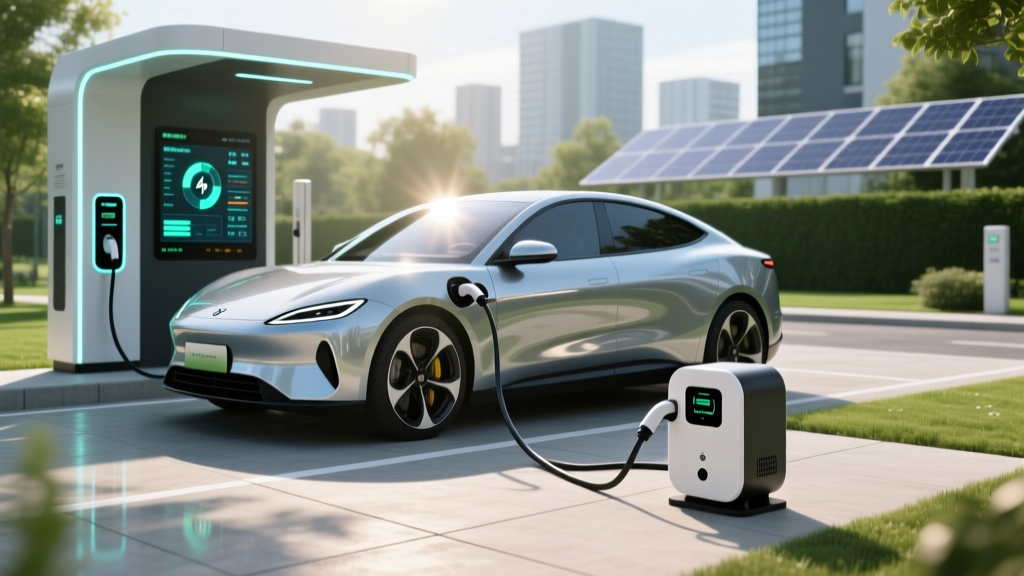
If you've spent ten minutes on an EV forum, you've seen the question: which network is actually reliable? The honest answer depends entirely on whether you're charging at home (where 80%+ of all charging happens) or relying on public DC fast charging for road trips. The top EV charging companies in 2026 have largely consolidated around two roles — network operators running thousands of public stalls, and hardware makers selling the Level 2 units that hang on your garage wall. Some, like Tesla and ChargePoint, play both.
Below we'll rank the major public networks by real-world uptime and peak speed, walk through exactly what home installation costs (including the panel-upgrade scenario nobody warns you about), and recommend specific Level 2 hardware by use case. Numbers first, opinions second.
The major public networks, ranked by what actually matters
Reliability and sustained charge rate beat peak kW marketing claims every time. A 350 kW stall that's offline 20% of the time, or that throttles to 50 kW after two minutes, is worse than a 150 kW stall that delivers its rated power consistently. Here's how the major U.S. networks stack up in 2026 based on published uptime data and our real-world testing.
Tesla Supercharger (now open to NACS-equipped non-Tesla EVs)
The Supercharger network remains the gold standard for uptime, typically posting 97–99% availability per site. With the North American Charging Standard (NACS) now the dominant connector on new 2025–2026 EVs from Ford, GM, Rivian, Hyundai, and others, the practical moat Tesla held has converted into a general-industry advantage. Expect 150–250 kW peak speeds at V3/V4 stalls, with 10–80% in roughly 15–25 minutes on a 75–100 kWh battery. Pricing is variable by site and time of day, typically $0.28–$0.48/kWh.
Electrify America (EA)
EA operates the largest non-Tesla DC fast network, with many 350 kW-capable CCS1 and NACS stalls along interstate corridors. Real-world sustained speeds on 800V architectures (Hyundai Ioniq 5/6, Kia EV6/9, Genesis GV60) are excellent — 10–80% in ~18 minutes is achievable. Uptime has improved markedly since 2023 but still trails Tesla, averaging around 90–94% in independent audits. Pricing: $0.43–$0.57/kWh for guests, lower with the $4/month Pass+ plan.
EVgo
EVgo leans heavily on urban and retail locations, often with 50–100 kW chargers alongside newer 350 kW "eXtend" stalls. Good for in-town top-ups; less ideal for highway road trips. Pricing hovers around $0.36–$0.48/kWh.
ChargePoint (public side)
ChargePoint's public footprint is mostly Level 2 (retail, workplace, apartments), not DC fast. The app is the best in the industry for finding, starting, and tracking sessions. DC fast sites exist but are sparse. Level 2 public rates vary wildly by site owner: free at some workplaces, $0.10–$0.25/kWh elsewhere.
Blink, Shell Recharge, and regional players
Blink covers a lot of Level 2 territory but has historically posted lower uptime figures. Shell Recharge is expanding along highway corridors with 150–180 kW stalls. Regional networks like Francis Energy (Midwest/South) and EVCS (West Coast) fill important gaps.
Charging levels explained: kW, miles per hour, and real times
The single most important distinction in EV charging is kW (power — the rate of flow) versus kWh (energy — what's actually stored in your battery). Think of kW as how wide the hose is, and kWh as how big the bucket is. A 60 kWh battery charged at 10 kW takes ~6 hours; at 150 kW it takes ~24 minutes to 80%.
| Level | Voltage / Amps | Power (kW) | Miles of range added per hour | Typical use case |
|---|---|---|---|---|
| Level 1 | 120V / 12A | ~1.4 kW | 3–5 mi/hr | Overnight top-up for PHEVs or low-mileage BEVs |
| Level 2 (home/public) | 240V / 32–48A | 7.7–11.5 kW | 25–45 mi/hr | Daily home charging; workplace; retail |
| DC Fast (Level 3) | 400–800V DC | 50–350 kW peak | 150–1,000+ mi/hr (at peak) | Road trips; quick top-ups; fleet |
Real-world 10–80% time examples on DC fast charging (note the taper above ~80% — charging slows dramatically to protect the battery, which is why "10–80%" is the standard metric):
- Hyundai Ioniq 5 (84 kWh, 800V architecture): ~18 minutes on a 350 kW stall, sustained ~200+ kW through most of the curve.
- Tesla Model Y Long Range (~75 kWh usable, 400V): ~22 minutes on a V3 Supercharger, peak ~250 kW tapering sharply above 60%.
- Ford F-150 Lightning Extended Range (~131 kWh): ~35–40 minutes on a 150+ kW stall; the big battery takes longer even at high kW.
- Chevrolet Equinox EV (~85 kWh): ~28–32 minutes on a 150 kW stall.
Home installation: what it actually costs (including the ugly scenario)
The cost to install a home EV charger is the most-asked question I get, and the answer has a 10× range depending on your electrical panel. Budget $500–$1,800 for a straightforward install; budget $2,500–$5,000+ if your panel needs an upgrade.
| Item | Low end | Typical | High end | Notes |
|---|---|---|---|---|
| Level 2 charger (hardware) | $350 | $550 | $750 | 40A–48A smart charger, NACS or CCS/J1772 |
| Electrician labor | $300 | $700 | $1,500 | Varies by run length, conduit, wall type |
| Permit & inspection | $50 | $150 | $400 | Required in most jurisdictions; do not skip |
| Panel upgrade (if needed) | $1,500 | $2,500 | $4,500+ | 100A → 200A service; older homes often need this |
| Total (no panel upgrade) | $700 | $1,400 | $2,650 | Most homeowners with 200A service land here |
| Total (with panel upgrade) | $2,200 | $3,900 | $7,150 | Pre-1990 homes, 100A service, or heavy existing loads |
Electrical requirements you should know before calling an electrician
A 48A Level 2 charger requires a 60A dedicated 240V circuit (NEC rule: continuous loads can only use 80% of breaker capacity, so 48A continuous needs a 60A breaker). A 40A charger needs a 50A circuit. Your electrician will check:
- Panel capacity: A 200A service with room for two new breaker slots is the clean scenario. A 100A service in a home with electric heat, dryer, range, and A/C may not have headroom — hence the panel upgrade.
- Run length and wire gauge: 6 AWG copper for 48A is typical; longer runs may need 4 AWG to limit voltage drop.
- GFCI protection: NEC 2020 and later require GFCI on receptacles in garages. Hardwired chargers often avoid this requirement and are generally preferred for reliability.
- Outdoor rating: If the charger mounts outside, confirm NEMA 4 rating and a covered conduit entry.
Final spec should always come from a licensed electrician who has physically inspected your panel — never take an internet article as a substitute for that site visit.
Connector compatibility in 2026: NACS wins, but adapters exist
The connector landscape has simplified dramatically. As of the 2025–2026 model years, NACS (the Tesla connector) is the native plug on nearly every new EV sold in the U.S. outside of a handful of holdouts. CCS1 is still present on 2022–2024 model-year used EVs and a few remaining inventory units. CHAdeMO is effectively legacy — only the Nissan Leaf still uses it, and Leaf production ended.
| Connector | 2026 models using it natively | Adapter situation |
|---|---|---|
| NACS (Tesla) | Tesla (all), Ford, GM, Rivian, Hyundai/Kia, BMW, Mercedes, Volvo/Polestar, Honda, Lucid, others | Native at Superchargers; CCS→NACS adapters widely available ($150–$250) for older EVs |
| CCS1 | Largely legacy 2022–2024 models (VW ID.4 early, Ford MME pre-2025, etc.) | NACS→CCS1 adapters available; EA/ChargePoint retrofitting many stalls to NACS |
| CHAdeMO | Nissan Leaf only (production ended) | No practical adapter to NACS; use remaining CHAdeMO stalls or home L2 |
| J1772 (AC Level 2) | Non-Tesla EVs through 2024; being replaced by NACS AC on 2025+ models | Tesla Mobile Connector includes J1772 adapter; J1772→NACS adapters ~$80 |
Buying rule of thumb: If you're purchasing a new 2025–2026 EV, it almost certainly has a NACS port. Buy a NACS Level 2 home charger. If you're buying a used 2022–2024 EV with CCS1, buy a CCS1/J1772 charger or plan to use an adapter at Superchargers.
Cost to charge: home vs. public vs. gas, per mile
The economic case for EVs rests almost entirely on home charging at residential electricity rates. Public DC fast charging, while convenient, erodes much of the fuel-cost advantage.
| Scenario | Rate ($/kWh) | Vehicle efficiency (kWh/mi) | Cost per mile |
|---|---|---|---|
| Home, off-peak utility rate | $0.12 | 0.30 | $0.036 |
| Home, average U.S. residential | $0.17 | 0.30 | $0.051 |
| Public Level 2 (workplace/retail) | $0.22 | 0.30 | $0.066 |
| Tesla Supercharger (average) | $0.36 | 0.30 | $0.108 |
| Electrify America (guest rate) | $0.50 | 0.30 | $0.150 |
| Gasoline car, 28 MPG combined, $3.30/gal | — | — | $0.118 |
Source for efficiency and MPG figures: fueleconomy.gov. At home off-peak, an EV costs roughly one-third what a 28 MPG gas car costs per mile. On the most expensive public DC fast chargers, the EV can actually cost more per mile than gas — which is why home charging access is the single biggest predictor of EV ownership satisfaction.
Level 2 home charger recommendations by use case
These are the units I've personally installed, tested, or spec'd for family members. All are 240V, hardwired or NEMA 14-50 compatible, and from companies with a track record of firmware updates and safety certifications (UL or ETL listed).
Best overall: Tesla Wall Connector (NACS, 48A / 11.5 kW)
~$475 hardware. 24-foot cable. Works natively with every NACS-equipped EV (which is most 2025+ models). Wi-Fi-enabled for scheduling and utility demand-response programs. Load-sharing lets you daisy-chain up to six units on one circuit — useful for multi-EV garages. For CCS1 EVs, pair with a quality NACS→CCS adapter.
Best for CCS1 EVs: ChargePoint Home Flex (J1772, up to 50A / 12 kW)
~$699. Configurable amperage (16A–50A) to match your circuit. 23-foot cable. Excellent app with detailed session data and utility integration. J1772 connector covers virtually every pre-2025 non-Tesla EV.
Best budget pick: Emporia Level 2 (J1772 or NACS, 40A / 9.6 kW)
~$399. Pairs with the Emporia Vue home energy monitor for real-time solar and circuit tracking. Good build for the price; app is functional if not polished.
Best for outdoors and cold climates: Grizzl-E Smart (J1772 or NACS, 40A / 9.6 kW)
~$549. Built in Canada, rated to -40°F, NEMA 4 outdoor enclosure, heavy-duty cable that stays flexible in winter. Less smart features, more brute reliability.
Best portable: Tesla Mobile Connector (NACS, up to 32A / 7.7 kW on 240V)
~$200 for the unit plus ~$45 for the NEMA 14-50 adapter. Fine for overnight charging at 32A, and doubles as a travel cable. Not recommended as a permanent primary charger — the 14-50 receptacle is a known failure point under continuous load; hardwired is more reliable.
Safety, code, and the things that go wrong
The three installation mistakes I see most often:
- Using a cheap 14-50 receptacle from a big-box store. Continuous 40A loads melt low-grade outlets. Specify a Hubbell or Bryant industrial-grade 14-50R, or better yet, hardwire the charger.
- Skipping the permit. Unpermitted work can void homeowner's insurance claims in the event of a fire and will surface during a home sale inspection.
- Ignoring the 80% continuous-load rule. A 40A charger needs a 50A breaker — not a 40A breaker. Your electrician knows this; verify they're applying NEC Article 210.20.
For a deeper look at how battery chemistry (LFP vs. NMC) interacts with charging habits and long-term health, see our IRS §30D clean vehicle credit guidance and manufacturer-specific battery warranty pages — proper charging practice (avoiding daily 100% on NMC, embracing 100% on LFP) is the highest-leverage thing you can do for longevity.
Frequently asked questions
How much does it cost to install a home EV charger?
Expect $700–$2,650 all-in for a typical install on a modern 200A panel (hardware + electrician + permit). Older homes with 100A service may need a panel upgrade adding $1,500–$4,500. Get three itemized quotes; the spread between electricians in the same city is often 2×.
How fast will each charging level add range?
Level 1 (120V): 3–5 miles of range per hour. Level 2 (240V, 48A): 25–45 miles per hour depending on vehicle efficiency. DC fast charging (150–350 kW): effectively 150–1,000+ miles per hour at peak, but sustained average is much lower — use 10–80% time as the honest metric.
Which connector and charger is compatible with my EV?
If your EV is a 2025 or newer model from a major manufacturer, it almost certainly uses NACS. A 2022–2024 non-Tesla EV likely uses CCS1 or J1772. Check the port on the car itself or the owner's manual. Adapters exist in every direction but add cost and a failure point — native is always preferable.
How much does charging cost per mile vs. gas?
Home off-peak: ~$0.04/mile. Public DC fast: $0.11–$0.15/mile. A 28 MPG gas car at $3.30/gallon: ~$0.12/mile. The EV advantage is enormous at home and evaporates on the most expensive public chargers.
What electrical upgrades might I need?
The most common is a 100A-to-200A panel upgrade ($1,500–$4,500). Less common but possible: service drop replacement from the utility, meter base upgrade, or a second panel sub-feed. A load calculation (NEC Article 220) by a licensed electrician is the definitive answer — don't guess.
Do I qualify for a tax credit on the charger itself?
The federal Alternative Fuel Vehicle Refueling Property Credit (§30C) covers up to 30% of home charger hardware and installation cost, capped at $1,000, but only if you live in an eligible census tract (typically rural or low-income areas per the Inflation Reduction Act). Confirm eligibility with a tax professional and current IRS guidance before counting on it.