The Reality Behind the 'Top 10 EV Charging Companies' Rankings
Every year, industry publications release lists of the top EV charging companies, often focusing on stock performance, venture capital funding, or total number of ports deployed. But for a driver staring at a 15% battery in a rural charging desert, market cap is irrelevant. What matters is uptime, charge curve consistency, and whether the stall actually delivers the 350 kW promised on the signage.
As we move through 2026, the landscape has shifted dramatically. The adoption of the North American Charging Standard (NACS) has nearly eliminated the CCS vs. Tesla debate for new buyers, and home charging hardware has become more affordable and reliable. This guide moves beyond the corporate rankings to provide a technical, data-driven look at the hardware and networks you actually use.
Charging Levels: Speed, Power, and Reality
The most common point of confusion for new EV owners is the difference between power (kW) and energy (kWh). Think of kW as the speed of the water flowing from a hose, and kWh as the size of the bucket you're filling. A 100-kWh battery (a large bucket) will take longer to fill than a 40-kWh battery, even if the hose (kW) is the same size.
| Level | Voltage | Power (kW) | Miles Added per Hour | Best Use Case |
|---|---|---|---|---|
| Level 1 | 120V AC | 1.2 - 1.9 kW | 3 - 5 miles | Overnight top-ups, PHEVs |
| Level 2 (Home/Public) | 240V AC | 7.2 - 19.2 kW | 25 - 70 miles | Daily primary charging |
| DC Fast Charging | 400V - 800V DC | 50 - 350+ kW | 150 - 1,200+ miles | Road trips, commercial fleets |
The Charge Curve Reality
Manufacturers advertise peak charge rates, but batteries don't charge at a constant speed. A 250 kW peak rate might only be sustained between 10% and 40% State of Charge (SoC). After 80%, the vehicle's Battery Management System (BMS) aggressively tapers the speed to protect the cells from lithium plating and excessive heat. Always plan your road-trip stops based on the 10-80% time, not the 0-100% time.
Home Installation: Electrical Requirements and Costs
Installing a Level 2 home charger is the single most impactful upgrade for an EV owner. However, the "plug and play" marketing often hides the reality of older home electrical systems. Most modern Level 2 chargers recommend a 60-amp dedicated circuit to deliver 48 amps of continuous power (11.5 kW at 240V).
Panel Upgrades and Load Calculations
If your home has a 100-amp main panel, adding a 60-amp EV circuit may trigger a panel upgrade to 200 amps. This is a major expense and a frequent point of frustration for buyers in homes built before 2000. Some newer smart chargers offer load management features that monitor your home's total usage and throttle the charger if the house nears its limit, potentially avoiding a panel upgrade.
Estimated 2026 Installation Costs
| Item | Cost Range | Notes |
|---|---|---|
| Level 2 Hardware (40A-48A) | $400 - $750 | Smart WiFi-enabled models |
| Electrician Labor (Simple) | $500 - $1,200 | Short run from panel to garage |
| Electrical Permit | $100 - $300 | Varies by municipality |
| Panel Upgrade (If needed) | $2,000 - $4,500 | Required for older 100A services |
| Total (Typical) | $1,000 - $6,500 | Excluding utility rebates |
Connector Compatibility: NACS, CCS, and CHAdeMO
As of 2026, the North American Charging Standard (NACS) is the dominant connector for new vehicles. Most legacy CCS1 vehicles now require an adapter to access the expansive Tesla Supercharger network, which has opened its stalls to non-Tesla vehicles.
| Connector | Primary Brands (2026) | Network Access |
|---|---|---|
| NACS (Tesla) | Tesla, Ford, Rivian, GM, Hyundai/Kia | Superchargers, Electrify America, EVgo |
| CCS1 | VW ID.4 (older), BMW i4, Legacy Models | Electrify America, ChargePoint, EVgo |
| CHAdeMO | Nissan Leaf (Discontinued/Legacy) | Limited; primarily older stations |
Equipment Recommendations: 2026 Top Picks
When selecting a home charger, prioritize build quality, cable length (24ft is ideal for reaching all driveway positions), and smart features that allow for scheduled charging during off-peak utility hours.
1. Emporia Vue Level 2 Smart Charger
Power: 48A / 11.5 kW | Price: ~$400 | Features: Excellent load management and energy monitoring. Often cited in "top 10" lists for its value-to-feature ratio.
2. ChargePoint Home Flex (NACS)
Power: 50A / 12 kW | Price: ~$600 | Features: Robust app, adjustable amperage (up to 50A), and high reliability for outdoor installations.
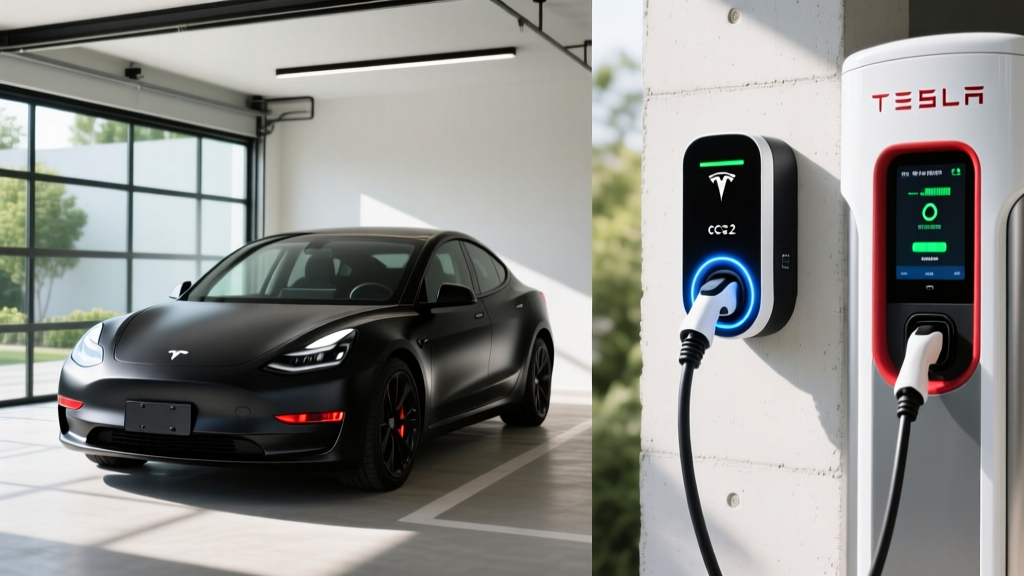
3. Tesla Wall Connector
Power: 48A / 11.5 kW | Price: ~$450 | Features: Integrated NACS cable, sleek design, and power-sharing for multi-charger setups.
The Economics: Cost per Mile vs. Gas
The financial advantage of an EV depends entirely on where you charge. Home charging remains the most economical, while DC Fast Charging on the highway can sometimes rival the cost of premium gasoline.
| Scenario | Rate ($/kWh) | Efficiency (3 mi/kWh) | Cost per Mile |
|---|---|---|---|
| Home (Off-Peak) | $0.15 | 3.0 miles | $0.05 |
| Public Level 2 | $0.35 | 3.0 miles | $0.12 |
| DC Fast Charging | $0.55 | 3.0 miles | $0.18 |
| Gas Car (30 MPG @ $3.50/gal) | N/A | 30 miles | $0.12 |
Public Networks: Reliability and Uptime
While "top 10" lists often rank companies by size, owners rank them by reliability. PlugShare remains the essential tool for checking real-time stall status. In 2026, the Electrify America and Tesla Supercharger networks continue to lead in uptime, while ChargePoint dominates the destination and workplace Level 2 market. Always check for "Plug and Charge" compatibility, which allows the vehicle to authenticate and start billing automatically without using an app or RFID card.
Frequently Asked Questions
How much does it cost to install a home EV charger?
For a standard installation near your electrical panel, expect to pay between $1,000 and $2,000 (including hardware). If your home requires a 200-amp panel upgrade, costs can reach $5,000 or more.
How fast will each charging level add range?
Level 1 adds roughly 4 miles per hour. Level 2 (48A) adds roughly 35-45 miles per hour. DC Fast Charging can add 200+ miles in 15-20 minutes, depending on the vehicle's peak acceptance rate.
Which connector/charger is compatible with my EV?
Most 2025-2026 models use NACS. If you drive an older CCS-equipped vehicle, you will likely need a CCS-to-NACS adapter to access the Supercharger network, which is now the largest in North America.
How much does charging cost per mile vs gas?
At home, EVs cost about $0.05 per mile—significantly less than gas vehicles at $0.12+ per mile. However, exclusive use of DC Fast Charging can make EV costs equal to or higher than gas.
What electrical upgrades might I need?
You may need a dedicated 60-amp circuit breaker and heavier gauge wiring. If your main service panel is already near capacity (common in older homes with electric heating), a "heavy-up" to 200 amps may be required by code.
Final Thoughts on Choosing a Provider
When looking at the top EV charging companies, prioritize those that offer transparent pricing, high uptime guarantees, and integration with your specific vehicle's navigation system. For home use, invest in a high-quality, WiFi-enabled Level 2 charger that can be managed via your utility's demand-response programs to maximize your annual savings.