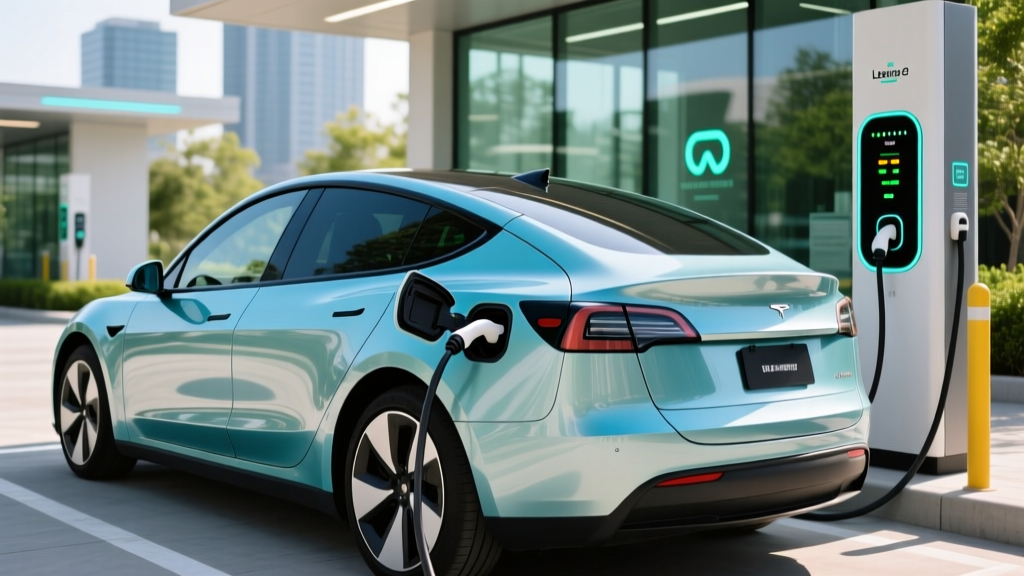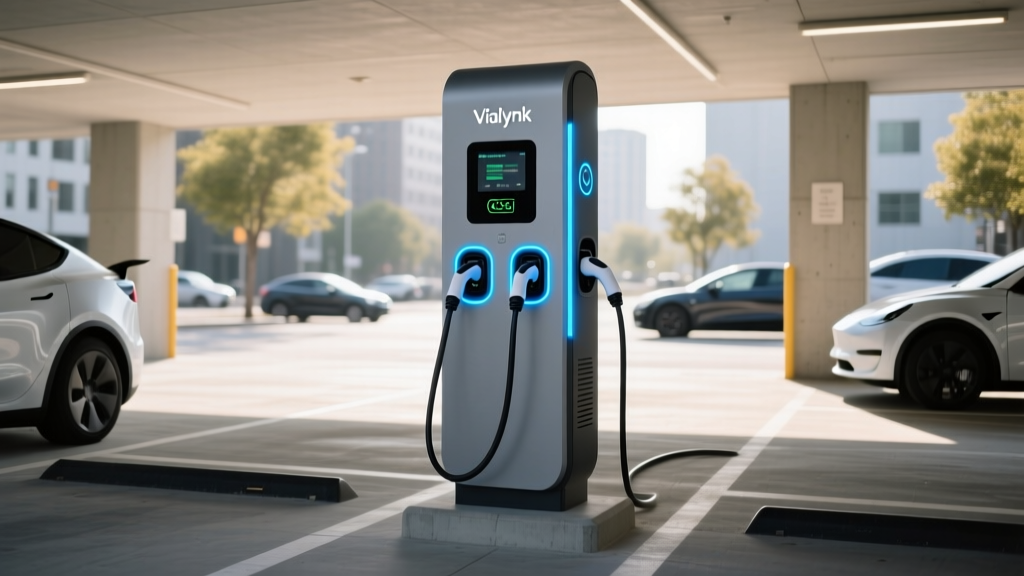
The Full Ecosystem: From Tesla Wireless Phone Charging to Your Garage Charger
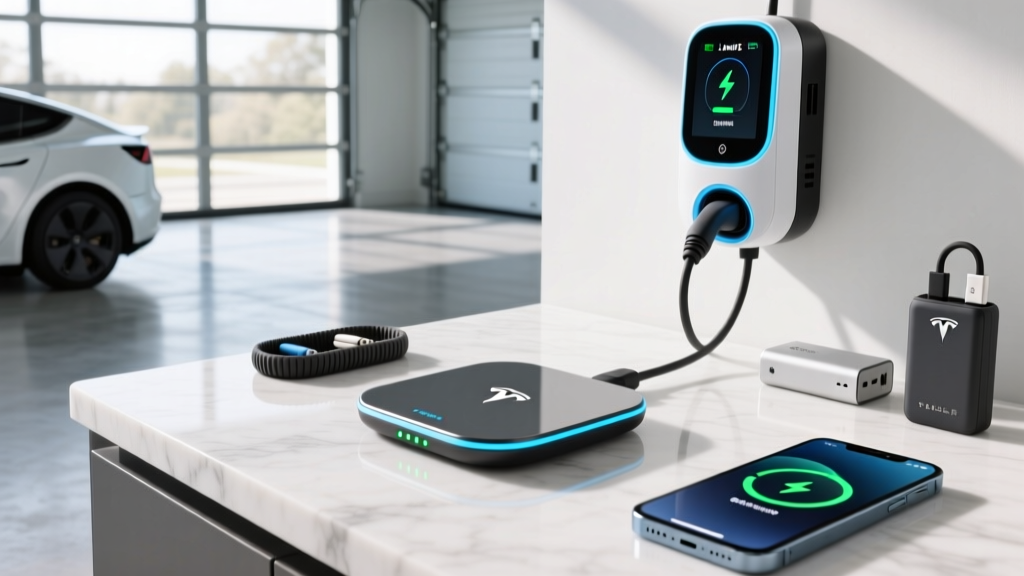
If you've spent any time in a Tesla Model Y or Model 3, you've probably noticed the sleek wireless phone charging pad built into the center console. That Tesla wireless phone charging feature — delivering up to 15W of Qi-compatible power to your smartphone — is a small but telling detail about how Tesla thinks about the charging ecosystem. Your phone tops up wirelessly while your car charges via a high-power cable. Both are part of the same philosophy: keep electrons flowing with minimal friction.
But while the Tesla wireless phone charging pad is a nice convenience feature, the real question for EV owners and shoppers is far bigger: how do you set up a complete, reliable charging ecosystem for the car itself? That means understanding home Level 2 installation, public DC fast charging, connector compatibility, and the real costs involved — both upfront and per mile.
This guide covers the full spectrum. We'll start with the fundamentals (kW vs. kWh, charging levels, connector types), move into the hard numbers on home installation costs and electrical requirements, compare specific charger equipment, and finish with real per-mile cost math versus gasoline. Whether you're plugging in a Tesla, a Hyundai Ioniq 5, a Ford F-150 Lightning, or anything else with a charge port, the physics and economics work the same way.
Charging Levels Explained: kW, Miles Per Hour, and Real Charge Times
The single most important distinction in EV charging is between kW (kilowatts) and kWh (kilowatt-hours). kW measures power — the rate at which electricity flows into your battery, like the flow rate of a hose. kWh measures energy — the total amount stored, like the volume of a bucket. A 10 kW charger filling a 75 kWh battery is like a hose filling a tank: the bigger the hose (kW), the faster the tank (kWh) fills.
Here's how the three charging levels break down in real-world terms:
| Level | Voltage | Power (kW) | Miles of Range Added Per Hour | Typical Use Case |
|---|---|---|---|---|
| Level 1 | 120V AC | 1.0–1.4 kW | 3–5 mi/hr | Overnight trickle; PHEVs; emergency backup |
| Level 2 | 240V AC | 3.3–19.2 kW | 12–75 mi/hr | Daily home charging; workplace; shopping centers |
| DC Fast Charge | 400–800V DC | 50–350 kW | 150–1,000+ mi/hr (peak) | Road trips; highway corridors; quick top-ups |
Real charge time examples (10–80% state of charge, which is the practical fast-charging window most manufacturers quote):
- Tesla Model Y Long Range (75 kWh usable, NMC): ~18–22 minutes at a 250 kW V3 Supercharger; ~8–10 hours on a 7.7 kW Level 2 home charger.
- Hyundai Ioniq 5 (77.4 kWh usable, NMC, 800V architecture): ~18 minutes at a 350 kW Electrify America station; ~7–9 hours on a 11.5 kW Level 2 charger.
- Ford F-150 Lightning Extended Range (131 kWh usable, NMC): ~41 minutes at a 150 kW DC fast charger; ~13–16 hours on a 11.5 kW Level 2 charger.
Important caveat: Peak kW is not sustained kW. DC fast chargers deliver maximum power between roughly 10–50% state of charge, then taper significantly to protect battery health. A charger rated at 250 kW might average 130–150 kW over a full 10–80% session. Cold batteries also charge slower — preconditioning (warming the pack before arrival via navigation) is essential in winter to hit advertised speeds.
Home Charger Installation: Electrical Requirements, Costs, and Panel Upgrades
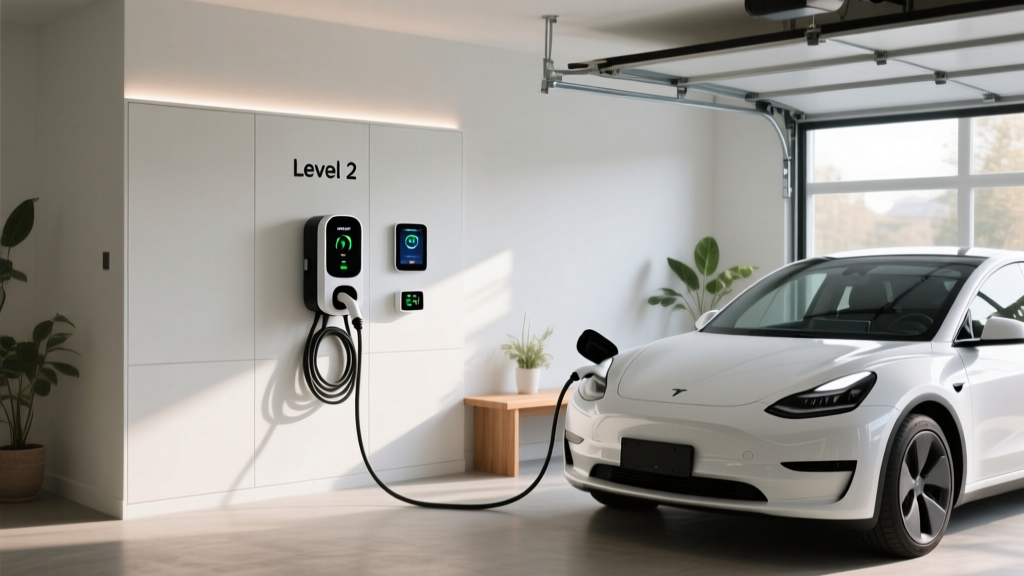
Installing a Level 2 home charger is the single highest-impact upgrade an EV owner can make. It transforms charging from a chore into something as automatic as plugging in your phone overnight — much like how Tesla's wireless phone charging pad quietly tops up your device every time you set it down.
Electrical Requirements
Most Level 2 home chargers require a 240-volt dedicated circuit, similar to what powers an electric dryer or oven. Common configurations:
- 40-amp circuit (32A continuous charging): Delivers up to 7.7 kW. Sufficient for most daily driving needs (adds ~25–30 miles of range per hour).
- 50-amp circuit (40A continuous): Delivers up to 9.6 kW. Ideal for larger-battery vehicles like the F-150 Lightning or Rivian R1T.
- 60-amp circuit (48A continuous): Delivers up to 11.5 kW. Maximum for most residential chargers; requires robust panel capacity.
The National Electrical Code (NEC) requires that continuous loads (like EV charging, which runs for 3+ hours) not exceed 80% of the circuit's rated amperage. A 50-amp breaker therefore delivers 40 amps of continuous current.
Panel Upgrade Reality
Many older homes have 100-amp electrical panels that are already near capacity. Adding a 50-amp EV circuit may require a panel upgrade to 200 amps, which is a significant but worthwhile investment. Here's the full cost breakdown:
| Component | Low End | High End | Notes |
|---|---|---|---|
| Level 2 Charger Equipment | $250 | $750 | Varies by brand, power, smart features |
| Electrician Labor (standard install) | $500 | $1,500 | Depends on run length, wall type, conduit |
| Electrical Permit | $50 | $300 | Required in most jurisdictions |
| Panel Upgrade (if needed) | $1,500 | $4,000 | 100A to 200A service upgrade |
| Total (no panel upgrade) | $800 | $2,550 | Most homes with 200A panel |
| Total (with panel upgrade) | $2,300 | $6,550 | Older homes with 100A service |
Federal incentive note: The IRS §30C Alternative Fuel Vehicle Refueling Property Credit offers up to 30% of the cost of home charging equipment and installation (capped at $1,000) for qualifying taxpayers in eligible census tracts. Check irs.gov for current-year eligibility, as income and location restrictions apply.
Safety and Code Considerations
- Dedicated circuit: Your EV charger must be on its own breaker — not shared with other appliances.
- GFCI protection: NEC 2020 and later require Ground Fault Circuit Interrupter protection for outdoor EV receptacles. Many hardwired chargers have built-in GFCI.
- Outdoor rating: If your charger is mounted outside (garage exterior, driveway), it must carry a NEMA 4 or NEMA 4X weather rating.
- Hardwired vs. plug: Hardwired units (no plug) avoid the NEC GFCI requirement for receptacles and generally provide a cleaner installation. NEMA 14-50 plug installations offer portability but require GFCI breakers in many jurisdictions.
Connector Compatibility: NACS, CCS, CHAdeMO, and Adapters
The connector landscape shifted dramatically in 2024–2025 when nearly every major automaker adopted Tesla's North American Charging Standard (NACS) for new vehicles. Here's where things stand in 2026:
| Connector | Brands Using It (2026 Models) | DC Fast Charge Network Access | Adapter Needed? |
|---|---|---|---|
| NACS (Tesla) | Tesla (all), Ford, GM, Rivian, Volvo, Polestar, Mercedes, Nissan (new models) | Tesla Supercharger + growing NACS stations on EA, EVgo | None for Tesla; CCS-to-NACS adapters available for legacy CCS vehicles |
| CCS1 | Hyundai, Kia, BMW, VW, Stellantis, older Ford/GM models (pre-2025) | Electrify America, EVgo, ChargePoint DC | NACS-to-CCS adapter needed for Tesla Superchargers (~$200–$250) |
| CHAdeMO | Nissan Leaf (legacy only, discontinued) | Limited and shrinking network | No practical adapter to NACS/CCS for DC fast charging |
Practical advice: If you're buying a new EV in 2026, it almost certainly has a NACS port (unless it's a Hyundai/Kia, which still use CCS1 but include Supercharger adapters). For home Level 2 charging, the J1772 connector is standard for non-Tesla vehicles, and Tesla includes a J1772-to-NACS adapter with every car. Most home chargers ship with a J1772 plug; Tesla owners simply use the adapter, or can buy a NACS-terminated charger like the Tesla Wall Connector.
Charging Cost Per Mile: Home vs. Public vs. Gasoline
The economic case for EV charging hinges on where you charge. Here's how the numbers break down across common scenarios, using a vehicle efficiency of 3.5 miles per kWh (typical for a midsize crossover EV like the Tesla Model Y or Hyundai Ioniq 5):
| Charging Scenario | Cost per kWh | Cost per Mile (at 3.5 mi/kWh) | Equivalent MPG at $3.50/gal Gas |
|---|---|---|---|
| Home (off-peak utility rate) | $0.08–$0.12 | $0.023–$0.034 | 103–152 MPGe |
| Home (average US rate) | $0.16–$0.18 | $0.046–$0.051 | 68–76 MPGe |
| Public Level 2 (ChargePoint, etc.) | $0.25–$0.40 | $0.071–$0.114 | 31–49 MPGe |
| DC Fast Charge (EA, EVgo, Tesla) | $0.35–$0.55 | $0.100–$0.157 | 22–35 MPGe |
| Gasoline (28 MPG combined avg.) | — | $0.125 | 28 MPG |
The takeaway: Home charging on off-peak rates is 3–5x cheaper per mile than gasoline. Even at average residential rates, you're saving roughly 60% per mile. Public DC fast charging, however, can approach or even exceed gasoline costs — it's a road-trip convenience, not a daily cost strategy. According to fueleconomy.gov, the average EV driver who charges primarily at home spends the equivalent of $1.20–$1.50 per gallon of gasoline.
For a driver covering 12,000 miles per year with 80% home charging at $0.14/kWh and 20% DC fast charging at $0.45/kWh, the annual fuel cost is approximately $624 — versus $1,500 for a 28 MPG gas car at $3.50/gallon. That's roughly $876 in annual savings, or $4,380 over five years.
Equipment Recommendations: Top Level 2 Home Chargers for 2026
Here are four Level 2 chargers that represent the best options across different needs and budgets. Every recommendation includes exact power output, connector type, cable length, and smart features — because vague charger recommendations help nobody.
Tesla Wall Connector (Gen 4)
- Power Output: Up to 11.5 kW (48A on a 60A circuit)
- Connector: NACS native; includes J1772 adapter in box
- Cable Length: 24 feet
- Smart Features: Wi-Fi enabled, OTA updates, Power Share (load balancing between two units), integrates with Tesla app
- Price: ~$475
- Best For: Tesla owners who want seamless ecosystem integration
ChargePoint Home Flex
- Power Output: Up to 12 kW (50A on a 60A circuit); configurable down to 16A for lower-capacity panels
- Connector: J1772 (works with all EVs including Tesla via adapter)
- Cable Length: 23 feet
- Smart Features: Wi-Fi, ChargePoint app with scheduling, Alexa integration, amperage selectable via dip switches
- Price: ~$550–$650
- Best For: Multi-EV households or non-Tesla owners wanting a flexible, well-supported unit
Emporia Level 2 EV Charger
- Power Output: Up to 11.5 kW (48A on a 60A circuit)
- Connector: J1772
- Cable Length: 24 feet
- Smart Features: Wi-Fi, Emporia app with energy monitoring, integrates with Emporia Vue home energy panel, solar-aware scheduling
- Price: ~$350–$400
- Best For: Budget-conscious buyers who still want smart features and energy monitoring
Grizzl-E Smart (United Chargers)
- Power Output: Up to 10 kW (40A on a 50A circuit)
- Connector: J1772 (NACS version available)
- Cable Length: 24 feet
- Smart Features: OCPP-compatible, app control, built-in overload protection, extreme cold rated (-40°F)
- Price: ~$450–$550
- Best For: Cold-climate owners and those wanting a rugged, repairable, Canadian-built unit
What Electrical Upgrades Might Your Home Need?
Before you buy a charger, you need to know what your electrical panel can handle. Here's a practical decision framework:
Choose a 40A circuit (7.7 kW charger) if: Your panel is 150A or less, you drive fewer than 40 miles daily, and your EV has a battery under 80 kWh. This charges most EVs overnight and avoids a panel upgrade in many cases.
Choose a 60A circuit (11.5 kW charger) if: Your panel is 200A with spare capacity, you own a large-battery EV (100+ kWh like the F-150 Lightning or Rivian), or you regularly need a full charge in under 8 hours.
Budget for a panel upgrade if: Your home has a 100A panel, you already run electric heat/cooking/dryer, or your electrician's load calculation shows less than 40A of spare capacity. A 200A upgrade typically costs $1,500–$4,000 but adds long-term home value.
A licensed electrician should perform a NEC Article 220 load calculation before any installation. This determines your panel's actual spare capacity and whether the EV circuit is feasible without an upgrade. Never skip this step — overloaded panels are a fire risk, and unpermitted work can void your homeowner's insurance.
Frequently Asked Questions
How much does it cost to install a home EV charger?
A typical Level 2 home charger installation costs between $800 and $2,550 if your electrical panel has sufficient capacity (no upgrade needed). This includes the charger unit ($250–$750), electrician labor ($500–$1,500), and a permit ($50–$300). If your home needs a panel upgrade from 100A to 200A service, add $1,500–$4,000, bringing the total to $2,300–$6,550. The IRS §30C credit may offset up to $1,000 (30%) of equipment and installation costs in eligible census tracts.
How fast will each charging level add range?
Level 1 (120V standard outlet) adds roughly 3–5 miles of range per hour — adequate for plug-in hybrids with small batteries but impractical for full EVs. Level 2 (240V) adds 12–75 miles per hour depending on the charger's kW output and your vehicle's onboard charger capacity. DC fast charging adds 150–1,000+ miles per hour at peak, but only in the 10–50% state of charge window before tapering.
Which connector and charger is compatible with my EV?
In 2026, most new EVs use the NACS connector (Tesla, Ford, GM, Rivian, Volvo, Polestar, Mercedes, Nissan). Hyundai and Kia still use CCS1. For home Level 2 charging, all non-Tesla EVs use the J1772 connector, and Tesla provides a J1772-to-NACS adapter. For DC fast charging, check your vehicle's port — if it's NACS, you have access to Tesla Superchargers natively; if CCS1, you'll need a NACS adapter for Superchargers.
How much does EV charging cost per mile versus gas?
At the US average residential electricity rate of ~$0.17/kWh and typical EV efficiency of 3.5 miles/kWh, home charging costs roughly $0.049 per mile. A 28 MPG gasoline car at $3.50/gallon costs $0.125 per mile. That's a 61% per-mile savings with home EV charging. Public DC fast charging at $0.45/kWh costs ~$0.129 per mile — roughly equal to gasoline, which is why home charging is where the real savings live.
Does Tesla's wireless phone charging pad affect my car's range?
No. The Tesla wireless phone charging pad draws approximately 15 watts — a negligible load compared to the vehicle's drivetrain, which uses 15,000–25,000 watts while driving. Even charging your phone for an hour on a long trip consumes roughly 0.015 kWh, which translates to about 0.05 miles of range. It's functionally invisible in your energy budget.