If you drive a Tesla or any modern EV, keeping your devices powered is just as important as keeping your battery charged. The Tesla wireless phone charger — the Qi-compatible pad sold for Model 3, Model Y, Model S, and Model X consoles — is a convenient accessory, but it also raises a bigger question for new EV owners: how should you set up your entire charging ecosystem, from the phone in your cupholder to the 240V Level 2 wall connector in your garage?
This guide covers both. We'll break down what the Tesla wireless phone charger actually delivers, then move into the real numbers behind home EV charging in 2026 — installation costs, electrical requirements, charge speeds in kW, connector compatibility, and how your per-mile charging cost compares to gasoline.
The Tesla Wireless Phone Charger: What It Actually Does
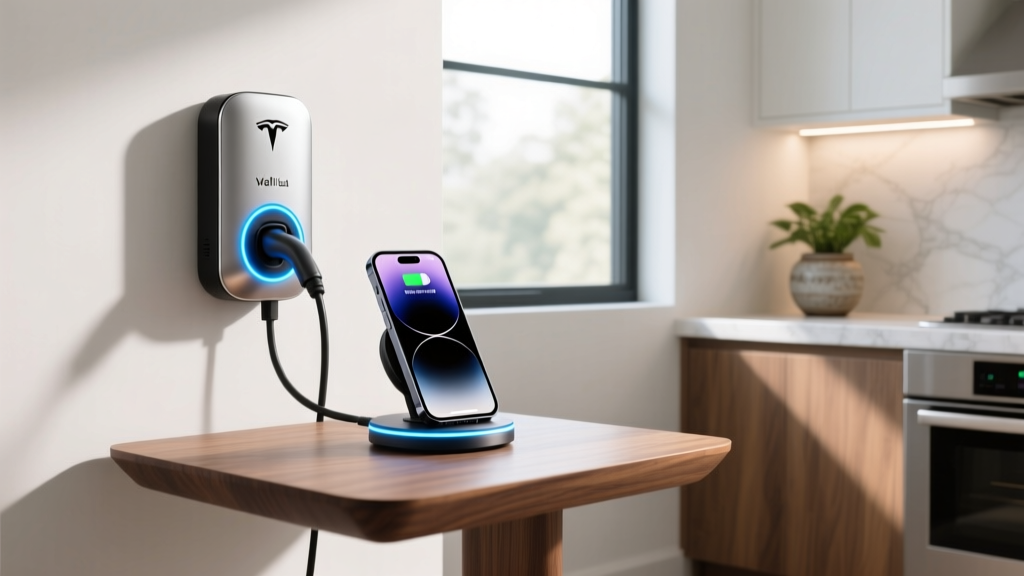
The Tesla wireless phone charger is an OEM Qi charging pad designed to sit in the front console tray of Tesla vehicles (and retrofitted into older Model 3/Y trims that shipped without one). Key specs:
- Power output: Up to 15W (Qi standard), though real-world sustained output often hovers around 10–12W depending on phone case thickness and thermal conditions
- Compatibility: Works with any Qi-enabled smartphone — iPhone 15/16 series, Samsung Galaxy S24/S25, Google Pixel 8/9
- Price: ~$65 via the Tesla Shop (OEM); third-party Qi pads that fit the console tray run $20–$40
- Limitation: Does not support MagSafe magnetic alignment natively — iPhone users won't get the snap-to-center benefit without an aftermarket MagSafe-to-Qi adapter ring
The charger draws power from the vehicle's 12V (or 16V lithium auxiliary in newer Teslas) system, which is replenished by the DC-DC converter from the main traction battery. The energy draw is negligible — roughly 0.015 kWh per hour of charging — meaning it has no meaningful impact on your vehicle's range.
Charging Levels Explained: Level 1, Level 2, and DC Fast Charging
Before you install anything, you need to understand the three charging levels and what they mean for your daily routine. Here's the data:
| Level | Voltage | Max Power (kW) | Miles of Range Added Per Hour | Best Use Case |
|---|---|---|---|---|
| Level 1 | 120V AC | 1.4–1.9 kW | 3–5 mi/hr | Overnight top-up, low-mileage drivers, PHEVs |
| Level 2 | 240V AC | 7.2–19.2 kW | 25–65 mi/hr | Primary home charging, daily use |
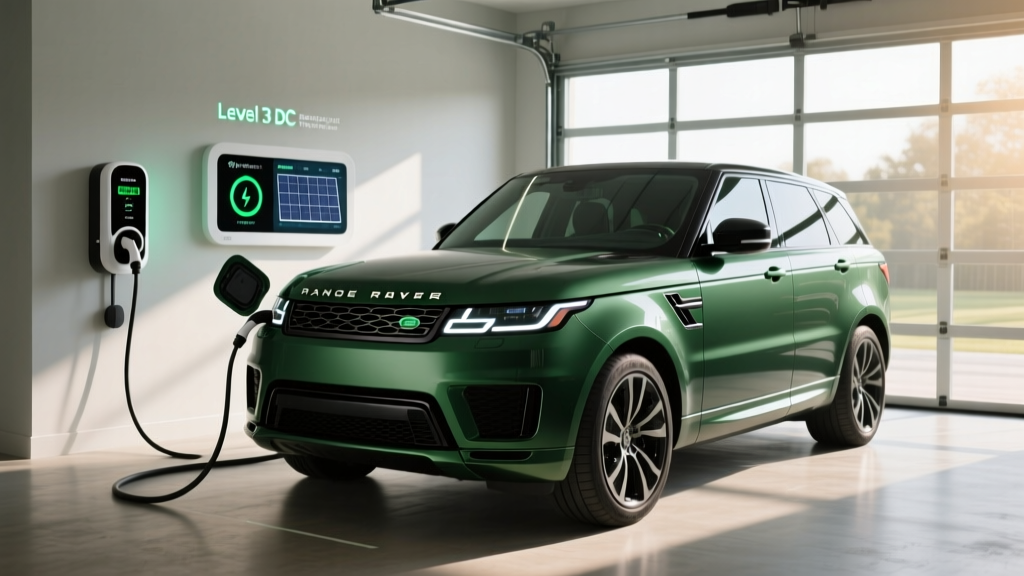
| DC Fast (Level 3) | 400–800V DC | 50–350 kW | 150–1,000+ mi/hr (peak) | Road trips, quick top-ups, commercial fleets |
A few real-world notes most spec sheets omit:
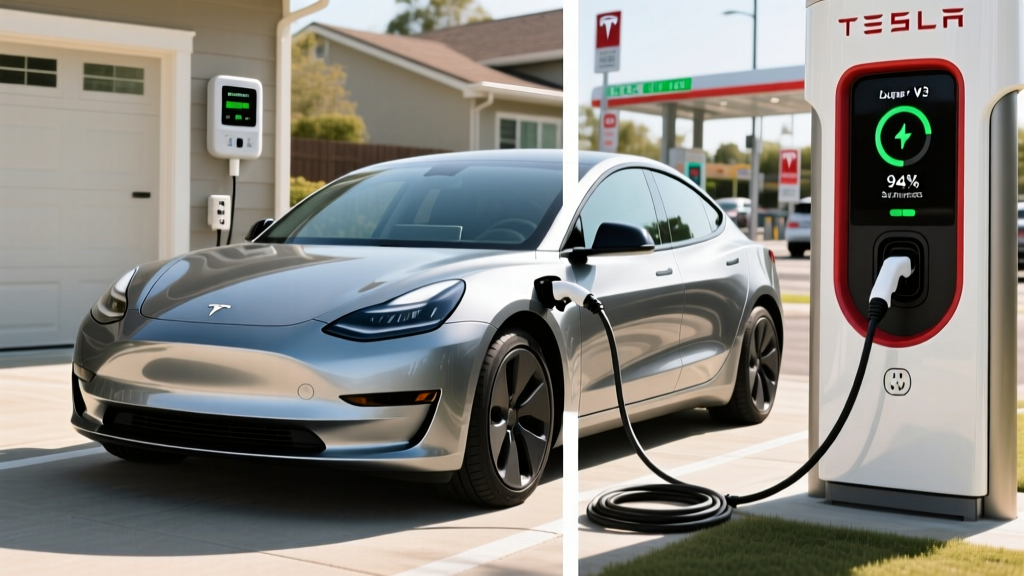
- Level 2 home charging at 11.5 kW (48A) will fully replenish a Tesla Model Y Long Range (75 kWh usable battery) in roughly 6.5 hours — perfect for overnight charging.
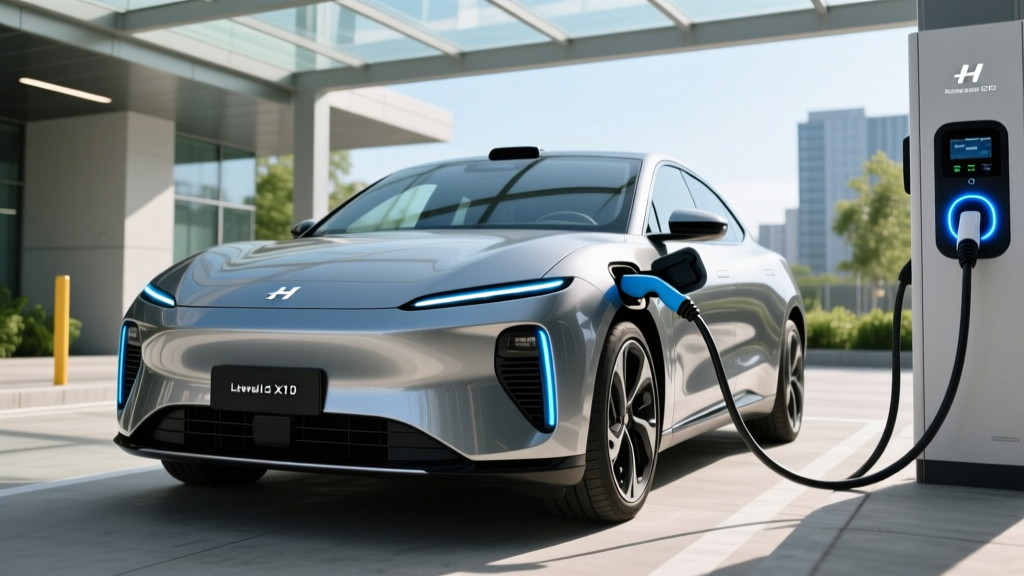
- DC fast charging peaks early, then tapers. A Model Y at a 250 kW V3 Supercharger might peak at 250 kW at 10% SoC but drops to ~100 kW by 60% and ~40 kW by 85%. The advertised 10–80% time of ~15 minutes assumes preconditioned battery and optimal thermal conditions.
- Level 1 is viable for PHEV owners with smaller batteries (10–18 kWh) who drive under 30 miles daily, but it's painfully slow for BEVs with 60–100 kWh packs.
Home EV Charger Installation: Electrical Requirements and Costs
This is where most EV buyers hit their first surprise. A Level 2 home charger isn't plug-and-play — it requires a dedicated 240V circuit, and depending on your home's electrical panel, that can mean a straightforward install or a costly upgrade.
Typical Electrical Requirements
- Circuit: Dedicated 240V, 50A or 60A breaker (for a 40A or 48A continuous-draw charger, respectively — NEC requires circuits rated at 125% of continuous load)
- Wire gauge: 6 AWG copper (for 50A) or 4 AWG copper (for 60A), run in conduit where exposed
- Outlet vs. hardwired: NEMA 14-50 outlet offers portability (take your charger when you move); hardwired is cleaner and avoids the ~$80–$150 outlet cost plus GFCI breaker requirement
- Panel capacity: Most homes with a 200A main panel can accommodate a 50A EV circuit. Homes with 100A panels or heavy existing loads (electric range, dryer, HVAC) may need a panel upgrade.
Panel Upgrade: The Hidden Cost
If your home has a 100A service panel — common in homes built before the 1990s — an electrician will likely recommend upgrading to 200A before adding a 50A EV circuit. This isn't optional; it's a code and safety issue. Panel upgrades typically run $1,500–$3,500 depending on your utility's requirements, local labor rates, and whether a new meter base is needed.
Installation Cost Breakdown
| Component | Simple Install (panel nearby, no upgrade) | Complex Install (long wire run, panel upgrade) |
|---|---|---|
| EV charger equipment (Level 2, 40–48A) | $400–$700 | $400–$700 |
| Electrician labor (2–8 hours) | $300–$600 | $800–$2,000 |
| Materials (wire, conduit, breaker) | $100–$250 | $300–$800 |
| Electrical permit | $50–$150 | $50–$200 |
| Panel upgrade (if needed) | $0 | $1,500–$3,500 |
| TOTAL | $850–$1,700 | $3,050–$7,200 |
Federal incentive note: The IRS §30C alternative fuel vehicle refueling property credit covers up to 30% of home EV charger equipment and installation costs, capped at $1,000, for installations in eligible census tracts. Check IRS.gov for current eligibility maps — this credit is location-dependent, not universal.
Connector Compatibility: NACS, CCS1, and CHAdeMO in 2026
The connector landscape has shifted dramatically. As of 2026, the North American Charging Standard (NACS) — originally Tesla's proprietary connector — has been adopted by Ford, GM, Rivian, Volvo, Polestar, and most major automakers for new vehicles. CCS1 remains on many 2023–2025 models, and CHAdeMO is effectively legacy (Nissan Leaf being the last holdout).
| Connector | Vehicles (2026 Models) | Home Charger Availability | Adapter Needed? |
|---|---|---|---|
| NACS (Tesla) | Tesla Model 3/Y/S/X, Ford F-150 Lightning (2025+), GM Ultium vehicles (2025+), Rivian R1T/R1S (2025+) | Tesla Wall Connector, ChargePoint Home Flex (NACS), Emporia Vue | CCS-to-NACS adapters available (~$200–$300) for older CCS vehicles |
| CCS1 | Hyundai Ioniq 5/6 (2024–2025), VW ID.4 (2024–2025), BMW iX, Kia EV6 (2024) | ChargePoint Home Flex, Emporia Vue, EnelX JuiceBox | NACS-to-CCS adapter for Tesla Supercharger access (~$200–$250) |
| CHAdeMO | Nissan Leaf (discontinued after 2025), Mitsubishi Outlander PHEV (older) | Limited; J1772 for Level 2, CHAdeMO DC infrastructure declining | No practical adapter to NACS/CCS for DC fast charging |
For Tesla owners: Your vehicle uses NACS natively. The Tesla Wall Connector (Gen 3) is the most seamless home option, delivering up to 11.5 kW (48A) on a 60A circuit with a 24-foot cable and Wi-Fi connectivity for scheduling and energy tracking.
For non-Tesla EV owners transitioning to NACS: If you're buying a 2025+ Ford, GM, or Rivian with NACS, you'll need a NACS-compatible home charger or a CCS-to-NACS adapter for public charging. Most charger manufacturers now ship NACS variants.
Level 2 Home Charger Recommendations for 2026
Based on power output, build quality, smart features, cable length, and price, here are the top picks for home Level 2 charging:
Tesla Wall Connector (Gen 3)
- Power: 11.5 kW (48A) on 60A circuit
- Connector: NACS (native)
- Cable: 24 ft
- Smart features: Wi-Fi, OTA updates, load sharing with second unit, Tesla app integration
- Price: ~$475
- Best for: Tesla owners, new NACS-adopting EVs
ChargePoint Home Flex
- Power: Up to 12 kW (50A) on 60A circuit; configurable down to 16A
- Connector: NACS or J1772 (configurable)
- Cable: 23 ft
- Smart features: Wi-Fi, ChargePoint app scheduling, Alexa integration, flexible amperage
- Price: ~$550–$650
- Best for: Multi-EV households, non-Tesla NACS vehicles
Emporia Vue Smart Charger
- Power: Up to 11.5 kW (48A) on 60A circuit
- Connector: NACS or J1772
- Cable: 24 ft
- Smart features: Wi-Fi, real-time energy monitoring, solar integration, circuit-level load management
- Price: ~$400–$500
- Best for: Budget-conscious buyers, solar-equipped homes
Charging Cost Per Mile: EV vs. Gasoline in 2026
The economics of EV charging depend heavily on where and when you charge. Here's a realistic breakdown using a 2026 Tesla Model Y Long Range (average efficiency of 28 kWh/100 miles) compared to a comparable gas SUV averaging 28 MPG combined:
| Charging Scenario | Rate ($/kWh) | Cost Per 100 Miles | Cost Per Mile |
|---|---|---|---|
| Home off-peak (utility TOU rate) | $0.09–$0.13 | $2.52–$3.64 | $0.025–$0.036 |
| Home standard rate (no TOU) | $0.14–$0.20 | $3.92–$5.60 | $0.039–$0.056 |
| Public Level 2 (workplace, mall) | $0.20–$0.35 | $5.60–$9.80 | $0.056–$0.098 |
| DC Fast Charging (Electrify America, EVgo) | $0.35–$0.55 | $9.80–$15.40 | $0.098–$0.154 |
| Tesla Supercharger (V3/V4) | $0.25–$0.40 | $7.00–$11.20 | $0.070–$0.112 |
| Gasoline (28 MPG, $3.40/gal avg) | $3.40/gal | $12.14 | $0.121 |
The bottom line: Home charging on an off-peak rate saves roughly 70–75% per mile versus gasoline. Even exclusive DC fast charging is often comparable to or slightly cheaper than gas. But if you rely entirely on expensive public DC chargers at $0.50+/kWh, your savings narrow significantly. This is why home charging access remains the single biggest economic factor in EV ownership.
According to fueleconomy.gov, the average EV driver who charges primarily at home saves $800–$1,200 annually on fuel compared to a 28 MPG gas vehicle.
Charging Time Examples: 10–80% for Common Battery Sizes
Real-world charging times depend on battery size (kWh), peak charge rate (kW), and the charge curve taper above 80%. Here are representative examples:
- Tesla Model Y Long Range (75 kWh usable, 250 kW peak DC): 10–80% in ~15–18 minutes at a V3 Supercharger (250 kW), tapering sharply above 60% SoC
- Hyundai Ioniq 5 (77.4 kWh usable, 350 kW peak DC on 800V architecture): 10–80% in ~18 minutes at a compatible 350 kW Electrify America station — one of the fastest production charge curves available
- Ford F-150 Lightning Extended Range (131 kWh usable, 150 kW peak DC): 10–80% in ~41 minutes — the large battery limits effective C-rate despite respectable peak kW
- Chevrolet Equinox EV (85 kWh usable, 150 kW peak DC): 10–80% in ~30 minutes at a 150 kW CCS/NACS station
Preconditioning matters. Tesla's navigation-based battery preconditioning warms the pack en route to a Supercharger, enabling faster initial charge rates. Without preconditioning (arriving at a charger with a cold battery), your 10–80% time can increase by 30–50%, especially in winter. Always navigate to the charger rather than just driving there.
Safety and Code Considerations for Home Charger Installation
A Level 2 EV charger is a high-draw, continuous-load appliance — it runs at full amperage for hours at a time. The National Electrical Code (NEC) treats it accordingly:
- Dedicated circuit required: Your EV charger must be on its own breaker — not shared with any other appliance or outlet. A 48A charger needs a 60A dedicated breaker.
- GFCI protection: NEC 2020 and later require GFCI protection for all 240V EV charging outlets (NEMA 14-50). Hardwired installations are exempt from this GFCI requirement in most jurisdictions, which is one reason hardwired is often preferred.
- Outdoor rating: If your charger is installed outside (carport, driveway pedestal), it must be rated for outdoor use (NEMA 4 or IP65). The Tesla Wall Connector and ChargePoint Home Flex both carry outdoor ratings.
- Permit and inspection: Virtually all jurisdictions require an electrical permit and post-installation inspection for EV charger circuits. Skipping this can void your homeowner's insurance coverage for electrical fires and may cause issues at home sale.
- Load management: If your panel is near capacity, some chargers (like the Emporia Vue) offer real-time load monitoring that throttles charge rate to avoid tripping the main breaker — a cheaper alternative to a panel upgrade in some cases.
Always hire a licensed electrician experienced with EV charger installations. Ask for a load calculation before work begins to confirm your panel can handle the new circuit. The NHTSA doesn't regulate home charging directly, but your local building department enforces NEC compliance through the permit process.
Frequently Asked Questions
How much does it cost to install a home EV charger?
A straightforward Level 2 installation (panel has capacity, short wire run) typically costs $850–$1,700 including equipment, electrician labor, materials, and permit. If your home needs a 200A panel upgrade, expect $3,050–$7,200 total. The IRS §30C credit may offset up to $1,000 (30% of costs) if your address is in an eligible census tract.
How fast will each charging level add range?
Level 1 (120V) adds 3–5 miles of range per hour. Level 2 (240V, 48A) adds 30–45 miles per hour depending on vehicle efficiency. DC fast charging adds 150–1,000+ miles per hour at peak rates, but sustained rates taper significantly above 60% SoC — the practical metric is 10–80% time, which ranges from ~15 minutes (best case) to ~45 minutes (large battery, lower peak rate).
Which connector and charger is compatible with my EV?
For 2026 models: Tesla, Ford (2025+), GM Ultium (2025+), and Rivian (2025+) use NACS. Hyundai, Kia, VW, and BMW still on CCS1 can use CCS-compatible chargers or buy a NACS-to-CCS adapter (~$200–$250) for Supercharger access. Check your vehicle's charge port — it's stamped or labeled near the port door.
How much does charging cost per mile vs. gas?
Home off-peak charging costs $0.025–$0.036 per mile for a typical EV — roughly 70–75% cheaper than gasoline at $3.40/gal and 28 MPG ($0.121/mile). Public DC fast charging at $0.40–$0.55/kWh costs $0.098–$0.154/mile, making it comparable to or slightly above gas. Home charging access is the key economic variable.
What electrical upgrades might I need?
The most common upgrade is a panel replacement from 100A to 200A service ($1,500–$3,500). You may also need a new breaker slot, heavier-gauge wire for long runs (50+ feet from panel to garage), or a load-management device if your panel is near capacity. A licensed electrician's load calculation will determine this before any work begins.
Does the Tesla wireless phone charger affect my car's range?
No. The Tesla wireless phone charger draws approximately 15W (0.015 kW) from the vehicle's auxiliary 12V/16V system, which is replenished by the DC-DC converter from the main traction battery. Over an hour of charging, it consumes roughly 0.015 kWh — equivalent to about 0.05 miles of range. It's negligible.
Key Takeaways
- The Tesla wireless phone charger is a ~$65 Qi accessory that draws negligible power — useful, but a small piece of the EV ecosystem.
- Home Level 2 charging (11.5 kW, 48A) is the foundation of practical EV ownership: plan for $850–$1,700 for a simple install, potentially $3,000+ with panel upgrades.
- NACS has won the connector war for 2025+ vehicles. CCS1 owners will need adapters for Tesla Supercharger access.
- Home off-peak charging delivers ~$0.03/mile — a 70%+ savings over gasoline. Public DC fast charging erodes that advantage to near-parity.
- Always get a professional load calculation, pull a permit, and understand the charge curve taper — peak kW is not sustained kW.