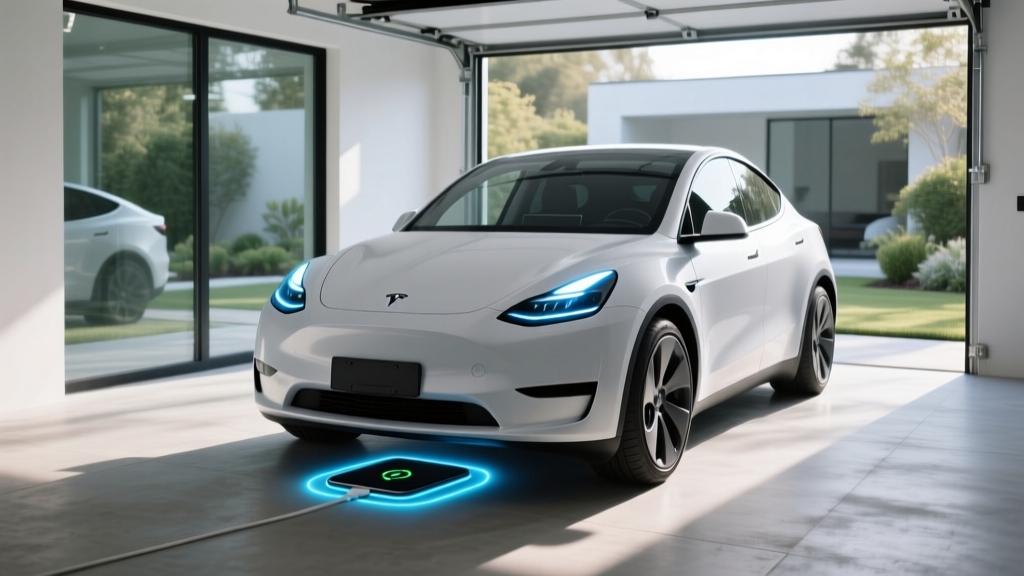
If you've been searching for a Tesla wireless charger to install in your garage, the short answer is: a true consumer-ready, plug-free wireless charging pad for Tesla vehicles does not exist on the retail market in 2026. While inductive (wireless) EV charging technology has been demonstrated by companies like WiTricity and was briefly explored in pilot programs, Tesla has never sold or officially announced a wireless home charging product. What Tesla does offer — and what the vast majority of EV owners actually use — is a robust ecosystem of wired Level 2 home chargers and DC fast-charging Superchargers.
This guide cuts through the hype to explain what wireless EV charging actually is today, why wired Level 2 remains the practical standard, and everything you need to know about setting up fast, reliable home charging for a Tesla (or any EV) — including exact costs, electrical requirements, and equipment recommendations.
What Is Wireless EV Charging and Why Isn't It Here Yet?
Wireless EV charging, technically called inductive charging, uses electromagnetic fields between a ground-mounted transmitter pad and a receiver coil on the vehicle's undercarriage to transfer energy without a physical cable. The concept is elegant: park over a pad, and charging begins automatically.
Several companies have pushed this technology forward:
- WiTricity has demonstrated 11 kW wireless charging prototypes and partnered with automakers for testing, but no production vehicles currently sold in the U.S. ship with a factory-installed wireless receiver.
- Qualcomm Halo ran pilot programs in Europe, primarily with fleet vehicles, at 7–22 kW power levels.
- Plugless Power (Evatran) offered aftermarket wireless charging kits for the Nissan Leaf and Chevy Volt circa 2016–2019 at around 3.3 kW, but the company ceased operations and the product is discontinued.
The barriers remain significant for consumer adoption:
- Efficiency loss: Inductive charging typically operates at 85–93% efficiency versus 95–98% for a wired Level 2 connection. That 5–15% energy loss translates directly into higher electricity costs and slower effective charging.
- Cost: Wireless pads have historically cost $3,000–$6,000+ for equipment alone, compared to $350–$700 for a quality wired Level 2 charger.
- Alignment sensitivity: The vehicle must be parked precisely over the pad. Misalignment of even a few inches can significantly reduce power transfer.
- No Tesla receiver: No Tesla model (Model 3, Model Y, Model S, Model X, Cybertruck) includes an underbody inductive receiver coil. Without this hardware, a wireless pad cannot charge the vehicle.
Bottom line: If you own or plan to buy a Tesla in 2026, wired charging is your path. Let's focus on doing it right.
EV Charging Levels Explained: Speeds, kW, and Real-World Range
Understanding the three charging levels is foundational. kW (kilowatts) measures the rate of power delivery — think of it as the speed of water flowing through a hose. kWh (kilowatt-hours) measures total energy stored in the battery — the size of the tank. They are not interchangeable.
| Level | Voltage | Power (kW) | Miles of Range Added per Hour | Typical Use Case |
|---|---|---|---|---|
| Level 1 | 120V AC | 1.0–1.4 kW | 3–5 miles/hour | Overnight trickle; emergency top-up |
| Level 2 | 240V AC | 3.3–19.2 kW | 12–75 miles/hour | Daily home charging; workplace |
| DC Fast Charge | 400–800V DC | 50–350 kW | 150–1,000+ miles/hour (peak) | Road trips; highway corridors |
For a Tesla Model Y Long Range (75 kWh usable battery, EPA 310 miles), here's what charging times look like in practice:
- Level 1 (120V, 1.2 kW): 10% to 80% takes roughly 44 hours — impractical for daily use.
- Level 2 (240V, 11.5 kW / 48A): 10% to 80% in approximately 4.5–5 hours — ideal overnight session.
- Tesla Supercharger V3 (250 kW peak): 10% to 80% in roughly 25–30 minutes. Note: peak 250 kW is sustained only from roughly 10–30% State of Charge (SoC); the charge curve tapers significantly above 50%, dropping to ~100 kW and then ~40 kW above 80%.
Home Level 2 Charger Installation: Electrical Requirements and Costs
Installing a Level 2 home charger is the single highest-impact upgrade for EV ownership. Here's exactly what's involved electrically and financially.
Electrical Requirements
A Level 2 charger requires a dedicated 240-volt circuit, similar to what powers an electric dryer or oven. The most common configurations:
- NEMA 14-50 outlet: 240V, 50A circuit (delivers up to 40A continuous to the vehicle, or ~9.6 kW). This is the most popular home setup and allows you to unplug the charger if you move.
- NEMA 6-50 outlet: 240V, 50A circuit (no neutral wire). Common for welders; some chargers support this plug type.
- Hardwired connection: 240V, 60A circuit (delivers up to 48A continuous, or ~11.5 kW). Required for chargers rated above 40A. Must be performed by a licensed electrician. Provides a cleaner install with no plug to loosen over time.
Panel Upgrade Reality
Many homes built before 2000 have 100-amp electrical service panels. Adding a 50A or 60A dedicated EV circuit to an already-loaded 100A panel may exceed its capacity, requiring a panel upgrade to 200A. Signs you might need an upgrade:
- Your panel is 100A or less and already runs electric heat, an electric oven, and an electric dryer.
- You have fewer than 2–4 open breaker slots.
- Your electrician's load calculation (required by code) shows insufficient headroom.
A panel upgrade is the single largest variable in home charger installation cost — potentially adding $1,500–$3,500 to the project.
Installation Cost Breakdown
| Component | Cost Range | Notes |
|---|---|---|
| Level 2 Charger (equipment) | $350–$700 | Varies by brand, power output, smart features |
| Electrician labor (standard install) | $500–$1,500 | Run 240V line from panel to garage; ~20–50 ft run |
| Electrical permit | $50–$200 | Required in most jurisdictions; varies by city/county |
| Panel upgrade (if needed) | $1,500–$3,500 | 100A to 200A upgrade; not always required |
| Conduit, wiring, materials | $100–$400 | Longer runs and outdoor conduit increase cost |
| Total (no panel upgrade) | $1,000–$2,800 | Typical for most homes with 200A service |
| Total (with panel upgrade) | $2,500–$6,300 | Older homes with 100A panels |
Always hire a licensed electrician and pull a permit. Unpermitted electrical work can void homeowner's insurance and create fire risk. The National Electrical Contractors Association and Tesla's own certified installer network can connect you with qualified professionals.
Connector Compatibility: NACS, CCS, and What Fits Your EV
The connector landscape has consolidated significantly. As of 2026, the North American Charging Standard (NACS) — originally developed by Tesla — has been adopted by Ford, GM, Rivian, Volvo, Polestar, Mercedes-Benz, BMW, and most other major automakers. Here's where things stand:
| Connector | Brands Using It (Native) | Notes |
|---|---|---|
| NACS (Tesla) | Tesla, Ford, GM, Rivian, Volvo, Polestar, Mercedes, BMW, Hyundai, Kia (2025+) | Standard on all new Teslas; now the dominant North American standard |
| CCS1 | VW, Audi (older models), some legacy 2022–2024 EVs | Still functional; adapters available for NACS Supercharger access |
| CHAdeMO | Nissan Leaf (discontinued 2025), Mitsubishi Outlander PHEV | Largely deprecated in North America; limited new infrastructure |
Adapter needs: If you own a non-Tesla EV with a CCS1 port, Tesla sells a CCS-to-NACS adapter (~$250) that grants access to Tesla's Supercharger network (V2 and V3 stalls). Ford and GM owners who received complimentary adapters with their vehicles can use these as well. Conversely, if you own a Tesla and need to use a CCS-only public charger (increasingly rare), a NACS-to-CCS adapter is available from third-party manufacturers.
Cost to Charge: Home vs. Public vs. Gas — The Real $/Mile Math
One of the strongest arguments for home Level 2 charging is cost. Here's a direct comparison using a Tesla Model Y Long Range (28 kWh/100 mi combined efficiency, per fueleconomy.gov):
| Scenario | Rate | Cost per Mile (Model Y) |
|---|---|---|
| Home charging (off-peak utility rate) | $0.08–$0.12/kWh | $0.022–$0.034/mile |
| Home charging (standard rate) | $0.13–$0.18/kWh | $0.036–$0.050/mile |
| Public Level 2 (ChargePoint, etc.) | $0.25–$0.49/kWh | $0.070–$0.137/mile |
| Tesla Supercharger (V3) | $0.25–$0.40/kWh | $0.070–$0.112/mile |
| Electrify America DC Fast | $0.35–$0.55/kWh | $0.098–$0.154/mile |
| Gasoline car (28 MPG avg, $3.40/gal) | $3.40/gallon | $0.121/mile |
At national average electricity rates, home charging a Model Y costs roughly 3–5 cents per mile, compared to 12 cents per mile for a 28 MPG gasoline car at $3.40/gallon. Over 15,000 annual miles, that's a fuel savings of approximately $1,050–$1,350 per year.
However, if you rely exclusively on public DC fast charging at $0.35–$0.55/kWh, your per-mile cost can match or exceed gasoline. Home charging access is the economic linchpin of EV ownership.
Best Level 2 Home Chargers for Tesla and NACS-Equipped EVs (2026)
Below are top-rated Level 2 chargers with native NACS connectors or J1772 connectors (adaptable to NACS). All prices are approximate as of early 2026.
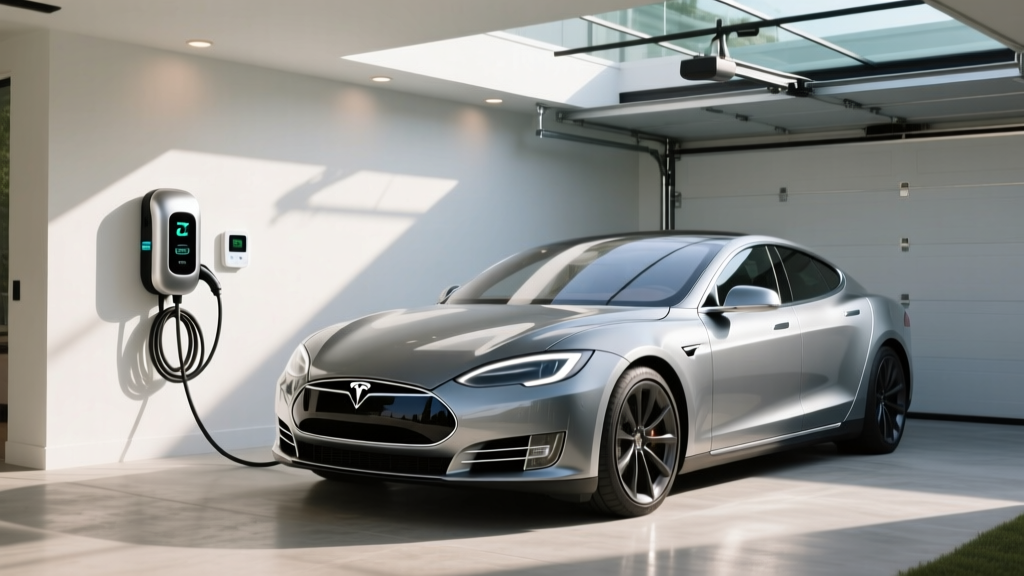
Tesla Wall Connector
- Power: Up to 11.5 kW (48A hardwired)
- Connector: Native NACS
- Cable length: 24 ft
- Smart features: Wi-Fi, OTA updates, power sharing between units, access control
- Price: ~$475
- Best for: Tesla owners wanting the simplest, most integrated solution
ChargePoint Home Flex
- Power: Up to 12 kW (50A, configurable down to 16A)
- Connector: NACS (2025+ model) or J1772 with adapter
- Cable length: 23 ft
- Smart features: Wi-Fi, scheduling, Alexa/Google integration, detailed app analytics
- Price: ~$599
- Best for: Multi-EV households; flexible amperage for older panels
Emporia Vue EV Charger
- Power: Up to 11.5 kW (48A)
- Connector: NACS (2025+ model)
- Cable length: 24 ft
- Smart features: Wi-Fi, energy monitoring, solar integration, time-of-use scheduling
- Price: ~$399
- Best for: Budget-conscious buyers; solar panel owners
Grizzl-E Smart
- Power: Up to 10 kW (40A)
- Connector: J1772 (NACS adapter required for Tesla)
- Cable length: 24 ft
- Smart features: OCPP-compatible, adjustable amperage, extreme cold rated (-40°C)
- Price: ~$449
- Best for: Cold-climate durability; commercial OCPP fleet use
Safety, Electrical Code, and What Your Electrician Will Check
EV charger installation is governed by the National Electrical Code (NEC) Article 625, which covers Electric Vehicle Charging System Equipment. Key requirements your electrician will address:
- Dedicated circuit: Your EV charger must have its own dedicated breaker — it cannot share a circuit with other appliances or outlets.
- Continuous load derating: NEC defines EV charging as a continuous load (3+ hours). This means the circuit must be rated at 125% of the charger's maximum draw. A 48A charger requires a 60A breaker; a 40A charger requires a 50A breaker.
- GFCI protection: The 2020 NEC update (and subsequent 2023/2026 editions) requires GFCI (Ground Fault Circuit Interrupter) protection for EV charging outlets. Hardwired installations may be exempt in some jurisdictions, but your electrician will confirm local code.
- Outdoor rating: If your charger is installed outdoors (carport, driveway), the unit must carry a NEMA 4 or IP65 weather rating. All four chargers recommended above meet outdoor installation standards.
- Wire gauge: A 50A circuit typically requires 6 AWG copper wire; a 60A circuit requires 4 AWG copper. Longer runs may require upsizing to account for voltage drop.
- Permit and inspection: Nearly all jurisdictions require an electrical permit and post-installation inspection. This protects you legally and ensures the work meets code. Expect $50–$200 for the permit fee.
Frequently Asked Questions
How much does it cost to install a home EV charger?
A typical Level 2 home charger installation costs $1,000–$2,800 if your electrical panel has sufficient capacity (200A service with available breaker slots). This includes the charger unit ($350–$700), electrician labor ($500–$1,500), permit ($50–$200), and materials. If your home has a 100A panel that needs upgrading to 200A, add $1,500–$3,500, bringing the total to $2,500–$6,300.
How fast will each charging level add range?
Level 1 (120V) adds approximately 3–5 miles of range per hour. Level 2 (240V) adds 12–75 miles per hour depending on amperage (a 48A/11.5 kW charger adds roughly 44 miles per hour on a Model Y). DC fast charging at a Tesla Supercharger V3 (250 kW peak) can add up to 200 miles in 15 minutes, though the charge curve tapers significantly above 50% SoC.
Which connector/charger is compatible with my EV?
All current Tesla vehicles (Model 3, Model Y, Model S, Model X, Cybertruck) use the native NACS connector. Most non-Tesla EVs sold from 2025 onward (Ford, GM, Rivian, Hyundai, Kia, Volvo, BMW, Mercedes) have also adopted NACS. Older non-Tesla EVs (2022–2024 model years) may still have CCS1 ports and require a CCS-to-NACS adapter (~$250) to access Tesla Superchargers. CHAdeMO is effectively discontinued for new vehicles in North America.
How much does charging cost per mile vs. gas?
Home charging at average U.S. electricity rates ($0.13–$0.18/kWh) costs approximately 3–5 cents per mile for a Tesla Model Y. Gasoline at $3.40/gallon in a 28 MPG vehicle costs approximately 12 cents per mile. That's a 60–75% per-mile fuel savings when charging at home. Public DC fast charging ($0.35–$0.55/kWh) narrows the gap to roughly 8–15 cents per mile.
What electrical upgrades might I need?
The most common upgrade is a 200A panel upgrade for homes with older 100A service. You may also need to upgrade the service wire from your utility meter to the panel, add a sub-panel in a detached garage, or extend conduit for long cable runs (50+ feet from panel to charger). Your electrician will perform a NEC Article 220 load calculation to determine your panel's available capacity before recommending any upgrades.
Will Tesla ever release a wireless charger?
Tesla has not announced any consumer wireless charging product as of early 2026. While the company holds patents related to inductive charging, Tesla's strategy has focused on expanding its wired Supercharger network (now 60,000+ stalls globally) and opening NACS access to other automakers. If wireless charging reaches consumer viability, Tesla would likely integrate it alongside — not replace — its existing wired infrastructure.
Is there a federal tax credit for home charger installation?
The Alternative Fuel Vehicle Refueling Property Credit (IRS Form 8911) offers up to $1,000 (30% of equipment and installation costs) for home EV charger installation, but only if you live in a qualifying census tract (typically rural or low-income areas as defined by the Inflation Reduction Act). Check your eligibility on irs.gov and consult a tax professional, as eligibility rules are location-specific and subject to change.