The V4 Supercharger Is Tesla's Most Open Network Yet
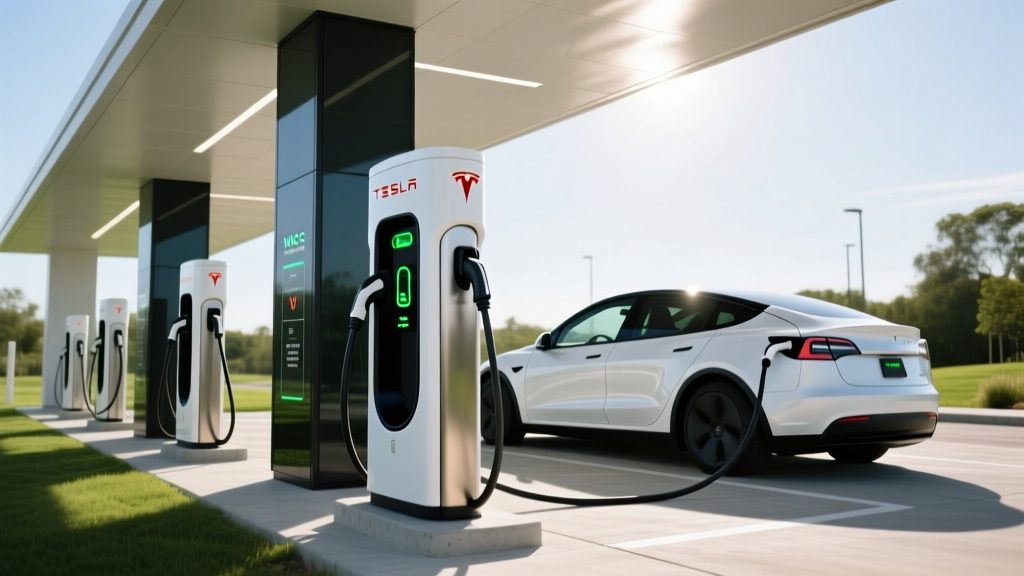
When Tesla launched its first Superchargers in 2012, they were a walled garden — proprietary connectors, Tesla-only access, and a closed ecosystem. The rollout of the V4 Supercharger architecture marks a fundamental shift. Deployed widely through 2025 and expanding rapidly in 2026, V4 cabinets support both the North American Charging Standard (NACS) and, via integrated adapters, CCS1-equipped vehicles from Ford, Rivian, GM, Hyundai, and others.
But what does V4 actually deliver in terms of charge speed, connector options, and real-world usability — especially compared to the Level 2 home charger most EV owners rely on daily? This guide breaks down the V4 Supercharger specs alongside a complete home and public charging primer so you can plan your charging strategy with real numbers, not marketing promises.
Charging Levels Explained: kW, Miles Per Hour, and When Each Matters
Before evaluating any specific charger — V4 or otherwise — you need a clear picture of the three charging tiers. The critical distinction: kW (kilowatts) measures power — the rate at which energy flows into your battery. kWh (kilowatt-hours) measures energy — the total capacity stored. Think of kW as the width of a hose and kWh as the size of the bucket.
| Level | Voltage | Typical Power (kW) | Miles of Range Added Per Hour | Best Use Case |
|---|---|---|---|---|
| Level 1 | 120V AC | 1.0–1.4 kW | 3–5 miles | Overnight top-ups, PHEVs, emergency |
| Level 2 | 240V AC | 7.2–19.2 kW | 25–75 miles | Daily home charging, workplace |
| DC Fast Charge | 400–800V DC | 50–350+ kW | 150–1,000+ miles (equivalent rate) | Road trips, rapid top-ups |
For a typical 75 kWh battery (like a Tesla Model Y Long Range), Level 1 adds roughly 4 miles of range per hour — enough for a plug-in hybrid but painfully slow for a full BEV. Level 2 at 11.5 kW (the most common home setup on a 48-amp circuit) adds about 44 miles per hour, fully replenishing that 75 kWh pack in roughly 7 hours. DC fast charging at a V4 Supercharger cabinet can peak at up to 350 kW for compatible vehicles, adding 200+ miles in roughly 15 minutes.
V4 Supercharger Architecture: What Changed From V3
The V4 Supercharger introduces several hardware and design changes over the ubiquitous V3 (which peaked at 250 kW):
- Higher voltage cabinet: V4 cabinets operate on a 480V–1,000V DC architecture, enabling peak outputs up to 350 kW for vehicles with compatible battery systems (800V architectures like the Hyundai Ioniq 5, Kia EV6, and Porsche Taycan benefit most).
- Modular power distribution: Rather than fixed power per stall, V4 cabinets dynamically distribute power across posts, reducing the "power splitting" penalty when adjacent stalls are occupied.
- Integrated CCS1 support: V4 posts feature a built-in CCS adapter or native CCS1 cable in many deployments, opening the network to non-Tesla EVs without requiring a separate Magic Dock add-on at each stall.
- New charge cable design: Thinner, lighter, and longer (up to ~9.8 feet / 3 meters in some configurations), improving reach for vehicles with charge ports on different sides.
- Credit card reader: Select V4 stalls include a built-in payment terminal, reducing reliance on app-based activation for non-Tesla drivers.
For Tesla vehicles (which use NACS natively), V4 posts deliver up to 250 kW on current Model 3/Y platforms, since Tesla's 400V battery architecture caps charge acceptance below the cabinet's maximum. Future Tesla models with higher-voltage packs could unlock the full 350 kW capability.
10–80% Charging Times: V4 vs. V3 vs. Home Level 2
| Charger Type | Peak Power | Tesla Model Y (75 kWh) | Hyundai Ioniq 5 (77.4 kWh, 800V) |
|---|---|---|---|
| V4 Supercharger | Up to 350 kW | ~18–22 min (250 kW cap) | ~16–18 min |
| V3 Supercharger | 250 kW | ~22–27 min | ~18–22 min |
| Home Level 2 (11.5 kW) | 11.5 kW | ~6.5–7 hours | ~6.7–7.2 hours |
| Home Level 2 (7.7 kW) | 7.7 kW | ~9.7 hours | ~10 hours |
Which Connector Does Your EV Need? NACS, CCS1, and Adapter Requirements
The North American charging landscape consolidated heavily in 2024–2025 when most major automakers adopted NACS (the Tesla connector) as their standard. By 2026, the situation is:
| Connector | Brands Using It (2026 Models) | V4 Supercharger Compatible? | Adapter Needed? |
|---|---|---|---|
| NACS (J3400) | Tesla, Ford, GM, Rivian, Hyundai, Kia, BMW, Volvo, Polestar | Yes — native | No |
| CCS1 | Older (pre-2025) models from VW, BMW, some Stellantis; legacy vehicles | Yes — via V4 integrated adapter or CCS-to-NACS adapter | Yes (if V4 post lacks built-in CCS cable) |
| CHAdeMO | Nissan Leaf (discontinued 2025), Mitsubishi Outlander PHEV (older models) | No | No practical adapter exists |
If you own a 2025+ model-year EV from Ford, GM, Rivian, Hyundai, or Kia, your vehicle almost certainly has a native NACS port. You can plug directly into any V4 Supercharger post with a NACS cable — no adapter required. For CCS1-equipped vehicles from model years 2024 and earlier, you'll need either a V4 post with an integrated CCS adapter cable or a third-party CCS-to-NACS adapter (Tesla sells an official adapter for ~$250; aftermarket options from brands like Lectron run $150–$200).
CHAdeMO owners are effectively locked out of the Supercharger network. Your best DC fast-charging options remain Electrify America, EVgo, and ChargePoint stations with CHAdeMO connectors — which are increasingly rare as networks prioritize NACS and CCS1.
Cost to Charge: Home vs. Public DC Fast Charging Per Mile
Charging economics vary dramatically depending on where and when you plug in. Here's a realistic breakdown for 2026:
| Scenario | Rate ($/kWh) | Efficiency (kWh/100mi) | Cost Per Mile | Equivalent Gas Price (at 28 MPG) |
|---|---|---|---|---|
| Home Level 2 — off-peak utility rate | $0.08–$0.14 | 28–32 | $0.025–$0.045 | $0.70–$1.26/gal |
| Home Level 2 — standard residential rate | $0.14–$0.22 | 28–32 | $0.04–$0.07 | $1.12–$1.96/gal |
| Tesla Supercharger V4 (member pricing) | $0.28–$0.36 | 28–32 | $0.08–$0.12 | $2.24–$3.36/gal |
| Electrify America / EVgo (public DC) | $0.35–$0.55 | 28–32 | $0.10–$0.18 | $2.80–$5.04/gal |
For a Tesla Model Y averaging 30 kWh/100 miles, home charging at $0.12/kWh costs roughly $0.036 per mile — equivalent to gasoline at about $1.00 per gallon in a 28 MPG vehicle. Even at a V4 Supercharger averaging $0.32/kWh, you're paying the equivalent of ~$2.50/gallon gas. The savings case for EVs is strongest when you can charge at home on off-peak rates.
According to fueleconomy.gov, the average 2026 EV achieves 97–120 MPGe combined, translating to 25–34 kWh/100 miles depending on vehicle size and aerodynamics. Larger SUVs like the Rivian R1S consume closer to 40–45 kWh/100 miles, raising per-mile costs proportionally.
Home Level 2 Installation: Electrical Requirements, Costs, and Panel Upgrades
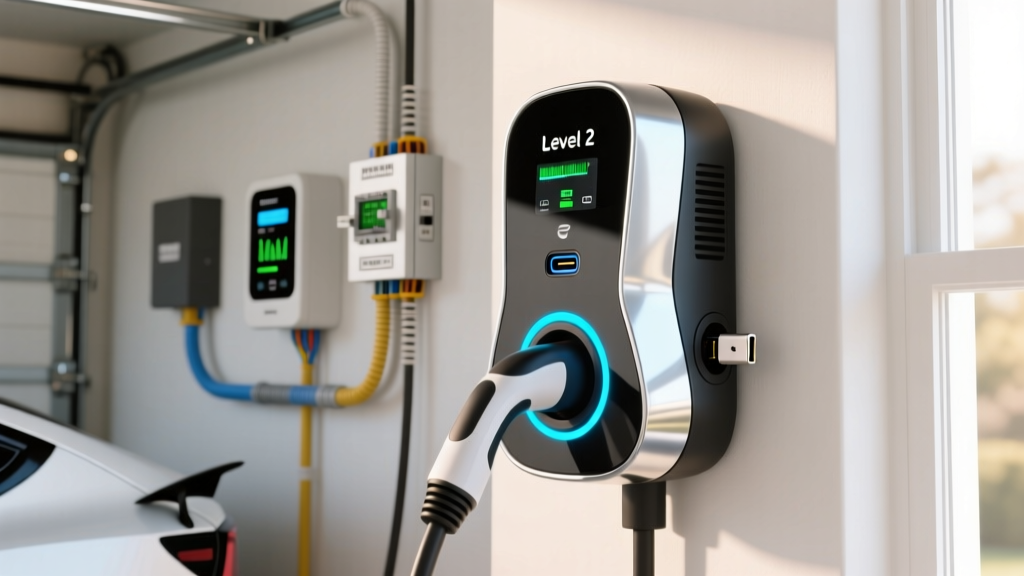
The V4 Supercharger is excellent for road trips, but 80–90% of EV charging happens at home. Installing a Level 2 charger requires understanding your electrical panel's capacity and budgeting realistically.
Electrical Requirements
- Voltage: 240V (same as a clothes dryer or electric range)
- Amperage: 40A circuit for a 32A charger (NEC requires circuits rated 125% above continuous load), or 60A circuit for a 48A charger
- Circuit: Dedicated breaker — you cannot share this circuit with other appliances
- Wire gauge: 6 AWG copper for 40A; 4 AWG copper for 60A (may vary by run length and local code)
- GFCI protection: Required by NEC 2020+ for EV charging circuits in most jurisdictions
Installation Cost Breakdown
| Component | Simple Install (panel nearby, no upgrade) | Complex Install (long run, panel upgrade) |
|---|---|---|
| Level 2 charger unit | $400–$700 | $400–$700 |
| Electrical permit | $50–$200 | $50–$200 |
| Electrician labor (2–4 hrs simple / 6–12 hrs complex) | $300–$800 | $900–$2,500 |
| Conduit, wire, breaker | $100–$300 | $300–$800 |
| Electrical panel upgrade (100A → 200A, if needed) | N/A | $1,500–$3,500 |
| Total estimated cost | $850–$2,000 | $3,150–$7,700 |
Homes built after 2000 typically have 200A panels with sufficient spare capacity for a 40–60A EV circuit. Older homes with 100A panels may require a service upgrade — this is the single biggest cost variable. A licensed electrician can perform a load calculation to determine whether your panel can handle the additional draw. Never skip the permit: unpermitted electrical work can void homeowner's insurance and create fire hazards.
Federal Tax Credit for Home Charger Installation
Under IRS §30C Alternative Fuel Vehicle Refueling Property Credit, you can claim 30% of the cost of home EV charger equipment and installation, up to $1,000. This credit applies to both the charger hardware and electrician labor. Eligibility requires that your home be located in a qualifying census tract (typically rural or low-income areas, per IRS guidance). Check your census tract at the IRS §30C page before assuming eligibility. This credit is separate from the §30D vehicle purchase credit.
Recommended Level 2 Home Chargers for 2026
Best Overall: ChargePoint Home Flex
- Power output: Up to 12 kW (50A circuit, 40A continuous) — configurable down to 16A for smaller panels
- Connector: NACS (J3400) native, with CCS1 adapter available
- Cable length: 23 feet
- Smart features: Wi-Fi, scheduling, energy tracking, Alexa integration
- Price: ~$550–$650 (unit only)
- UL listed, outdoor-rated (NEMA 4)
Best Value: Emporia Level 2 EV Charger
- Power output: Up to 11.5 kW (48A continuous on 60A circuit)
- Connector: NACS or J1772 (CCS1 via adapter)
- Cable length: 24 feet
- Smart features: Wi-Fi, solar integration, real-time energy monitoring via Emporia VUE panel
- Price: ~$350–$400 (unit only)
- UL listed, indoor/outdoor rated
Best for Tesla Owners: Tesla Wall Connector
- Power output: Up to 11.5 kW (48A continuous on 60A circuit)
- Connector: NACS native; also includes J1772 adapter in box
- Cable length: 24 feet
- Smart features: Wi-Fi firmware updates, power-sharing between multiple units, access control
- Price: ~$425–$475
- UL listed, NEMA 4 outdoor rated
Best for High Power: Grizzl-E Smart
- Power output: Up to 11.5 kW (48A) or configurable to 40A/32A/24A/16A
- Connector: NACS or J1772 options
- Cable length: 24 feet
- Smart features: OCPP-compatible, app scheduling, works with utility demand-response programs
- Price: ~$450–$550
- IP67 rated (fully waterproof), -40°F to 122°F operating range — ideal for cold climates
Safety, Code, and Installation Best Practices
Level 2 charging is safe and code-compliant when installed correctly. Key requirements and best practices:
- Dedicated circuit: Your EV charger must have its own breaker — never share with a dryer, range, or HVAC system.
- GFCI breaker or outlet: NEC 2020 and later requires ground-fault circuit interrupter protection for all EV supply equipment. Most jurisdictions enforce this for new installations.
- Outdoor rating: If installing outside, choose a NEMA 4 (or IP65+) rated unit. The ChargePoint Home Flex, Tesla Wall Connector, and Grizzl-E all meet this standard.
- Cable management: Use a wall-mounted holster or reel to prevent tripping hazards and cable damage. Never run a charging cable across a driveway or sidewalk where vehicles can crush it.
- Hardwired vs. plug-in: Hardwired installations (no plug, direct-wired to the junction box) are preferred for circuits above 40A and eliminate the need for a 240V receptacle. Plug-in units using a NEMA 14-50 outlet offer portability but require a quality industrial-grade receptacle (Hubbell or Bryant brand — cheap Leviton 14-50 outlets have documented overheating issues under continuous EV loads).
- Permit and inspection: Always pull an electrical permit. A post-installation inspection by your local authority having jurisdiction (AHJ) ensures the work meets code and protects your insurance coverage.
Frequently Asked Questions
How much does it cost to install a home EV charger?
A straightforward Level 2 installation on an existing 200A panel typically costs $850–$2,000 total (charger unit + electrician + permit + materials). If your home requires a panel upgrade from 100A to 200A, total costs can reach $3,150–$7,700. Always get at least two quotes from licensed electricians and verify they include permit costs.
How fast will each charging level add range?
Level 1 (120V) adds 3–5 miles of range per hour. Level 2 (240V) adds 25–75 miles per hour depending on amperage (a 48A/11.5 kW setup adds ~44 miles/hour for a typical mid-size EV). DC fast charging at a V4 Supercharger can add 150–200+ miles in 15–20 minutes, depending on your vehicle's peak charge acceptance rate and battery state of charge.
Which connector/charger is compatible with my EV?
For 2025–2026 model-year vehicles from Tesla, Ford, GM, Rivian, Hyundai, Kia, BMW, and Volvo: your vehicle has a NACS (J3400) port and is natively compatible with all V4 Supercharger posts. Older CCS1-equipped vehicles need a CCS-to-NACS adapter (~$150–$250). CHAdeMO vehicles (older Nissan Leaf) are not compatible with the Supercharger network.
How much does charging cost per mile vs. gas?
Home charging at typical residential rates ($0.12–$0.18/kWh) costs $0.03–$0.06 per mile for most EVs — equivalent to gasoline at $0.85–$1.70 per gallon in a 28 MPG vehicle. V4 Supercharger pricing ($0.28–$0.36/kWh) works out to $0.08–$0.12 per mile, roughly equivalent to $2.25–$3.35/gallon gas. Public DC networks like Electrify America ($0.35–$0.55/kWh) can approach or exceed current gas prices per mile in some regions.
What electrical upgrades might I need?
The most common upgrade is a panel service increase from 100A to 200A ($1,500–$3,500), required when your existing panel lacks spare capacity for a dedicated 40–60A EV circuit. Other potential needs: replacing a worn or undersized main breaker, adding a sub-panel in the garage, or upgrading service entrance wiring. A licensed electrician's load calculation (typically $100–$200, often credited toward installation) will determine exactly what's required. Homes with solar panels or battery storage (like Tesla Powerwall) may already have 200A+ service and ample capacity.
Can non-Tesla vehicles use the V4 Supercharger?
Yes. As of 2026, most V4 Supercharger locations support non-Tesla EVs with NACS ports natively. CCS1-equipped vehicles can charge at V4 posts that feature an integrated CCS adapter cable. Tesla's app or in-car navigation will show which stations are open to non-Tesla vehicles. Pricing for non-Tesla vehicles may include a small surcharge ($0.02–$0.05/kWh above Tesla-member rates) unless you have a Tesla membership subscription (~$13/month, which unlocks member pricing for any vehicle).
Does preconditioning matter for V4 Supercharger sessions?
Critically. Preconditioning warms or cools the battery to its optimal charging temperature before you arrive. Tesla vehicles do this automatically when you navigate to a Supercharger. Non-Tesla EVs with NACS may not precondition for Tesla chargers automatically — check your vehicle's settings. In cold weather (below 40°F), skipping preconditioning can reduce peak charge rates by 30–50% and extend a 10–80% session from 18 minutes to 35+ minutes.