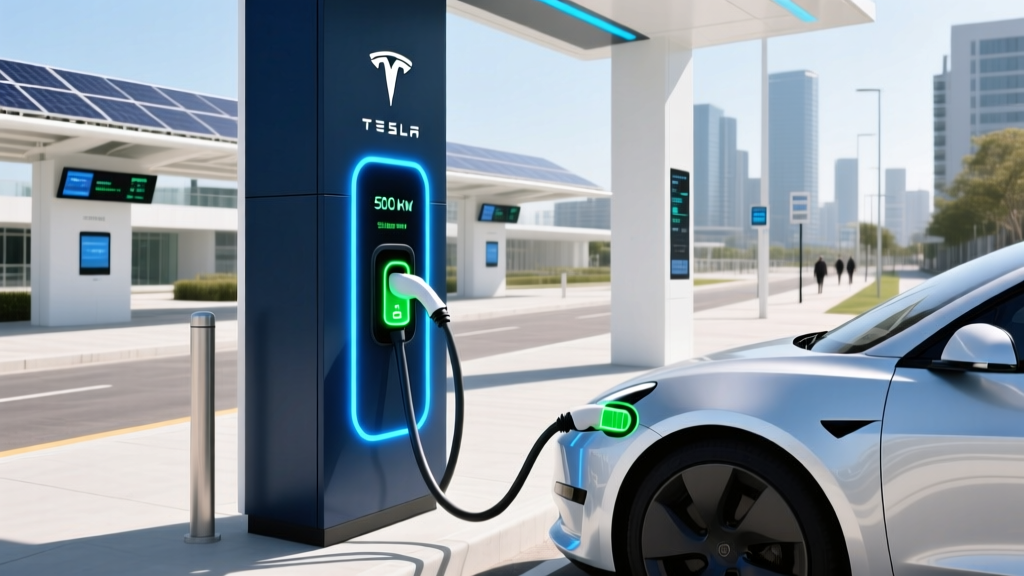
The Tesla V4 Supercharger 500 kW cabinet architecture marks a significant shift in public DC fast charging. Unlike earlier V3 stalls capped at 250 kW, the V4 system pairs a centralized 500 kW power cabinet with individual charge posts capable of delivering up to 500 kW to a single vehicle — provided that vehicle's battery management system (BMS) and electrical architecture can accept it. As of early 2026, most production EVs peak between 200–350 kW on DC fast chargers, but 800V+ platforms from Hyundai/Kia (E-GMP), Porsche (Taycan), and GM (Ultium-based models with the right pack) are already pulling 270–350 kW at compatible stations.
This guide puts the V4 Supercharger in context against the broader charging ecosystem: what each charging level actually delivers, how to set up home charging properly, what it costs per mile, and which equipment to buy. Whether you drive a Tesla or a CCS/NACS-equipped EV from another brand, the fundamentals of kW, kWh, and charging curves apply universally.
Understanding Charging Levels: Speeds, Power, and Range Added
The single most important distinction in EV charging is between kW (power) — the rate at which energy flows — and kWh (energy) — the total capacity stored in your battery. Think of kW as the width of a hose and kWh as the size of the bucket. A 500 kW charger doesn't deliver 500 kWh; it delivers energy at a rate of up to 500 kW, filling your battery's kWh capacity faster.
| Level | Voltage | Power (kW) | Miles of Range Added per Hour | Typical Use Case |
|---|---|---|---|---|
| Level 1 | 120V AC | 1.0–1.4 kW | 3–5 mi/hr | Overnight trickle; PHEV topping off |
| Level 2 | 240V AC | 3.3–19.2 kW | 12–75 mi/hr | Home daily charging; workplace; destination |
| DC Fast (V3 Supercharger) | 400–800V DC | Up to 250 kW | ~1,000 mi/hr (peak) | Road trips; rapid top-ups |
| DC Fast (V4 Supercharger) | 400–800V DC | Up to 500 kW | ~1,500+ mi/hr (peak, 800V vehicles) | Ultra-fast corridor charging |
How the Tesla V4 Supercharger 500 kW Architecture Works
Tesla's V4 Supercharger design separates the power conversion hardware into a centralized cabinet that can feed multiple charge posts. This modular approach offers several advantages:
- Dynamic power allocation: The cabinet can route more power to a stall serving a vehicle that can accept it, rather than splitting evenly across posts.
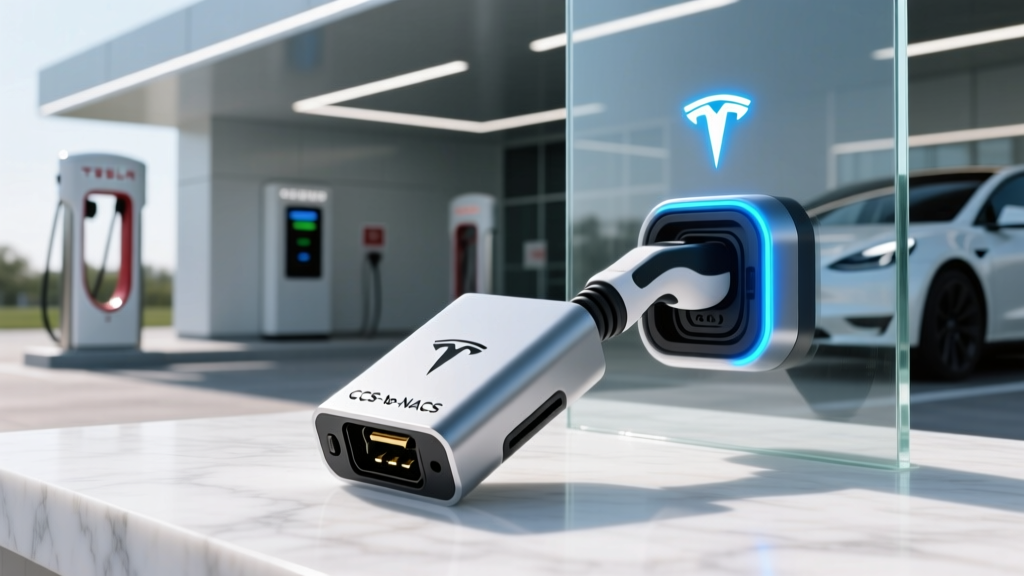
- CCS and NACS compatibility: V4 posts in North America feature the NACS (North American Charging Standard) connector native to Tesla vehicles. Non-Tesla EVs with NACS ports (Ford, GM, Rivian, and others that transitioned starting in 2025) can use V4 stalls natively. CCS1 vehicles require a Tesla-provided adapter (Magic Dock) at select locations.
- Integrated payment and cable management: V4 posts include a credit card reader and a longer, lighter cable — addressing common complaints about V3 cable reach.
As of 2026, Tesla has deployed V4 cabinets at select high-traffic corridor sites in North America and Europe. Not every Supercharger station has been upgraded — the vast majority of the network still operates V3 (250 kW) or V2 (150 kW) stalls. Check the Tesla app or in-car navigation for real-time stall power ratings before planning a road trip around V4 availability.
For context, even at 350 kW sustained for a brief window, a vehicle like the Hyundai Ioniq 5 (84 kWh battery, 800V architecture) can add roughly 60–70 miles of range in under 5 minutes during the peak portion of its charge curve. The 500 kW ceiling primarily benefits future vehicles with larger packs and higher acceptance rates.
Home EV Charger Installation: Requirements, Costs, and Panel Upgrades
Public DC fast chargers like the V4 Supercharger are essential for road trips, but 80–90% of EV charging happens at home. A properly installed Level 2 home charger is the single biggest quality-of-life upgrade for EV ownership. Here's what's involved.
Electrical Requirements for Level 2 Home Charging
A Level 2 charger requires a 240V dedicated circuit — the same voltage as an electric dryer or oven. The most common residential setups:
- 240V / 40A circuit (NEMA 14-50 outlet or hardwired): Delivers up to 9.6 kW (32A continuous draw on a 40A breaker, per NEC 80% rule). Adds ~30–35 mi/hr for most EVs.
- 240V / 60A circuit (hardwired): Delivers up to 11.5 kW (48A continuous). Adds ~40–44 mi/hr. Requires 6 AWG copper wire.
- 240V / 48A circuit (hardwired): Delivers up to 11.5 kW on some chargers. A practical middle ground.
Most modern EVs have onboard chargers rated between 7.2 kW and 11.5 kW. Your actual charge speed is limited by whichever is lower: the charger's output or the vehicle's onboard charger capacity. For example, a base Tesla Model 3 RWD has an 11.5 kW onboard charger, so a 48A/11.5 kW home charger will max it out. A Toyota bZ4X with a 7.68 kW onboard charger won't benefit from anything above a 32A/7.7 kW circuit.
Do You Need a Panel Upgrade?
This is the most overlooked cost in home EV charging. If your home has a 100A main electrical panel (common in homes built before the 1990s), adding a 40A or 60A EV circuit may exceed your panel's capacity — especially if you already run electric heat, an electric dryer, and an electric oven. A licensed electrician will perform a load calculation (per NEC Article 220) to determine if your panel can handle the additional draw.
If an upgrade is needed, expect a 200A panel upgrade to cost between $1,500 and $3,500 depending on your utility, local permitting, and whether a new service drop is required. Homes with existing 200A panels usually have sufficient headroom for a 40A–60A EV circuit without an upgrade.
Installation Cost Breakdown
| Component | Cost Range | Notes |
|---|---|---|
| Level 2 Charger (Equipment) | $300–$700 | Smart Wi-Fi chargers; see recommendations below |
| Electrician Labor (standard install) | $500–$1,500 | Short run from panel to garage; no panel upgrade |
| Electrical Permit | $50–$200 | Varies by municipality; some utilities rebate this |
| Panel Upgrade (if needed) | $1,500–$3,500 | 100A → 200A service upgrade |
| Long Wire Run / Conduit (if needed) | $300–$1,000+ | Panel far from parking spot; trenching for detached garage |
| Total (no panel upgrade) | $850–$2,400 | Typical scenario for modern homes |
| Total (with panel upgrade) | $2,350–$5,900 | Older homes needing service upgrade |
Connector Compatibility: NACS, CCS1, and CHAdeMO
The North American charging connector landscape consolidated significantly between 2023 and 2026. Here's where things stand:
| Connector | AC Level 2 | DC Fast Charging | Vehicle Brands Using It | Adapter Needed? |
|---|---|---|---|---|
| NACS (J3400) | Yes | Yes | Tesla (all), Ford, GM, Rivian, Volvo, Polestar, Mercedes (2025+), Honda (2025+), others transitioning | No — native on new vehicles |
| CCS1 | Via J1772 inlet | Yes | Hyundai/Kia (2024 and earlier), BMW, VW (ID.4 pre-2025), legacy CCS vehicles | CCS-to-NACS adapter for Tesla Superchargers |
| CHAdeMO | Via J1772 inlet | Yes (declining) | Nissan Leaf (legacy); effectively discontinued for new models | Limited DC network access |
| J1772 | Yes (AC only) | No | All non-Tesla EVs (AC inlet) | J1772-to-NACS adapter included with Tesla Mobile Connector for non-Tesla Level 2 |
Key takeaway for 2026: If you're buying a new EV, it almost certainly has a NACS port or will have one by the next model year. CCS1 vehicles remain fully supported at Electrify America, EVgo, and other non-Tesla DC networks, and Tesla's Magic Dock adapter opens Supercharger access to CCS1 vehicles at participating stations. CHAdeMO is effectively a legacy standard — functional but with shrinking infrastructure investment.
Charging Cost Per Mile: Home vs. Public vs. Gas
One of the strongest arguments for EV ownership is lower fueling cost — but the savings vary dramatically depending on where and when you charge. Let's run the numbers using a real vehicle: the 2026 Tesla Model Y Long Range (EPA-rated 320 miles, ~75 kWh usable battery, ~3.8 mi/kWh efficiency).
| Scenario | Rate | Cost for Full "Tank" (320 mi) | Cost Per Mile |
|---|---|---|---|
| Home Level 2 — Off-Peak (utility time-of-use) | $0.08–$0.12/kWh | $6.00–$9.00 | $0.019–$0.028 |
| Home Level 2 — Standard Rate | $0.14–$0.18/kWh | $10.50–$13.50 | $0.033–$0.042 |
| Public Level 2 (ChargePoint, workplace) | $0.20–$0.35/kWh | $15.00–$26.25 | $0.047–$0.082 |
| DC Fast — Tesla Supercharger (avg) | $0.28–$0.40/kWh | $21.00–$30.00 | $0.066–$0.094 |
| DC Fast — Electrify America / EVgo | $0.35–$0.55/kWh | $26.25–$41.25 | $0.082–$0.129 |
| Gasoline — 28 MPG combined (comparable ICE SUV) | $3.40/gal | $38.86 | $0.121 |
Home charging on an off-peak rate delivers fuel costs roughly 75–85% lower than gasoline. Even DC fast charging at Tesla Supercharger rates undercuts gas per mile in most states. However, if you rely exclusively on non-Tesla public DC fast chargers at peak pricing ($0.50+/kWh), your per-mile cost approaches or exceeds that of a fuel-efficient hybrid — a critical consideration for apartment dwellers without home charging access.
Charging Time Examples by Battery Size
Here's how long common EVs take to charge from 10% to 80% SoC across different charging scenarios:
- Tesla Model Y LR (75 kWh): Home Level 2 at 11.5 kW — ~5 hours; V3 Supercharger (250 kW peak) — ~25 min; V4 Supercharger (250 kW sustained, vehicle-limited) — ~22 min
- Hyundai Ioniq 5 (84 kWh, 800V): Home Level 2 at 10.9 kW — ~5.5 hours; 350 kW CCS DC fast charger — ~18 min (10–80%); V4 Supercharger via NACS adapter — similar if acceptance rate matches
- Ford F-150 Lightning Extended Range (131 kWh): Home Level 2 at 11.5 kW — ~9 hours; 150 kW DC fast — ~55 min; 250+ kW DC fast — ~38 min (battery-limited acceptance)
- Chevrolet Equinox EV (85 kWh): Home Level 2 at 11.5 kW — ~6 hours; 150 kW DC fast — ~35 min (10–80%)
Recommended Home Level 2 Chargers (2026)
Based on reliability, smart features, connector compatibility, and value, these are our top picks for home Level 2 charging equipment:
ChargePoint Home Flex
- Power Output: Up to 11.5 kW (48A) on 60A circuit; configurable down to 16A
- Connector: NACS (J3400) native; J1772 version available
- Cable Length: 23 ft
- Smart Features: Wi-Fi, scheduling, energy tracking, Alexa integration
- Price: ~$550–$650
- Best For: Flexible amperage for older panels; non-Tesla EVs with NACS
Tesla Wall Connector
- Power Output: Up to 11.5 kW (48A) on 60A circuit
- Connector: NACS native; includes J1772 adapter in box
- Cable Length: 24 ft
- Smart Features: Wi-Fi, OTA updates, Power Sharing (link multiple units on one circuit)
- Price: ~$475
- Best For: Tesla owners; best value for NACS-native charging
Emporia Level 2 Smart Charger
- Power Output: Up to 11.5 kW (48A) on 60A circuit
- Connector: J1772 (use adapter for NACS vehicles)
- Cable Length: 24 ft
- Smart Features: Wi-Fi, energy monitoring, solar integration, load management
- Price: ~$350–$400
- Best For: Budget-conscious buyers; solar-panel homes
For homes with solar panels, the Emporia charger paired with an Emporia Vue energy monitor allows you to charge exclusively on excess solar production — effectively driving on sunshine for zero marginal grid cost.
Safety, Code, and Installation Best Practices
EV charging involves sustained high-current draw over many hours — more similar to running an electric furnace than plugging in a phone. Proper installation isn't optional; it's a safety requirement.
- Dedicated circuit: Your Level 2 charger must be on its own dedicated breaker — never shared with other appliances. This is a National Electrical Code (NEC) requirement.
- GFCI protection: NEC 2023 (Article 625.54) requires GFCI protection for all EV receptacles rated 150V to ground or less and 60A or less. Many modern Level 2 chargers have built-in GFCI; hardwired installations may not require a separate GFCI breaker (which can also cause nuisance tripping). Your electrician will determine the correct approach per your local code.
- Outdoor rating: If your charger is installed outdoors (carport, driveway, or exterior wall), it must carry a NEMA 4 or NEMA 4X weatherproof rating. All three chargers recommended above are rated for outdoor use.
- Permitting and inspection: Most jurisdictions require an electrical permit for EV charger installation. The work must pass inspection before the utility will approve any associated rate plans or rebates. Skipping the permit risks insurance coverage denial in the event of an electrical fire.
- Wire gauge: A 60A circuit requires 6 AWG copper wire (THHN in conduit or NM-B/Romex where permitted). A 40A circuit requires 8 AWG. Your electrician will size wire per NEC Table 310.15(B)(16) and local amendments.
Frequently Asked Questions
How much does it cost to install a home EV charger?
A standard Level 2 installation (40A–60A circuit, short wire run, no panel upgrade) typically costs $850–$2,400 including equipment, electrician labor, and permit. If your home needs a 200A panel upgrade, add $1,500–$3,500. Always get at least two quotes from licensed electricians and verify they have EV charger installation experience.
How fast will each charging level add range?
Level 1 (120V) adds 3–5 miles per hour — sufficient for PHEVs with small batteries but impractical for full EVs. Level 2 (240V, 40A–60A) adds 25–44 miles per hour, fully recharging most EVs overnight. DC fast charging adds hundreds of miles per hour at peak rates, but real-world 10–80% sessions take 18–40 minutes depending on battery size, chemistry, and charger power.
Which connector/charger is compatible with my EV?
Check your vehicle's charge port. If it's NACS (the smaller, Tesla-style connector now standardized as SAE J3400), you can use Tesla Wall Connectors, NACS-equipped public chargers, and Tesla Superchargers natively. If your vehicle has CCS1, you'll need a CCS-to-NACS adapter for Tesla Superchargers (where Magic Dock is available) and can use Electrify America, EVgo, and ChargePoint DC stations natively. All non-Tesla Level 2 public chargers use J1772; Tesla provides a J1772 adapter with its vehicles, and NACS chargers like the ChargePoint Home Flex work directly.
How much does charging cost per mile vs. gas?
Home off-peak charging costs $0.02–$0.03 per mile for a typical EV — roughly 75–85% less than a 28 MPG gas SUV at $3.40/gallon ($0.12/mi). Standard-rate home charging runs $0.03–$0.04/mi. Public DC fast charging at $0.35–$0.55/kWh costs $0.07–$0.13/mi, narrowing the gap. For maximum savings, prioritize home charging on a time-of-use utility plan.
What electrical upgrades might I need?
The most common upgrade is a main panel replacement from 100A to 200A, needed in older homes where the existing panel can't support the additional 40A–60A load. Other potential upgrades include: adding a sub-panel in a detached garage, upgrading the utility service drop (coordinated with your utility company), or replacing aluminum wiring with copper. A licensed electrician's load calculation will identify exactly what's needed before any work begins.
Will a Tesla V4 Supercharger 500 kW stall charge my non-Tesla EV?
It depends on your vehicle's connector and the specific station. V4 Supercharger posts use NACS connectors. If your non-Tesla EV has a NACS port (Ford, GM, Rivian, and others from 2025+), you can charge natively at V4 stalls open to non-Tesla vehicles. If your EV has CCS1, you'll need to use a station with Tesla's Magic Dock adapter — availability varies by location. Regardless of connector, your vehicle's maximum DC charge acceptance rate (not the stall's 500 kW capacity) determines your actual charging speed.
Sources: fueleconomy.gov (EPA range and efficiency data); IRS.gov (Alternative Fuel Vehicle Refueling Property Credit); Tesla.com Supercharger (network specifications).