The Supercharger Software Update Myth: What Actually Happens
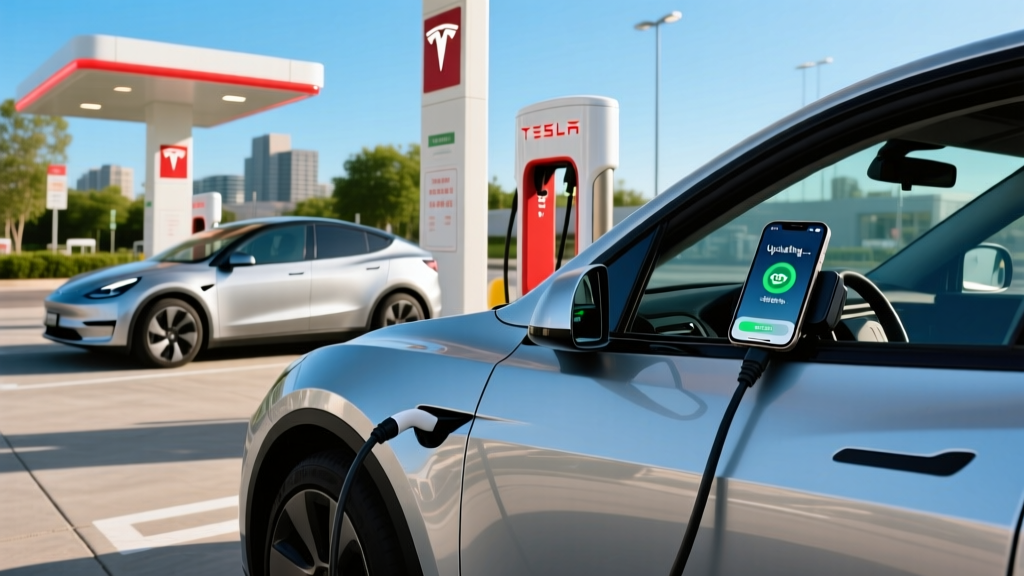
If you've spent time in EV forums or Facebook groups, you've likely encountered the question: can you download Tesla updates next to a Supercharger? The short answer is no — proximity to a Supercharger station does not trigger, accelerate, or enable over-the-air (OTA) software downloads. Tesla pushes updates via your vehicle's built-in Wi-Fi or cellular connection, routed through Tesla's own servers. The car doesn't "sense" a Supercharger and pull data from it.
Superchargers deliver DC fast charging power to your battery. They are not Wi-Fi hotspots, data relays, or update distribution nodes. The confusion likely stems from the fact that Tesla sometimes stages new firmware to vehicles before a major Supercharger network upgrade — but that's a server-side rollout, not a location-based download.
For the fastest and most reliable OTA updates, Tesla actually recommends connecting your vehicle to home Wi-Fi. Large updates (especially FSD Supervised builds) can exceed several gigabytes, and Tesla throttles cellular downloads for large packages. Park within range of your router, and updates will queue and install overnight.
EV Charging Levels Explained: Speeds, Power, and Real-World Range Added
Understanding charging starts with one critical distinction: kW (kilowatts) measures power — the rate at which energy flows into your battery. kWh (kilowatt-hours) measures energy — the total capacity stored in the battery. Think of kW as the width of a pipe and kWh as the size of the tank. A wider pipe fills the tank faster.
| Level | Voltage | Power (kW) | Miles of Range/Hour | Best Use Case |
|---|---|---|---|---|
| Level 1 (120V) | 120V AC | 1.0–1.4 kW | 3–5 mi/hr | Overnight top-off, PHEVs, low-mileage drivers |
| Level 2 (240V) | 240V AC | 3.3–19.2 kW | 12–75 mi/hr | Home daily charging, workplace, destinations |
| DC Fast Charging | 400–800V DC | 50–350 kW | 150–1,000+ mi/hr | Road trips, rapid top-ups, commercial fleets |
A typical BEV with a 75 kWh battery (like the Tesla Model Y Long Range) charging at a 48-amp Level 2 station (11.5 kW) will add roughly 37 miles of range per hour and go from 10% to 80% in about 5.5 hours. At a 250 kW DC fast charger, that same 10–80% session takes approximately 20–25 minutes — though peak rates only hold up to roughly 50–60% State of Charge before tapering.
Home Charger Installation: Electrical Requirements, Panel Upgrades, and Real Costs
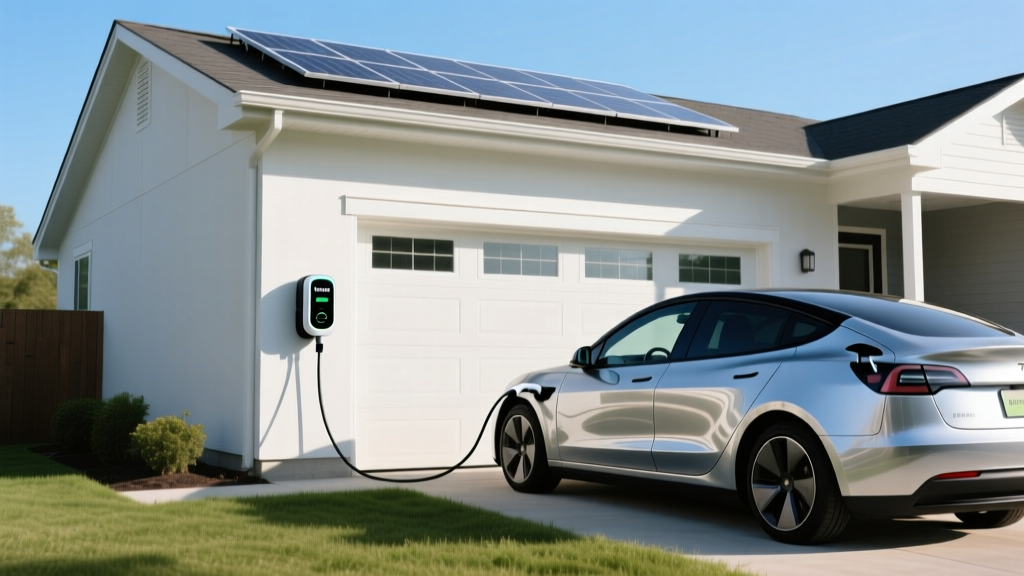
Most EV owners do 80%+ of their charging at home on a Level 2 circuit. Here's what a proper installation requires and what it actually costs in 2026.
Electrical Requirements
A hardwired Level 2 charger typically runs on a 240V dedicated circuit at 40, 48, or 60 amps. The National Electrical Code (NEC) requires the circuit breaker to be rated at 125% of the continuous load — so a 48-amp charger needs a 60-amp breaker. You'll need:
- A dedicated double-pole breaker in your main panel
- Appropriate gauge wiring (6 AWG copper for 60A circuits, run in conduit where required)
- A NEMA 14-50 outlet (if using a plug-in charger) or direct hardwire connection
- GFCI protection if the charger is installed outdoors or in a garage per local code
- A permit from your local building department — most jurisdictions require inspection
Panel Upgrade Reality
Many homes built before 2000 have 100-amp electrical panels. Adding a 60-amp EV circuit may push total calculated load beyond the panel's capacity, triggering a mandatory upgrade to 200 amps. This is one of the most underestimated costs in EV ownership.
| Component | Typical Cost Range | Notes |
|---|---|---|
| Level 2 Charger Equipment | $350–$750 | Varies by brand, power output, and smart features |
| Electrician Labor (standard install) | $500–$1,500 | Depends on run length, conduit, and local rates |
| Permit & Inspection | $50–$250 | Varies by municipality |
| Electrical Panel Upgrade (if needed) | $1,500–$4,000 | 100A → 200A; required in older homes |
| Total (no panel upgrade) | $900–$2,500 | Most common scenario for 200A-panel homes |
| Total (with panel upgrade) | $2,400–$6,500 | Older homes, high-load households |
Always get at least two quotes from licensed electricians and confirm they hold a current EV-charger-installation certification or have verifiable EV install experience. The U.S. Department of Energy maintains resources on home charging best practices.
Connector Compatibility: NACS, CCS1, CHAdeMO, and Adapter Needs
The North American charging connector landscape has consolidated significantly since 2024, when most major automakers adopted the North American Charging Standard (NACS) — originally Tesla's proprietary connector. Here's where things stand for 2026 model-year vehicles:
| Connector | Brands Using It (2026) | Adapter Needed? |
|---|---|---|
| NACS (Tesla) | Tesla, Ford, GM, Rivian, Volvo, Polestar, Nissan (new models), Hyundai/Kia (new models), BMW, Mercedes | CCS1→NACS adapter for older non-Tesla EVs at Superchargers |
| CCS1 | Volkswagen ID.4 (pre-2026), legacy Hyundai/Kia, Stellantis models, Electrify America network standard | NACS→CCS1 adapter for newer NACS-port cars at legacy CCS stations |
| CHAdeMO | Nissan Leaf (legacy only — discontinued), Mitsubishi Outlander PHEV (legacy) | Limited adapter options; network shrinking |
If you drive a 2025+ Ford F-150 Lightning, GM Equinox EV, or Rivian R1S, your car has a native NACS port and can plug directly into any Tesla Supercharger V3 or V4 stall. If you own an older CCS1-equipped EV (e.g., 2023 Hyundai Ioniq 5), you'll need a manufacturer-approved CCS-to-NACS adapter — typically $150–$250 — to access the Supercharger network.
Charging Cost Per Mile vs. Gasoline: The Real Numbers
One of the strongest economic arguments for EVs is fuel cost savings — but the gap varies enormously depending on where and when you charge.
| Scenario | Cost per kWh | Cost per Mile* | Annual Cost (12,000 mi) |
|---|---|---|---|
| Home Level 2 (off-peak utility rate) | $0.08–$0.14 | $0.02–$0.04 | $240–$480 |
| Home Level 2 (standard rate) | $0.14–$0.20 | $0.04–$0.06 | $480–$720 |
| Public Level 2 (ChargePoint, etc.) | $0.20–$0.35 | $0.06–$0.10 | $720–$1,200 |
| DC Fast Charging (Electrify America, Tesla) | $0.30–$0.55 | $0.09–$0.16 | $1,080–$1,920 |
| Gasoline Vehicle (28 MPG avg, $3.40/gal) | — | $0.12 | $1,440 |
*Based on a typical BEV efficiency of 3.0–3.5 miles per kWh (e.g., Tesla Model Y, Hyundai Ioniq 5, Chevrolet Equinox EV). Per fueleconomy.gov, the 2026 Tesla Model Y Long Range achieves 122 MPGe combined (approximately 3.5 mi/kWh).
Home charging on an off-peak rate saves $1,000–$1,200 annually versus gasoline. But if you rely exclusively on DC fast charging at $0.45+/kWh, your "fuel" costs can actually exceed a gasoline car. This is why home charging access remains the single biggest factor in EV ownership satisfaction.
Charging Time Examples: 10–80% for Common Battery Sizes
EV batteries charge fastest between roughly 10% and 50% State of Charge (SoC). Above 80%, the charge rate tapers sharply to protect battery longevity — a phenomenon called the charge curve taper. Most drivers target 10–80% sessions for optimal time efficiency.
| Vehicle (Example) | Battery (kWh usable) | Peak DC kW | 10–80% DC Fast | Level 2 (11.5 kW) Full |
|---|---|---|---|---|
| 2026 Tesla Model Y LR | 75 kWh | 250 kW | ~22 min | ~6.5 hr |
| 2026 Hyundai Ioniq 5 (84 kWh) | 84 kWh | 240 kW | ~18 min | ~7.3 hr |
| 2026 Ford F-150 Lightning Ext. | 131 kWh | 150 kW | ~45 min | ~11.4 hr |
| 2026 Chevrolet Equinox EV | 85 kWh | 150 kW | ~32 min | ~7.4 hr |
Note that peak kW is not sustained kW. A 250 kW peak rate on the Model Y may hold for only the first 10–15% of the session before stepping down to 150–175 kW, then further tapering above 60%. The "10–80% time" is the most honest metric for comparing real-world charging speed.
Recommended Home EV Chargers: Equipment Picks for 2026
Tesla Wall Connector
- Power: 11.5 kW (48A) at 240V
- Connector: NACS native
- Cable: 24 ft
- Smart features: Wi-Fi, OTA updates, load sharing with multiple units, Power Sharing
- Price: ~$475
- Best for: Tesla owners and NACS-native 2025+ EVs
ChargePoint Home Flex
- Power: Up to 12 kW (50A) at 240V, configurable down to 16A
- Connector: J1772 (NACS adapter included in 2026 kit)
- Cable: 23 ft
- Smart features: Wi-Fi, app scheduling, Alexa integration, flexible amperage
- Price: ~$550–$650
- Best for: Mixed-EV households, adjustable circuit sizing
Emporia Vue EV Charger
- Power: 11.5 kW (48A) at 240V
- Connector: J1772 (NACS adapter available)
- Cable: 24 ft
- Smart features: Wi-Fi, energy monitoring, solar integration, time-of-use scheduling
- Price: ~$399
- Best for: Budget-conscious buyers, solar-panel homes
All three chargers carry NEMA 4 (outdoor) ratings and UL certification. Hardwired installation is recommended over plug-in for outdoor mounts, as it eliminates the GFCI breaker requirement on the outlet circuit in many jurisdictions and provides a more weather-resistant connection.
Safety, Code, and the Questions EV Buyers Actually Ask
How much does it cost to install a home EV charger?
A standard Level 2 home installation runs $900–$2,500 total (equipment + electrician + permit) in a home with an adequate 200-amp panel. Older homes requiring a panel upgrade should budget $2,400–$6,500. Always get itemized quotes that separate equipment, labor, and permit fees.
How fast will each charging level add range?
Level 1 (120V): 3–5 miles per hour. Level 2 (240V, 48A): 25–40 miles per hour depending on vehicle efficiency. DC fast charging: effectively 150–300 miles in 15–25 minutes at a 150–250 kW station, though actual speed depends on battery size, chemistry, temperature, and State of Charge.
Which connector/charger is compatible with my EV?
Check your vehicle's charge port. 2025–2026 models from Tesla, Ford, GM, Rivian, Hyundai, Kia, BMW, Volvo, and Nissan use NACS. Older non-Tesla EVs may have CCS1. The Nissan Leaf (now discontinued) used CHAdeMO. A NACS-equipped home charger covers most new EVs; buy a J1772 or CCS adapter if you have a legacy vehicle.
How much does charging cost per mile vs. gas?
Home charging at off-peak rates costs $0.02–$0.04 per mile — roughly one-quarter to one-third the cost of gasoline at $3.40/gallon and 28 MPG. Public DC fast charging at $0.40–$0.55/kWh can cost $0.12–$0.16 per mile, comparable to or exceeding gasoline. Maximize home charging for the best economics.
What electrical upgrades might I need?
The most common upgrade is a 100A → 200A panel replacement ($1,500–$4,000). Other potential needs include: a sub-panel addition if the main panel is full, service mast or meter base upgrades for utility-side capacity, and smart load-management devices (e.g., Emporia VUE or Tesla Powerwall gateway) that allow EV charging without a panel upgrade by dynamically limiting draw when other appliances are running.
Can you download Tesla updates next to a Supercharger?
No. Tesla OTA updates are delivered via your vehicle's cellular modem or Wi-Fi connection, independent of your proximity to any charging station. For the fastest downloads, connect your Tesla to home Wi-Fi — large FSD Supervised packages are often throttled on cellular and may require Wi-Fi to begin installation. See Tesla's official software update documentation for details.
For more on federal incentives that can offset your home charging setup, the IRS §30D clean vehicle credit page outlines current eligibility rules — though the charger itself may qualify under the separate Residential Clean Energy Credit if bundled with solar or battery storage.