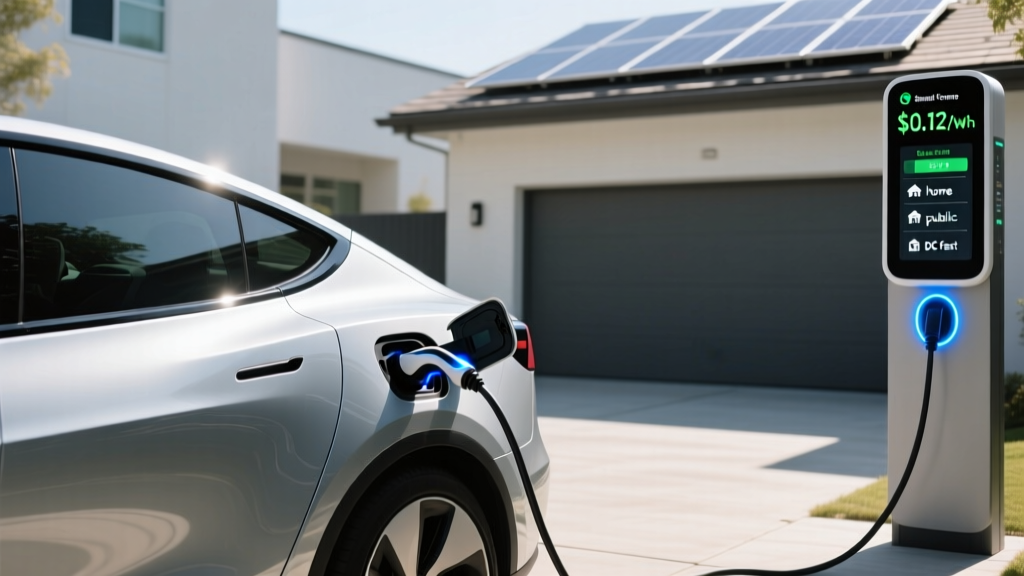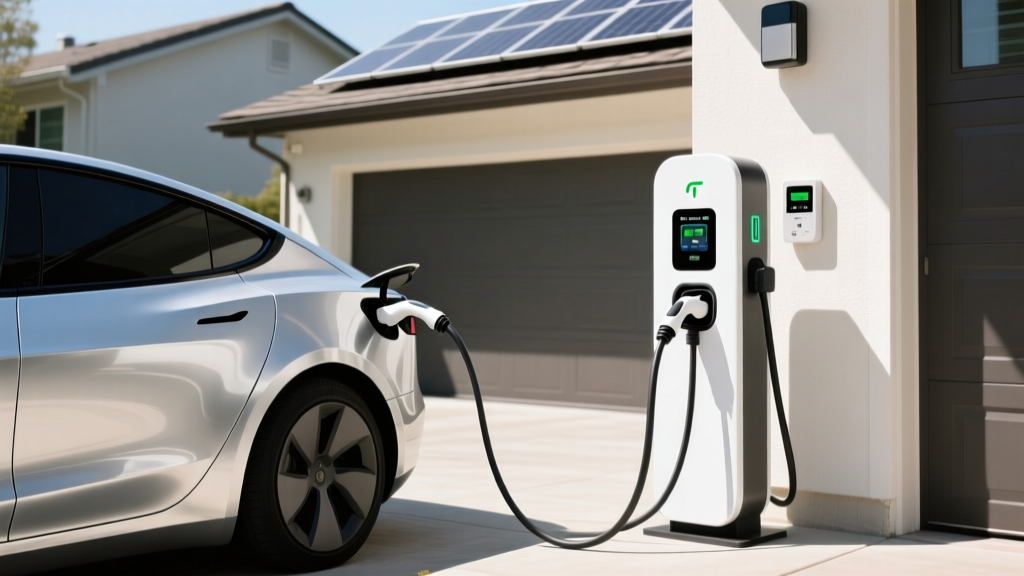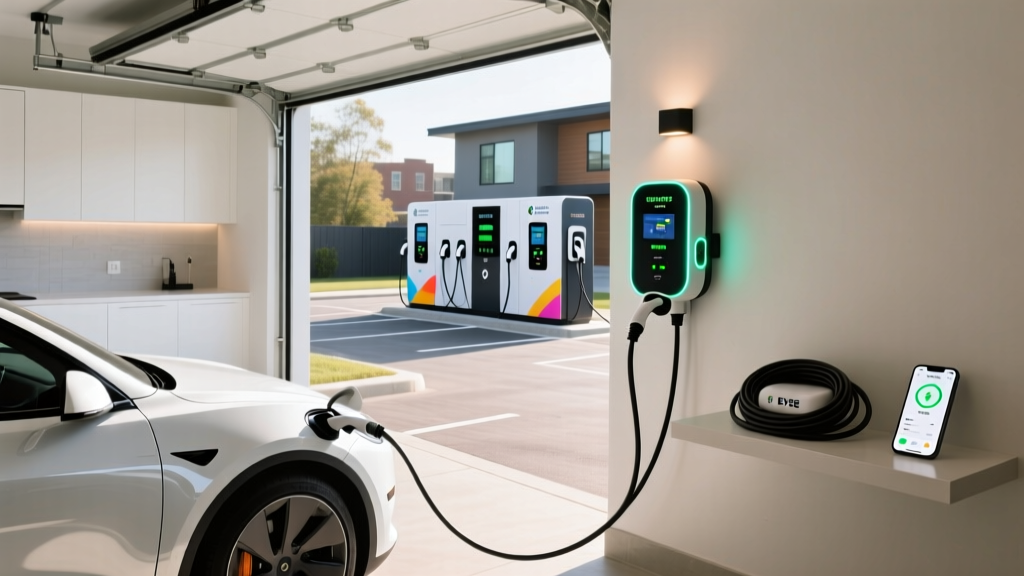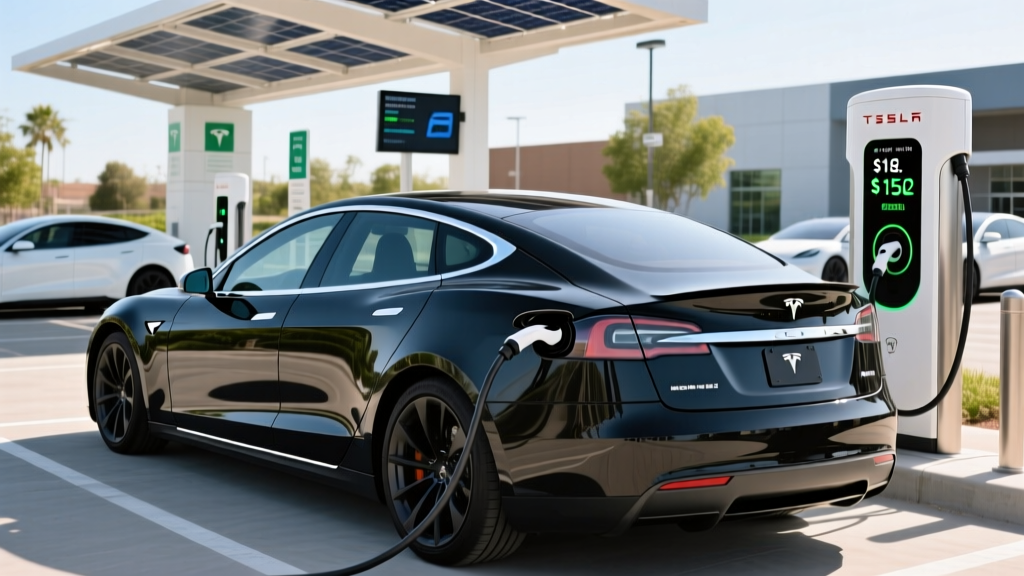
If you've ever stared at a Tesla Supercharger stall and wondered, "How much is this actually costing me?" — you're not alone. Supercharging pricing has evolved significantly, and the per-kWh rate varies wildly depending on your state, time of day, and whether you're charging a Model 3, Model Y, Model S, or Model X. In this guide, we break down exactly what Tesla Supercharging costs in 2026, compare it against home Level 2 charging, and show you the real per-mile economics versus a gas-powered car.
Tesla Supercharger Pricing in 2026: What You'll Actually Pay
Tesla Supercharger rates are not a single national number. They're set per-station and fluctuate based on local electricity rates, demand-based utility pricing, and Tesla's own margin strategy. As of early 2026, most U.S. Supercharger stations fall into these ranges:
- Off-peak hours (typically overnight or mid-morning): $0.28–$0.36/kWh
- Peak hours (late afternoon/evening, high-demand periods): $0.38–$0.52/kWh
- Average blended rate across the U.S. network: approximately $0.35/kWh
Some stations in California, New York, and Massachusetts routinely exceed $0.48/kWh during peak windows, while stations in the Southeast and Midwest often hover around $0.28–$0.32/kWh. Tesla displays the exact rate on your vehicle's touchscreen and in the Tesla app before you plug in — always check before initiating a session.
Idle fees remain an additional cost factor: if your vehicle is fully charged (or reaches its set limit) and you don't move it within 5 minutes, Tesla charges $0.50/minute (or $1.00/minute if the station is at 100% capacity). These fees add up fast and are entirely avoidable with the Tesla app's charge-complete notifications.
Charging Levels Explained: Speeds, Power, and Range Added
Understanding EV charging requires a firm grasp of the difference between kW (kilowatts), which measures power — the rate at which energy flows — and kWh (kilowatt-hours), which measures energy capacity — the total amount stored in your battery. Think of kW as the width of a hose and kWh as the size of the bucket.
| Level | Voltage | Power (kW) | Miles of Range/Hour | Best Use Case |
|---|---|---|---|---|
| Level 1 (120V) | 120V AC | 1.0–1.4 kW | 3–5 mi/hr | Overnight top-ups, PHEVs, emergency backup |
| Level 2 (240V) | 240V AC | 7.2–19.2 kW | 25–75 mi/hr | Daily home charging, workplace, destinations |
| DC Fast Charging | 400–800V DC | 50–350 kW | 150–1,000+ mi/hr (peak) | Road trips, rapid top-ups, fleet use |
Tesla Superchargers are DC fast chargers. The current V4 Supercharger stalls deliver up to 250 kW (with some newer V4 cabinets supporting up to 350 kW for compatible vehicles). A Tesla Model Y Long Range (75 kWh usable battery, ~310 miles EPA) charging from 10–80% at a 250 kW V3/V4 Supercharger takes approximately 22–27 minutes under ideal conditions — though the charge curve tapers significantly above 60% SoC, meaning the last 20% takes nearly as long as the first 50%.
Cost Per Mile: Supercharging vs Home Level 2 vs Gas
The headline question for most buyers: is Supercharging cheaper than gas? The answer depends heavily on whether you're paying Supercharger rates or residential electricity rates. Here's a real-world breakdown using a 2026 Tesla Model Y Long Range (EPA-rated 29 kWh/100 miles, or roughly 3.45 miles/kWh):
| Charging Method | Rate ($/kWh) | Cost per 100 Miles | Cost per Mile | Annual Cost (12,000 mi) |
|---|---|---|---|---|
| Home Level 2 (national avg electricity) | $0.16 | $4.64 | $0.046 | $557 |
| Home Level 2 (off-peak TOU rate) | $0.09 | $2.61 | $0.026 | $313 |
| Tesla Supercharger (avg blended) | $0.35 | $10.15 | $0.102 | $1,218 |
| Tesla Supercharger (peak CA rate) | $0.50 | $14.50 | $0.145 | $1,740 |
| Gas car (28 MPG combined, $3.40/gal) | — | $12.14 | $0.121 | $1,457 |
| Gas car (22 MPG combined, $3.40/gal) | — | $15.45 | $0.155 | $1,854 |
The takeaway: Home Level 2 charging is dramatically cheaper than both Supercharging and gas — roughly one-quarter the cost of gas per mile. Exclusive Supercharger use puts you in the same cost range as a fuel-efficient gas car, though still below a mid-efficiency ICE vehicle. For maximum savings, home charging on a time-of-use (TOU) plan is unbeatable.
For authoritative efficiency data on specific models, always cross-reference fueleconomy.gov, which publishes EPA-rated kWh/100mi and MPGe figures for every EV sold in the U.S.
Home EV Charger Installation: Costs, Requirements, and Upgrades
Installing a Level 2 home charger is the single highest-impact upgrade for EV ownership economics. Here's what's involved electrically and financially.
Electrical Requirements
A typical Level 2 home charger requires a 240-volt dedicated circuit — the same voltage as your electric dryer or oven. Common amperage configurations:
- 40A circuit / 32A continuous (7.7 kW): Most common residential setup, sufficient for overnight charging of any Tesla (adds ~30 miles/hour)
- 50A circuit / 40A continuous (9.6 kW): Recommended for larger batteries (Model S/X, 100 kWh); adds ~38 miles/hour
- 60A circuit / 48A continuous (11.5 kW): High-power setup; requires a robust panel and 6/3 NM-B or 4 AWG THHN wiring
The National Electrical Code (NEC) requires that continuous loads (like EV charging, which runs for 3+ hours) not exceed 80% of the circuit breaker rating. A 40A breaker therefore delivers a maximum continuous 32A (7.7 kW at 240V).
Panel Upgrade Considerations
Many homes built before 2000 have 100A or 125A main electrical panels. Adding a 40–60A EV circuit may push total load beyond safe capacity — especially if you also run electric heat, an electric dryer, and an electric oven simultaneously. An electrician will perform a load calculation per NEC Article 220 to determine if your panel can handle the addition.
If a panel upgrade is needed (from 100A to 200A), expect to pay $1,500–$3,500 for the upgrade alone, on top of the charger circuit installation. Some utility companies offer rebates of $200–$500 for panel upgrades that enable EV charging — check with your local provider.
| Component | Low Estimate | High Estimate | Notes |
|---|---|---|---|
| Level 2 charger unit (hardware) | $350 | $750 | Varies by brand, power, smart features |
| Electrician labor (circuit + outlet/hardwire) | $500 | $2,000 | Depends on run length, wall type, conduit needs |
| Electrical permit | $50 | $250 | Required in most jurisdictions; varies by municipality |
| Panel upgrade (if needed) | $1,500 | $3,500 | Only if existing panel lacks capacity |
| Total (no panel upgrade) | $900 | $3,000 | Most homes with 200A service |
| Total (with panel upgrade) | $2,400 | $6,500 | Older homes with 100A panels |
Federal incentive note: The §30D tax credit applies to vehicles, not chargers. However, the Alternative Fuel Vehicle Refueling Property Credit (IRS Form 8911) may cover up to 30% of home charger equipment and installation costs (capped at $1,000) if you live in an eligible census tract. Consult a tax professional and verify current-year eligibility on irs.gov.
Connector Compatibility: NACS, CCS, and Adapters
The connector landscape has shifted dramatically. Tesla's North American Charging Standard (NACS) has been adopted by Ford, GM, Rivian, Volvo, BMW, Hyundai, and most major automakers for their 2025+ models. Here's where things stand:
| Connector | Native Vehicles | Adapter Required For | Network Access |
|---|---|---|---|
| NACS (Tesla) | Tesla (all), Ford (2025+), GM (2025+), Rivian (2025+), others | CCS vehicles via CCS-to-NACS adapter ($150–$250) | Tesla Supercharger, Electrify America (select), ChargePoint |
| CCS1 | Hyundai/Kia (some 2024–25), legacy VW ID.4, BMW iX (pre-2025) | Tesla Supercharger via NACS-to-CCS adapter (limited availability) | Electrify America, EVgo, ChargePoint, Ionity (EU) |
| CHAdeMO | Nissan Leaf (discontinued 2025), Mitsubishi Outlander PHEV (older) | No practical adapter to NACS/CCS | Limited and declining network |
For Tesla owners, NACS is native — no adapter needed at Superchargers. If you need to use a non-Tesla CCS station (Electrify America, for example), Tesla sells a CCS adapter (~$175) that enables access to those networks. Conversely, non-Tesla EVs with CCS ports can now access Tesla Superchargers (where enabled) using a NACS-to-CCS adapter provided or sold by their manufacturer.
Level 2 Charger Equipment Recommendations
Not all Level 2 chargers are equal. Here are proven, well-built units suited for Tesla and NACS-equipped vehicles, evaluated on power output, cable length, connectivity, and durability:
Tesla Wall Connector (Gen 4)
- Power Output: Up to 11.5 kW (48A on a 60A circuit)
- Connector: Native NACS — no adapter needed for Tesla vehicles
- Cable Length: 24 feet
- Smart Features: Wi-Fi connectivity, OTA firmware updates, Power Sharing (link two units on one circuit), Tesla app integration, load management
- Price: ~$475
- Best For: Tesla-only households wanting seamless integration and maximum power
ChargePoint Home Flex (NACS version)
- Power Output: Up to 12 kW (50A on a 60A circuit); configurable down to 16A for smaller circuits
- Connector: NACS (2025+ model); older CCS/J1772 versions available
- Cable Length: 23 feet
- Smart Features: Wi-Fi, ChargePoint app with scheduling and cost tracking, Alexa/Google Home integration, flexible amperage DIP switches
- Price: ~$599
- Best For: Mixed EV households (with adapter), users wanting detailed energy tracking
Emporia Level 2 EV Charger
- Power Output: Up to 11.5 kW (48A on 60A circuit)
- Connector: NACS or J1772 versions available
- Cable Length: 24 feet
- Smart Features: Wi-Fi, Emporia app with real-time energy monitoring, solar integration (pairs with Emporia Vue home energy monitor), scheduling, TOU optimization
- Price: ~$399
- Best For: Budget-conscious buyers with solar panels or those wanting granular energy data
Safety, Electrical Code, and Installation Best Practices
EV charging is a high-draw, continuous electrical load — treat it with the same seriousness as adding a sub-panel or electric range circuit. Key safety requirements:
- Dedicated circuit: Your EV charger must be on its own dedicated breaker — never shared with other appliances or outlets.
- GFCI protection: NEC 2023 (Article 625.54) requires GFCI protection for all receptacle-based EV charging installations (NEMA 14-50 outlets). Hardwired installations have different requirements — your electrician will advise based on local code amendments.
- Outdoor rating: If installing outdoors, the charger must carry a NEMA 4 or NEMA 4X rating (weatherproof, resistant to rain, dust, and hose-directed water). All three chargers listed above meet this standard.
- Permit and inspection: Virtually all jurisdictions require a permit for new 240V circuits. The inspection ensures wire gauge, breaker sizing, grounding, and bonding meet NEC standards. Skipping the permit risks voiding homeowner's insurance coverage for electrical fires.
- NEMA 14-50 vs hardwired: A NEMA 14-50 outlet offers portability (take the charger when you move), but hardwired installations eliminate the GFCI breaker requirement in some jurisdictions and reduce points of failure. Hardwired is generally recommended for permanent installations.
Charging Time Examples: 10–80% Across Common Battery Sizes
Here's how long a 10–80% charge takes across popular Tesla models at different charging levels. Note that all DC fast charging sessions experience curve taper — charging speed peaks early and decreases as the battery fills.
| Vehicle (Battery Size) | Level 2 Home (11.5 kW) | Tesla Supercharger V3 (250 kW peak) | Electrify America (150 kW peak) |
|---|---|---|---|
| Model 3 RWD (57.5 kWh usable, LFP) | ~4 hr 30 min | ~25 min (LFP accepts high rate longer) | ~35 min |
| Model Y Long Range (75 kWh usable, NMC) | ~5 hr | ~24 min | ~33 min |
| Model S Plaid (95 kWh usable, NMC) | ~6 hr 15 min | ~30 min | ~42 min |
| Model X (95 kWh usable, NMC) | ~6 hr 15 min | ~32 min | ~45 min |
Key nuance on LFP batteries: The Model 3 RWD uses a lithium iron phosphate (LFP) battery, which has a flatter charge curve than NMC chemistry — it sustains higher charge rates deeper into the session. Tesla recommends charging LFP batteries to 100% regularly for calibration, unlike NMC batteries where 80% daily is optimal for longevity.
Frequently Asked Questions
How much does it cost to fully charge a Tesla at a Supercharger?
At the U.S. average Supercharger rate of ~$0.35/kWh, fully charging a Model Y Long Range (75 kWh usable) from near-empty costs approximately $26.25. A Model S or Model X with a 95 kWh battery would cost roughly $33.25. These figures assume a full 0–100% session, which is rare — most drivers charge from 10–80%, costing $18–$22 for a Model Y.
Is home charging really that much cheaper than Supercharging?
Yes, dramatically so. At the national average residential rate of $0.16/kWh, the same Model Y 10–80% session costs about $8.40 — less than half the Supercharger cost. On a time-of-use plan with off-peak rates of $0.09/kWh, it drops to roughly $4.73. Over a year of 12,000 miles, exclusive home charging saves $660–$1,200 versus exclusive Supercharger use.
Can I install a Tesla Wall Connector myself?
Tesla sells the Wall Connector directly to consumers, but installation must be performed by a licensed electrician to meet NEC code and maintain your homeowner's insurance. The 240V circuit involves your main panel, proper wire gauge, breaker sizing, and grounding — all of which require professional expertise and a permit.
Do Tesla Supercharger prices vary by time of day?
Yes. Many Supercharger stations now use time-of-use pricing, with lower rates during off-peak hours (typically 9 PM – 6 AM, and sometimes mid-morning). Check the Tesla app or your in-car navigation for station-specific pricing before you arrive. Savings of $0.10–$0.20/kWh between peak and off-peak are common.
What if my house only has a 100A electrical panel?
A 100A panel can sometimes support a Level 2 charger on a 20A or 30A circuit (delivering 3.8–5.8 kW, or roughly 15–23 miles of range per hour) if your electrician's load calculation allows it. For faster 40–60A charging, a panel upgrade to 200A ($1,500–$3,500) is typically required. Some homeowners opt for a smart load-management device (like the Emporia Smart Load Center or Tesla's built-in Power Sharing) to avoid the panel upgrade.
Does frequent Supercharging degrade my Tesla's battery?
DC fast charging generates more heat than Level 2 charging, and heat is the primary driver of lithium-ion degradation. However, Tesla's thermal management system actively cools the battery during Supercharging. Current data from fleet studies suggests that exclusive Supercharger users see approximately 1–3% more degradation over 100,000 miles compared to primarily Level 2-charged vehicles. This is a modest difference — not a reason to avoid Supercharging on road trips, but a good reason to default to Level 2 at home.