Tesla Supercharging Costs: What You'll Actually Pay
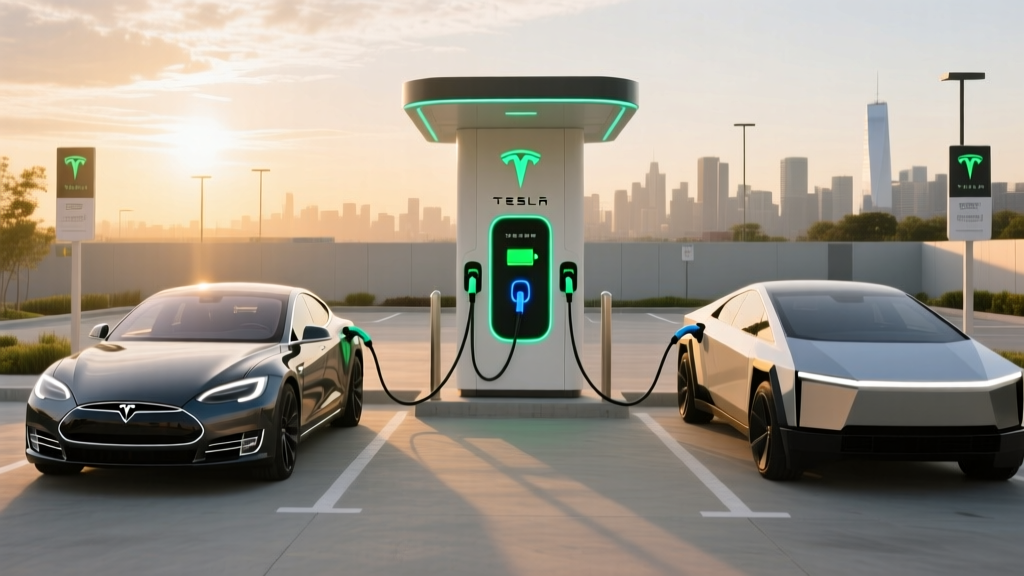
If you're researching how much does Tesla Supercharging cost before buying a Model 3, Model Y, or the refreshed Model S, the short answer is: between $0.25 and $0.50 per kWh at most U.S. Supercharger stations in 2026, with a national average hovering around $0.35/kWh. But that number fluctuates based on your state, time of day, whether you're a Tesla owner or driving a non-Tesla EV with a NACS adapter, and whether you subscribe to Tesla's membership pricing tier.
This guide breaks down the real math behind Supercharger sessions, compares the cost to home Level 2 charging and gasoline, and explains how to minimize what you pay per mile. We'll also cover the full home charging setup so you can avoid Superchargers for daily driving altogether.
- Supercharger average: ~$0.35/kWh (varies $0.25–$0.50 by location)
- Full Supercharger charge (75 kWh battery, 10–80%): ~$18–$26
- Home Level 2 average: ~$0.13–$0.17/kWh (national residential average)
- Cost per mile (Supercharger): ~$0.09–$0.14
- Cost per mile (home): ~$0.03–$0.05
Supercharger Pricing by the Numbers
Tesla prices Supercharging in one of two ways depending on the station: per kWh (the most common and transparent method) or per minute (used in some regions where utility regulations prohibit per-kWh resale). Most U.S. stations in 2026 bill per kWh.
Here's what typical sessions cost for popular Tesla models using the ~$0.35/kWh average:
| Vehicle | Battery (usable kWh) | Energy Added (kWh) | Est. Cost @ $0.35/kWh | Est. Range Added |
|---|---|---|---|---|
| Model 3 RWD (2026) | 57.5 kWh (LFP) | ~40 kWh | $14.00 | ~180 miles |
| Model 3 Long Range AWD | 75 kWh (NMC) | ~52.5 kWh | $18.38 | ~240 miles |
| Model Y Long Range AWD | 75 kWh (NMC) | ~52.5 kWh | $18.38 | ~225 miles |
| Model S Long Range | 95 kWh (NMC) | ~66.5 kWh | $23.28 | ~275 miles |
Peak vs. off-peak pricing: Tesla has expanded time-of-use pricing to more Supercharger stations. In California, Nevada, and parts of the Northeast, charging between 9 PM and 6 AM can drop the rate by $0.05–$0.10/kWh. Conversely, midday peak rates at urban stations can push toward $0.45–$0.50/kWh. Check the Tesla app before you plug in — it displays the current rate for each station.
Idle fees: Don't forget Tesla's idle fee. If your car finishes charging and you don't move it within 5 minutes, Tesla charges $0.50/minute (or $1.00/minute if the station is at 100% capacity). This can add $10–$20 to your session if you're distracted.
Supercharging vs. Gas vs. Home Charging: Cost Per Mile
To understand whether Supercharging saves money, we need to compare it to gasoline and home charging on a per-mile basis. The key variable here is your vehicle's efficiency, measured in kWh per 100 miles (the EV equivalent of gallons per 100 miles).
| Energy Source | Unit Cost | Efficiency | Cost Per Mile |
|---|---|---|---|
| Home Level 2 (national avg.) | $0.16/kWh | 26 kWh/100 mi (Model Y) | $0.042 |
| Home Level 2 (off-peak TOU) | $0.09/kWh | 26 kWh/100 mi (Model Y) | $0.023 |
| Tesla Supercharger (avg.) | $0.35/kWh | 26 kWh/100 mi (Model Y) | $0.091 |
| Tesla Supercharger (peak) | $0.48/kWh | 26 kWh/100 mi (Model Y) | $0.125 |
| Non-Tesla DC fast (EA, EVgo) | $0.43/kWh | 26 kWh/100 mi (Model Y w/ adapter) | $0.112 |
| Gasoline (28 MPG combined) | $3.40/gallon | 28 MPG (Toyota RAV4) | $0.121 |
| Gasoline (22 MPG combined) | $3.40/gallon | 22 MPG (F-150 EcoBoost) | $0.155 |
The takeaway: home charging is 2–4× cheaper than Supercharging, and even peak Supercharger rates are competitive with or cheaper than gasoline for most vehicles. A Model Y owner charging exclusively at home saves roughly $1,200–$1,800 per year compared to a 28 MPG gas vehicle driven 12,000 miles annually. Even exclusive Supercharging saves $300–$500/year versus the same gas car.
According to fueleconomy.gov, the 2026 Model Y Long Range achieves 115 MPGe combined (29 kWh/100 mi), which we've approximated at 26 kWh/100 mi for real-world mixed driving above.
Charging Levels Explained: Speed, Cost, and When to Use Each
Understanding the three charging levels is essential for managing both your time and your charging budget.
| Level | Voltage | Power (kW) | Miles of Range Per Hour | Best For |
|---|---|---|---|---|
| Level 1 (120V) | 120V AC | 1.0–1.4 kW | 3–5 mi/hr | Overnight top-ups, PHEVs, emergencies |
| Level 2 (240V) | 240V AC | 7.2–19.2 kW | 25–70 mi/hr | Daily home charging, workplace |
| DC Fast Charging | 400–800V DC | 50–350 kW | 150–1,000+ mi/hr (peak) | Road trips, quick top-ups |
kW vs. kWh — the critical distinction: kW (kilowatts) measures the rate of energy delivery — like water pressure from a hose. kWh (kilowatt-hours) measures the total energy delivered — like gallons in a bucket. A 150 kW charger filling a 75 kWh battery for 30 minutes delivers roughly 75 kWh of energy (minus taper losses). You're billed on kWh consumed, not kW rate.
The charging curve reality: DC fast charging doesn't deliver peak kW for the entire session. A Tesla Model Y Long Range at a V3 Supercharger peaks at 250 kW from roughly 10–30% SoC, then tapers to ~150 kW by 50%, ~75 kW by 70%, and drops below 50 kW past 80%. That's why Tesla quotes 10–80% times (~27 minutes for the Model Y LR) rather than 0–100%. Charging past 80% at a Supercharger is slow and expensive — set your charge limit to 80% for road trips.
How Much Does It Cost to Install a Home EV Charger?
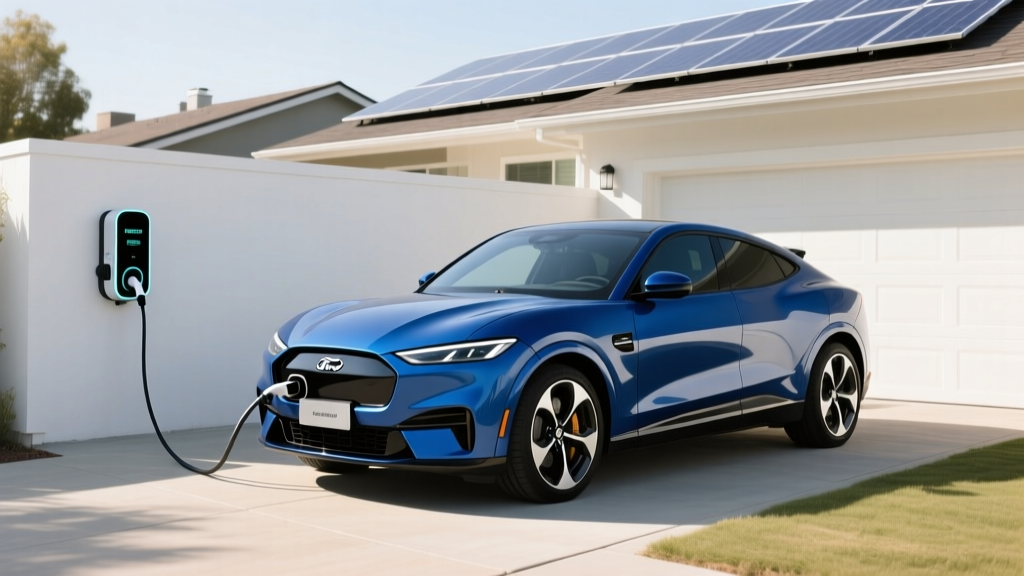
Home Level 2 charging is where the real savings happen, but the installation cost varies enormously based on your electrical panel, wiring distance, and local permit requirements.
Electrical requirements for Level 2: A standard home Level 2 charger requires a 240V dedicated circuit, typically rated at 40A or 60A. A 40A circuit delivers up to 9.6 kW (enough to fully charge a Model Y in ~8 hours). A 60A circuit delivers up to 14.4 kW (full charge in ~5.5 hours). The National Electrical Code requires the circuit breaker to be rated at 125% of the continuous load, so a 48A charger needs a 60A breaker.
| Component | Simple Install (panel nearby) | Standard Install (50–100 ft run) | Complex Install (panel upgrade needed) |
|---|---|---|---|
| Level 2 Charger (hardware) | $400–$700 | $400–$700 | $400–$700 |
| Electrician labor | $300–$600 | $600–$1,500 | $1,000–$2,500 |
| Electrical permit | $50–$150 | $50–$200 | $100–$300 |
| Panel upgrade (if needed) | $0 | $0 | $1,500–$4,000 |
| Conduit/wiring materials | $50–$150 | $150–$400 | $200–$600 |
| Total estimated cost | $800–$1,600 | $1,200–$2,800 | $3,200–$8,100 |
Panel upgrade gotcha: Many homes built before 2000 have 100A electrical panels. Adding a 60A EV circuit to an already-loaded 100A panel may require upgrading to a 200A panel — the single biggest cost driver at $1,500–$4,000. Before hiring an electrician, check your panel's amperage rating (printed on the main breaker) and total existing load. Some utilities offer panel-upgrade rebates; check with your provider.
Safety and code considerations: Your installation must include a dedicated circuit (no sharing with dryers or ovens), a properly rated breaker, and in many jurisdictions, a GFCI breaker for outdoor installations (NEC 2023 Article 625 requirement). Outdoor chargers should carry a NEMA 4 or NEMA 4X rating for weather resistance. Always pull a permit — unpermitted work can void your homeowner's insurance and create problems at resale.
Which Connector and Charger Is Compatible with My EV?
The connector landscape has consolidated significantly since Tesla opened the North American Charging Standard (NACS) to other automakers. Here's where things stand in 2026:
| Connector | Brands Using It (2026) | Tesla Supercharger Access? | Adapter Needed? |
|---|---|---|---|
| NACS (Tesla) | Tesla, Ford, GM, Rivian, Volvo, Polestar, Mercedes (2026+), Honda (2026+) | Native access | None for Tesla Superchargers |
| CCS1 | Hyundai, Kia, BMW, VW, Stellantis, legacy Ford/GM (pre-2025) | With Tesla CCS adapter | Tesla CCS adapter ($150–$250) |
| CHAdeMO | Nissan Leaf (legacy only, no new models) | No | No adapter available for NACS stations |
For Tesla owners: All Tesla vehicles use the native NACS connector and access Tesla Superchargers directly — no adapter needed. Your Tesla can also charge at CCS stations using Tesla's CCS adapter (sold separately, ~$175).
For non-Tesla NACS vehicles (Ford F-150 Lightning, GM Ultium models, Rivian): These vehicles have native NACS ports as of 2025–2026 and can access Tesla Superchargers directly. Check Tesla's app or in-vehicle navigation for station compatibility — a small number of older Supercharger stalls have short cables that don't reach non-Tesla charge ports.
For CCS vehicles (Hyundai Ioniq 5/6, Kia EV6/EV9, BMW iX): You'll need a NACS-to-CCS adapter to access Tesla Superchargers. Tesla sells one, and third-party options exist from Lectron and A2Z. Without the adapter, you'll rely on Electrify America, EVgo, and ChargePoint DC fast stations.
Recommended Home Level 2 Chargers (2026)
These are the chargers we recommend based on reliability, features, and value — all support the NACS connector natively or via included adapter.
Tesla Wall Connector (Gen 4)
- Power output: Up to 11.5 kW (48A) on a 60A circuit
- Connector: Native NACS (Tesla)
- Cable length: 24 feet
- Smart features: Wi-Fi, OTA updates, power sharing between two units, Tesla app integration, access control
- Price: ~$420
- Best for: Tesla-only households; cleanest integration with Tesla vehicles
ChargePoint Home Flex (NACS version)
- Power output: Up to 12 kW (50A) on a 60A circuit; adjustable down to 16A
- Connector: Native NACS (2025+ model) or J1772 with adapter
- Cable length: 23 feet
- Smart features: Wi-Fi, ChargePoint app scheduling, Alexa integration, flexible amperage settings, detailed energy reporting
- Price: ~$550
- Best for: Multi-EV households (NACS + adapter flexibility); excellent app
Emporia Vue Level 2 Charger
- Power output: Up to 11.5 kW (48A) on a 60A circuit
- Connector: NACS (2025+ model)
- Cable length: 24 feet
- Smart features: Wi-Fi, Emporia energy monitoring integration, solar-aware scheduling, load management
- Price: ~$399
- Best for: Budget-conscious buyers; solar-panel owners who want energy tracking
Grizzl-E Smart (NACS)
- Power output: Up to 10 kW (40A) on a 50A circuit
- Connector: Native NACS
- Cable length: 24 feet
- Smart features: Wi-Fi, OCPP-compatible, adjustable amperage, extreme cold rated (-40°F)
- Price: ~$449
- Best for: Cold-climate owners (Canadian-built, rugged enclosure); no-frills reliability
Minimizing Your Supercharging Costs: Practical Tips
If you rely on Superchargers regularly — apartment dwellers, frequent road-trippers, or rideshare drivers — these strategies reduce your per-session cost:
- Charge to 80%, not 100%: The charging curve tapers sharply above 80%, meaning you pay for kWh at the same rate but add miles much more slowly. A 10–80% session on a Model Y LR adds ~225 miles in ~27 minutes. Going from 80–100% can take another 25+ minutes and cost an additional $5–$8.
- Use time-of-use pricing: At stations with TOU rates, charging between 9 PM and 6 AM can save $0.05–$0.10/kWh — that's $3–$5 per session on a large battery.
- Precondition your battery: Navigate to a Supercharger in your Tesla's navigation system, even if you don't need it — this triggers battery preconditioning, warming the pack to optimal temperature so you hit peak charge rates faster. Cold batteries charge significantly slower, meaning more idle time.
- Consider a Tesla membership: If you drive a non-Tesla EV with NACS access, Tesla's membership program (~$4.99/month) reduces per-kWh rates at Superchargers by roughly 10–15%, bringing them closer to what Tesla owners pay.
- Avoid idle fees: Set a charge limit at 80% in the Tesla app and monitor your session. The $0.50–$1.00/minute idle fee is the fastest way to double your charging cost.
Frequently Asked Questions
Is Tesla Supercharging free for any vehicles in 2026?
Free unlimited Supercharging is no longer included with new Tesla purchases. Some Model S and Model X vehicles purchased before 2017 retain free Supercharging for the life of the car, but this benefit is tied to the original vehicle (not transferable to new owners in most cases). Tesla occasionally offers promotional free Supercharging credits (typically 1,000–10,000 miles) with new purchases or referrals — check current offers at the time of purchase.
How much does Tesla Supercharging cost compared to Electrify America or EVgo?
Tesla Superchargers average ~$0.35/kWh, while Electrify America averages ~$0.43–$0.48/kWh and EVgo averages ~$0.39–$0.45/kWh for non-members. Tesla's pricing is generally 15–25% lower than third-party DC fast networks, and Tesla stations tend to have higher reliability and availability. Memberships on EA (Pass+) or EVgo (Evergreen) can reduce those rates by $0.10–$0.15/kWh.
How fast will a Tesla Supercharger charge my Model Y?
A 2026 Model Y Long Range at a V3 Supercharger (250 kW peak) charges from 10–80% in approximately 27 minutes, adding roughly 225 miles of range. V4 Supercharger cabinets (rolling out in 2025–2026) support higher sustained rates, but the vehicle-side charge acceptance remains the limiting factor at ~250 kW peak. Expect the first 10 minutes at peak rate to add ~100–120 miles.
Can non-Tesla EVs use Tesla Superchargers?
Yes. As of 2026, Ford, GM, Rivian, Volvo, Polestar, and Mercedes EVs with NACS ports can access Tesla Superchargers natively. CCS-equipped vehicles (Hyundai, Kia, BMW, VW) need a NACS-to-CCS adapter. Use the Tesla app to activate a charging session at non-Tesla-enabled stalls. Note that some older Supercharger sites have cable lengths optimized for Tesla's rear-quarter charge port location, which can make reaching the front-mounted ports on some non-Tesla EVs awkward.
What electrical upgrades might I need for a home charger?
The most common upgrade is a panel capacity increase from 100A to 200A, needed when your existing electrical load plus the new 40–60A EV circuit exceeds your panel's rated capacity. Other potential upgrades include: adding a sub-panel in the garage, replacing aluminum wiring with copper, upgrading your utility service drop, or installing a smart load-management device (like the Emporia VUE or Span panel) that dynamically limits charger draw when other appliances are running. A licensed electrician can perform a load calculation to determine exactly what's needed.
Does the federal tax credit cover home charger installation?
The §30D tax credit applies to new EV purchases, not charger installation. However, the Alternative Fuel Vehicle Refueling Property Credit (§30C) can cover up to 30% of home charging equipment and installation costs, capped at $1,000. Eligibility depends on income limits and whether you live in a qualifying census tract. Consult IRS guidance on §30C or a tax professional for your specific situation, as rules are subject to change.
Sources: Tesla Supercharger pricing data via Tesla app (2026); fueleconomy.gov for MPGe and efficiency ratings; irs.gov §30C for refueling property credit rules. Residential electricity rates from EIA monthly data.