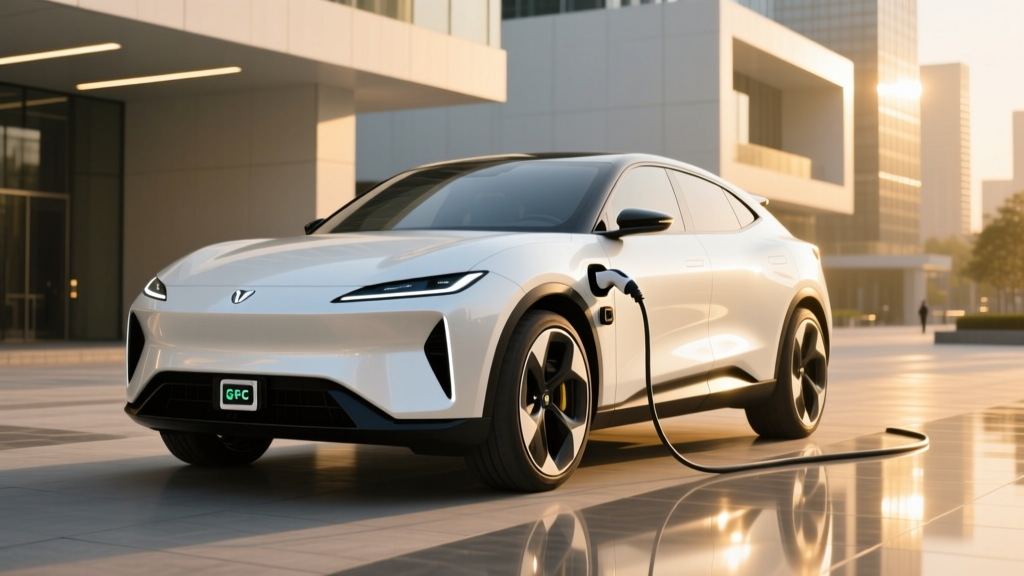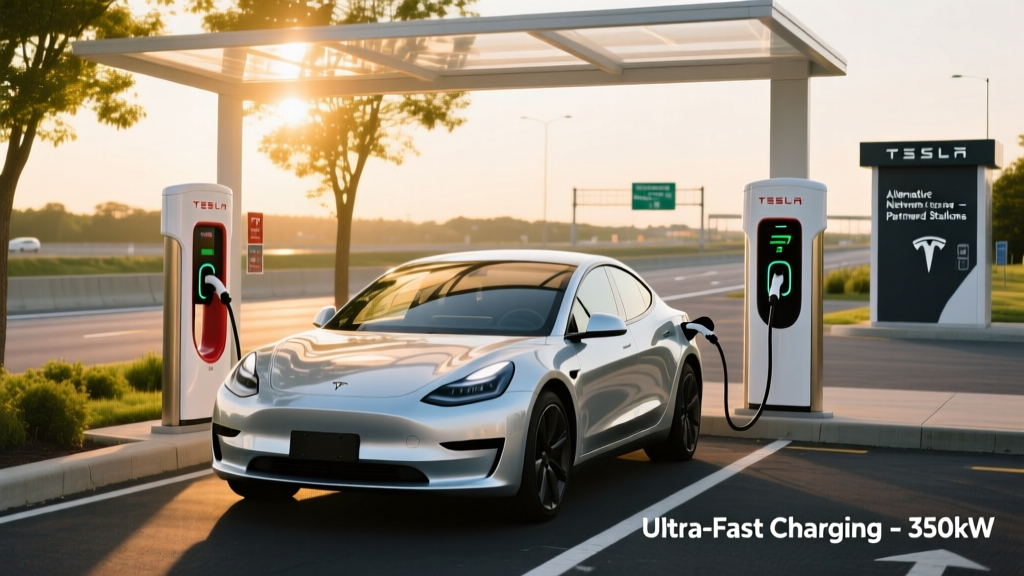
If you've driven the New Jersey Turnpike regularly, you've likely relied on the Tesla Supercharger stations at service plazas like Joyce Kilmer and Molly Pitcher. Recent infrastructure changes and contract disputes between Tesla and the New Jersey Turnpike Authority have led to reports that some Tesla Superchargers are to be removed from New Jersey Turnpike service plazas — leaving EV drivers scrambling for reliable DC fast-charging alternatives along one of the East Coast's busiest corridors.
Whether you're a Tesla owner or drive a non-Tesla EV now using the NACS connector standard, losing highway-adjacent Superchargers is a real inconvenience. But it's also a wake-up call: relying solely on one public network is risky. This guide covers what's happening on the Turnpike, where to charge instead, and — most importantly — how to set up reliable home charging so public networks are a convenience, not a lifeline.
What's Happening with Tesla Superchargers on the NJ Turnpike?
Several Tesla Supercharger installations at New Jersey Turnpike service plazas were established under agreements that have faced renegotiation, maintenance disputes, and evolving state EV-infrastructure mandates. While not every plaza has lost its chargers, drivers report intermittent outages, reduced stall counts, and in some cases full removal of legacy V2 Supercharger hardware (which maxed out at 150 kW) without immediate V3 (250 kW) or V4 (up to 350 kW) replacements.
The practical impact: if you're driving I-95 through New Jersey and planned a 15-minute Supercharger stop, you need backup options. Fortunately, the corridor has seen significant expansion from competing networks.
Alternative DC Fast Chargers Near the NJ Turnpike
- Electrify America: Multiple stations along the Route 1 and Route 9 corridors adjacent to the Turnpike, offering up to 350 kW CCS1 and NACS connectors.
- EVgo: Stations in East Brunswick, Cranbury, and Cherry Hill with 350 kW chargers. NACS adapters available.
- Tesla Superchargers (off-Turnpike): Stations at shopping centers in Edison, Paramus, and Princeton remain operational and often less congested.
- ChargePoint & EV Gateway: Expanding presence at Wawa and Sheetz locations near Turnpike exits.
For the latest station status, check fueleconomy.gov and network-specific apps before long trips.
Charging Levels Explained: How Fast Will Each Add Range?
Understanding charging speeds is essential whether you're replacing a Turnpike Supercharger stop with a home setup or choosing a public network. Here's how the three levels break down:
| Level | Voltage | Power (kW) | Miles of Range Added/Hour | Best For |
|---|---|---|---|---|
| Level 1 | 120V AC | 1.0–1.4 kW | 3–5 mi/hr | Overnight top-off, PHEVs |
| Level 2 | 240V AC | 7.2–19.2 kW | 25–65 mi/hr | Daily home charging |
| DC Fast | 400–800V DC | 50–350 kW | 150–1,000+ mi/hr (peak) | Road trips, rapid top-up |
Real-world caveat: DC fast charging doesn't sustain peak rates. A Tesla Model Y on a V3 Supercharger peaks at 250 kW but tapers significantly above 60% state of charge (SoC). Expect a realistic 10–80% charge in roughly 25–30 minutes, not the "15 minutes to 80%" marketing claim that assumes ideal battery temperature and low initial SoC.
Charging Time Examples for Common Battery Sizes
| Vehicle (Battery Size) | Level 2 (11.5 kW) | DC Fast (150 kW) | DC Fast (250 kW) |
|---|---|---|---|
| Tesla Model Y (75 kWh usable, NMC) | ~4.5 hours | ~30 min | ~25 min |
| Ford F-150 Lightning (98 kWh usable, NMC) | ~6 hours | ~40 min | ~32 min |
| Hyundai Ioniq 5 (77.4 kWh usable, NMC) | ~4.7 hours | ~28 min | ~18 min (800V architecture) |
| Chevrolet Equinox EV (85 kWh usable, NMC) | ~5.2 hours | ~35 min | ~28 min |
The Hyundai Ioniq 5 and Kia EV6, with their 800V battery architecture, can accept up to 350 kW and sustain higher rates longer — a meaningful advantage when highway chargers are sparse.
Home Level 2 Charger Installation: Costs, Requirements & Panel Upgrades
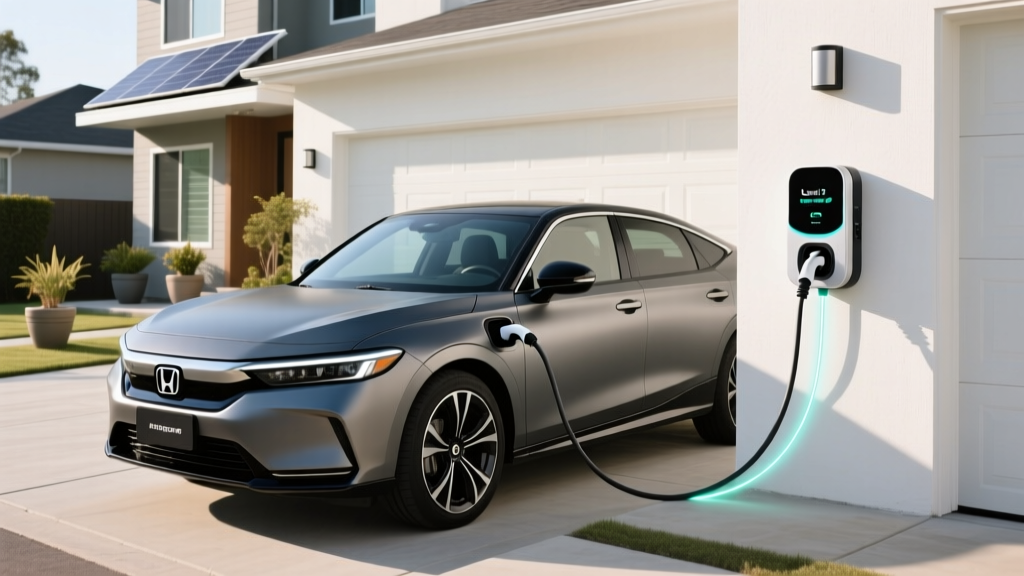
With public charging infrastructure in flux — as the NJ Turnpike situation demonstrates — a reliable home Level 2 charger is the single most impactful EV ownership upgrade. Here's exactly what's involved.
Electrical Requirements
A standard Level 2 home charger requires a 240V dedicated circuit, similar to what powers an electric dryer or oven. The most common configurations:
- 40A circuit / 32A continuous charge: Delivers ~7.7 kW. Sufficient for most EVs; adds ~25–30 miles per hour of charging.
- 50A circuit / 40A continuous charge: Delivers ~9.6 kW. Adds ~30–38 miles per hour. Recommended for larger batteries (F-150 Lightning, Rivian R1S).
- 60A circuit / 48A continuous charge: Delivers ~11.5 kW. The maximum most residential EVs can accept. Adds ~38–45 miles per hour.
Panel upgrade reality: Many homes built before 2000 have 100A or 150A electrical panels. Adding a 50–60A EV circuit may require upgrading to a 200A panel — a significant cost. Always have a licensed electrician perform a load calculation before installation.
Installation Cost Breakdown
| Component | Low End | High End | Notes |
|---|---|---|---|
| Level 2 Charger (hardware) | $350 | $750 | Depends on power output & smart features |
| Electrician labor (standard install) | $500 | $1,500 | Varies by run length, wall type, conduit needs |
| Electrical permit | $50 | $200 | Required in most NJ municipalities |
| Panel upgrade (if needed) | $1,500 | $4,000 | 100A→200A upgrade; not always required |
| Total (no panel upgrade) | $900 | $2,450 | Most common scenario |
| Total (with panel upgrade) | $2,400 | $6,450 | Older homes with undersized panels |
Federal incentive: Under current IRS rules, the Alternative Fuel Vehicle Refueling Property Credit covers up to 30% of home charging equipment and installation costs (capped at $1,000). Eligibility depends on your census tract and income — consult a tax professional.
Which Connector and Charger Is Compatible with My EV?
The connector landscape shifted dramatically between 2023 and 2026. Here's where things stand:
| Connector | Also Known As | Compatible Vehicles | Notes |
|---|---|---|---|
| NACS | Tesla connector / J3400 | Tesla (all), Ford, GM, Rivian, Volvo, Polestar, Hyundai/Kia (2025+) | Now the dominant North American standard |
| CCS1 | Combined Charging System | VW ID.4, older BMW iX, some Stellantis models | Phasing out on new models; adapters available |
| CHAdeMO | — | Nissan Leaf (legacy) | Effectively discontinued for new vehicles |
Adapter needs: If you drive a CCS1-equipped EV, you'll need a CCS-to-NACS adapter (roughly $150–$250) to access Tesla Superchargers and the growing number of NACS-equipped public stations. Tesla sells an official adapter, and third-party options from brands like Lectron are widely available. Most 2025+ EVs now ship with NACS ports natively.
Recommended Home Level 2 Chargers for 2026
Based on reliability, power output, cable management, and smart features, here are the top picks for home installation:
Tesla Wall Connector (Gen 4)
- Power: Up to 11.5 kW (48A on 60A circuit)
- Connector: NACS (native)
- Cable: 24 ft
- Smart features: Wi-Fi, OTA updates, load sharing with multiple units
- Price: ~$475
- Best for: Tesla owners; also works with NACS-equipped Ford, GM, Rivian
ChargePoint Home Flex
- Power: Configurable up to 12 kW (50A on 60A circuit)
- Connector: NACS or CCS1 (select at purchase)
- Cable: 23 ft
- Smart features: App scheduling, Alexa/Google integration, energy reports
- Price: ~$599
- Best for: Multi-EV households, flexible amperage
Emporia Vue Level 2 Charger
- Power: Up to 11.5 kW (48A)
- Connector: NACS
- Cable: 24 ft
- Smart features: Solar integration, whole-home energy monitoring via Emporia app
- Price: ~$399
- Best for: Budget-conscious buyers, solar-home integration
Grizzl-E Smart
- Power: Up to 10 kW (40A on 50A circuit)
- Connector: NACS or J1772 (with adapter)
- Cable: 24 ft
- Smart features: OCPP-compatible, adjustable amperage, extreme cold rating (-40°F)
- Price: ~$449
- Best for: Cold-climate garages, outdoor installs, durability
Charging Cost Per Mile: Home vs. Public vs. Gas
One of the strongest arguments for home charging — especially when public networks are unreliable — is cost. Here's a realistic comparison:
| Charging Scenario | Rate | Cost per kWh | Cost per Mile* |
|---|---|---|---|
| Home (off-peak utility rate) | Time-of-use plan | $0.08–$0.14 | $0.025–$0.045 |
| Home (standard rate) | Flat rate | $0.15–$0.22 | $0.048–$0.070 |
| Public Level 2 (ChargePoint, etc.) | Per kWh or per session | $0.25–$0.45 | $0.08–$0.14 |
| DC Fast (Electrify America, EVgo) | Per kWh | $0.35–$0.55 | $0.11–$0.17 |
| Tesla Supercharger (where available) | Per kWh | $0.28–$0.42 | $0.09–$0.13 |
| Gasoline vehicle (25 MPG combined) | $3.40/gallon avg | — | $0.136 |
*Based on an EV averaging 3.2 miles per kWh (roughly 105 MPGe combined, typical of a Tesla Model Y or Hyundai Ioniq 5).
The takeaway: Home off-peak charging costs roughly $0.03–$0.05 per mile — about one-quarter to one-third the cost of gasoline. Even DC fast charging on the road is often cheaper than gas per mile. But if you're forced to rely entirely on public DC fast chargers (no home access), the savings narrow considerably.
Safety, Code & Installation Best Practices
EV charging draws significant current for extended periods — often 4–8 continuous hours. This isn't like plugging in a lamp. Proper installation is non-negotiable.
Key Safety Requirements
- Dedicated circuit: Your Level 2 charger must be on its own dedicated breaker. Sharing a circuit with other appliances risks tripping or overheating.
- GFCI protection: The NEC (National Electrical Code) requires GFCI protection for outdoor EV charging outlets. Hardwired installations may have different requirements — your electrician will advise.
- Outdoor rating: If your charger is installed outside (driveway, exterior wall), it must carry a NEMA 4 or IP65 weather rating. All chargers recommended above meet this standard.
- Proper wire gauge: A 60A circuit requires 6 AWG copper wire minimum. Undersized wiring is a fire hazard.
- Permit and inspection: Most New Jersey municipalities require an electrical permit and post-installation inspection. Skipping this can void home insurance coverage in the event of an electrical fire.
Frequently Asked Questions
How much does it cost to install a home EV charger?
A typical Level 2 home installation (charger + electrician + permit) ranges from $900 to $2,450 if your electrical panel has sufficient capacity. If a panel upgrade from 100A to 200A is needed, total costs range from $2,400 to $6,450. The federal Alternative Fuel Vehicle Refueling Property Credit may offset up to $1,000 (30% of costs) depending on your location and income — see IRS guidelines.
How fast will each charging level add range?
Level 1 (120V) adds roughly 3–5 miles per hour — adequate only for PHEVs or overnight trickle charging. Level 2 (240V) adds 25–65 miles per hour depending on amperage, easily replenishing a full night's drive. DC fast charging adds 150–1,000+ miles per hour at peak rates, but real-world 10–80% sessions take 18–40 minutes depending on battery size and charger power.
Which connector/charger is compatible with my EV?
As of 2026, the NACS (J3400) connector is the dominant North American standard, used by Tesla, Ford, GM, Rivian, Hyundai, Kia, and Volvo on new models. CCS1 remains on some 2022–2024 models (VW ID.4, older BMW iX) but is being phased out. CHAdeMO is effectively dead for new vehicles. Check your vehicle's charge port or owner's manual, and invest in an adapter if your EV uses CCS1.
How much does charging cost per mile vs gas?
Home charging on an off-peak utility rate costs roughly $0.03–$0.05 per mile, compared to about $0.14 per mile for a 25 MPG gas car at $3.40/gallon. Even public DC fast charging at $0.45/kWh works out to about $0.14/mile — roughly breaking even with gas. The real savings come from home charging.
What electrical upgrades might I need?
The most common upgrade is a panel replacement from 100A to 200A service, needed in older homes where the existing panel can't support an additional 40–60A continuous load. Your electrician will perform a NEC Article 220 load calculation to determine if your panel has headroom. Other potential upgrades include running new conduit from the panel to the garage, upgrading the meter socket, or adding a sub-panel if your charger is far from the main service.
Are Tesla Superchargers on the NJ Turnpike permanently gone?
The situation is evolving. Some service plaza chargers have been removed or are experiencing prolonged outages due to contract renegotiations between Tesla and the NJ Turnpike Authority. Off-Turnpike Supercharger stations in Edison, Paramus, and other locations remain fully operational. Check the Tesla app or PlugShare for real-time station status before trips. The long-term trend favors multi-network public charging rather than single-brand exclusivity at highway rest stops.
Bottom line: The potential removal of Tesla Superchargers from NJ Turnpike plazas is inconvenient but manageable — especially if you invest in a proper home Level 2 charging setup. For $900–$2,450 (before incentives), you can charge overnight at $0.03–$0.05 per mile and treat public DC fast chargers as a road-trip supplement rather than a daily necessity. In a state with some of the highest gas prices in the nation, that math works decisively in your favor.