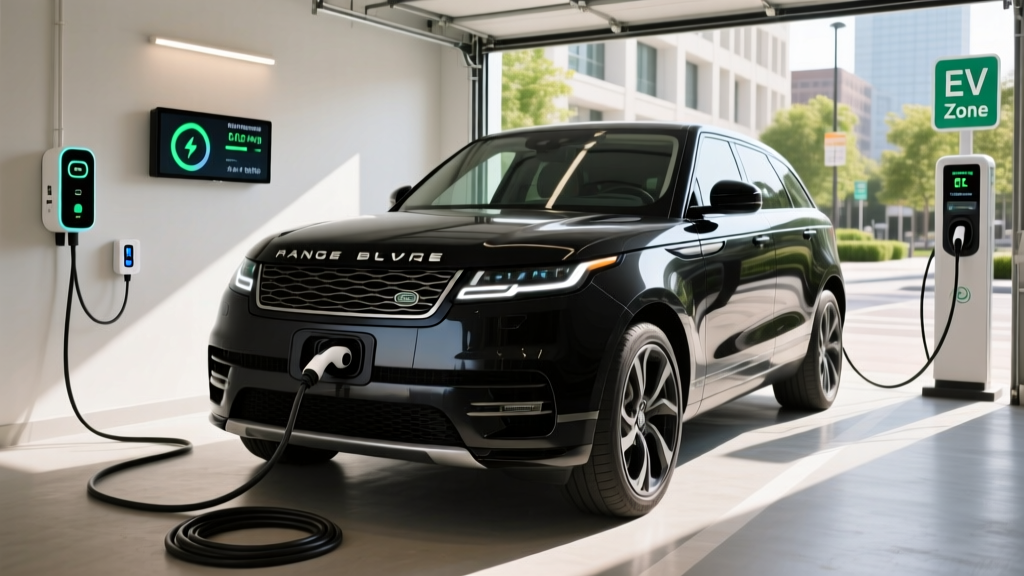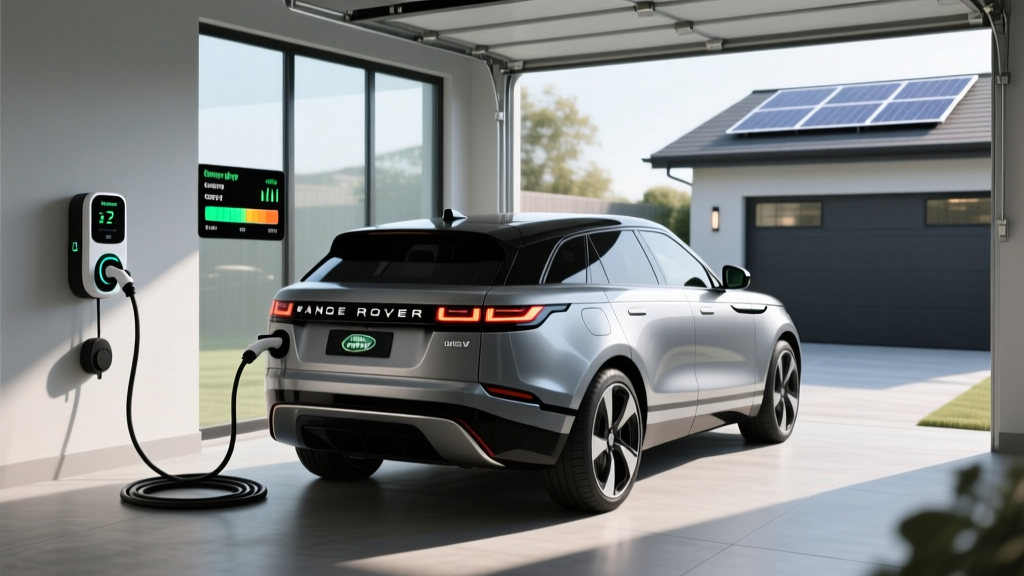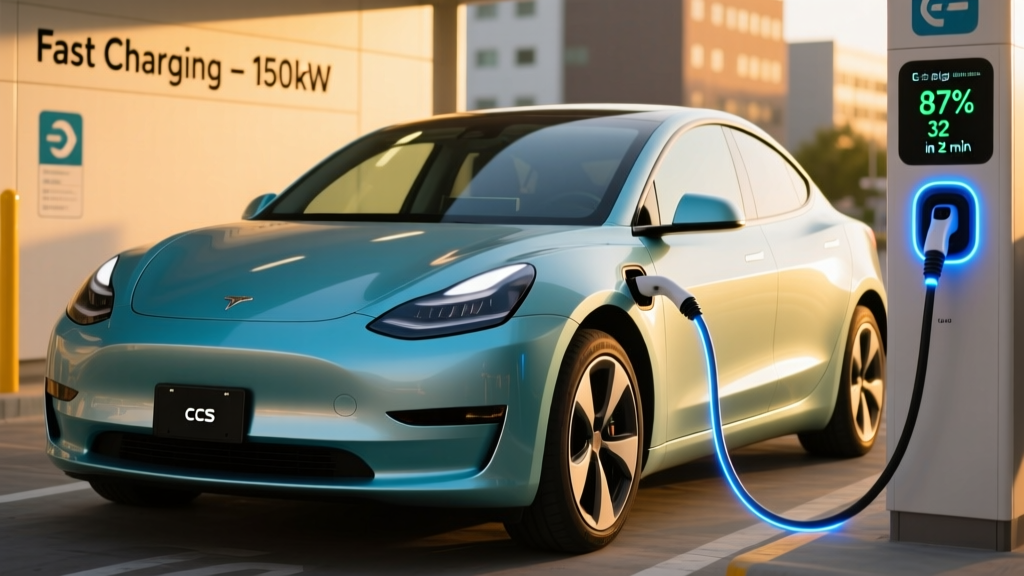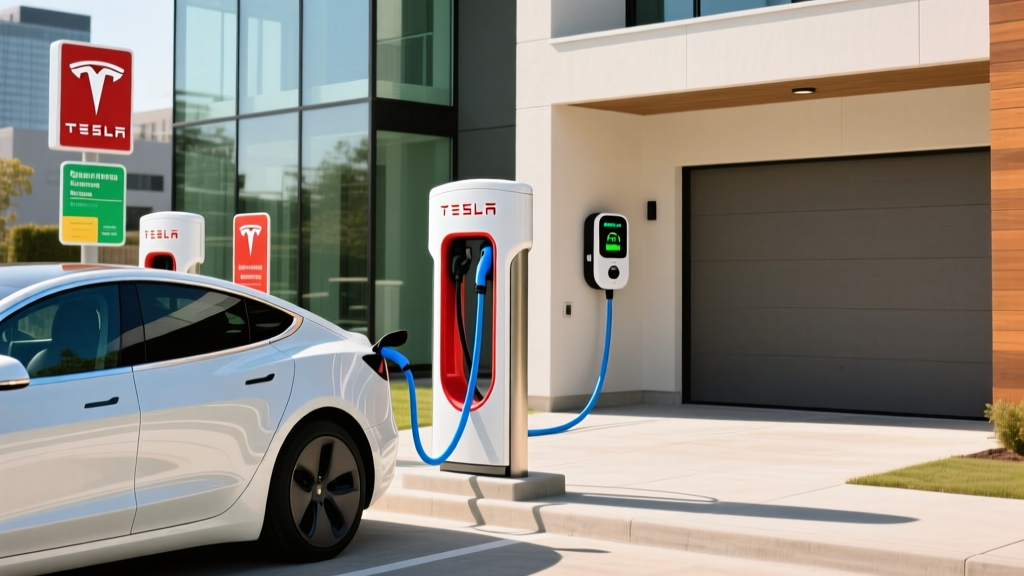
If you own a Tesla—or any EV using the North American Charging Standard (NACS)—you have probably noticed that Supercharger pricing varies wildly by location, time of day, and state. One stall might charge $0.28/kWh while another across town bills $0.52/kWh during peak hours. Understanding what Tesla Superchargers cost in real-world driving, and how that compares to charging at home, is the single most important financial calculation an EV owner can make.
This guide breaks down the actual per-kWh rates at Tesla Superchargers in 2026, compares them to home Level 2 charging, walks through the full cost of installing a home charger (including the panel upgrade nobody warns you about), and shows you exactly how much you will spend per mile versus a gas car.
How Tesla Supercharger Pricing Actually Works
Tesla Superchargers bill by the kWh (kilowatt-hour, a unit of energy) in most U.S. states. A few states with older regulations still bill by the minute, but as of 2026, per-kWh billing is the norm in 46 states. The rate you pay depends on three variables:
- Location: Urban Superchargers in California and New York tend to cost $0.40–$0.55/kWh. Rural and Midwestern stations often sit at $0.25–$0.35/kWh.
- Time-of-use (TOU): Tesla has rolled out peak/off-peak pricing at many urban stations. Off-peak rates (typically 9 PM–6 AM) can be $0.10–$0.15/kWh lower than peak rates.
- Membership tier: Tesla's non-member pricing (for vehicles not registered to a Tesla account, or non-Tesla EVs using the Magic Dock adapter) adds roughly $0.10–$0.13/kWh on top of the member rate.
For a Tesla Model Y Long Range with a 75 kWh (usable) battery, a 10–80% charge (about 52.5 kWh delivered) at a national average Supercharger rate of $0.36/kWh costs approximately $18.90. That same charge at peak urban rates ($0.50/kWh) jumps to $26.25.
Charging Levels Explained: Speed, Power, and Range Added
Before comparing costs, you need to understand the three charging levels available to EV owners. The critical distinction: kW (kilowatts) measures power—the rate at which energy flows into your battery. kWh (kilowatt-hours) measures energy—the total capacity of your battery, like gallons in a fuel tank. A 75 kWh battery charged at 11.5 kW (Level 2) takes roughly 6.5 hours from empty; at 250 kW (DC fast), the same energy arrives in about 25–30 minutes (with taper above 80%).
| Level | Voltage | Max Power (kW) | Miles of Range Added Per Hour | Typical Use Case |
|---|---|---|---|---|
| Level 1 | 120V AC | 1.4–1.9 kW | 3–5 mi/hr | Overnight trickle, PHEVs, emergency top-ups |
| Level 2 | 240V AC | 7.2–19.2 kW | 20–60 mi/hr | Home daily charging, workplace, hotels |
| DC Fast (Supercharger V4) | 400–800V DC | 150–350 kW | 200–800 mi/hr (peak) | Road trips, highway corridors, quick stops |
10–80% charge time examples (2026 models):
- Tesla Model 3 Highland (75 kWh battery, 250 kW peak): ~25 minutes at a V3 Supercharger
- Tesla Model Y Long Range (75 kWh, 250 kW peak): ~27 minutes at V3
- Ford F-150 Lightning Extended Range (131 kWh, 150 kW peak CCS via adapter): ~42 minutes
- Hyundai Ioniq 5 (77.4 kWh, 238 kW peak NACS): ~18 minutes (800V architecture sustains higher rate longer)
DC fast charging follows a charge curve: your car pulls peak kW only at low state-of-charge (SoC). Above 50–60%, the rate tapers to protect battery health. A "250 kW" charger does not deliver 250 kW for the entire session—expect an average of 120–160 kW over a 10–80% session depending on battery chemistry and temperature.
How Much Does It Cost to Install a Home EV Charger?
Home Level 2 charging is where EV owners save the most money, but the upfront installation cost varies enormously depending on your home's electrical panel, the distance from panel to charger location, and local permit fees. Here is a realistic breakdown for a typical 48-amp (11.5 kW) Level 2 wall connector installation in 2026:
| Cost Component | Low End | High End | Notes |
|---|---|---|---|
| Level 2 Charger (hardware) | $400 | $750 | Tesla Wall Connector, ChargePoint Home Flex, Emporia |
| Electrician labor (240V/60A circuit) | $600 | $2,500 | Depends on run length, conduit, drywall work |
| Permit and inspection | $50 | $300 | Varies by municipality |
| Electrical panel upgrade (if needed) | $1,500 | $4,000 | 100A → 200A service; common in pre-1990 homes |
| Total (no panel upgrade) | $1,050 | $3,550 | Most homes with 200A panels fall here |
| Total (with panel upgrade) | $2,550 | $7,550 | Older homes with 100A service |
What Electrical Upgrades Might I Need?
A 48-amp continuous-draw Level 2 charger requires a dedicated 60-amp, 240-volt circuit (NEC code requires circuits rated at 125% of continuous load: 48A × 1.25 = 60A). Your electrician will check:
- Panel capacity: If you have a 200-amp panel with room for a double-pole 60A breaker, you are likely fine. A 100-amp panel almost certainly needs an upgrade.
- Load calculation: Per NEC Article 220, your electrician must verify the total connected load (HVAC, oven, dryer, water heater, EV charger) does not exceed 80% of panel capacity.
- Conduit and wire run: Longer runs from panel to garage or driveway require thicker (more expensive) copper wire—typically 6 AWG for a 60A circuit. Runs over 100 feet may require 4 AWG.
- GFCI protection: NEC 2020 and later require GFCI breakers for EV charging outlets in garages and outdoor locations, adding $50–$150 to the breaker cost.
Tesla Superchargers Cost vs. Home Charging: The Per-Mile Showdown
Here is where the math gets decisive. We compare three charging scenarios against a gas-powered baseline using a 2026 Tesla Model Y Long Range (EPA efficiency: 3.6 miles/kWh, or roughly 120 MPGe) and a comparable gas SUV averaging 28 MPG combined.
| Scenario | Rate | Cost per Full Charge (10–80%) | Cost per Mile | Annual Cost (12,000 mi) |
|---|---|---|---|---|
| Home Level 2 (national avg electricity) | $0.16/kWh | $8.40 | $0.044 | $533 |
| Home Level 2 (off-peak TOU rate) | $0.09/kWh | $4.73 | $0.025 | $298 |
| Tesla Supercharger (avg member rate) | $0.36/kWh | $18.90 | $0.100 | $1,200 |
| Tesla Supercharger (urban peak) | $0.50/kWh | $26.25 | $0.139 | $1,667 |
| Non-Tesla DC fast (Electrify America avg) | $0.48/kWh | $25.20 | $0.133 | $1,600 |
| Gas SUV (28 MPG, $3.40/gal) | $3.40/gal | — | $0.121 | $1,457 |
The takeaway is stark: home charging at off-peak rates is roughly one-fifth the cost of gas per mile, and one-quarter the cost of peak Supercharging. If you rely exclusively on Superchargers at urban peak rates, you could actually spend more per mile than a gas car. This is why home charging access is the single biggest financial factor in EV ownership.
Even at the national average Supercharger rate of $0.36/kWh, you are paying roughly $1,200/year for 12,000 miles—still less than gas, but the margin narrows significantly compared to home charging. Most Tesla owners who charge at home 85–90% of the time and use Superchargers only for road trips report annual fuel costs of $400–$600.
Connector Compatibility: NACS, CCS, and Adapters
The connector landscape has consolidated dramatically. As of 2026, nearly every major automaker has adopted the North American Charging Standard (NACS)—the connector Tesla developed and opened to the industry in late 2022. Here is where each brand stands:
| Automaker | Native Connector (2026 Models) | Supercharger Access | Adapter Needed? |
|---|---|---|---|
| Tesla | NACS | Full network | None |
| Ford | NACS | Full network | None (CCS adapter for non-Tesla DC stations) |
| GM (Chevy/Cadillac) | NACS | Full network | None |
| Hyundai/Kia | NACS (2025+ models) | Full network | None on new models; CCS→NACS adapter for older |
| Rivian | NACS | Full network | None |
| BMW | NACS (2025+) | Full network | None on new models |
| Volkswagen/ID.4 (2024 and earlier) | CCS1 | Via Magic Dock or adapter | Tesla CCS adapter (~$250) or Magic Dock stations |
| Nissan LEAF (legacy) | CHAdeMO | Limited | CHAdeMO→NACS adapters rare and expensive |
If you drive a non-Tesla EV with a CCS port (most 2023 and earlier models), you can access Tesla Superchargers equipped with the Magic Dock—a built-in CCS adapter at select stalls. However, Magic Dock stations remain limited to roughly 15–20% of the Supercharger network as of 2026. A more reliable solution is purchasing Tesla's CCS adapter (approximately $250), which unlocks the full network from your CCS-equipped vehicle.
For home Level 2 charging, all EVs use the same J1772 standard—or NACS, which is backward-compatible with J1772 via a simple adapter included with most Tesla Wall Connectors. There is no compatibility issue for home charging regardless of your EV brand.
Best Home Level 2 Chargers for 2026: Equipment Picks
Not all Level 2 chargers are equal. Key specs to evaluate: maximum power output (kW), cable length, smart features (Wi-Fi, scheduling, energy monitoring), connector type, and whether the unit is hardwired or plug-in (NEMA 14-50 outlet). Here are three proven options:
Tesla Wall Connector (Gen 4)
- Power: Up to 11.5 kW (48A) on a 60A circuit
- Connector: NACS native; J1772 adapter included
- Cable length: 24 feet
- Smart features: Wi-Fi, OTA updates, Tesla app integration, load sharing between two units
- Price: ~$475
- Best for: Tesla owners wanting seamless integration; works with all EVs via adapter
ChargePoint Home Flex (2nd Gen)
- Power: Up to 12.5 kW (50A) on a 60A circuit; configurable down to 16A for lower-capacity panels
- Connector: J1772 native; NACS adapter available separately
- Cable length: 23 feet
- Smart features: Wi-Fi, Alexa, ChargePoint app with detailed energy tracking, TOU scheduling
- Price: ~$599
- Best for: Multi-EV households, non-Tesla owners, renters who may move (plug-in NEMA 14-50 option)
Emporia Vue Level 2 Charger
- Power: Up to 11.5 kW (48A) on a 60A circuit
- Connector: J1772 native; NACS adapter included
- Cable length: 24 feet
- Smart features: Wi-Fi, Emporia app, integrates with Emporia whole-home energy monitor for real-time load management
- Price: ~$399
- Best for: Budget-conscious buyers, solar-panel owners wanting energy-aware charging
All three units are UL-listed, rated for indoor and outdoor installation (NEMA 4 enclosure), and support hardwired or plug-in (NEMA 14-50) mounting. Hardwired installation is recommended for maximum reliability and eliminates the GFCI breaker requirement that applies to plug-in receptacles under current NEC code.
Safety, Code, and Installation Best Practices
EV charging draws sustained high current for hours—unlike any other household appliance. Treat the installation with the seriousness it deserves:
- Always use a licensed electrician. DIY 240V work is dangerous and may void your homeowner's insurance if unpermitted.
- Pull a permit. Most jurisdictions require an electrical permit and inspection for EV charger installations. This protects you during a home sale.
- Hardwire when possible. Hardwired chargers avoid the NEC GFCI breaker requirement for receptacles, reduce failure points, and look cleaner.
- Outdoor rating matters. If your charger is mounted outside or in an open carport, ensure it carries a NEMA 4 (splash-resistant) or NEMA 4X (corrosion-resistant) rating.
- Consider a smart panel or load manager. Devices like the Emporia Vue or Span smart panel can dynamically limit charger draw when other high-load appliances (dryer, oven) are running, avoiding panel upgrades in some homes.
Frequently Asked Questions
How much does it cost to charge a Tesla at a Supercharger in 2026?
The national average Tesla Supercharger rate is approximately $0.34–$0.38/kWh for Tesla account members. Urban peak rates in California, New York, and Florida can reach $0.48–$0.55/kWh. Off-peak rates at select stations drop to $0.22–$0.28/kWh. For a Model Y Long Range, a typical 10–80% session costs $15–$26 depending on location and time.
Is it cheaper to charge at home or use Tesla Superchargers?
Home charging is almost always cheaper. At the U.S. residential average of $0.16/kWh, home Level 2 charging costs roughly $0.044/mile in a Model Y—about one-third the cost of average Supercharger pricing and one-quarter the cost of gas. The savings are even larger if your utility offers off-peak TOU rates below $0.10/kWh.
How fast will a Level 2 home charger add range to my Tesla?
A 48-amp (11.5 kW) Level 2 charger adds approximately 35–44 miles of range per hour to a Tesla Model Y or Model 3, depending on efficiency. An overnight charge of 8–10 hours easily replenishes 250–350 miles—more than enough for daily driving and most commutes.
Do I need a panel upgrade to install a home EV charger?
If your home has a 200-amp electrical panel with available breaker slots, you likely do not need an upgrade. Homes with 100-amp service almost always require an upgrade to 200A, costing $1,500–$4,000. Your electrician will perform a load calculation per NEC Article 220 to determine whether your existing panel can handle the additional 60A circuit.
Can non-Tesla EVs use Tesla Superchargers?
Yes. As of 2026, Ford, GM, Rivian, Hyundai, Kia, BMW, and other NACS-equipped EVs can use the full Supercharger network natively. Older CCS-equipped EVs can access Superchargers with Magic Dock stations or by purchasing Tesla's CCS adapter (~$250). Non-Tesla members pay a surcharge of roughly $0.10–$0.13/kWh above the member rate.
What is the federal tax credit for home EV charger installation?
The Alternative Fuel Vehicle Refueling Property Credit (IRS Form 8911) covers 30% of the cost of home EV charging equipment and installation, up to a maximum of $1,000. This credit applies to equipment placed in service through 2032, but the property must be located in an eligible census tract (typically lower-income or rural areas). Consult a tax professional to verify your eligibility.
How does charging cost compare to gas per mile?
Based on 2026 data: home Level 2 charging averages $0.04/mile, Tesla Superchargers average $0.10/mile, and a 28-MPG gas SUV at $3.40/gallon costs $0.12/mile. Source: fueleconomy.gov for EPA efficiency ratings. Over 12,000 annual miles, home charging saves roughly $900–$1,100 compared to gas.
Understanding what Tesla Superchargers cost—and more importantly, how that compares to the dramatically lower cost of home charging—is the foundation of smart EV ownership. The math consistently shows that buyers who can install a Level 2 charger at home unlock the full economic advantage of going electric, while those who rely solely on public DC fast charging see their savings narrow or even disappear in high-rate urban markets. Plan your charging strategy before you buy, budget for the home installation (including a potential panel upgrade), and you will keep your per-mile cost well below gas for the life of the vehicle.