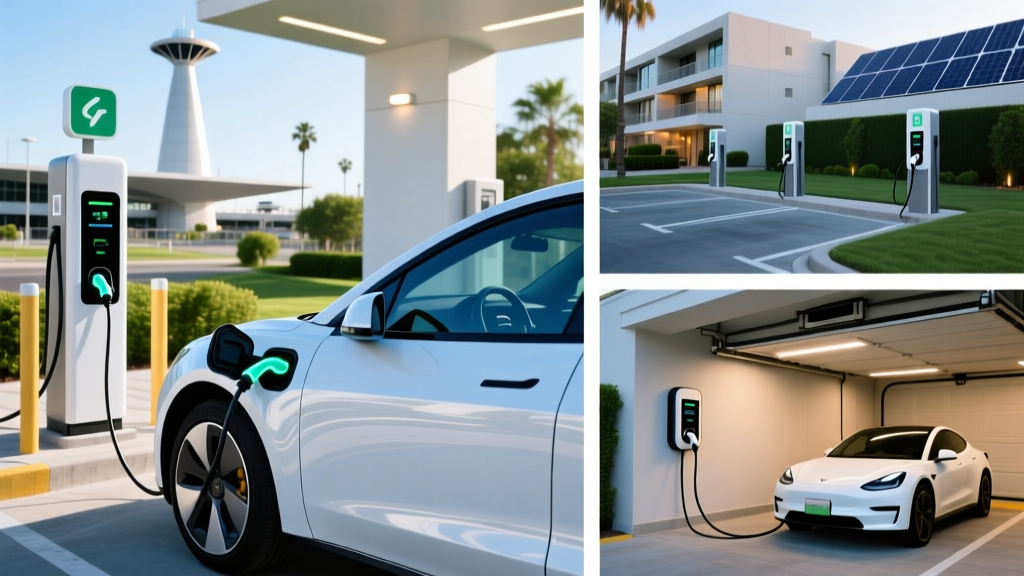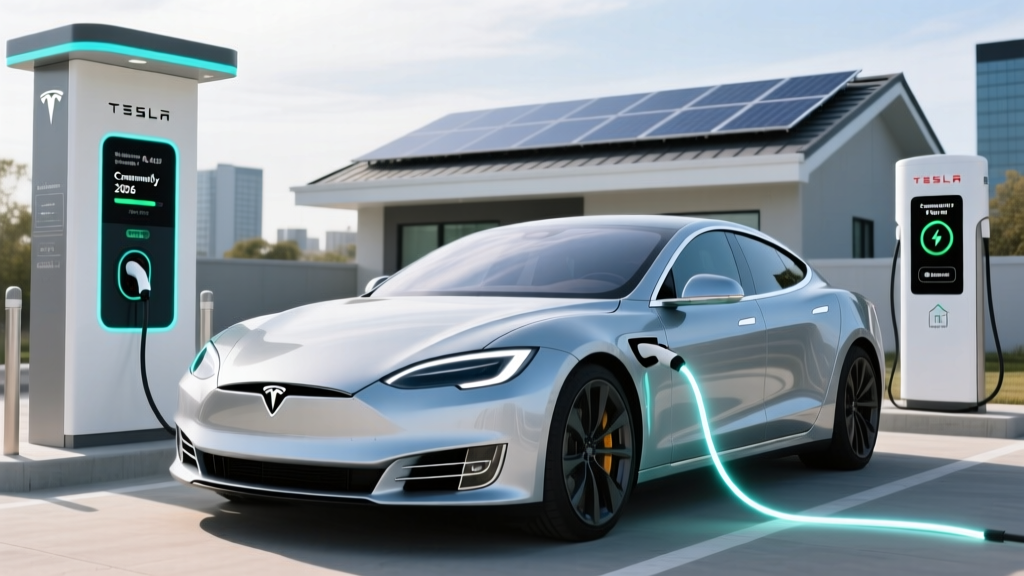
Every year, EV owners cast their votes in community polls ranking the best Tesla Supercharger stations across the country. The Tesla Supercharger voting results reveal which locations deliver the most reliable, convenient, and fast charging experiences — and they offer valuable lessons for anyone building out their own EV charging strategy, whether at home or on the road.
But public fast charging is only one piece of the puzzle. Over 80% of EV charging happens at home, according to the U.S. Department of Energy. This guide breaks down everything you need to know: from the community's top-rated Superchargers to the real costs, electrical requirements, and equipment you need for a Level 2 home setup in 2026.
What the Tesla Supercharger Voting Results Tell Us in 2026
Annual community surveys — conducted through forums like Reddit's r/TeslaMotors, Tesla Motors Club, and independent EV advocacy groups — consistently rank Supercharger stations based on four criteria: reliability (uptime and functional stalls), charge speed (V3 250 kW vs. V4 architecture), amenities (restrooms, food, Wi-Fi), and accessibility (easy in/out, pull-through stalls for towing).
The 2025–2026 voting cycle highlighted several trends:
- V4 Supercharger adoption is accelerating. Stations with V4 cabinets and CCS-compatible Magic Dock connectors earned the highest reliability scores, averaging 97%+ uptime.
- Pull-through stalls matter. Locations with dedicated pull-through spots for trucks and trailers (like the Kettleman City, CA and Loveland, CO stations) consistently topped the rankings.
- Amenity gaps still frustrate. Even high-speed stations with 20+ stalls lost points when restrooms or food options were absent — a reminder that charging infrastructure is as much about the human experience as the electrons.
- Non-Tesla EV access is expanding. With Tesla opening its Supercharger network to CCS-equipped vehicles via the built-in Magic Dock adapter or NACS adapters, voters noted growing congestion at popular urban stations.
The takeaway? The best charging experiences combine fast, reliable hardware with thoughtful site design. That same principle applies to your home charging setup.
Charging Levels Explained: Speeds, Power, and Real-World Range Added
Before selecting equipment, you need to understand the three charging levels and what each delivers. The critical distinction: kW (kilowatts) measures power — the rate of energy flow — while kWh (kilowatt-hours) measures energy — the total amount stored in your battery. Think of kW as the width of a pipe and kWh as the size of the tank.
| Level | Voltage | Max Power (kW) | Miles of Range Added per Hour | Typical Use Case |
|---|---|---|---|---|
| Level 1 | 120V AC | 1.0–1.4 kW | 3–5 mi/hr | Overnight trickle; PHEVs; emergency backup |
| Level 2 | 240V AC | 3.3–19.2 kW | 12–75 mi/hr | Daily home charging; workplace; destination |
| DC Fast Charging | 400–900V DC | 50–350+ kW | 150–1,200+ mi/hr (peak) | Road trips; rapid top-ups; Tesla Superchargers |
Real-world context: A Tesla Model Y Long Range (75 kWh usable battery, ~310 miles EPA range) charging on a 48-amp Level 2 circuit at 11.5 kW will add roughly 44 miles of range per hour. That same vehicle at a V3 Supercharger peaking at 250 kW can go from 10% to 80% in approximately 20–22 minutes — though the charge curve tapers significantly above 60% SoC. Expect the last 20% (80–100%) to take nearly as long as the first 70%.
How Much Does It Cost to Install a Home EV Charger?
Home Level 2 installation costs vary dramatically based on your electrical panel's capacity, the distance from the panel to the charger location, and local permitting requirements. Here's a realistic 2026 breakdown:
| Component | Simple Install (Panel Nearby, 200A Service) | Complex Install (Long Run, Panel Upgrade Needed) |
|---|---|---|
| Level 2 EVSE Equipment (hardwired, 48A) | $400–$700 | $400–$700 |
| Electrician Labor (2–4 hrs simple / 6–12 hrs complex) | $300–$800 | $1,200–$3,000 |
| Electrical Panel Upgrade (100A → 200A, if needed) | $0 | $1,500–$3,500 |
| Permit & Inspection | $50–$200 | $100–$350 |
| Conduit, Wiring (6 AWG copper for 48A), Misc. | $50–$200 | $300–$800 |
| Total Estimated Range | $800–$1,900 | $3,500–$8,350 |
Panel upgrade reality check: If your home has a 100-amp service panel — common in homes built before the 1990s — adding a 48-amp EV charger circuit will almost certainly require an upgrade to 200 amps. This is often the single largest line item. Some utilities offer rebates of $500–$1,500 for panel upgrades tied to EV adoption; check with your local provider.
Federal incentive note: The IRS §30C Alternative Fuel Vehicle Refueling Property Credit offers up to $1,000 (30% of equipment and installation costs) for home charger installations in eligible census tracts through 2032. This is separate from the §30D vehicle purchase credit. Verify eligibility with a tax professional.
Connector Compatibility: NACS, CCS1, CHAdeMO, and Adapters
The connector landscape has consolidated significantly since 2024, when Ford, GM, Rivian, Volvo, and others committed to adopting the North American Charging Standard (NACS) — Tesla's proprietary connector, now standardized as SAE J3400. Here's where things stand in 2026:
| Connector | Native Vehicles | Adapter Needed For | Notes |
|---|---|---|---|
| NACS (J3400) | Tesla (all), Ford (2025+), GM (2025+), Rivian (2025+), Volvo/Polestar (2025+), Hyundai/Kia (2026 select) | CCS1 stations (via NACS-to-CCS adapter, ~$200–$250) | Dominant standard by 2026; smaller, lighter connector |
| CCS1 | VW ID.4, BMW iX/i4, Mercedes EQE/EQS, legacy Hyundai/Kia (pre-2026), Stellantis | Tesla Superchargers with Magic Dock; NACS stations (via CCS-to-NACS adapter) | Still widely available at Electrify America, EVgo stations |
| CHAdeMO | Nissan Leaf (legacy only — discontinued for new sales) | CCS or NACS stations (adapters rare and expensive, ~$400+) | Effectively deprecated; no new vehicles use CHAdeMO |
Adapter strategy: If you drive a NACS-equipped vehicle (any current Tesla or 2025+ Ford/GM EV), you can use Tesla Superchargers natively and most CCS stations with a NACS-to-CCS adapter. If your EV still has CCS1, Tesla's Magic Dock (built into select Supercharger stalls) provides CCS compatibility without an adapter. Always verify Magic Dock availability in the Tesla app before relying on it for a road trip.
Cost to Charge: Home vs. Public vs. Gas — The Per-Mile Breakdown
One of the strongest economic arguments for EVs is the cost-per-mile advantage, but the savings depend heavily on where and when you charge.
| Scenario | Avg. Cost per kWh | Cost per Mile (at 3.5 mi/kWh efficiency) | Annual Cost (12,000 mi) |
|---|---|---|---|
| Home — Off-Peak TOU Rate (national avg.) | $0.09–$0.14 | $0.026–$0.040 | $312–$480 |
| Home — Standard Flat Rate (national avg.) | $0.15–$0.18 | $0.043–$0.051 | $516–$612 |
| Public Level 2 (ChargePoint, workplace) | $0.20–$0.35 | $0.057–$0.100 | $684–$1,200 |
| DC Fast Charging (Tesla Supercharger, avg.) | $0.28–$0.40 | $0.080–$0.114 | $960–$1,368 |
| DC Fast Charging (Electrify America, EVgo) | $0.35–$0.55 | $0.100–$0.157 | $1,200–$1,884 |
| Gas Vehicle (28 MPG combined, $3.40/gal) | — | $0.121 | $1,452 |
Key insight: Home off-peak charging is 3–4× cheaper per mile than gasoline. Even exclusive DC fast charging at Tesla Superchargers is competitive with gas, while non-Tesla DC networks can approach or exceed gas costs at peak pricing. Time-of-use (TOU) utility plans are essential for maximizing savings — many utilities offer EV-specific rates as low as $0.06–$0.09/kWh between midnight and 6 AM.
According to fueleconomy.gov, the average EV achieves 3–4 miles per kWh, with efficient models like the Tesla Model 3 and Hyundai Ioniq 6 reaching 4.0–4.5 mi/kWh (roughly 120–140 MPGe combined).
Charging Time Examples: What to Expect for Common Battery Sizes
Charging times depend on battery capacity (kWh), the charger's power output (kW), the vehicle's onboard charger limit (for AC), and the battery's charge curve (for DC fast charging). Here are practical 10–80% estimates for popular 2026 EV battery sizes:
- 60 kWh battery (e.g., base Tesla Model 3 RWD): Level 2 at 11.5 kW → ~5 hours 15 min. DC fast at 170 kW peak → ~22 min (10–80%).
- 75 kWh battery (e.g., Tesla Model Y Long Range): Level 2 at 11.5 kW → ~6 hours 30 min. DC fast at 250 kW peak → ~20 min (10–80%).
- 85 kWh battery (e.g., Ford F-150 Lightning Extended Range): Level 2 at 11.5 kW → ~7 hours 20 min. DC fast at 150 kW peak → ~35 min (10–80%).
- 100 kWh battery (e.g., GMC Sierra EV, Rivian R1S Max Pack): Level 2 at 11.5 kW → ~8 hours 40 min. DC fast at 350 kW peak (800V architecture) → ~18 min (10–80%).
Charge curve reality: Peak kW ratings are not sustained. A vehicle that peaks at 250 kW at 10% SoC may taper to 150 kW by 50%, 75 kW by 70%, and 25 kW by 90%. The 10–80% time is the industry-standard benchmark because charging above 80% is dramatically slower and rarely worth the wait on a road trip.
Equipment Recommendations: Top Home Level 2 Chargers for 2026
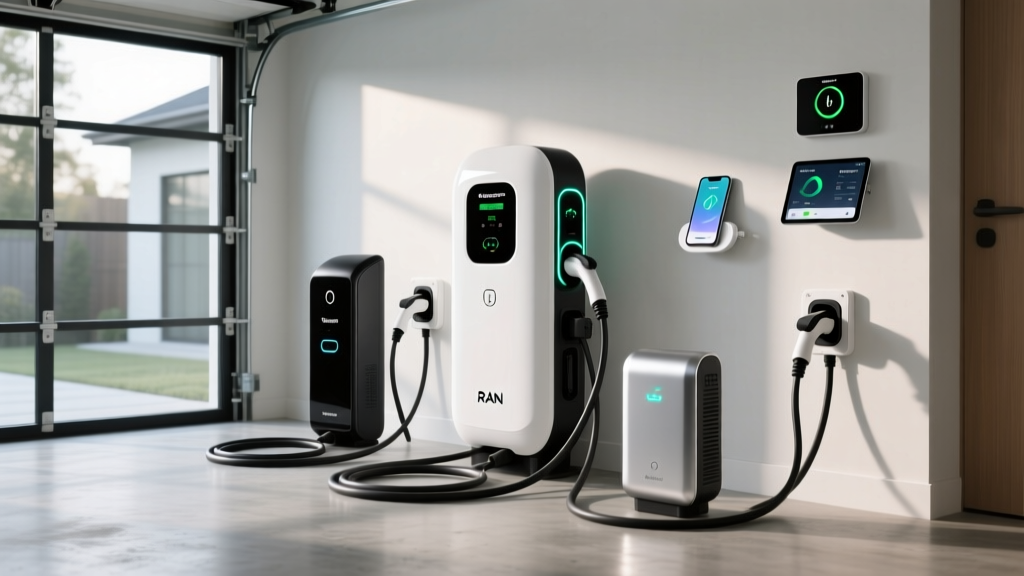
These are the chargers most frequently recommended in the Tesla Supercharger voting community's home-setup discussions, based on reliability, smart features, and value:
ChargePoint Home Flex
- Power: Up to 12 kW (50A, adjustable down to 16A)
- Connector: NACS (2025+ models) or J1772 with NACS adapter
- Cable Length: 23 ft
- Smart Features: Wi-Fi, app scheduling, energy tracking, Alexa integration
- Price: ~$599–$699
- Best For: Flexible amperage for older panels; robust app ecosystem
Tesla Wall Connector (Gen 3)
- Power: Up to 11.5 kW (48A)
- Connector: NACS native
- Cable Length: 24 ft
- Smart Features: Wi-Fi, OTA updates, Power-Share (daisy-chain two units on one circuit), Tesla app integration
- Price: ~$475
- Best For: Tesla owners wanting seamless integration and lowest cost
Emporia Level 2 EV Charger
- Power: Up to 11.5 kW (48A)
- Connector: J1772 (NACS adapter included in 2025+ kits)
- Cable Length: 24 ft
- Smart Features: Wi-Fi, real-time energy monitoring, solar integration, TOU scheduling
- Price: ~$399–$449
- Best For: Budget-conscious buyers; solar-panel homes; energy monitoring enthusiasts
Hardwired vs. plug-in: Chargers rated above 40A (like 48A units) should be hardwired by a licensed electrician — the NEC requires hardwiring for continuous loads exceeding 80% of a receptacle's rating. A 48A charger on a 60A dedicated circuit is the standard configuration. Plug-in (NEMA 14-50) setups are limited to 40A continuous (50A breaker) and offer portability if you move.
Safety, Electrical Code, and Installation Best Practices
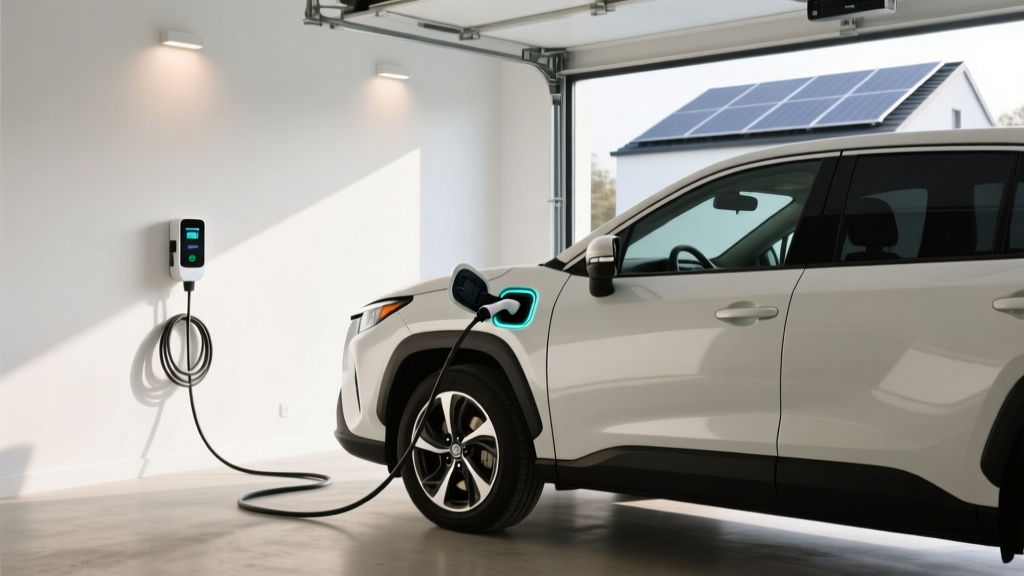
EV charging is a continuous high-draw electrical load — comparable to running an electric oven for 8 hours straight. Proper installation is non-negotiable for safety and code compliance:
- Dedicated circuit: Your EV charger must have its own dedicated breaker — never shared with other appliances. A 48A charger requires a 60A breaker (NEC 80% rule: continuous load ≤ 80% of breaker rating).
- GFCI protection: The 2023 NEC (adopted by most states by 2026) requires GFCI protection for all EVSE receptacles. Hardwired units with built-in ground-fault protection satisfy this requirement. Outdoor installations always require GFCI.
- Outdoor rating: If your charger is mounted outside (garage exterior, carport, driveway post), ensure the EVSE is rated NEMA 4 (weatherproof). Most major chargers — ChargePoint, Tesla, Emporia — carry NEMA 4 ratings.
- Wire gauge: 6 AWG copper wire is standard for 48A circuits. Runs exceeding 100 feet may require 4 AWG to prevent voltage drop.
- Permits and inspections: Most jurisdictions require an electrical permit for EVSE installation. The inspection ensures proper grounding, breaker sizing, and GFCI compliance. Skipping permits can void homeowner's insurance coverage for electrical fires.
- Load management: If your panel is near capacity, consider a smart load-management system (like the Emporia VUE or Span panel) that dynamically reduces charger amperage when other high-draw appliances are active. This can avoid a costly panel upgrade.
Frequently Asked Questions
How fast will each charging level add range?
Level 1 (120V) adds 3–5 miles per hour — adequate for PHEVs with small batteries but impractical for full BEVs. Level 2 (240V, 48A) adds 30–44 miles per hour, fully recharging most EVs overnight. DC fast charging adds 150–1,200+ miles per hour at peak rates, with a typical 10–80% session taking 15–35 minutes depending on the vehicle and charger power.
Which connector is compatible with my EV?
Check your vehicle's charge port. All 2026 Teslas, plus 2025+ Ford, GM, Rivian, and Volvo EVs use NACS. Most other 2025–2026 models from VW, BMW, Mercedes, and Hyundai/Kia (pre-NACS transition) use CCS1. CHAdeMO is limited to legacy Nissan Leafs. Adapters are available for cross-compatibility, but native connectors always provide the most reliable connection.
How much does charging cost per mile vs. gas?
Home off-peak charging costs $0.03–$0.04 per mile — roughly 3–4× cheaper than gasoline at $3.40/gallon in a 28 MPG vehicle ($0.12/mile). Even exclusive DC fast charging at Tesla Superchargers averages $0.08–$0.11 per mile, still below gas. Non-Tesla DC networks at peak rates can approach $0.15/mile, nearing gas parity.
What electrical upgrades might I need?
Homes with 100A service panels will likely need an upgrade to 200A ($1,500–$3,500). Homes with 200A panels usually have sufficient capacity for a 48A charger circuit, but an electrician should perform a load calculation (NEC Article 220) to confirm. Older wiring (aluminum, knob-and-tube) or panels with Federal Pacific or Zinsco breakers will need replacement regardless of EV adoption.
Do Tesla Supercharger voting results affect non-Tesla EV owners?
Increasingly, yes. With Tesla opening Supercharger access to NACS-equipped non-Tesla EVs (and CCS vehicles via Magic Dock at select stations), the reliability and design insights from community voting apply broadly. Stations that rank highest for Tesla owners — those with V4 hardware, pull-through stalls, and good amenities — are the same stations non-Tesla drivers will benefit from as interoperability expands.
Sources: U.S. Department of Energy, fueleconomy.gov (EPA), IRS §30C Credit. Always verify current incentive rules and local electrical codes with qualified professionals.