Understanding the Tesla Supercharger Virtual Queue App
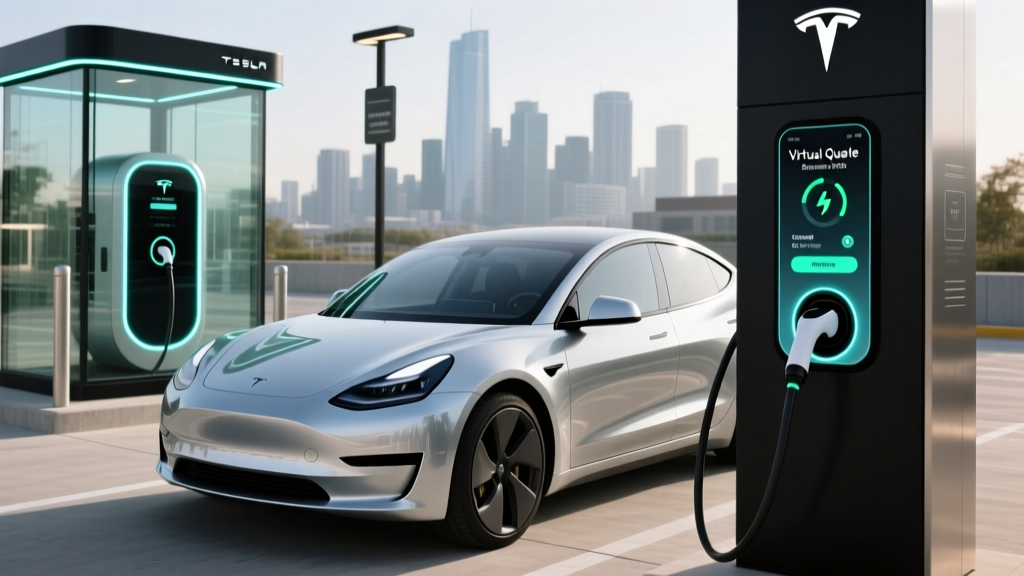
The Tesla Supercharger virtual queue app feature has become essential infrastructure for EV owners navigating busy charging stations. When you arrive at a crowded Supercharger location, the app allows you to join a digital waiting list rather than physically queueing in your vehicle. You'll receive a notification when a stall becomes available, typically within 5-15 minutes at high-traffic locations.
This virtual queue system integrates directly into the Tesla app and vehicle navigation, showing real-time stall availability and estimated wait times. For non-Tesla EVs now accessing Supercharger networks via NACS adapters or Magic Dock stations, the queue functionality works through the Tesla app's "Charge Your Non-Tesla EV" feature, though availability varies by location.
Charging Levels Explained: Speed, Power, and Real-World Range
Before diving into installation or costs, let's clarify the three charging tiers every EV owner encounters. Remember: kW (kilowatts) measures power — how fast energy flows — while kWh (kilowatt-hours) measures energy capacity, like gallons in a fuel tank.
| Charging Level | Power Output | Voltage/Amperage | Miles Added Per Hour | Best Use Case |
|---|---|---|---|---|
| Level 1 (Standard Outlet) | 1.4-1.9 kW | 120V / 12-16A | 3-5 miles | Overnight top-ups, PHEVs, low-mileage drivers |
| Level 2 (Home/Public AC) | 3.3-19.2 kW | 240V / 16-80A | 12-60 miles | Daily home charging, workplace, destinations |
| DC Fast Charging | 50-350 kW | 400-800V DC | 150-1000+ miles per hour equivalent | Road trips, rapid top-ups (10-80% in 15-40 min) |
Real-world charging time examples (10-80% State of Charge):
- 60 kWh battery (Chevrolet Bolt, Nissan Leaf): Level 2 at 7.2 kW takes ~7 hours; DC fast at 50 kW takes ~50 minutes
- 82 kWh battery (Tesla Model 3 Long Range): Level 2 at 11.5 kW takes ~5.5 hours; DC fast at 250 kW takes ~25 minutes (with preconditioning)
- 110 kWh battery (Ford F-150 Lightning Extended): Level 2 at 19.2 kW takes ~5 hours; DC fast at 150 kW takes ~45 minutes
Charging speeds aren't linear — most EVs peak early in the charge curve then taper significantly above 80% to protect battery health. A 250 kW peak rate might average only 120-150 kW across the full 10-80% session.
Home EV Charger Installation: Costs, Requirements, and Electrical Upgrades
Installing a Level 2 home charger delivers the best ownership experience — wake up to a full battery every morning at the lowest per-mile cost. But installation complexity varies dramatically based on your electrical panel's capacity and the charger's distance from it.
Electrical Requirements for Level 2 Charging
Most home Level 2 chargers require a dedicated 240V circuit, similar to an electric dryer or oven. Common configurations:
- 40A circuit / 32A continuous charging: Supports 7.7 kW chargers — adequate for most daily needs
- 50A circuit / 40A continuous: Supports 9.6 kW chargers — faster charging for larger batteries
- 60A circuit / 48A continuous: Supports 11.5 kW chargers — maximum for most residential setups
The National Electrical Code requires circuits be rated 125% above continuous load, so a 40A charger needs a 50A breaker.
Does Your Electrical Panel Need an Upgrade?
Homes built before 2000 often have 100A or 150A main panels that may lack capacity for a 40-60A EV circuit, especially if you already run electric heat, an electric dryer, and an electric range. Signs you'll need a panel upgrade:
- Main breaker rated below 200A
- No available double-pole breaker slots
- Panel already near capacity (electrician will perform a load calculation)
- Federal Pacific or Zinsco panels (insurance companies often require replacement)
A 200A panel upgrade costs $1,500-$3,500 depending on your region and utility requirements. Some homes need a full service upgrade from the utility, pushing costs to $4,000-$6,000.
Typical Home Charger Installation Costs (2026)
| Component | Cost Range | Notes |
|---|---|---|
| Level 2 Charger Equipment | $350-$750 | Smart Wi-Fi chargers cost more than basic units |
| Electrician Labor (simple install) | $500-$1,200 | Short run from panel, no upgrades needed |
| Electrician Labor (complex install) | $1,200-$2,500 | Long wire runs, conduit, drywall work |
| Electrical Permit | $50-$250 | Varies by municipality |
| Panel Upgrade (if needed) | $1,500-$3,500 | 200A service upgrade |
| Total (no panel upgrade) | $900-$2,200 | Most common scenario |
| Total (with panel upgrade) | $2,400-$5,750 | Older homes or high-load households |
Safety and Code Requirements
Your installation must meet NEC (National Electrical Code) and local amendments:
- Dedicated circuit: EV chargers require their own breaker — no sharing with other appliances
- GFCI protection: Required for outdoor installations and some jurisdictions mandate it indoors
- NEMA 14-50 outlet vs. hardwired: Plug-in outlets offer flexibility but some utilities require hardwired for rebates; hardwired eliminates GFCI nuisance tripping issues common with 14-50 receptacles
- Outdoor rating: If installing outside, ensure the charger carries a NEMA 4 or IP65 weatherproof rating
Always hire a licensed electrician familiar with EV charging — improper installation voids warranties and creates fire risk.
Connector Compatibility: NACS, CCS, and CHAdeMO
The North American charging landscape has consolidated around NACS (North American Charging Standard, aka Tesla's connector) as the dominant standard, but your vehicle's native port determines what adapters you'll need.
| Connector Type | Vehicles Using It | Home Charging | DC Fast Charging Access |
|---|---|---|---|
| NACS (Tesla) | Tesla (all models), Ford, GM, Rivian, Volvo, Polestar, Mercedes, Nissan (2025+), Honda (2025+) | Native NACS or J1772 with adapter | Tesla Supercharger network + Electrify America (2025+ rollout) |
| CCS1 | Hyundai, Kia, BMW, VW, Audi, Porsche, Stellantis (through 2024), older Ford/GM models | J1772 (standard on all Level 2 chargers) | Electrify America, EVgo, ChargePoint, non-Tesla networks |
| CHAdeMO | Nissan Leaf (pre-2025), Mitsubishi Outlander PHEV | J1772 | Limited and declining — prioritize CCS/NACS adapters |
Adapter essentials:
- Tesla to J1772 adapter: Included with Tesla vehicles — lets you use any Level 2 public charger
- J1772 to NACS adapter: Required for non-Tesla EVs charging at NACS-equipped Level 2 stations ($150-$250)
- CCS to NACS adapter: Allows CCS-equipped vehicles to access Tesla Superchargers (Magic Dock stations don't require this) — Tesla sells an official adapter for ~$250
- CHAdeMO to CCS adapter: Expensive ($400-$600) and increasingly unnecessary as CHAdeMO infrastructure declines
Cost to Charge: Home vs. Public vs. Gas Comparison
Electricity pricing varies wildly by region, time of day, and charging location. Here's the real math on what you'll pay per mile.
Charging Cost Scenarios (2026 National Averages)
| Charging Scenario | Price per kWh | Cost Per Mile (3.5 mi/kWh EV) | Equivalent Gas Price (at 30 MPG) |
|---|---|---|---|
| Home Off-Peak (TOU rate) | $0.08-$0.14 | $0.023-$0.040 | $0.69-$1.20/gallon |
| Home Standard Rate | $0.15-$0.22 | $0.043-$0.063 | $1.29-$1.89/gallon |
| Public Level 2 (ChargePoint, etc.) | $0.25-$0.45 | $0.071-$0.129 | $2.13-$3.87/gallon |
| DC Fast Charging (Electrify America, EVgo) | $0.35-$0.60 | $0.100-$0.171 | $3.00-$5.13/gallon |
| Tesla Supercharger (varies by location) | $0.25-$0.50 | $0.071-$0.143 | $2.13-$4.29/gallon |
| Gas Vehicle (30 MPG, $3.50/gal) | — | $0.117 | $3.50/gallon |
Key takeaway: Home charging on off-peak rates delivers 70-85% fuel cost savings versus gas. Exclusive DC fast charging erases most savings — plan to charge at home 80%+ of the time for maximum economic benefit.
Time-of-Use (TOU) rates from your utility can dramatically reduce home charging costs. Many utilities offer EV-specific plans with super-off-peak rates (midnight-6am) as low as $0.05-$0.08/kWh. A smart charger with scheduled charging automates this optimization.
Recommended Level 2 Home Chargers (2026)
After testing dozens of units across multiple EVs, these chargers deliver the best combination of reliability, features, and value:
Top Pick: ChargePoint Home Flex
- Power: Up to 12 kW (50A circuit) — adjustable down to 16A for smaller panels
- Connector: J1772 (NACS adapter available) — 23-foot cable
- Smart Features: Wi-Fi, app scheduling, Alexa integration, energy tracking, TOU optimization
- Price: $550-$650
- Best For: Most homeowners wanting flexibility and smart scheduling
Premium Choice: Tesla Wall Connector
- Power: Up to 11.5 kW (48A / 60A circuit)
- Connector: Native NACS — 24-foot cable
- Smart Features: Wi-Fi, over-the-air updates, power sharing (multiple units on one circuit), Tesla app integration
- Price: $475
- Best For: Tesla owners or households with multiple NACS-equipped vehicles
Budget Smart Option: Emporia Vue
- Power: Up to 11.5 kW (48A)
- Connector: J1772 — 24-foot cable
- Smart Features: Wi-Fi, solar integration, load management, detailed energy monitoring
- Price: $399-$449
- Best For: Solar owners, budget-conscious buyers wanting smart features
Heavy-Duty: JuiceBox Pro 48
- Power: 11.5 kW (48A)
- Connector: J1772 — 25-foot cable
- Smart Features: Wi-Fi, app control, energy usage reports, utility demand-response compatible
- Price: $599
- Best For: Commercial-grade reliability, utility rebate programs
All recommended chargers carry UL certification, NEMA 4 outdoor ratings, and 3-year warranties. Avoid uncertified Amazon/eBay imports — they lack safety testing and may void your home insurance.
Maximizing Your Charging Strategy
The optimal EV charging setup combines home Level 2 for daily needs with strategic DC fast charging for road trips. Here's the framework:
- Install a 40-50A Level 2 circuit at home — covers 95% of driving needs at lowest cost
- Use your utility's TOU rates — schedule charging for off-peak hours (typically 10pm-6am)
- Plan road trips around DC fast charger locations — use A Better Routeplanner or your vehicle's native navigation
- Precondition your battery before DC fast charging — most EVs do this automatically when you navigate to a charger, warming the battery for faster charge acceptance
- Keep daily charging between 20-80% SoC for NMC batteries; LFP batteries can charge to 100% regularly without degradation concerns
Frequently Asked Questions
How much does it cost to install a home EV charger?
A typical Level 2 home charger installation costs $900-$2,200 including equipment ($350-$750), electrician labor ($500-$1,200 for simple installs), and permits ($50-$250). Older homes needing electrical panel upgrades should budget an additional $1,500-$3,500. Complex installations with long wire runs or conduit work can reach $2,500+ without a panel upgrade.
How fast will each charging level add range?
Level 1 (120V outlet) adds 3-5 miles per hour — adequate for PHEVs or low-mileage drivers. Level 2 (240V, 40A) adds 25-35 miles per hour, fully recharging most EVs overnight. DC fast charging adds 150-250+ miles in 15-30 minutes (10-80% SoC), but speeds taper significantly above 80% to protect battery health.
Which connector/charger is compatible with my EV?
All EVs accept J1772 connectors for Level 1/Level 2 AC charging — Tesla includes a J1772 adapter. For DC fast charging, check your vehicle's native port: Tesla/Ford/GM/Rivian use NACS, Hyundai/Kia/BMW/VW use CCS1, older Nissan Leaf uses CHAdeMO. Adapters exist for cross-compatibility, but native connectors deliver the most reliable experience.
How much does charging cost per mile vs gas?
Home charging on off-peak rates costs $0.02-$0.04 per mile — equivalent to $0.60-$1.20/gallon gas. Standard home rates cost $0.04-$0.06/mile ($1.20-$1.80/gallon equivalent). Public DC fast charging costs $0.10-$0.17/mile ($3.00-$5.10/gallon equivalent), sometimes exceeding gas prices. A comparable gas vehicle at 30 MPG and $3.50/gallon costs $0.117/mile.
What electrical upgrades might I need?
Homes with 100A or 150A electrical service may need a panel upgrade to 200A ($1,500-$3,500) to support a 40-60A EV circuit. You'll also need available double-pole breaker slots and sufficient capacity after an electrician performs a load calculation. Homes with electric heat, dryers, and ranges are most likely to need upgrades. Some utilities offer "make-ready" programs covering panel upgrade costs — check with your provider.
Can I use the Tesla Supercharger virtual queue app with a non-Tesla EV?
Yes, but only at Supercharger locations equipped with Tesla's Magic Dock (built-in CCS adapter) or where you have a NACS adapter. Download the Tesla app, select "Charge Your Non-Tesla EV," and you can join virtual queues at supported stations. Availability varies by region — most Magic Dock locations are in urban areas with high non-Tesla EV adoption.
Do I need a smart charger or is a basic unit sufficient?
Smart chargers ($100-$200 more than basic units) deliver significant value through scheduled charging (optimizing for TOU rates), energy monitoring, remote control, and utility demand-response programs that can earn rebates. If your utility offers off-peak rates or you want to track charging costs, a smart charger pays for itself within 1-2 years through optimized charging schedules.
For the latest federal tax credit rules on home charger installation (up to $1,000 credit under §30C), consult the IRS residential energy credits page. Local utility rebates often stack with federal credits — check your provider's EV programs before purchasing equipment.