The latest Tesla Supercharger UI update has streamlined how drivers locate, initiate, and monitor charging sessions — and it pairs seamlessly with Tesla's Valet Parking mode for hands-off public charging. But whether you're pulling into a V4 Supercharger stall or plugging in at home, understanding the fundamentals of EV charging remains essential. This guide breaks down every charging level, home installation realities, connector compatibility, and real cost-per-mile math so you can charge smarter in 2026.
Understanding EV Charging Levels: Speeds That Matter
Before we get into the Tesla Supercharger UI update or valet-mode charging, let's ground the discussion in charging physics. EV charging operates across three tiers, each defined by power output in kilowatts (kW) — the rate at which energy flows into your battery, measured in kilowatt-hours (kWh). Think of kW as the width of the pipe and kWh as the size of the tank.
| Level | Voltage | Power (kW) | Miles of Range/Hour | Best For |
|---|---|---|---|---|
| Level 1 | 120V AC | 1.0–1.4 kW | 3–5 mi/hr | Overnight top-ups, PHEVs |
| Level 2 | 240V AC | 7.2–19.2 kW | 25–65 mi/hr | Daily home/workplace charging |
| DC Fast (Level 3) | 400–800V DC | 50–350+ kW | 150–1,200+ mi/hr | Road trips, rapid top-ups |
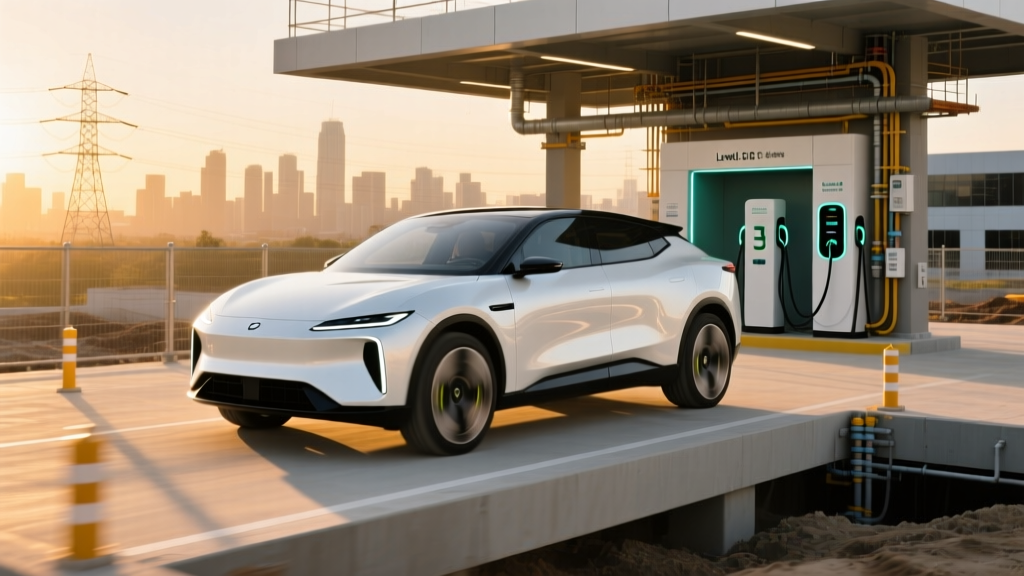
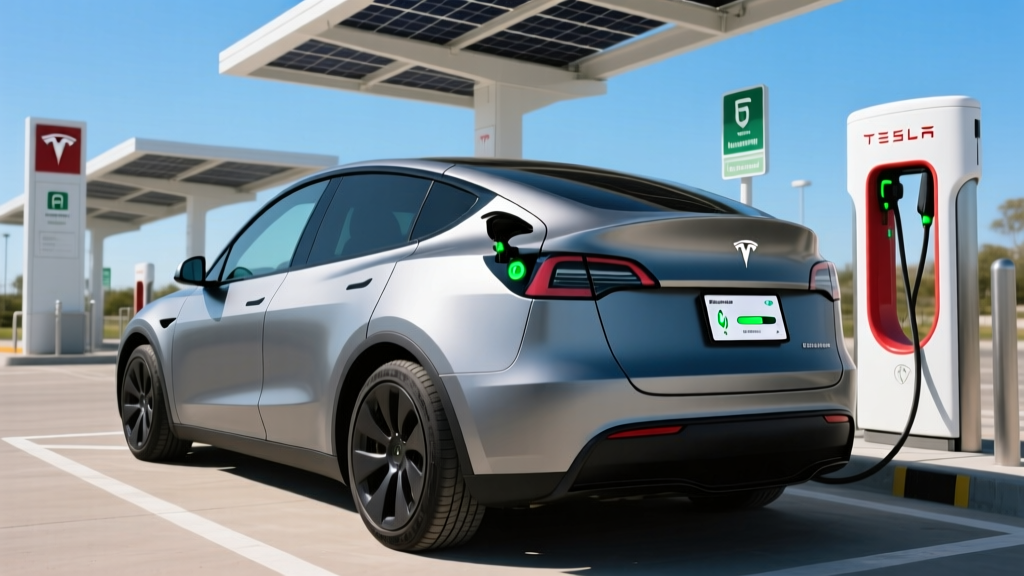
Tesla's V4 Supercharger cabinets now deliver up to 350 kW to compatible vehicles via the NACS (North American Charging Standard) connector. That means a Tesla Model Y with its ~75 kWh usable battery can add roughly 200 miles of range in about 15 minutes under ideal conditions — though real-world charge curves taper significantly above 80% State of Charge (SoC). Expect a 10–80% session to take approximately 18–25 minutes depending on battery temperature and preconditioning.
The Tesla Supercharger UI Update and Valet Parking Mode
The 2025–2026 Tesla Supercharger UI overhaul redesigned the in-car charging interface with larger map pins, real-time stall availability counts, and integrated pricing tiers. When you pull up to a Supercharger, the vehicle's navigation now displays per-kWh pricing, current occupancy, and estimated wait times before you even arrive.
Tesla's Valet Parking mode — activated via the vehicle's security settings or the Tesla app — restricts speed to 70 mph, locks the glovebox and frunk, hides personal data from the touchscreen, and crucially, keeps the charge port accessible so a valet or service attendant can plug in without full vehicle access. This is especially useful at hotels, airports, and destination chargers where you hand off the vehicle but still need it charged.
Home EV Charger Installation: Costs and Electrical Requirements
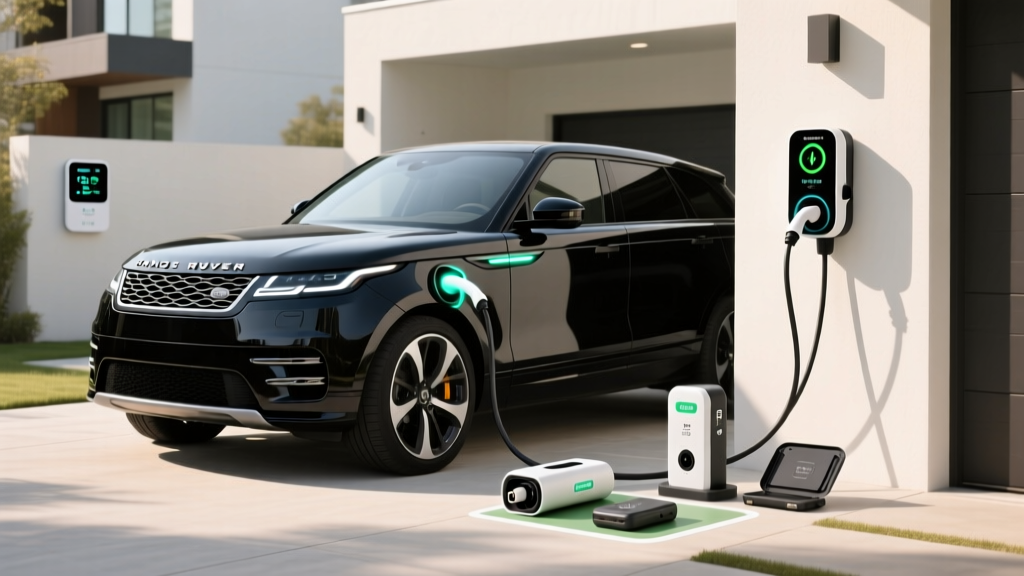
Home Level 2 charging is where most EV owners do 80–90% of their charging. A proper installation requires a dedicated 240V circuit — typically 40A to 60A — running from your electrical panel to a NEMA 14-50 outlet or a hardwired wall connector.
| Component | Typical Cost Range | Notes |
|---|---|---|
| Level 2 Charger (Equipment) | $350–$700 | Tesla Wall Connector, ChargePoint, Emporia |
| Electrician Labor | $500–$2,000 | Depends on panel proximity, conduit run length |
| Electrical Permit | $50–$200 | Varies by municipality |
| Panel Upgrade (if needed) | $1,500–$4,000 | Required if panel is 100A or maxed out |
| Total (no panel upgrade) | $900–$2,900 | Most homes with 200A service |
| Total (with panel upgrade) | $2,400–$6,900 | Older homes with 100A panels |
Homes built before 1990 often have 100-amp electrical panels that may lack capacity for a 40A EV circuit alongside existing loads like electric dryers, ovens, and HVAC. A licensed electrician will perform a load calculation per NEC Article 220 to determine whether a panel upgrade to 200A is necessary. Don't skip this step — an overloaded panel is a fire hazard and will fail inspection.
Connector Compatibility: NACS, CCS1, CHAdeMO, and Adapters
The connector landscape has consolidated significantly since 2024, when Ford, GM, Rivian, and most major automakers adopted the NACS (Tesla's connector standard, now SAE J3400). By 2026, NACS is the dominant DC fast-charging connector in North America.
| Connector | Brands Using It | DC Fast Charge? | Adapter Needed? |
|---|---|---|---|
| NACS (J3400) | Tesla, Ford, GM, Rivian, Hyundai, Kia, BMW, most 2025+ models | Yes, up to 350 kW | None for Tesla Superchargers |
| CCS1 | Legacy VW ID.4, some 2023–2024 models, Electrify America stalls | Yes, up to 350 kW | NACS-to-CCS adapter (~$150–$250) |
| CHAdeMO | Nissan Leaf (legacy only, discontinued) | Yes, up to 100 kW | Limited availability, phase-out |
If you drive a CCS-equipped EV from model year 2023 or 2024 (such as an early Hyundai Ioniq 5 or VW ID.4), you'll need a NACS-to-CCS adapter to access Tesla Superchargers. Tesla sells an official adapter for approximately $200, and third-party options from brands like Lectron are available for $150–$180. Always verify the adapter is UL-listed for safety.
Cost to Charge: Per-Mile Math vs. Gasoline
The economics of EV charging depend heavily on where and when you charge. Here's how the numbers stack up in 2026:
| Scenario | Rate ($/kWh) | Efficiency (kWh/100mi) | Cost Per Mile |
|---|---|---|---|
| Home Level 2 (off-peak utility rate) | $0.08–$0.14 | 28–32 kWh | $0.022–$0.045 |
| Home Level 2 (standard rate) | $0.14–$0.20 | 28–32 kWh | $0.039–$0.064 |
| Public Level 2 (workplace/mall) | $0.20–$0.35 | 28–32 kWh | $0.056–$0.112 |
| DC Fast (Tesla Supercharger avg.) | $0.28–$0.42 | 28–32 kWh | $0.078–$0.134 |
| DC Fast (Electrify America/Ionity) | $0.35–$0.55 | 28–32 kWh | $0.098–$0.176 |
| Gas car (28 MPG avg., $3.40/gal) | — | — | $0.121 |
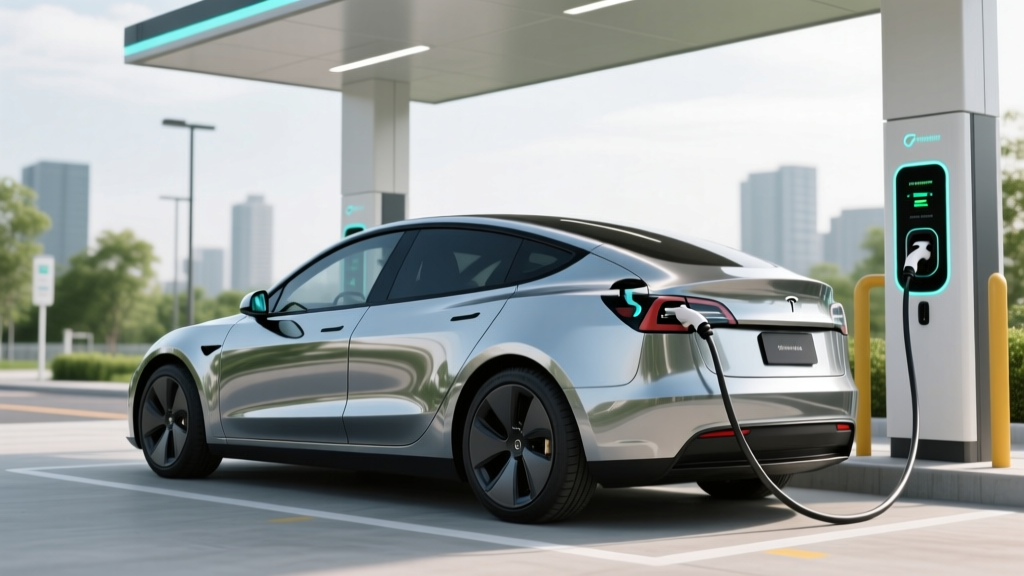
A Tesla Model 3 rated at approximately 28 kWh/100mi charging at home on a $0.12/kWh off-peak rate costs about $0.034 per mile — roughly one-quarter the cost of a 28 MPG gas car at $3.40/gallon. Even at DC fast-charger rates, many EVs still undercut or match gasoline per mile. The savings are most dramatic for home chargers with time-of-use (TOU) utility plans that offer rates as low as $0.06–$0.08/kWh overnight.
Charging Time Examples: 10–80% Sessions by Battery Size
Charging time depends on battery capacity (kWh), peak charge rate (kW), and the vehicle's charge curve. Most EVs taper charge speed significantly above 80% SoC to protect battery longevity — a phenomenon called the charge curve taper. Here's what to expect:
- Tesla Model 3 (60 kWh LFP battery, 170 kW peak): 10–80% in ~22 minutes on a V3 Supercharger (250 kW stall, vehicle-limited to 170 kW).
- Tesla Model Y Long Range (75 kWh NMC, 250 kW peak): 10–80% in ~18–20 minutes on V3/V4 Supercharger.
- Hyundai Ioniq 5 (77.4 kWh, 240 kW peak, 800V architecture): 10–80% in ~18 minutes on a 350 kW-capable charger.
- Ford F-150 Lightning Extended Range (131 kWh, 150 kW peak): 10–80% in ~40 minutes — larger batteries take longer even at high kW.
- Chevrolet Equinox EV (85 kWh, 150 kW peak): 10–80% in ~30 minutes on a DC fast charger.
Recommended Home Chargers: Power, Features, and Pricing
Not all Level 2 chargers are equal. Here are top picks for 2026, selected for reliability, smart features, and value:
Tesla Wall Connector
Power: 11.5 kW (48A) max
Connector: NACS (native Tesla)
Cable Length: 24 ft
Smart Features: Wi-Fi, OTA updates, power sharing across multiple units, access control
Price: ~$425
Best For: Tesla owners wanting seamless integration and load-sharing in multi-EV garages.
Emporia Level 2 EV Charger
Power: 11.5 kW (48A) max
Connector: NACS (2025+ models) or J1772 with adapter
Cable Length: 24 ft
Smart Features: Energy monitoring via Emporia app, solar integration, TOU scheduling
Price: ~$350
Best For: Budget-conscious buyers with solar panels who want granular energy tracking.
ChargePoint Home Flex
Power: Up to 12 kW (50A) configurable
Connector: NACS or J1772 (configurable)
Cable Length: 23 ft
Smart Features: Alexa integration, amperage adjustment, ChargePoint network access
Price: ~$550
Best For: Non-Tesla EV owners who want flexible amperage settings and robust app control.
Safety and Electrical Code Requirements
EV charger installation isn't plug-and-play. The National Electrical Code (NEC) and local building codes mandate several safety requirements:
- Dedicated Circuit: A Level 2 charger must be on its own dedicated breaker — typically 50A or 60A — not shared with other appliances. Per NEC 210.23, the continuous load (EV charging qualifies) cannot exceed 80% of the breaker rating, so a 48A charger requires a 60A breaker.
- GFCI Protection: NEC 2020 and later require Ground Fault Circuit Interrupter (GFCI) protection for all EV charging outlets. Many modern hardwired chargers have built-in GFCI, but receptacle-based installs need a GFCI breaker.
- Outdoor Rating: If your charger is installed outdoors (garage exterior, driveway), it must carry a NEMA 4 or IP65 rating for weather resistance. All three chargers recommended above meet this standard.
- Wire Gauge: A 48A circuit typically requires 6 AWG copper wire (THHN in conduit) or 4 AWG for runs exceeding 50 feet to minimize voltage drop. Your electrician will calculate this.
- Permit and Inspection: Nearly all jurisdictions require an electrical permit for EV charger installation, followed by an inspection. Skipping the permit can void home insurance claims in the event of an electrical fire.
Always hire a licensed electrician — not a general handyman — for EV charger installation. Ask for their experience specifically with EV circuits and request a load calculation before work begins.
Frequently Asked Questions
How much does it cost to install a home EV charger?
A typical Level 2 home charger installation costs between $900 and $2,900 when your electrical panel has sufficient capacity. This includes $350–$700 for the charger, $500–$2,000 in electrician labor, and $50–$200 for the permit. If your home needs a panel upgrade from 100A to 200A, add $1,500–$4,000, bringing the total to $2,400–$6,900.
How fast will each charging level add range?
Level 1 (120V) adds 3–5 miles per hour — adequate for PHEVs with small batteries but impractical for full EVs. Level 2 (240V) adds 25–65 miles per hour depending on amperage, easily replenishing a day's driving overnight. DC fast charging adds 150–1,200+ miles per hour at peak rates, enabling 10–80% sessions in 18–40 minutes depending on battery size and charge rate.
Which connector is compatible with my EV?
For 2025 and newer EVs from Tesla, Ford, GM, Rivian, Hyundai, Kia, and most others, NACS (J3400) is the native connector. Older CCS-equipped vehicles (2023–2024 model years) need a NACS-to-CCS adapter (~$150–$250) to access Tesla Superchargers. CHAdeMO is effectively discontinued — only the Nissan Leaf used it, and the Leaf ended production in 2025.
How much does charging cost per mile vs. gas?
Home charging on off-peak rates costs approximately $0.02–$0.05 per mile for a typical EV achieving 28–32 kWh/100mi. Public DC fast charging costs $0.08–$0.14 per mile. A comparable gas car at 28 MPG with fuel at $3.40/gallon costs about $0.12 per mile. Home charging delivers 2–5x savings per mile; even DC fast charging is competitive with gasoline in most markets.
What electrical upgrades might I need?
The most common upgrade is a panel replacement from 100A to 200A service ($1,500–$4,000) if your existing panel lacks capacity for a 40–60A dedicated EV circuit. Some homes may also need a service drop upgrade from the utility ($1,000–$3,000), new conduit runs for long wire distances, or a sub-panel installation if the main panel is full. A licensed electrician's load calculation will determine your specific needs.
Sources: fueleconomy.gov for EPA efficiency data; IRS.gov for residential energy credit eligibility; National Electrical Code (NEC) Article 625 for EV charging installation standards.