The Real Answer: Tesla Supercharger Times by Model and Generation
If you've ever pulled into a Tesla Supercharger stall and wondered why the car next to you seems to be charging faster, you're not alone. The question how long does a Tesla Supercharger take doesn't have a single answer — it depends on your vehicle's battery size, its peak charge acceptance rate, the Supercharger generation you're plugged into, and the state of charge (SoC) when you arrive.
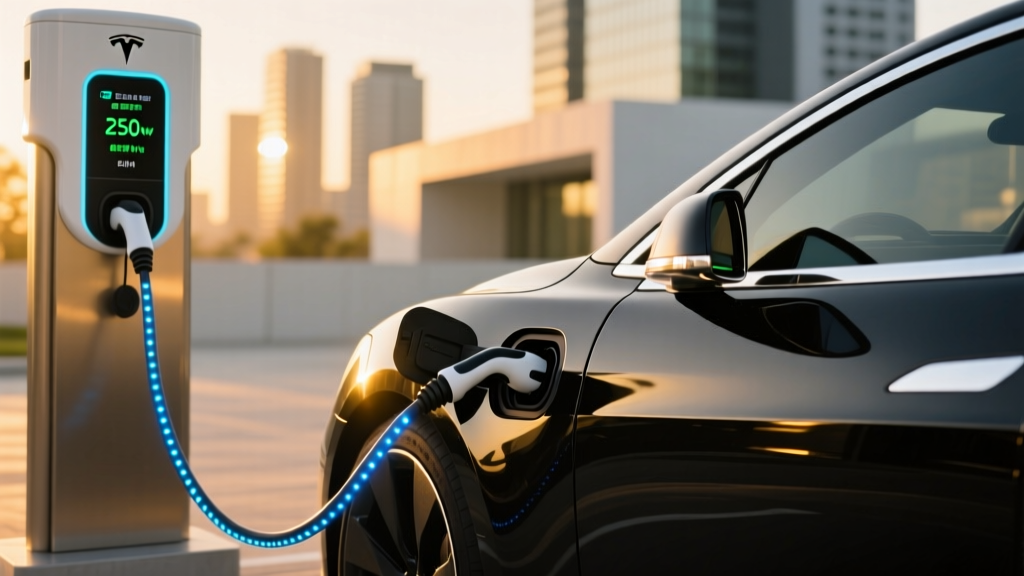
Here's the short version: a Tesla Model Y on a V3 Supercharger (250 kW peak) can add roughly 10% to 80% in about 25–28 minutes under ideal conditions. A Model 3 Long Range with LFP chemistry may take closer to 30–35 minutes. On older V2 stalls (150 kW shared), expect 40–55 minutes for the same session. But peak kW numbers tell only part of the story — the charge curve, battery temperature, and stall availability all shape your actual wait.
| Vehicle | Battery (kWh usable) | Peak DC Rate | V3 (250 kW) 10–80% | V4 (350 kW)* 10–80% | V2 (150 kW) 10–80% |
|---|---|---|---|---|---|
| Model 3 Long Range AWD | ~75 kWh (NMC) | 250 kW | ~25 min | ~20 min | ~42 min |
| Model 3 RWD (LFP) | ~57.5 kWh (LFP) | 170 kW | ~32 min | ~32 min (peak-limited) | ~48 min |
| Model Y Long Range AWD | ~75 kWh (NMC) | 250 kW | ~27 min | ~22 min | ~45 min |
| Model S Plaid | ~95 kWh (NMC) | 250 kW | ~30 min | ~24 min | ~52 min |
| Cybertruck AWD | ~123 kWh (NMC) | 250 kW (800V arch) | ~38 min | ~28 min | ~65 min |
*V4 Supercharger cabinets (350 kW capable) are rolling out through 2025–2026, but most current vehicles are limited by their onboard charge acceptance. The Cybertruck's 800-volt architecture benefits most from V4 stalls. Times are estimates under optimal battery temperature and preconditioning. Source: Tesla Supercharging Support.
Understanding Charging Levels: kW, Speed, and What You Actually Get
Before comparing Supercharger stops to home charging, it's essential to understand the three charging levels and how they differ. The critical distinction: kW (kilowatts) measures power — the rate of energy flow — while kWh (kilowatt-hours) measures energy, the total capacity of your battery. A 250 kW charger delivers energy fast; a 75 kWh battery holds 75 units of that energy.
| Level | Voltage / Amps | Power (kW) | Miles of Range per Hour | Typical Use Case |
|---|---|---|---|---|
| Level 1 (120V) | 120V / 12A | ~1.4 kW | 3–5 mi/hr | Emergency / overnight trickle |
| Level 2 (240V) | 240V / 32–48A | 7.7–11.5 kW | 25–44 mi/hr | Home daily charging, workplace |
| DC Fast (V3 SC) | 400–800V DC | 150–250 kW | 750–1,000+ mi/hr (peak) | Road trips, rapid top-ups |
| DC Fast (V4 SC) | 400–800V DC | Up to 350 kW | 1,000–1,300+ mi/hr (peak) | Next-gen road-trip charging |
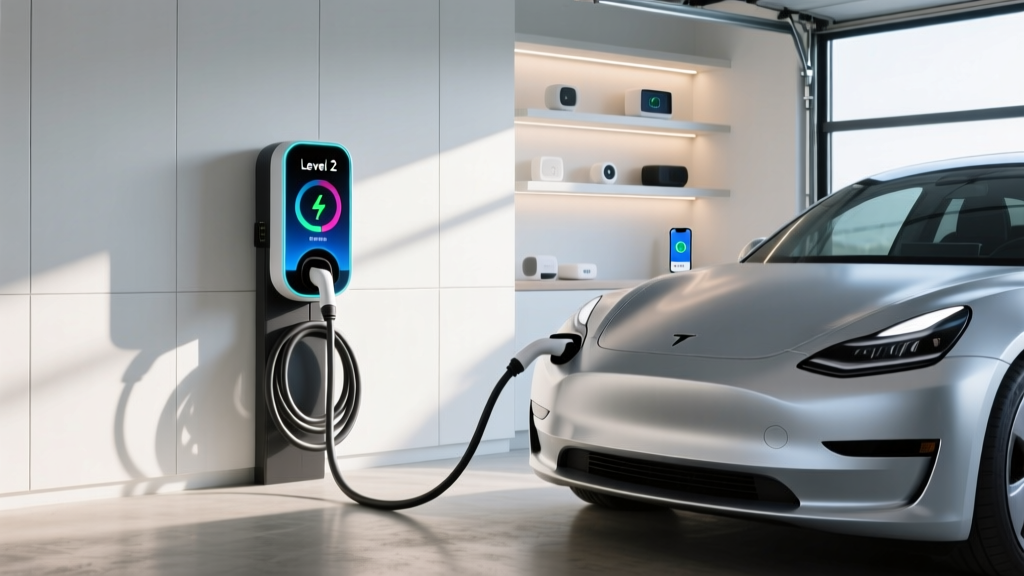
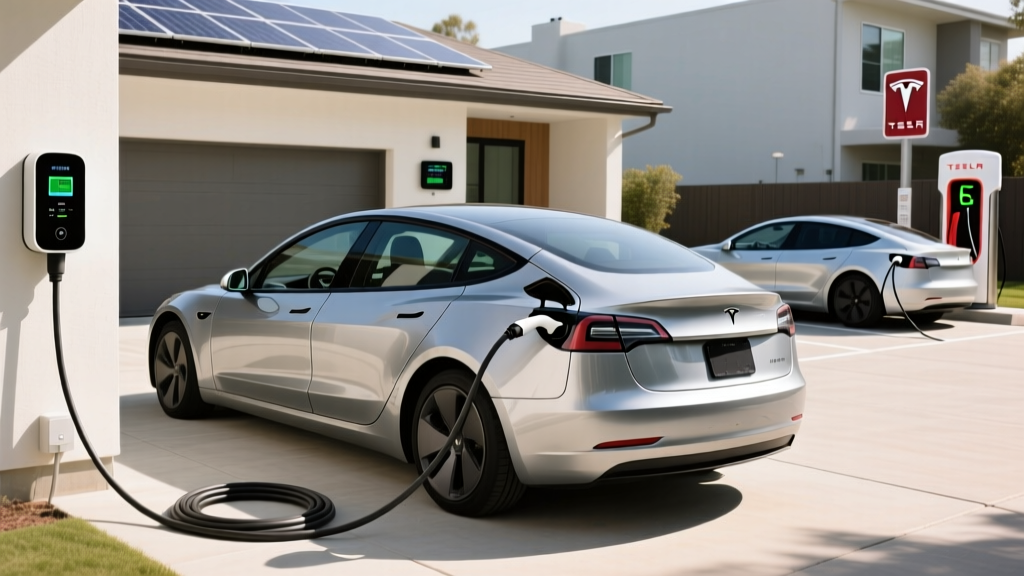
For daily driving, Level 2 at home covers the vast majority of needs. A Tesla Model Y averaging 3.5 miles per kWh charged overnight on an 11.5 kW Wall Connector gains roughly 40 miles of range per hour — more than enough to replenish a typical daily commute in 1–2 hours.
How Much Does Charging Cost: Supercharger vs Home vs Gas?
The cost gap between home charging and public DC fast charging is substantial, and it's the primary reason most EV owners install a Level 2 charger at home.
| Scenario | Rate | Cost per kWh | Cost per Mile* |
|---|---|---|---|
| Home (national avg electricity) | $0.16/kWh | $0.16 | $0.046 |
| Home (off-peak TOU rate) | $0.09/kWh | $0.09 | $0.026 |
| Tesla Supercharger (avg 2026) | $0.30–$0.40/kWh | $0.35 (avg) | $0.100 |
| Electrify America / EVgo (DC) | $0.35–$0.55/kWh | $0.45 (avg) | $0.129 |
| Gasoline car (30 MPG, $3.40/gal) | — | — | $0.113 |
*Based on a Tesla Model Y Long Range at ~3.5 mi/kWh (EPA combined). Gasoline comparison uses EPA combined MPG for a comparable compact SUV. Electricity rates vary by state and utility — check your local EIA data for precise figures.
The takeaway: home charging at off-peak rates costs roughly a quarter of what a Supercharger session does per mile. Even at average Supercharger pricing, Tesla owners still pay slightly less per mile than a 30 MPG gas car — but the savings multiply dramatically with home charging.
Home Charger Installation: Costs, Electrical Requirements, and Gotchas
If you're buying a Tesla — or any EV — the single highest-impact ownership decision is installing a Level 2 home charger. Here's what that actually involves and what it costs in 2026.
Electrical Requirements
A Level 2 charger requires a dedicated 240-volt circuit, similar to what powers an electric dryer or oven. The most common setup for Tesla owners:
- Circuit: 60-amp dedicated breaker (supports up to 48A continuous charging)
- Wire: 6 AWG copper (or 4 AWG aluminum) for a 60A circuit
- Outlet: NEMA 14-50 receptacle (for Mobile Connector) or hardwired (for Wall Connector)
- Panel capacity: Your electrical panel must have room for the additional load — typically requires a 200-amp service panel in modern homes
Do You Need a Panel Upgrade?
Homes built before 2000 often have 100-amp or 150-amp service panels. Adding a 60-amp EV circuit to a fully loaded 100-amp panel may require a service upgrade to 200 amps — a significant cost that catches many buyers off guard. A licensed electrician will perform a load calculation per NEC Article 220 to determine if your panel can handle the additional draw.
| Component | Low End | Typical | High End |
|---|---|---|---|
| EVSE equipment (Tesla Wall Connector or equivalent) | $400 | $475 | $650 |
| Electrician labor (simple install, near panel) | $300 | $600 | $1,200 |
| Electrical permit | $50 | $125 | $300 |
| Conduit/wire (long run, 50+ ft) | $100 | $300 | $800 |
| Panel upgrade (if needed — 100A to 200A) | $1,500 | $2,500 | $4,500 |
| Total (no panel upgrade) | $850 | $1,500 | $2,950 |
| Total (with panel upgrade) | $2,350 | $4,000 | $7,450 |
Costs vary by region, garage layout, and local code requirements. Always get 2–3 quotes from licensed electricians. Some utilities offer rebates of $250–$1,000 for Level 2 installations — check with your provider.
Safety and Code Considerations
- Dedicated circuit: NEC requires EV chargers to have their own dedicated breaker — no sharing with other appliances.
- GFCI protection: NEC 2020+ requires GFCI protection for outdoor receptacles; hardwired installations may bypass this requirement depending on jurisdiction.
- Outdoor rating: If your charger is mounted outside, ensure the EVSE is NEMA 4 rated for weather resistance.
- Wi-Fi connectivity: Smart chargers with Wi-Fi enable off-peak scheduling and utility demand-response programs that can lower your electricity bill.
Which Connector Does Your EV Need? NACS, CCS, and Adapters
The connector landscape shifted dramatically in 2024–2026 as Tesla's North American Charging Standard (NACS) became the de facto industry connector. Here's where things stand now:
| Connector | Native Brands | Adapter Needed For | DC Fast Charge Capable? |
|---|---|---|---|
| NACS (Tesla) | Tesla, Ford, GM, Rivian, Volvo, Polestar, Fisker | CCS vehicles via adapter | Yes — up to 350 kW (V4) |
| CCS1 | Hyundai, Kia, BMW, VW, Mercedes, legacy models | NACS vehicles via adapter | Yes — up to 350 kW |
| CHAdeMO | Nissan Leaf (legacy) | Limited adapter options | Yes — up to 100 kW |
If you own a Tesla, you have native NACS access to the Supercharger network — the largest and most reliable DC fast-charging network in North America with over 30,000 stalls as of early 2026. Non-Tesla EVs with NACS ports (2025+ Ford, GM, Rivian models) now access Superchargers natively. Older CCS-equipped vehicles from these brands require a Tesla-provided or third-party NACS-to-CCS adapter (typically $200–$250).
Recommended Home Chargers for Tesla and NACS-Equipped EVs
Not all Level 2 chargers are created equal. Here are three vetted options for 2026, selected for reliability, power output, and smart features:
Tesla Wall Connector (Gen 4)
- Power: Up to 11.5 kW (48A on 60A circuit)
- Connector: Native NACS
- Cable length: 24 ft
- Smart features: Wi-Fi, OTA updates, Power Share (load balancing between two units), Tesla app integration
- Price: ~$475
- Best for: Tesla owners who want seamless ecosystem integration
ChargePoint Home Flex (NACS)
- Power: Up to 12 kW (50A on 60A circuit, configurable down to 16A)
- Connector: NACS (2025+ model) or CCS1 with adapter
- Cable length: 23 ft
- Smart features: Wi-Fi, Alexa integration, ChargePoint app scheduling, utility demand-response compatible
- Price: ~$650
- Best for: Multi-EV households or utility program participants
Emporia Vue Level 2 Charger
- Power: Up to 11.5 kW (48A on 60A circuit)
- Connector: NACS (J3400) or J1772 with included adapter
- Cable length: 24 ft
- Smart features: Wi-Fi, energy monitoring, solar integration, scheduling via app
- Price: ~$400
- Best for: Budget-conscious buyers who want energy monitoring and solar pairing
Maximizing Your Supercharger Stop: Preconditioning and Charge-Curve Strategy
The difference between a 22-minute and a 40-minute Supercharger session often comes down to preparation.
Preconditioning is non-negotiable. When you set a Supercharger as your navigation destination, the Tesla's thermal management system begins warming the battery to its optimal charging temperature (~95°F / 35°C) before you arrive. In cold weather, arriving at a Supercharger without preconditioning can cut your peak charge rate in half — turning a 25-minute session into a 45-minute slog. Always navigate to the Supercharger through the car's built-in nav, even if you know the route.
Plan around the charge curve. Charging from 10% to 80% is dramatically faster than 80% to 100%. Above 80%, the battery management system throttles current to protect cell longevity — the rate drops from 100+ kW to under 30 kW. On a road trip, it's faster to charge to 80% and drive to the next Supercharger than to wait for the last 20%. Tesla's trip planner accounts for this automatically.
Avoid peak stall-sharing. Older V2 Supercharger stalls share power between paired stalls (labeled 1A/1B, 2A/2B). If both stalls are occupied, each car gets roughly 75–90 kW instead of the full 150 kW. V3 and V4 stalls deliver dedicated power to each vehicle. When possible, choose V3/V4 stations — the Tesla app and in-car navigation display the stall generation.
Frequently Asked Questions
How long does a Tesla Supercharger take for a full charge (0–100%)?
A full 0–100% session on a V3 Supercharger takes roughly 55–75 minutes depending on battery size. However, almost no experienced EV owner charges to 100% on the road — the 80–100% phase is so slow due to charge-curve taper that it's faster to stop at 80% and charge again later if needed. Reserve 100% charges for overnight Level 2 sessions before a long trip.
Why does my Tesla charge slower than the advertised 250 kW?
Peak 250 kW is achieved only under specific conditions: battery preconditioned to optimal temperature, SoC between roughly 10–30%, and a V3 or V4 stall operating at full capacity. As SoC rises, the charge rate tapers. Cold batteries, high SoC, and shared V2 stalls all reduce the rate. Real-world sustained averages for a 10–80% session are closer to 100–140 kW.
How much does it cost to install a home EV charger?
A typical Level 2 home installation (Tesla Wall Connector, 60A circuit, short wire run) costs $1,200–$2,500 including equipment, electrician labor, and permit. If your home needs a panel upgrade from 100A to 200A service, add $1,500–$4,500. Always get a load calculation from a licensed electrician before committing.
How much does charging cost per mile compared to gas?
Home charging at the national average electricity rate ($0.16/kWh) costs about $0.046 per mile in a Tesla Model Y — roughly 60% less than a 30 MPG gas car at $3.40/gallon ($0.113/mile). Supercharger pricing ($0.30–$0.40/kWh) brings cost per mile to ~$0.10, still competitive with gasoline but far more expensive than home charging.
Can non-Tesla EVs use Superchargers?
Yes. As of 2025–2026, Ford, GM, Rivian, Volvo, and Polestar EVs with native NACS ports can access Tesla Superchargers directly. Older CCS-equipped vehicles from these brands require a NACS adapter. Other brands (Hyundai, Kia, BMW, VW) can use Superchargers only where Tesla has opened access with a Magic Dock CCS adapter built into the stall, or via their own NACS adapter when available.
Is it bad to Supercharge my Tesla frequently?
Tesla's battery management system is designed to handle DC fast charging, and data from high-mileage fleets shows manageable degradation with frequent Supercharging. However, consistent daily DC fast charging accelerates degradation slightly compared to Level 2 home charging. Tesla recommends setting your charge limit to 80% for daily use (for NMC batteries) and using Superchargers primarily for road trips. LFP-equipped Model 3 RWD batteries tolerate 100% charges and frequent DC charging with less degradation concern.