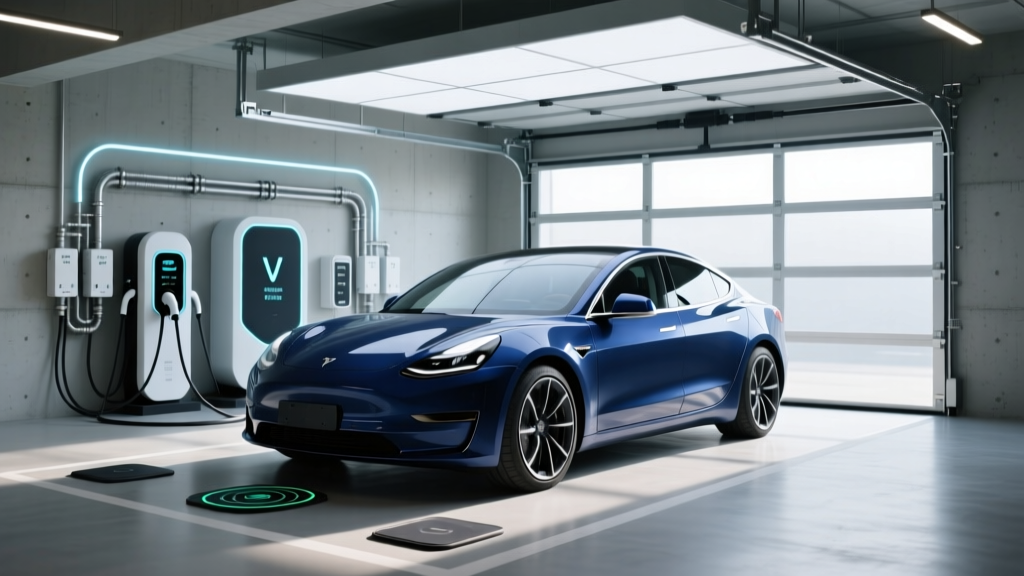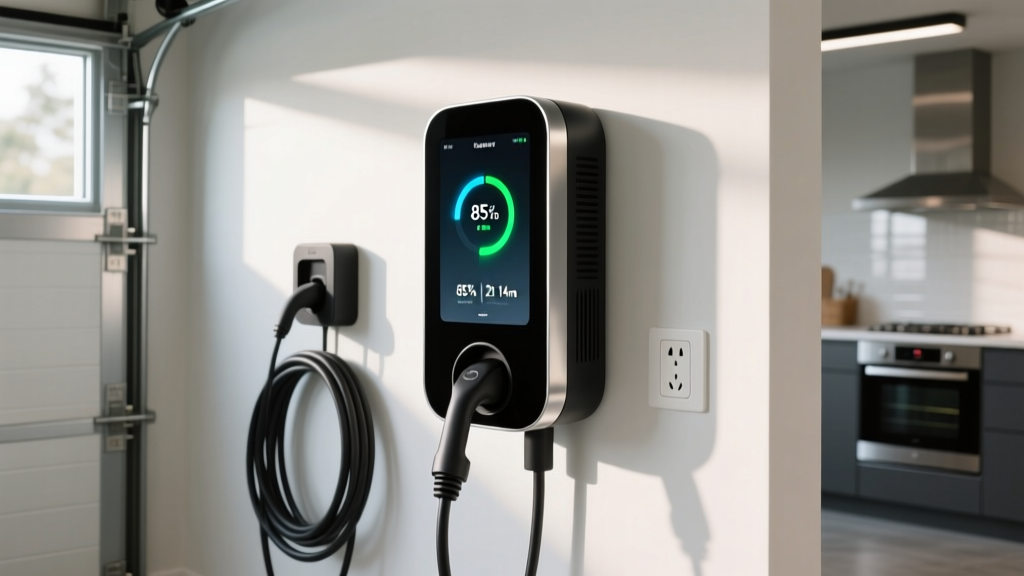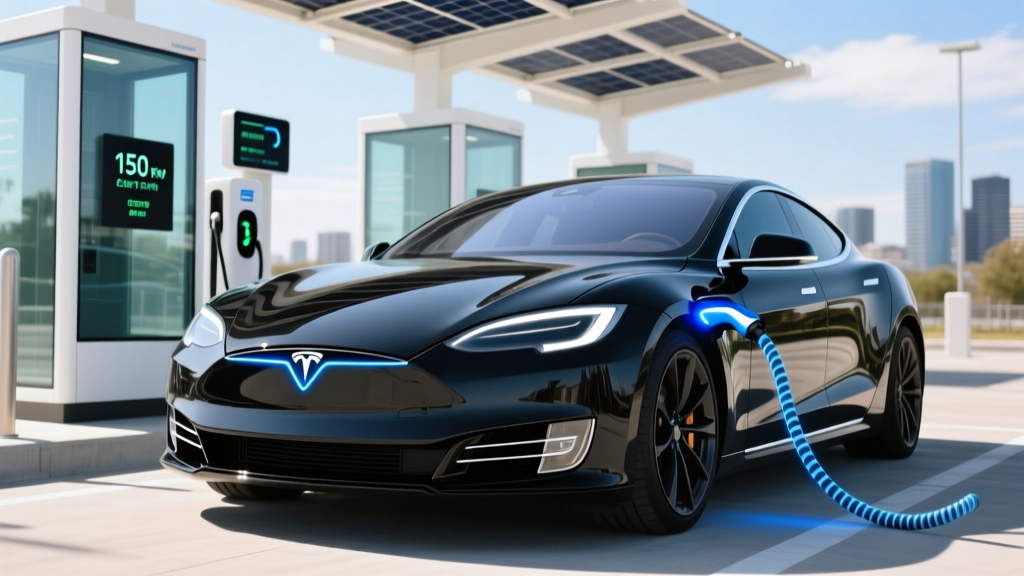
If you've searched "how fast does a Supercharger charge a Tesla," the quick answer is: 15 to 30 minutes from 10% to 80% State of Charge (SoC), depending on the Supercharger generation, your specific Tesla model, battery size, and battery temperature. But peak kilowatt (kW) numbers on a stall placard tell only part of the story. The real-world charging curve, taper behavior above 80%, and ambient conditions all shape how long you'll actually stand at a stall.
This guide dissects Tesla Supercharger speeds across V2, V3, and the newer V4 architecture, compares them to home Level 2 charging, and breaks down the true cost per mile — so you can plan road trips and daily charging with exact numbers, not guesswork.
Tesla Supercharger Generations: V2, V3, and V4 Speeds Explained
Tesla's Supercharger network has evolved through several hardware generations, each with different peak power delivery. Understanding these differences is critical because your charging time depends on which stall type you pull up to.
| Generation | Peak Power (kW) | Connector | Typical 10-80% Time | Notes |
|---|---|---|---|---|
| V2 | 150 kW | NACS (Tesla) | ~30-38 min | Power shared if paired stall occupied; older urban locations |
| V3 | 250 kW | NACS (Tesla) | ~15-25 min | No power sharing between stalls; most common highway type |
| V4 | Up to 350 kW (cabinet); ~250 kW to current Teslas | NACS with CCS adapter support | ~15-22 min (current Teslas) | Integrated payment terminal; supports non-Tesla EVs via Magic Dock |
Key nuance: While V4 cabinets can deliver up to 350 kW, no current Tesla vehicle (Model 3, Model Y, Model S, Model X, or Cybertruck) can accept more than ~250 kW peak. The vehicle's battery management system (BMS) limits the charge rate. Future Tesla models with next-generation battery architectures may unlock higher acceptance rates, but as of the 2026 model year, 250 kW remains the practical ceiling.
The Charging Curve: Why Peak kW Is Not Sustained kW
This is where most EV newcomers get tripped up. A "250 kW Supercharger" does not deliver 250 kW for the entire session. Lithium-ion batteries can only safely accept maximum power at a low State of Charge (typically 5-20%). As the battery fills, the BMS progressively tapers the charge rate to protect cell health.
Here's what a typical V3 Supercharger session looks like for a 2026 Tesla Model Y Long Range (75 kWh usable battery, NMC chemistry):
- 10-20% SoC: Peaks near 250 kW (~5 minutes)
- 20-50% SoC: Sustains 150-200 kW (~8 minutes)
- 50-80% SoC: Tapers from ~120 kW down to ~60 kW (~10 minutes)
- 80-100% SoC: Drops sharply to 20-40 kW (not recommended for road trips)
Real-world implication: Charging from 10-80% takes roughly 22-25 minutes on a V3 stall. Charging from 10-100% takes 45-55 minutes. For road trips, plan to charge to 80% and move on — the last 20% takes nearly as long as the first 70%.
Charging Levels Compared: Level 1, Level 2, and DC Fast
Superchargers are DC Fast Charging (Level 3), but most Tesla miles are actually added at home via Level 2. Here's how all three levels compare in practical terms.
| Level | Voltage / Amps | Power (kW) | Miles of Range Added per Hour | Best For |
|---|---|---|---|---|
| Level 1 (120V) | 120V / 12A | ~1.4 kW | 3-5 mi/hr | Emergency / trickle top-up; PHEVs with small batteries |
| Level 2 (240V) | 240V / 32-48A | 7.7-11.5 kW | 25-44 mi/hr | Daily home charging; overnight full charge |
| DC Fast (Supercharger V3) | 400-800V DC | Up to 250 kW | ~750-1,000 mi/hr (peak) | Road trips; rapid top-ups away from home |
| DC Fast (Supercharger V4) | 400-800V DC | Up to 350 kW (cabinet) | ~1,000+ mi/hr (peak, future vehicles) | Next-gen high-speed corridors |
Critical terminology reminder: kW (kilowatts) measures power — how fast energy flows into the battery. kWh (kilowatt-hours) measures energy — the total capacity of the battery. A 75 kWh battery charged at 11.5 kW (Level 2) takes roughly 6.5 hours from 0-100%. The same battery on a V3 Supercharger averaging ~130 kW sustained might go 10-80% in 22 minutes.
10-80% Charging Times by Tesla Model
Charge speed varies by model because battery size, chemistry, and thermal management differ. Here are approximate 10-80% times on a V3 Supercharger (250 kW peak) for the 2026 Tesla lineup:
- Model 3 Long Range (~75 kWh, NMC): ~22-25 minutes
- Model 3 Standard Range (~57.5 kWh, LFP): ~20-28 minutes (LFP charges more linearly but at lower peak kW)
- Model Y Long Range (~75 kWh, NMC): ~22-25 minutes
- Model S / Model X (~100 kWh, NMC): ~28-35 minutes
- Cybertruck (~123 kWh, NMC): ~30-38 minutes
LFP vs. NMC charging behavior: Tesla's Standard Range models use Lithium Iron Phosphate (LFP) batteries, which have a flatter charge curve — they maintain a more consistent charge rate but at a lower peak (often ~170 kW). NMC (Nickel Manganese Cobalt) batteries in Long Range and Performance models hit higher peaks but taper more aggressively. The result? Total 10-80% times are surprisingly similar.
How Much Does It Cost to Install a Home EV Charger?
Most Tesla owners do 80-90% of their charging at home on a Level 2 charger. Installation costs vary enormously based on your electrical panel's capacity, the distance from panel to charger location, and local permit fees.
| Component | Low End | High End | Details |
|---|---|---|---|
| Level 2 Charger (Equipment) | $350 | $700 | Tesla Wall Connector, ChargePoint Home Flex, Emporia Vue |
| Electrician Labor | $400 | $1,500 | Depends on run length, conduit, wall penetration |
| Electrical Permit | $50 | $250 | Varies by municipality; some jurisdictions bundle |
| Panel Upgrade (if needed) | $1,500 | $3,500 | 100A → 200A service upgrade for older homes |
| Total (no panel upgrade) | $800 | $2,450 | Most homes with 200A service and short runs |
| Total (with panel upgrade) | $2,300 | $5,950 | Homes with 100A or older panels |
Electrical requirements for a Level 2 Tesla charger: The Tesla Wall Connector (Gen 3) supports up to 48 amps, requiring a dedicated 60-amp circuit breaker on a 240V line. If you opt for a 32A charger (like the ChargePoint Home Flex configured at 32A), a 40-amp breaker suffices. Per the National Electrical Code (NEC), continuous loads like EV charging must not exceed 80% of the circuit rating — hence a 48A charger needs a 60A breaker.
Connector Compatibility: NACS, CCS1, and Adapters
As of 2026, the North American Charging Standard (NACS) — originally Tesla's proprietary connector — has been adopted by nearly every major automaker. Here's where things stand:
| Connector | Used By | Supercharger Access | Adapter Needed? |
|---|---|---|---|
| NACS (native) | Tesla (all models), Ford, Rivian, GM, Volvo, Polestar, others (2025+ models) | Direct plug-in at Tesla Superchargers | None |
| CCS1 | Hyundai, Kia, BMW, VW, older Ford/GM models (pre-2025) | Via Tesla Magic Dock (at select V4 stalls) or NACS adapter | Yes — OEM NACS adapter or Tesla Magic Dock |
| CHAdeMO | Nissan Leaf (legacy), Mitsubishi Outlander PHEV | Not compatible with Superchargers | No practical adapter exists |
For non-Tesla EV owners: Tesla sells a NACS adapter for CCS-equipped vehicles (approximately $200-$250), enabling access to the Supercharger network. Ford, GM, and Rivian owners with factory NACS ports can plug in directly. Always check Tesla's official support page for the latest adapter compatibility list.
Cost to Charge: Supercharger vs. Home vs. Gas
The economics of EV charging depend heavily on where and when you charge. Here's a realistic cost comparison for a 2026 Tesla Model Y Long Range (75 kWh battery, ~310 miles EPA range).
| Scenario | Rate ($/kWh) | Cost for Full Charge (75 kWh) | Cost per Mile | Equivalent Gas Price (at 28 MPG) |
|---|---|---|---|---|
| Home (off-peak, utility rate) | $0.08-$0.14 | $6.00-$10.50 | $0.02-$0.03 | $0.56-$0.84/gal |
| Home (standard rate, no TOU) | $0.15-$0.20 | $11.25-$15.00 | $0.04-$0.05 | $1.12-$1.40/gal |
| Tesla Supercharger (average US) | $0.28-$0.36 | $21.00-$27.00 | $0.07-$0.09 | $1.96-$2.52/gal |
| Third-party DC Fast (EA, EVgo) | $0.35-$0.55 | $26.25-$41.25 | $0.09-$0.13 | $2.52-$3.64/gal |
| Gasoline (US average, 2026) | — | — | $0.11-$0.13 | $3.10-$3.60/gal (actual) |
The takeaway: Home charging on an off-peak time-of-use (TOU) rate is the cheapest fuel you'll ever buy — roughly equivalent to $0.60/gallon gas. Even Supercharger pricing undercuts gasoline on a per-mile basis for most drivers. However, exclusive reliance on public DC fast charging narrows the cost advantage significantly, especially in high-rate states like California and New York.
For current utility rates and TOU plan availability in your area, check the U.S. Energy Information Administration's state-by-state electricity pricing data.
Best Home Level 2 Chargers for Tesla Owners (2026 Picks)
You don't need a Tesla-branded charger to charge a Tesla at home. Any Level 2 charger with a NACS connector (or a J1772 charger with the Tesla-include adapter) works. Here are our top picks based on power output, build quality, smart features, and value.
Tesla Wall Connector (Gen 3)
- Max Power: 11.5 kW (48A at 240V)
- Connector: NACS native
- Cable Length: 24 ft
- Smart Features: Wi-Fi, OTA updates, load sharing (pair two units on one circuit), Power Sharing
- Price: ~$475
- Best for: Tesla-only households wanting seamless integration
ChargePoint Home Flex
- Max Power: 12 kW (50A at 240V, configurable down to 16A)
- Connector: NACS or J1772 (select at purchase)
- Cable Length: 23 ft
- Smart Features: Wi-Fi, app scheduling, Alexa integration, flexible amperage
- Price: ~$550-$600
- Best for: Multi-EV households; adjustable amperage for older panels
Emporia Level 2 EV Charger
- Max Power: 11.5 kW (48A at 240V)
- Connector: NACS or J1772
- Cable Length: 24 ft
- Smart Features: Wi-Fi, energy monitoring, solar integration, app control
- Price: ~$350-$400
- Best for: Budget-conscious buyers; solar panel owners
Grizzl-E Smart
- Max Power: 10 kW (40A at 240V)
- Connector: NACS or J1772
- Cable Length: 24 ft
- Smart Features: OCPP-compatible, adjustable amperage, extreme cold rated (-40°F)
- Price: ~$450
- Best for: Cold-climate garages; outdoor installs; no-frills durability
Safety and code essentials: Any Level 2 installation must be on a dedicated circuit (not shared with other appliances). Outdoor installations require a charger rated for outdoor use (NEMA 4 or IP65). The NEC requires GFCI protection for outdoor receptacles used for EV charging. Hardwired installations (no plug) avoid the GFCI breaker requirement and are generally preferred by electricians for reliability.
Frequently Asked Questions
How fast will each charging level add range to my Tesla?
Level 1 (120V) adds 3-5 miles per hour — essentially an overnight trickle. Level 2 (240V, 48A) adds roughly 35-44 miles per hour, fully recharging a Model Y overnight in 7-8 hours. A V3 Supercharger (DC Fast) at peak rate adds roughly 750-1,000 miles per hour, but that rate only sustains for a few minutes before tapering. Expect 175-200 miles added in a 20-minute V3 session.
How much does charging cost per mile compared to gas?
For a Tesla Model Y Long Range, home charging costs $0.02-$0.05 per mile depending on your electricity rate. Supercharging costs $0.07-$0.09 per mile. A comparable gas SUV at 28 MPG with $3.30/gallon fuel costs roughly $0.12 per mile. Home charging is 3-6x cheaper per mile than gasoline. Data sourced from fueleconomy.gov's EV energy cost calculator.
What electrical upgrades might I need for a home charger?
If your home has a 200-amp electrical panel (standard in most homes built after 2000), you likely need only a dedicated 60A breaker and a wire run to your garage. If you have a 100A panel — common in older homes — an electrician will perform a load calculation. If the calculation shows insufficient headroom, a panel upgrade to 200A costs $1,500-$3,500. Some utilities offer rebates for panel upgrades tied to EV adoption.
Which connector and charger is compatible with my EV?
All 2026 Tesla vehicles use the NACS connector natively. If you own a non-Tesla EV from Ford, GM, Rivian, or Volvo (2025+), it likely has NACS as well. Older CCS-equipped vehicles from Hyundai, Kia, BMW, and VW need a NACS adapter (~$200-$250 from Tesla or the OEM) to use Superchargers. CHAdeMO vehicles (Nissan Leaf) cannot use Superchargers. For home charging, any Level 2 charger with a NACS plug or a J1772 plug (with Tesla's included adapter) works.
Is it bad to Supercharge my Tesla every day?
Exclusive DC fast charging accelerates battery degradation slightly — studies show roughly 2-5% more capacity loss over 200,000 miles compared to Level 2 charging. Tesla's battery warranty covers 8 years / 120,000-150,000 miles (depending on model) with a guaranteed minimum of 70% capacity retention. For daily use, Level 2 home charging is gentler on the battery and far cheaper. Reserve Supercharging for road trips.
Can I charge a non-Tesla EV at a Supercharger?
Yes — at select V4 Supercharger stations equipped with Tesla's Magic Dock (a built-in CCS adapter). Additionally, non-Tesla EVs with NACS ports (Ford F-150 Lightning, Rivian R1T, etc.) can plug directly into any Supercharger. Tesla's "Open Supercharger" program continues to expand. Check the Tesla app for station-level compatibility.