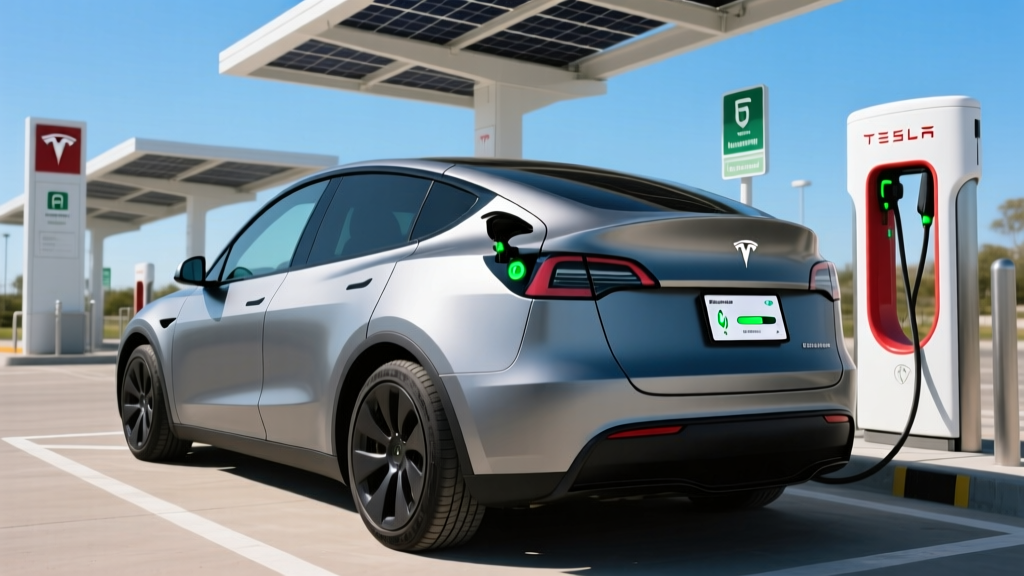
If you've ever pulled into a Tesla Supercharger station and watched your neighbor's Model Y add 200 miles of range in 15 minutes, you've probably wondered: does Tesla let you purchase a Supercharger for your own garage? The short answer is no — Tesla does not sell Supercharger hardware to individual consumers. Superchargers are DC fast-charging stations rated between 150 kW and 350 kW (V4), require commercial-grade electrical infrastructure, and are deployed exclusively by Tesla at its own network sites.
But here's what most buyers actually need to know: you don't need a Supercharger at home. A properly installed Level 2 charger delivers all the daily range you need overnight, and with Tesla's North American Charging Standard (NACS) now adopted by nearly every major automaker, the adapter landscape has simplified dramatically. This guide covers exactly what hardware you can buy, what it costs to install, which adapters you need, and how charging economics compare to gasoline in 2026.
Charging Levels Explained: Speeds, kW, and Real-World Range Added
Before choosing equipment, you need to understand the three charging levels and what each delivers in practical terms. The critical distinction: kW (kilowatts) measures power — the rate at which energy flows into your battery. kWh (kilowatt-hours) measures energy — the total capacity stored in your battery. Think of kW as the speed of water flowing through a hose and kWh as the size of the bucket you're filling.
| Level | Voltage / Amperage | Max Power (kW) | Miles of Range Added Per Hour | Best For |
|---|---|---|---|---|
| Level 1 | 120V / 12-16A | 1.4–1.9 kW | 3–5 miles | Overnight top-ups, PHEVs, low-mileage drivers |
| Level 2 | 240V / 16-80A | 3.8–19.2 kW | 14–75 miles | Daily home charging, full EVs, overnight 10-80% |
| DC Fast Charging | 400-800V DC | 50–350 kW | 150–1,200+ miles (equivalent/hr) | Road trips, quick top-ups away from home |
Real-world charging time examples: A Tesla Model Y Long Range (75 kWh usable battery) charging from 10% to 80% takes roughly 9–11 hours on a 7.7 kW Level 2 circuit, about 5–6 hours on an 11.5 kW charger, and approximately 25–30 minutes at a 250 kW Supercharger V3. Note that DC fast charging slows significantly above 80% State of Charge (SoC) — the charge curve tapers to protect battery health, which is why 10-80% times are the industry standard metric rather than 0-100%.
Can You Buy a Tesla Supercharger? What You Can Actually Purchase
Tesla does not sell Supercharger stalls to consumers or businesses for private installation. The Supercharger network — now over 6,500 stations and 70,000+ connectors globally as of early 2026 — is owned, operated, and maintained by Tesla. The hardware uses proprietary power electronics and requires utility-grade electrical service (typically 480V three-phase), making residential installation impractical even if Tesla permitted it.
What Tesla does sell to consumers is home charging equipment:
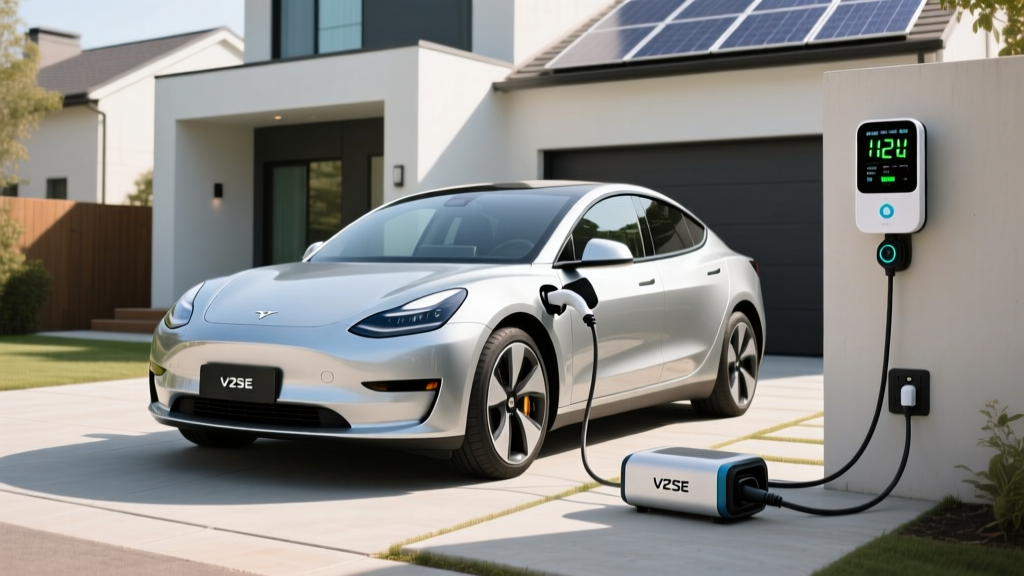
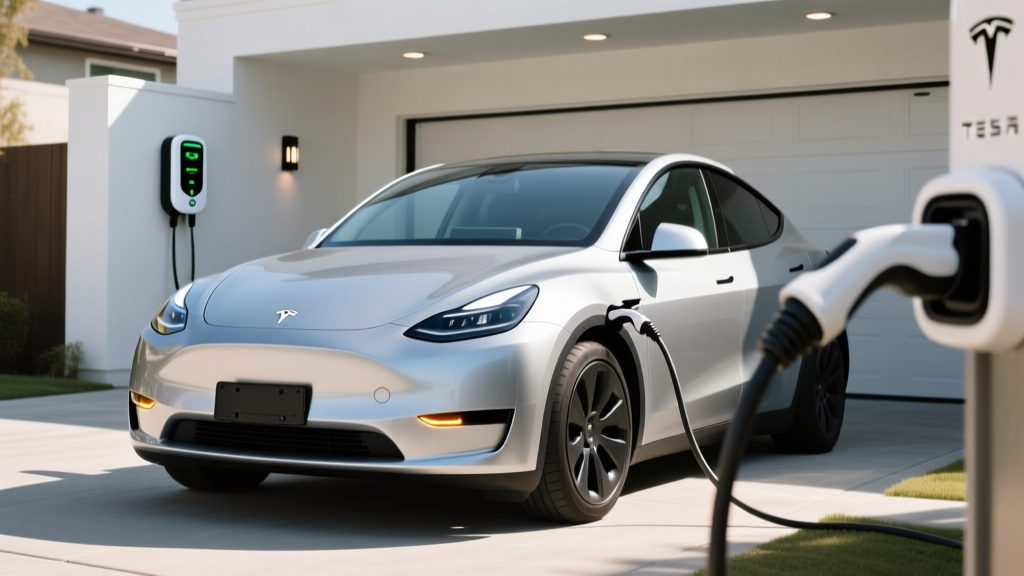
- Tesla Wall Connector (Gen 3): A Level 2 charger delivering up to 11.5 kW (48A) on a 60A circuit, or up to 44 miles of range per hour. Price: approximately $475. Features a 24-foot cable, Wi-Fi connectivity for software updates, and native NACS connector — no adapter needed for Tesla vehicles.
- Tesla Mobile Connector: Included with new Tesla vehicles. Delivers up to 3.8 kW (16A) on a standard 240V NEMA 14-50 outlet, or 1.4 kW on a 120V household outlet. Suitable for light use but not ideal as a primary daily charger.
- Tesla Universal Wall Connector: Released in 2024, this version includes a built-in CCS adapter (J1772/CCS1 to NACS) so it can charge both Tesla and non-Tesla EVs. Priced around $595.
If you own a non-Tesla EV with a CCS1 port and want to use Tesla Superchargers, Tesla sells the CCS Adapter for Supercharging (approximately $195 from the Tesla shop) — though many newer non-Tesla EVs from Ford, Rivian, GM, and others now ship with native NACS charge ports as of the 2025-2026 model years, eliminating the adapter requirement entirely.
Connector Compatibility: NACS, CCS1, and CHAdeMO in 2026
The connector landscape has consolidated significantly since Tesla opened its charging standard as NACS (SAE J3400) in late 2022. By 2026, NACS is the dominant light-duty EV connector in North America. Here's how compatibility breaks down:
| Connector | Used By | AC Level 2 Charging | DC Fast Charging | Adapter Needed? |
|---|---|---|---|---|
| NACS (Tesla/J3400) | Tesla (all years), Ford, GM, Rivian, Volvo, Polestar, BMW, Hyundai, Kia, and most others from 2025+ | Yes | Yes (Supercharger + growing third-party networks) | No for Tesla; CCS1 vehicles need a NACS adapter |
| CCS1 (Combined Charging System) | Pre-2025 non-Tesla EVs: VW ID.4, older Hyundai Ioniq 5, Kia EV6, BMW i4, etc. | Yes (J1772 upper portion) | Yes (Electrify America, EVgo, ChargePoint DC) | NACS-to-CCS adapter needed for Tesla Superchargers |
| CHAdeMO | Nissan LEAF, Mitsubishi Outlander PHEV (legacy) | Yes (J1772) | Limited and declining network | No widely available adapter to NACS for DC |
Key takeaway: If you're buying a new EV in 2026, it almost certainly has a NACS port unless it's a carryover model. If you already own a CCS1-equipped EV, you'll need a NACS adapter (typically $150–$250) to access the Tesla Supercharger network, which now welcomes non-Tesla vehicles at most US locations via Tesla's "Open Supercharging" program. Check Tesla's non-Tesla Supercharging page for station-specific availability.
Home Charger Installation: Electrical Requirements and Costs
Installing a Level 2 home charger is an electrical project, not a plug-and-play appliance purchase. Here's what's involved and what it costs.
Electrical Requirements
A dedicated Level 2 charger requires a 240-volt circuit on your home's electrical panel. The most common configurations:
- NEMA 14-50 outlet (50A circuit): Supports chargers up to 40A continuous draw (9.6 kW). This is the most popular setup and allows you to use a plug-in charger that you can take with you if you move.
- Hardwired 60A circuit: Supports chargers up to 48A continuous draw (11.5 kW). Required for the Tesla Wall Connector at full output. Hardwired connections are more reliable and avoid the GFCI breaker issues that plague some NEMA 14-50 installations.
- Hardwired 80A circuit: Supports chargers up to 64A (15.3 kW) or 80A continuous (19.2 kW). Only practical if your home has a 200A+ electrical panel with spare capacity.
Panel upgrade reality check: Many homes built before 2000 have 100A or 150A electrical panels. Adding a 50-60A EV circuit to an already-loaded panel may require a panel upgrade to 200A, which costs $1,500–$3,500 depending on your utility's requirements and local labor rates. Some utilities offer rebates for panel upgrades tied to EV adoption — check with your provider.
| Cost Component | Simple Install (Panel Nearby) | Complex Install (Panel Upgrade Needed) |
|---|---|---|
| Level 2 Charger (Equipment) | $400–$650 | $400–$650 |
| Electrician Labor (240V circuit run) | $500–$1,200 | $1,500–$3,500 |
| Electrical Panel Upgrade (if needed) | $0 | $1,500–$3,500 |
| Permit & Inspection | $50–$200 | $100–$300 |
| Total Estimated Cost | $950–$2,050 | $3,500–$7,950 |
Always hire a licensed electrician familiar with EV charger installations. The National Electrical Code (NEC) requires that continuous loads (like EV charging) not exceed 80% of the circuit rating — meaning a 50A breaker supports a maximum 40A continuous charger. Permits are required in most jurisdictions, and your insurance company may deny a claim if unpermitted electrical work causes a fire. See NFPA 70 (NEC) for code details.
Level 2 Charger Equipment Recommendations for 2026
Based on reliability testing, connector compatibility, and real-world ownership feedback, these are the top home chargers for different needs:
Tesla Wall Connector (Gen 3)
- Max Power: 11.5 kW (48A on 60A circuit)
- Connector: Native NACS
- Cable Length: 24 feet
- Smart Features: Wi-Fi, OTA updates, power sharing with second unit, access control
- Price: ~$475
- Best For: Tesla owners who want the simplest, fastest home charging with no adapter
ChargePoint Home Flex
- Max Power: 12 kW (50A on 60A circuit, configurable down to 16A)
- Connector: J1772 (CCS1-compatible); NACS adapter available separately
- Cable Length: 23 feet
- Smart Features: Wi-Fi, app scheduling, Alexa integration, flexible amperage settings
- Price: ~$550–$650
- Best For: CCS1 EV owners or multi-EV households needing adjustable amperage
Emporia Level 2 EV Charger
- Max Power: 11.5 kW (48A on 60A circuit)
- Connector: J1772 (NACS adapter included in some bundles)
- Cable Length: 24 feet
- Smart Features: Wi-Fi, energy monitoring, solar integration, time-of-use scheduling
- Price: ~$399
- Best For: Budget-conscious buyers who want energy monitoring and solar pairing
Tesla Universal Wall Connector
- Max Power: 11.5 kW (48A on 60A circuit)
- Connector: NACS with integrated CCS1 adapter
- Cable Length: 24 feet
- Smart Features: Wi-Fi, OTA updates, charges both Tesla and CCS1 vehicles without separate adapter
- Price: ~$595
- Best For: Households with a Tesla and a non-Tesla EV, or anyone future-proofing for NACS adoption
Charging Cost Per Mile: Home Electricity vs. Gasoline
One of the strongest economic arguments for EV ownership is the fuel-cost advantage — but the savings depend heavily on where and when you charge. Here's a realistic breakdown using 2026 electricity and gasoline prices:
| Charging Scenario | Cost per kWh | Cost to Add 200 Miles (at 3.5 mi/kWh avg efficiency) | Cost Per Mile |
|---|---|---|---|
| Home — Off-Peak (Time-of-Use rate) | $0.08–$0.12 | $4.57–$6.86 | $0.023–$0.034 |
| Home — Standard Residential Rate (US avg) | $0.16–$0.18 | $9.14–$10.29 | $0.046–$0.051 |
| Public Level 2 (ChargePoint, etc.) | $0.25–$0.40 | $14.29–$22.86 | $0.071–$0.114 |
| DC Fast Charging (Tesla Supercharger avg) | $0.28–$0.42 | $16.00–$24.00 | $0.080–$0.120 |
| DC Fast Charging (Electrify America / EVgo) | $0.35–$0.55 | $20.00–$31.43 | $0.100–$0.157 |
| Gasoline Baseline (28 MPG avg at $3.40/gal) | — | $24.29 | $0.121 |
The bottom line: Charging at home on off-peak rates costs roughly 75% less per mile than gasoline. Even exclusive DC fast charging at public stations can match or beat gasoline costs depending on your vehicle's efficiency. But if you rely entirely on expensive public DC chargers without any home access, your savings narrow considerably — this is why home charging access is the single most important factor in EV ownership economics.
According to fueleconomy.gov, most modern EVs achieve between 3.0 and 4.0 miles per kWh. A Tesla Model Y averages about 3.5 mi/kWh, while a Hyundai Ioniq 6 can reach 4.1 mi/kWh thanks to its aerodynamic efficiency. Use your specific vehicle's kWh/100mi rating (shown on the EPA window sticker) for precise calculations.
Safety, Electrical Code, and Installation Best Practices
EV charging draws significant current for extended periods — often 8+ hours continuously. This is a heavier duty cycle than most household appliances, and it demands proper installation:
- Dedicated circuit: Your EV charger must have its own dedicated breaker — never share a circuit with other high-draw appliances like a dryer or oven.
- GFCI considerations: The 2020 NEC requires GFCI protection for outdoor receptacles, but some GFCI breakers trip nuisance-free with continuous EV loads. Many electricians now recommend hardwired connections (which do not require GFCI under current code) for outdoor installations to avoid this issue.
- Outdoor rating: If installing outdoors, ensure the charger carries a NEMA 4 or IP65 rating for weather resistance. All recommended chargers above meet outdoor-use standards.
- Cable management: Use a wall-mounted holster or cable organizer to prevent the charging cable from lying on the ground where it can be damaged by vehicles, ice, or standing water.
- Load management: If your panel is near capacity, consider a smart charger with load-management features (like the Emporia or Tesla Wall Connector with Power Sharing) that dynamically adjusts charging amperage based on your home's real-time electrical load.
The NHTSA does not directly regulate home EV chargers, but all chargers sold in the US must meet UL (Underwriters Laboratories) safety certification — specifically UL 2594 for EV supply equipment. Never purchase an uncertified charger from an unknown brand, regardless of price.
Frequently Asked Questions
Does Tesla let you purchase a Supercharger for home use?
No. Tesla Superchargers are commercial DC fast-charging stations (150-350 kW) that require utility-grade 480V three-phase electrical service and are only deployed at Tesla-operated sites. For home use, Tesla sells the Wall Connector, a Level 2 charger delivering up to 11.5 kW on a 240V residential circuit — which is sufficient to fully recharge most EVs overnight.
Do I need an adapter to charge a non-Tesla EV at a Supercharger?
If your non-Tesla EV has a CCS1 port, yes — you need a NACS-to-CCS adapter (sold by Tesla for ~$195 or by third parties for $150-$250). If your EV is a 2025+ model with a native NACS port (Ford F-150 Lightning, GM Equinox EV, Rivian R1T Gen 2, etc.), no adapter is needed. CHAdeMO vehicles like the Nissan LEAF cannot currently use Tesla Superchargers.
How much does it cost to install a home EV charger?
A straightforward Level 2 installation with an existing 200A panel and a short cable run costs $950–$2,050 including equipment, electrician labor, and permits. If your home needs a panel upgrade from 100A to 200A, expect total costs of $3,500–$7,950. Always get 2-3 quotes from licensed electricians and confirm they include permit costs.
How fast will a Level 2 charger add range to my EV?
At 11.5 kW (48A), a Level 2 charger adds approximately 40-44 miles of range per hour for an efficient EV like a Tesla Model Y. At 7.7 kW (32A), expect about 28-30 miles per hour. This means a typical overnight charge (8-10 hours) adds 250-400+ miles — more than enough for virtually any daily driving pattern.
Is charging an EV cheaper than gas?
At home on average US electricity rates ($0.16-$0.18/kWh), charging costs approximately $0.046-$0.051 per mile — about 60% less than gasoline at $3.40/gallon in a 28 MPG vehicle ($0.121/mile). On off-peak utility rates, the savings increase to 70-75%. Public DC fast charging narrows the gap but typically still matches or beats gasoline costs.
What electrical upgrades might I need for a home charger?
If your home has a 200A electrical panel with at least 40-60A of spare capacity, you likely only need a new dedicated circuit and breaker — no panel work required. Homes with 100A or 150A panels, or panels already near capacity (common with electric heat, AC, and an electric oven/dryer), may need a panel upgrade to 200A. Your electrician will perform a load calculation per NEC Article 220 to determine this.