Tesla Supercharger Pricing in California: What You'll Actually Pay in 2025-2026
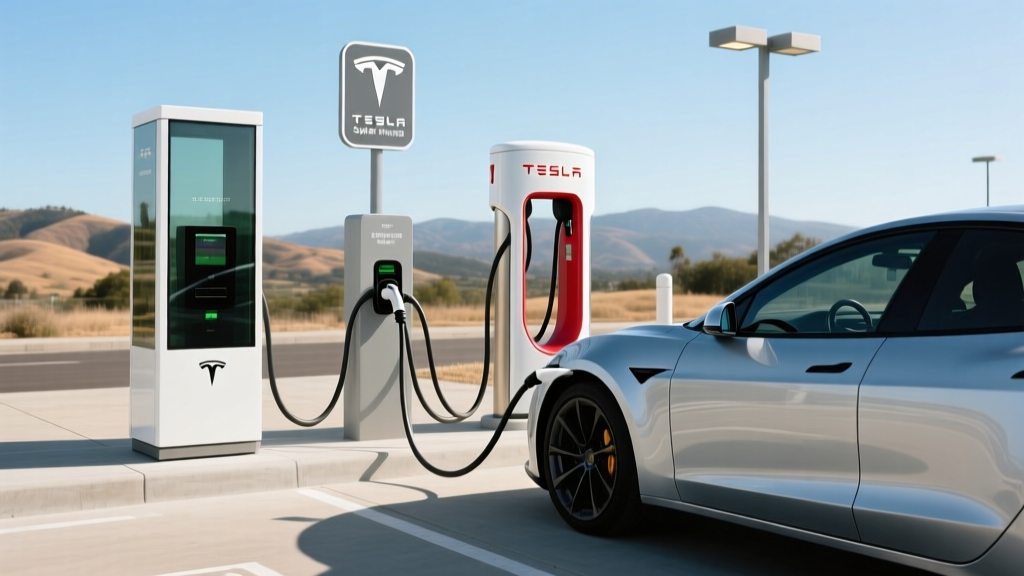
California remains the most expensive state in the U.S. for DC fast charging, and Tesla's Supercharger network is no exception. As of late 2025 and into 2026, the Tesla Supercharger price per kWh in California typically ranges from $0.48 to $0.66/kWh depending on station location, time of day, and whether the site uses time-of-use (TOU) pricing. Urban stations in San Francisco, Los Angeles, and San Jose trend toward the higher end, while rural corridor chargers along I-5 or US-101 can sit closer to $0.48/kWh during off-peak hours.
For a Tesla Model Y Long Range (75 kWh usable battery), a 10-80% session — adding roughly 52 kWh — costs approximately $25-$34 at a California Supercharger. That translates to roughly $0.10-$0.14 per mile, which is still cheaper than gasoline at $4.80/gallon in a 28 MPG compact SUV ($0.17/mi), but it's far from the bargain that home charging delivers.
Charging Levels Explained: Speed, Power, and Miles Per Hour
Before comparing costs, you need a clear picture of the three charging levels available to EV owners. Each level delivers dramatically different speeds, and understanding the kW output tells you exactly how long you'll wait.
| Level | Voltage / Amps | Power (kW) | Miles of Range Per Hour | 10-80% Time (75 kWh Battery) |
|---|---|---|---|---|
| Level 1 (120V outlet) | 120V / 12A | 1.4 kW | 3-5 mi/hr | ~38 hours |
| Level 2 (240V home/public) | 240V / 32-48A | 7.7 - 11.5 kW | 25-44 mi/hr | ~5-7 hours |
| DC Fast (Supercharger/CCS) | 400-800V DC | 50 - 350 kW | 150-1,000+ mi/hr (peak) | 15-30 minutes |
Real-world caveat: DC fast charging does not sustain peak kW for the entire session. A V3 Tesla Supercharger peaks at 250 kW but tapers significantly above 50-60% State of Charge (SoC). Expect the 10-80% session to average closer to 100-130 kW over the full duration, which is why a Model Y 10-80% charge takes roughly 25-28 minutes rather than the ~15 minutes that pure peak-rate math would suggest.
Cost to Charge: Supercharger vs. Home vs. Gas — The $/Mile Breakdown
This is where the Tesla Supercharger price per kWh in California either stings or looks reasonable, depending entirely on your alternative. Let's run the numbers across realistic scenarios for a 2026 Tesla Model Y Long Range (EPA 320 miles, 75 kWh usable, ~4.2 mi/kWh efficiency).
| Scenario | Rate | Cost for 10-80% (52 kWh) | Cost Per Mile |
|---|---|---|---|
| CA Supercharger (peak) | $0.61/kWh | $31.72 | $0.145/mi |
| CA Supercharger (off-peak) | $0.48/kWh | $24.96 | $0.114/mi |
| Home Level 2 (PG&E TOU off-peak) | $0.14/kWh | $7.28 | $0.033/mi |
| Home Level 2 (SCE standard) | $0.28/kWh | $14.56 | $0.066/mi |
| Gasoline (28 MPG, $4.80/gal CA avg) | $4.80/gal | $37.71 (equiv. 210 mi) | $0.171/mi |
The takeaway is stark: exclusive Supercharger reliance in California costs roughly 4x more per mile than home off-peak charging. A driver covering 12,000 miles/year who charges entirely at home on PG&E's EV-A rate (off-peak ~$0.14/kWh) spends roughly $400/year on electricity. That same driver relying solely on peak Superchargers spends $1,740/year. The gas comparison ($2,057/year) still loses to the Supercharger — but only narrowly.
For the latest utility rate structures and EV-specific TOU plans, check the California Public Utilities Commission or your local utility's EV rate page.
Home Level 2 Charger Installation: What It Actually Costs
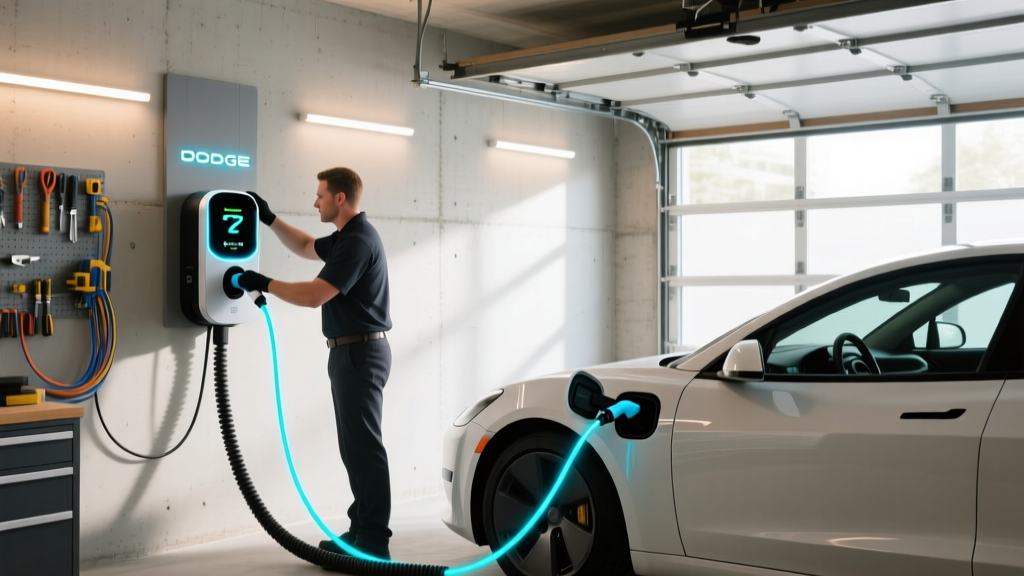
The single most impactful financial decision an EV owner in California can make is installing a Level 2 home charger. But installation costs vary wildly based on your home's electrical panel, the distance from panel to charger location, and whether you need a service upgrade.
Electrical Requirements
A typical Level 2 home charger requires a 240V dedicated circuit on a NEMA 14-50 outlet or hardwired connection. The most common configurations:
- 40A circuit / 32A continuous charge = 7.7 kW (most common, works with 100A+ panels)
- 50A circuit / 40A continuous = 9.6 kW (requires 125A+ panel capacity)
- 60A circuit / 48A continuous = 11.5 kW (requires 150A+ panel, common for larger EVs)
Per the National Electrical Code (NEC), continuous loads (including EV charging) can only use 80% of a circuit's rated capacity. So a 50A breaker yields 40A of continuous charging current.
The Panel Upgrade Question
Homes built before 1990 often have 100A or even 60A service panels. Adding a 40-60A dedicated EV circuit to a 100A panel that's already near capacity may require a panel upgrade to 200A — one of the most expensive variables in EV charger installation. Signs you may need an upgrade:
- Your panel is 100A or less
- You already run electric heat, electric dryer, electric oven, and A/C
- Your panel has no open breaker slots
- An electrician's load calculation shows insufficient headroom
| Component | Simple Install (panel nearby, no upgrade) | Complex Install (long run, conduit) | Panel Upgrade Required |
|---|---|---|---|
| Level 2 Charger (hardware) | $400 - $750 | $400 - $750 | $400 - $750 |
| Electrician labor | $500 - $1,000 | $1,500 - $3,000 | $2,000 - $4,000 |
| Permit & inspection | $100 - $300 | $150 - $400 | $200 - $500 |
| Panel upgrade (if needed) | — | — | $2,000 - $5,000 |
| Total Range | $1,000 - $2,050 | $2,050 - $4,150 | $4,600 - $10,250 |
The IRS §30C Alternative Fuel Vehicle Refueling Property Credit can offset up to $1,000 (30% of costs, capped) for home charger installation, subject to income and census-tract eligibility. Always confirm current-year eligibility with a tax professional.
Connector Compatibility: NACS, CCS1, CHAdeMO, and Adapters
The connector landscape has shifted dramatically since 2024, when Ford, GM, Rivian, and nearly every major automaker committed to adopting Tesla's North American Charging Standard (NACS) for their EVs. By 2026, NACS is the dominant DC fast-charging connector in North America, but CCS1 vehicles remain on the road in large numbers.
| Connector | Native Vehicles (2025-2026 Models) | Tesla Supercharger Access | Adapter Needed? |
|---|---|---|---|
| NACS (Tesla) | Tesla Model 3/Y/S/X, Ford F-150 Lightning (2025+), Rivian R1T/R1S (2025+), GM Ultium vehicles (2025+) | Direct plug-in | None for Superchargers |
| CCS1 | Hyundai Ioniq 5/6, Kia EV6/EV9, VW ID.4, BMW iX (pre-2025), older Ford/GM EVs | Via Tesla CCS adapter (~$175) | Yes — Tesla CCS adapter or use Electrify America/EVgo |
| CHAdeMO | Nissan Leaf (legacy, discontinued for 2026), Mitsubishi Outlander PHEV (older models) | No — CHAdeMO not supported at Superchargers | No viable adapter; use Electrify America or EVgo CHAdeMO stalls |
For CCS owners: Tesla sells a CCS-to-NACS adapter (approximately $175) that enables access to V3 Superchargers at up to ~150 kW (not the full 250 kW, due to protocol translation overhead). This dramatically expands your fast-charging network, since Superchargers outnumber CCS stations roughly 3:1 in California.
Recommended Home Level 2 Chargers (2025-2026 Picks)
Not all Level 2 chargers are equal. Here are three proven options with different strengths, each with NACS native connectors (or CCS options) for the current market:
Tesla Wall Connector (Gen 4)
- Power: 11.5 kW (48A) max
- Connector: NACS native
- Cable: 24 ft
- Smart features: Wi-Fi, OTA updates, load sharing (pair two units on one circuit), access control
- Price: ~$475
- Best for: Tesla owners wanting maximum speed and native integration
ChargePoint Home Flex
- Power: Up to 12 kW (50A) — configurable from 16A to 50A
- Connector: NACS or CCS1 (select at purchase)
- Cable: 23 ft
- Smart features: Wi-Fi, app scheduling, Alexa integration, flexible amperage to match your panel
- Price: ~$649
- Best for: Multi-EV households, adjustable amperage for older panels
Emporia Level 2 Smart Charger
- Power: 11.5 kW (48A) max
- Connector: NACS or J1772 (with adapter)
- Cable: 24 ft
- Smart features: Wi-Fi, energy monitoring, solar integration, TOU scheduling, budget-friendly
- Price: ~$399
- Best for: Budget-conscious buyers who want smart features and solar pairing
All three units support hardwired or NEMA 14-50 plug installation. Hardwired is preferred for 48A+ units, as NEMA 14-50 receptacles are rated for 50A and some inspectors require GFCI breakers on receptacle circuits (adding $80-$150 to your electrical bill). Hardwired connections bypass the receptacle GFCI requirement.
Safety, Code, and Permit Considerations
California enforces strict electrical codes for EV charger installations, and cutting corners creates fire risk and insurance liability. Key requirements:
- Dedicated circuit: Your EV charger must have its own breaker — no shared circuits with other appliances.
- GFCI protection: NEC 2020+ requires GFCI protection on 240V receptacles used for EV charging. Hardwired installations are exempt from this receptacle-specific GFCI rule.
- Outdoor rating: If your charger is installed outdoors (garage-adjacent carport, driveway), the unit must carry a NEMA 4 or IP65 weather rating. All three chargers above qualify.
- Permit required: California requires an electrical permit for EV charger installation. Your electrician pulls this; cost varies by municipality ($100-$500). Inspections typically happen within 2-4 weeks.
- Load calculation: A licensed electrician must perform a NEC Article 220 load calculation to confirm your panel can handle the added circuit. This is non-negotiable and protects against overloaded panels.
Always hire a licensed electrician (California C-10 Electrical Contractor license) rather than a handyman. Improper installation can void your homeowner's insurance coverage for electrical fires.
Charging Time Examples: 10-80% for Common Battery Sizes
Most EV owners charge between 10% and 80% SoC for daily driving, since charging above 80% slows dramatically (the charge curve tapers to protect battery health). Here's what that looks like across common battery capacities:
| Vehicle | Usable Battery | 10-80% at 11.5 kW (Home L2) | 10-80% at 250 kW DC (Supercharger V3) | 10-80% at 350 kW DC (EA/CCS) |
|---|---|---|---|---|
| Tesla Model Y LR (2026) | 75 kWh | ~4 hr 30 min | ~25 min | N/A (NACS) |
| Hyundai Ioniq 5 (2026) | 77.4 kWh | ~4 hr 45 min | ~27 min (w/ adapter) | ~18 min |
| Ford F-150 Lightning Ext. (2026) | 131 kWh | ~8 hr | ~42 min | N/A (NACS) |
| Chevrolet Equinox EV (2026) | 85 kWh | ~5 hr 15 min | ~32 min | N/A (NACS) |
Why 800V matters: The Hyundai Ioniq 5's 800V architecture allows it to accept up to 350 kW on compatible CCS chargers (like Electrify America's 350 kW stalls), enabling the fastest 10-80% times in its class. Tesla's 400V architecture peaks at 250 kW — still fast, but outpaced by 800V competitors at non-Tesla DC chargers.
Frequently Asked Questions
How much does it cost to install a home EV charger in California?
A straightforward Level 2 installation (panel nearby, no upgrade needed) typically costs $1,000-$2,050 including the charger, electrician labor, and permit. Complex runs with long conduit paths push costs to $2,000-$4,150. If your home needs a 200A panel upgrade, total costs can reach $4,600-$10,250. The federal §30C credit may offset up to $1,000 of these costs.
How fast will each charging level add range to my EV?
Level 1 (120V) adds roughly 3-5 miles per hour — suitable only for plug-in hybrids with small batteries or overnight trickle charging. Level 2 (240V, 48A) adds 25-44 miles per hour, fully replenishing most EVs overnight. DC fast charging at 150-250 kW adds 150-1,000+ miles per hour at peak, though the rate tapers above 60-80% SoC.
Which connector is compatible with my EV?
If you own a 2025-2026 Tesla, Ford, Rivian, or GM EV, your vehicle uses NACS natively and plugs directly into Tesla Superchargers. If you own a Hyundai, Kia, VW, or BMW EV with CCS1, you'll need a Tesla CCS adapter (~$175) for Supercharger access, or you can use Electrify America and EVgo CCS stations. CHAdeMO vehicles (older Nissan Leaf) cannot use Superchargers.
How much does EV charging cost per mile compared to gasoline?
In California, home off-peak charging costs approximately $0.03-$0.07 per mile, while Supercharger sessions cost $0.11-$0.15 per mile. A comparable gasoline vehicle at 28 MPG with California fuel prices ($4.80/gallon) costs roughly $0.17 per mile. Home charging delivers 3-5x savings over gas; exclusive Supercharger use saves 15-35%.
What electrical upgrades might I need for a home charger?
The most common upgrade is a panel capacity increase from 100A to 200A, costing $2,000-$5,000. You may also need additional breaker slots, a new meter socket, or utility service wire upgrades. Older homes with aluminum wiring or Federal Pacific/Zinsco panels (known safety hazards) require full panel replacement regardless of EV charging. A licensed electrician's load calculation determines your exact needs.
Is the Tesla Supercharger price per kWh in California going to decrease?
Tesla periodically adjusts Supercharger pricing, and some California stations now offer off-peak discounts (typically 12 AM - 6 AM) of 15-25% below peak rates. However, California's high commercial electricity rates and demand charges mean Supercharger pricing will likely remain above $0.45/kWh for the foreseeable future. The most effective cost-reduction strategy is home Level 2 charging on a TOU plan.